
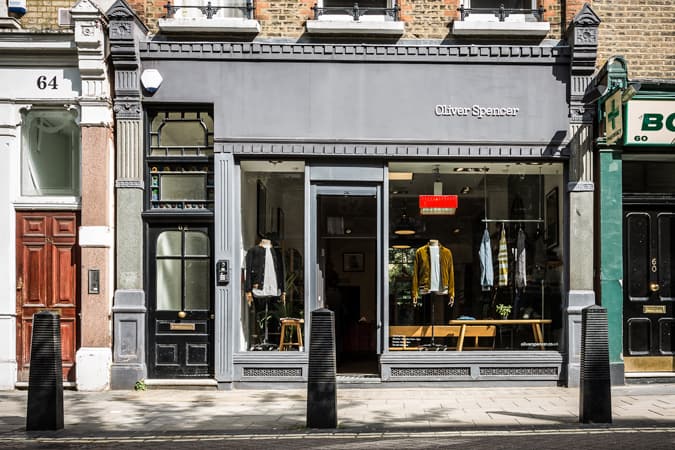
London menswear shopping spans very different worlds: long-running independents like Stuarts London, established in 1967, luxury multi-brand retail at Zoo Fashions, Jermyn Street shirt-and-tailoring houses like Harvie & Hudson, and contemporary designer labels such as Oliver Spencer. The city’s appeal is that you can move from traditional British dress codes to casual and sportswear-driven buying in a single afternoon, with places like Tonic Menswear and Suitsupply adding modern wardrobe-building and made-to-measure convenience to the mix. Guides from GQ and Permanent Style make clear that the real pleasure is not just buying clothes, but learning London’s retail geography and the difference between heritage, designer, and specialist tailoring districts. If you shop with your eyes open, London menswear stores become a map of competing ideas about how men dress now.
Learn
Map the London Menswear Landscape
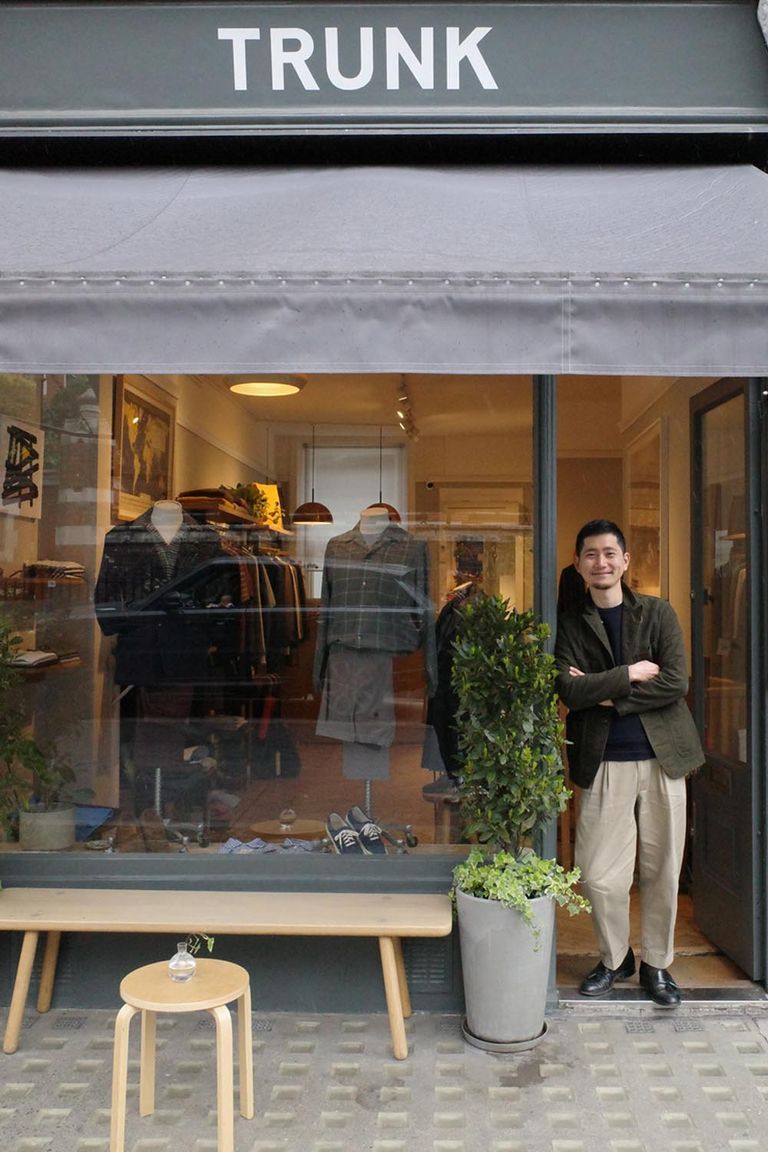
London's menswear landscape is not a single district but a constellation of distinct retail ecosystems, each with its own DNA. Jermyn Street remains the epicentre of heritage shirting and classic British style, anchored by Turnbull & Asser, Harvie & Hudson, and the relocated Cordings of Piccadilly, which brought its Tattersall-check legacy with help from King Charles III. A short stroll away, Chiltern Street in Marylebone offers a quieter, more curated edit blending Japanese and Ivy League influences—Trunk Clothiers, John Simons (a 1960s Ivy Shop survivor now run by the founder's son), and the theatrical Jacques Marie Mage eyewear boutique all sit within a few doors of each other. Meanwhile, newer players like BSTN in Brixton and Clutch Cafe (run by the editor-in-chief of Japan's Clutch Magazine) inject streetwear and subcultural energy, proving that London's menswear scene rewards those who know exactly where to look.


 gentlemansgazette.comgentlemansgazette.com
 luxurylondon.co.ukluxurylondon.co.uk
+Field notes
- —Cordings of Piccadilly, credited with inventing the Tattersall check, moved to 23 Jermyn Street last year with the personal assistance of King Charles III; its tweed suits and country clothing are a specialist draw.
- —Chiltern Street's John Simons opened as 'The Ivy Shop' in Richmond in 1964, later moving to 46 Chiltern Street, where it remains the UK's definitive source for Ivy League preppy style—corduroy button-downs, herringbone slacks, and tweed—now run by founder John's son Paul.
- —Clutch Cafe on Great Portland Street (W1W) doubles as a coffee shop and a curated showcase for Japanese heritage labels like The Real McCoy's and Cohérence, founded by Atsushi Matsushima, editor-in-chief of Japan's Clutch Magazine.
- —BSTN, originally a German sneaker and streetwear brand, opened its first international flagship at 395-397 Brixton Road in 2022, featuring a brushed-steel staircase inspired by 2001: A Space Odyssey and an upper-floor community space called the B-Hive.
- —Crockett & Jones has maintained a flagship at 69 Jermyn Street since 13 September 1997—its 25th anniversary in 2022—making it one of the street's most loyal residents and the only place stocking the brand's full range of Northampton-made shoes.
- —Trunk Clothiers on Chiltern Street (No. 8) has a second space at No. 34 called Trunk Labs, which expands into lifestyle, travel, and accessories; both locations together form a cornerstone of the street's curated retail identity.
Learn
From Jermyn Street Tradition to Modern Multi-Brand Retail
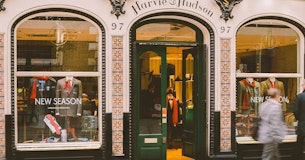
The London menswear landscape offers a fascinating contrast between the deep-rooted tradition of Jermyn Street, epitomized by Harvie & Hudson—the last family-owned shirtmaker on the street—and the adaptive evolution of independent multi-brand retailers like Stuarts London. Harvie & Hudson, founded in 1949 by Thomas Harvie and George Hudson after WWII delayed their plans, still cuts shirts on-site at 96-97 Jermyn Street, a building that was once The Rose Tavern run by Dante Gabriel Rossetti's mistress Fanny Cornforth; the original gold-leaf rose cornices and the repurposed tavern sign remain. The shop's iconic H&H stripe emerged by accident in the 1960s when a window display used flamboyant pyjama material, creating a colourful revolution up and down the street. In contrast, Stuarts London, West London's oldest independent menswear retailer, started as a tailor in the mid-1960s making made-to-measure trousers and suits, then pivoted in the 1970s and 1980s to football casual wear before embracing Italian-inspired fashion in the 1990s. Today it curates collections around specific subcultures—Ivy League style, Terracewear, 80s Casuals, and British subculture—blending heritage with contemporary streetwear. Both stores survive by evolving: Harvie & Hudson by staying true to craftsmanship and personal service, Stuarts by adapting to trends while maintaining a loyal customer base that spans generations, with manager Harvey Singh noting that fashion 'goes in one big circle.'
+Field notes
- —Harvie & Hudson’s founders Thomas Harvie and George Hudson originally worked together at a Jermyn Street shirtmaker before WWII, but the war delayed their own shop; Thomas was drafted to Burma while George cut uniforms, and they only opened in 1949 after both survived.
- —The H&H signature stripe—now a brand hallmark—came from a 1960s window display using bright pyjama fabric; customers mobbed the shop for pink, red, yellow, green, and purple striped shirts, sparking a colour trend on Jermyn Street.
- —Harvie & Hudson’s store at 96-97 Jermyn Street was originally The Rose Tavern, run by Fanny Cornforth, mistress of Pre-Raphaelite painter Dante Gabriel Rossetti; the building still features original rose cornices and the gold-leaf rose sign from the tavern.
- —Stuarts London began in the mid-1960s as a tailor making made-to-measure trousers and suits, then pivoted to football casual wear in the 1970s–80s, Italian-inspired fashion in the 1990s, and now curates subculture-driven collections like Ivy League, Terracewear, and 80s Casuals.
- —Stuarts London manager Harvey Singh says the store’s survival comes from adapting to trends without hesitation—'fashion goes in one big circle'—and that some customers have shopped there for 30 years and now bring their own children.
- —Unlike many neighbouring Jermyn Street houses that have been absorbed into corporate groups, Harvie & Hudson remains the last independently family-owned shirtmaker on the street, cutting shirts on-site in its basement cutting room since 1964.
Learn
The Store Types London Shoppers Actually Compare
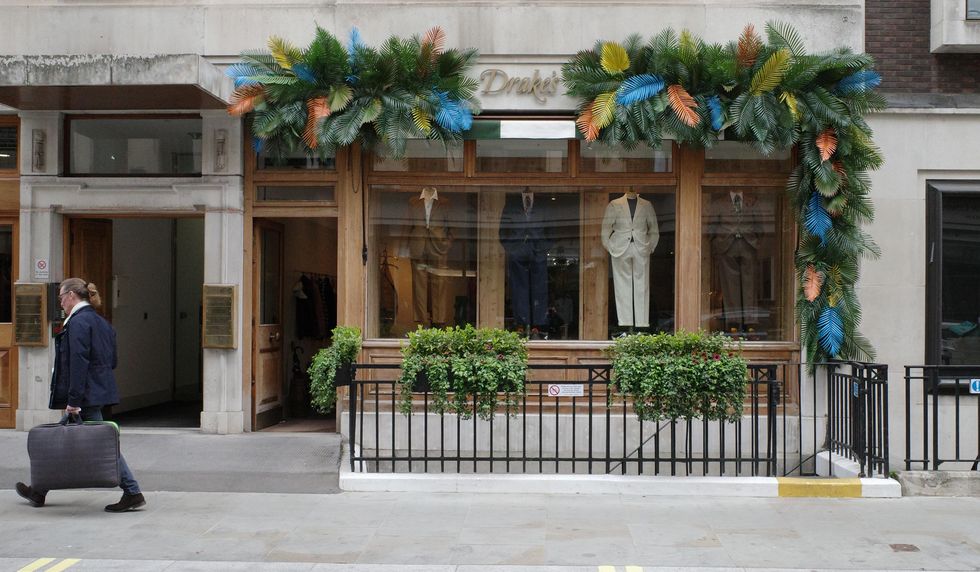
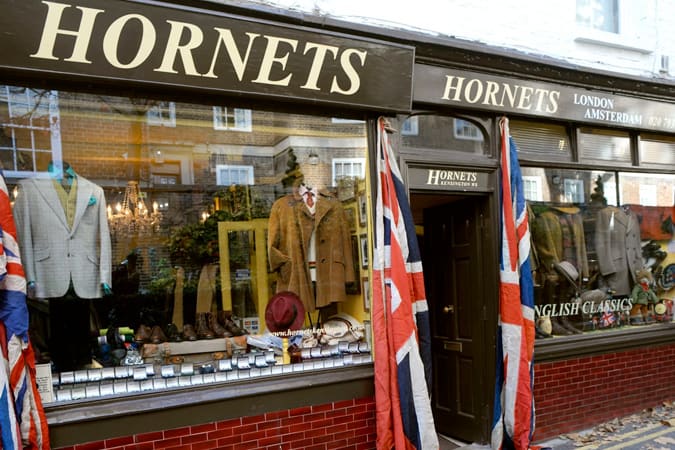
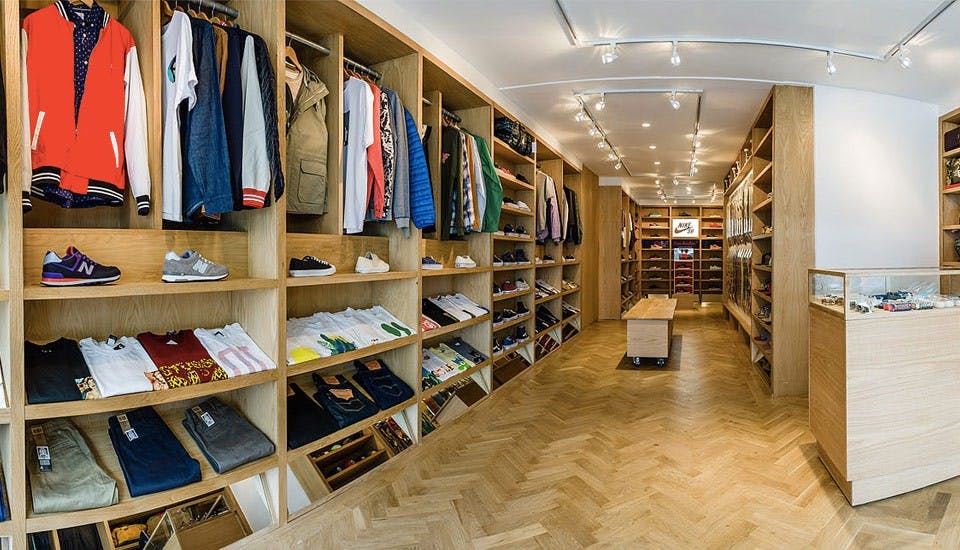
London's menswear scene is best understood not by individual stores but by the specific type of shopping experience each offers—and the three main categories that serious shoppers actually compare are bespoke tailors on and around Savile Row, the handful of maker-owned shops for top-tier accessories (shoes, ties, knitwear), and curated multi-brand clothiers like Trunk Clothiers that act as a one-stop edit for a particular aesthetic. Permanent Style's guides draw a sharp line: the only stores worth visiting are those with an offering that is essentially exclusive to London, like Anderson & Sheppard's haberdashery (the only place for its own-designed Shetland sweaters) or Drake's (the tie maker's sole shop, also the only UK stockist of Saint Crispin's shoes). Meanwhile, FashionBeans points to a parallel universe of streetwear flagships like END. and Supreme, where the draw is limited-edition drops and a deliberately spartan, sub-street-level space. The real divide isn't between expensive and cheap—it's between the few places that offer something you genuinely cannot get anywhere else, and the many that are just well-stocked branches of global chains.

 permanentstyle.compermanentstyle.com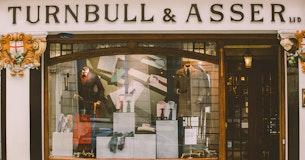
 fashionbeans.comfashionbeans.com
 fashionbeans.comfashionbeans.com
+Field notes
- —Permanent Style‘s guide to London menswear explicitly filters out every shop that sells something available elsewhere in the world—it only includes stores with a product or experience that is unique to the city, like Anderson & Sheppard's haberdashery (17 Clifford Street), which is the only place to buy that house's own-designed Shetland sweaters and trousers, or Drake's (3 Clifford Street), the British tie maker's only physical shop and the sole UK spot to try Saint Crispin's shoes.
- —Trunk Clothiers (8 Chiltern Street) and its second shop Trunk Labs are described as a 'trailblazer' for bringing together Incotex trousers, Boglioli jackets, and Common Projects trainers under one roof—the go-to for quality casual clothing with a classic aesthetic, and a model that defines the 'curated multi-brand' store type.
- —The bespoke tailors on Savile Row—Henry Poole, H. Huntsman & Sons, and newer arrivals Richard James and Timothy Everest—are distinguished from the rest by a shared philosophy: they treat the making of a suit as an art and a science, which is why a 3-piece suit from any of the off-Savile Row makers like Kent & Haste (7 Sackville Street) typically runs 20–30% more than a 2-piece, and many houses won't publish full pricing at all due to customization and fabric selection.
- —London's streetwear-driven stores—like Supreme (2/3 Peter Street, Soho) with its deliberately cavernous, sparsely stocked basement, and END.'s flagship—compete on a completely different axis: limited-edition drops and exclusive collaborations, where the queue around the block is itself part of the experience, not just a store with a curated product selection.
- —The shoe specialists Gaziano & Girling (39 Savile Row), GJ Cleverley (13 The Royal Arcade), and John Lobb (9 St James's Street) are grouped together as the only shops in the world for these top-end makers—each worth a visit for a different reason: G&G for the range of bespoke and patination work, Cleverley for its upstairs workshops, and John Lobb for the 'rabbit-warren' nature of the space.
- —Anderson & Sheppard (32 Old Burlington Street) is one of the all-time greats, established in 1906, with a house code of 'soft shoulders, natural waistlines, generous proportions'—a deliberate contrast to most Savile Row tailoring rooted in military dress—and counts Fred Astaire as a client who danced in the shop to ensure his white tie and tails sat correctly on his shirt collar.
Discover
Watch Store Walkthroughs, Shopping Vlogs, and London Style Tours


London's menswear scene is a layered ecosystem where Savile Row's bespoke tailors—like Huntsman's rigid, military-influenced cut versus Anderson & Sheppard's soft, natural shoulder—sit alongside modern upstarts such as Percival, which evolved from an East London side hustle into a Covent Garden flagship that now dresses Gareth Southgate, while streetwear disruptors like Blondey's THAMES MMXX at 53 Brewer Street prove the city's style pulse beats far beyond the formal Row.
+Field notes
- —Huntsman, Henry Poole, and Anderson & Sheppard each have a distinct house style: Huntsman is known for a structured, military-influenced silhouette; Henry Poole is the oldest surviving bespoke tailor on Savile Row; and Anderson & Sheppard favors a soft, natural shoulder with minimal padding.
- —Jermyn Street hosts a concentration of classic menswear shops that are often ranked head-to-head, with the Gentleman's Gazette video featuring a guest to debate which store truly deserves the top spot.
- —Percival founder Chris Gove built the brand from a side hustle in East London into a Covent Garden store, and it has become known for dressing figures like Gareth Southgate and Wayne Bridge, blending sharp tailoring with a sense of humor.
- —Blondey McCoy's THAMES MMXX shop at 53 Brewer Street in Soho represents a new wave of London menswear that merges skate culture with high-fashion minimalism, a stark contrast to the traditional tailoring districts.
Discover
Read the People Who Notice Fabric, Fit, and Store Character
In London's menswear scene, the real connoisseurs are the people behind the counters — the ones who can spot a poorly fused collar from across the room or who know exactly how a tweed should drape. At Anderson & Sheppard's haberdashery, Anda and Audie personally designed the knitwear and trousers, bringing a hands-on expertise that's rare. Chris Modoo, a celebrated stylist, publicly grades Jermyn Street shops on their quality and character, offering an insider's critical eye. Trunk Clothiers remains a trailblazer because its owners curated a classic-casual aesthetic with real conviction. Even the 'rabbit-warren' layout of John Lobb's shop signals a place where staff have seen it all. And at Cordings, where the Tattersall check was born, the staff's deep knowledge of country clothing is legendary. To learn about fabric and fit, watch the people who work there — their opinions are the real treasure.
+Field notes
- —Chris Modoo, a celebrated menswear stylist, publicly ranks Jermyn Street shops with letter grades, offering an expert's critical take on quality and store character.
- —At Anderson & Sheppard's haberdashery, Anda and Audie personally designed the knitwear and trousers, reflecting a hands-on, deeply knowledgeable approach to product.
- —John Lobb's shop is described as a 'rabbit-warren,' implying a quirky, character-filled space where staff expertise has built up over decades.
- —Trunk Clothiers on Chiltern Street was a trailblazer for quality casual clothing with a classic aesthetic, indicating a curated selection driven by the owners' sharp eye.
- —Cordings of Piccadilly, credited with inventing the Tattersall check, has staff with deep expertise in tweed and country clothing, now on Jermyn Street.
- —Crockett & Jones's flagship at 69 Jermyn Street has been a loyal resident for 25 years, with staff who know the full range of Northampton-made shoes intimately.
Keep exploring
More of London Menswear Stores


More to explore
In the same world.
Second-Hand Men’s Ties in Paris
Paris second-hand shopping is less about a single tie specialist than about knowing which thrift, vintage, and consignme…

Façonnable Men’s Clothing
Façonnable’s men’s clothing range is built around polished, easygoing wardrobe staples rather than hard-edged trend piec…
Ralph Lauren Double RL
Double RL is Ralph Lauren’s dedicated RRL world: a full line spanning men’s and women’s clothing, jeans, accessories, an…

Tie Stores in Paris
Paris tie shopping quickly narrows to a few names that treat neckwear as a craft object rather than a basic accessory. T…
Ralph Lauren Fireman Hook Jackets
This is a small but vivid corner of vintage Ralph Lauren collecting built around jackets and coats that borrow the closu…
Polo Country by Ralph Lauren
Polo Country is a Ralph Lauren collection name that appears across current pieces like T-shirts, a ball cap, a utility j…
RRL (Double RL)
RRL, or Double RL, is Ralph Lauren’s heritage-focused line built around early 20th-century workwear, military clothing,…
Barbour Waxed Jackets
What draws people to a Barbour jacket is not just the label but the specific world of waxed cotton field coats that have…
Know someone who’d love this?
Discovered by ArcurianAuto-generated from public sources and AI synthesis — it may be incomplete or inaccurate. Treat it as a starting point for your own exploration, not professional (medical, legal, financial, or safety) advice. Verify anything you act on. Report this page.