Vintage Levi's denim is a collector's world built around reading the garment itself: care tags, the red tab, and details like single-stitch construction are key clues used to date older pairs. The center of gravity is usually the 501, with recurring obsession around specific eras that Levi's itself reproduces through Levi's Vintage Clothing, including 1937, 1947, and 1955 501s, plus the 1967 505. Beyond simple nostalgia, the appeal is that each era wears, fits, and fades differently—once you start seeing those differences, a thrift-store pair stops being just jeans and becomes a document.
Learn
How Vintage Levi's Are Actually Identified
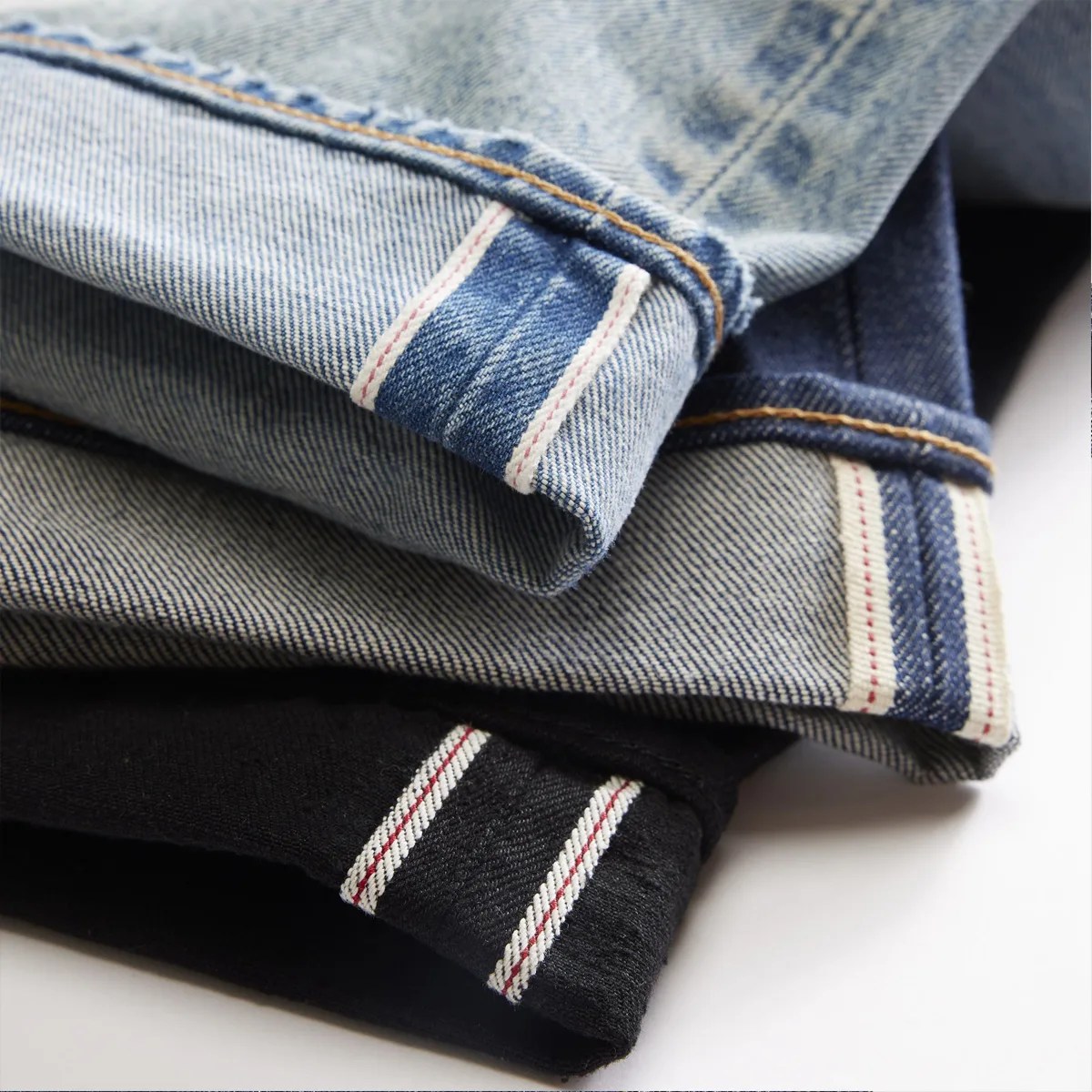
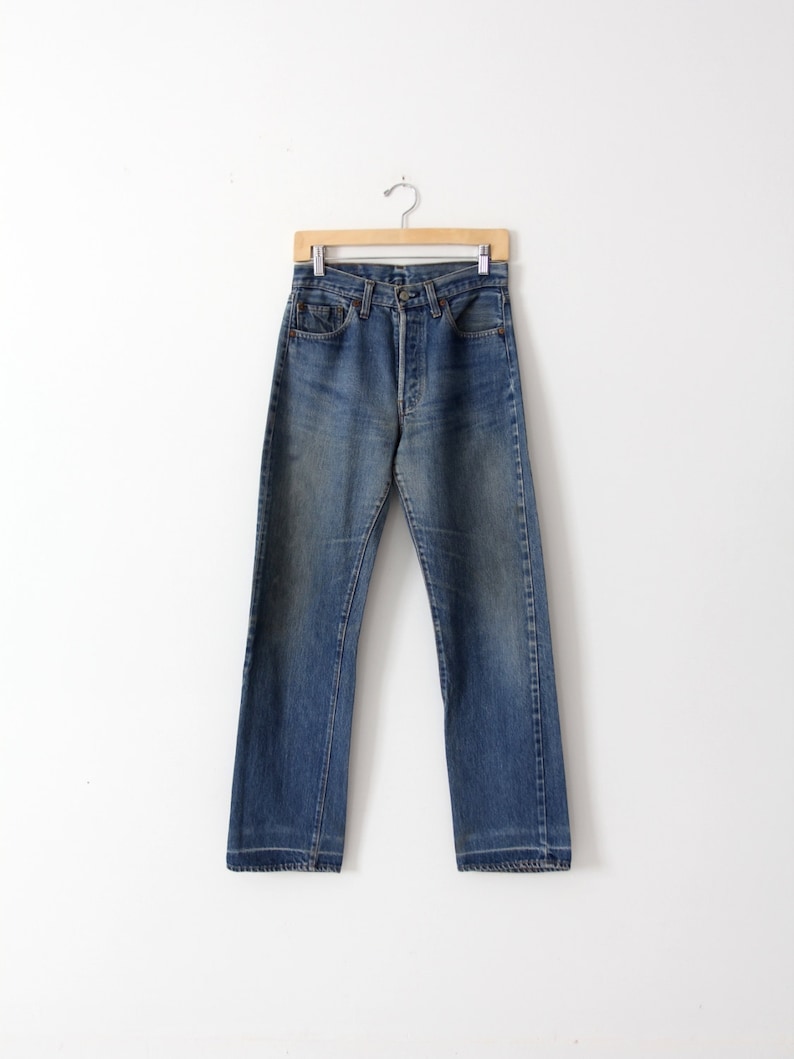
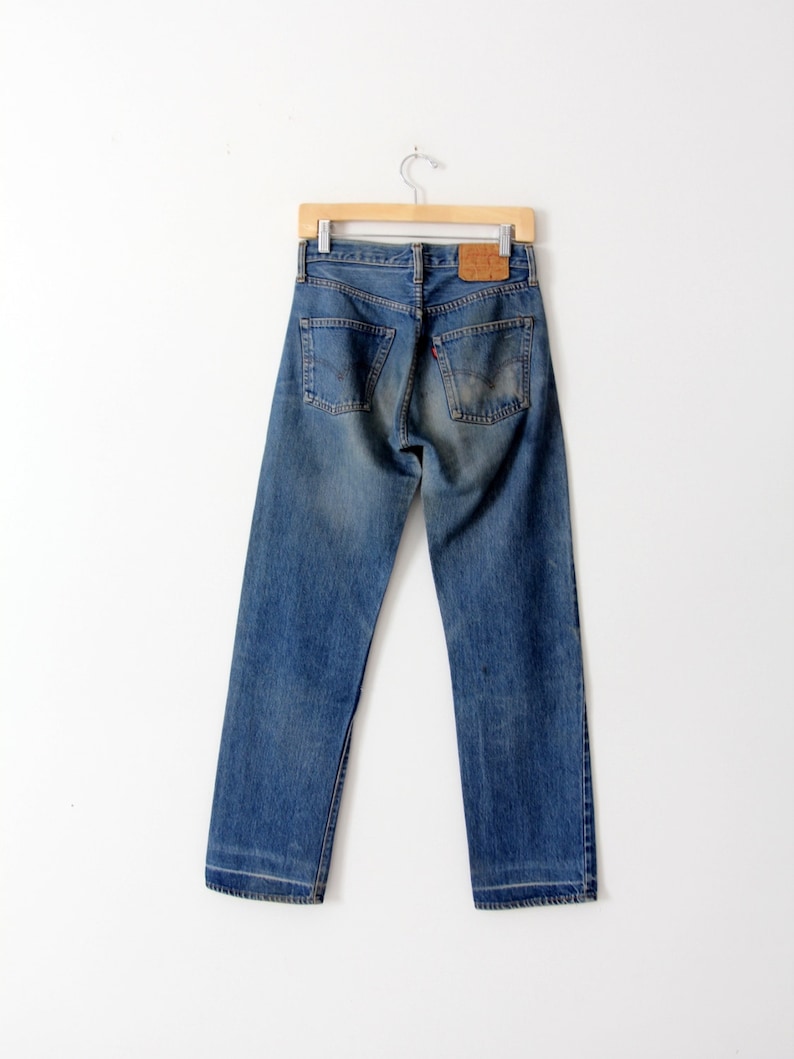
Dating a vintage pair of Levi's is a forensic exercise, not a guessing game. The single most famous marker is the red tab: a capital "LEVI'S" (Big E) means pre-1971; the small "e" starts in 1971 and continues today. But serious collectors look deeper — hidden rivets on back pockets were replaced by bar tacks in 1966, a leather patch disappeared around 1954, and selvedge denim (especially Cone Mills redline) was mostly phased out by 1986. The presence of a care tag dates a pair to the 1970s or later, while printed washing instructions on the pocket bag pin it to 1968–1971. The back pocket stitch tells a story too: single lock stitching suggests pre-1978, double lock after. And the patch wording — if it says "Every Garment Guaranteed" — places the jeans before 1963. The people who really know ignore the hype and cross-reference the red tab, rivet style, patch material, and factory stamps on the top button to nail down a specific era, sometimes within a three-year window.

+Field notes
- —The Big E red tab is the undisputed king of dating markers: if the word LEVI'S is in all capitals, the jeans were made before 1971; the switch to a lower-case 'e' happened that year and remains the standard.
- —Back pocket rivets were hidden (concealed under the pocket) from 1937 until 1966, when Levi's replaced them with bar tacks — so if a pair has no rivets on the back pockets, it's 1966 or later.
- —A leather back patch is a sign of pre-1954 production; after that year Levi's switched to a cardboard-backed 'leatherette' patch, and later patches were entirely paper or plastic.
- —Selvedge denim on Levi's 501s indicates the jeans were made before the mid-1980s, with most selvedge pairs dating from before 1970 — though Levi's has reintroduced selvedge in modern reproductions.
- —Care tags were introduced in the 1970s, but an even finer detail is printed washing instructions on the inside of the pocket bag, which narrows production to 1968–1971.
- —The two-line lock stitch on the top of the back pockets switched from single to double lock stitching around 1978; double lock stitch means the jeans are from 1978 or later.
Learn
Why 1937, 1947, 1955, and 1967 Matter
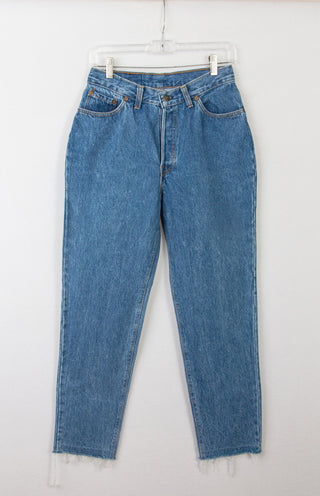
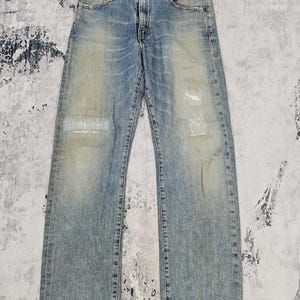
The years 1937, 1947, 1955, and 1967 mark pivotal turning points in Levi's 501 evolution, each reflecting broader cultural and industrial shifts. 1937 saw the introduction of the iconic Red Tab on the right back pocket to combat counterfeits, and it was the last model to feature a cinch-back belt. 1947 is the post-war reset: the return of back pocket arcuates and watch pocket rivets that were omitted during WWII rationing, alongside a dramatically slimmed-down fit to appeal to the emerging middle class, all in 12 oz Cone Mills red-line selvedge denim. 1955 swung in the opposite direction with an 'anti-fit' waist and a much wider, straighter leg, channeling the boxier silhouette of the 1890s originals. 1967 is the year Levi's introduced the 505, a zip-fly counterpart to the button-fly 501, marking a shift toward convenience; the LVC reproduction of this 505 uses a paper patch and has become a favorite for achieving high-contrast fades with minimal washing.

 heddels.comheddels.com
 brooklyndenimco.combrooklyndenimco.com
+Field notes
- —The 1937 model introduced the now-ubiquitous Red Tab on the right back pocket as an anti-counterfeiting measure, and it was the last iteration to include a cinch-back belt before that feature was phased out.
- —The 1947 model was the first post-WWII 501, restoring the back pocket arcuate stitching and watch pocket rivets that had been removed during wartime rationing, and it slimmed the fit considerably to suit a new middle-class consumer.
- —Unlike the slimmed 1947, the 1955 501 featured an 'anti-fit' waist and a much wider, straighter leg, creating a boxier silhouette that referenced the earliest 1890s 501s.
- —1967 marked the debut of the Levi's 505, a zip-fly version of the classic button-fly 501; the Levi's Vintage Clothing reproduction of this 505 uses a paper patch and is known among enthusiasts for developing high-contrast fades with minimal washing.
- —The 1947 model is one of the most popular among collectors because it was the first to feature the diamond point intersection on the back pocket stitching, a detail that became a hallmark of the golden age of denim.
Learn
The Terms Collectors Use: 501s, 505s, Selvedge, Big E, Red Tab
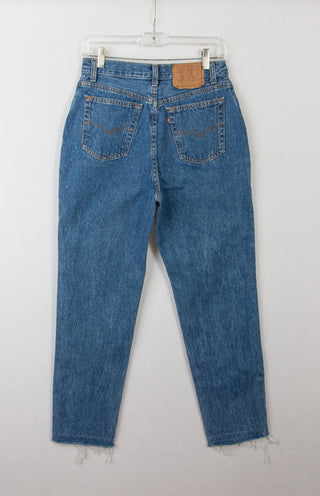
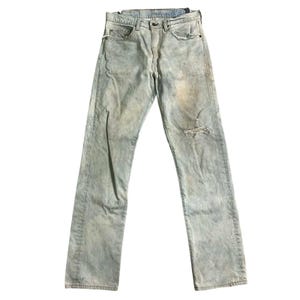
Vintage Levi's denim collecting is a language of tiny, telling details that can make the difference between a $20 thrift-store find and a $10,000 collector's piece. The most famous shorthand is the red tab — introduced in 1936 to help shoppers spot a genuine pair in a sea of imitators. On that tab, a capital 'E' in 'LEVI'S' (the "Big E") means the jeans were made before 1971, when the company switched to a lowercase 'e'. But the Big E is just the headline; the real story is in the construction: selvedge denim (visible as a clean, finished edge when you roll the cuff, often with a red thread — the "redline") indicates pre-mid-1980s production; hidden rivets on back pockets were phased out by 1966; a leather patch gave way to cardboard in the 1950s; and single-stitch back pockets mark an earlier era. Even within the 501 family, model numbers like 505 have their own quirks — the 505 Big E, for instance, is a pre-shrunk successor to the 551ZXX, with a zipper (Talon 42) instead of buttons, a slightly larger back pocket, and no uneven arcuate stitching. True collectors cross-reference every clue — tab lettering, care tags, button stamps, rivet backs, and even the fabric orientation in the coin pocket — because one detail alone can be faked, but the full constellation is nearly impossible to counterfeit.
 the-ethos.cothe-ethos.co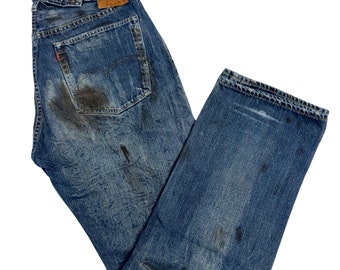
 patina-app.compatina-app.com
+Field notes
- —The 'Big E' red tab — all-capital 'LEVI'S' — dates a pair to pre-1971; after that year, Levi's switched to a lowercase 'e', so a Big E alone can add hundreds or thousands of dollars to a pair's value.
- —Selvedge denim, especially with a red line (redline selvedge), indicates pre-mid-1980s production, as Levi's moved away from old-style shuttle looms around 1984.
- —Hidden rivets on back pockets were used until around 1966, when they were replaced by bar tacks — so a pair with hidden rivets is almost certainly from the 1960s or earlier.
- —The 505 Big E is a distinct model: it uses a Talon 42 zipper, has a slightly taller and larger back pocket than the 501, and lacks the uneven arcuate stitching common on 501 Big Es; it was aimed at the East Coast market.
- —A leather patch (actually a heavyweight paper in many early versions) turned to a 'leather-like' cardboard patch around 1955, and later to a leatherette — so patch material alone can date a pair within a decade.
- —Single-stitch back pockets (lock stitches rather than chain stitches on the horizontal seam) were standard before about 1976, and are a quick visual clue that a pair is earlier than that.
Discover
Video Deep Dives on Dating and Buying Old Levi's


Dating vintage Levi's is a forensic game of tiny details: the red tab's letter case, the care tag's format, and even the rivet construction can pin a pair to a specific decade. The 'Big E' tab (capital E) marks jeans made between 1936 and 1971, while the lowercase 'e' tab signals post-1971 production. For modern pairs (post-1980s), a date code hidden inside the care tag reveals the exact year of manufacture—a trick that separates casual thrifters from serious collectors. Orange, black, silver, and blue tags each denote specific sub-lines (trendy, wrinkle-free, baggy, premium selvedge), so a quick glance at the tag color tells you more than any fit description could. The most valuable vintage finds—like the $1,000 pair uncovered in a bale of denim—often come down to spotting a Big E tab on a classic 501 or 505, since that single detail can multiply the resale price by ten.
+Field notes
- —A red tab with a capital 'E' ('Big E') dates a pair of Levi's to between 1936 and 1971; a lowercase 'e' tab means post-1971, making the Big E the single most valuable ID marker on vintage Levi's.
- —Modern Levi's (roughly 1980s onward) have a hidden date stamp inside the care tag that gives the exact year of manufacture, unlike older pairs that must be dated by era-specific features like rivet style or tab lettering.
- —Beyond red tabs: orange tags indicate trendy fashion jeans, black tags signal anti-wrinkle or dry-clean-only garments, silver tags mean baggy/grunge fits, and blue tags denote premium lines like Japanese selvedge denim.
- —A bale of mixed vintage denim can conceal a $1,000+ pair of Big E Levi's—the difference between a thrift-store bargain and a collector's prize is often just the capital E on the red tab.
- —Key vintage model distinctions: the 501 has a button-fly and straight leg, the 505 offers a zip-fly straight leg, and the 550 is a relaxed tapered fit—knowing these helps you identify a pair even without a visible tag.
Keep exploring
More of Vintage Levi's Denim

More to explore
In the same world.

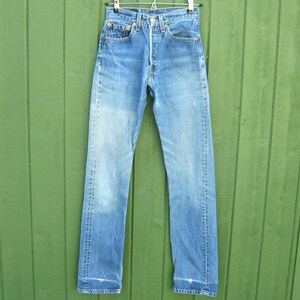
Levi’s 501 Big E
Levi’s 501 Big E means the red tab with the brand name in capital letters, a detail that has become a shorthand for some…

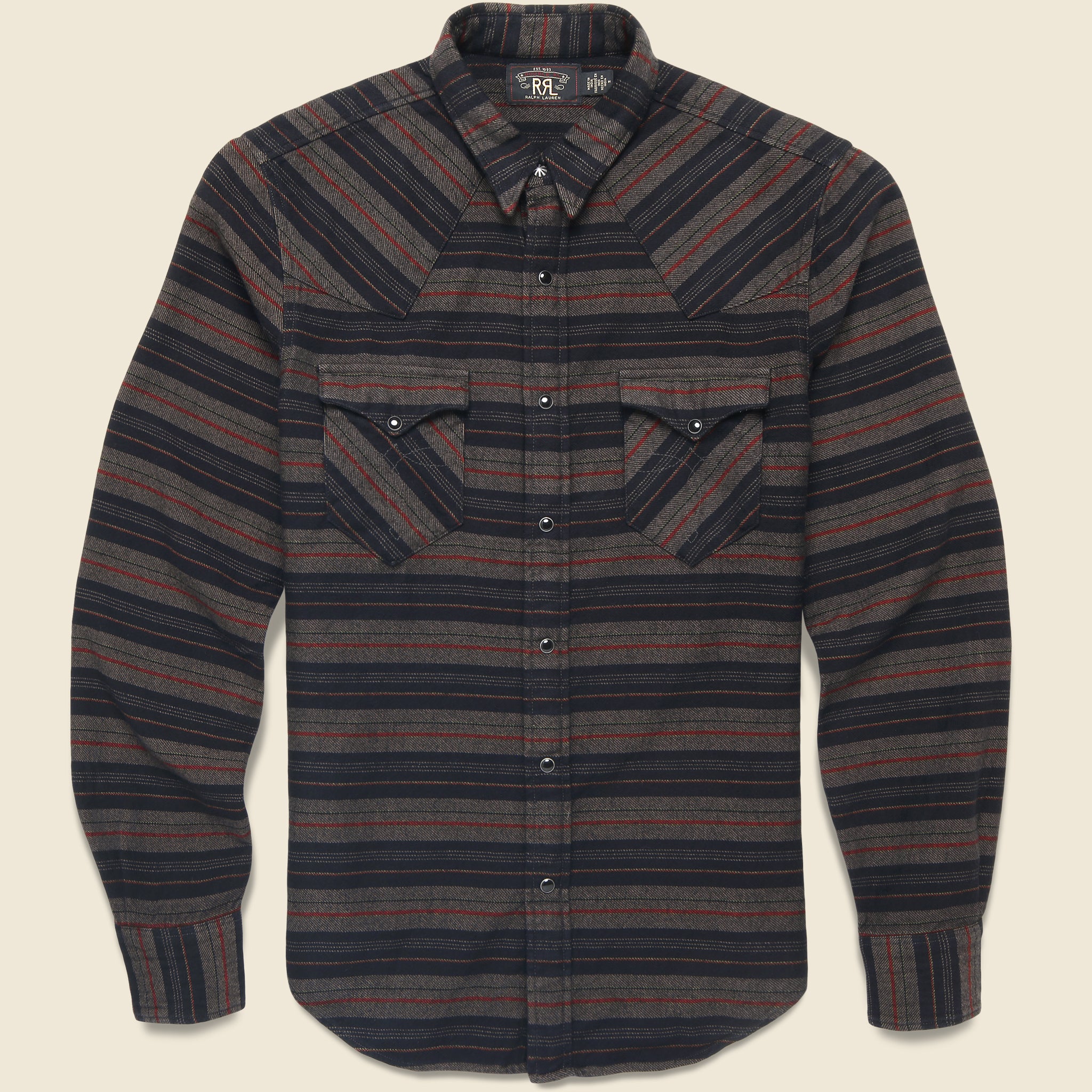
RRL (Double RL)
RRL, or Double RL, is Ralph Lauren’s heritage-focused line built around early 20th-century workwear, military clothing,…

Vintage Rolex Watches
Vintage Rolex collecting revolves around older references whose value is tied not just to the model name, but to origina…
RRL (Double RL)
RRL, or Double RL, is Ralph Lauren’s heritage-focused line built around early 20th-century workwear, military clothing,…

RRL (Double RL)
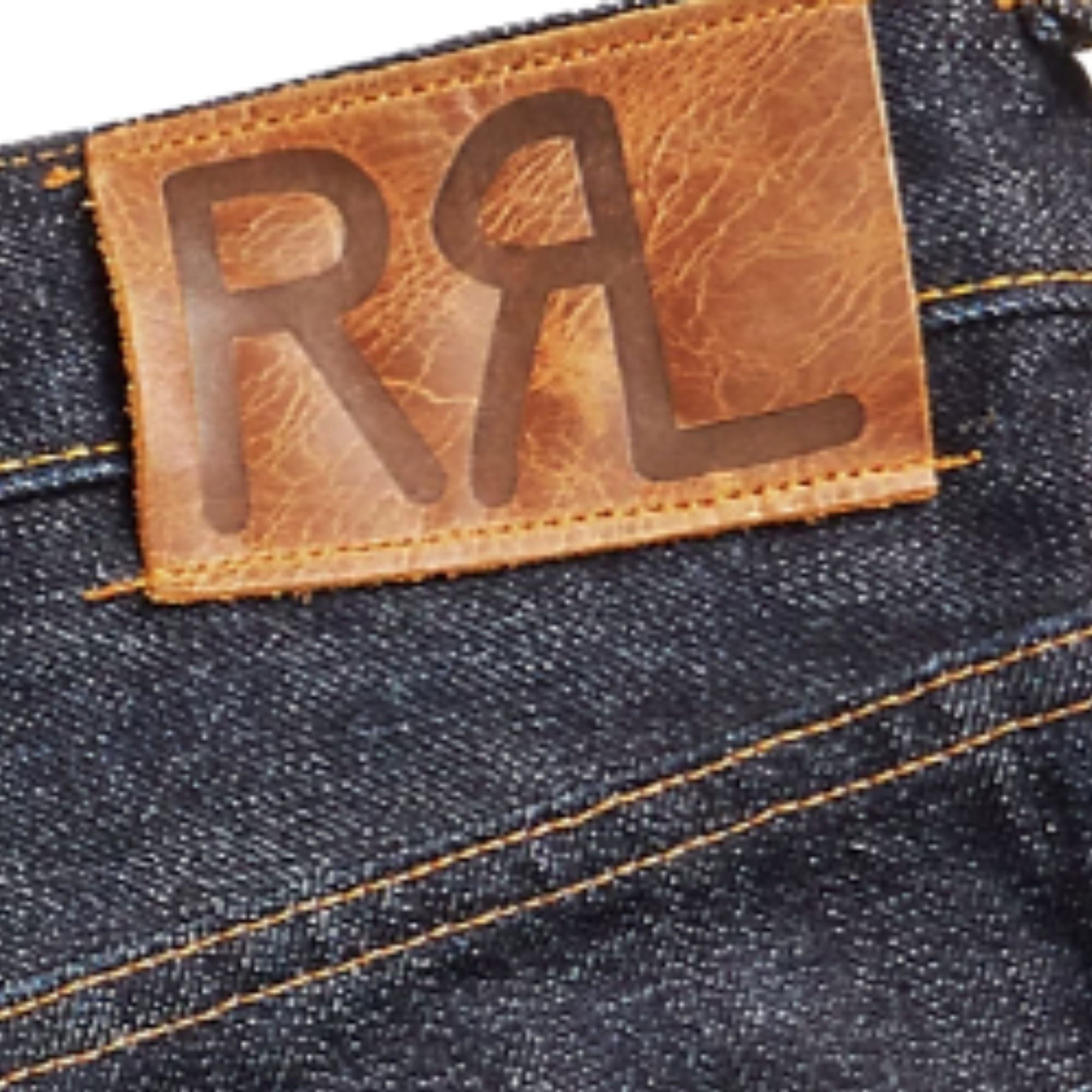
Founded in 1993 and named after Ralph and Ricky Lauren's Colorado cattle ranch, RRL is Ralph Lauren's most obsessive sub…
Ralph Lauren Double RL
Double RL is Ralph Lauren’s dedicated RRL world: a full line spanning men’s and women’s clothing, jeans, accessories, an…
Vintage Rolex Submariner
When Rolex introduced the Submariner in 1953, it permanently defined what a dive watch could be — a purpose-built tool t…

Vintage Omega Speedmaster
Vintage Omega Speedmasters sit at the intersection of tool-watch history, lunar mythology, and exacting collector schola…
More in Heritage Menswear & Denim
Stay in this world.

Men’s Chain Link Styles

Italian Men’s Jewelry

Polo Country by Ralph Lauren
Ralph Lauren Fireman Hook Jackets
RRL (Double RL)
RRL (Double RL)
Montblanc Great Characters James Dean
Second-Hand Men’s Ties in Paris
Imagery
Know someone who’d love this?
Discovered by ArcurianAuto-generated from public sources and AI synthesis — it may be incomplete or inaccurate. Treat it as a starting point for your own exploration, not professional (medical, legal, financial, or safety) advice. Verify anything you act on. Report this page.