Vintage Rolex collecting revolves around older references whose value is tied not just to the model name, but to originality, condition, and the tiny details the catalog never taught anyone to notice. The field spans familiar pillars like the Submariner, Day-Date, Explorer, Datejust, Air-King, and Sea-Dweller, but collectors quickly graduate into reference numbers, dial variants, service parts, and oddities like the Explorer 1016 “Frog’s Foot” signature that can turn a good watch into a memorable one. Dealers and buyers alike treat these pieces as historical objects as much as luxury goods, which is why authentication, case sharpness, and era-correct components matter so much. The real thrill is that vintage Rolex is less about buying “an old Rolex” than learning how to read one at a glance.
Learn
How to Read a Vintage Rolex Like a Collector
Reading a vintage Rolex like a collector means seeing past the surface to the watch's true story: the dial alone can drive up to 90% of the value, with the three great eras—Gilt (1950s–mid-1960s), Matte, and Glossy—each carrying distinct manufacturing tells and collector premiums. The first thing any seasoned eye checks is 'matching patina'—the wear on the case has to align with the aging on the dial, hands, and bezel; if they tell different stories, the watch has likely been messed with. Service dials, which replace the original during factory service, slash value by 30–60%, and even a heavily polished case, though it may look cleaner, erodes collector appeal—so much so that the term 'unpolished' is so contested it's banned from some marketplaces. Reference numbers encode the exact generation, case material, and complications, while original papers and documented service history can add 20–50% to a watch's worth. Authentic vintage Rolex collecting is a forensic exercise in originality, not just aesthetics.

 subdial.aisubdial.ai


 atelierdegriff.comatelierdegriff.com
+Field notes
- —The dial can account for up to 90% of a vintage Rolex's overall price, making it the single most important value driver.
- —Service dials (original dials replaced during factory service) reduce a watch's collector value by 30–60% compared to an original, untouched dial.
- —The first check on any vintage Rolex is 'matching patina'—the wear pattern on the case must visually align with the aging on the dial, bezel, and hands; mismatched patina is a clear sign of post-production tampering or servicing.
- —The claim 'unpolished case' is so controversial in the vintage Rolex market that sellers on the Vintage Rolex Forum Marketplace are explicitly prohibited from using it in listings.
- —Original warranty card, box, and service history (papers and provenance) typically add 20–50% to a vintage Rolex's market value.
Learn
From Tool Watch to Trophy Piece
The Rolex Submariner, GMT-Master, and Explorer were born in the 1950s as purpose-built tools for divers, pilots, and climbers—the Submariner waterproof to 100 meters with its Twinlock crown, the GMT-Master co-developed with Pan Am to track multiple time zones, the Explorer commemorating the Everest ascent. Yet by the 1960s, these professional instruments began their transformation into cultural icons, accelerated by Sean Connery wearing a Submariner 5508 (the 'James Bond' watch) with tuxedos in From Russia with Love and Goldfinger, proving a sports watch could signal sophistication. The GMT-Master 1675/3 earned the 'Clint Eastwood' nickname for its gold-and-steel presence. Today, vintage collectors prize originality above all—box, papers, and untouched dials—with references like the Submariner 5513 and GMT-Master 1675 leading sales, while neo-vintage 1980s models gain momentum as a more accessible entry point.

 jstor.orgjstor.org

 hodinkee.comhodinkee.com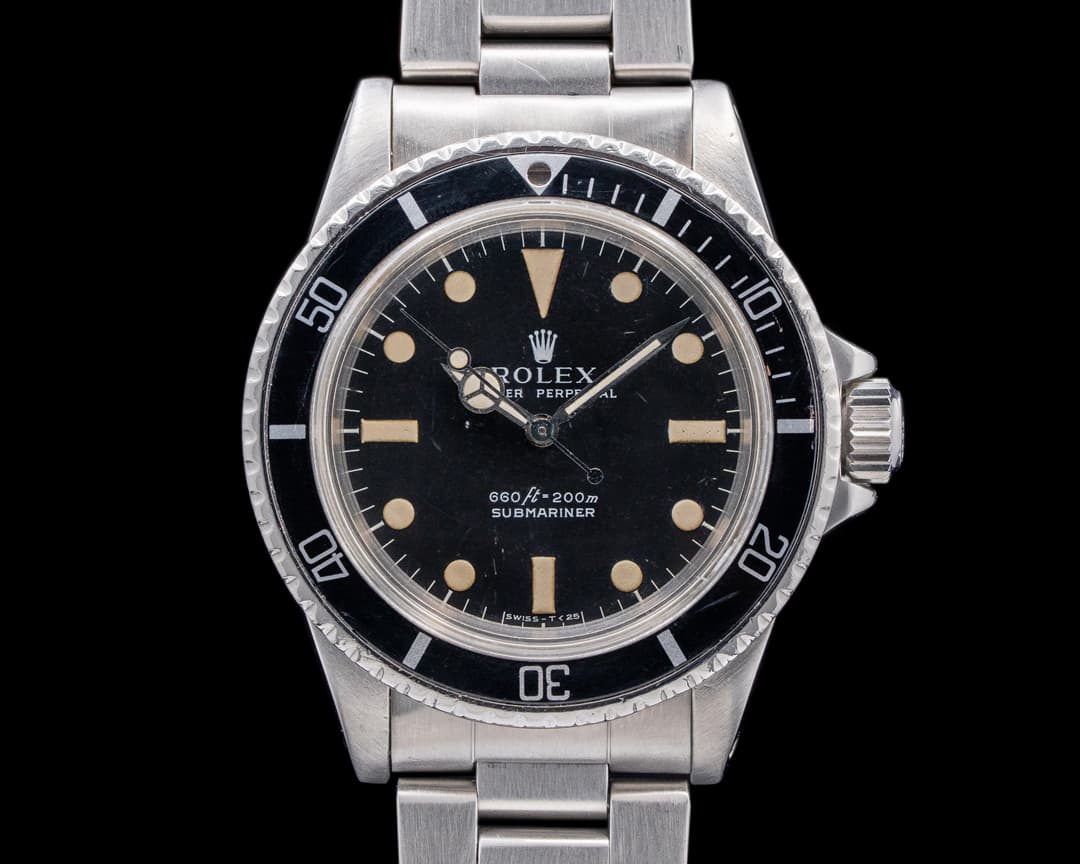
+Field notes
- —The Submariner 5508 (1958–1962) was the last model without crown guards and is widely called the 'James Bond' watch because Sean Connery wore it in From Russia with Love and Goldfinger, transforming a professional dive tool into a cinematic status symbol.
- —The GMT-Master 1675/3, nicknamed 'Clint Eastwood,' represents the transition from tool to trophy with its two-tone gold-and-steel construction, reflecting how Rolex sports models became collector's icons through Hollywood association.
- —The Explorer reference 1016, produced from 1960 to 1989, is revered as the 'anti-hype Rolex'—a 36mm, no-date, matte-dial tool watch whose simplicity and climbing heritage make it the ideal subtle everyday piece for knowledgeable collectors.
- —In 2025, the vintage Rolex market saw double-digit growth, with sport models like the GMT-Master 1675 and Submariner 5513 dominating sales, and originality—original box and papers—being the single most important factor for top values.
- —Rolex's collaboration with Pan American World Airways for the GMT-Master (1955) was a pragmatic response to transatlantic jet routes, not a marketing gimmick—the additional 24-hour hand and rotating bezel offered pilots an elegantly simple way to read two time zones.
- —The Submariner's transition from tool to icon was helped by its role in a 1952 Royal Navy exercise aboard HMS Reclaim, where Oyster Perpetual chronometers survived depths of 73 meters in Loch Fyne, proving waterproofness that directly influenced the Submariner's 100-meter rating at launch in 1953.
Learn
The Terms That Actually Matter: Ref Numbers, Dials, and Parts
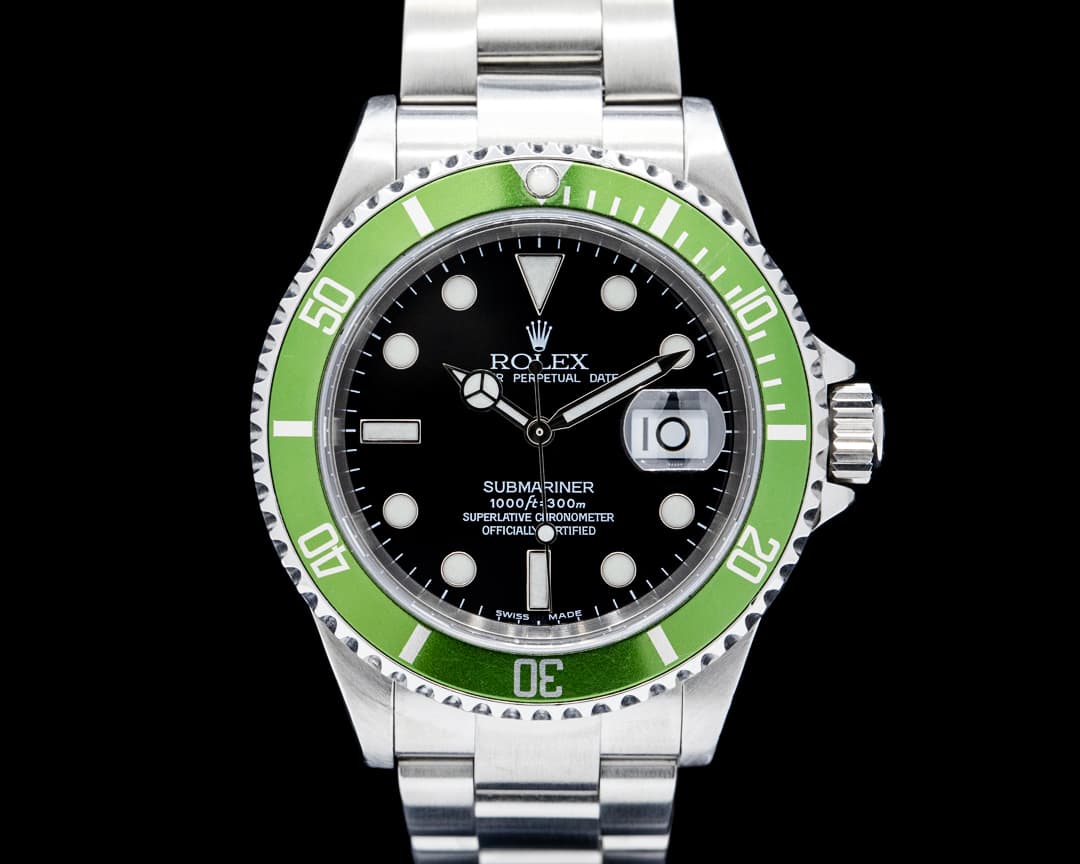
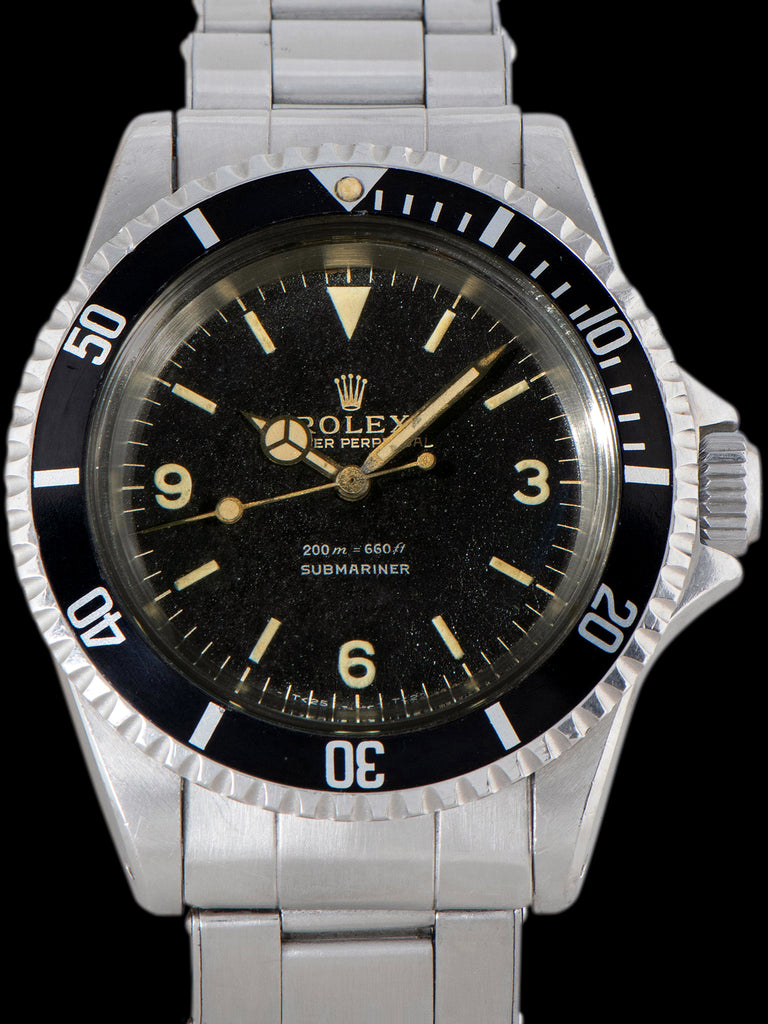
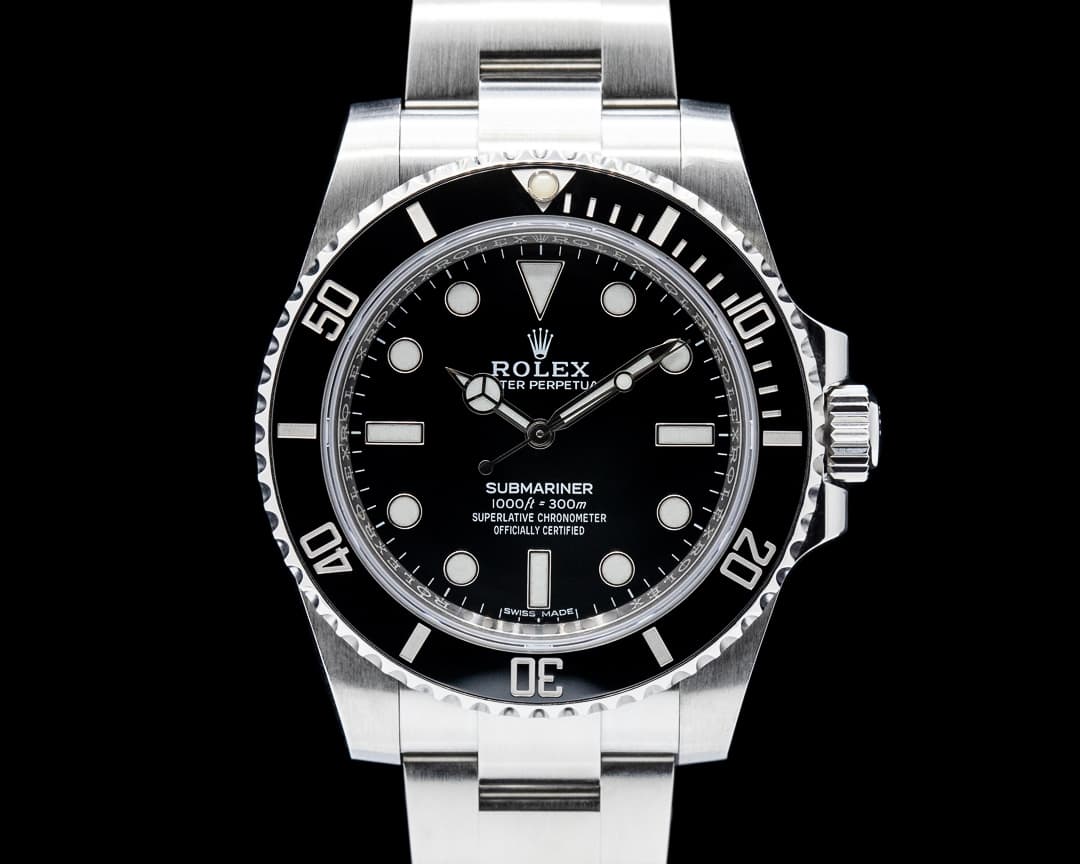
The language collectors use to talk about vintage Rolex is precise and unforgiving—and it's the difference between a $14,000 watch and a $40,000 one. A true vintage Rolex isn't just old; it must have a 4-digit reference number, a plexiglass crystal, and tritium-filled markers, a trio that defines the era rather than a rolling 25-year window. The reference number itself, stamped between the lugs, is the DNA: a 5513's two-line dial (non-chronometer) versus a 5512's four-line chronometer designation can swing a watch's value by tens of thousands, even when the cases look identical. Dials are the battlefield—original gilt or matte dials command premiums, while a factory-installed 'service dial' (genuine Rolex but from a later era) slashes value by 30–60%, because the dial no longer matches the case's birth date. Collectors also track subtle variants like the glossy dial's rare 'spider' effect (crazing in the lacquer), the 'meters first' vs 'feet first' depth rating on Submariner dials, and the Explorer 1016's celebrated 3-6-9 layout that evolved through 'fat font' and 'tropical' brown-dial iterations over its 29-year run. Understanding these terms—from radium to tritium, from gilt to matte, from frankenwatch to all-original—isn't pedantry; it's the only way to know what you're actually buying.
+Field notes
- —The three hard rules collectors use to define a true vintage Rolex are: a 4-digit reference number (e.g., 1675, 5513), a plexiglass (not sapphire) crystal, and tritium-painted luminous markers. This is not a moving target—worn by age alone, a modern Rolex will never become 'vintage' under these criteria.
- —The difference between a 5513 and a 5512 Submariner is often invisible to the casual eye, but it's written in the dial lines: a 5513 has a two-line dial (non-chronometer) while the 5512 has four lines including 'Superlative Chronometer Officially Certified.' That single distinction can mean a $25,000+ value gap.
- —A 'service dial' is a replacement dial installed by Rolex during a factory service, often decades after the watch was made. It carries the Rolex logo and is fully genuine, but because the dial era no longer matches the case era, collector value drops 30–60% — a 1965 Submariner with a 1985 service dial is worth far less than one with its original dial.
- —The reference number is engraved between the upper lugs (12 o'clock side) and requires removing the bracelet to read. A single digit—5512 vs 5513—can swing a watch's market value by more than $25,000, as illustrated by a real case where an inherited Submariner thought to be a 5513 was actually a rare gilt-dial 5512 after the lugs were checked.
- —The Rolex Explorer ref. 1016, produced from 1960 to 1989, introduced the iconic 3-6-9 dial configuration that became the template for legible tool watches. Over its 29-year run, it appeared with black glossy or matte dials, and rare variants like 'fat font' numerals, 'tropical' brown dials from sun damage, and tritium service dials that some collectors actually seek out.
Discover
What to Watch Now: Serious Vintage Rolex Video Channels


For serious vintage Rolex enthusiasts, the real depth lies not in polished overviews but in granular, hands-on content that treats each reference as a distinct character. The standout channels are those run by dealers and restorers who don't just show watches—they narrate the forensic details that separate a nice example from a legendary one. Bulang & Sons, for instance, is the go-to for storytelling around impossibly complete sets, like a 1966 Explorer 1016 that still had its original owner's box and papers, bought in Germany on October 12 of that year—a level of provenance that transforms a watch into a time capsule. On the technical side, Tuscanyrose delivers raw, unfiltered workshop footage, like swapping a crystal on a 1016 using a number 22 crystal and the proper open bezel remover, emphasizing that vintage restoration demands the exact right tools, not shortcuts. Lobtime gets into the weeds of bezel insert variants for Subs and GMTs, naming specific aftermarket replacements like the "Kissing 4" and "Long 5" for the 5513/5512/1680, and Fuchsia or Pepsi inserts for the 1675—terminology that collectors use to pinpoint dial and bezel generations. Bob's Watches breaks down the subtle transition points, like a 1984 5513 with a Mark V Maxi dial that has no white gold surrounds (the last of its kind before Rolex added them), where the Submariner word sits above the depth rating and is noticeably wider. These channels reward the viewer who already knows the references and wants the insider's view on condition, rarity, and the tiny manufacturing quirks that define market value.
+Field notes
- —Bulang & Sons is the channel for provenance porn: they sold a 1966 Rolex 1016 Explorer that still had its original box, papers, and even the receipt from the original owner's purchase in Germany on October 12, 1966—a level of completeness that typically only exists in fantasy.
- —Tuscanyrose shows the proper way to swap a crystal on a vintage 1016 Explorer using a number 22 crystal and an open bezel remover, stressing that you must use the real deal tools—no shortcuts—and that the old-style crystals pop on smoothly without forcing them.
- —Lobtime deals in the granular details of bezel insert variants for vintage Subs and GMTs, specifically naming aftermarket replacements like the "Kissing 4" and "Long 5" for the 5513/5512/1680, and Fuchsia or Pepsi inserts for the 1675—jargon that separates casual lookers from serious collectors.
- —Bob's Watches breaks down the 1984 5513 Submariner with a Mark V Maxi dial: it has no white gold surrounds (the last model before Rolex added them), the Submariner word sits above the depth rating, and the font is wider—a transitional piece that marks the end of an era.
Discover
Collectors, Dealers, and Feeds Worth Following Daily

For anyone serious about vintage Rolex, three daily feeds stand out for their distinct, insider perspectives. Tuscanyrose's channel delivers no-nonsense, close-up restoration work—like swapping a worn crystal on a 1016 Explorer using proper tools and an old-style number 22 crystal, revealing the gritty reality of preserving these watches. Watch Chest goes deeper into the movement, as shown in their meticulous mainspring replacement on a rare 1968 Milgauss 1019, emphasizing the importance of replacing tired springs to restore amplitude while keeping the watch original. Then there's Bulang & Sons, a dealer that doesn't just sell watches but tells their stories; their video on a 1966 Explorer 1016 with a tropical dial and full original ownership history exemplifies the kind of provenance-rich content that makes you understand why a specific serial number or a faded gilt dial matters. Together, these three feeds cover the practical, the mechanical, and the historical—everything you need to follow daily.
+Field notes
- —Tuscanyrose's crystal-change video on a 1016 Explorer shows the exact technique for popping off the bezel with a bezel remover, exposing the original bezel's rough inner surface, and installing a 'number 22' old-style crystal—a detail only a restorer would notice.
- —The same Tuscanyrose clip underscores the doctrine of using 'real deal tools' rather than cheap substitutes, and the casual banter with 'Buck' hints at a community of restorers who share inside jokes and tips.
- —Watch Chest's mainspring replacement on a 1968 Milgauss 1019 reveals that even a robust vintage Rolex movement needs a new mainspring to recover proper amplitude and power reserve, showing that originality doesn't mean leaving tired parts in place.
- —Bulang & Sons' deep dive on a 1966 Explorer 1016 (sold to its original owner in Germany on 12 October 1966) includes the watch's tropical dial, gilt printing, and full provenance—proof that a dealer's feed is worth following for stories that make a specific serial number come alive.
- —Bernhard Bulang's personal enthusiasm in that video—calling the watch 'a treasure' and detailing its original ownership—demonstrates how dealer content can educate collectors about what makes a tropical dial or a tight matching case-and-bracelet set valuable.
Discover
Buying Guides, Market Notes, and Reference-by-Reference Writing
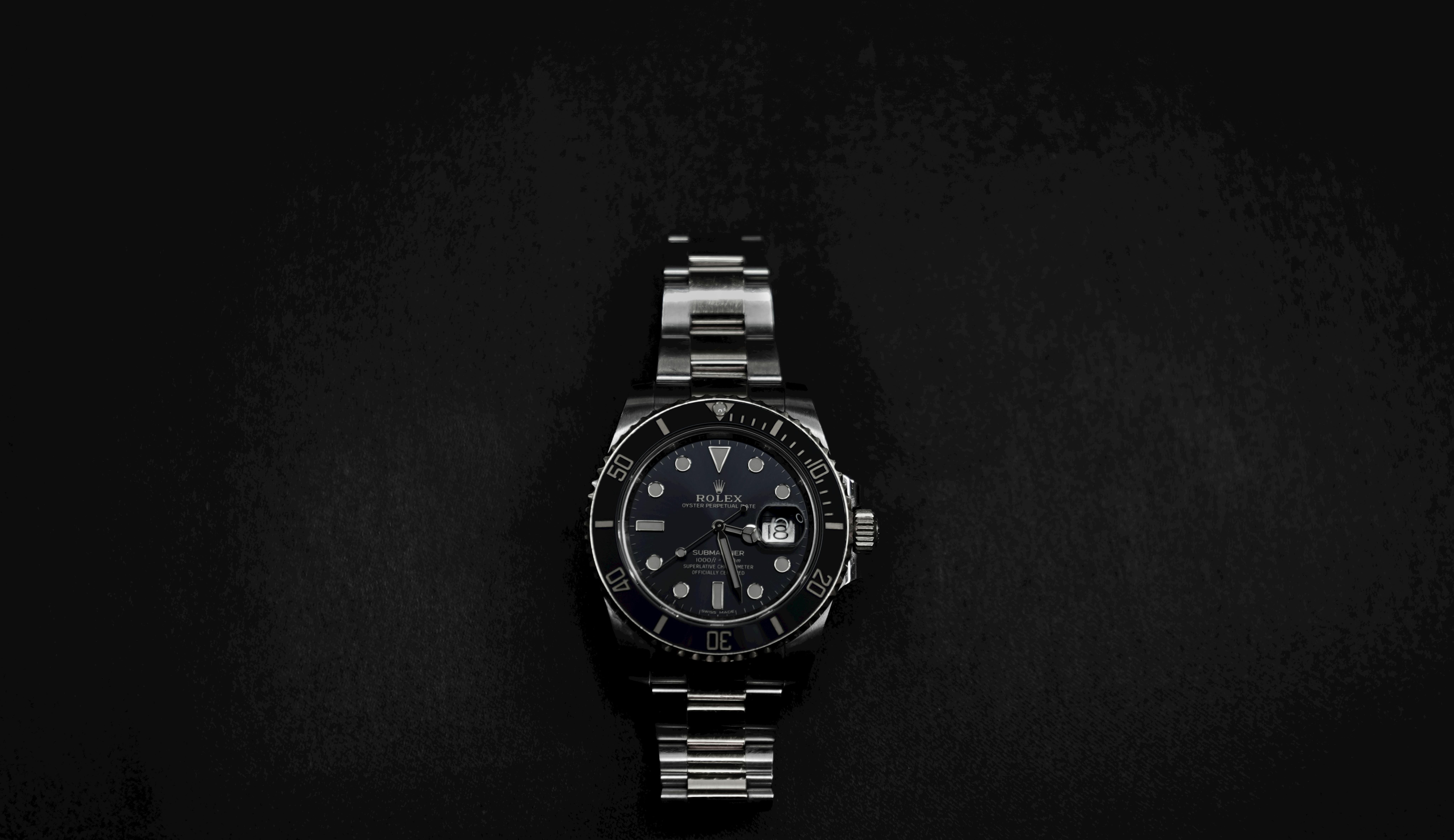


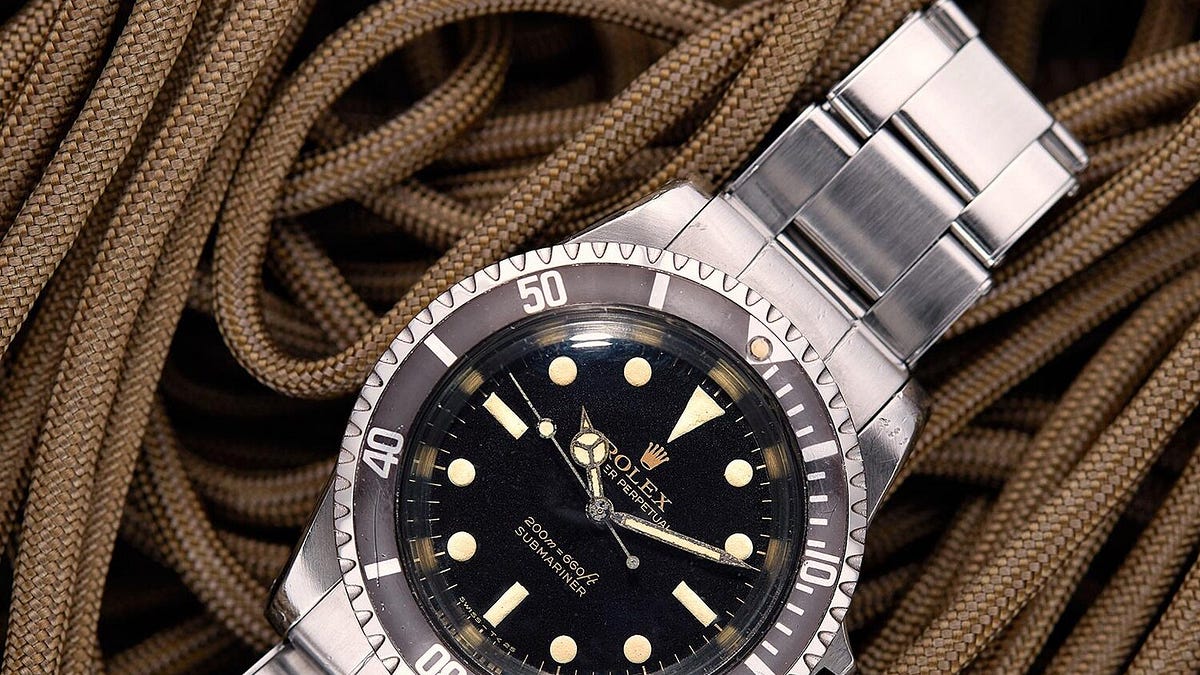
Buying a vintage Rolex in 2026 means navigating a market split into four distinct tiers—trophy, connoisseur, wearable-vintage, and bottom-feeder—where two watches with the same reference number can differ in value by 19x or more based on dial originality, case sharpness, and service history. The single most important step is to remove the bracelet and read the 4-digit reference between the upper lugs and the serial between the lower lugs; a correctly identified gilt-dial 5512 can trade around $40,000 while the same case with a later service dial sinks to roughly $14,000. Dial codes like the 'MK1 maxi' on a 5513 or a faded 'Pepsi' bezel on a 1675 are the details that turn a $11,500 watch into a $218,400 trophy, and every serious guide emphasizes that a service dial—though genuine Rolex—cuts collector value by 40 to 50 percent. The most collectible references span the 1953–1989 era: Submariners 5513 and 5512, GMT-Master 1675, manual-wind Daytonas like the 6263 and 6265 'Big Red', Explorer 1016, and Sea-Dweller 1665 'Single Red' and 'Double Red'. For the cautious buyer, the golden rule is to demand clear photos of the reference and serial numbers, the dial under angled light, and the movement—any seller who refuses is a red flag.
+Field notes
- —A 1972 Submariner 5513 with an 'MK1 maxi' dial sold at Phillips for CHF 218,400, while the same reference with a service dial, replaced hands, and polished case sold on Chrono24 for $11,500—a 19x price gap driven entirely by details the brochure never described.
- —A correctly identified gilt-dial 5512 trades around $40,000 today, but the same case fitted with a later service dial—still genuine Rolex—sits closer to $14,000. The 40–50% value loss from a service dial is the single most costly mistake a new buyer can make.
- —The vintage Rolex community defines 'true vintage' as pre-1970 (acrylic crystals, radium or tritium lume, non-quickset date), 'classic vintage' as 1970–1989 (tritium lume, quickset date, some sapphire), and 'neo-vintage' as 1990–2005 (sapphire crystals, SuperLuminova, solid endlinks). These brackets determine which dial concerns and price levels apply.
- —The reference number is engraved between the upper lugs (12 o'clock side) and the serial between the lower lugs (6 o'clock side)—both require removing the bracelet with a spring-bar tool and inspecting with a loupe. A 1965 Submariner with a 1985 service dial is not a fake, but it is a dramatically less valuable example of a real watch.
- —Over nearly 600 no-date Submariner auction sales tracked by Roundtable Vintage, the average price was $32,400, with a high of $1.1 million and many examples selling below $10,000—the widest price spread of any Rolex model, driven entirely by originality and condition.
Explore
Where Collectors Actually Shop for Vintage Rolex
Collectors hunting for vintage Rolex don't just hit the big auction houses; they gravitate toward specialized dealers with deep inventories and transparent policies. Bob's Watches, run by Paul Altieri, maintains a presence on Etsy alongside its main site, offering everything from vintage Rolex to modern pieces. Over in the UK, Oldengentwatches, operated by Nick from Beverley, focuses on affordable vintage Swiss watches (Rolex, Tudor, Omega, Longines) with a perfect 5-star rating. SwissWatchExpo in Atlanta, Georgia, stands out by photographing every single watch in their showroom — what you see is exactly what you get, with thousands in stock. Watchfinder & Co., a pre-owned specialist since 2002, has built a massive YouTube channel reviewing watches from Rolex to Hublot, becoming a trusted reference for buyers. Smaller operators like SwissTimepieces in Kendal, Cumbria, operate by appointment only, adding a layer of exclusivity and personal service that serious collectors appreciate.

 swisswatchexpo.comswisswatchexpo.com
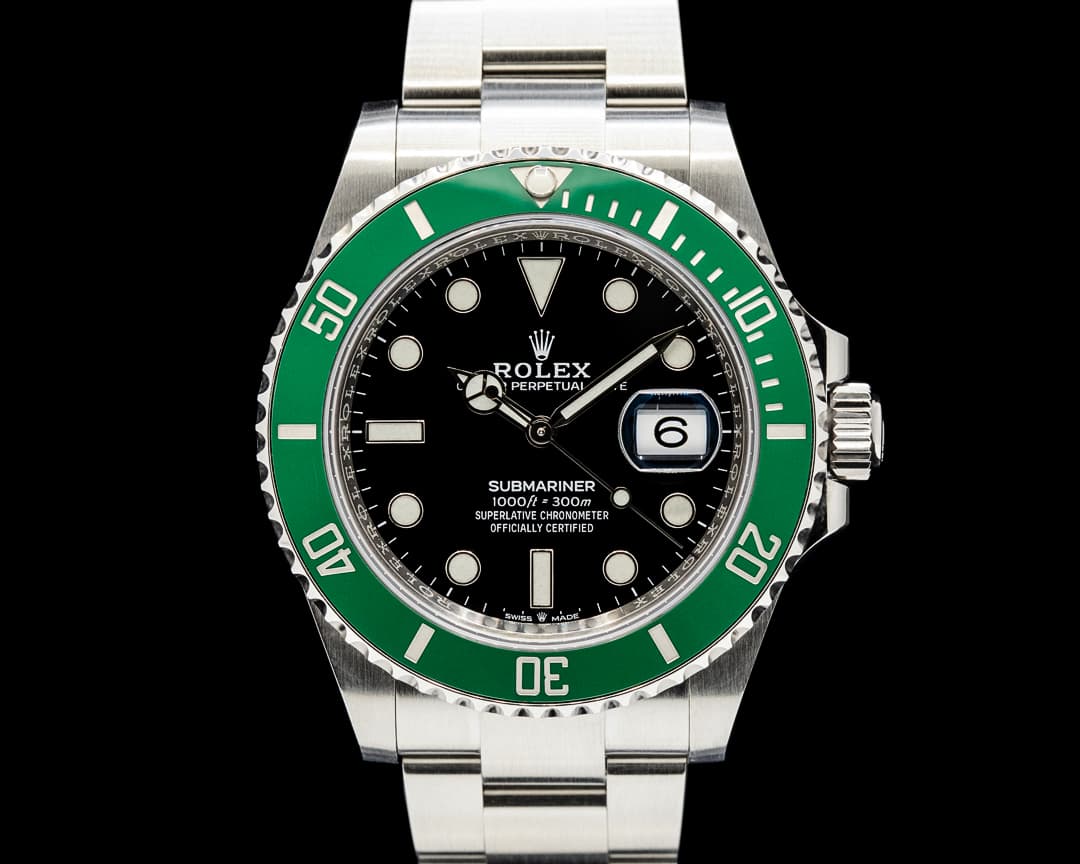
 linktr.eelinktr.ee
+Field notes
- —Bob's Watches, a major vintage Rolex dealer, sells through Etsy under the shop name BobsWatches — an unusual platform for high-end watches, but it gives buyers buyer protection and a familiar checkout.
- —Oldengentwatches in Beverley, UK, specializes in affordable vintage Swiss watches including Rolex, Tudor, and Omega, with a 5-star rating from 376 sales — a reminder that serious dealers can thrive on Etsy.
- —SwissWatchExpo uses only actual photos of the specific watch for sale, not stock images — a rarity in the online pre-owned market that builds trust; all watches are physically in their Atlanta showroom.
- —Watchfinder & Co. has been a pre-owned specialist since 2002 and runs a popular YouTube channel with in-depth reviews of Rolex, Omega, Breitling, and more, making it both a seller and an educational resource.
- —SwissTimepieces in Kendal, Cumbria, operates strictly by appointment only, offering a discreet, high-touch buying experience for luxury watches including Rolex, with contact via phone, WhatsApp, or social media.
Keep exploring
More of Vintage Rolex Watches


Branch out
Beyond Vintage Rolex Watches
More to explore
In the same world.
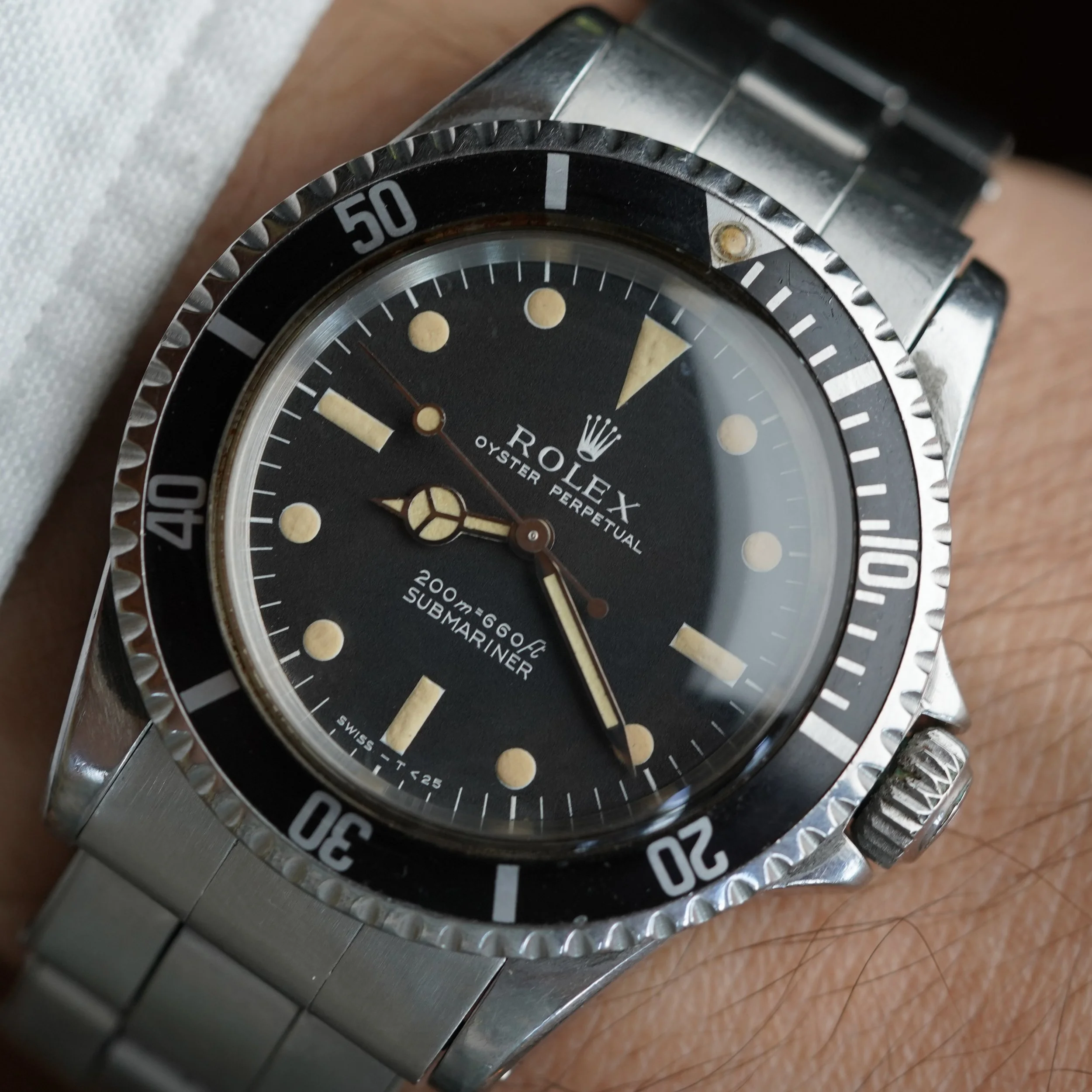
Vintage Rolex Submariner
When Rolex introduced the Submariner in 1953, it permanently defined what a dive watch could be — a purpose-built tool t…

Vintage Omega Speedmaster
Vintage Omega Speedmasters sit at the intersection of tool-watch history, lunar mythology, and exacting collector schola…
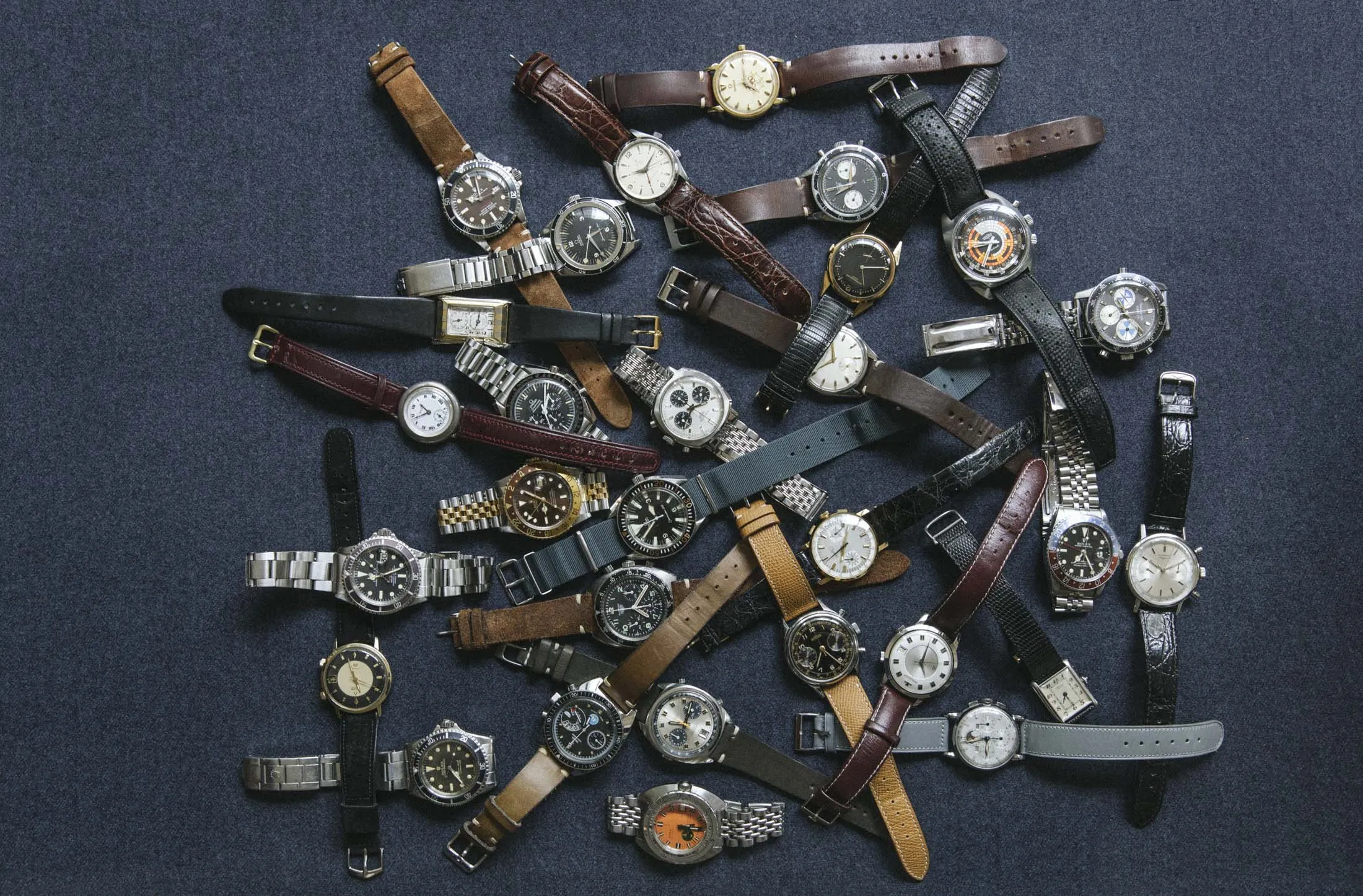
Vintage Watch Hunting
Vintage watch hunting is the search itself as much as the object: scanning eBay, dealer aggregators, flea markets, resal…
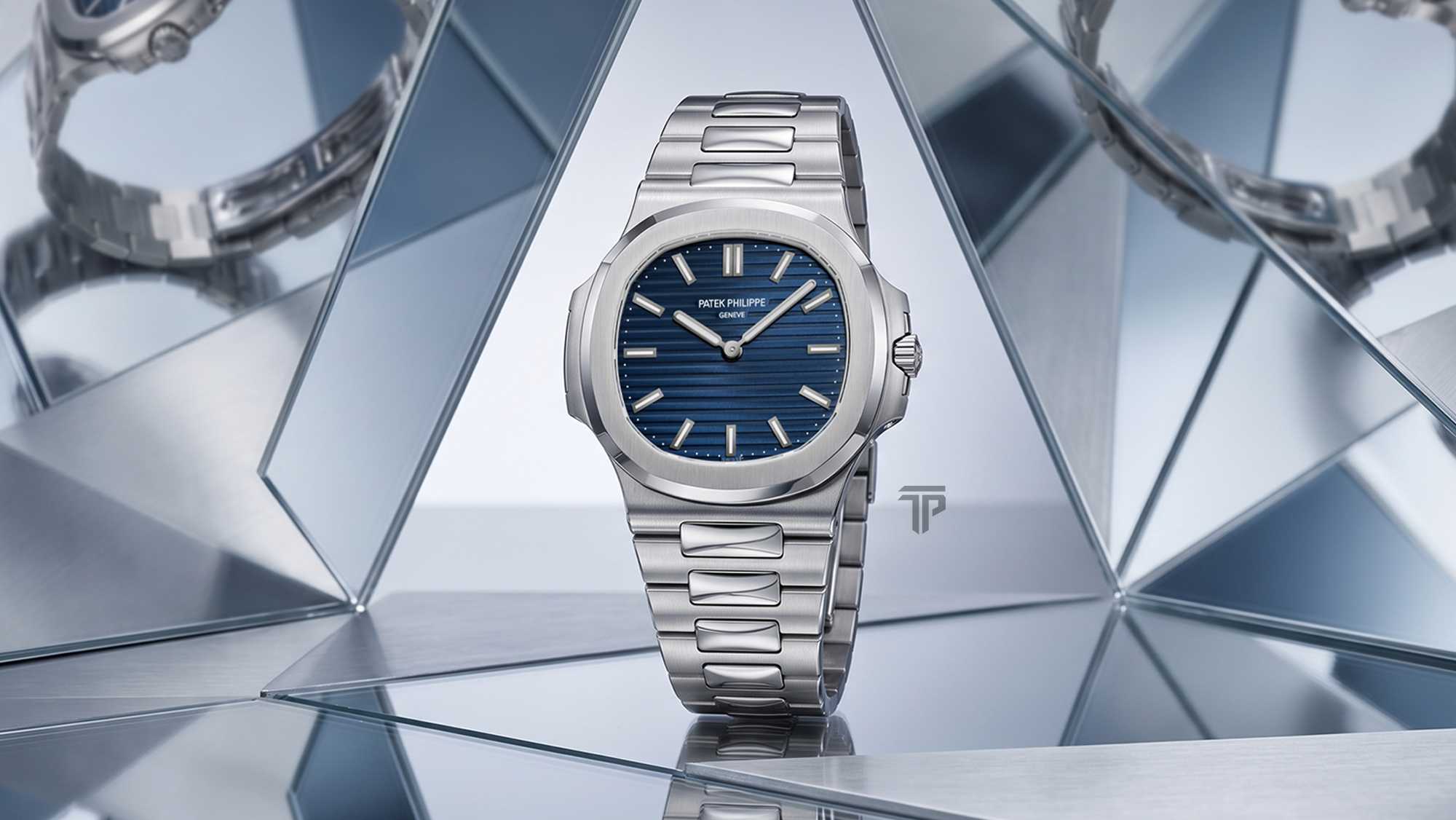
Luxury Watches That Hold Value
In the watch world, “holding value” usually means a luxury piece that stays resilient on the secondary market rather tha…
Best First Luxury Watch
A first luxury watch is less about chasing a single “best” model than making a high-stakes first purchase with clear tra…

Rolex Deepsea
The Rolex Deepsea is Rolex’s 44 mm extreme-depth diver, introduced in 2008 as the brand’s purpose-built watch for deep-s…

Rolex Deepsea
The Rolex Deepsea is Rolex’s 44 mm extreme-depth dive watch, built around the brand’s Ringlock system and rated to 3,900…
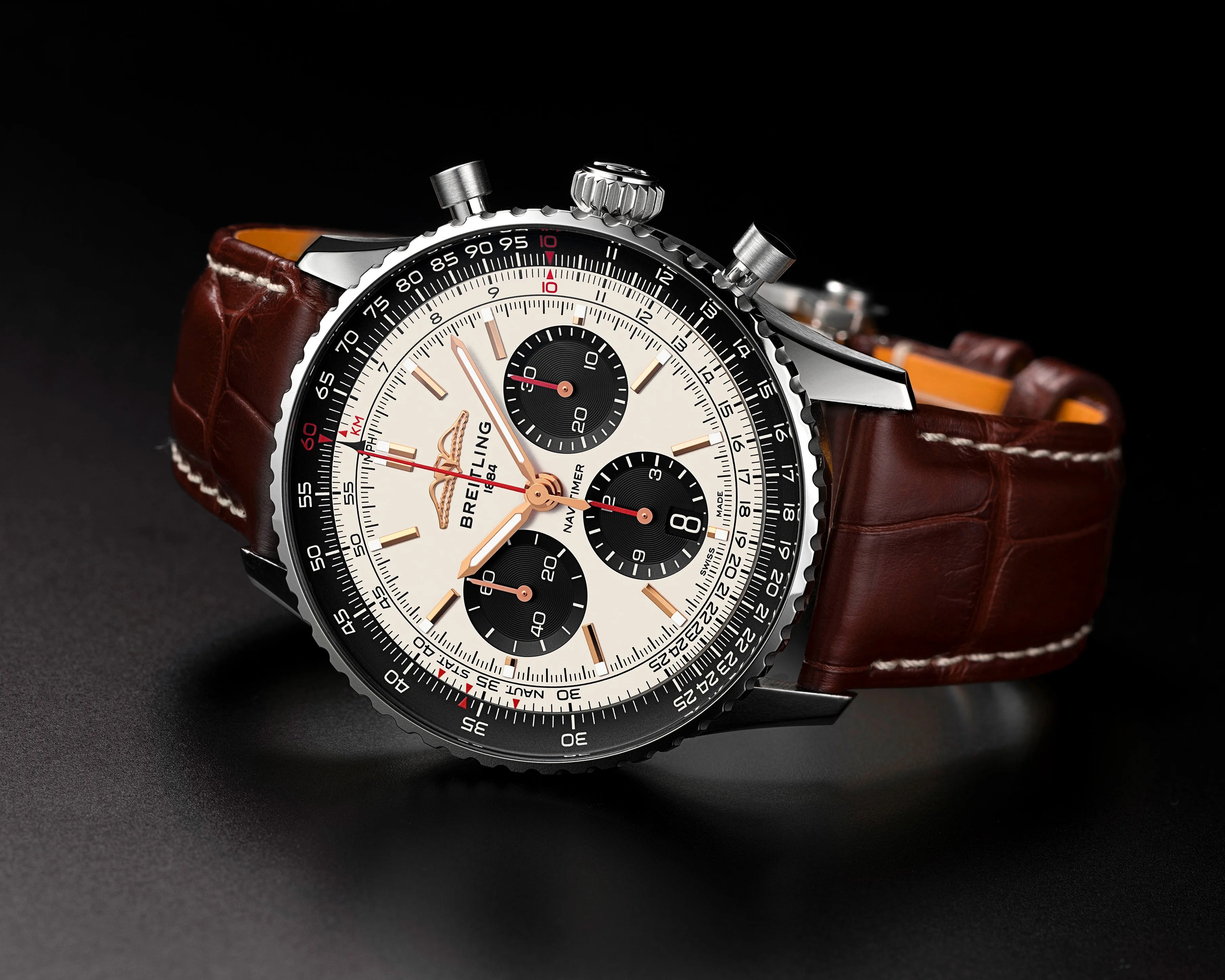
Breitling Navitimer
The Breitling Navitimer is a mechanical chronograph defined by aviation use and its signature circular slide rule, a fea…
Imagery
Know someone who’d love this?
Discovered by ArcurianAuto-generated from public sources and AI synthesis — it may be incomplete or inaccurate. Treat it as a starting point for your own exploration, not professional (medical, legal, financial, or safety) advice. Verify anything you act on. Report this page.