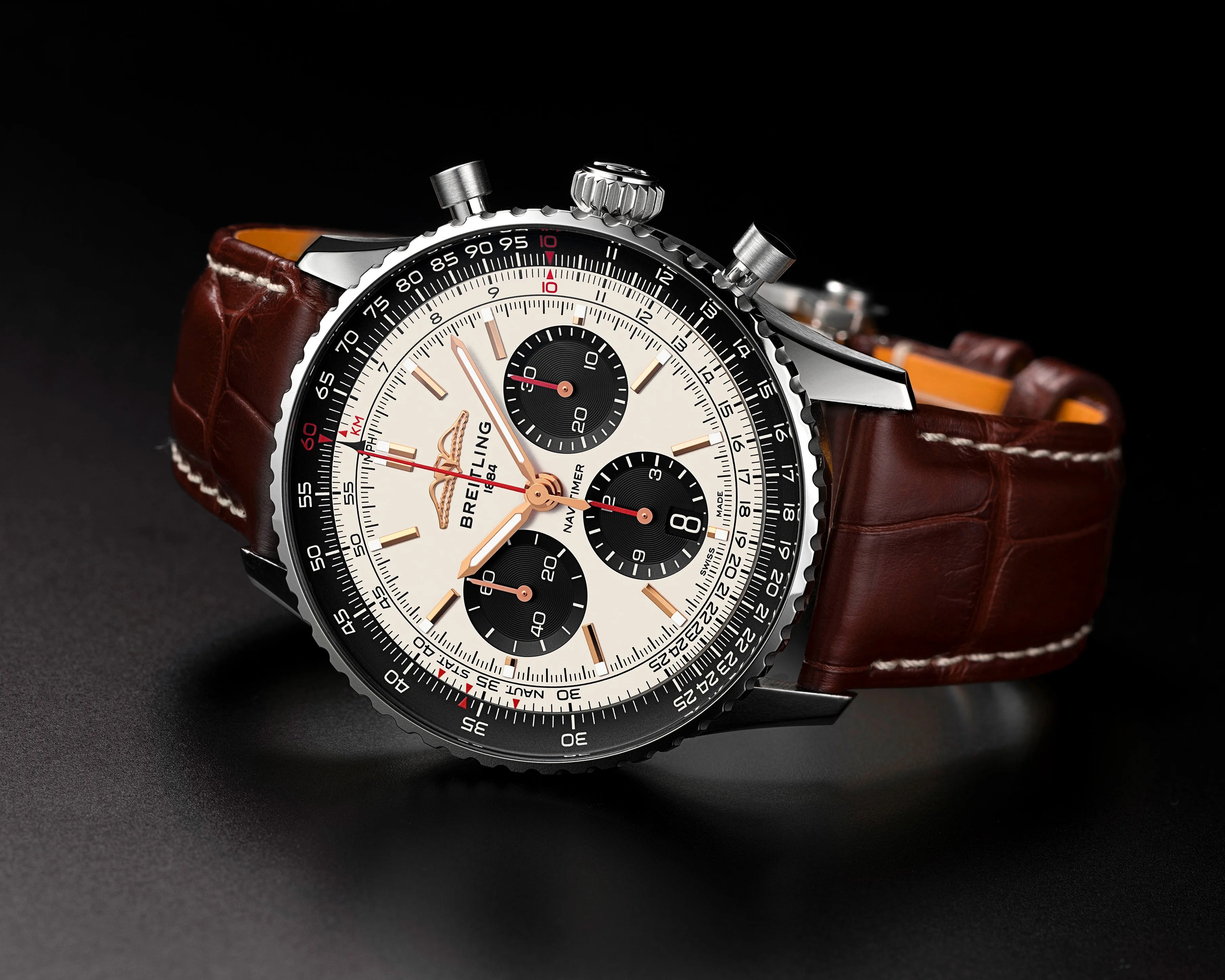
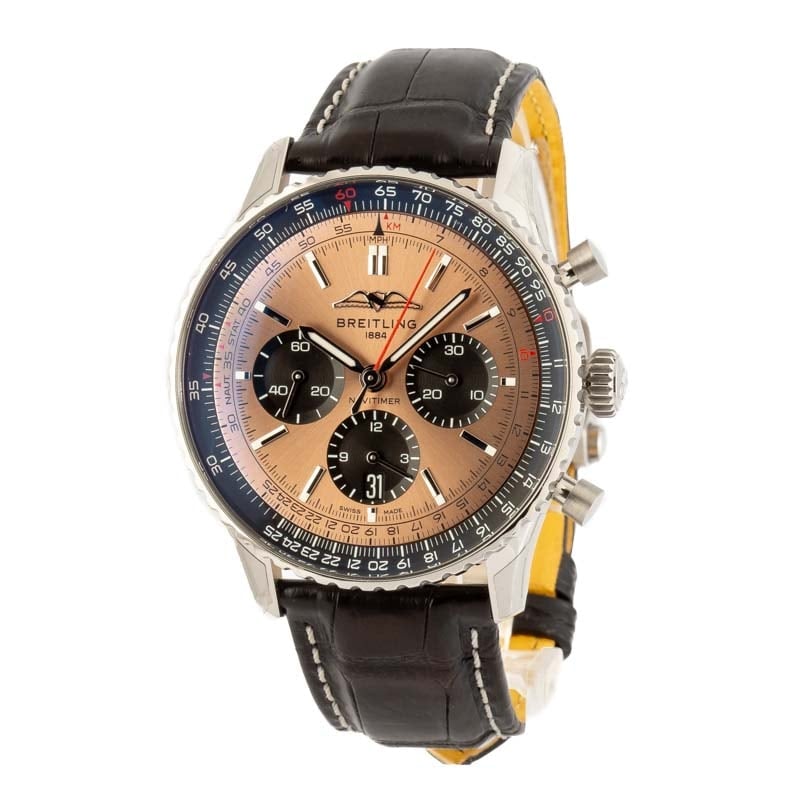
The Breitling Navitimer is a mechanical chronograph defined by aviation use and its signature circular slide rule, a feature that made it a genuine wrist-worn instrument for pilots rather than just a styled sports watch. Breitling traces the model to 1952, when Willy Breitling was asked by the Aircraft Owners and Pilots Association to create a new chronograph for its members; decades later, the watch is still presented as the brand’s most iconic timepiece and remains closely tied to both aviators and style-conscious wearers. Current versions show how broad the line has become, from the Navitimer B01 Chronograph 43 to simpler Automatic 41 and GMT 41 models, all carrying the family look while shifting how much “tool watch” energy they preserve. What makes the Navitimer interesting is that collectors don’t just debate references—they argue about how much of that original cockpit instrument should survive in a modern luxury watch.
Learn
What Actually Makes a Navitimer a Navitimer
A true vintage Navitimer isn't just a pilot's watch with a busy dial—it's a wrist-borne flight computer defined by a specific constellation of features that evolved in lockstep with aviation. The heart of the matter is the rotating bezel carrying a logarithmic slide rule, adapted by Willy Breitling in 1952 from the 1940s Chronomat to let pilots calculate speed, fuel consumption, climb rate, and unit conversions without an external tool. But the devil is in the details: the earliest watches, made exclusively for the Aircraft Owners and Pilots Association (AOPA), bore only the AOPA winged shield logo and no Breitling name at all—those are the purest 'foundation' dials. The first commercial public release, retroactively called the Reference 806, arrived around late 1955 and swapped the AOPA badge for a stylized unsigned wing. Over the next 15 years, the dial logos went through 12 distinct phases—from gold winged shields to cursive 'B's, from signed wings to the famous twin-jet emblem (two superimposed aircraft silhouettes) that appeared around 1965. Meanwhile, the bezel shifted from a 'beaded' edge to a 'serrated' grip, and in 1959 the black dial got contrasting white subdials—the 'reverse panda' look that collectors now obsess over. The movement inside the 41mm case was the manually wound Venus 178, replaced in later years by automatic calibers. A genuine vintage Navitimer, then, is a time capsule of mid-century avionics: the bezel type, the dial logo generation, the subdial color, and the case reference number all tell you exactly which era and which pilot—or which jazz legend like Miles Davis—might have worn it.


+Field notes
- —The earliest Navitimers (1954–1955) were AOPA-only specials with no Breitling branding on the dial—just a gold winged shield with a diagonal 'AOPA' banner. Identifying one of these 'foundation' dials is the quickest way to spot the first generation, made before the commercial ref. 806 launched.
- —There were 12 distinct Navitimer dial logo variants between 1954 and 1970, including unsigned wings, signed wings with 'Breitling Genève', the cursive 'B' logo, and the twin-jet emblem of two superimposed aircraft. Many of these ran concurrently, so the logo alone dates a watch to a specific range—not always a single year.
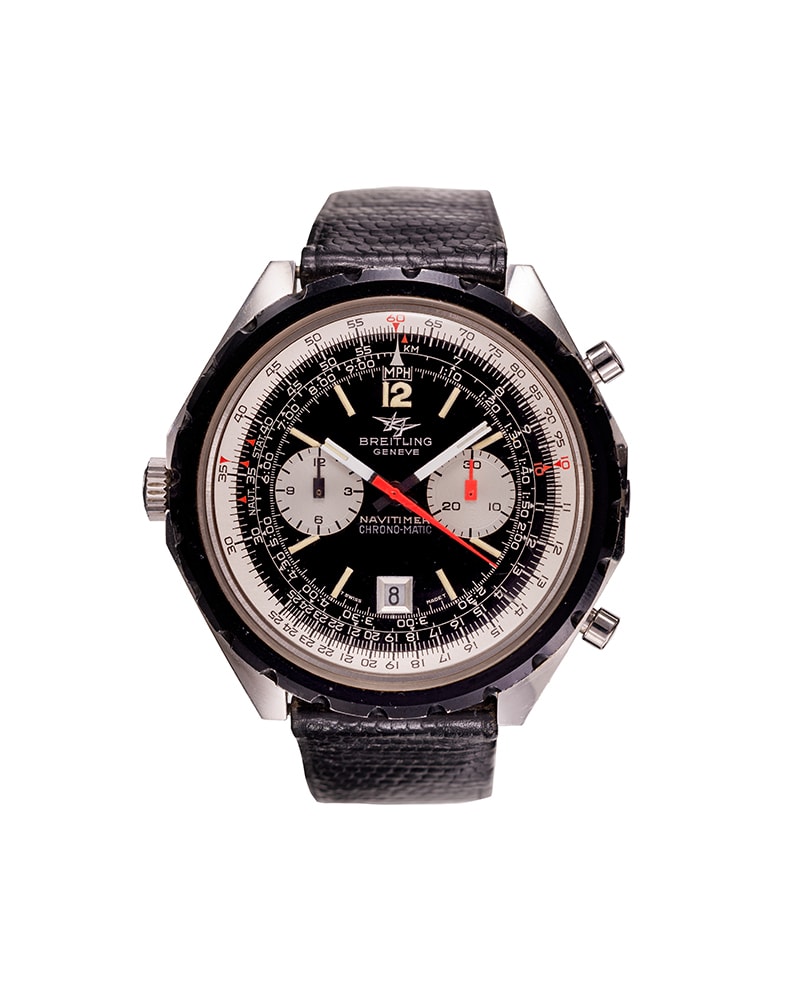
- —The 'reverse panda' dial—black with three contrasting silver subdials—only appeared in 1959, first on the SuperOcean and then on the Navitimer. Before that, all Navitimers had black-on-black subdials with white or gold printing, so the look of the subdials is a hard cutoff for dating.
- —The original Navitimer movement was the hand-wound Venus 178, a rugged column-wheel chronograph calibre. Later ref. 806 watches used automatic movements, but the purest early collectors’ pieces are the manually wound examples with the Venus 178.
- —The bezel changed from a 'beaded' (small round ridges) to a 'serrated' (tooth-like grip) design around 1964–1965. A serrated bezel combined with a twin-jet logo and reverse panda dial marks the late-1960s 'holy trinity' that collectors specifically seek out—as seen on the 1968 ref. 806.
- —The Navitimer was used by jazz legend Miles Davis for two decades and by racing drivers who appreciated the slide rule for speed calculations—proving its appeal far beyond the cockpit. This cross-cultural history is part of why vintage 806 references remain so coveted.
Learn
From AOPA Pilot Tool to Breitling Icon
The Breitling Navitimer did not begin life as a Breitling product at all. In 1952, Willy Breitling was commissioned by the Aircraft Owners and Pilots Association (AOPA), the world's largest pilots' club, to create a chronograph exclusively for its members. The first models, delivered in 1954, bore no Breitling name or logo on the dial; instead, they featured only the winged AOPA insignia at 12 o'clock, making them effectively unbranded secret weapons for pilots. These early AOPA Navitimers lacked any reference number on the caseback (the iconic reference 806 was assigned retroactively in late 1955), and their rotating bezels used a distinctive 'beads of rice' texture — with early examples carrying as many as 125 beads, later reduced to 93 by 1960. Powered by the Valjoux 72 movement before Breitling abruptly shifted to a Venus calibre 178, these first-generation watches were distributed in the U.S. through Wakmann, while European sales of a version with a simple winged logo (still unsigned) followed shortly after. The Navitimer's defining innovation — a logarithmic slide rule on the rotating bezel — was adapted directly from Breitling's own 1940s Chronomat, miniaturizing the E6B flight computer pilots had been using on cardboard or metal discs. The result was a wrist-worn navigation computer that could calculate average speed, distance, fuel consumption, rate of climb, and unit conversions, cementing its role as the ultimate pilot's instrument. The AOPA connection has been revived multiple times, most notably in 2019 with the faithful Navitimer Ref. 806 1959 Re-Edition, and in 2022 Breitling renewed its partnership with the association, even funding a full pilot training course through the Breitling Aviation Scholarship.
 phillips.comphillips.com
 uhrinstinkt.comuhrinstinkt.com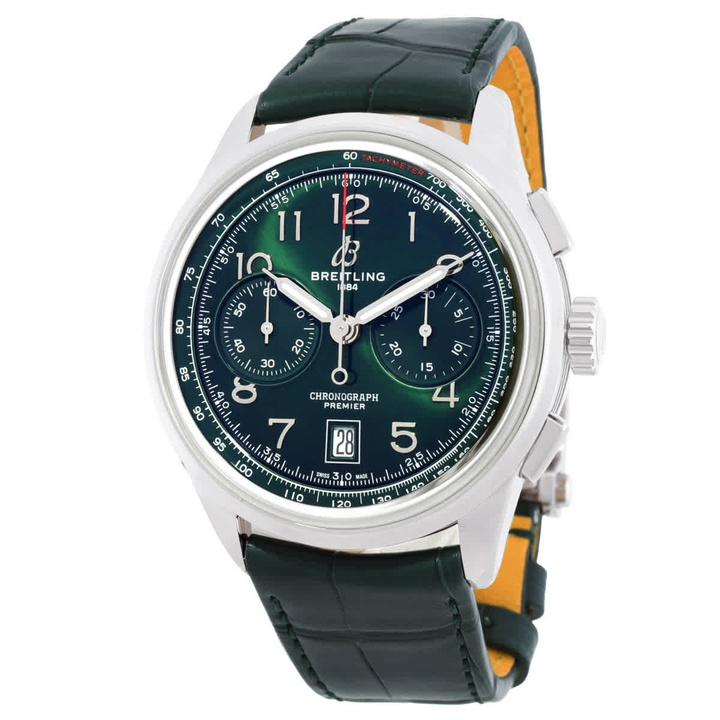
 sothebys.comsothebys.com
 professionalwatches.comprofessionalwatches.com
+Field notes
- —The very first Navitimers, made in 1954 for AOPA members, had no Breitling branding on the dial — only the winged AOPA logo appeared at 12 o'clock, making them effectively unbranded collaboration pieces.
- —Early AOPA Navitimers lacked a reference number; the now-famous 'Ref. 806' was only assigned retroactively in late 1955.
- —The 'beads of rice' bezel on early Navitimers had over 120 beads in 1955, decreasing to 93 by 1960 — a key detail for dating early examples.
- —The earliest Navitimers used the Valjoux 72 movement, but after only a few years Breitling switched entirely to the Venus calibre 178, requiring a completely new case design; the reason for this abrupt change remains speculative among collectors.
- —The Navitimer's slide rule was directly adapted from the 1940s Chronomat — itself inspired by the E6B flight computer that pilots had previously used as a flat cardboard or metal disc.
- —AOPA-issued Navitimers were distributed exclusively through Wakmann in the United States, while European models carried a simple winged logo (still unsigned by Breitling) and were sold directly by the brand.
Learn
The Collector Vocabulary: AOPA, B01, Reverse Panda, Beads-of-Rice
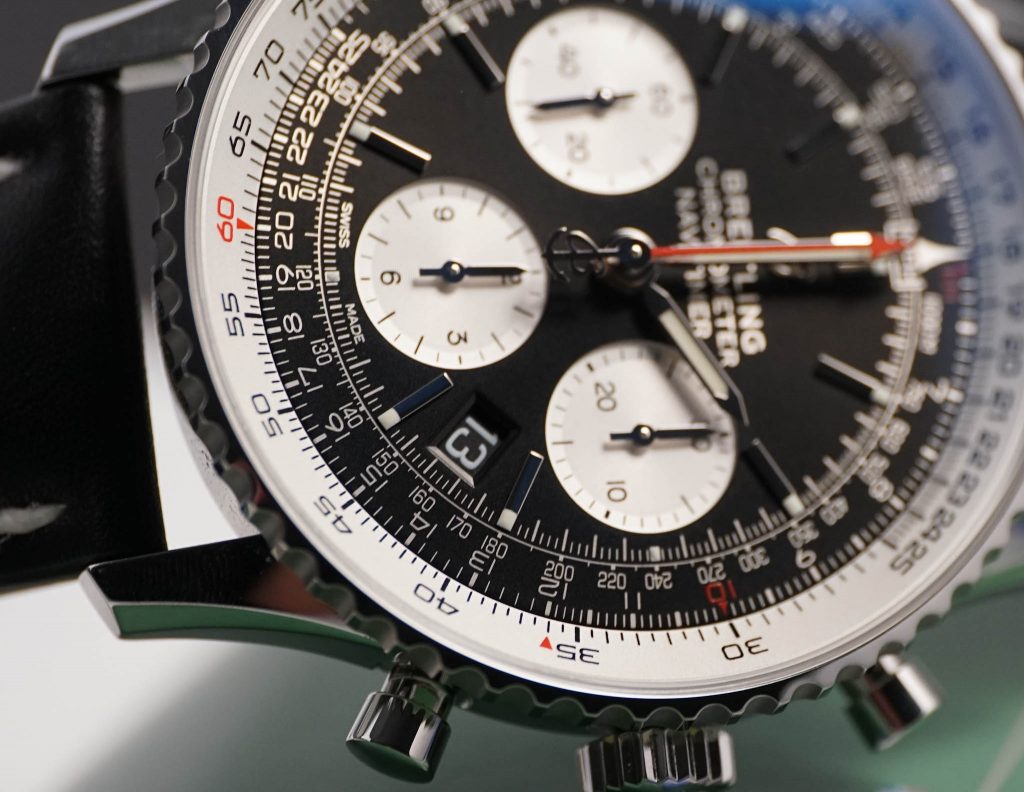
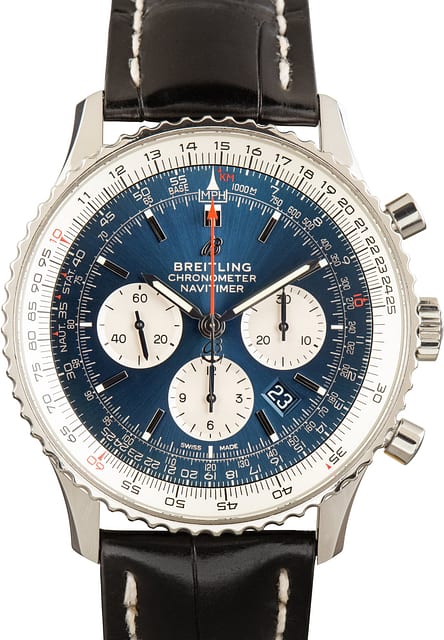
The Breitling Navitimer's collector vocabulary is built on a handful of specific terms that unlock its history. AOPA (Aircraft Owners and Pilots Association) refers to the pilots' organization that adopted the Navitimer as its official watch in 1954, placing its winged shield logo at 12 o'clock—the earliest and most celebrated dial variant. B01 designates the brand's modern in-house chronograph caliber, introduced in 2009, which powers many contemporary Navitimers. Reverse Panda describes a dial layout with a light base (often silver) and dark subdials, valued for its high contrast and tool-watch clarity. Beads-of-Rice denotes the beaded bezel edging on early Navitimers from the 1950s, designed to improve grip for operating the slide rule, and is a hallmark of the original ref. 806. These terms are not casual jargon; they are precise identifiers that separate rare first-generation AOPA-signed pieces from later production, and vintage references from modern reissues.

+Field notes
- —AOPA (Aircraft Owners and Pilots Association) commissioned the Navitimer in 1952 for its members, and the earliest dials from 1954–c.1964 bear the gold winged AOPA shield with a diagonal banner—no Breitling logo appears on the first 1954 examples, making those 'pre-806' watches the Holy Grail for collectors.
- —The B01 is Breitling's own manufacture chronograph movement, introduced in 2009; it offers 70 hours of power reserve and a column-wheel architecture, and is used in modern 'B01' Navitimers like the 2026 North American Limited Edition with a reverse panda dial.
- —A 'reverse panda' dial—silver base with black subdials—was first used by Breitling on the SuperOcean in 1957 before appearing on Navitimers in the early 1960s; it enhances legibility and maintains the tool-watch ethos, and is a key identifier for the modern 300-piece North American Limited Edition (ref. unknown).
- —'Beads-of-rice' refers to the original bezel edging on the 1954–1960s ref. 806 Navitimer, composed of small raised beads designed for easy grip; it predates the serrated bezel that appeared around 1965, and is a distinguishing feature of first-generation examples.
- —Collectors classify 12 distinct dial/logo variants from 1954–1970, starting with the AOPA shield (Logo I), through the introduction of the 'twin-jet' logo (two superimposed aircraft) around 1965, to a cursive 'B'—each with specific production years that affect rarity and value.
- —The earliest Navitimers (late 1954–mid 1955) used the Valjoux 72 manual-wind movement and had no reference number on the caseback, making them extremely rare cult watches; production later switched to the Venus 178 for the ref. 806 starting in late 1955.
Discover
Video Reviews That Go Beyond the Brochure


The best video reviews of the Breitling Navitimer don't just recite specs—they decode the watch's role as a historical pilot's tool and surface the hidden differences between models like the Curtiss Warhawk AB0119 (which strips the slide rule for a cleaner look) and the rose-gold Navitimer 1 U17325 (which keeps the slide rule but loses the chronograph). The B19 perpetual calendar in 43mm rose gold, a 140th-anniversary piece, pushes the Navitimer into high-complication territory without forgetting its flight-ready roots. The Exemplaires A23330, limited to 400 pieces, is a panda-dial collector's trap with lume-filled hands that looks balanced despite its dense layout. These reviews show that the Navitimer isn't one watch—it's a family where a single bezel or movement change shifts the entire character.
+Field notes
- —The Navitimer defined the E6B pilot watch category in the 1950s, developed with the Aircraft Owners and Pilots Association (AOPA) to let pilots perform flight calculations on the wrist.
- —The Breitling Navitimer Aviator 8 B01 Curtiss Warhawk AB0119 is a modern chronograph that ditches the iconic slide rule bezel entirely, opting for a green dial and a canvas strap that tie the look together.
- —The Navitimer Exemplaires A23330, limited to 400 pieces, uses a panda-style dial with raised baton indices and lume-filled hands to keep the dense layout balanced.
- —The 140th-anniversary Navitimer B19 Chronograph Perpetual Calendar (ref. RB19101A1H1P1) packs a perpetual calendar and chronograph into a 43mm rose gold case with a black alligator strap, pushing the Navitimer into ultra-high-complication territory.
- —The Navitimer 1 model U17325 (38mm) is a time-and-date-only piece that keeps the slide rule bezel and a silver dial, but swaps the chronograph for a cleaner look, with rose gold indices and hands adding warmth.
Discover
Where Navitimer People Read Closely
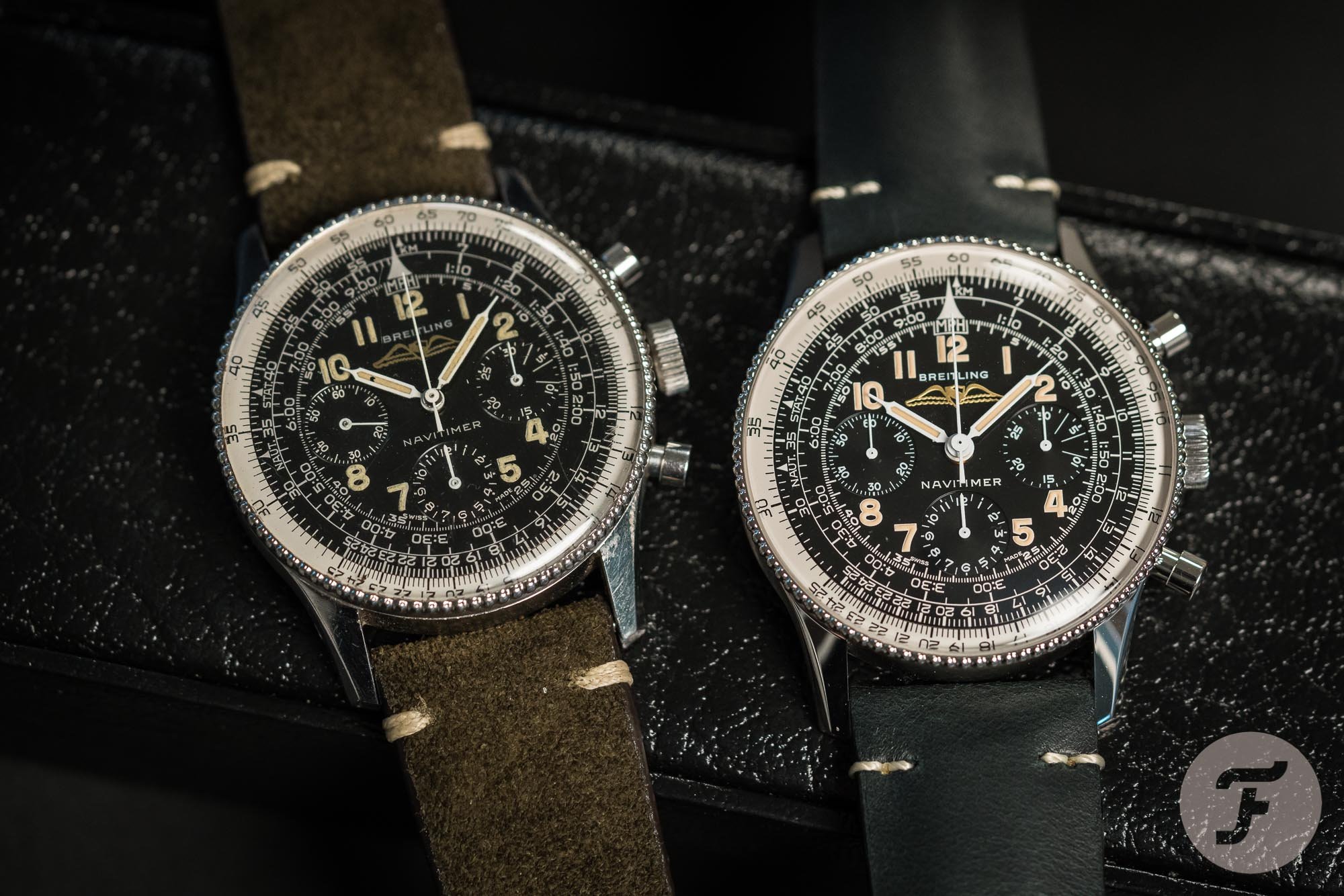

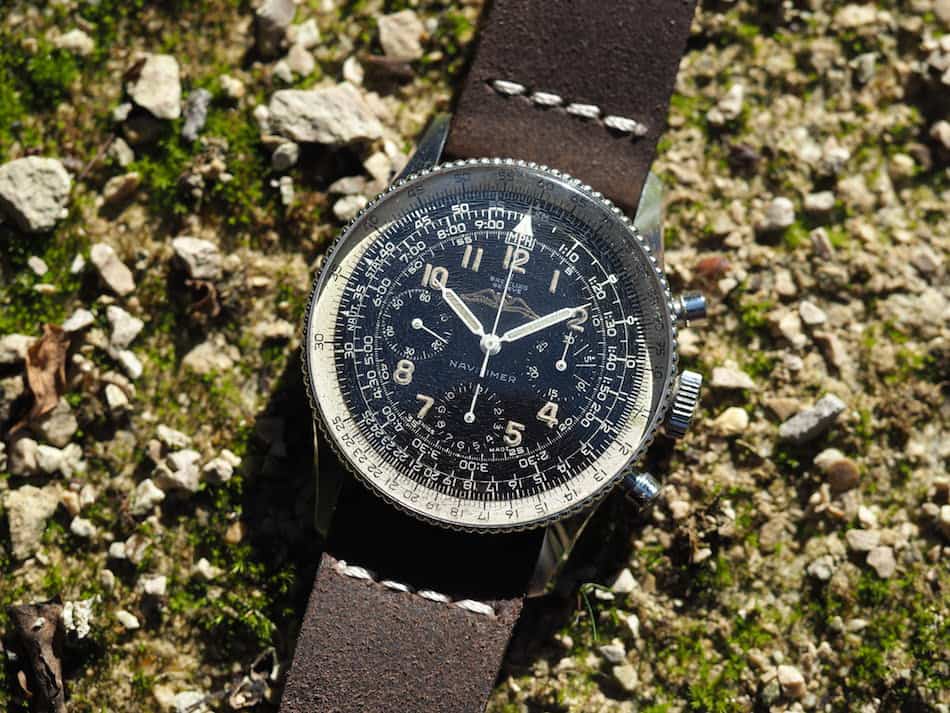
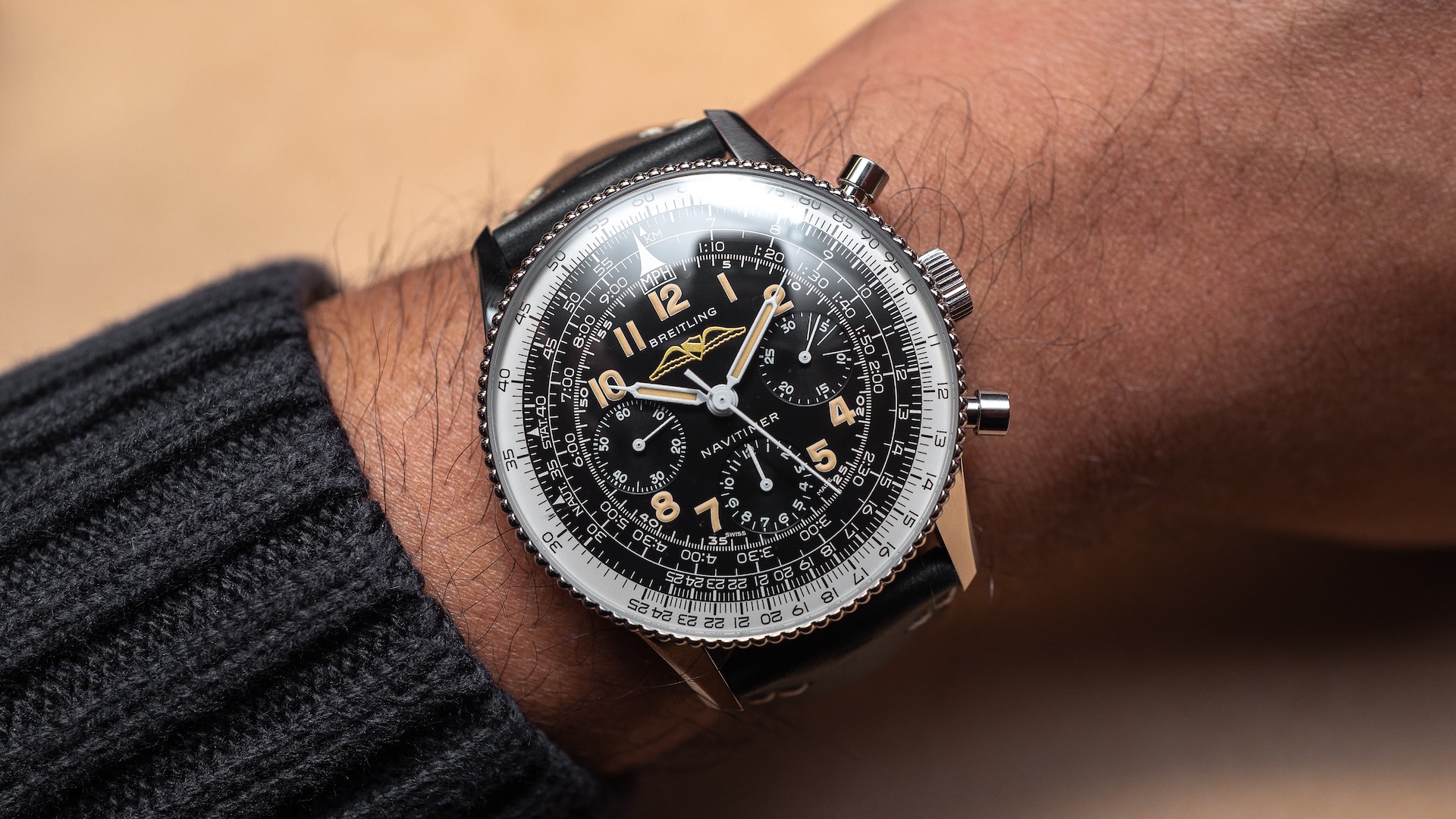


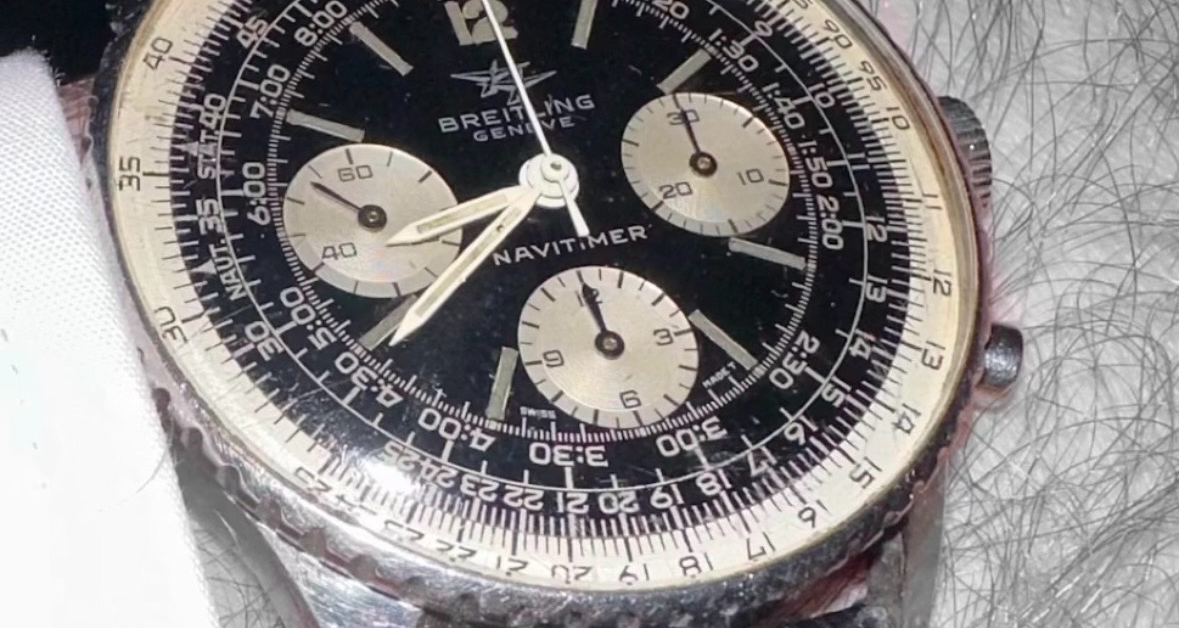
The Breitling Navitimer 806, launched in 1954 and refined through the 1960s, is the watch that defined the pilot's chronograph by merging a slide-rule bezel with a three-register layout. Enthusiasts obsess over the smallest details: the number of beads on the bezel (94 on the 1959 re-edition, down from as many as 125 in the 1950s), the shift from a beaded to a serrated bezel in 1964, and the variations in logo—from the early AOPA winged emblem to the later "twin jet" with 'Breitling Genève.' The 1959 re-edition, limited to 1,959 pieces, is celebrated for its fidelity: a snapped-in steel caseback, domed plexiglass crystal, and the hand-wound in-house caliber B09, which Breitling says will power future historical re-editions. Collectors prize early All-Black dials and the Venus 178 movement, while later models—even those from the 1970s—still command respect for their gentle evolution. The Navitimer's enduring appeal lies not in radical reinvention but in obsessive preservation of a design that hasn't changed much over its long history.
+Field notes
- —The 1959 re-edition's bezel has exactly 94 beads—a figure that varied wildly in the originals, with some 1950s examples having up to 125 and 1960s pieces as few as 93.
- —The only concessions to modernity in the 806 1959 re-edition are increased water resistance to 30 meters and Super-LumiNova replacing radium; it even keeps a closed, snapped-in steel caseback instead of an exhibition one.
- —Early Navitimers used the Valjoux 72 movement, but Breitling quickly switched to the Venus 178, and those Valjoux-powered examples now command a significant premium among collectors.
- —The bezel design changed in 1964 from the earlier 'beaded' style (resembling a coin edge) to the modern serrated version that is still used today.
- —Breitling's in-house hand-wound caliber B09, introduced in the 1959 re-edition, is explicitly intended to power many future hand-wound historical re-editions.
- —The Navitimer case is distinct from other classic chronographs like the Speedmaster or Daytona because it lacks crown guards, which keeps its profile elegant and versatile.
Keep exploring
More of Breitling Navitimer
Branch out
Beyond Breitling Navitimer
More to explore
In the same world.

Vintage Rolex Watches
Vintage Rolex collecting revolves around older references whose value is tied not just to the model name, but to origina…

Vintage Omega Speedmaster
Vintage Omega Speedmasters sit at the intersection of tool-watch history, lunar mythology, and exacting collector schola…

Military Watches
Military watches sit at the intersection of real field use, instrument design, and modern tool-watch collecting: brands…

Audemars Piguet
Audemars Piguet is a Swiss luxury watchmaker rooted in Le Brassus in the Vallée de Joux, where the brand says its craft…
Mechanical Watches
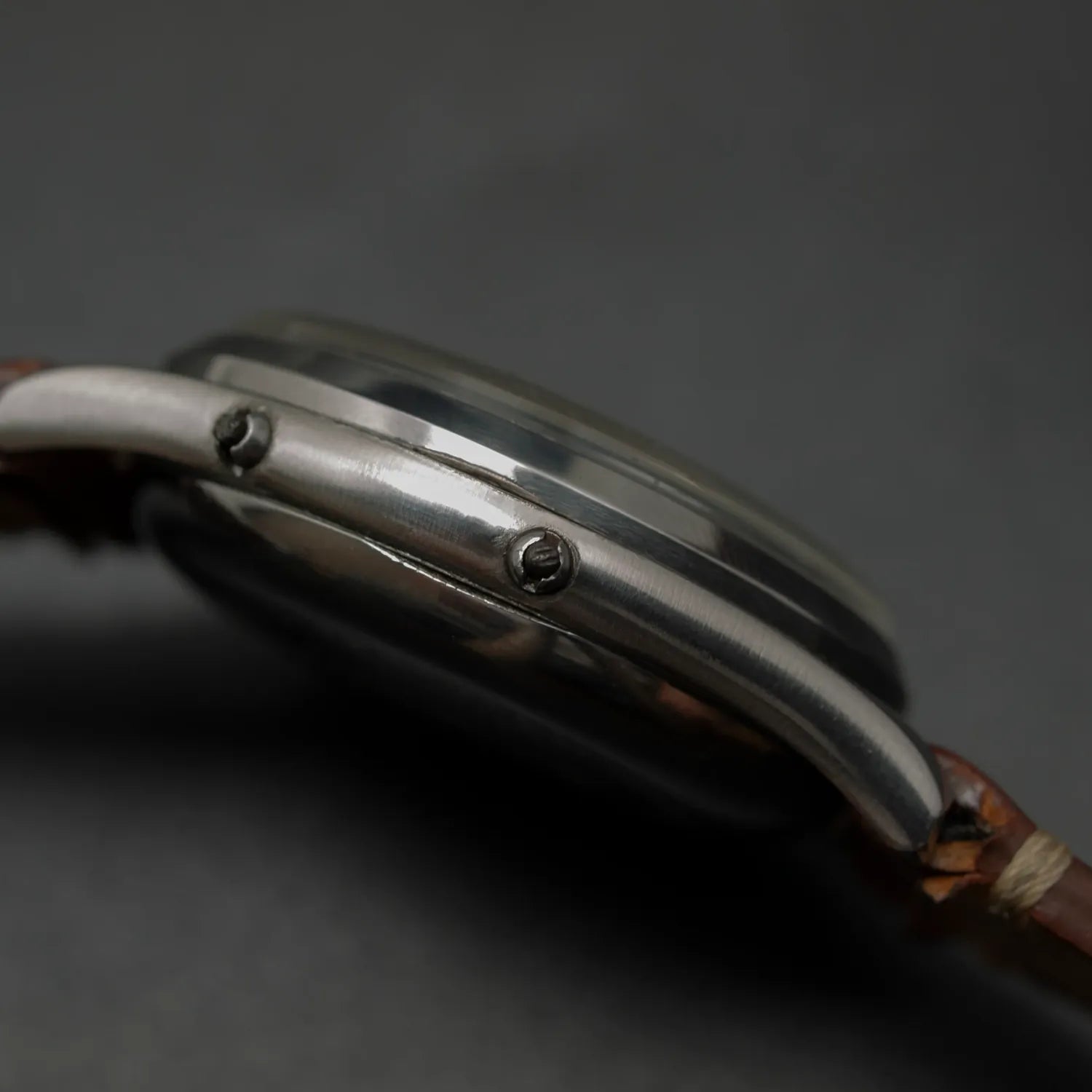
Mechanical watches run on a clockwork movement powered by a mainspring, with energy delivered through gears to a balance…

Blancpain Villeret
The Blancpain Villeret collection is the brand’s dress-watch center of gravity: restrained white dials, slim round cases…
Blancpain Fifty Fathoms
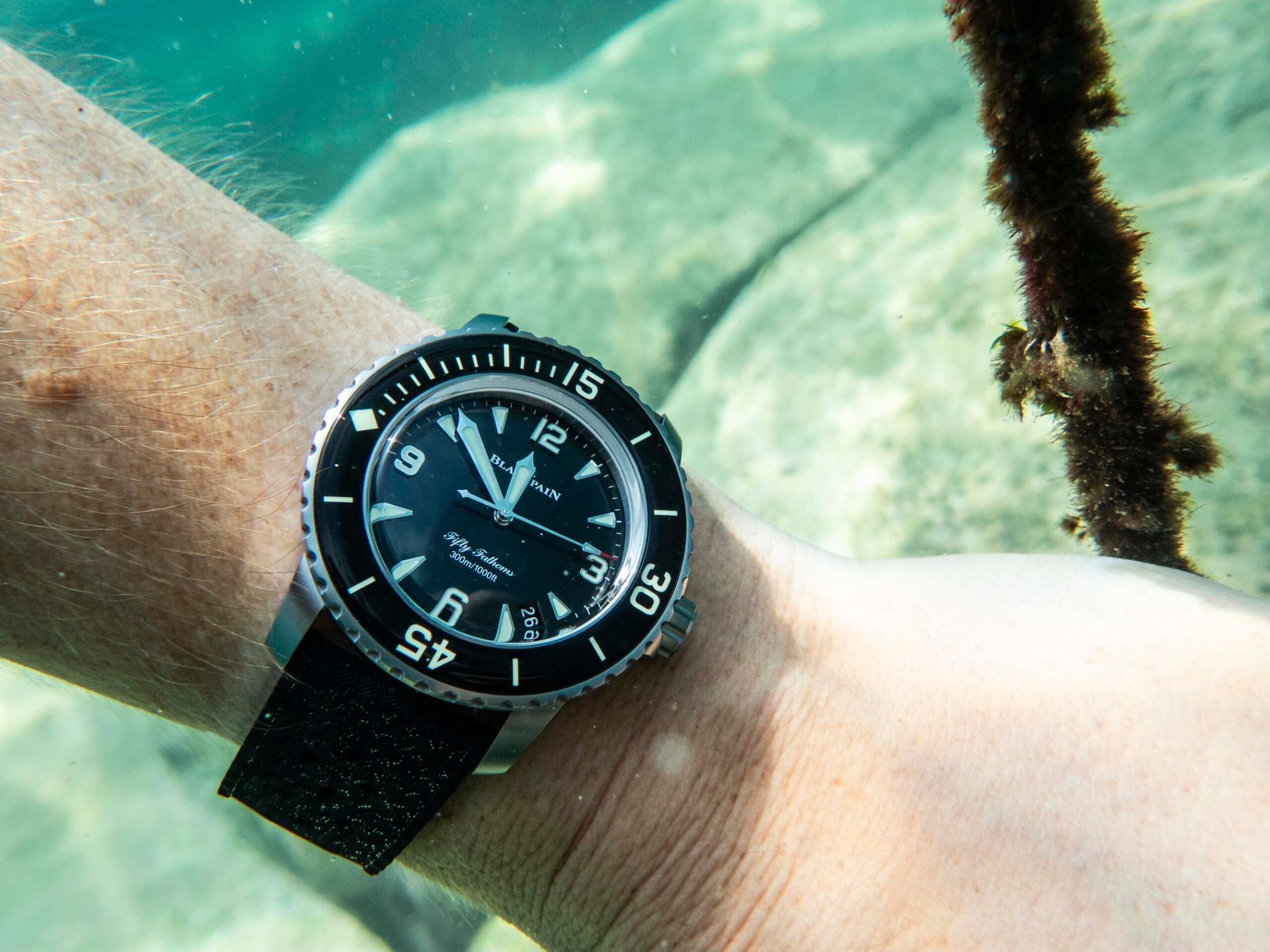
The Blancpain Fifty Fathoms is the brand’s long-running diver’s-watch family, spanning core Fifty Fathoms Automatique mo…

Audemars Piguet Code 11.59
Code 11.59 is Audemars Piguet’s contemporary round-cased collection, revealed in 2019 as a platform for both new design…
More in Watches & Horology
Stay in this world.
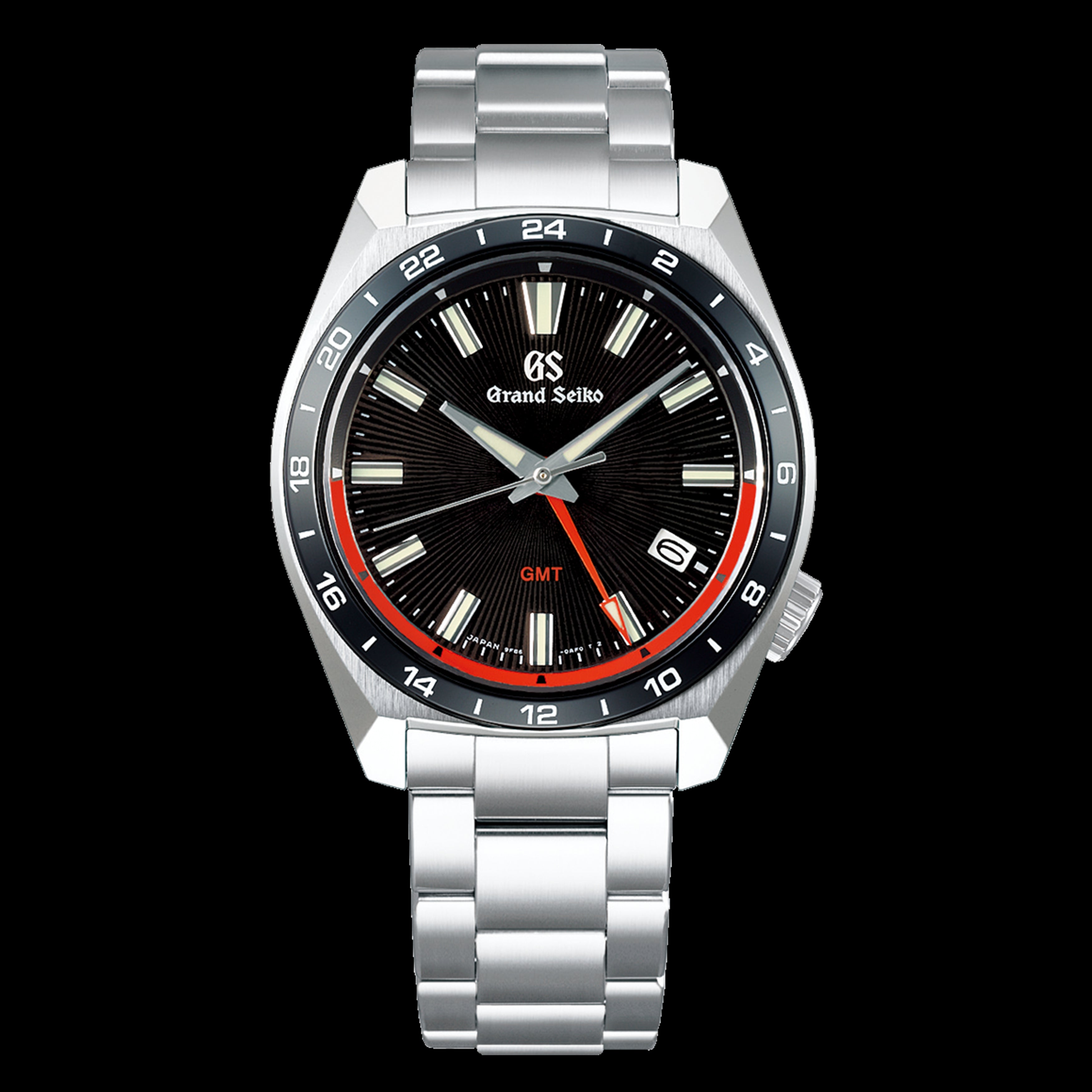
Grand Seiko SBGN001 9F GMT

Rolex Deepsea
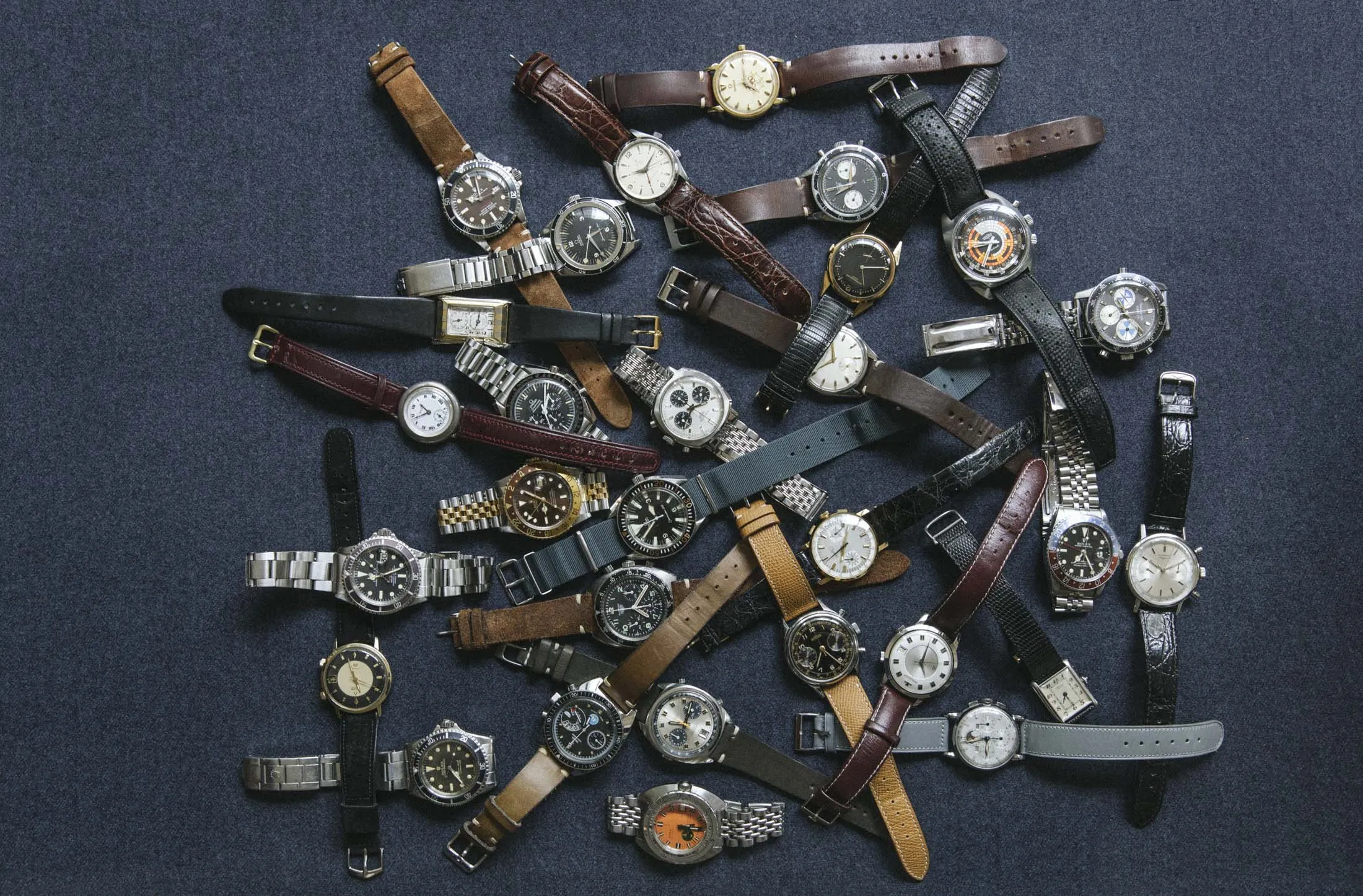
Vintage Watch Hunting

Rolex Deepsea

Luxury Watches That Hold Value

Best Luxury Quartz Watches
Skeletonized Haute Horlogerie
Best First Luxury Watch
Imagery
Know someone who’d love this?
Discovered by ArcurianAuto-generated from public sources and AI synthesis — it may be incomplete or inaccurate. Treat it as a starting point for your own exploration, not professional (medical, legal, financial, or safety) advice. Verify anything you act on. Report this page.