Electric vehicle design is the discipline of turning battery-electric architecture into a workable vehicle, balancing energy storage, power conversion, distribution, control, packaging, safety, and manufacturability. The sources here frame it as a system-level problem: early-phase design parameters and holistic powertrain component development matter because battery placement, range targets, thermal management, and vehicle architecture all constrain one another long before styling is finalized. Practical guides and textbooks alike treat simulation and validation as central, not optional, because EV performance depends on how the battery, motor, inverter, controls, and chassis behave together. What makes the field compelling is that EVs are not just cars with engines removed—they force a rethink of the entire vehicle layout from first principles.
Learn
How EV Architecture Becomes Vehicle Design
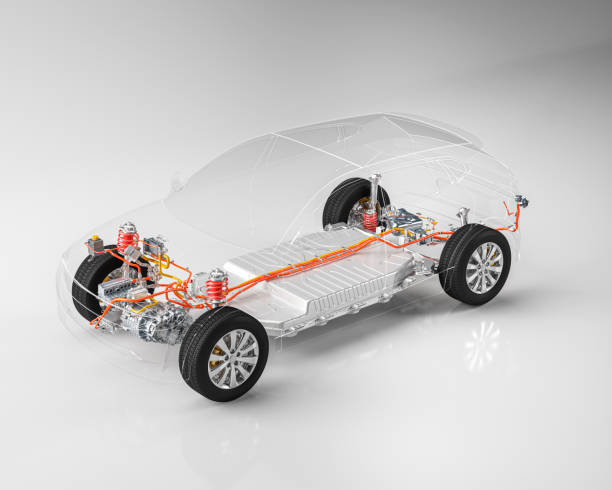
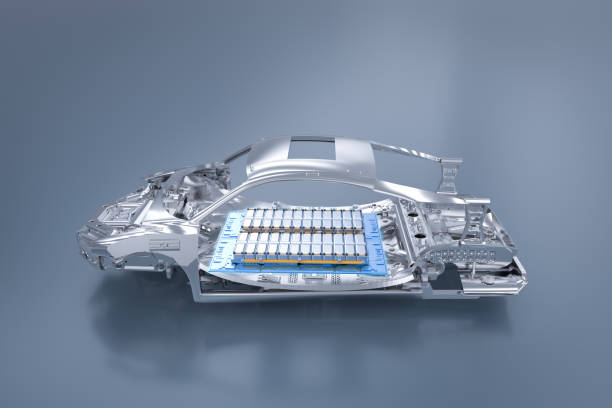
Electric vehicle architecture is no longer just a packaging exercise—it fundamentally reshapes the vehicle's structure, safety, and performance. The battery pack, once a separate box, is now designed as a structural sandwich integrated into the underbody, increasing torsional and bending stiffness while lowering the center of gravity for better handling. Cell-to-body (CTB) technology takes this further, making individual cells load-bearing members as seen in BYD's Blade Battery and Tesla's structural pack. Meanwhile, powertrain integration into a single unit (e.g., InfiMotion's L40X 7-to-12-in-1) consolidates the motor, inverter, gear reducer, and auxiliary electronics, slashing volume and wiring. Thermal management choices dictate packaging: liquid cooling enables higher power but requires complex routing, while passive cooling limits performance but simplifies design. These architectural decisions cascade into every aspect of the vehicle—from crashworthiness and interior space to weight distribution and manufacturing cost.


 frontiersin.orgfrontiersin.org
 sciencedirect.comsciencedirect.com
+Field notes
- —Cell-to-body (CTB) integration makes battery cells structural members, as in BYD's Blade Battery and Tesla's structural pack, eliminating separate modules and boosting overall chassis stiffness.
- —Locating the battery pack below the passenger floor turns the underbody into a sandwich structure that increases torsional and bending stiffness while improving side-impact protection and lowering the center of gravity.
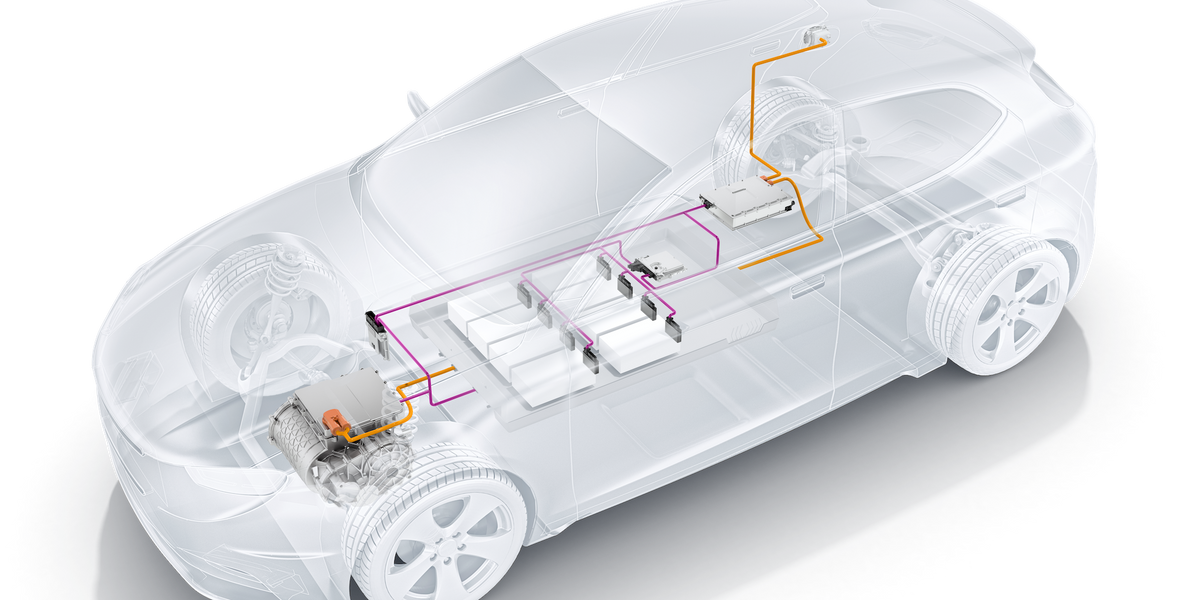
- —X-in-1 powertrain integration—like InfiMotion's L40X platform (7-to-12-in-1)—consolidates the motor, inverter, DC/DC converter, OBC, and BMS into a single unit, reducing weight, volume, and wiring complexity.
- —Thermal management strategy dictates battery packaging: passive cooling (conduction and natural convection) is simplest but cannot handle high-power operation, while liquid cooling allows higher performance at the cost of added plumbing and weight.
- —A 3-in-1 powertrain standard (motor, inverter, gear reducer) reduces component count and enables scalable architectures, with gear reduction ratios typically between 8:1 and 12:1 to optimize efficiency and torque delivery.
Learn
From Conversion Thinking to Dedicated BEV Platforms
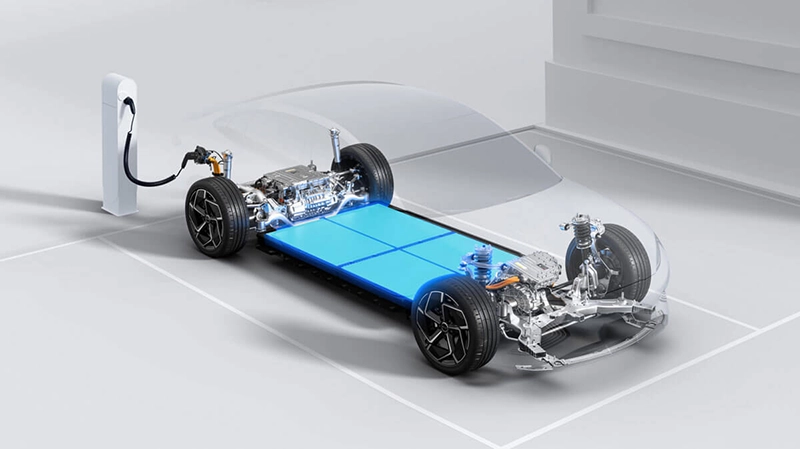
The shift from ICE-based conversions to dedicated battery electric vehicle (BEV) platforms is one of the defining architectural pivots in automotive history, driven by the realization that modified internal combustion engine (ICE) platforms carry crippling 'scar tissue' — extra weight, compromised packaging, and suboptimal range. Early efforts from the late 1990s through the early 2010s forced automakers to reuse existing ICE architectures, but the competitive advantage in range and efficiency demanded clean-sheet BEV designs. The skateboard platform, where the battery pack forms the floor and motors, steering, and suspension mount to subframes at each end, emerged as the dominant solution. This layout first appeared as a concept from General Motors in 2002 called the Autonomy, though Tesla later popularized it commercially with the Model S. A dedicated BEV platform enables easy wheelbase changes, flexible body styles, and better weight distribution — but it also introduces new manufacturing complexities like gigacasting and battery integration challenges. The transition is not just a technical exercise; it forces legacy OEMs to unlearn decades of ICE platform process expertise, while new entrants like Tesla, Rivian, and BYD benefit from starting with a blank sheet. The result is a fundamental rethinking of how vehicles are conceived, built, and serviced, with modular skateboards potentially allowing localized assembly and simplified repairs.


+Field notes
- —The term 'scar tissue' refers to the compromises baked into a platform designed to accept both an ICE powertrain and a BEV — extra weight from accommodating a gas tank or a battery pack, a radiator or a frunk, an 8-speed automatic or a 2-speed gear reduction unit. The result is a heavier, less efficient vehicle than a dedicated BEV design.
- —The first skateboard platform was developed twenty years ago by General Motors for a concept EV called the Autonomy, long before Tesla turned the idea into a production reality with the Model S.
- —Shifting a traditional ICE vehicle's wheelbase by 6 or 7 inches can trigger a $1 billion redesign costing five to eight years — a skateboard platform avoids this by allowing wheelbase and body style changes with minimal re-engineering.
- —Tesla's Model S architecture, described by Design Director Franz von Holzhausen in 2013, treats the floor as the battery pack and the motor as being between the rear wheels — everything above that is 'opportunity space.'
- —Legacy OEMs like Toyota, VW, and GM face a unique challenge: they have deep process experience architecting ICE platforms, but that expertise doesn't automatically transfer to BEV-dedicated designs, whereas new entrants like Tesla, Rivian, and BYD are unencumbered by legacy compatibility.
- —A dedicated BEV 'skateboard' platform can accommodate cylindrical, prismatic, or pouch battery formats, and allows for easy variation — from a small consumer car to a luxury sedan, delivery truck, or off-road construction vehicle — all using variants of the same base chassis.
Learn
The Terms Engineers Actually Use
In EV engineering, the high-voltage DC power train isn't just a battery connected to a motor — it's a carefully orchestrated system of subsystems with precise names and roles. The core components include the HV battery (typically 350–800 V DC), a contactor (a heavy-duty relay that physically isolates the pack), a precharge resistor that softly charges the inverter's DC-link capacitor before the main contacts close (avoiding a destructive inrush surge), a DC-DC converter that steps the high voltage down to 12–14 V for the LV auxiliary battery, and an inverter that converts DC to three-phase AC for the traction motor. Engineers increasingly refer to the integrated unit combining motor, inverter, and gearbox as an e-axle or EDU (electric drive unit), with some designs pulling in the OBC (on-board charger) and PDU (power distribution unit) into a single housing — creating 3-in-1, 7-in-1, or even higher-integration boxes. These integrated architectures are not just mechanical; they can share control stages, power stages, cooling loops, and magnetic components, which is why an OEM might talk about 'mechanical integration vs. control-stage integration vs. power-stage integration' as distinct engineering decisions.



 evengineeringonline.comevengineeringonline.com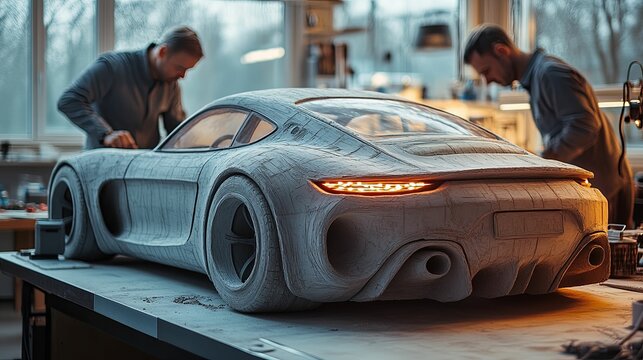
+Field notes
- —The precharge resistor is a critical step in every EV start-up: a smaller contactor closes first, running current through a power resistor to slowly charge the inverter's DC-link capacitor, so that when the main HV contactors close there's no arc or current surge.
- —The industry shorthand 'DC-link capacitor' refers specifically to the large film capacitor across the DC bus of a traction inverter — its job is to smooth the voltage ripple caused by the IGBTs switching at high frequency.
- —Integrated e-axles (combining motor, gearbox, and inverter in one housing) now appear in roughly half of new EV traction drive units analyzed in a 2025 study of 48 units from 31 vehicles built 2018–2023, confirming a clear trend toward compact unified drive systems.
- —Higher-level integration goes beyond mechanical sharing: the 'power stage integration' option OBC + HV DCDC merges magnetic components, power switches, and control units (one MCU for the PFC stage, another for the DCDC stages) into a single combo box, yielding the best cost advantage.
- —Motor speeds are trending sharply upward: current production e-axles run 14,000–20,000 rpm, and prototypes targeting 30,000 rpm are already in development — this shrinks motor volume and raises power density, but intensifies gear whine (1–10 kHz from tooth mesh errors) and electromagnetic noise (0.5–5 kHz from stator/rotor slot harmonics).
- —Cell-to-chassis (C2C) architecture — bonding cells directly to the vehicle frame with thermally conductive urethane adhesives — eliminates module housings entirely, but demands new cooling and safety materials that can withstand both the mechanical loads of the chassis and the propagation risks of thermal runaway.
Discover
Videos That Break Down Packs, Platforms, and Powertrains


The Munro Live channel, led by Sandy Munro and his team of experienced engineers, offers some of the most technically substantive teardown videos available for electric vehicle drivetrains. Unlike glossier overviews, these deep dives physically dissect battery packs and electric motors, component by component, to evaluate real-world engineering choices. Through these videos, you learn to see EVs not as black boxes, but as collections of integrated design decisions — from a pack's vent channel strategy to a motor's winding pattern. The team brings a critical, sometimes blunt, lean-manufacturing lens, celebrating clever solutions in a Volkswagen ID motor while tearing into the wasteful over-engineering of a Hummer EV battery pack. Watching these analyses reveals the tangible differences between automakers' engineering philosophies, making it an essential resource for understanding what actually distinguishes good design from bad in the EV world.
+Field notes
- —Tesla's 4680 pack uses a structural design where the BMS and VSH (Voltage Sense Harness) attach directly to the cells, and the pack itself integrates vent channels, a cooling system, an isolation gasket, and large current collector welds — all designed to eliminate modules.
- —Inside a single Tesla 4680 cell, the team uses CT scans from Kinetic Vision to reveal the internal tabless electrode design, which reduces resistance and improves thermal performance compared to traditional cells with tabs.
- —Volkswagen's APP550 motor, found in ID.4, ID.7, and ID. Buzz, features a hairpin winding design and a cleverly integrated gearbox housing that Sandy Munro praises as 'German engineering at its best' for its balance of performance and manufacturability.
- —The BYD iDM-210 drive unit teardown reveals a holistic design philosophy where every component, including BorgWarner-supplied parts, is optimized for power density and seamless system integration, showcasing BYD's advanced in-house engineering approach.
- —The Hummer EV battery pack is criticized by the Munro team as the antithesis of lean design due to its excessive use of fasteners, complex cooling plates, and overbuilt structure, which adds unnecessary weight and cost compared to Tesla's modular approach.
- —YASA's YM360 axial flux motor uses a pancake-like rotor-stator arrangement with a unique cooling strategy and material selection that achieves higher power density than conventional radial flux motors, making it a standout design for performance EVs.
Discover
Where to Follow Real Engineering Analysis




Explore
Textbooks, Papers, and Tools for Going Deeper
For engineers ready to move beyond theory into simulation and validation, the current landscape offers a remarkably coherent pipeline of resources. SAE International's R-570, *Electric Vehicles: Theory and Design* (2024), written by a former combustion engineer, bridges the conceptual gap by covering everything from battery systems to autonomous subsystems. On the practical side, the open-source MATLAB/Simscape 'Electric Vehicle Design with Simscape' repository (v24.2.2.02, 4.4K downloads) lets you model everything from all-wheel-drive to front-wheel-drive setups, estimate range, size a high-voltage battery pack, and even generate loss maps for your motor and inverter to predict the inverter's lifetime by tracking junction temperature variations. For deeper simulation of thermal management and driveline architectures, Gamma Technologies' GT-SUITE offers an object-oriented environment (GT-ISE) that handles any electrified architecture—HEV, BEV, or fuel cell—and integrates with GT-POWER for NVH and boosting dynamics. Meanwhile, a recent comparative study (Taha et al., 2024) used both AVL Cruise and MATLAB Simulink to benchmark single-, dual-, and quad-motor powertrains, providing concrete efficiency and performance baselines that can directly inform initial component sizing. Together, these tools and texts form a complete deep-dive kit: a modern textbook, two industry-standard simulation platforms, a validated open-source model, and a recent academic benchmark—all accessible within the last few years.


+Field notes
- —SAE's R-570 textbook was written by Yiqing Yuan, an engineer with a background in combustion engines, making it an unusually effective bridge for traditional automotive engineers shifting into EV design.
- —The MATLAB/Simscape BEV model (R2023b+) can estimate the junction temperature of individual semiconductor devices in the inverter power module to predict inverter lifetime—a level of detail usually reserved for component-level durability studies.
- —A 2024 study by Taha et al. directly compared single-, dual-, and quad-motor powertrains using both AVL Cruise and MATLAB Simulink, revealing significant performance variations that provide benchmarks for preliminary architecture selection.
- —GT-SUITE's object-oriented interface (GT-ISE) allows users to build any driveline architecture—series, parallel, series/parallel, power-split hybrids, or battery electric vehicles with multi-motor designs—and later integrate physical subsystems like thermal management and aftertreatment.
- —A 2019 SAE paper from Isuzu Technical Center (2019-01-2369) developed a system-level BEV model in GT-Suite that was validated against real field-testing data—including acceleration, deceleration, and coast-down—demonstrating faster-than-real-time simulation for range and performance estimation.
- —The 2020 SAE technical paper by Al Halabi and Al Tarabsheh (2020-01-5086) modeled a complete electric vehicle in MATLAB/Simulink, including aerodynamic drag, rolling resistance, and linear acceleration, and reported a motor efficiency of 73% under the simulated driving cycles.
Learn
Places Where EV Engineers and Builders Trade Ideas
The electric vehicle building community thrives in several distinct digital spaces, each with its own character and depth. The long-running DIY Electric Car Forums (since 2007, with 99,000 members) remains the go‑to for hands‑on conversion threads—everything from Leaf motor stacks to Tesla battery integration. The openinverter.org ecosystem, founded in 2008 by Johannes Huebner, centers on open‑source inverter firmware and a wiki documenting reverse‑engineered OEM drivetrains (Tesla, Nissan Leaf, Mitsubishi Outlander), enabling reuse at minimal cost. For professional networking, LinkedIn groups like “eMobility” (growing 156%) and “EV Infrastructure Forum” attract industry insiders discussing charging standards and smart grids. At the intersection of community and code, GitHub repositories such as Damien Maguire’s ZombieVerter VCU (V2.40A) support over 20 OEM components, including CCS DC fast charging via a BMW i3 LIM. Meanwhile, newer platforms like electr0motiv are pioneering a cooperative guild model with regional clusters and an AI coach fed by 2,900+ curated resources, aiming to break the isolation that kills conversion projects. Together, these spaces form a layered, self‑reinforcing knowledge network for anyone building or engineering EVs.


 driivz.comdriivz.com
+Field notes
- —DIY Electric Car Forums has hosted over 558,000 posts across 99,000 members since 2007, with dedicated subforums for every technical subsystem—controllers (Alltrax, Kelly, Zilla), batteries, motors (ADC, Netgain Warp), and even non‑road vehicles like tractors and boats.
- —The openinverter.org project, founded in 2008 by Johannes Huebner, provides open‑source inverter control firmware and a wiki that teaches how to reverse‑engineer and reuse OEM drivetrains from Tesla, Nissan Leaf, and others—often costing a few hundred euros for a complete low‑power drive train.
- —Damien Maguire’s ZombieVerter VCU (V2.40A on GitHub) supports over 20 OEM components, including CCS DC fast charge via BMW i3 LIM or the Foccci module, Chademo, and serial communication with Lexus GS450H and Toyota Prius Gen3 inverters.
- —LinkedIn groups like “eMobility” (11,509 members) grew 156% in membership over 20 months, and “EV Infrastructure Forum” (7,159 members) grew 65%—reflecting a surge in professional interest in charging hardware, smart grids, and utility metering.
- —Endless Sphere’s battery design thread details a modular 100Ah 7.2V pack using Queen Battery QB26800 6800mAh cells in a 2s15p layout, with phase‑change material for thermal management—a rare glimpse into bespoke high‑capacity pack building.
- —electr0motiv operates as a cooperative EV conversion guild with regional clusters, an AI Conversion Coach backed by 2,900+ curated resources, and a free three‑tool pipeline (EValuator, Toolkit, Companion) to assess feasibility and cost—all aimed at builders who lack local support.
Keep exploring
More of Electric Vehicle Design


Branch out
Beyond Electric Vehicle Design
More in Cars & Motorcycles
Stay in this world.

Land Rover Defender 110

Datsun 240Z

Honda CB400

Honda Super Cub
.jpg)
Ferrari Testarossa
Ferrari Testarossa

Porsche 911

Ferrari in the 1980s
Imagery
Know someone who’d love this?
Discovered by ArcurianAuto-generated from public sources and AI synthesis — it may be incomplete or inaccurate. Treat it as a starting point for your own exploration, not professional (medical, legal, financial, or safety) advice. Verify anything you act on. Report this page.