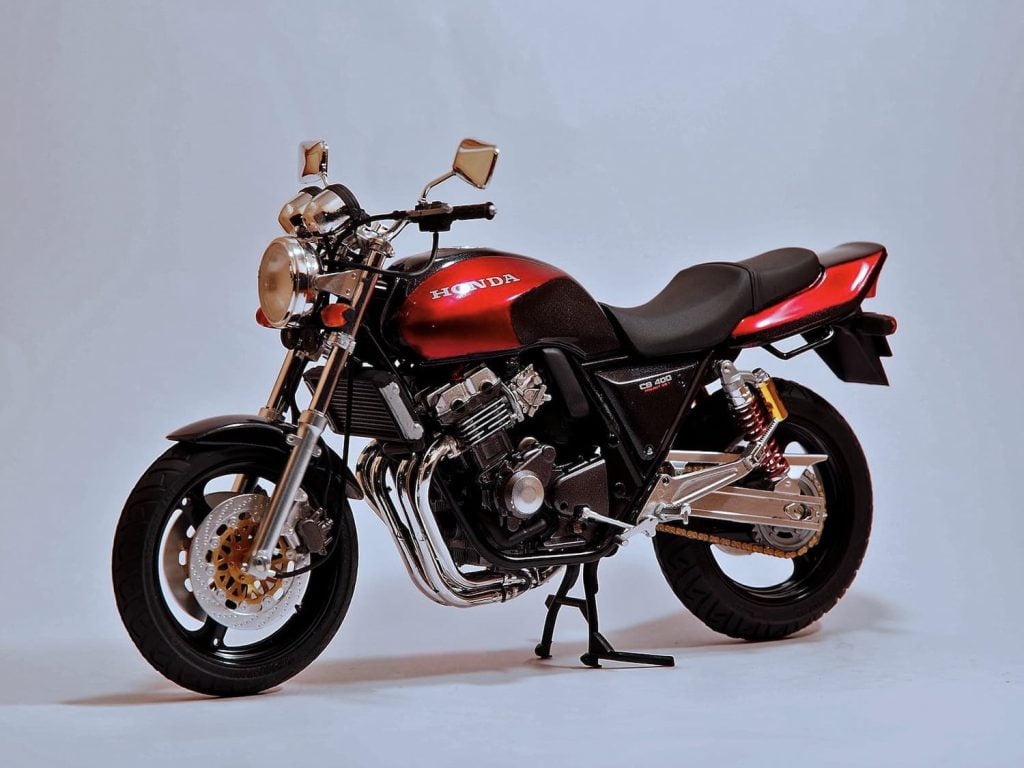
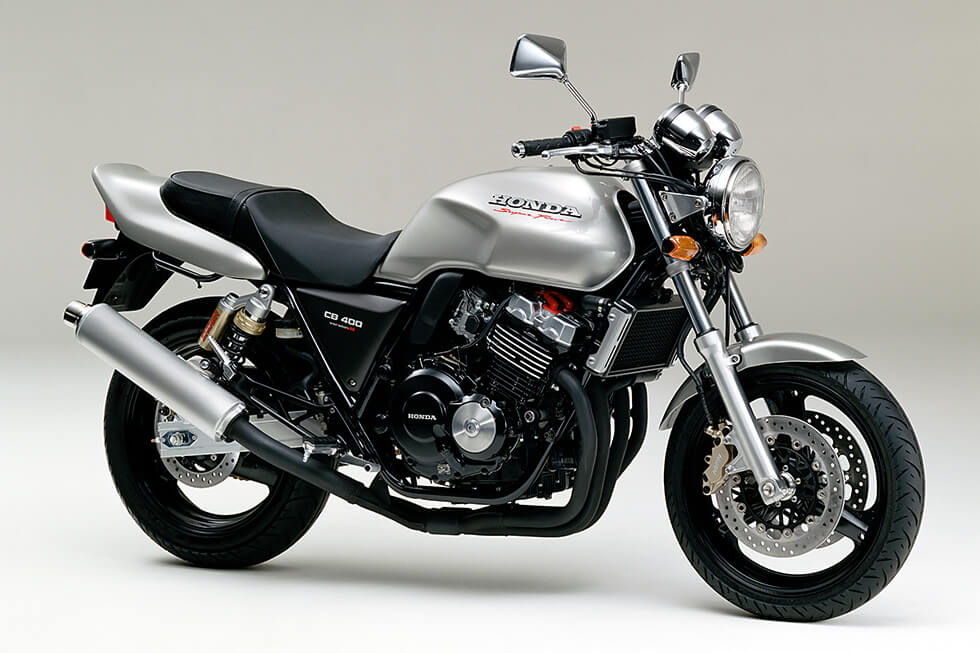
Honda’s CB400 name has covered multiple motorcycle families, but the model most riders mean today is the CB400 Super Four: a 399 cc standard built at Honda’s Kumamoto plant from 1992 to 2022, with production slated to return from 2026. Its appeal is unusually specific: a naked retro shape, a smooth inline-four, and the feel of a classic Universal Japanese Motorcycle translated into a smaller-capacity package. That sits alongside an earlier cult favorite, the 1975–1977 CB400F “400 Four,” the air-cooled 408 cc four-cylinder machine that gave the badge its enduring collector aura. If you want to understand why 400 cc Hondas inspire such loyalty, start with the tension between these two poles: the jewel-like 400 Four and the long-running Super Four.
Learn
What “CB400” Actually Refers To
The Honda CB400 badge is a chameleon, having adorned no fewer than ten distinct motorcycle families over nearly five decades, from the 1975 original — a 408 cc air-cooled SOHC inline-four, the 'Dream CB400 Four' — to the modern 399 cc liquid-cooled DOHC 16-valve 'Super Four' that ran from 1992 until 2022 and then resumed production in 2026. Despite sharing a displacement number, these are radically different machines: the early CB400F was a 37 hp, 6-speed, point-and-condenser-ignition mini-superbike with four 20mm Mikunis, while the later CB400 Super Four uses a VTEC-like system (Hyper VTEC, later 'Hyper VTEC Revo') that switches from two to four valves per cylinder above 6,750 rpm, and revs to 11,000. The name even ghosted through a 2-speed automatic 'Hondamatic' Hawk, a single-cylinder 397 cc CB400SS, and a Brazilian dealer-built 447 cc special called the CB440S. So if someone says they ride a 'CB400', you need to ask which one — and the answer might be a 1970s four-cylinder, a 2000s thumper, or a 2020s hyper-naked that shares its engineering DNA with the CB1000 'Big One'.
 global.hondaglobal.honda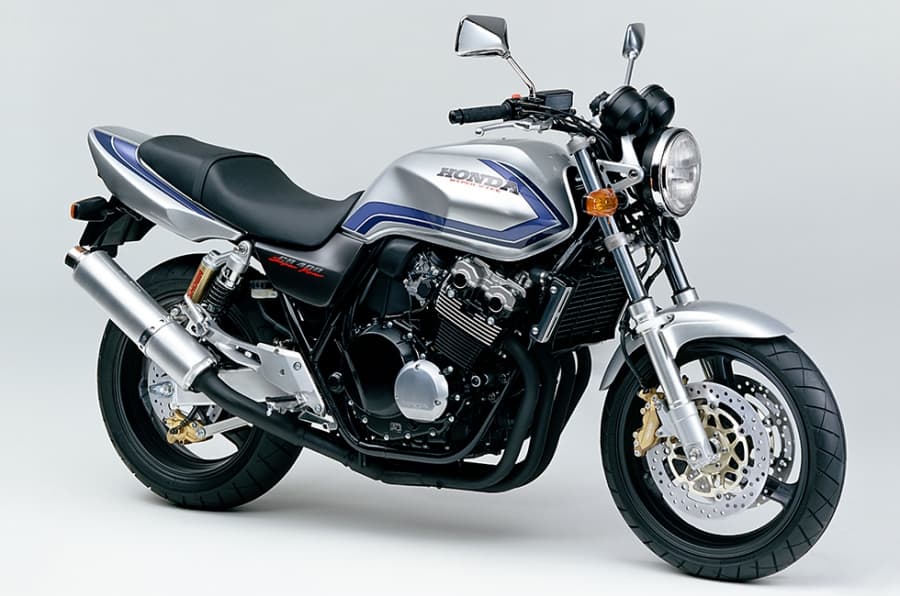
 classicbikeguide.comclassicbikeguide.com
+Field notes
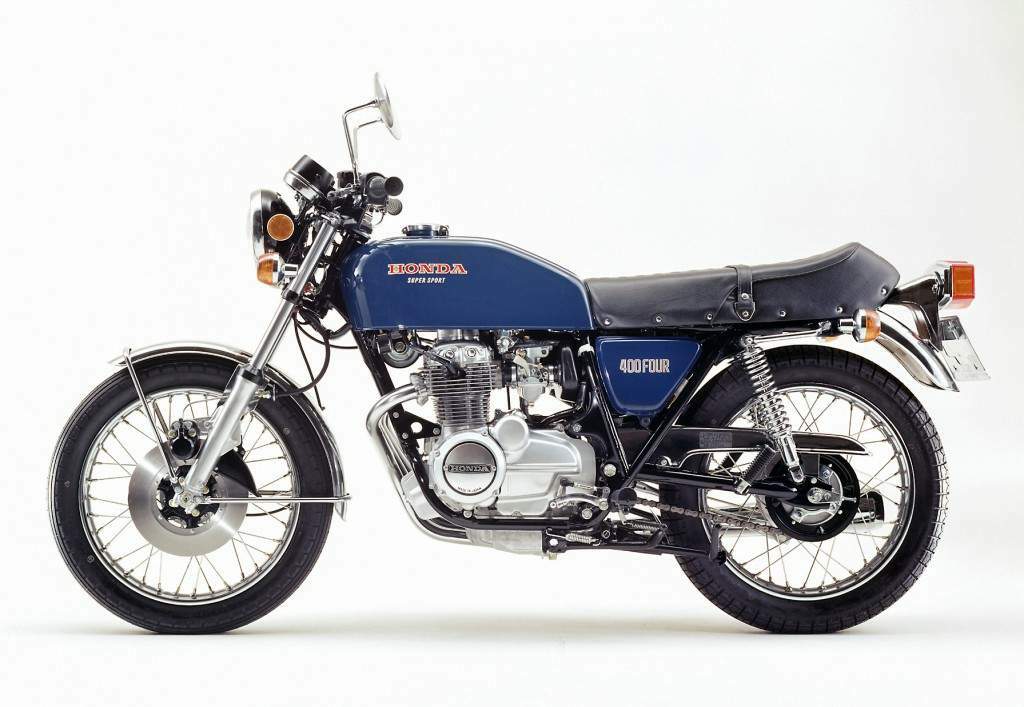
- —The first CB400 was the 1975–1977 'Dream CB400 Four' — a 408 cc air-cooled SOHC inline-four with six speeds, breaker-point ignition, and four 20 mm Mikuni carbs; it was essentially a mini-superbike that Honda sold for only three years in Europe because it cost almost as much to build as a CB550/4.
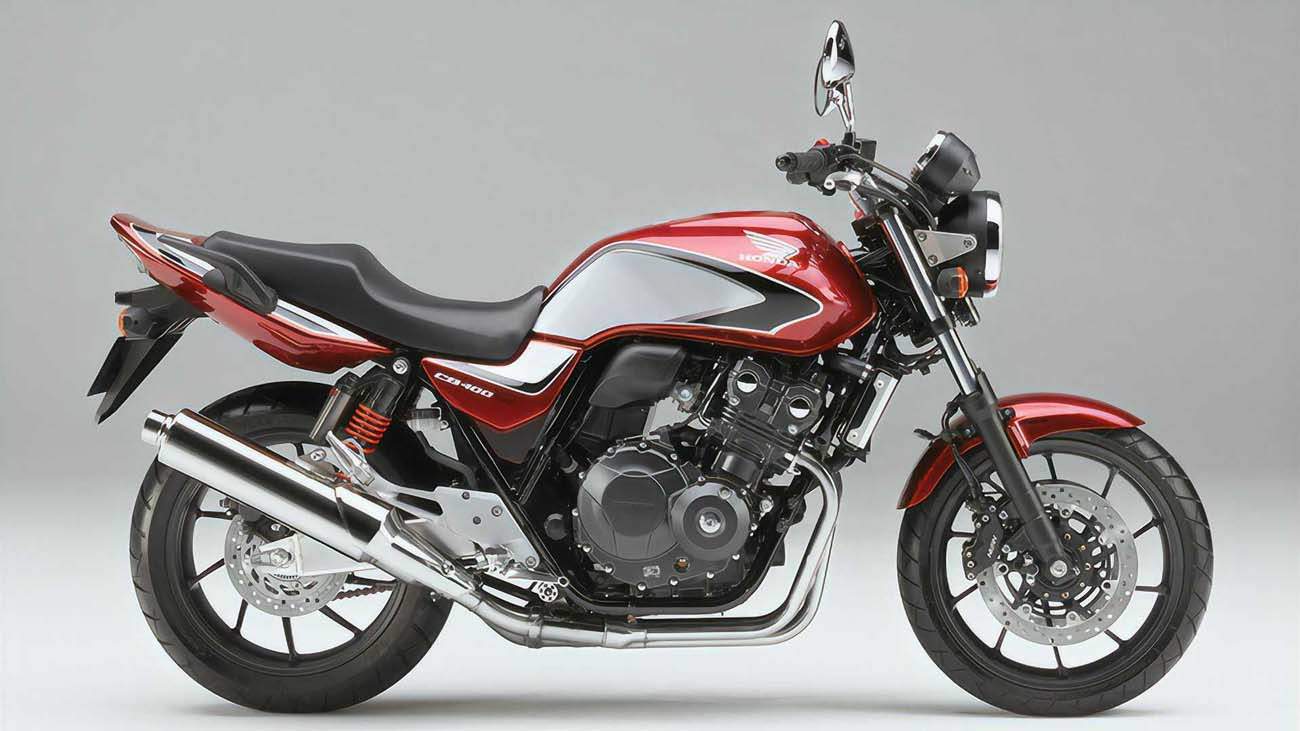
- —The CB400 Super Four (1992–2022) uses a 399 cc liquid-cooled DOHC 16-valve inline-four with a 55 mm × 42 mm bore/stroke, 11.3:1 compression, and a claimed 56 PS at 11,000 rpm — it's a 400 cc version of the CB1000 'Big One' that was the 'PROJECT BIG-1' design concept, sharing its chassis and styling cues.
- —The 1989–1990 CB-1 (also called CB400F) is a separate beast: a 399 cc liquid-cooled DOHC 16-valve inline-four with a gear-driven cam system (replaced by chain drive on the later Super Four) and a redline of 12,500 rpm, making it a higher-revving, more sporting machine than the Super Four that followed.
- —The CB400SS (NC41, 2002–2006) is a single-cylinder 397 cc SOHC 4-valve air-cooled thumper making only 29 hp — a lightweight (139 kg) retro scrambler that shares nothing with the four-cylinder CB400s except the badge and a 400 cc class pretence.
- —The CB440S was a one-off built by a Honda dealership in São Paulo, Brazil in 1983 — a CB400 with a 447 cc engine (bigger pistons, different crankcase, new suspension arms) that never officially left the dealer's workshop, a true local oddity.
- —The Japanese licence system is the reason 400 cc four-cylinder bikes like the CB400 survive: after the 1970s, Japan made it easier to get a licence for bikes up to 400 cc, creating a domestic market for middleweight pocket rockets that Honda fed with models like the CB400 Super Four and the CBR400RR 'Baby Blade' — machines never officially sold in most Western markets until the 2000s.
Learn
From the 400 Four to the Super Four
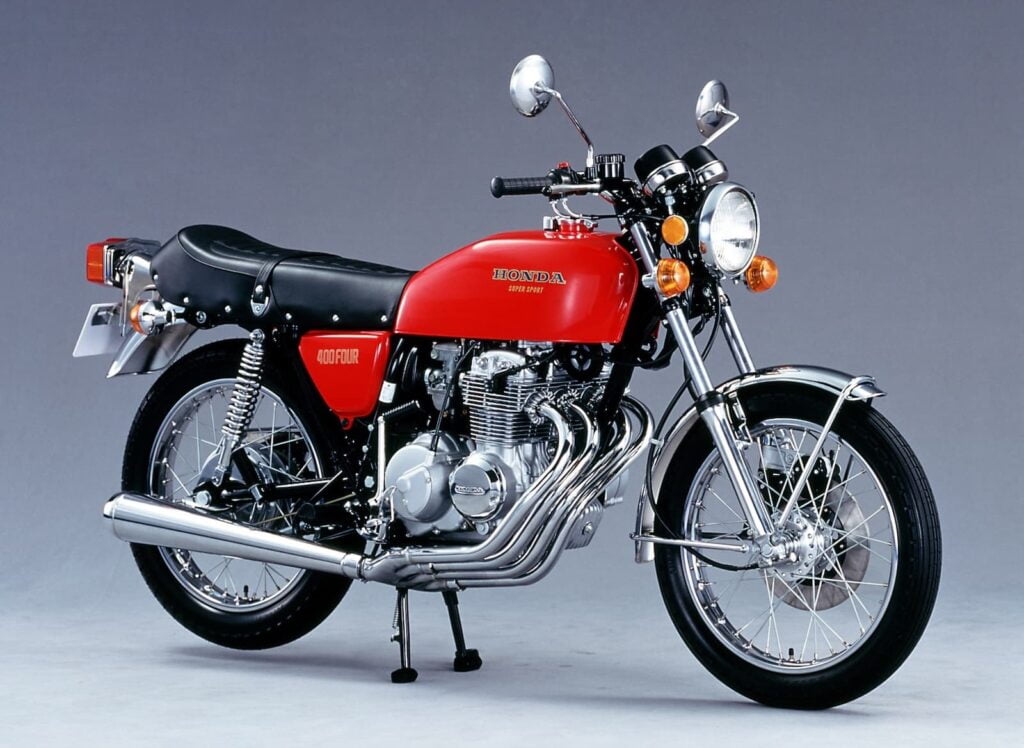
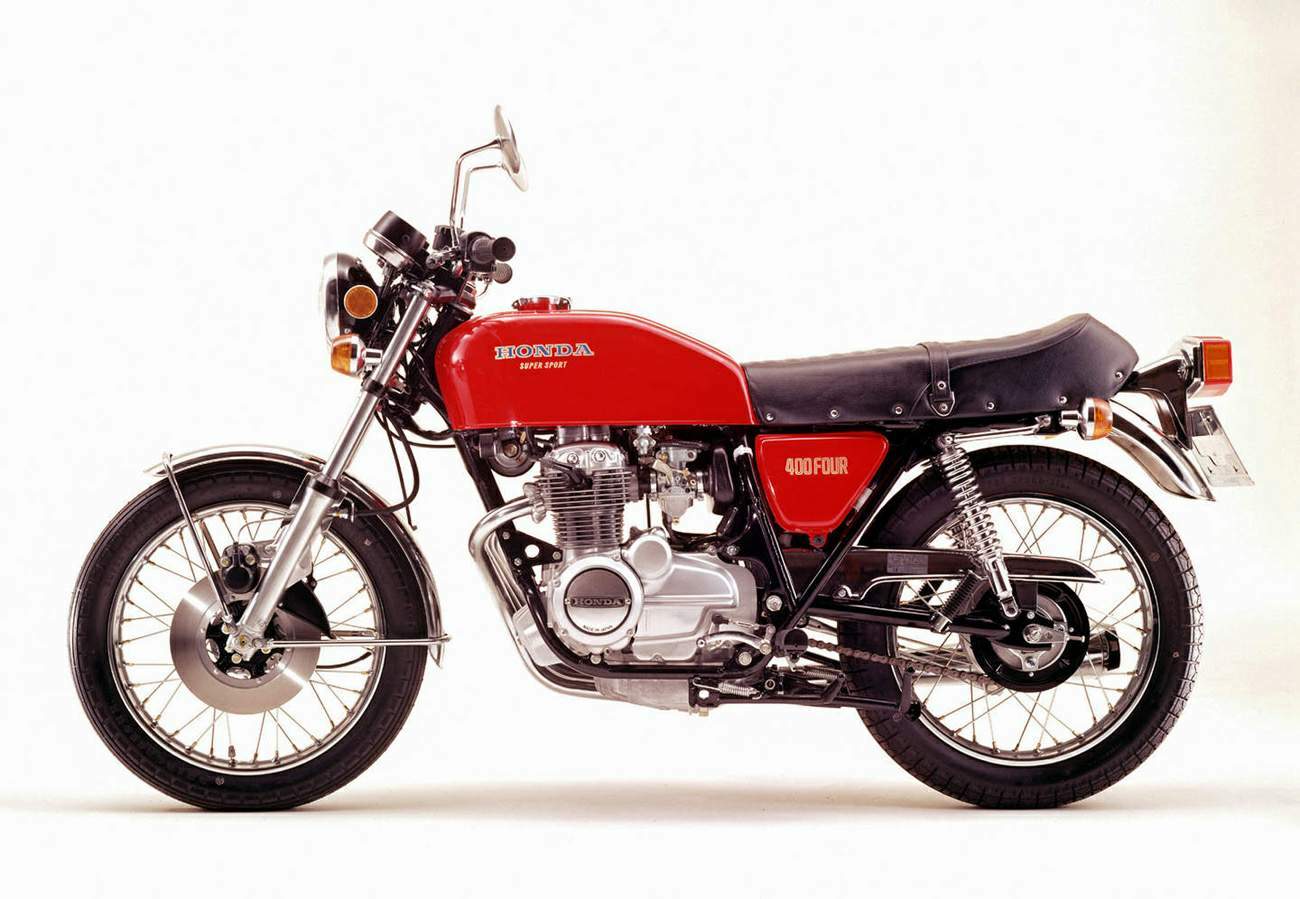
The Honda CB400 lineage splits into two distinct eras: the original 1975-1977 CB400F (often called the 400 Four) and the long-running CB400 Super Four that debuted in 1992 and was produced for 30 years. The CB400F was created as a rescue mission after Honda's own Soichiro Honda declared the CB350 Four 'the finest, smoothest Honda ever built,' yet it sold poorly and was slow—one of Honda's rare failures. Led by Large Project Leader Masahiro Sato, the team increased bore to 408cc, added a first-for-Honda six-speed gearbox, and gave it a café racer look with low handlebars and rearset footpegs. Most iconically, it was the first Honda production bike to adopt a 4-into-1 exhaust system, a styling and cost-saving move that defined its sound and silhouette. The Super Four, by contrast, emerged from Japan's unique licensing system that made 400cc bikes desirable on an ordinary license. Developed under the PROJECT BIG-1 concept alongside the CB1000 Super Four, it used a liquid-cooled 16-valve DOHC engine based on the earlier CB-1, and it kept the 4-into-1 exhaust for a 'sexy and wild' naked look. The Super Four sold for three decades until 2022, then returned in 2026, proving that Honda's middleweight four-cylinder formula—whether air-cooled and SOHC or liquid-cooled and DOHC—has an enduring appeal that casual history often overlooks.
 global.hondaglobal.honda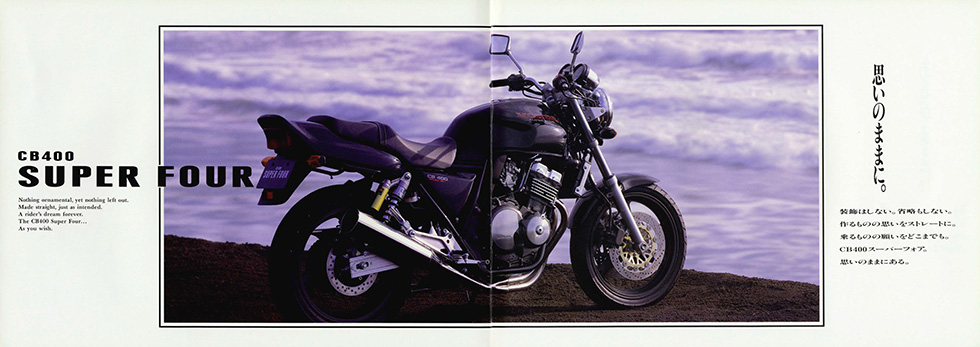

+Field notes
- —Honda's own founder Soichiro Honda called the CB350 Four 'the finest, smoothest Honda ever built,' but the bike was a slow sales flop—one Japanese journalist at the time called it 'the reply to a query never raised.' LPL Masahiro Sato later admitted it was a failure, which directly spurred the CB400F's development.
- —The CB400F was Honda's first production motorcycle to use a 4-into-1 exhaust system—a decision driven not by performance alone but by a mandate to cut weight and cost, since the CB400F cost nearly as much to build as a CB550/4.
- —Unlike the CB750 and CB500/550 that used four separate mufflers, the CB400F's single-sided muffler and chromed 4-into-1 header gave it a café racer profile that was radical for a Japanese bike—low bars, rearset pegs, and a slim tank-seat line were all factory standard.
- —The CB400 Super Four's 1992 debut was part of PROJECT BIG-1, a design philosophy shared with the CB1000 Super Four that defined 'sexy and wild' styling and 'emotional performance.' The engine tilted backward for a more erect cylinder bank, and carburetors switched from down-draft to side-draft constant velocity units.
- —Japan's 400cc license category kept the Super Four alive for 30 years (1992-2022) while 400cc bikes vanished elsewhere; Honda even experimented with a Hyper VTEC system on the CBR400R that cut intake valves from four to two below 6,750 rpm to boost torque and economy.
- —The original CB400F had only a three-year production run (1975-1977) because it was too expensive to build—it used the same basic platform as the CB550/4—and was replaced by the cheaper, blander CB400 Superdream in most markets.
Learn
The Terms, Specs, and Generations Enthusiasts Use
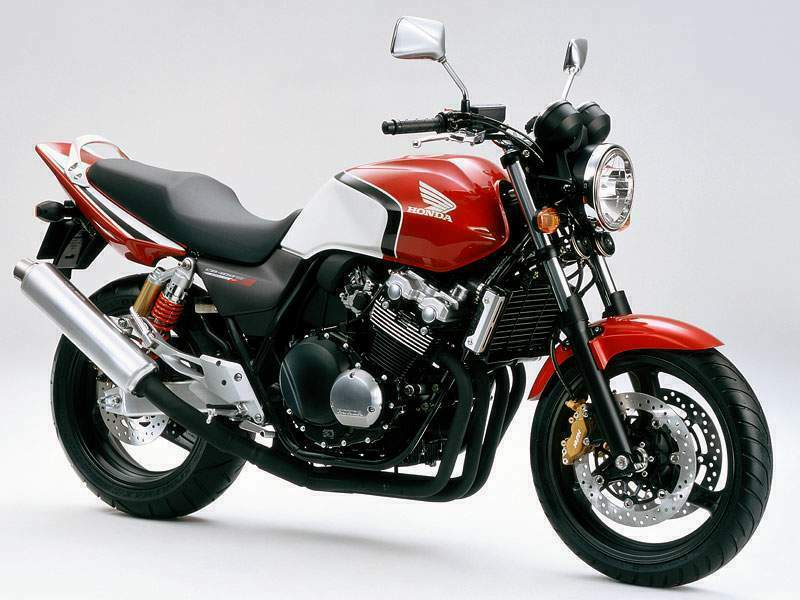
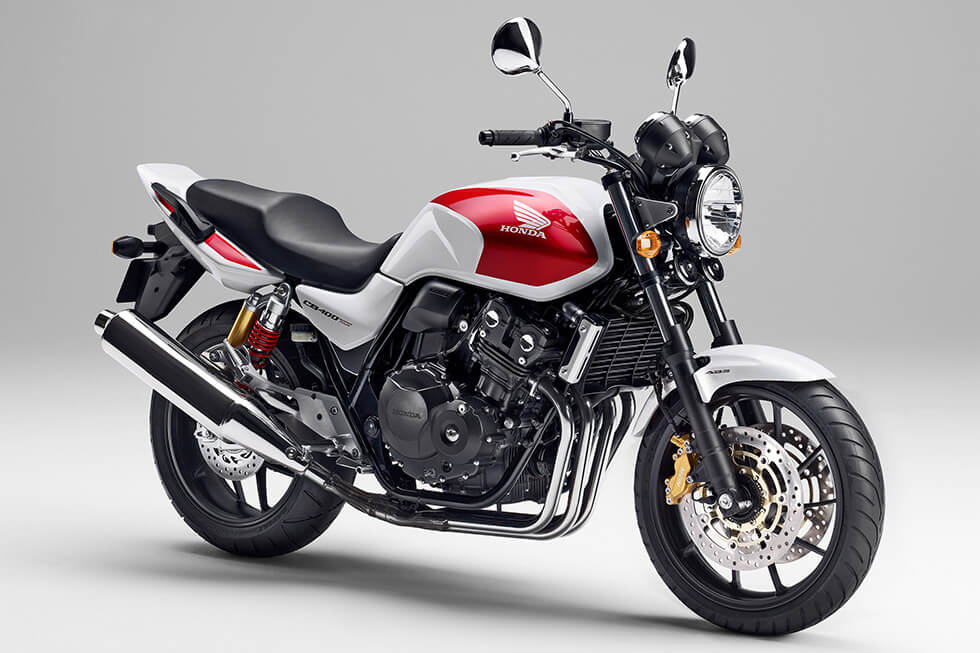
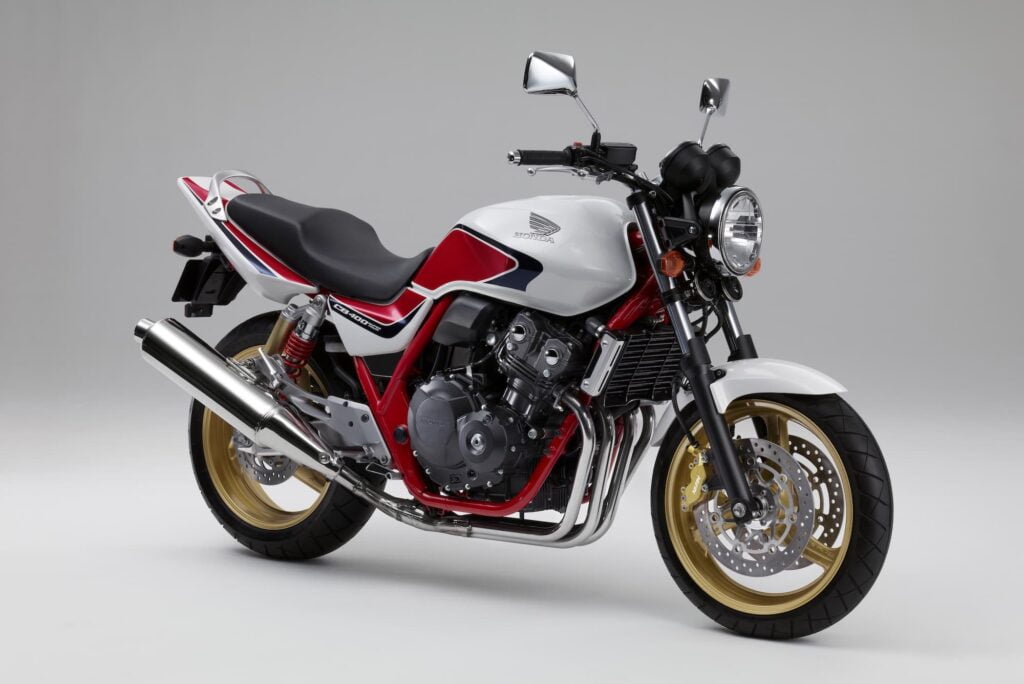
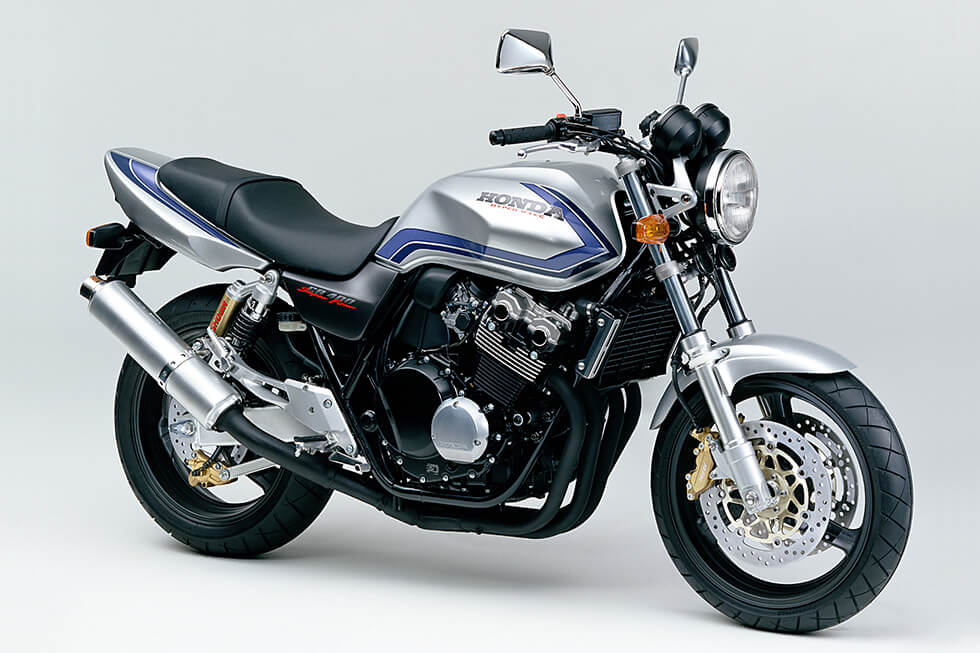
The Honda CB400 Super Four, produced from 1992 to 2022 at Honda's Kumamoto plant, is defined by three distinct chassis-code generations — NC31, NC39, and NC42 — each marking a major technological leap. The NC31 (1992–1998) is the original carbureted, non-VTEC variant; the NC39 (1999–2006) introduced the world's first mass-produced 'direct push' HYPER VTEC valve system and is still carbureted, with sub-specs Spec I, II, and III. The NC42 (2007–2022) transitioned to fuel injection (PGM-FI), adopted the refined HYPER VTEC Revo system that uses throttle position as well as rpm to switch between 2- and 4-valve operation, and saw three phases: early (2007–2013), mid (2014–2017), and late (2018–2022), the last gaining a slight power bump to 56 ps and LED headlights. Within NC42, dozens of limited-edition color schemes were released — like the 2012 20th Anniversary 'Candy Prominence Red' with gold stripes (700 units) — partly because the bike was almost exclusively sold in Japan, making it a domestic-market icon with a global cult following.
 en.enduro.teamen.enduro.team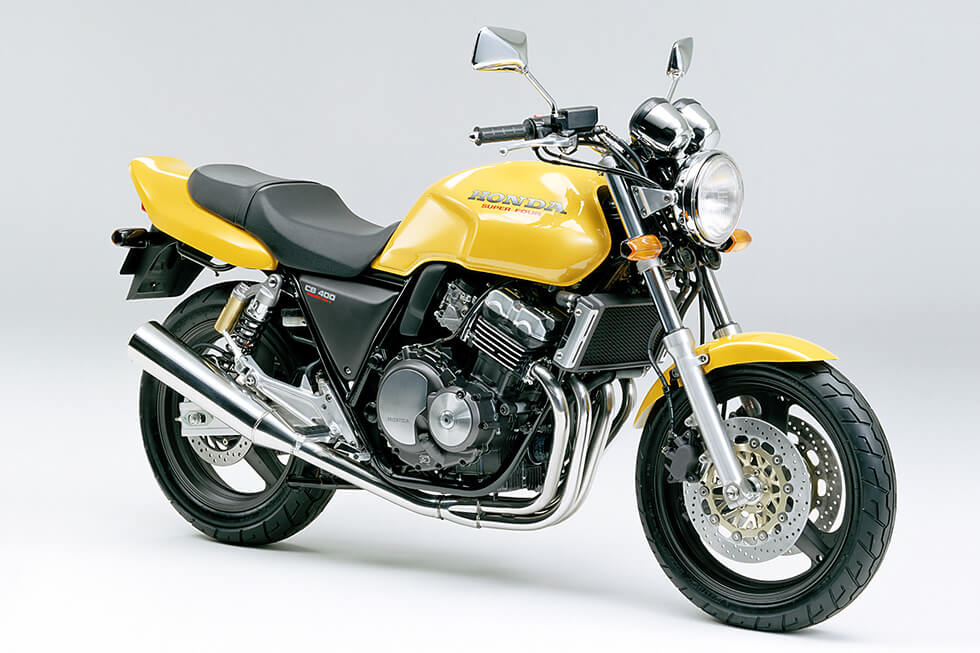
 astys.jpastys.jp
+Field notes
- —Three core chassis codes define the entire lineage: NC31 (carbureted, 1992–1998), NC39 (carbureted with HYPER VTEC, 1999–2006, sub-divided into Spec I, II, and III), and NC42 (PGM-FI injected with HYPER VTEC Revo, 2007–2022).
- —The 2007 NC42 'Revo' upgrade replaced carbs with Honda's PGM-FI electronic fuel injection, added independent ignition coils per cylinder, and introduced IACV for idle control — making the bike far more maintenance-free and responsive than earlier generations.
- —HYPER VTEC Revo was a significant evolution: it used throttle position in addition to engine rpm and gear position to switch between 2-valve and 4-valve operation, enabling smooth cruising and aggressive acceleration on the same motor.
- —Late NC42 models (2018–2022) bumped peak output from 53 ps to 56 ps at 11,000 rpm, gained LED headlights, and switched to L-shaped air valves on the wheels — all to meet Euro 4 emissions standards.
- —The CB400 was always a Japan Domestic Market (JDM) machine, officially exported only to Australia (from 2008) and parts of Southeast Asia; its limited production runs and constant special editions — like the 2012 20th anniversary model (700 units) — were partly a strategy to sustain sales in its home market.
- —Despite being a 400cc class bike, the engine shares the same 55 mm bore and 42 mm stroke as many larger CBs, revs freely to over 10,500 rpm, and produces a claimed 53–56 ps — figures that explain why it became the primary training motorcycle for most Japanese riding schools.
Discover
Ride Reviews, Imports, and Owner Walkarounds on YouTube


The Honda CB400, particularly the Super Four variant, enjoys a legendary status among riders for its blend of reliability, performance, and timeless design. Jake's Coffee Rider review on TRI333PLE highlights it as an all-time favorite, praising its ride quality and character while honestly discussing its drawbacks. The model's history traces back to 1975, when it debuted as a lighter, more agile sibling to the CB750, borrowing advanced eight-valve engine technology from MV Agusta—a pedigree that still impresses enthusiasts today. Full restoration videos, like the one by Vintage Car Revival, showcase the bike's enduring appeal by documenting complete rebuilds of 1997 models, underlining how these machines reward dedicated owners with a satisfying revival process.
+Field notes
- —Jake's Coffee Rider review on TRI333PLE gives an honest, first-person take on the CB400 Super Four, calling it a fan favorite but also breaking down the good and not-so-good aspects—exactly the kind of balanced perspective you don't get from glossy manufacturer videos.
- —The CB400's engine technology traces back to MV Agusta, specifically an eight-valve design that made it punchier and more refined than expected for a 400cc machine—a direct link to Italian racing pedigree that Honda quietly adapted for the mass market.
- —First launched in 1975, the CB400 was conceived as a lighter, more accessible version of the CB750, which itself had defined the modern superbike category just a few years earlier.
- —The restoration of a 1997 CB400 by Vintage Car Revival racked up over 1.7 million views—proof that the bike's fanbase is rabid and that seeing a tired example brought back to life is deeply satisfying, not just for CB owners but for any motorcycle enthusiast.
Discover
Buyer Guides, Ownership Reviews, and Model Deep Dives
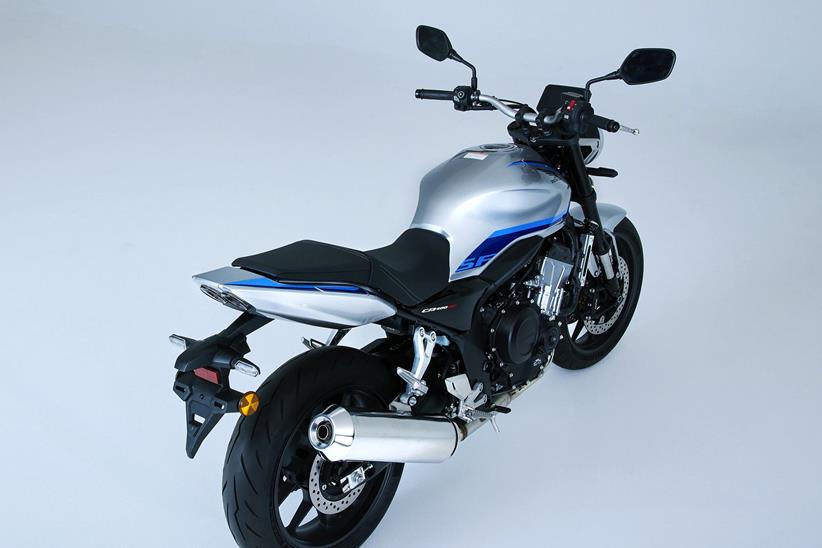
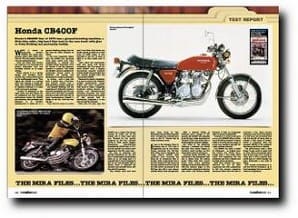

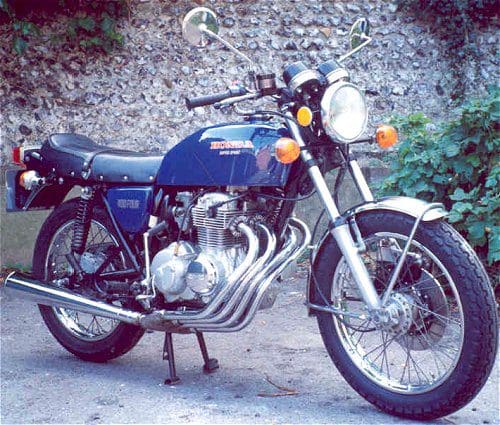
The Honda CB400 story splits into two distinct eras, each with its own character and quirks. The original CB400F (1975–77) was a 408cc six-speed mini-superbike that could turn a 14.1-second quarter-mile but suffered from a famously fiddly cam chain tensioner, HT leads that fail at the coil, and chrome that rots at the first sign of neglect—yet David Silver Sparts keeps most parts available, making it a restorer's delight. In contrast, the CB400 Super Four (1992–2022) is a liquid-cooled 399cc inline-four from Honda's 'PROJECT BIG-1', sharing its design DNA with the CB1000 and delivering 52 bhp with a 12,500 rpm redline. As a Japan-only grey import in the UK, it's only available used (typically around £6,500) and demands careful inspection for abuse by novice riders, though owners rate reliability at 4.6/5 and servicing runs just £120 a year.
+Field notes
- —The CB400F's 408cc engine (bored from the 350F's 47mm to 51mm) came with a six-speed gearbox and ran a 14.1-second quarter-mile, but its cam chain tensioner is a notorious weak point with stripped threads, and the HT leads are moulded into the coils in a way that catches road muck, often leaving you running on three cylinders.
- —The CB400 Super Four launched in April 1992 as a 400cc version of the CB1000 'Big One', using an updated CB-1 engine with side-draft carbs, a conventional chain drive (replacing the gear cam drive), and a 12,500 rpm redline—all wrapped in a 'sexy and wild' naked design that Honda said should 'thinly veil its power'.
- —UK buyers face grey-import realities: the Super Four is only available used (prices around £6,500), parts and servicing can be tricky to source, and many bikes have been thrashed by novice riders—so look for signs of damage and neglect before buying.
- —The CB400F's front brake caliper seizes on its pivot points at the mere whiff of road salt, and the chrome on mudguards rots away if left unkempt—but the engine itself is good for 100,000 miles with regular servicing, and most parts are still available from specialists like David Silver Spares.
- —Over 105,000 CB400Fours were built worldwide, with more than 15,000 sold in the UK between 1975 and 1979—yet the US market was a disappointment, selling fewer than 1,000 units less than the UK total, proving the model was a cult hit rather than a mass-market success in America.
- —The Super Four's twin 285mm floating front discs with 4-piston Nissin calipers and 41mm Showa forks give it genuinely good stopping power and handling—a far cry from the CB400F's 'weedy brakes and harsh suspension' that even fans admit are dated by modern standards.
Keep exploring
More of Honda CB400
More to explore
In the same world.
Honda Super Cub
The Honda Super Cub is Honda’s long-running underbone motorcycle, built continuously since 1958 and widely recognized as…
Datsun 240Z
The Datsun 240Z is the export-badged S30-generation Nissan Fairlady Z, a late-1960s-to-1970s sports car that reshaped ho…
Porsche 964
The Porsche 964 — built from 1989 to 1994 — represents one of the most ambitious reinventions of the 911 formula: beneat…

Porsche 911
The 911 is Porsche’s long-running family of rear-engine, high-performance sports cars, now spanning a wide range of Carr…
Ferrari in the 1980s
Ferrari’s 1980s output is a study in contrasts: wedge-shaped flat-12 flagships like the 1984 Testarossa, sharper-evolved…
Hibiki Whisky
Hibiki is Suntory’s premium blended Japanese whisky line, presented as a celebration of harmony and the art of blending…
.jpg)
Ferrari Testarossa
The Ferrari Testarossa is Ferrari’s mid-engined 12-cylinder successor to the Berlinetta Boxer, unveiled at the Paris Mot…

OHTO Fountain Pens
OHTO’s fountain-pen line is a compact corner of Japanese pen culture built around metal-bodied, fine-nib everyday writer…
More in Cars & Motorcycles
Stay in this world.

Electric Vehicle Design
Land Rover Defender 110
Datsun 240Z
Honda Super Cub
Ferrari Testarossa
Ferrari Testarossa
Porsche 911
Ferrari in the 1980s
Know someone who’d love this?
Discovered by ArcurianAuto-generated from public sources and AI synthesis — it may be incomplete or inaccurate. Treat it as a starting point for your own exploration, not professional (medical, legal, financial, or safety) advice. Verify anything you act on. Report this page.