
OHTO’s fountain-pen line is a compact corner of Japanese pen culture built around metal-bodied, fine-nib everyday writers rather than oversized luxury showpieces. The current FF01 and FF02 models are defined by aluminum bodies, steel F nibs, soft-grip sections, and OHTO’s FCR-6 cartridge system, while retailers and older stock also point to adjacent models like the F-Lapa and Celsus. What makes them interesting is the mix of practical industrial details—brass accents, a distinctive clip, compact proportions—with the slightly elusive way OHTO pens surface through stationery shops rather than dominating collector talk. If you like understated pens that feel engineered instead of ornamental, OHTO is worth following model by model.
Learn
Start with the FF01 and FF02
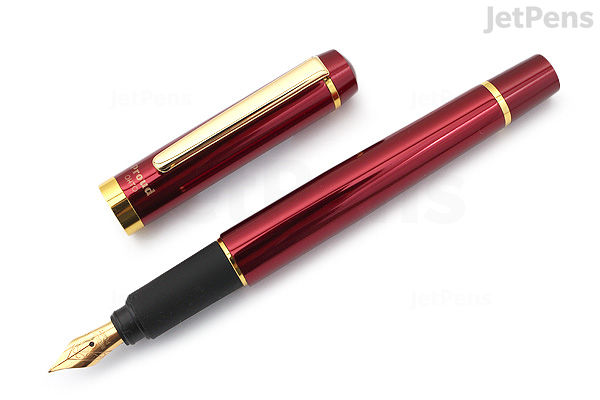
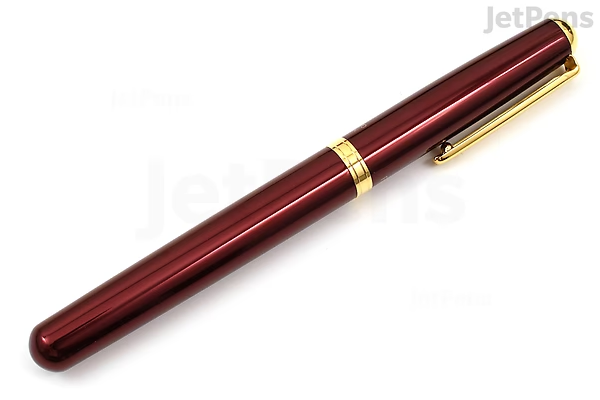
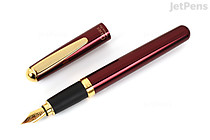
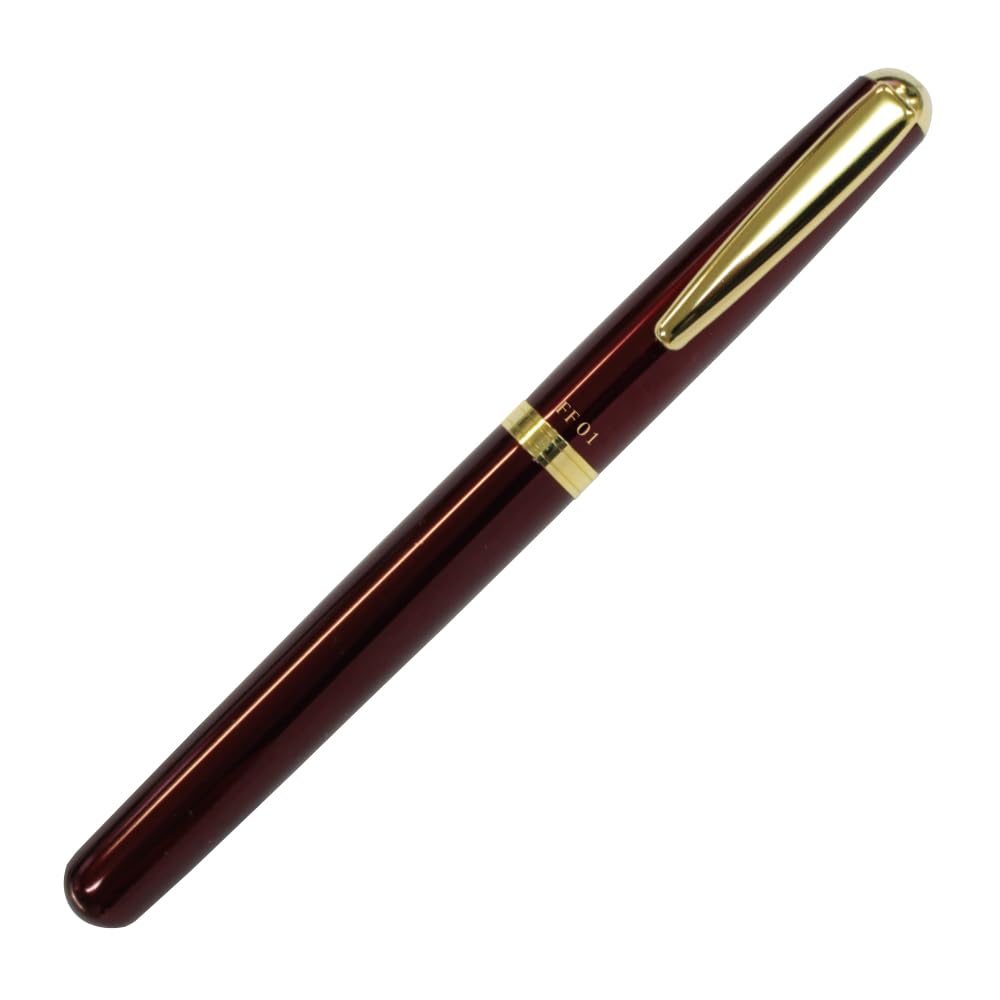
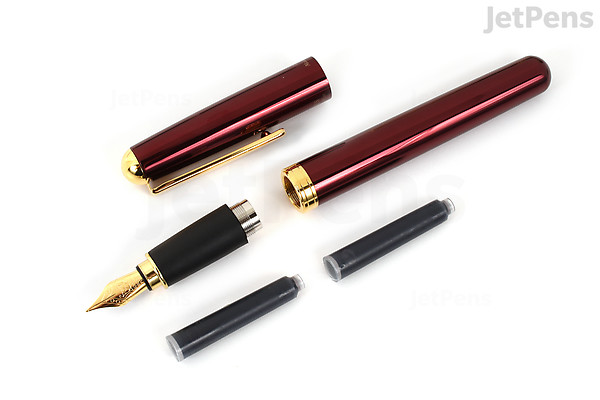
OHTO's FF01 and FF02 fountain pens represent a deliberate design fork within the same family, sharing a common aluminum barrel, steel nib, and proprietary FCR-6 cartridge system, but diverging sharply in grip philosophy and body profile. The FF01 is the fuller, more tactile option: a 13.3mm barrel diameter and 23.7g weight paired with a soft elastomer grip section, designed for comfort during longer writing sessions. The FF02, by contrast, is a streamlined 10.6mm-thin, 21g tool with an aluminum grip, prioritizing a sleek, uniform silhouette over cushioning. Both models use gold-plated brass accents—a detail that elevates them from standard aluminum pens—and are assembled at OHTO's Yuki Factory in Japan. Crucially, the nibs are reportedly manufactured by Schmidt in Germany, offering a quality-to-price ratio that makes these pens a surprise contender against far more expensive European options. The trade-off is that neither pen comes with a converter; they rely exclusively on OHTO's proprietary FCR-6 cartridges (available in black and blue-black), limiting ink choice unless you track down a compatible aftermarket converter.
 ohto.co.jpohto.co.jp
 ohto.co.jpohto.co.jp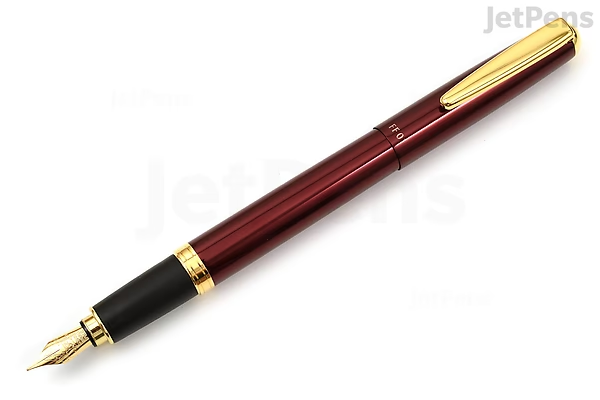
+Field notes
- —The FF01 and FF02 are identical in length (roughly 142mm) and both use an aluminum barrel and cap with a steel nib and SK clip, but the critical difference is the grip: the FF01 uses a soft elastomer section, while the FF02 uses a machined aluminum grip, making the FF01 2.7g heavier (23.7g vs 21g).
- —The nib on the FF01 and FF02 is widely reported by retailers to be a German-made Schmidt iridium-tipped steel unit, a significant upgrade for a pen at this price point, delivering smooth writing performance often associated with more expensive European pens.
- —Both pens are exclusively cartridge-fed, using OHTO's proprietary FCR-6 cartridges (available in black and blue-black). No converter is included in the package, so users wanting bottled ink must source a standard international converter, as the FCR-6 is not a widely compatible format.
- —Build construction differs subtly: the FF01's cap plug is listed as brass, while the FF02's spec sheet explicitly adds an 'endplug' also made of brass, suggesting a more consistent use of brass bookends on the slimmer model.
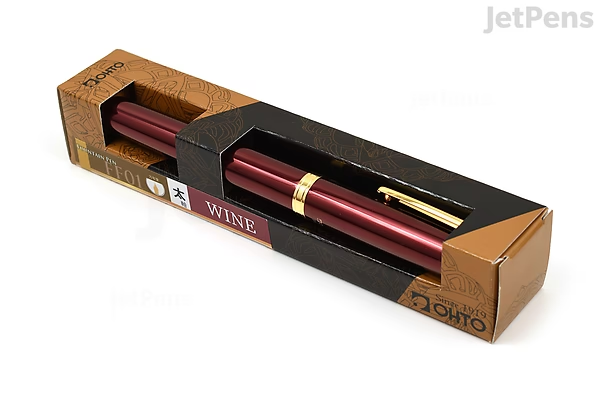
- —The gold-plated brass accents on the 'Gold Parts Model' are the defining aesthetic feature, turning what could be a plain aluminum pen into a visibly premium object; these models are marketed as limited editions and assembled at OHTO's Yuki Factory in Japan.
Learn
Map the OHTO fountain-pen family beyond the current catalog
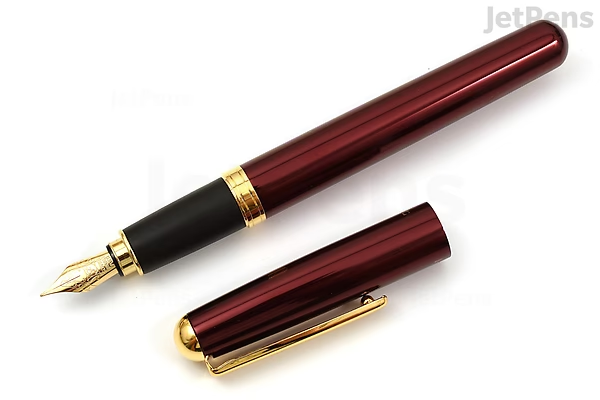
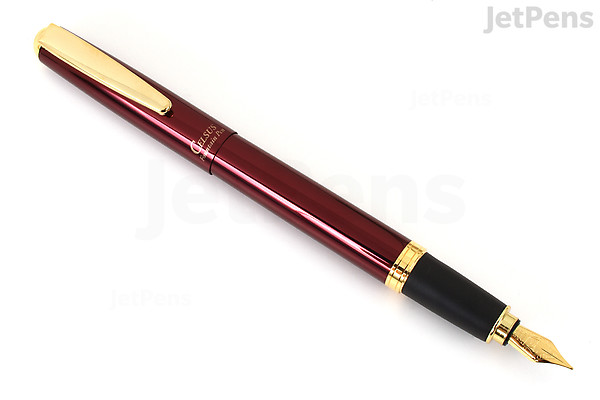
The OHTO fountain pen family is a quietly evolving line of Japanese-made pens that leans heavily on German nib craftsmanship and a rotating cast of discontinued-but-beloved models. The Celsus—sometimes spelled Celcius, a quirk that reflects its status as a pen you find more in enthusiast databases than on current store shelves—is a cigar-shaped aluminum-bodied pen fitted with a Schmidt iridium nib from Germany. It was offered in black, brown, and wine, and was later replaced by the FF01, which swaps aluminum for a heavier brass body and a lacquer finish. Meanwhile, the F-Lapa is a slim, gold-accented metal pen that shares its nib with the chunkier F-Spirit (a pen owners complained was too heavy); the F-Lapa’s grip is an oddly compelling plastic-rubber hybrid that develops a patina over time, and the pen was only sold through JetPens. A third pocket-sized model, the Rook, rounds out the easy-to-miss lineup. None of these pens use proprietary converters—they all rely on standard international short cartridges, which means any Ohto collector is free to mix and match ink brands without hunting down special parts.
 fountainpencompanion.comfountainpencompanion.com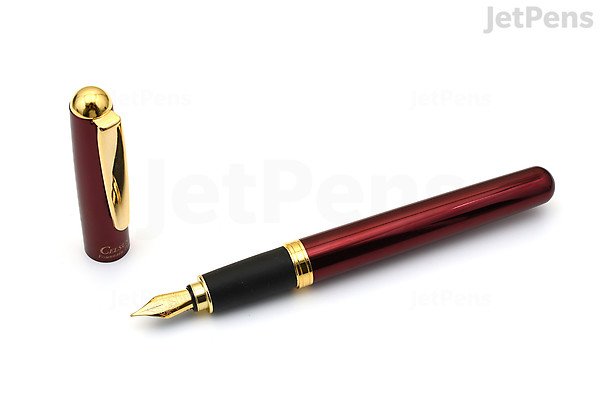
 jetpens.comjetpens.com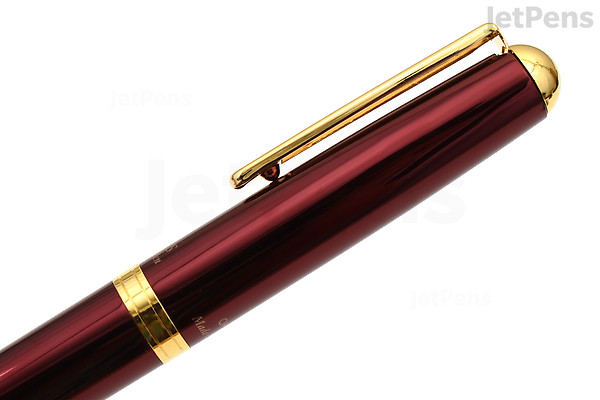
+Field notes
- —The Celsus/Celcius (the name varies even within retailer listings) was discontinued and directly replaced by the FF01: the Celsus used an anodized aluminum barrel, while the FF01 switched to a brass body with lacquer finish for a heavier feel.
- —The Celsus’s nib is a German-made Schmidt iridium unit, not a generic Ohto house nib—this is a key detail that separates it from cheaper offerings in the brand’s lineup.
- —The F-Lapa, sold exclusively at JetPens, shares its nib with the heavier Ohto F-Spirit; both have “Fine Iridium Point Germany” engraving, though at least one owner suspects the nib is actually Chinese-made, based on identical markings on a promotional pen.
- —The F-Lapa’s grip section is made from an unlabeled material that feels like a cross between hard plastic and rubber; over a year of use it becomes glossier and develops an oil-built patina rather than wearing down.
- —All of these Ohto models—Celsus, F-Lapa, F-Spirit, and the tiny Rook (the latter referenced in a review of the F-Lapa)—use standard international short cartridges; none come with a converter, but the Ohto FCR-6 refill is a common compatible option.
Learn
Learn the OHTO model names, refill codes, and hardware details
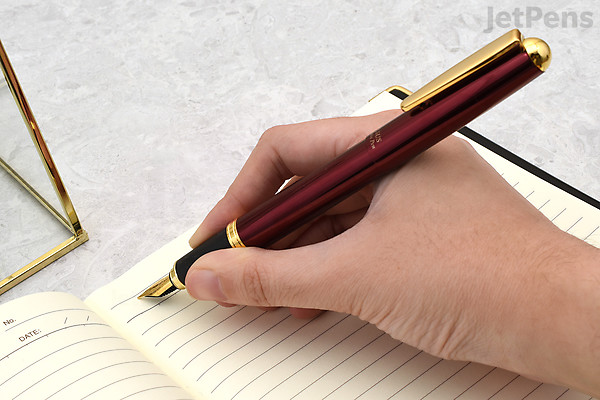
OHTO's fountain pen lineup is anchored by two deceptively similar metal-bodied models — the FF01 and FF02 — which share the same FCR-6 cartridge and steel nib but diverge in grip and silhouette: the FF01 uses a soft elastomer section and measures 13.3 mm wide, while the FF02 swaps in an aluminum grip and slims down to 10.6 mm, shaving nearly 3 grams off the weight. The FCR-6 refill, offered in black and blue-black, is the standard for these pens, though the F-Lapa (model FF-10NB) breaks the pattern by accepting standard international long and short cartridges and even a converter. The Celsus, another OHTO model, also relies on the FCR-6 but stands out with a German-made gold-plated steel nib and a lacquered aluminum body available in black or wine. All these pens emphasize aluminum construction and snap-on caps, with brass accents in the cap plug or end plug adding a touch of heft.
+Field notes
- —The FF01 and FF02 look similar but are distinct: the FF01 has a soft elastomer grip and 13.3 mm barrel width, while the FF02 uses an aluminum grip and measures 10.6 mm wide — making it noticeably slimmer and 2.7 g lighter (21 g vs 23.7 g).
- —Every OHTO fountain pen covered here — FF01, FF02, and Celsus — uses the same proprietary FCR-6 ink cartridge, which comes in black (4971516530717) and blue-black (4971516530731). No converter is included with these models, though the FF01 and FF02 ship with two FCR-6 black cartridges.
- —The F-Lapa (model number FF-10NB) breaks from the FF01/FF02 family by accepting standard international long and short cartridges and a converter, giving it wider refill compatibility. Its snap-on cap and plastic grip contrast with the metal-bodied FF series.
- —OHTO's Celsus fountain pen uses the same FCR-6 cartridge but features a gold-plated steel nib made in Germany — a rarity in this price range — and comes in black or wine lacquer over anodized aluminum, with silver or gold trim.
- —Hardware details on the FF01 and FF02 include a steel nib marked 'F', an aluminum barrel and cap, a brass cap plug (FF01) or brass cap plug and end plug (FF02), and an SK (steel) clip. The FF01 grip is soft elastomer; the FF02 grip is bare aluminum.
Discover
Read retailer notes and enthusiast writeups for the details listings miss
Ohto's budget-friendly F-Lapa fountain pen feels like a sleek, metal-bodied prop from a lawyer movie—shiny and imposing in the hand, yet unmistakably cheap on closer inspection. Retailers list standard specs (fine steel nib, cartridge-only filling, 14.2cm closed length), but enthusiasts noticed the nib is shared with the heavier F-Spirit and inked on the same F-Lapa but the line it puts down is thicker than most Asian fines, landing between a Lamy EF and F. The black plastic grip is oddly comfortable, warming to the touch over time, but a small step where it meets the metal barrel can become irritating during long writing sessions. The gold band behind the grip is a weak spot, showing wear faster than the rest of the pen, and the slender aluminum body stays balanced even when posted. For around $16, the F-Lapa rewards a curious owner with surprising everyday usability—provided you aren't expecting luxury refinement.
+Field notes
- —The Ohto F-Lapa shares its nib exactly with the earlier F-Spirit—same stiff steel, same gold-toned squiggly pattern, and the same "Fine Iridium Point Germany" etching, though one blogger suspects the nib is actually Chinese-made, based on finding identical markings on a promotional pen.
- —The F-Lapa's gold band behind the grip section develops noticeable wear within a year of frequent use, while the rest of the aluminum body holds up well—a specific durability quirk that retailers never mention.
- —The black plastic grip uses a material that doesn't sit flush against the metal part before the nib, creating a slight edge; one reviewer found it comfortable at first but worried it would cause fingertip pain during extended writing.
- —Despite its slim, classy appearance, the pen feels cheap upon handling—one enthusiast noted it succeeds as a visual prop for "yuppie lawyer movies" but doesn't survive hands-on scrutiny.
- —The Ohto F-Lapa's nib is stiff with no flex, but the tip is smooth and lays down a concentrated fine line that makes watery inks appear more saturated—an unexpected benefit for ink lovers.
- —Ohto's later FF01 model, listed as an evolution of the Celcius (Celsus) line, inherited metal body and soft elastomer grip features from the F-Lapa family, but added a lacquer finish and heavier brass elements.
Keep exploring
More of OHTO Fountain Pens
More to explore
In the same world.
Fountain Pens
Fountain pens are refillable writing instruments that feed liquid ink to a metal nib, and for many people the appeal is…

Sailor Fountain Pens
Sailor’s fountain-pen world is built around a few core families that collectors quickly learn to recognize: the rounded…

Vintage Pelikan Fountain Pens
Vintage Pelikan collecting really starts with the Model 100, the company’s first fountain pen, made from 1929 to 1944 an…
Platinum Modern Maki-e Fountain Pens
Platinum’s Modern Maki-e pens sit in a very specific corner of fountain-pen collecting: Japanese motif pens made with a…
Sailor King of Pens
Sailor’s King of Pens is the company’s top-of-the-range fountain pen line, positioned by Sailor as a symbol of its techn…
Sailor Maki-e Fountain Pens
Sailor’s Maki-e fountain pens sit at the meeting point of writing instrument collecting and a Japanese decorative art wi…
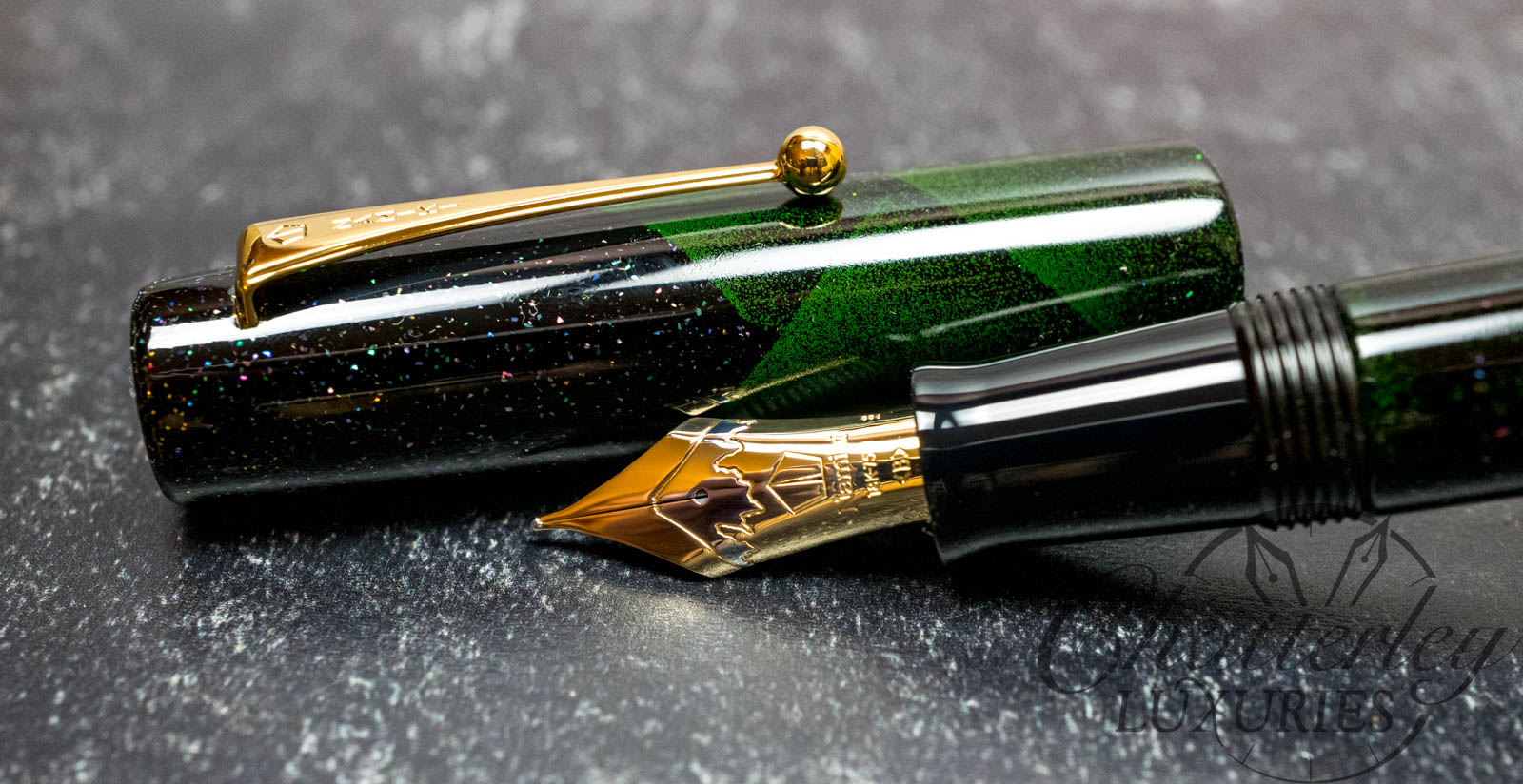
Namiki by Pilot
Namiki is Pilot’s Japanese brand for high-end fountain pens, especially models finished in maki-e and urushi lacquer. Th…
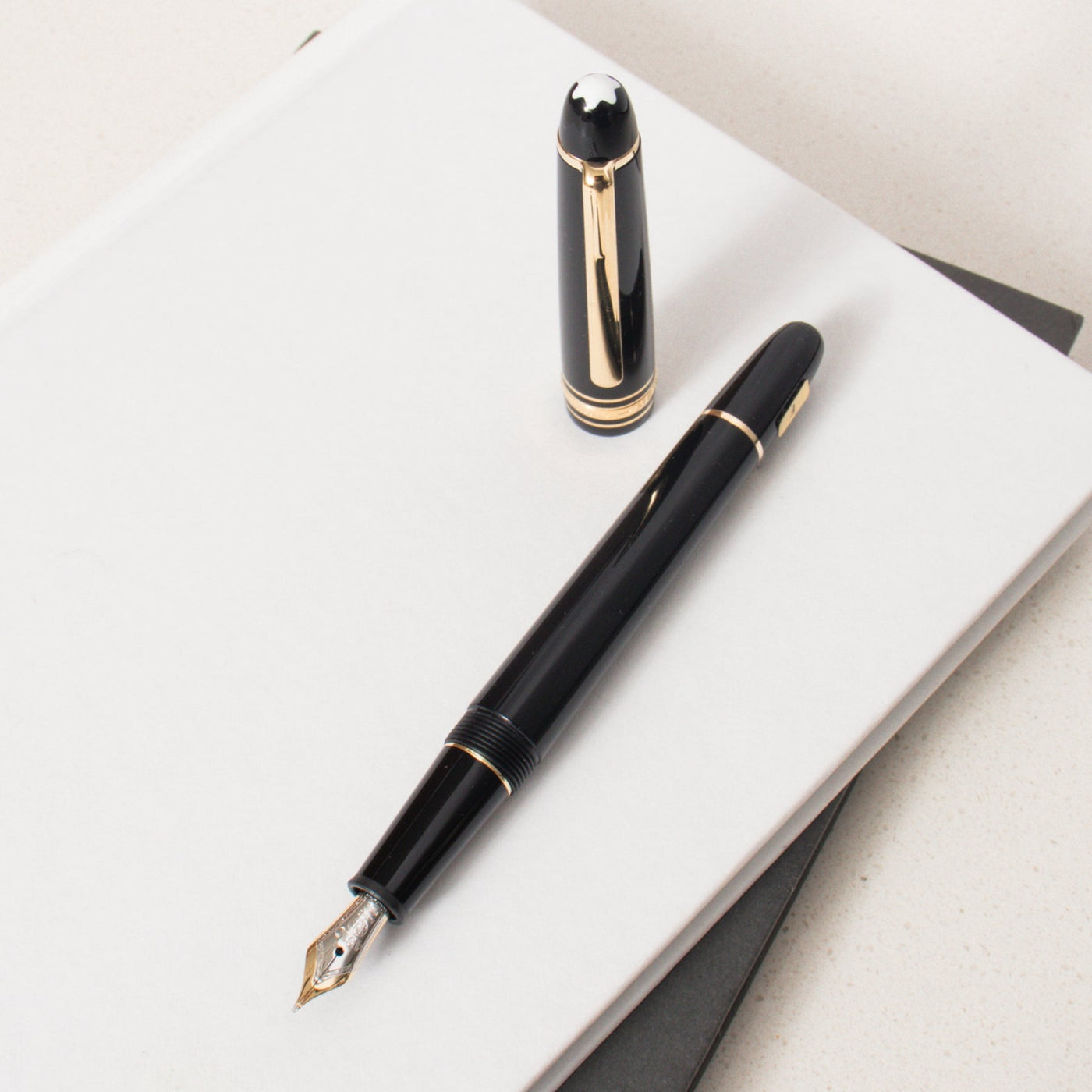
Montblanc Meisterstück 149
The Montblanc Meisterstück 149 is the flagship oversize fountain pen in the brand’s Meisterstück line, sold today in bla…
More in Fountain Pens & Writing
Stay in this world.
Sailor Fountain Pens
Vintage Pelikan Fountain Pens
Platinum Modern Maki-e Fountain Pens
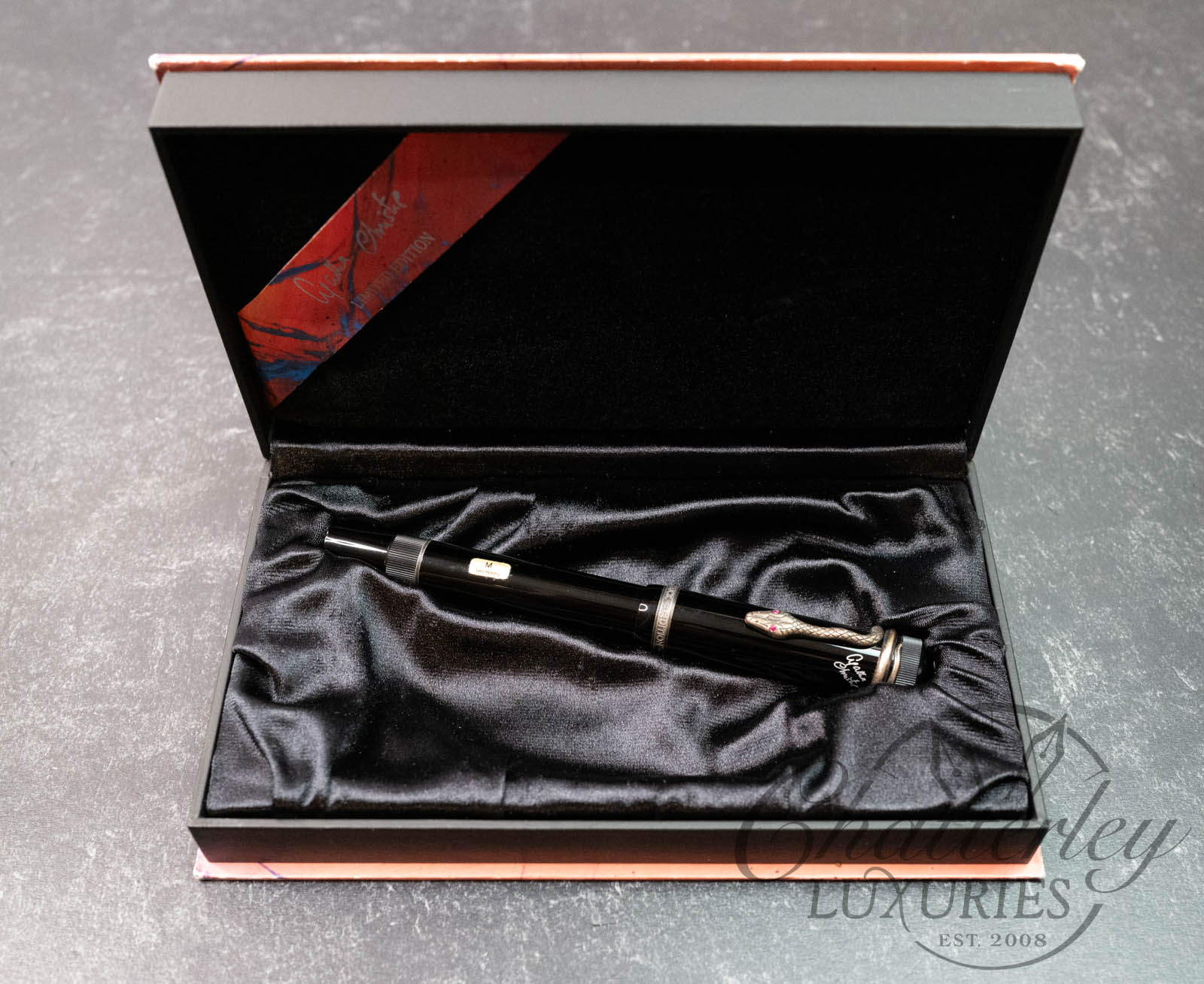
Montblanc Writers Edition Agatha Christie
Sailor Maki-e Fountain Pens
Montblanc Meisterstück 149
Fountain Pens
Sailor King of Pens
Know someone who’d love this?
Discovered by ArcurianAuto-generated from public sources and AI synthesis — it may be incomplete or inaccurate. Treat it as a starting point for your own exploration, not professional (medical, legal, financial, or safety) advice. Verify anything you act on. Report this page.