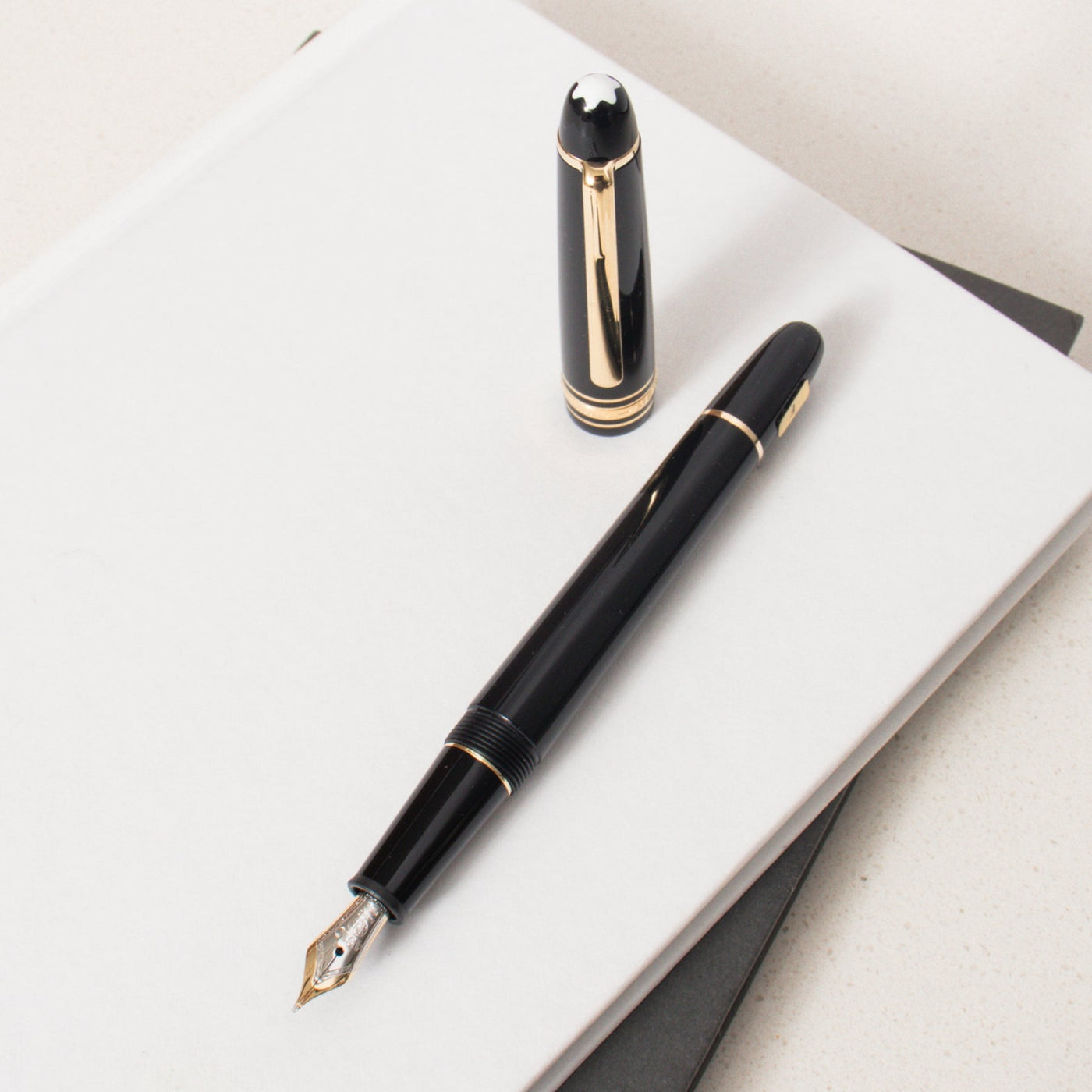
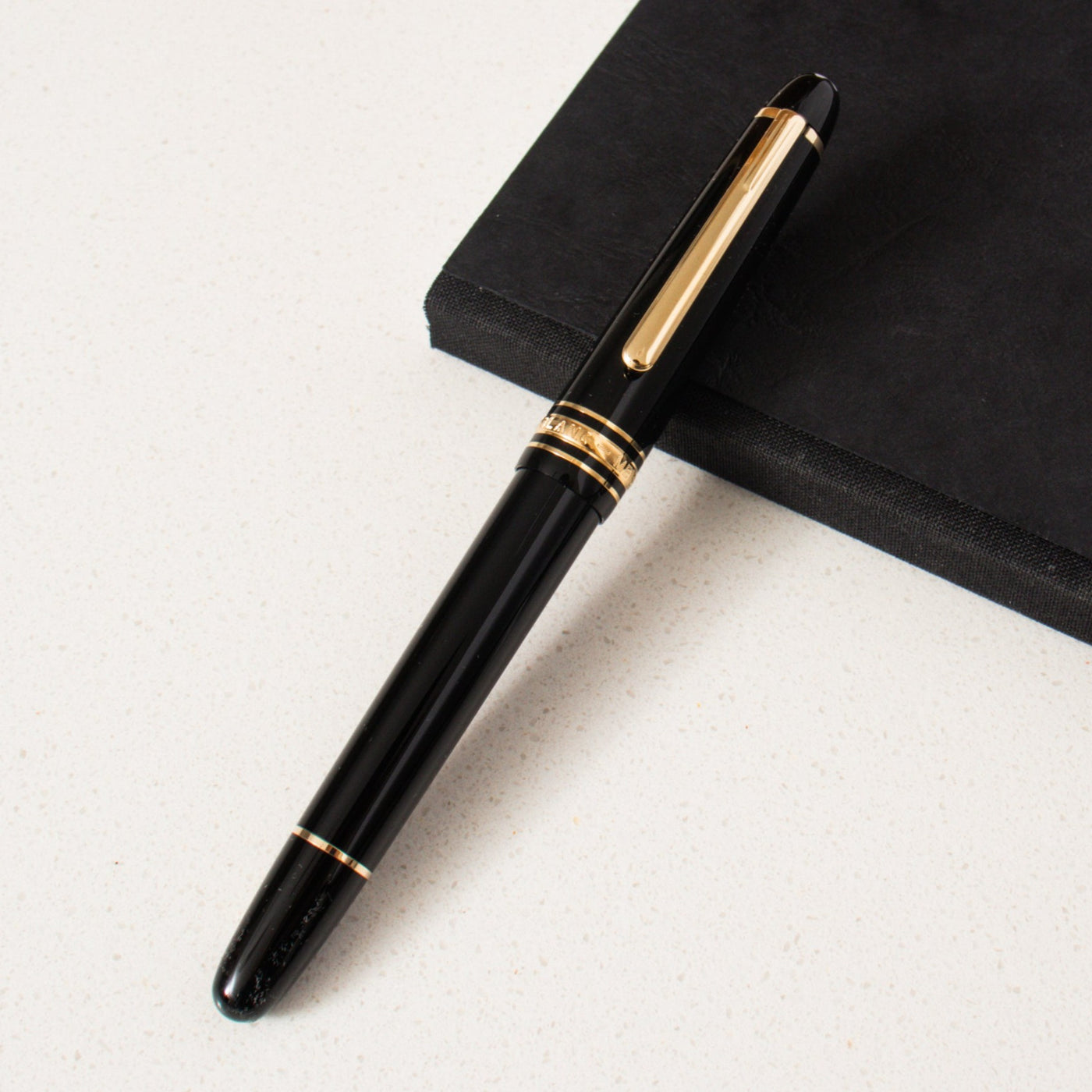
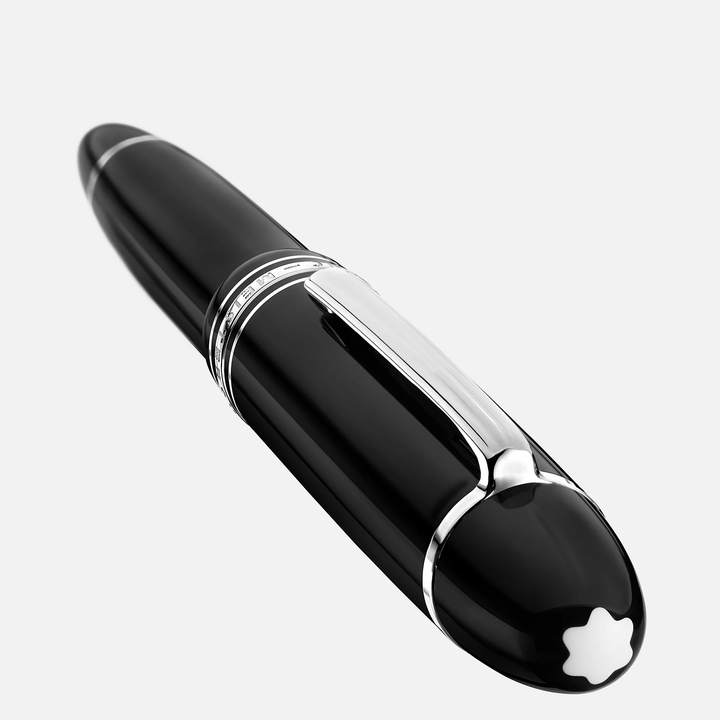
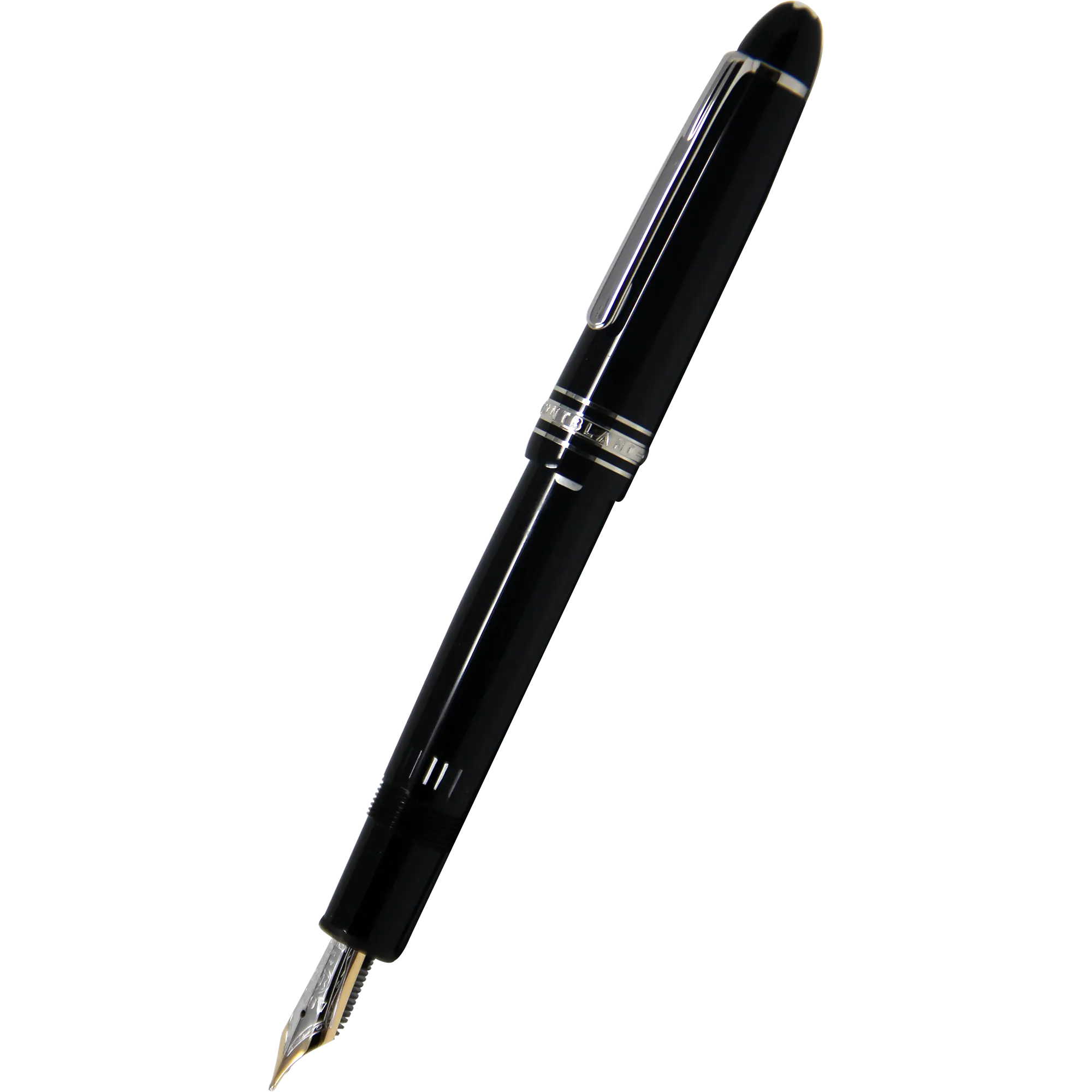
The Montblanc Meisterstück 149 is the flagship oversize fountain pen in the brand’s Meisterstück line, sold today in black resin with either gold-coated or platinum-coated trim and a wide spread of nib widths from EF through broad obliques. Montblanc’s own 149 Calligraphy Curved Nib page places the Meisterstück’s origins in 1924, and that long continuity is part of why the 149 carries such weight among pen people: it is both a current luxury writing instrument and a reference point for what a large piston-filling pen is supposed to feel like. Reviews like The Gentleman Stationer’s first impressions emphasize the pen’s scale and presence, which is exactly where the fascination starts. The real appeal is that the 149 is not just a status object—it is a pen collectors endlessly compare by trim, nib, era, and writing character.
Learn
What the 149 Actually Is
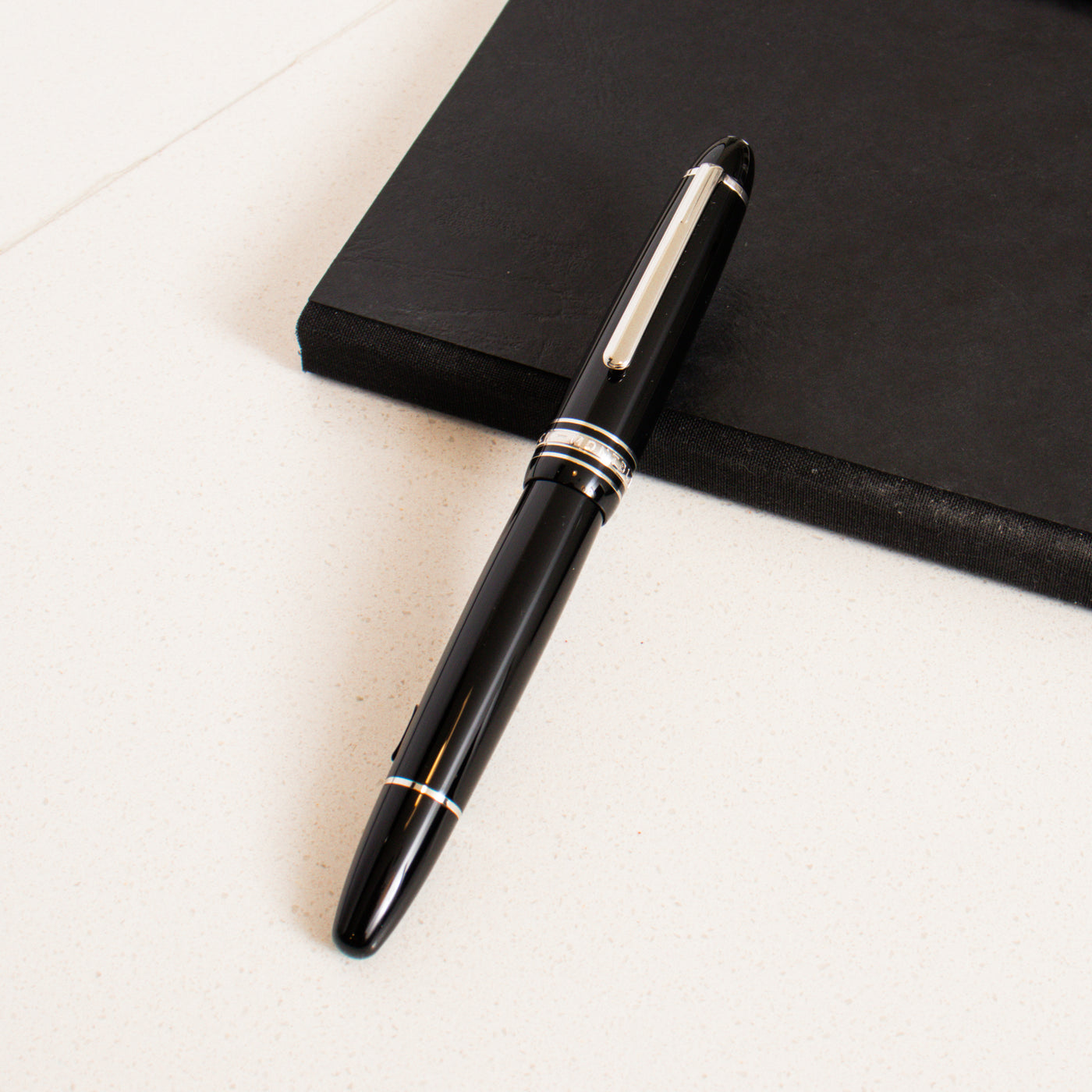
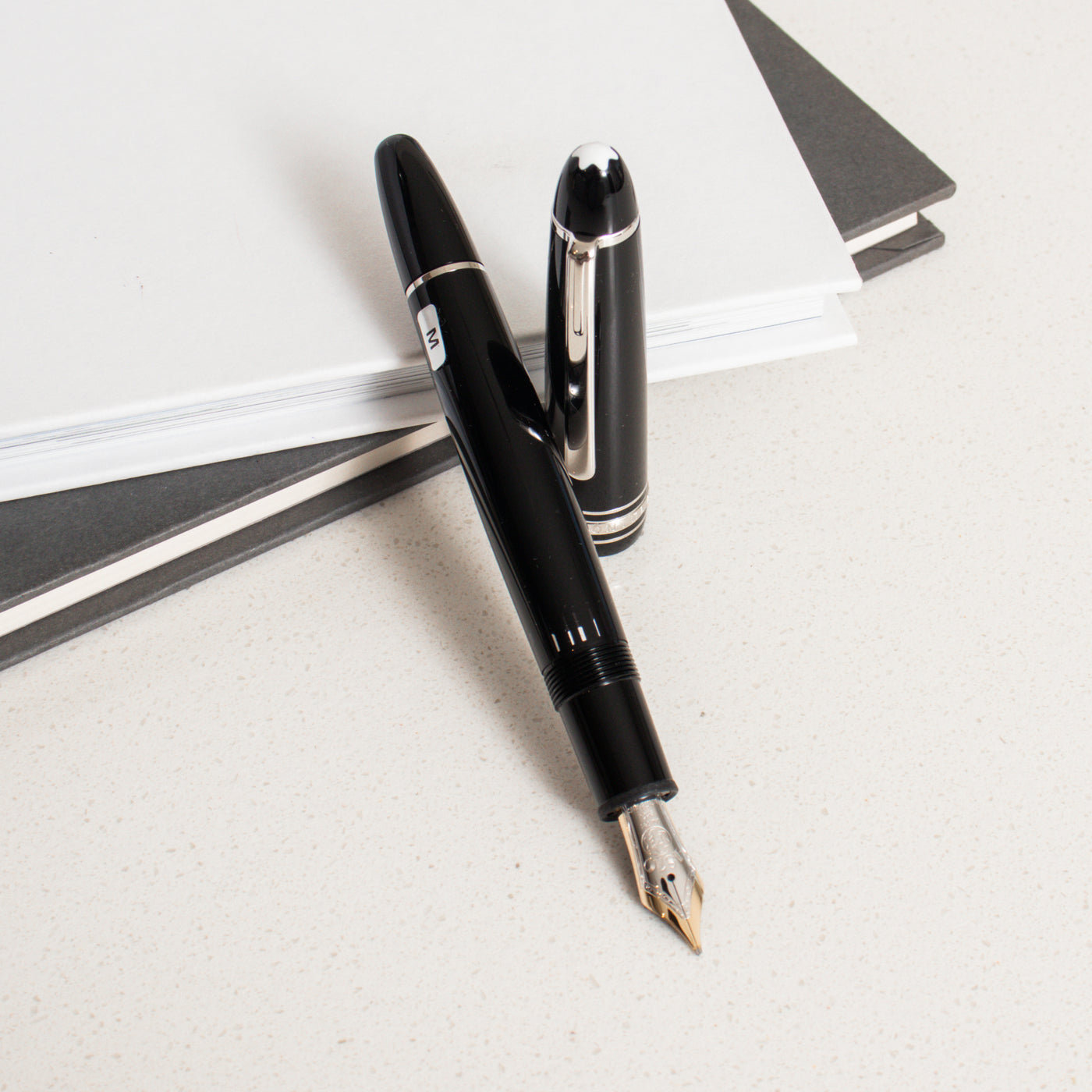
The Montblanc 149, introduced in 1952 under the Meisterstück line, is the flagship oversized fountain pen that has defined luxury writing instruments ever since. It is a piston-filler with a massive number 9 nib, available in sizes like EF, F, M, B, OB, BB, and OBB, and crafted from a material Montblanc calls "precious resin" — essentially a high-polish, scratch-prone plastic. The pen has evolved through distinct eras: early models used celluloid, had 14k nibs, and split ebonite feeds, while modern versions use 18k gold nibs (often bi-color with rhodium), plastic feeds, and one-piece barrels. Its cigar shape, white snowcap logo, and triple cap banding are iconic, but the 149 is more than a status symbol — its hand-tooled nib and large ink capacity (around 2 ml) make it a transcendent writer for those who can handle its girth. Critics note the short grip section forces a crowded hold, and the unprotected cap edge is a drop hazard, while vintage enthusiasts seek out the softer 14c nibs from the 1960s-80s. Ultimately, the 149 is the mental image of a fountain pen, cloned by dozens of brands, and remains the benchmark against which all other pens are judged.
 gentlemanstationer.comgentlemanstationer.com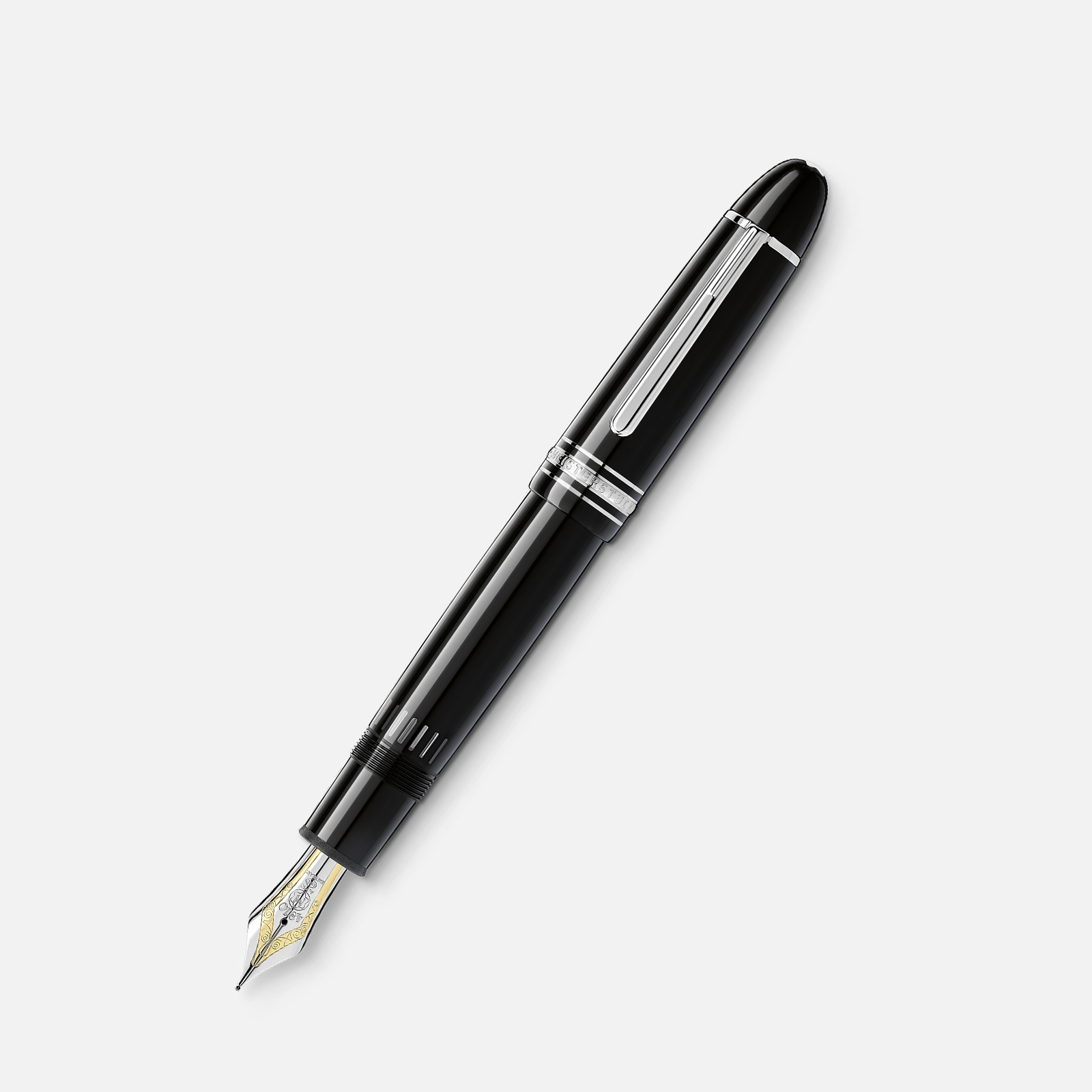
 stridewise.comstridewise.com
+Field notes
- —The 149 has been in continuous production since 1952, making it the largest standard Meisterstück with a piston-filling system; early models were made of celluloid before Montblanc switched to their proprietary "precious resin" (a hard, high-polish plastic).
- —Early 149s (1960s-1980s) used 14k gold nibs (often bicolor) and split ebonite feeds, while modern pens shifted to 18k gold nibs (sometimes tri-color) and plastic feeds — vintage fans prize the softer, more flexible 14c nibs.
- —The pen’s number 9 nib is among the largest on the western market, hand-tooled, and available in widths EF, F, M, B, OB, BB, and OBB (but no size marking on the nib itself, making multi-pen owners guess by sight).
- —The grip section is noticeably thicker than on smaller Montblancs, but it is also short, forcing writers to either crowd their fingers near the nib or balance awkwardly on the cap threads.
- —A two-stage piston mechanism prevents accidental ink discharge — the first few turns of the knob don't move the piston — and the ink reservoir holds a generous ~2 ml, but if the piston fails, professional service is required (no user-replaceable part).
- —The white snowcap logo on the oversized cap is considered by many to look its best on the 149, and Montblanc now offers trim in yellow gold, rose gold (a redder hue than typical pinkish rose tones), and platinum.
Learn
Why the Meisterstück Name Matters
The name 'Meisterstück'—German for 'masterpiece'—was first applied to Montblanc's pens in 1924, elevating them from everyday tools to a dedicated flagship line intended as the company's top-tier, highest-quality writing instruments (source 3). The term originally responded to client requests for refined 'Sunday-use' fountain pens that the company's own craftsmen had been making for themselves; the decision to sell them publicly marked the birth of a luxury icon (source 6). The model number '149' itself reinforces this hierarchy: the leading '1' in Montblanc's numbering system once designated top-of-the-line models, making the 149 the definitive example of the Meisterstück philosophy (source 8). The name has become so synonymous with quality that even during the 1960s, when market pressures pushed Montblanc to experiment with a slimmer, modern 'jet-age' aesthetic in the Linie 60 range, the cigar-shaped 149 was kept in production as the unsinkable flagship (source 6).
 followmypenblog.comfollowmypenblog.com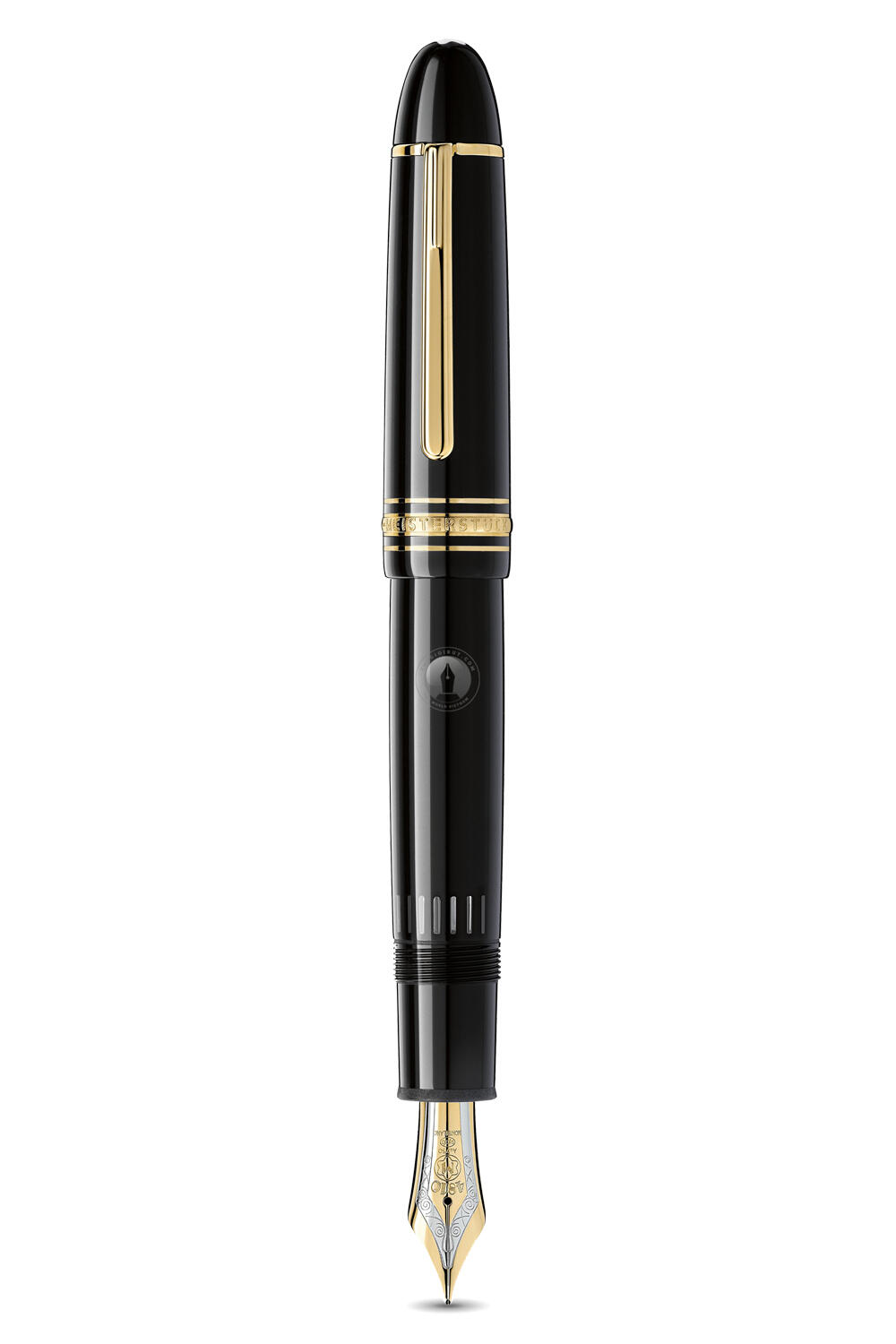
 appelboom.comappelboom.com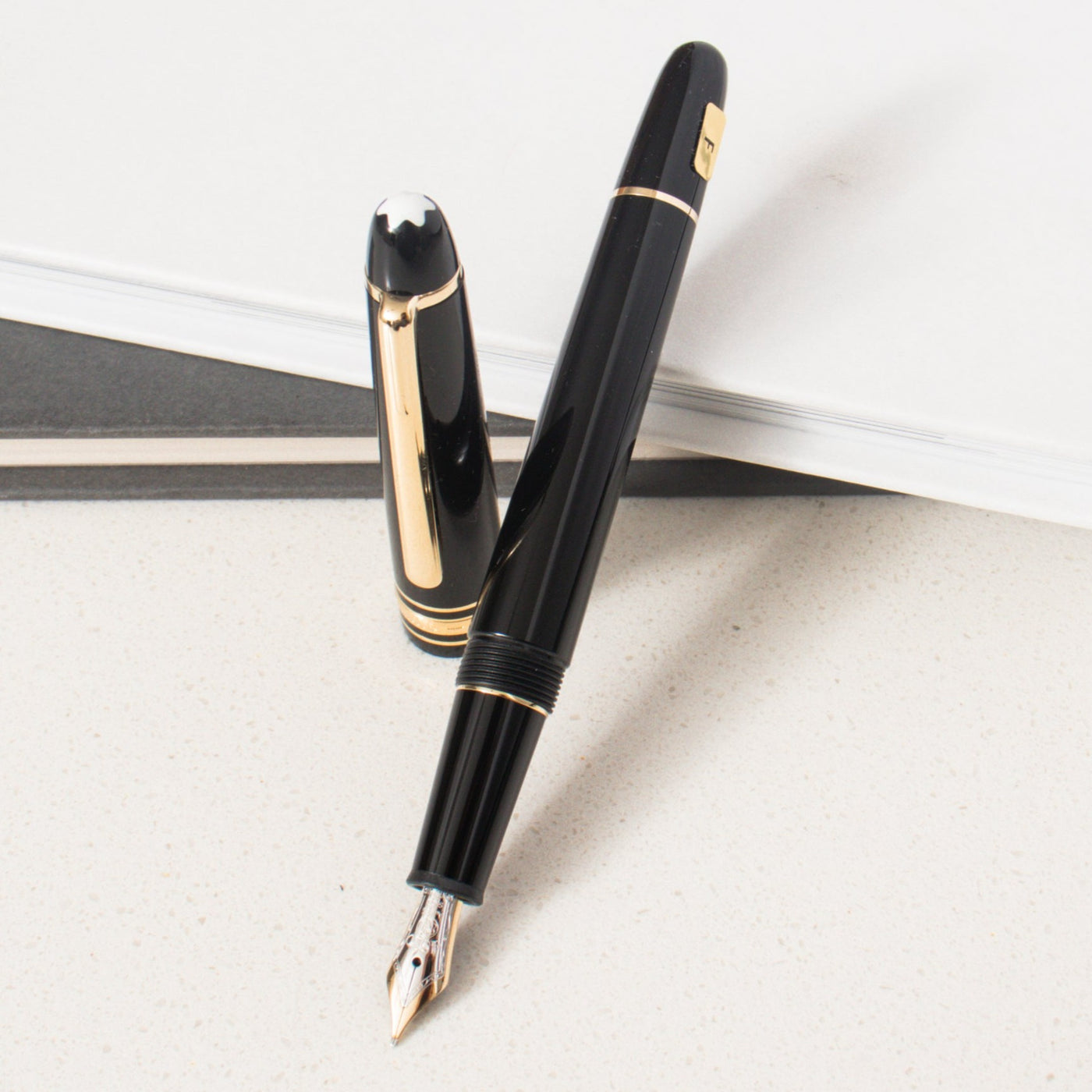

+Field notes
- —Meisterstück means 'masterpiece' in German, and the line was launched in 1924 as Montblanc's first-tier luxury range, deliberately positioned above all other models the company made at the time.
- —The model number '149' follows Montblanc's old coding system where the leading '1' signified the top-tier line, making the 149 the ultimate expression of the Meisterstück badge.
- —The Meisterstück name originated when Montblanc craftsmen, who had been building custom 'Sunday-use' pens for themselves, decided to offer them to the public—turning internal workshop creations into the company's flagship commercial product.
- —When Montblanc abandoned the classic cigar silhouette in the 1960s for the sleeker Linie 60 line, the 149 was the sole Meisterstück retained in its original form, a testament to the name's power and the model's unshakable status.
Learn
Speak 149: LeGrand, 149, Obliques, Calligraphy
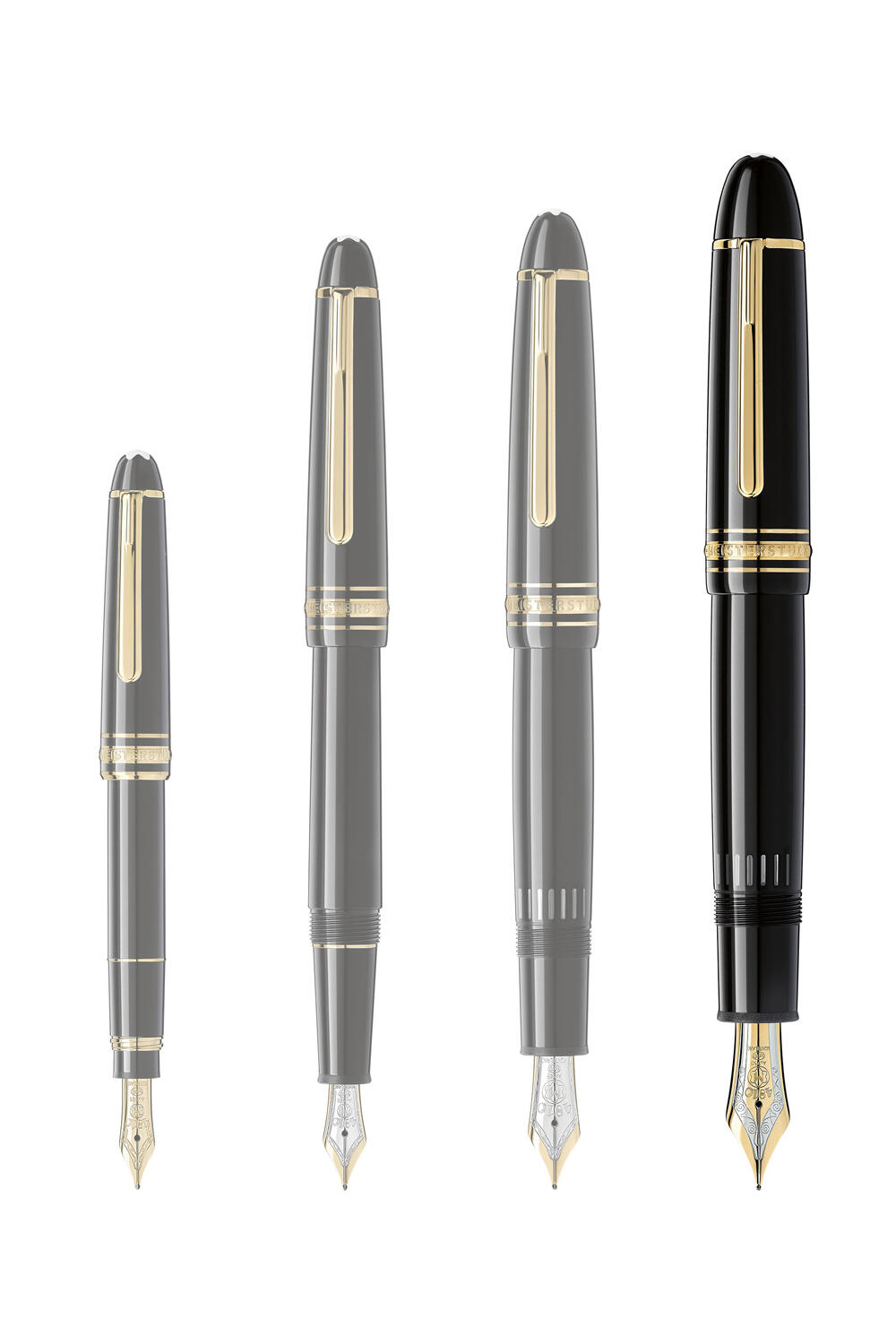
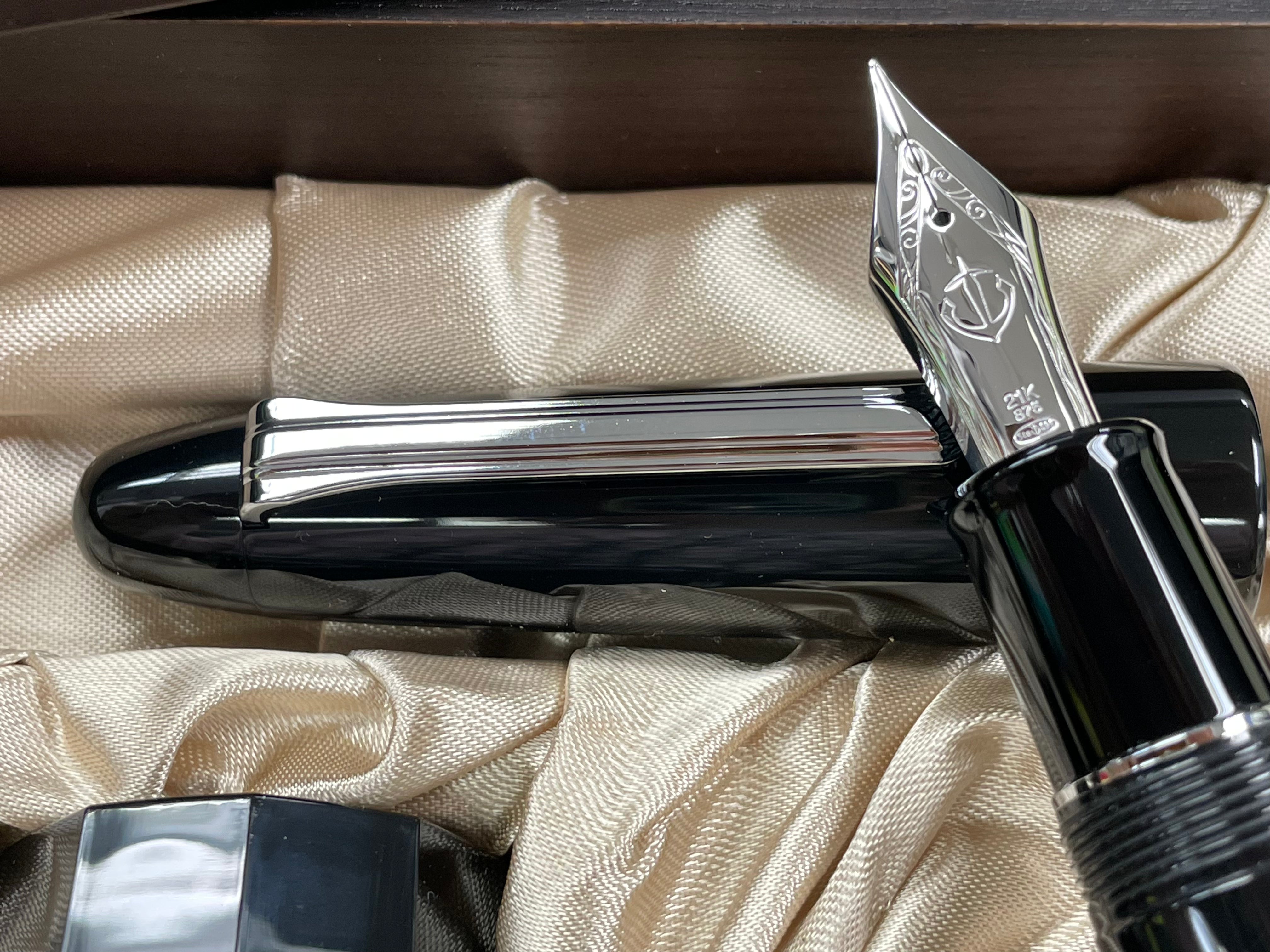
The Montblanc Meisterstück 149, launched in 1952, is the flagship oversized piston-filler of the line, measuring 150 mm capped with a 16 mm diameter and an 18-karat gold nib. Its nib is a modular unit, meaning it can be removed and swapped—a practical advantage over the smaller 146 (LeGrand), whose nib is not easily replaceable. The 149's flowing, calligraphy-friendly broad and double-broad nibs (including oblique cuts like OB, OBB, and OBBB) produce dramatic line variation, making it a favorite for expressive writing. The current production nib features a tri-tone design with a gold-plated edge, a white gold stripe, and a yellow gold center, while older 1980s models sport a platinum-plated inner surface. For collectors, the 149 is distinctly a fountain pen—no rollerball or ballpoint version exists—and its ink capacity (2.1 ml versus the 146's 1.4 ml) suits long, uninterrupted sessions.
 followmypenblog.comfollowmypenblog.com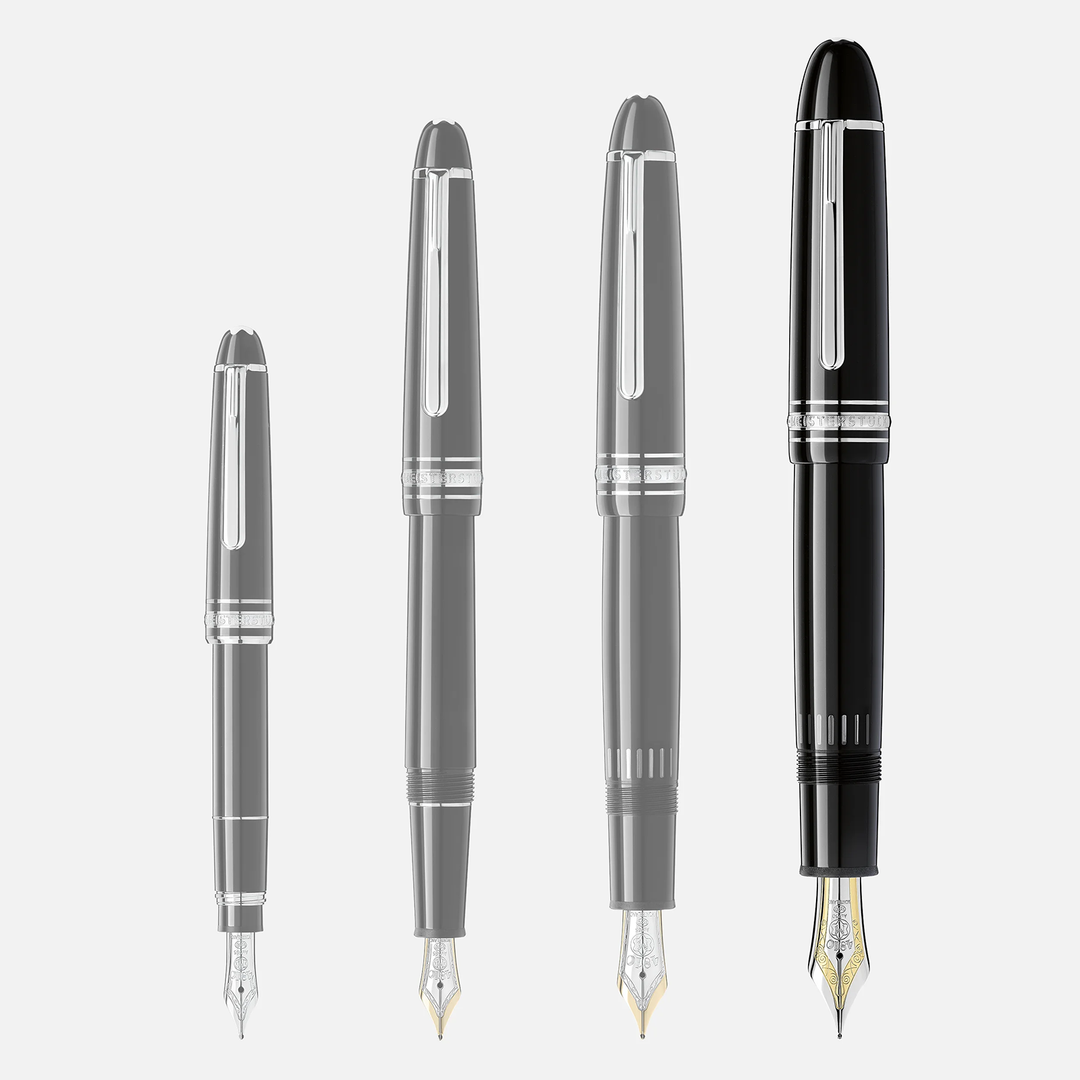

+Field notes
- —The Montblanc 149's nib is a modular, screw-in unit that can be removed and replaced by the user, unlike the 146's fixed nib—this makes servicing and nib swapping straightforward for the 149.
- —Current 149 nibs have a distinctive tri-tone finish: a gold-plated outer edge, a white gold stripe, and a yellow gold center; 1980s versions instead have a platinum-plated inner surface.
- —The 149 offers nib widths including EF, F, M, OM (oblique medium), B, OB, BB, and OBB—the oblique grinds, especially OBB and the rarer OBBB, create pronounced line variation ideal for calligraphic styles.
- —At 150 mm capped and 16 mm in diameter, the 149 is noticeably larger than the LeGrand (146 mm × 15 mm), and it exists only as a fountain pen—no rollerball or ballpoint version was ever made.
- —The 149's piston filler holds approximately 2.1 ml of ink versus the 146's 1.4 ml, making the 149 the better choice for extended writing sessions without refilling.
- —For fast writers, fine nibs like EF can cause skipping; Montblanc nibs are designed to minimize this, but broader nibs (M and up) are more forgiving at higher writing speeds.
Discover
Video Reviews That Show Size, Nib Feel, and Presence


Discover
Collector Reading Beyond the Product Page
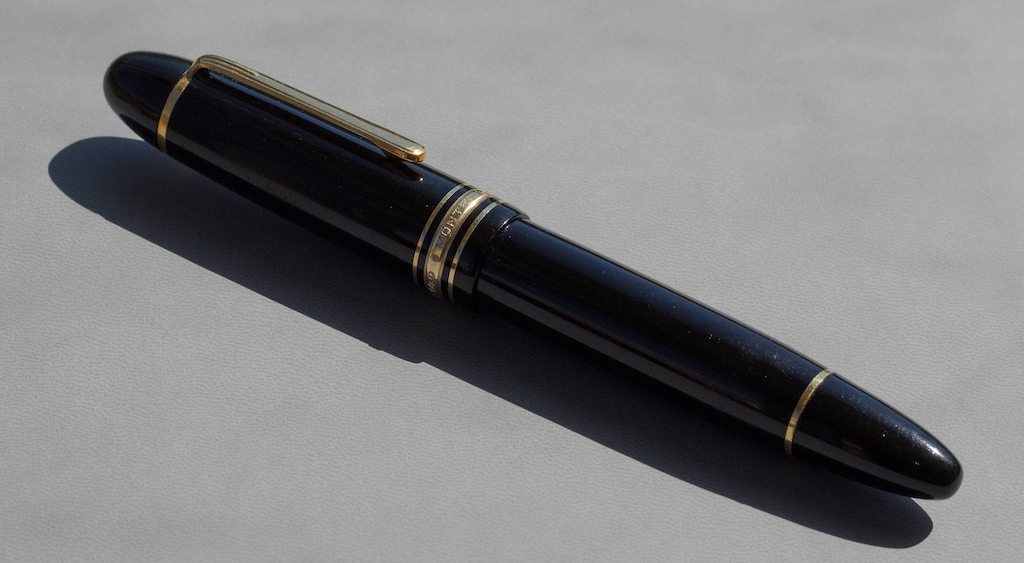

The Montblanc Meisterstück 149 is far more than a status symbol—it's a design and engineering benchmark that has quietly evolved over decades, and collectors who read past the product page discover a world of nuance. The 149's iconic "cigar" shape, with its black resin, gold trim, and white star logo, is deceptively simple, but that simplicity is what makes it timeless; its proportions avoid the awkwardness of many modern oversized pens. The true heart is the #9 nib—massive, hand-tooled, and available in a dizzying range of flexes and grinds, from the rare 14C bicolor of 1980s models to the modern Calligraphy flex nibs. Those nibs aren't just broad; they can be custom-ordered in oblique cuts like OBB and OBBB, and even the standard broads are famously expressive. A 1970s 149, with its bouncy 14K nib and split ebonite feed, writes with a springiness that modern production pens often lack, and the subtle variations in cap bands, ink windows, and piston materials (from plastic to brass) let you date a pen to within a two-year window. Meanwhile, the rose gold trim of recent years has a subtle, reddish hue that's almost impossible to distinguish from standard gold in certain light—a detail that rewards a second look. And while many dismiss the 149 as "boring," the truth is that its understated elegance has made it the ultimate blank canvas for generations of writers, from businesspeople to artists, and it remains the standard against which every other fountain pen is measured.
+Field notes
- —The #9 nib is enormous compared to most Western nibs, and its size is part of what makes the 149 a unique writer—but the grip section is short, forcing you either to crowd your fingers near the nib or to balance the pen on the cap threads, which can be less comfortable than on pens with longer sections.
- —Vintage 149s from the 1970s often have a bouncy 14K nib and a solid ebonite feed, which produces a noticeably softer, more expressive line than many modern production pens, and the split ebonite feed is a key visual cue for dating the pen to a specific era.
- —The Calligraphy special edition of the 149 comes with a specially developed flexible nib, but even the standard #9 nib is already soft on its own; the larger size of the #9 nib makes it the better choice for flex writing compared to the smaller #8 nib on the 146.
- —Ghost Plane's 149 nib comparison thread on FPN documents the full range of broad and oblique variants available, including B, OBB, and OBBB cuts, showing that the nibs are not only massive but also come in specialty grinds that give each pen a distinct character.
- —The rose gold trim Montblanc uses on the 149 has a distinct reddish hue, not the pinkish tint often seen; in certain lighting it can be hard to distinguish from standard gold trim, making it a subtle detail that rewards a close look.
- —A 1980s 149 can be dated to a two-year window by its 14C bicolor nib, split ebonite feed, and two-piece barrel with slightly obscured ink windows—tiny details that allow a collector to pin down the exact production era.
Keep exploring
More of Montblanc Meisterstück 149
Branch out
Beyond Montblanc Meisterstück 149
More to explore
In the same world.
Montblanc Meisterstück LeGrand
Montblanc’s Meisterstück LeGrand is a mid-to-large format within the brand’s core writing line, offered across fountain…
Sailor King of Pens
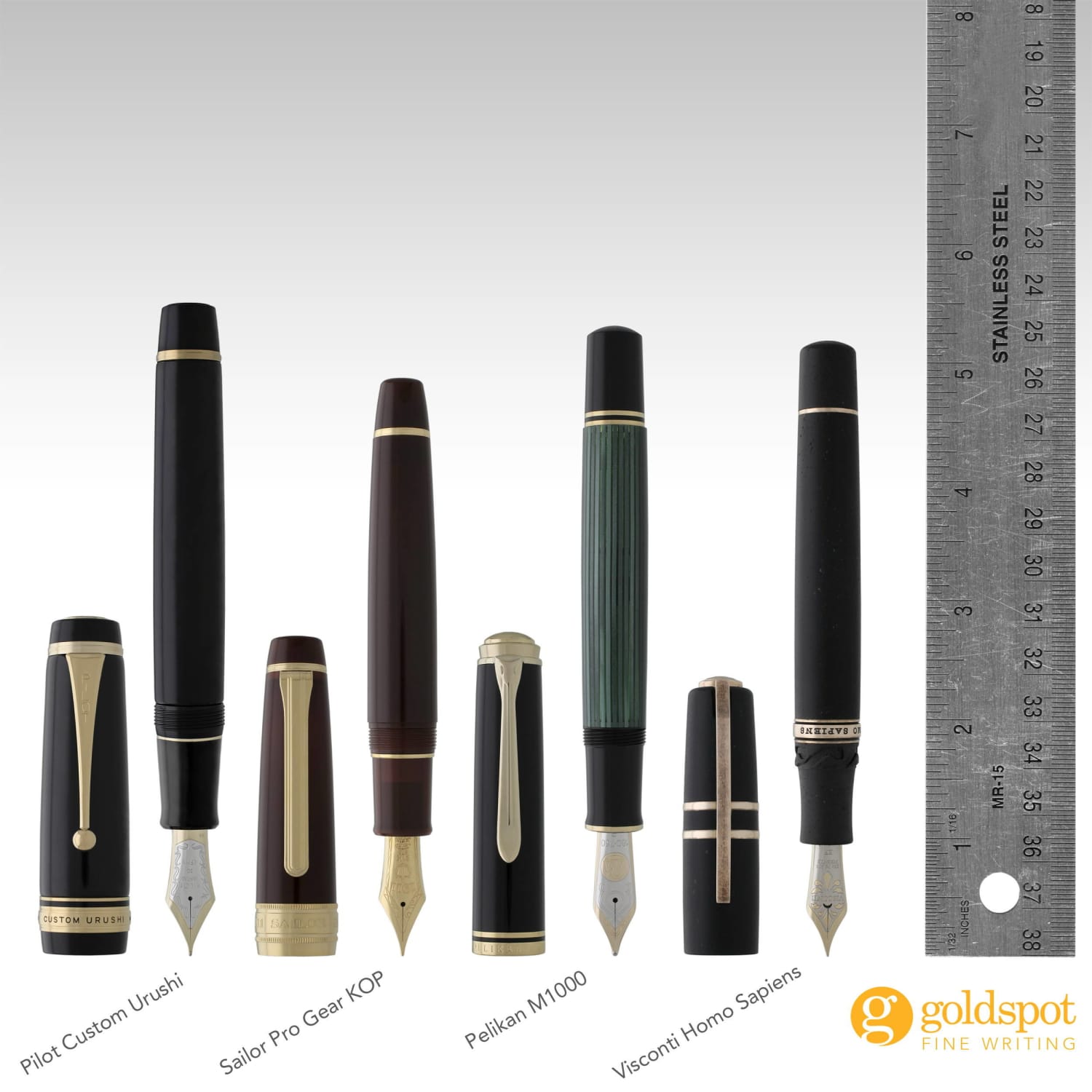
Sailor’s King of Pens is the company’s top-of-the-range fountain pen line, positioned by Sailor as a symbol of its techn…
Fountain Pens
Fountain pens are refillable writing instruments that feed liquid ink to a metal nib, and for many people the appeal is…
Montblanc Writers Edition Agatha Christie
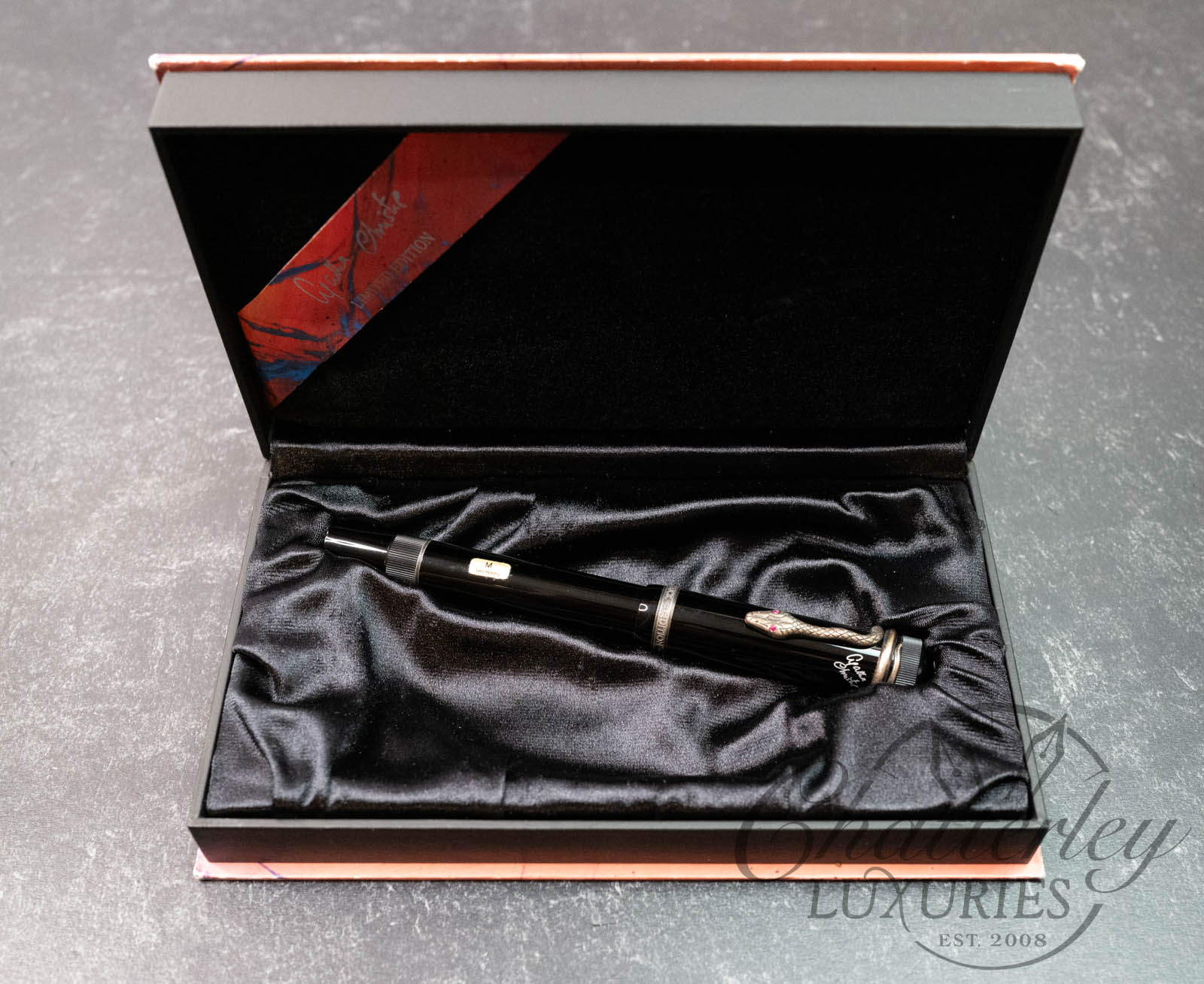
This is Montblanc’s 1993 Writers Edition tribute to Agatha Christie, a fountain pen that shows up across collector, deal…

Vintage Pelikan Fountain Pens
Vintage Pelikan collecting really starts with the Model 100, the company’s first fountain pen, made from 1929 to 1944 an…
Montblanc Great Characters James Dean
This is Montblanc’s James Dean tribute within the Great Characters line, issued as a Special Edition and as a Limited Ed…

Sailor Fountain Pens
Sailor’s fountain-pen world is built around a few core families that collectors quickly learn to recognize: the rounded…

Montblanc Great Characters Enzo Ferrari Collection
In 2021, Montblanc paid tribute to Enzo Ferrari — motor racing driver, entrepreneur, and founder of Scuderia Ferrari — t…
More in Fountain Pens & Writing
Stay in this world.
Sailor Fountain Pens
Vintage Pelikan Fountain Pens
Platinum Modern Maki-e Fountain Pens
Montblanc Writers Edition Agatha Christie
Sailor Maki-e Fountain Pens
Fountain Pens

OHTO Fountain Pens
Sailor King of Pens
Imagery
Know someone who’d love this?
Discovered by ArcurianAuto-generated from public sources and AI synthesis — it may be incomplete or inaccurate. Treat it as a starting point for your own exploration, not professional (medical, legal, financial, or safety) advice. Verify anything you act on. Report this page.