Hibiki is Suntory’s premium blended Japanese whisky line, presented as a celebration of harmony and the art of blending rather than a single-distillery identity. The brand was launched in 1989, and the current conversation around it often centers on how expressions like Japanese Harmony sit alongside sought-after age-statement bottlings such as 12, 21, 30, and the recently presented 40 Years Old. Source material repeatedly points to Hibiki’s blend of whiskies from Suntory’s Yamazaki, Hakushu, and Chita distilleries, with Mizunara oak named as part of its signature character. If you think whisky collecting is only about peat bombs or bourbon barrels, Hibiki is a great way into the more elusive appeal of balance, perfume, and blending craft.
Learn
What Makes Hibiki Hibiki
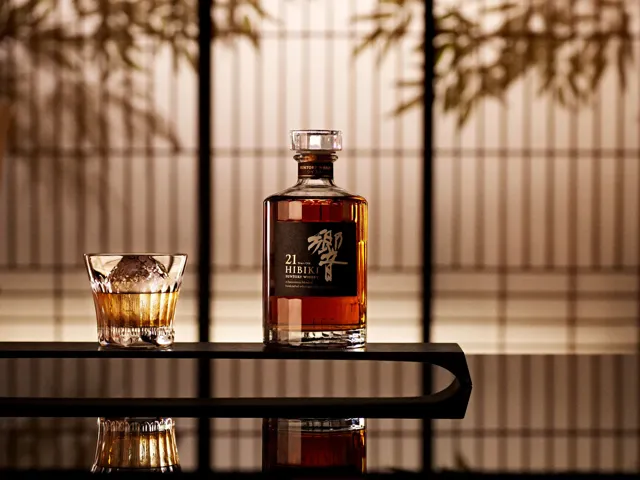
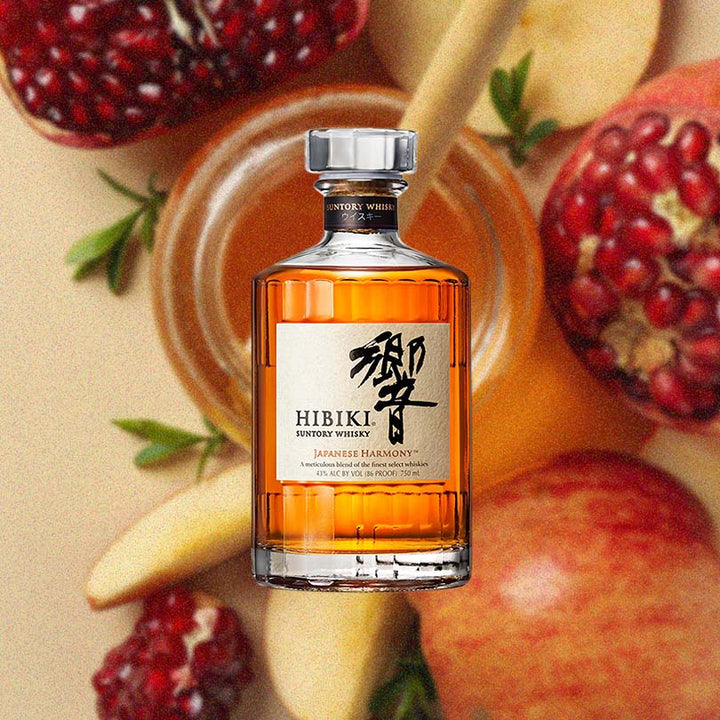
Hibiki Japanese Harmony is Suntory's deliberate, no-age-statement reimagining of their flagship blend, launched in 2015 after the 12-year-old was discontinued due to the Japanese whisky boom. It's a masterful collaboration between malt from Yamazaki and Hakushu and grain from Chita, matured across five cask types including American oak, sherry, and the elusive Japanese Mizunara oak that gives it that characteristic incense note. But here's the insider secret: despite its reputation as the entry-level Hibiki, the grain component from Chita — often the largest by volume — is actually aged in plum wine and Spanish oak casks, which contributes a subtle fruity roundness many drinkers misattribute to the malt. The blend was created by Suntory's legendary master blender Shingo Torii and chief blender Shinji Fukuyo, using the same whiskies that went into the original 1989 launch blend. At 43% ABV, chill-filtered, and with caramel coloring added, it's designed for approachability over power — a 'polite and polished' profile that divides connoisseurs: the nose is classy and convincing (rose, lychee, sandalwood), but the palate can feel 'too generic,' leaning heavily on young woody notes. Its cult status owes almost as much to the 24-faceted bottle, symbolizing the 24 sekki seasons of the traditional Japanese calendar, as to the liquid inside.
 kanpai-navi.comkanpai-navi.com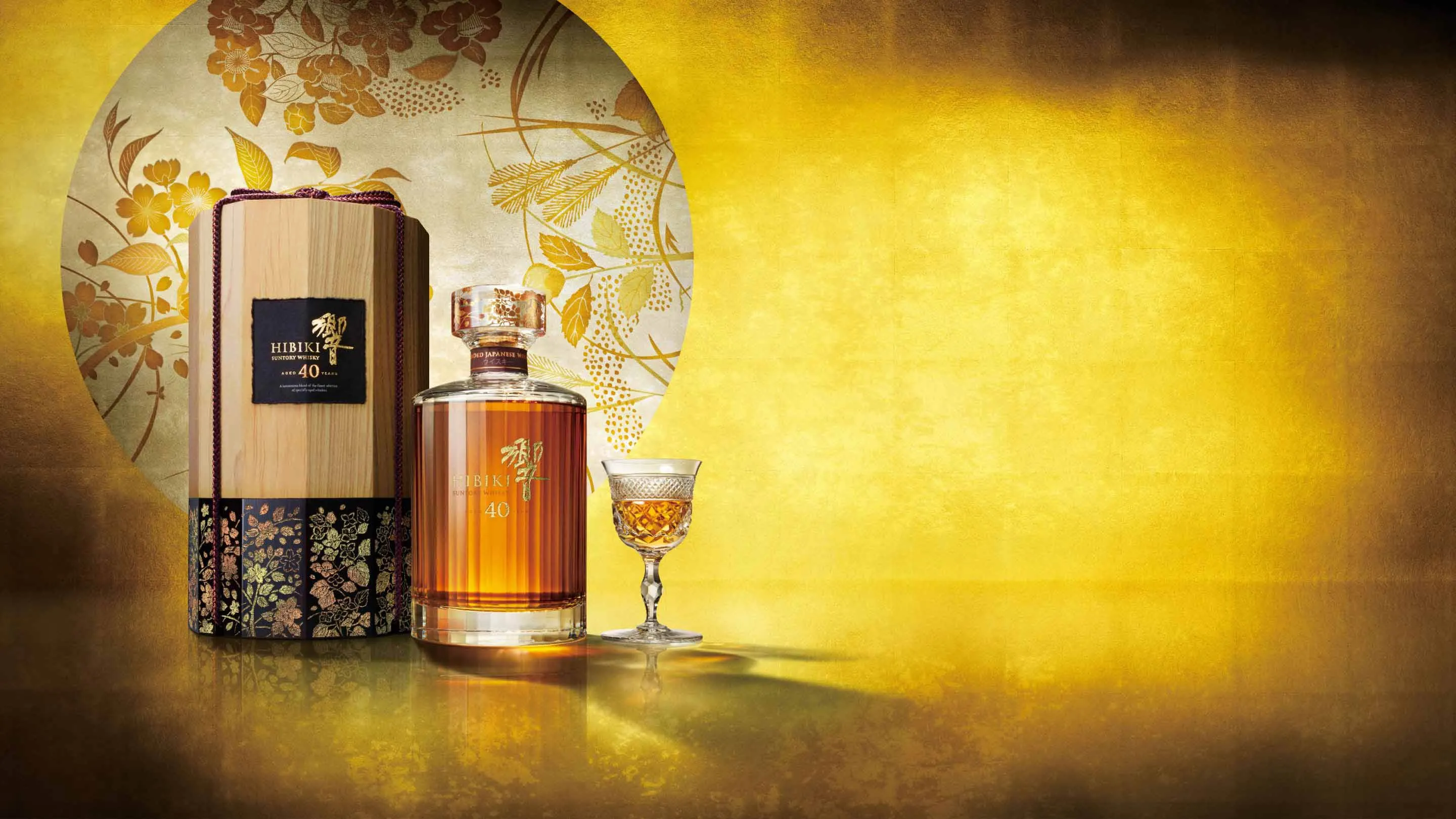
 whiskynotes.bewhiskynotes.be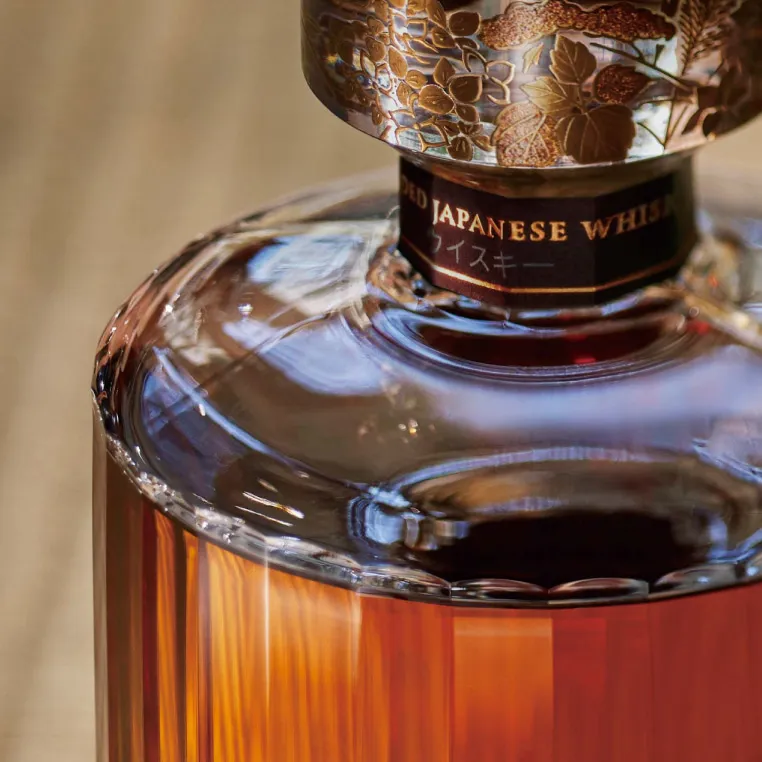
 bestwhiskeyguide.combestwhiskeyguide.com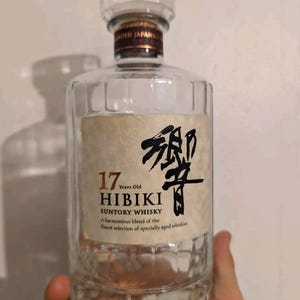
 dram1.comdram1.com
+Field notes
- —Hibiki was first introduced in 1989 to celebrate the 90th anniversary of House of Suntory, making Japanese Harmony the brand's non-age-statement successor after the 12-year-old was discontinued in 2015 due to overwhelming demand and supply shortages.
- —The blend uses whiskies from three Suntory distilleries: malt from Yamazaki and Hakushu, and grain whisky from Chita. By volume, Chita grain makes up the largest portion, much of it aged in Spanish oak and plum wine casks rather than the more famous Mizunara.
- —Japanese Harmony is aged across five cask types — American white oak, sherry, Mizunara oak, plus plum liqueur and Spanish oak casks — but it's the rare Mizunara oak that imparts the signature sandalwood, incense, and coconut notes that drinkers describe as distinctly 'Japanese.'
- —Despite being a premium blend, Hibiki Harmony is chill-filtered and has caramel coloring (E150a) added — Suntory doesn't fully disclose the coloring, but independent reviewers confirm it, which is a point of contention for purists who prefer natural presentation.
- —The 24-sided bottle is not just decorative; it represents the 24 sekki (seasonal divisions) of the traditional Japanese calendar, and the name 'Hibiki' means 'echo' or 'resonance' in Japanese, tying the product directly to nature and aesthetic philosophy.
- —The nose is the standout — reviewers consistently note rose, lychee, sandalwood, and orange blossom — but the palate is where opinions diverge: some find it 'creamy and semi-sweet' with white chocolate and honey, while others call it 'generic' and dominated by young woody notes, with a shortish finish.
Learn
From the 1989 Launch to Today’s Lineup
Hibiki, introduced in 1989 to mark Suntory's 90th anniversary, was conceived as the ultimate expression of the blender's art, marrying malts from Yamazaki and Hakushu with grain from Chita. Its name means 'resonance,' reflecting the philosophy of harmony among components. The original bottling was a no-age-statement blend of thirty whiskies, believed to be around 17 years old, presented in a distinctive 24-faceted bottle—each facet representing a season of the Japanese lunar calendar. Over the years, age-stated expressions appeared: 21-year from the start, 30-year in 1997, and 12-year in 2009, but supply shortages and surging global demand led to a cascade of discontinuations. The 12-year was dropped around 2015, replaced by the non-age-statement Japanese Harmony in the same year. By 2017, the 30-year had also vanished from the official lineup. Then in 2018, Beam Suntory announced the partial discontinuation of Hibiki 17-year in Japan, and as of March 2024 it is no longer listed on the company website, leaving Japanese Harmony and the 21-year as the only current expressions. The brand's cultural footprint—from its starring role in Lost in Translation to a 2023 centenary tribute directed by Sofia Coppola and featuring Keanu Reeves—has only amplified its mystique, while auction prices for rare decanters like the 35-year-old Kutani have reached tens of thousands of pounds.

 marklittler.commarklittler.com
 kanpai-navi.comkanpai-navi.com
+Field notes
- —The original 1989 Hibiki carried no age statement but was widely accepted by master sommeliers as a 17-year-old blend, drawing on 30 different malt and grain whiskies from Suntory's three distilleries.
- —The bottle's 24 facets deliberately reference the 24 sekki (seasonal divisions) of the traditional Japanese calendar, not merely a decorative choice.
- —The 17-year-old expression was partially discontinued in Japan in 2018 following a supply crisis, yet limited stocks continued to appear globally, driving secondary prices far above the original sub-$100 retail.
- —Hibiki's blend always contains at least ten malt and grain whiskies aged in five cask types (American oak, Spanish oak, Sherry butts, Mizunara, etc.), with the Master Blender individually evaluating each component before blending.
- —Lost in Translation (2003) features Hibiki in Suntory advertisements; the film's cult following contributed to the whisky's rarity and demand, and in 2023 Sofia Coppola directed a Suntory anniversary tribute video starring Keanu Reeves that incorporated footage from both her film and Akira Kurosawa's 1970s Suntory ad.
- —As of March 2024, Suntory's website lists only Hibiki Japanese Harmony and Hibiki 21-year as current expressions; the 12, 17, and 30-year have been discontinued, though limited-edition decanters like the 35-year-old Kutani command over £20,000 at auction.
Learn
The Terms You Need: Harmony, Mizunara, Yamazaki, Hakushu, Chita
Hibiki is Suntory's flagship blended whisky, launched in 1989 to celebrate the company's 90th anniversary, and its name — meaning "resonance" or "harmony" — directly references the Japanese blending philosophy of making components resonate together rather than compete. Every expression is a blend of malt whiskies from the Yamazaki and Hakushu distilleries and grain whisky from the Chita distillery, and many expressions incorporate spirit aged in the legendary Mizunara oak, a rare Japanese oak that imparts sandalwood and incense notes. Before the global Japanese whisky boom, the 17 Year sat on shelves for under $100; it and other age-stated expressions have since been discontinued due to stock shortages, transforming Hibiki into one of the most sought-after whisky brands in the world. The non-age-statement Hibiki Harmony remains the entry-level expression, bottled at 43% ABV like all Hibiki releases.

 en.dearwhisky.comen.dearwhisky.com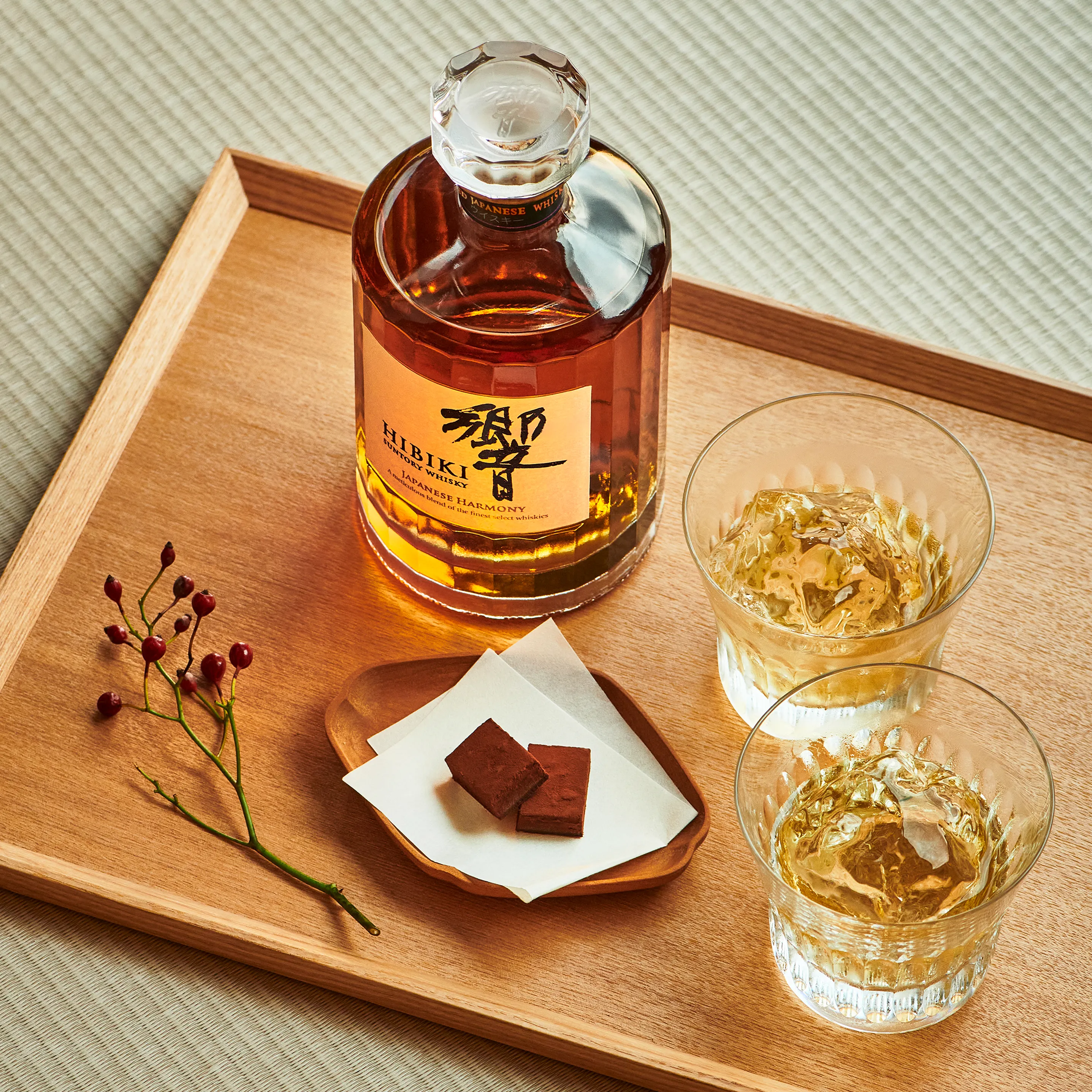
 kanpai-navi.comkanpai-navi.com
+Field notes
- —Hibiki is not a single malt or a grain whisky; it is a blend of all three Suntory distillery styles: malt from Yamazaki (Japan's oldest malt distillery, founded 1923), malt from the high-altitude Hakushu distillery (founded 1973 in a forest setting), and grain from the Chita distillery.
- —The Mizunara oak cask — a notoriously expensive and difficult-to-work Japanese oak that gives a distinct sandalwood and incense character — is used in some Hibiki expressions, though Suntory keeps the exact blend percentages proprietary.
- —Hibiki's Japanese blending philosophy was a deliberate departure from Scotch: Suntory founder Shinjiro Torii realized the Japanese palate rejected the heavy peat of early Scotch-style attempts (like the 1929 Suntory Shirofuda), so he pivoted to a lighter, punchy, floral style that became the baseline for Suntory's entire approach.
- —The 17 Year, once a shelf staple, was discontinued as part of a broader Suntory pullback on age-stated expressions, driven by the global explosion in Japanese whisky demand and consequent stock shortages — a decision that sent secondary-market prices soaring.
- —Every Hibiki expression is bottled at 43% ABV, including the non-age-statement Hibiki Harmony, which is the current entry-level bottle and was designed as a more accessible alternative to the discontinued age-stated line.
Discover
Serious Reading on the Full Range
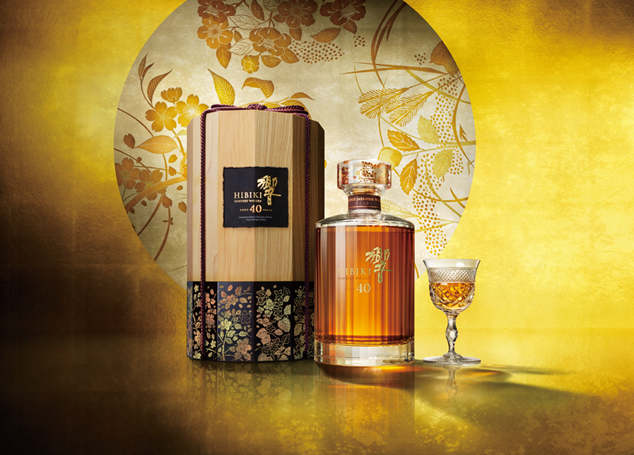
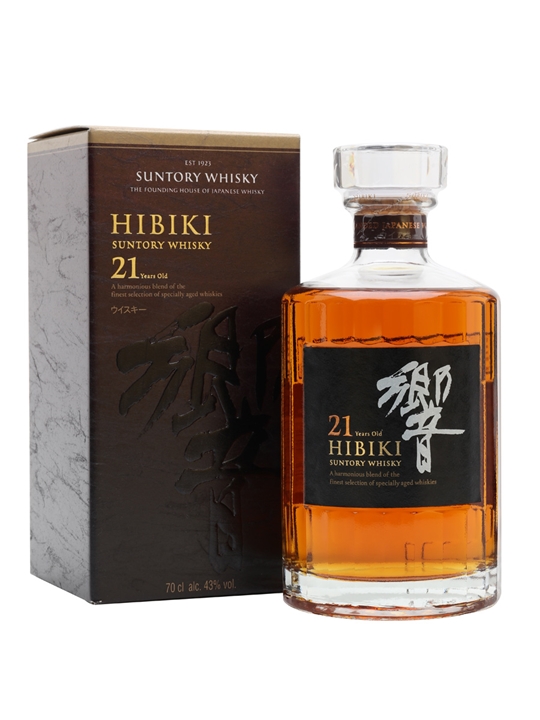
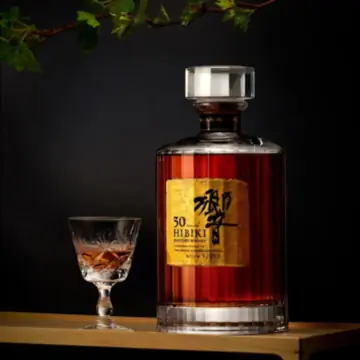
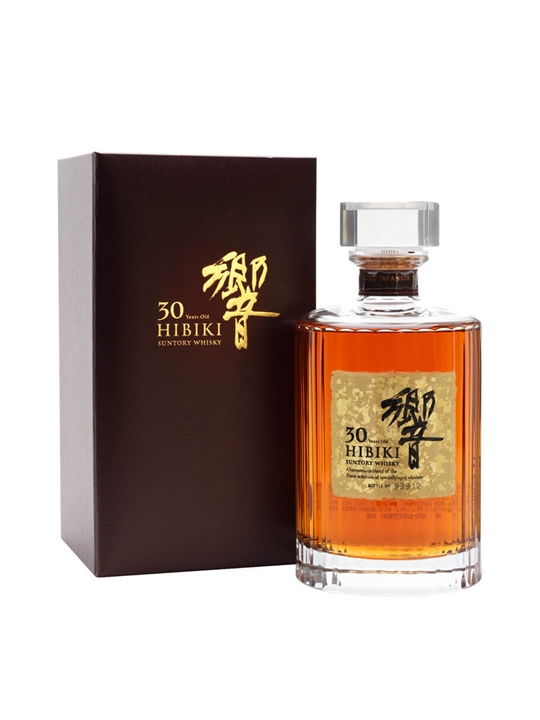

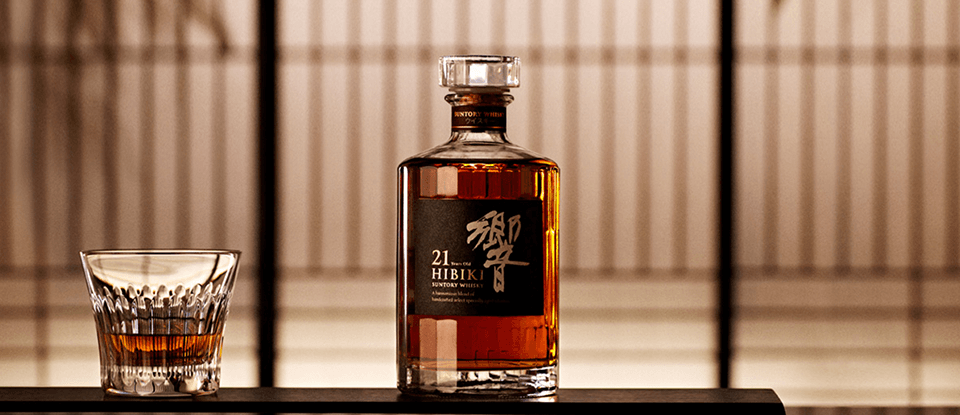
Hibiki is Suntory's flagship blended Japanese whisky, launched in 1989 for the company's 90th anniversary, created by master blender Koichi Inatomi after sampling from an estimated one million casks. The range is built on malt from Yamazaki and Hakushu distilleries and grain from Chita, all married at 43% ABV. The core lineup once included age-stated expressions from 12 to 30 years, but as global demand surged and aged stock dwindled, Suntory discontinued the 12-year-old and 17-year-old expressions and replaced them with the no-age-statement Hibiki Harmony. The 21-year-old and 30-year-old remain available but at dramatically higher prices than a decade ago. At the very top sits the Hibiki 40-year-old, released in 2024 in just 400 bottles worldwide, a carefully composed blend of five specific whisky styles — including a touch of Spanish-oak-aged Yamazaki used sparingly for structure, and a third-fill mizunara cask component that delivers the brand's signature incense and sandalwood character. The bottle itself, from Kagami Crystal, features 30 facets and traditional maki-e lacquer, housed in a 12-sided box made from 12 varieties of Japanese wood representing the changing seasons.
+Field notes
- —Koichi Inatomi, the original creator of Hibiki, supposedly tasted from one million casks at Suntory's warehouses to find the right blend, a figure so staggering it would require 91 samples a day for 30 years to achieve.
- —The iconic 24-faceted bottle design, found on all core Hibiki expressions, represents Japan's 24 micro-seasons (sekki) in the traditional calendar, not the standard four seasons.
- —The Hibiki 40-year-old uses a 1980 Yamazaki matured in Spanish oak added in only a 'touch' — chief blender Shinji Fukuyo says it was used specifically 'for structure,' to provide grip, astringency, and depth without dominating the blend.
- —The 40-year-old's mizunara component comes from a third-fill cask filled at Yamazaki in 1983, meaning the oak had already been used twice before, allowing subtler incense and aloeswood notes rather than aggressive spice.
- —The 30-year-old's limited edition collaboration with artist Hiroshi Senju features bottles designed as works of art themselves, with Senju's waterfall imagery adorning the packaging alongside the whisky.
- —The 40-year-old bottle is made by Kagami Crystal, the same glassmaker that supplies the Japanese Imperial family, with each bottle decorated using traditional maki-e gold lacquer and mother-of-pearl inlay.
Keep exploring
More of Hibiki Whisky

More to explore
In the same world.

Japanese Whisky Under $200
Shopping Japanese whisky below $200 means navigating two different pleasures at once: the appeal of Japanese craftsmansh…

Suntory Torys Classic PET
This is Suntory’s Torys Classic whisky in the large PET-bottle format, a practical packaging style tied to everyday Japa…
Springbank Whisky
Springbank is a Campbeltown single malt distilled since 1828, with a reputation strong enough that the distillery calls…
Vintage Rum
Vintage rum sits at the crossroads of spirits collecting, distillery history, and scarcity: bottles are often issued aro…
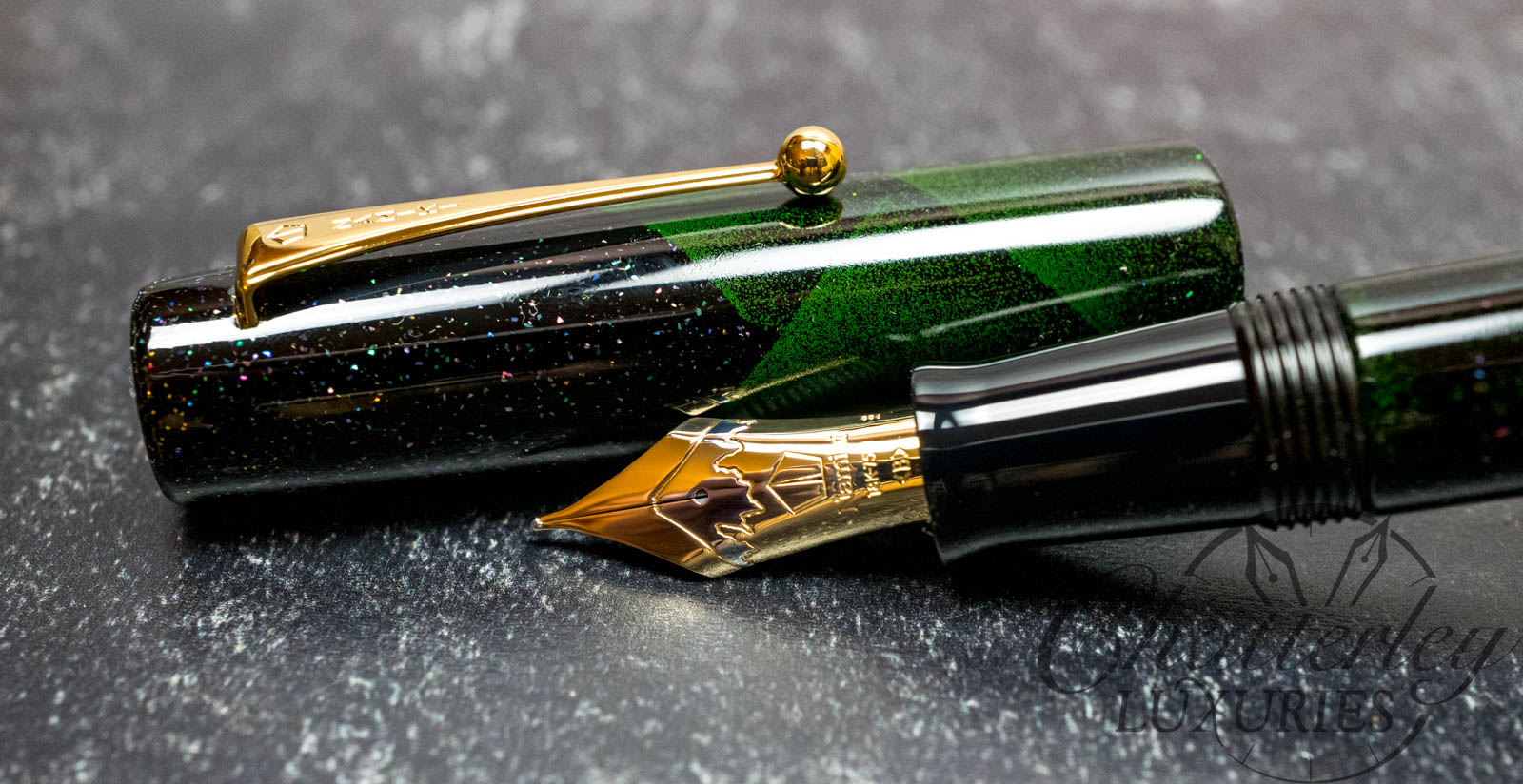
Namiki by Pilot
Namiki is Pilot’s Japanese brand for high-end fountain pens, especially models finished in maki-e and urushi lacquer. Th…
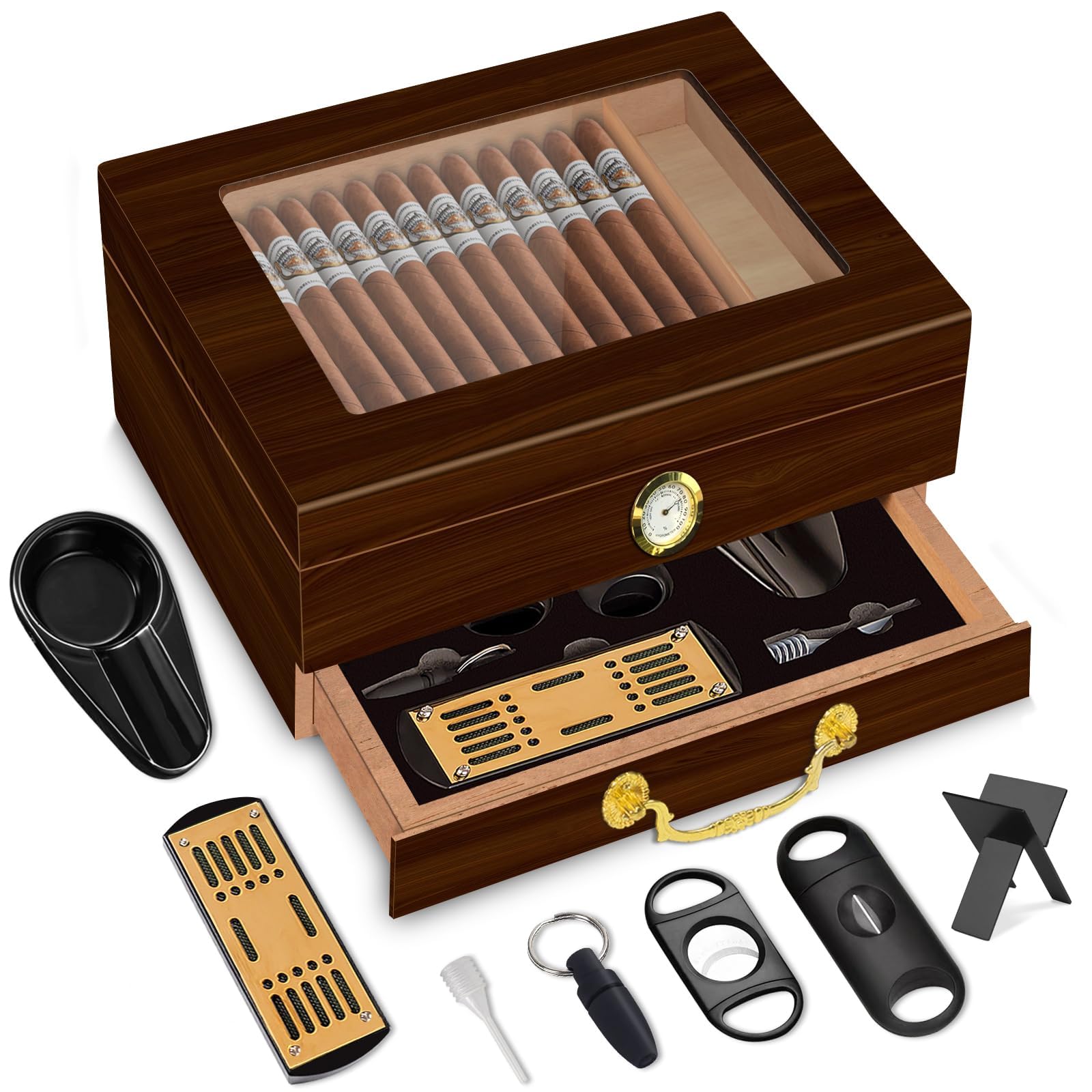
Cohiba Cigars
Cohiba refers to two closely watched premium-cigar lines: the Cuban brand made for Habanos and the non-Cuban Cohiba sold…
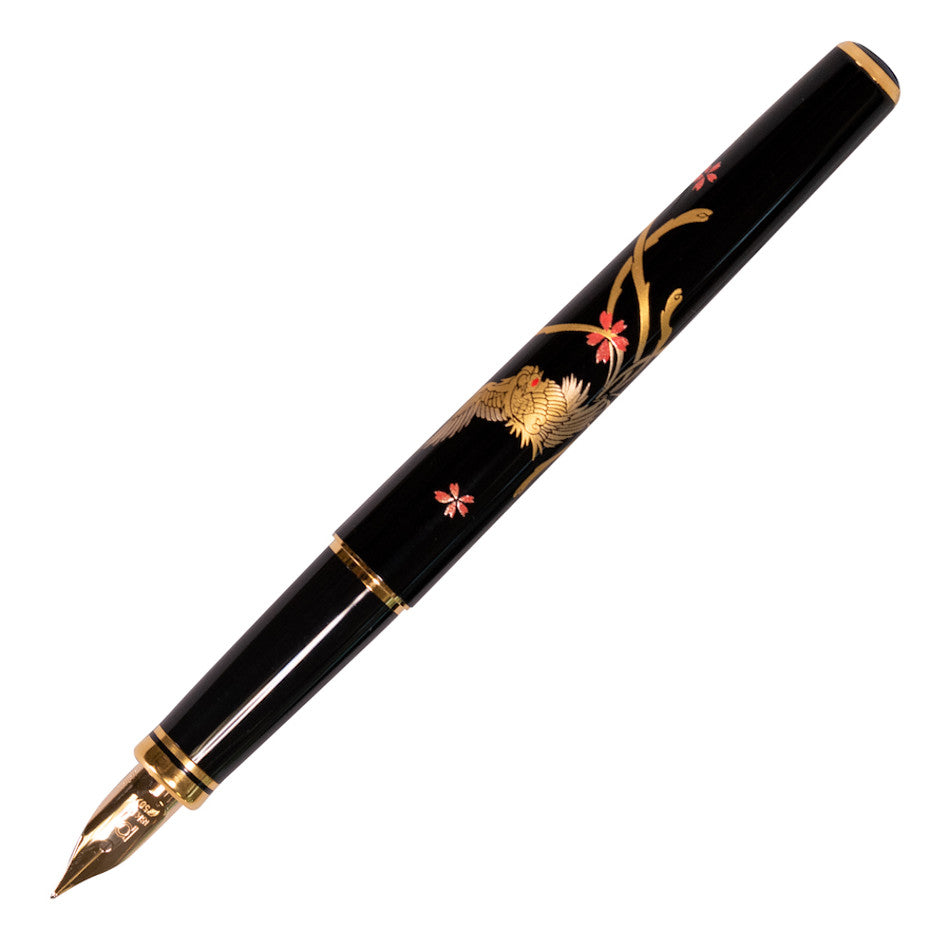
Platinum Modern Maki-e Fountain Pens
Platinum’s Modern Maki-e pens sit in a very specific corner of fountain-pen collecting: Japanese motif pens made with a…

Japanese Kitchen Knives
Japanese kitchen knives are a broad world of made-in-Japan chef’s knives that ranges from workhorse gyutos and santokus…
More in Whisky & Wine
Stay in this world.
Springbank Whisky
Vintage Rum
Château Latour 1923
Japanese Whisky Under $200
Suntory Torys Classic PET

Barolo Wine

Glassware
Know someone who’d love this?
Discovered by ArcurianAuto-generated from public sources and AI synthesis — it may be incomplete or inaccurate. Treat it as a starting point for your own exploration, not professional (medical, legal, financial, or safety) advice. Verify anything you act on. Report this page.