This query points to a very old bottle of Château Latour from the 1923 vintage: a red Pauillac classified as 1er Grand Cru Classé, with merchant and auction listings showing how it now lives as a collectible as much as a drink. The sources consistently frame it as Bordeaux from Château Latour, with listings noting classic bottle-condition details such as mid-shoulder fill, worn labels, and even a bottle that was rebottled and redressed at the château in 1990. That tension between historic prestige and present-day condition is the real story with a wine like this, especially when prices range from a few hundred euros in estimate databases to much higher retail asks. If you want to understand 1923 Latour, you are really learning how old Bordeaux is judged, traded, and interpreted bottle by bottle.
Learn
What a 1923 Château Latour Actually Is
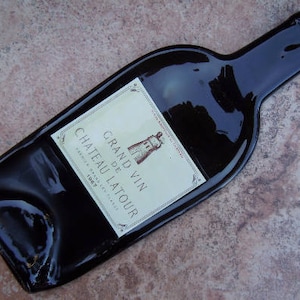
A 1923 Château Latour is a nearly century-old bottle from the Pauillac appellation, ranked as a Premier Grand Cru Classé in the 1855 Bordeaux classification. It is a red wine primarily made from Cabernet Sauvignon, blended with Merlot and Cabernet Franc, with an alcohol content around 13–14%. The 1923 vintage itself was not a standout year—described as a comedown from the brilliant early 1920s—so even top producers struggled to make great wines, yet Latour's terroir and winemaking still command respect and high prices. Examples available today show signs of age: stained labels, mid-shoulder fill levels, and 'capsule ok' condition. One bottle was originally bought at Christie's in London in 1977 directly from the château, then re-offered in a 2012 Christie's Geneva sale, while another was recorked and re-dressed at the château in 1990. Current price estimates vary widely, from around €393 on iDealwine to auction estimates of 1,800–3,600 CHF or retail prices of €2,000, reflecting rarity and provenance over the vintage's reputation.

 bagherawines.auctionbagherawines.auction
 boutique.caveletempsduvin.frboutique.caveletempsduvin.fr
 boutique.caveletempsduvin.frboutique.caveletempsduvin.fr
 jahrhundertweine.dejahrhundertweine.de
+Field notes
- —1923 Latour carries the official 1855 Classification rating of '1er Grand Cru Classé' from the Pauillac appellation, one of Bordeaux's most prestigious rankings.
- —The wine is a blend dominated by Cabernet Sauvignon, with smaller amounts of Merlot and Cabernet Franc, and a stated alcohol content of 13–14% depending on the source.
- —The 1923 vintage is generally considered unremarkable in Bordeaux—described as 'the comedown from the undeniably brilliant beginning of the '20s'—so surviving bottles rely heavily on Château Latour's terroir and winemaking reputation.
- —Surviving bottles show classic age-related condition issues: stained labels, 'mid-shoulder' fill levels, and intact capsules; one documented bottle was recorked and re-dressed at Château Latour in 1990.
- —Provenance for these rare bottles often includes notable auction histories: one example was originally purchased at Christie's in London in 1977 directly from the château, then resold in a 2012 Christie's Geneva sale.
- —Market pricing varies dramatically—from an iDealwine estimate of €393 to auction estimates of 1,800–3,600 CHF and retail listings at €2,000—reflecting condition, provenance, and the scarcity of a century-old first-growth Bordeaux.
Learn
Latour’s Place Among Pauillac’s First Growths
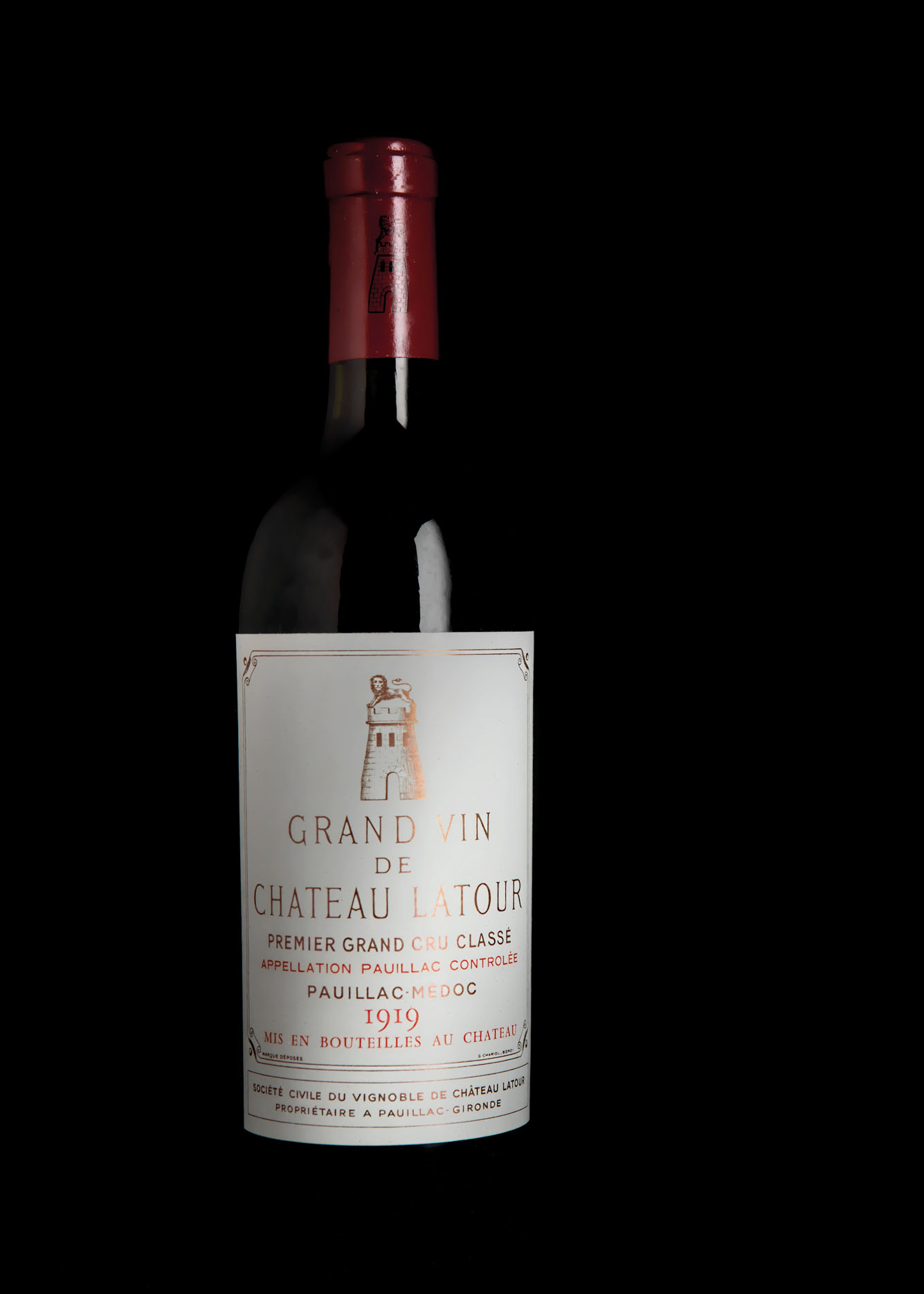
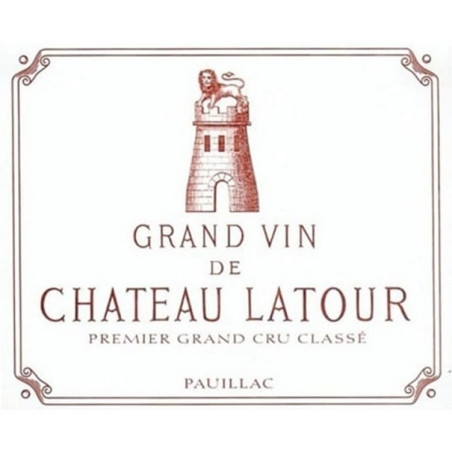
Château Latour, the most southerly of Pauillac’s three First Growths and the one that borders Saint-Julien, occupies a site that has been under vine since at least the 14th century – but its true rise began in the 17th century when the Ségur family acquired it, adding Lafite in 1716 and Mouton in 1718, and earning Nicolas-Alexandre de Ségur the nickname 'Prince of the Vines' from Louis XV. What makes Latour structurally different from its peers is the 47-hectare heart called L’Enclos, a walled parcel of deep, mixed gravel and clay (blue, red, grey strata) that sits on the Gironde’s edge and has been farmed biodynamically since 2018; the Grand Vin comes exclusively from those old-vine Cabernet Sauvignon-dominant plots. The estate’s ownership was remarkably stable – passing through only three families from 1670 until 1962 – and since 1993 it has been under François Pinault, who withdrew Latour from the Bordeaux En Primeur system in 2012, a move that changed how the wine trades and, critics argue, strengthened its secondary-market provenance. Despite that shift, Latour remains the consensus pick for 'best in off-vintage' among the First Growths: in 2001, 2002 and 2004 – years when much of Bordeaux struggled – Latour still scored 95+ points from Robert Parker, thanks to its unique position against the estuary that moderates frost and allows slow, even ripening. The 1961 Latour was the first wine that critic Neal Martin ever awarded a perfect 100-point score, and the 2016 is widely tipped as the benchmark of the post-En Primeur era.
 christies.comchristies.com
 chateau-latour.comchateau-latour.com
 frw.co.ukfrw.co.uk
+Field notes
- —Château Latour sits at the very southeastern tip of Pauillac, within walking distance of the Gironde estuary and just a few hundred metres from the border with Saint-Julien – a position that gives it the most consistent, frost-protected microclimate on the Left Bank, and the only First Growth able to produce outstanding wine in cool, rainy vintages like 2001, 2002 and 2004.
- —The Grand Vin is drawn exclusively from a 47-hectare walled vineyard called L’Enclos, which sits on a mixture of deep gravel and unusually coloured clay subsoils (blue, red and grey) – a mineral composition that gives Latour its trademark power, structure and slow-maturing tannins, and which has been farmed biodynamically since 2018.
- —From 1670 until 1963 the estate was owned by only three successive families, a stretch of continuity almost unmatched among the First Growths; in 1993 it was bought by François Pinault, who immediately ended the En Primeur system in 2012, meaning Latour now releases its wines only when they are fully ready to drink rather than as futures.
- —The 1961 Château Latour – a wine from ungrafted pre-phylloxera vines that had not been fully replanted until the 1920s – was the first bottle that critic Neal Martin ever awarded a perfect 100-point score; he called it 'a different realm' and 'dumbfounded by its structure and ineffable complexity'.
- —Latour was already listed in a 1755 report as one of only four Bordeaux properties commanding more than 900 livres per tonneau (alongside Haut-Brion, Lafite and Cantenac), a full century before the 1855 Classification officially made it a First Growth.
- —The estate’s famous tower – the round, 1620s-built 'Tour de Saint-Lambert' – is actually a pigeon roost, not a defensive keep, but it was built on the foundations of the original 14th-century fortress that Froissart described being captured by English soldiers in 1378; that original tower no longer exists.
Learn
How to Read an Old Bordeaux Listing
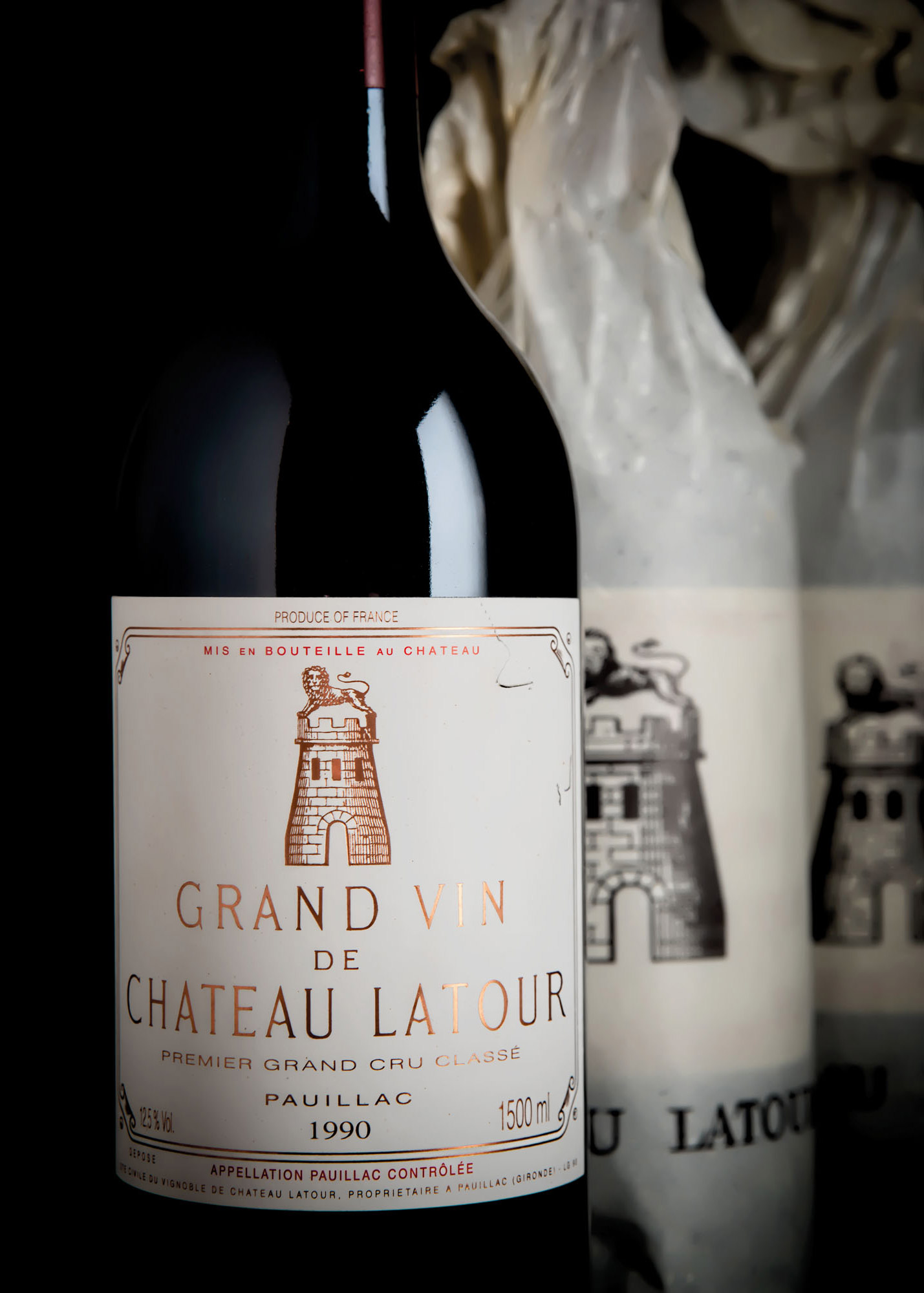
When reading an old Bordeaux listing, the single most important signal of a wine's condition is the fill level—known technically as 'ullage.' Auction catalogues use a specific shorthand: 'bn' or 'BON' for base of neck, 'ts' for top shoulder, 'hs' for high shoulder, and 'ms' for mid shoulder. For a wine like a 1923 Latour, now over a century old, a level at top shoulder would be considered normal; mid shoulder is not unusual for wines 30–40 years old but carries some risk for older bottles. The neck is the gold standard for any wine over ten years. A low-shoulder level—or worse, 'below low shoulder'—signals high risk and usually means the wine is a collector's curiosity rather than something to drink. Capsule corrosion and label condition add nuance, but the fill level is the first thing an experienced buyer checks.


 munichwinecompany.communichwinecompany.com
+Field notes
- —For a 1923 Latour, a 'top shoulder' (TS) fill level is normal: sources state that top shoulder is acceptable for any claret 15 years or older, and exceptional for pre-1950 wines like this one.
- —'Mid shoulder' (MS), while not abnormal for wines 30–40 years old, will lower auction estimates because it suggests cork weakening and some risk—critical to know when evaluating a listing.
- —Auction listings use abbreviations like 'bn' (base neck), 'ts' (top shoulder), 'hs' (high shoulder), and 'ms' (mid shoulder); for a 1923 Latour, 'vhs' (very high shoulder) would indicate excellent provenance, as it's typical for wines only 8+ years old.
- —If a listing notes 'low shoulder' or 'below low shoulder,' the bottle is considered high risk and undrinkable—only valuable if the label or bottle is exceptionally rare, which a common vintage like 1923 Latour is not.
- —Recorking at the château (e.g., 'reconditionné au Château en 1986') resets the fill level to high or into neck, dramatically improving the bottle's condition and market desirability—a key detail to look for.
- —Bottle sizes also matter in listings: a magnum (1.5 liters) ages more gracefully than a standard 750ml bottle, so a 1923 Latour in magnum would command a premium and likely have a better fill level for its age.
Discover
Read Price Histories, Auction Lots, and Merchant Notes

The 1923 Château Latour occupies a fascinating place in the marketplace: it's a nearly century-old First Growth with a modest current price estimate of €393 per 75cl bottle according to iDealwine, yet individual auction lots can carry much higher expectations — a single bottle at Bagherawines was estimated at CHF 1,800–3,600, reflecting the premium placed on provenance and condition. That specific bottle had a storied chain: originally bought at Christie's London in 1977 directly from the château, then re-offered at Christie's Geneva in 2012, with a mid-shoulder fill and stained label. The 1923 vintage itself, coming between the more famous 1921 and 1928, is a quiet presence — less celebrated but still a genuine pre-phylloxera-era First Growth, making it a sleeper for collectors who value rarity over reputation.
+Field notes
- —The 1923 Latour had an iDealwine price estimate of just €393 per 75cl bottle as of the latest data, yet a single bottle at auction carried an estimate of CHF 1,800–3,600, showing how dramatically provenance and condition inflate value for old vintages.
- —One auction lot of the 1923 Latour came with a detailed backstory: originally bought at Christie's London in 1977 directly from the château, then reoffered at a Christie's Geneva sale in May 2012, stored in a professional warehouse at the Geneva FreePorts.
- —The condition of that specific bottle was documented as 'capsule ok, marked and stained label, level mid-shoulder' — a common state for 100-year-old Bordeaux, where fill level is a critical indicator of preservation and often justifies a lower or higher estimate.
- —A Bonhams auction lot paired a single bottle of 1923 Latour with two bottles of 1943 Lafite Rothschild, indicating that the 1923 Latour is often grouped with other mid-century classics rather than sold in vertical collections.
Keep exploring
More of Château Latour 1923
More to explore
In the same world.
Vintage Rum
Vintage rum sits at the crossroads of spirits collecting, distillery history, and scarcity: bottles are often issued aro…

Vintage Rolex Watches
Vintage Rolex collecting revolves around older references whose value is tied not just to the model name, but to origina…
Chanel Classic Flap
The Chanel Classic Flap — officially the 11.12 handbag — was created by Karl Lagerfeld in 1983 as a reinterpretation of…

Piaget Reference 9801
Piaget reference 9801 appears in the market as a small 27mm manual-wind dress watch, often in 18k gold and frequently in…

Barolo Wine
Barolo is a DOCG red from Piedmont made from nebbiolo, and its reputation rests on a combination that catches newcomers…
Luxury Watches That Hold Value
In the watch world, “holding value” usually means a luxury piece that stays resilient on the secondary market rather tha…

Audemars Piguet Code 11.59
Code 11.59 is Audemars Piguet’s contemporary round-cased collection, revealed in 2019 as a platform for both new design…

Vintage Omega Speedmaster
Vintage Omega Speedmasters sit at the intersection of tool-watch history, lunar mythology, and exacting collector schola…
More in Whisky & Wine
Stay in this world.
Springbank Whisky
Vintage Rum

Japanese Whisky Under $200

Suntory Torys Classic PET
Hibiki Whisky
Barolo Wine

Glassware
Know someone who’d love this?
Discovered by ArcurianAuto-generated from public sources and AI synthesis — it may be incomplete or inaccurate. Treat it as a starting point for your own exploration, not professional (medical, legal, financial, or safety) advice. Verify anything you act on. Report this page.