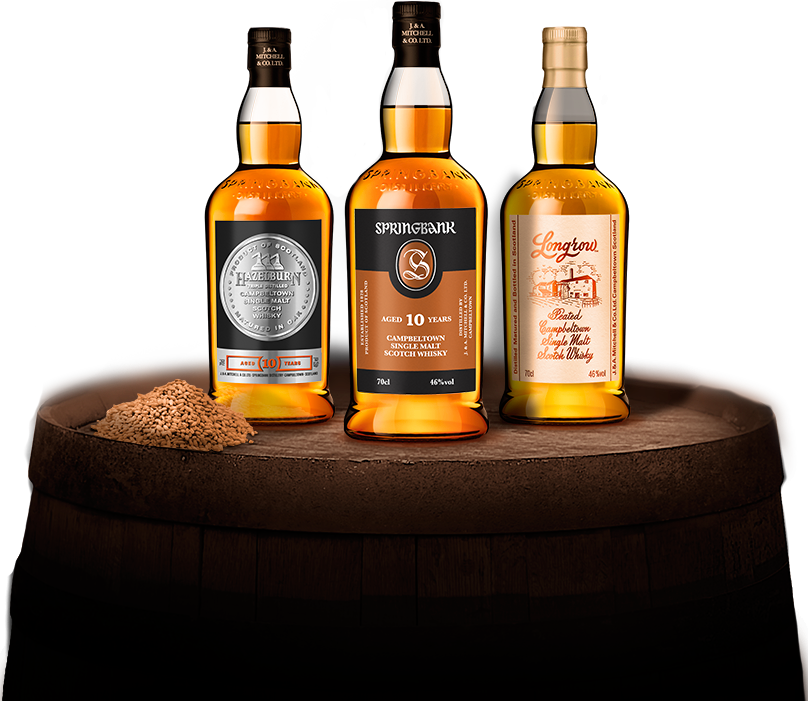
Springbank is a Campbeltown single malt distilled since 1828, with a reputation strong enough that the distillery calls it “the whisky drinker’s whisky.” What sets it apart in the sources is process: Springbank says it is the only distillery in Scotland to carry out 100% of production on one site, and its house style comes from lightly peated barley and a distinctive two-and-a-half-times distillation. Even the core range points collectors toward details that matter, from the 10 year old’s bourbon-and-sherry maturation to the 21 year old’s maritime character and mixed cask recipe. If you want to understand why people obsess over Campbeltown bottles, Springbank is where production method, family continuity, and flavor identity all collide.
Learn
Why Springbank commands such loyalty
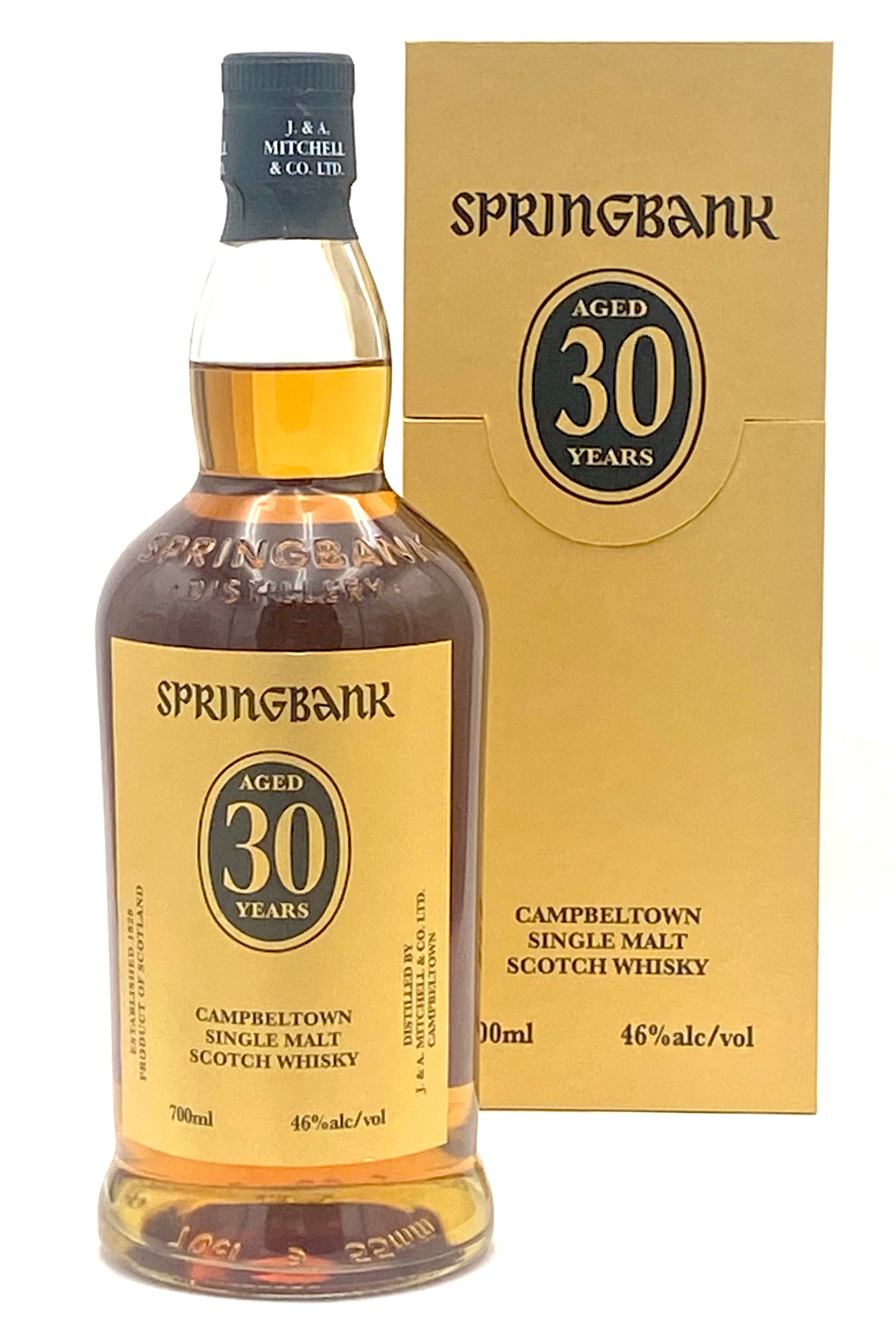
Springbank commands fierce loyalty because it is the last living link to Campbeltown's Victorian whisky heyday, a stubbornly hands-on distillery that does everything from floor malting to bottling on a single site—something almost no other Scotch distillery can claim. It produces three distinct single malts (Hazelburn, Springbank, Longrow) under one roof, each with its own distillation method and peat level, and its flagship 10-year-old is a masterclass in balance: 60% bourbon cask, 40% sherry cask, bottled at a muscular 46% ABV without chill-filtration or colouring. That combination of transparency, tradition, and a signature 'dunnage funk'—a damp, earthy complexity—has made it the benchmark against which many enthusiasts measure all other malts, despite rampant secondary-market pricing that can run 150–200% above standard age-statement bottles.
 peatedperfection.blogspot.compeatedperfection.blogspot.com
 whiskyunplugged.comwhiskyunplugged.com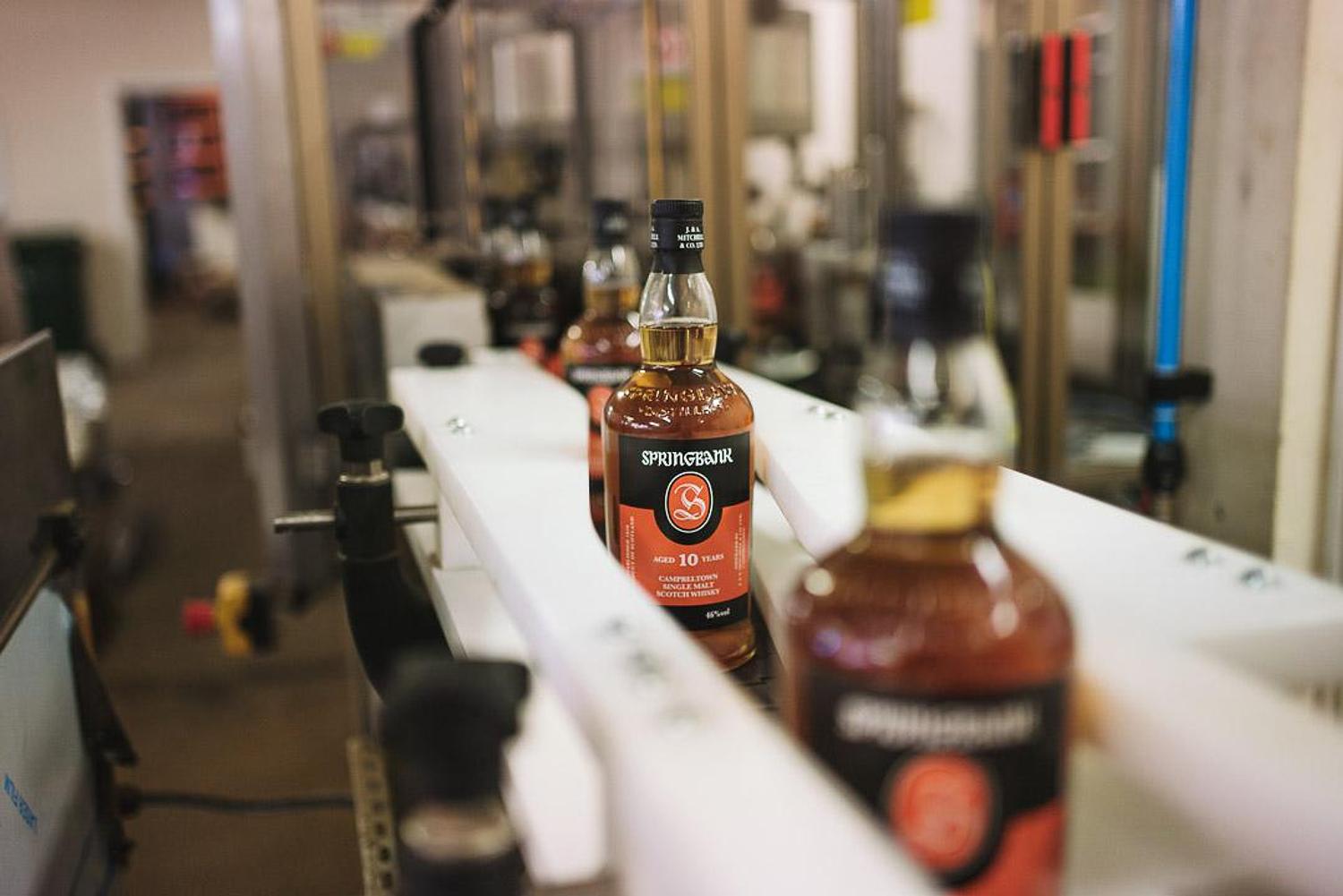
 distiller.comdistiller.com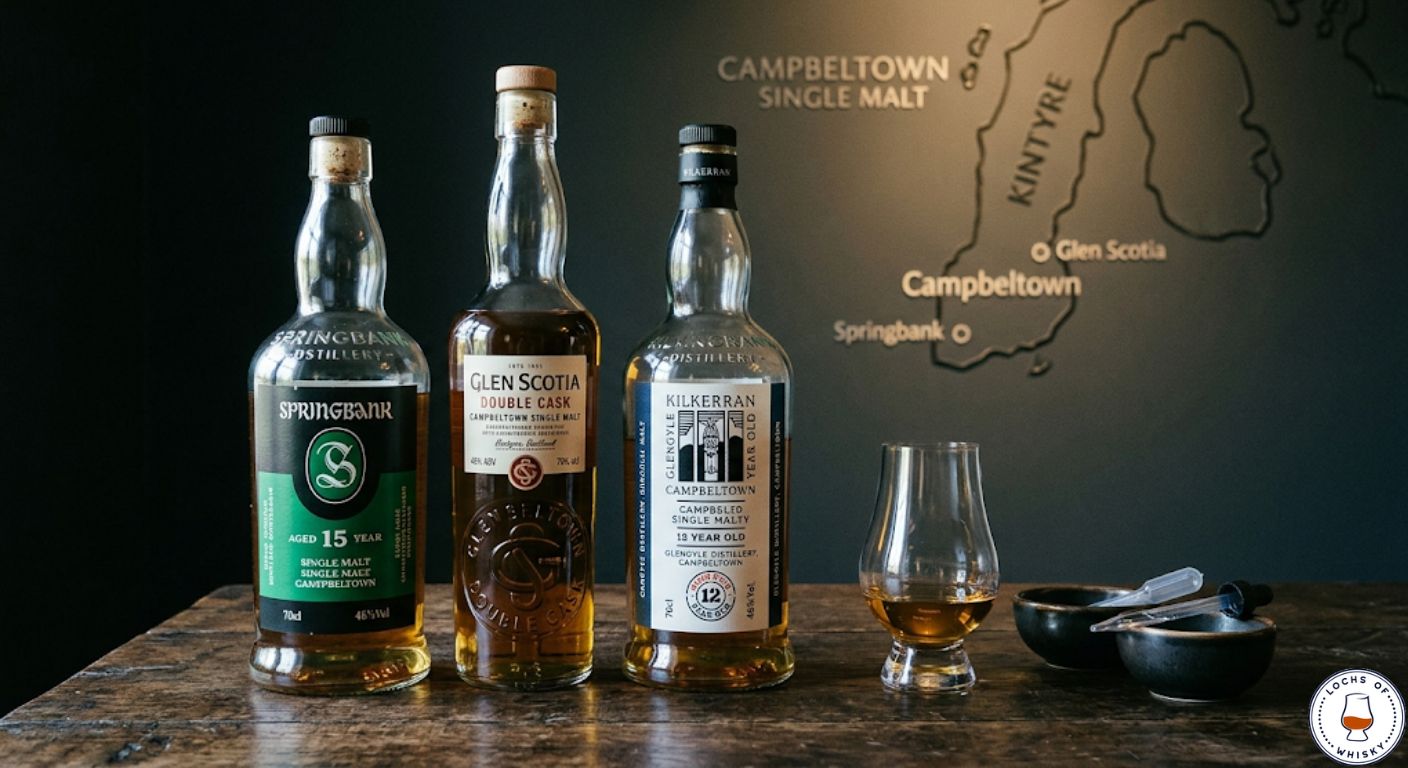
 thewateroflife.orgthewateroflife.org
+Field notes
- —Springbank is one of the few Scottish distilleries that still floor-malts its own barley and bottles everything on site—the whisky never leaves the distillery grounds until it's in the bottle, a level of vertical integration almost unmatched in the industry.
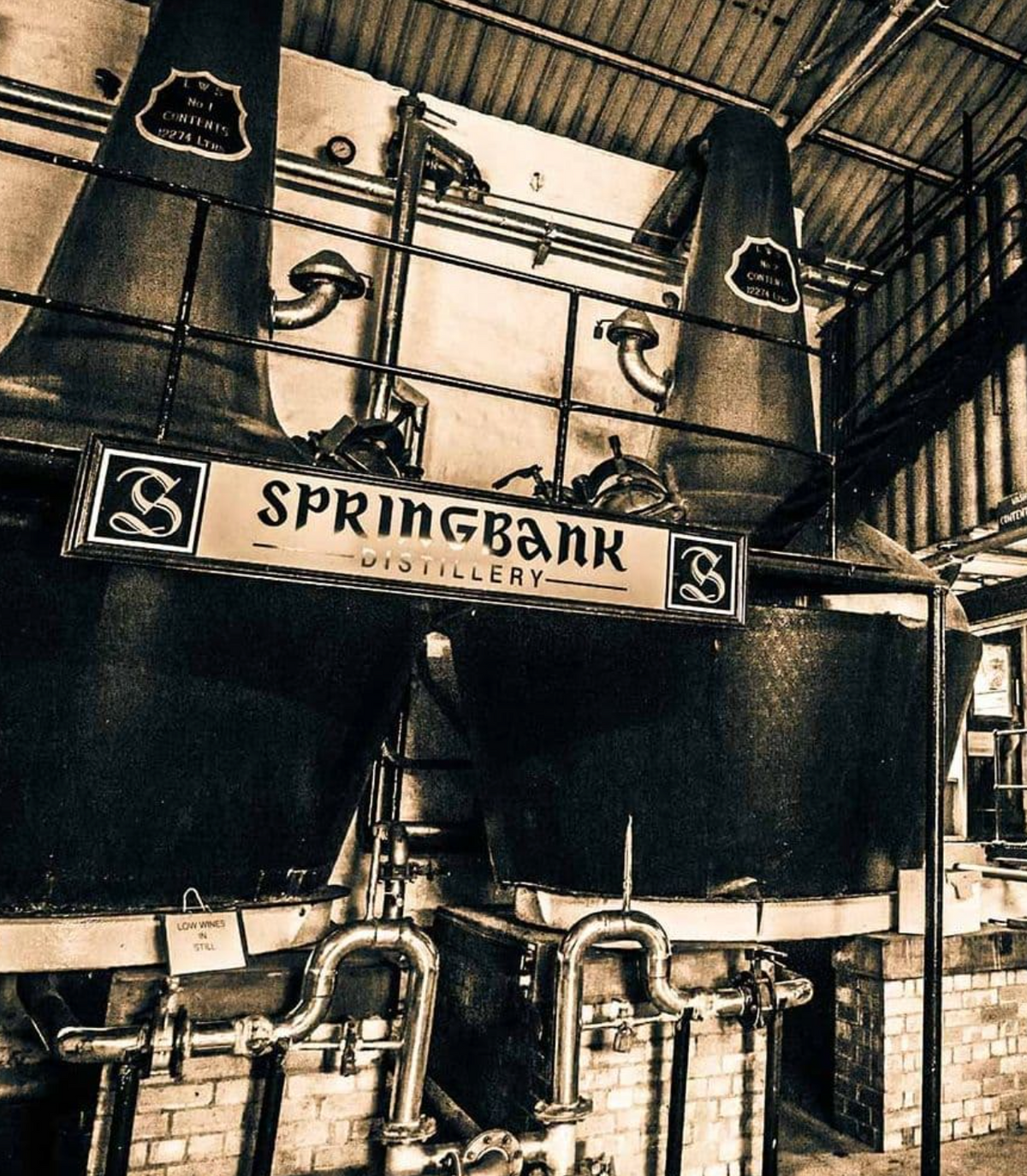
- —The '2.5 times distillation' is not marketing fluff: feints from the first spirit still are combined with low wines from the stripping run and redistilled on a second spirit still, so a portion of the spirit is distilled three times while the rest is done twice—a genuinely unique technical quirk.
- —Springbank 10 year old uses a precise 60/40 split of ex-bourbon and ex-sherry casks, bottled at 46% ABV with no chill-filtration and no added colour—a transparency policy they have never abandoned, even when it was unfashionable.
- —Campbeltown was once home to over 30 distilleries; today only three remain, and Springbank owns two of them (Springbank itself and Glengyle, which produces Kilkerran), making it the guardian of an entire whisky region's survival.
- —The distillery's marketing tag is 'The Whisky Drinker's Whisky', and it regularly tops insider rankings like the Dramface top 40 distilleries list, yet its core 10-year-old is often priced 150–200% above comparable age-statement single malts due to demand outstripping supply.
Learn
From illicit still to Campbeltown standard-bearer
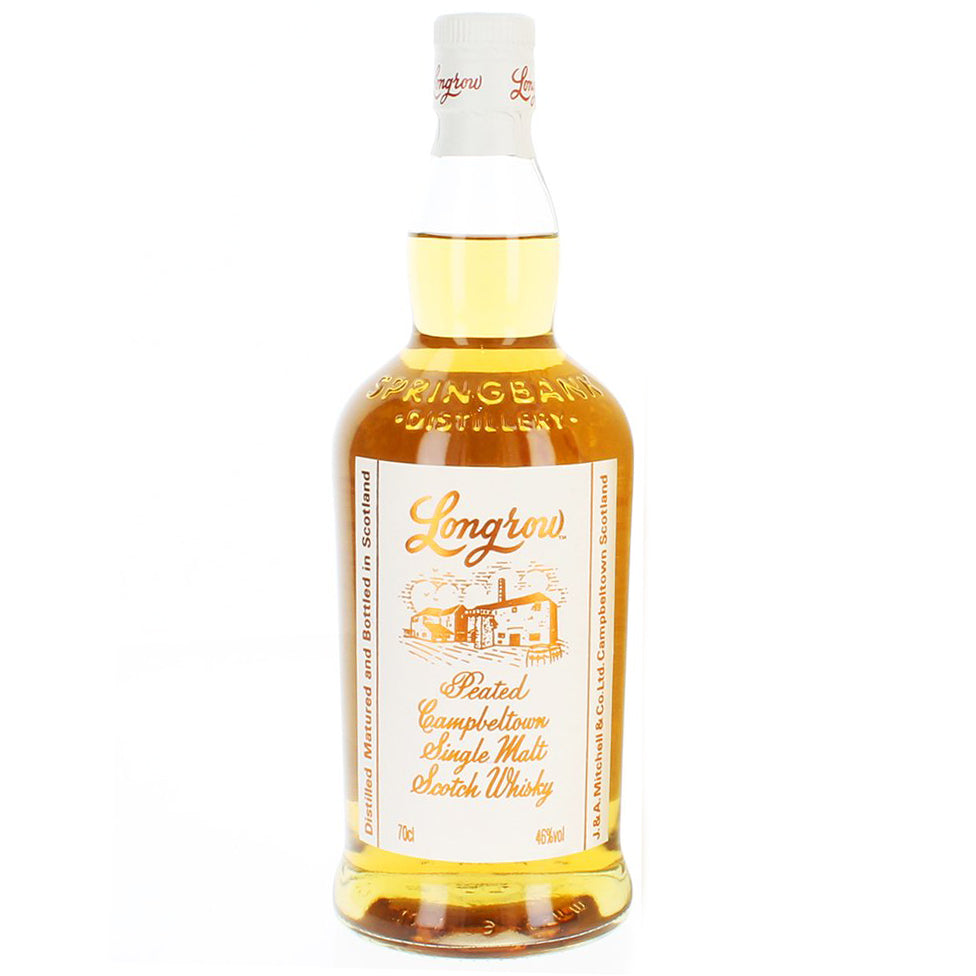
Springbank’s journey from illicit still to Campbeltown standard-bearer is a story of survival against the odds. Founded in 1828 on the exact site where Archibald Mitchell had operated a secret still, it became the 14th licensed distillery in a town that once boasted more than 30 legal producers. The Mitchell family’s grip on the business has never loosened — making Springbank one of only three 19th-century Scotch distilleries still in founding-family hands. When Campbeltown’s reputation collapsed in the 1920s, thanks to nearby distilleries cutting corners, Springbank’s commitment to quality kept it alive while rivals shuttered one by one. By 1934 only Springbank and Glen Scotia remained. The distillery endured Prohibition-era closures, the Whisky Loch of the 1970s, and a mothballing in 1979, before roaring back to full production in 1989. Today it’s revered not just for its three distinct styles — the lightly peated, two-and-a-half-times distilled Springbank; the heavily peated, double-distilled Longrow (first produced in 1973); and the unpeated, triple-distilled Hazelburn (first distilled in 1997) — but for being one of the last distilleries to malt its own barley on-site and handle every step of production, from floor malting to bottling, under one roof.

 springbank.scotspringbank.scot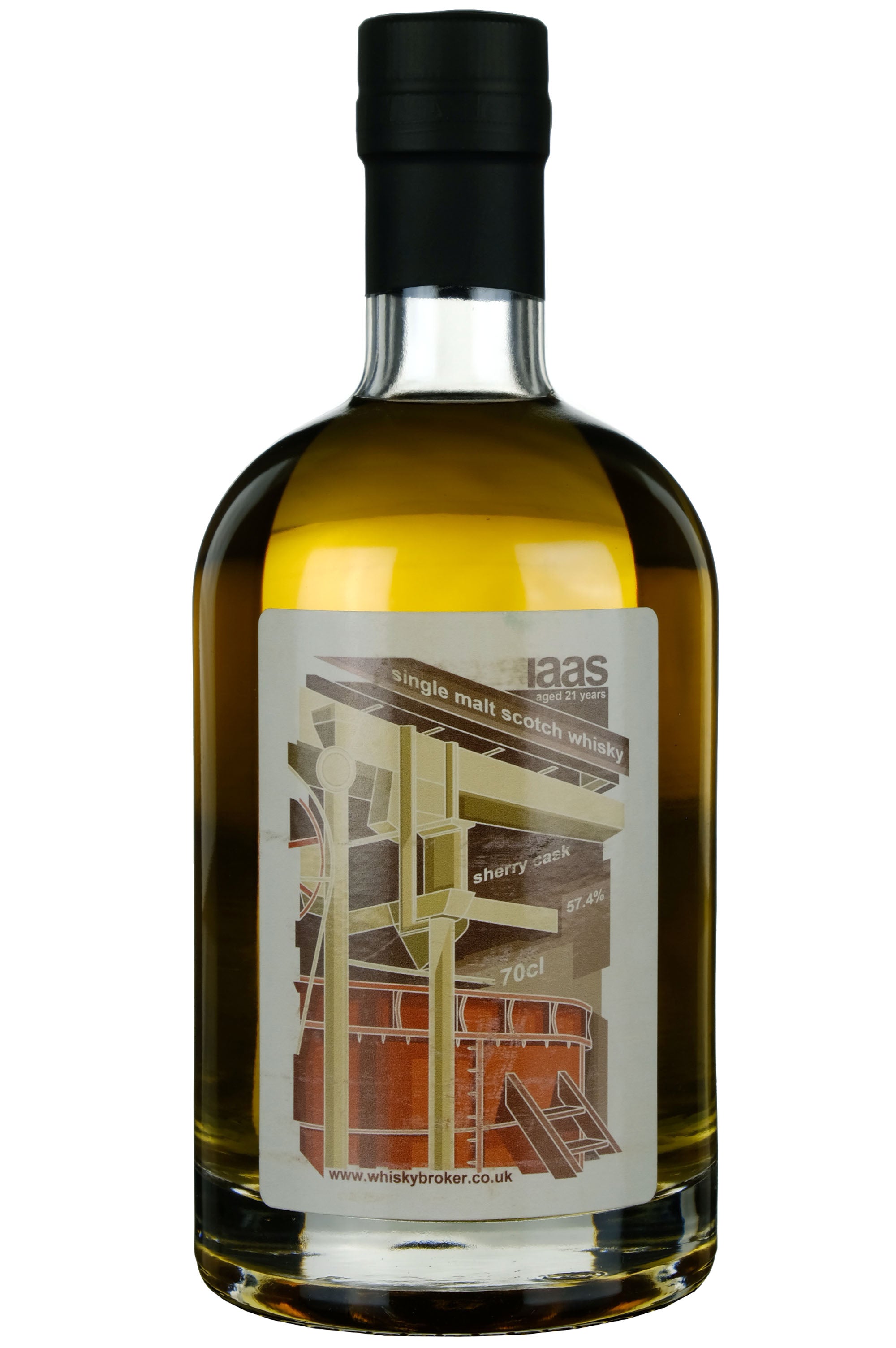
+Field notes
- —Springbank was built directly on the site of Archibald Mitchell’s illicit still, and the distillery’s original 1828 buildings are still in use — an unbroken physical link to the smuggling era.
- —By 1838, John Walker of Kilmarnock (of Johnnie Walker fame) recognized Springbank’s rising profile and purchased 118 gallons — one of the earliest endorsements from a major blender.
- —The depression forced Springbank to close in 1926 for seven years, and it was only the distillery’s refusal to cut corners during the 1920s that spared it the fate of the other Campbeltown distilleries that closed en masse after blenders lost faith in the region.
- —In 1973, Springbank distilled its first heavily peated Islay-style malt, which later became the Longrow range — a bold departure for a Campbeltown distillery at a time when the region was down to just two operational sites.
- —Springbank is one of the very few Scotch distilleries that still floor-malts its own barley and performs 100 percent of whisky-making — including bottling — on-site, a level of vertical integration almost unmatched in the industry.
- —The Mitchell family reclaimed and revived Glengyle distillery in 2000 after 75 years of silence, making it the first new whisky-making facility in Campbeltown for over 125 years, with its single malt sold under the Kilkerran name.
Learn
The Springbank terms and release details worth learning
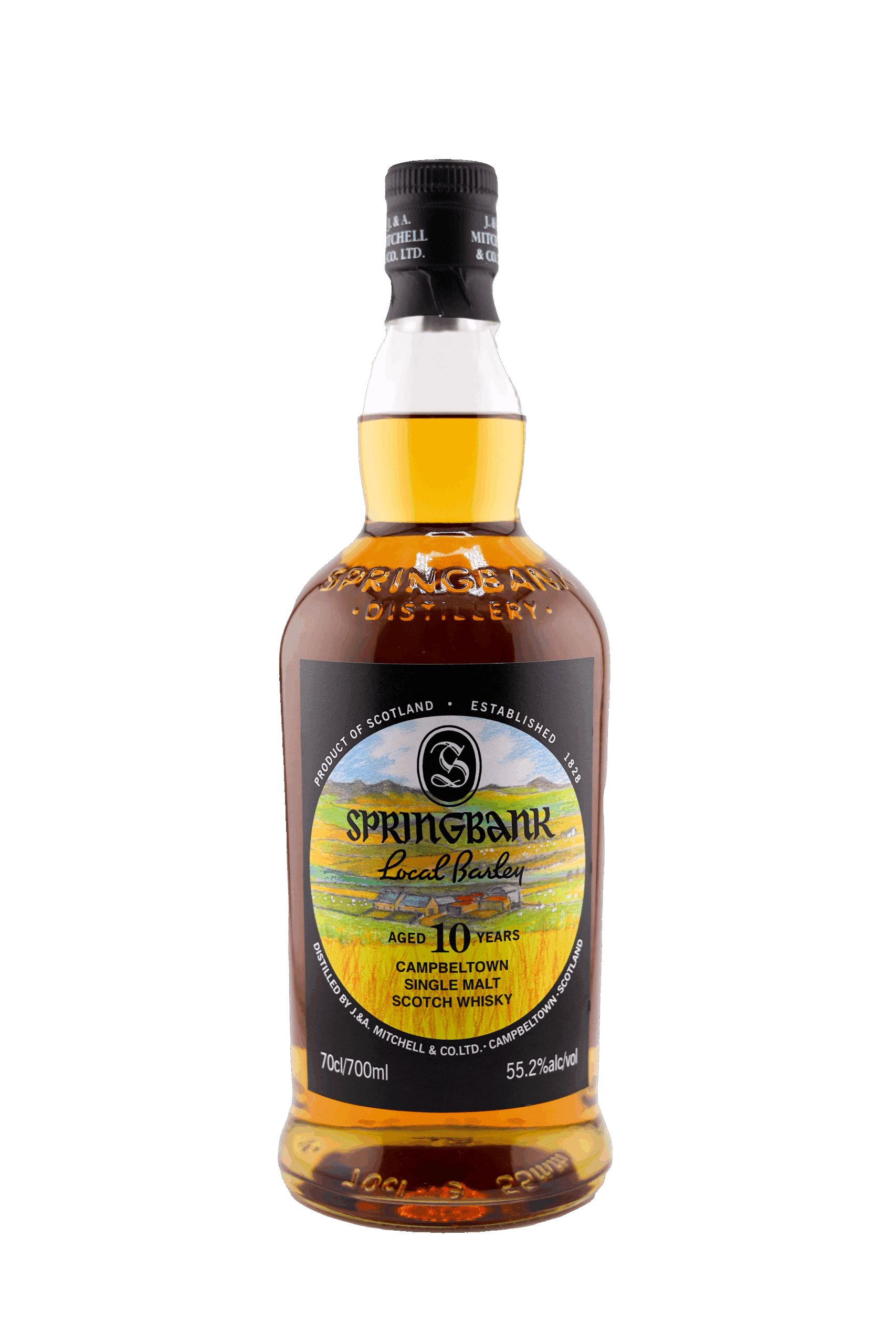
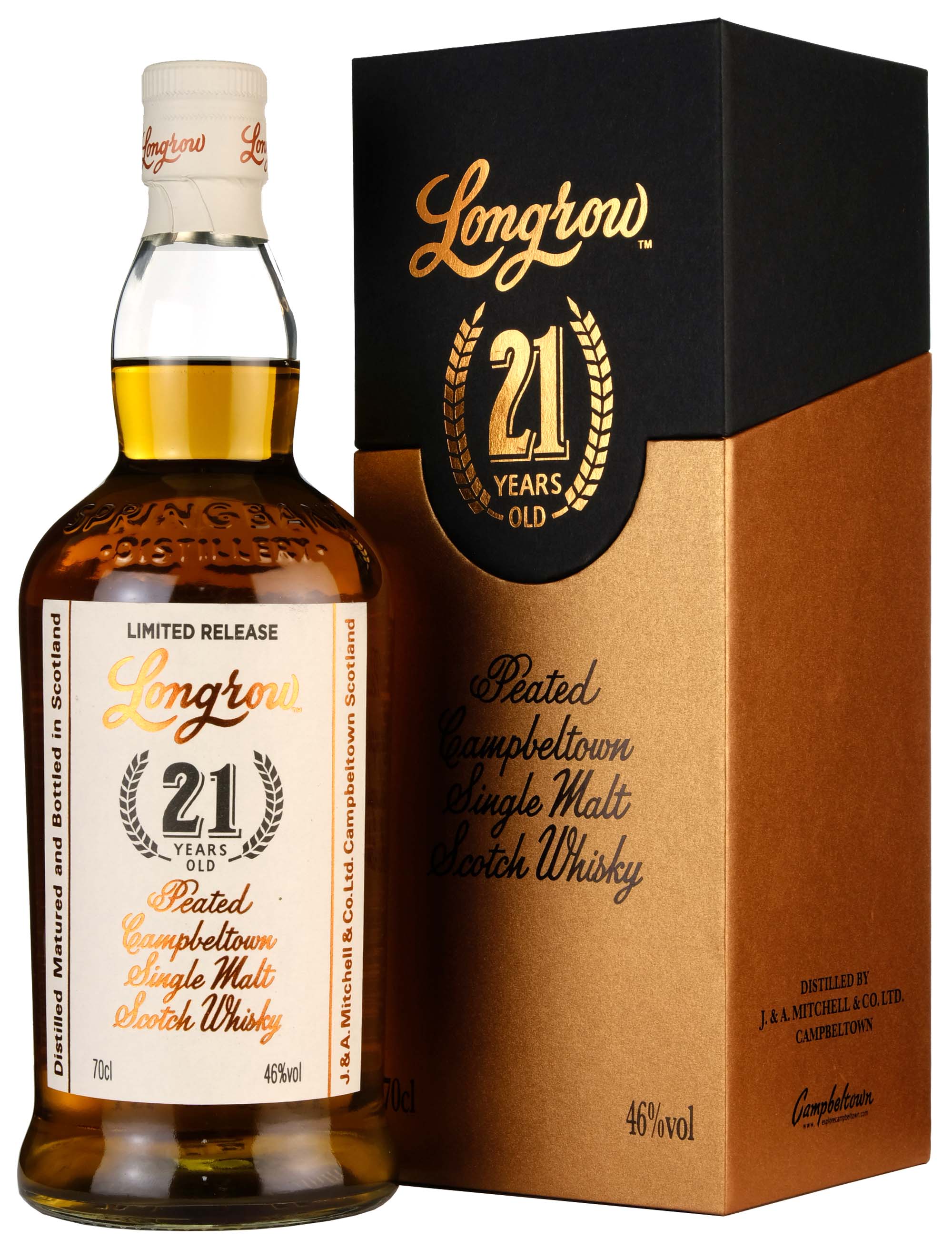
Springbank's 'Wood Expressions' series, released from 2002 to 2013, was a pioneering and influential run of limited-edition single malts that explored finishes in rum, sherry, Tokaji, Marsala, and other casks long before such experimentation became common. The series is not uniformly excellent—some early batches, like the 1989 rum finish, have been criticized as flat and clay-heavy—but it served as a gateway for many UK drinkers into serious whisky enthusiasm. Alongside these, the 'Local Barley' series (revived in 2016 after a 1965-vintage predecessor) champions terroir by using barley grown exclusively on farms around Campbeltown, with each annual release specifying both the barley variety—such as Bere barley from High Ranachan or Belgravia barley from Glencraigs Farm—and the exact cask breakdown, which has ranged from 100% bourbon in 2021 to a sherry-bourbon-rum blend in 2022. These releases are fiercely sought-after not for age-statement gimmicks but for their transparent link between field and glass, reinforcing Springbank's identity as the only distillery that malts all its own barley, distills three distinct styles (unpeated Hazelburn, medium-peated Springbank, heavily peated Longrow), and bottles entirely on site.
 spiritory.comspiritory.com
 moredramslessdrama.commoredramslessdrama.com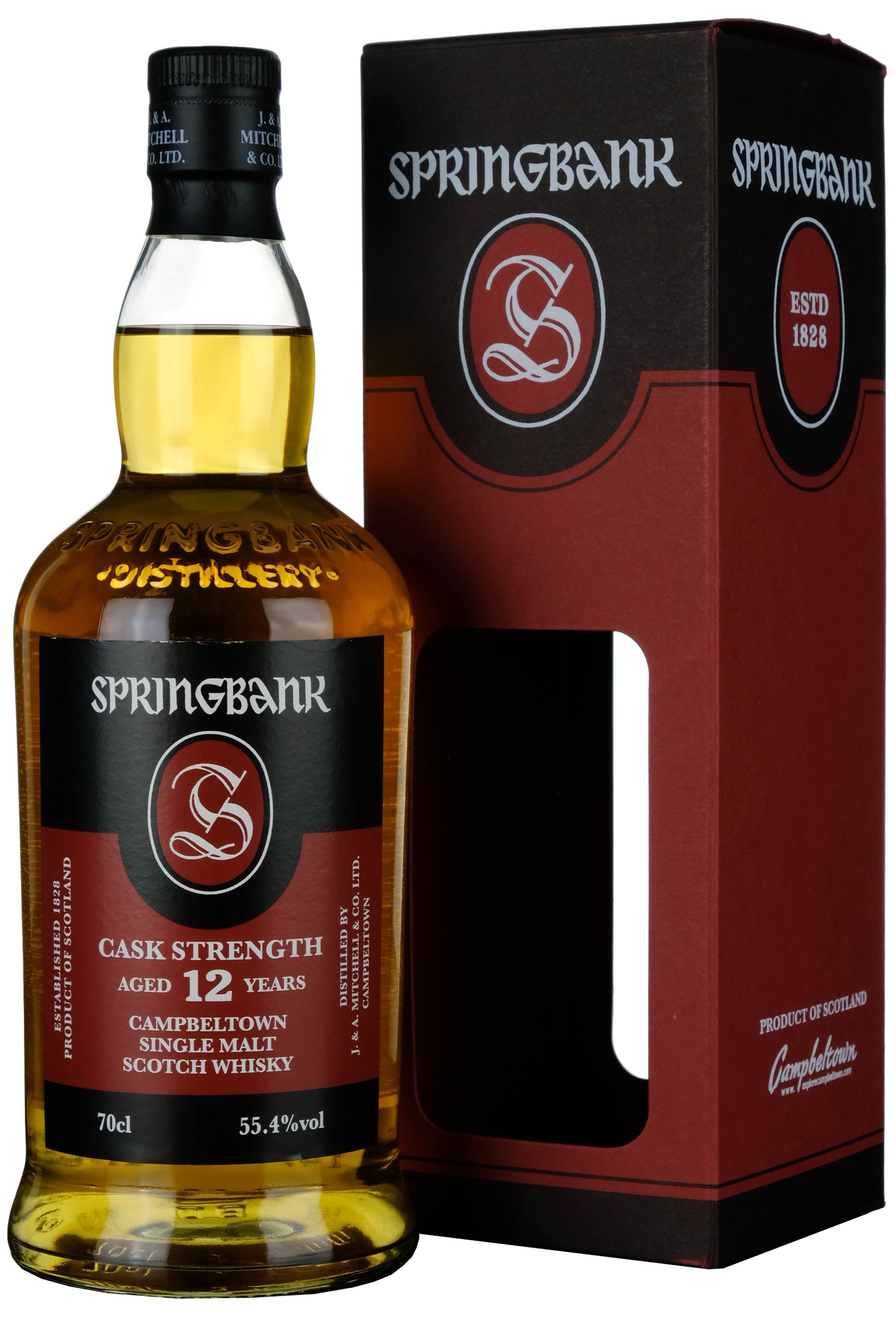
+Field notes
- —The 'Wood Expressions' series launched in 2002 with a 12-year-old Springbank finished in rum casks (5,700 bottles), followed the same year by a Longrow 13-year-old in sherry wood (2,350 bottles); overall the series ran through 2013 and was pivotal in exposing a new generation of UK whisky drinkers to cask experimentation.
- —Angus MacRaild's comprehensive 2022 tasting of the entire Wood Expressions series notes inconsistency: the 1989 rum-finished Springbank is described as 'rather flat and a little empty' with notes of clay, chalk, and metal polish, while other batches fared better.
- —The modern Local Barley series began in 2016, but an earlier precursor existed as single-cask 1965-vintage bottlings released in 2001; the current annual editions explicitly name the farm and barley variety, e.g., 2024's 8-year-old used Bere barley from High Ranachan on the Kintyre peninsula.
- —Local Barley releases vary significantly in cask composition: the 2021 10-year-old was 100% bourbon casks at 51.6% ABV (15,000 bottles), while the 2022 11-year-old used 55% sherry, 35% bourbon, and 10% rum casks at 55.1% ABV (15,000 bottles), showing Springbank's willingness to tweak recipes annually.
- —Springbank's 2024 Washback Bar menu priced a 13-year-old Local Barley at £16 per 25ml glass, indicating its premium positioning over standard 10- and 12-year-old expressions, and confirming the series is served as a high-end offering at the distillery itself.
- —The Local Barley series embodies the distillery's complete on-site control—from floor malting its own barley to bottling—making it one of the few Scotch whiskies that can claim a true 'single-estate' provenance from field to glass.
Discover
Where to follow serious Springbank coverage


For serious Springbank coverage, the blog *Diving for Pearls* (divingforpearlsblog.com) is a vital resource, offering detailed, opinionated tasting notes on everything from rare Independent Bottler releases like Cadenhead's 14-year-old bourbon barrel (2007-2022, 54.9% ABV, outturn 198 bottles) to distillery staples like the 18-year-old (2009, 46% ABV, 80% sherry/20% bourbon casks, 7800 bottles) and the fabled Local Barley series. The blogger tracks release context (e.g., the 15-year-old rum cask release's secondary-market frenzy, the 16-year-old Local Barley's $150+ price tag in the US), calls out specific barley varieties (Prisma from Low Machrimore Farm, Belgravia from West Backs Farm), and isn't afraid to declare a whisky "the epitome of clean crisp single malt" or dismiss a release as lacking complexity. WhiskyNotes (whiskynotes.be) provides concise, score-focused reviews with cask breakdowns and tasting notes (e.g., the 18-year-old gets an 88/100, described as "complex" with "underlying coal smoke and espresso"). Together, these sources deliver the granular detail—cask types, outturn numbers, ABV shifts with dilution, and frank assessments—that separates casual commentary from genuine connoisseurship.
+Field notes
- —Diving for Pearls tracks the entire Local Barley series across multiple releases, noting specific barley provenance (Prisma from Low Machrimore Farm for the 16yo, Belgravia from West Backs Farm for the 10yo) and calling out price inflation due to importers and the secondary market, which has made new bottles harder to justify.
- —WhiskyNotes provides structured reviews of core range bottles like the Springbank 18yo (2009), breaking down cask composition (80% sherry, 20% bourbon), limited outturn (7800 bottles), and giving a numerical score (88/100) alongside specific tasting notes like "coal smoke and espresso" and "bubble gum and wax."
- —The Diving for Pearls review of a Cadenhead independent bottling (Springbank 14yo, bourbon barrel, 2007-2022, 54.9% ABV, 198 bottles) shows how the blog covers semi-official releases that sold out instantly at around £85 on release, calling it "different than anything else they've released recently."
- —The blog reviews a rare rum-cask finished Springbank (15yo cask strength, 2020 release), noting it was "hot stuff in Facebook group and secondary market circles" with US pricing of $150-$200, but ultimately judges it as lacking the complexity of the standard 10-year-old, despite being "crisp and almost refreshing."
- —The 10-year-old Local Barley release (June 2007-November 2017, 57.3% ABV, 70% bourbon/30% sherry) is described by Diving for Pearls as "a cute little baby whisky" tasting closer to newmake spirit, but criticizes its secondary-market price of nearly $200 as a barrier despite the quality being pleasant but shallow.
Keep exploring
More of Springbank Whisky
Branch out
Beyond Springbank Whisky
More to explore
In the same world.
Hibiki Whisky
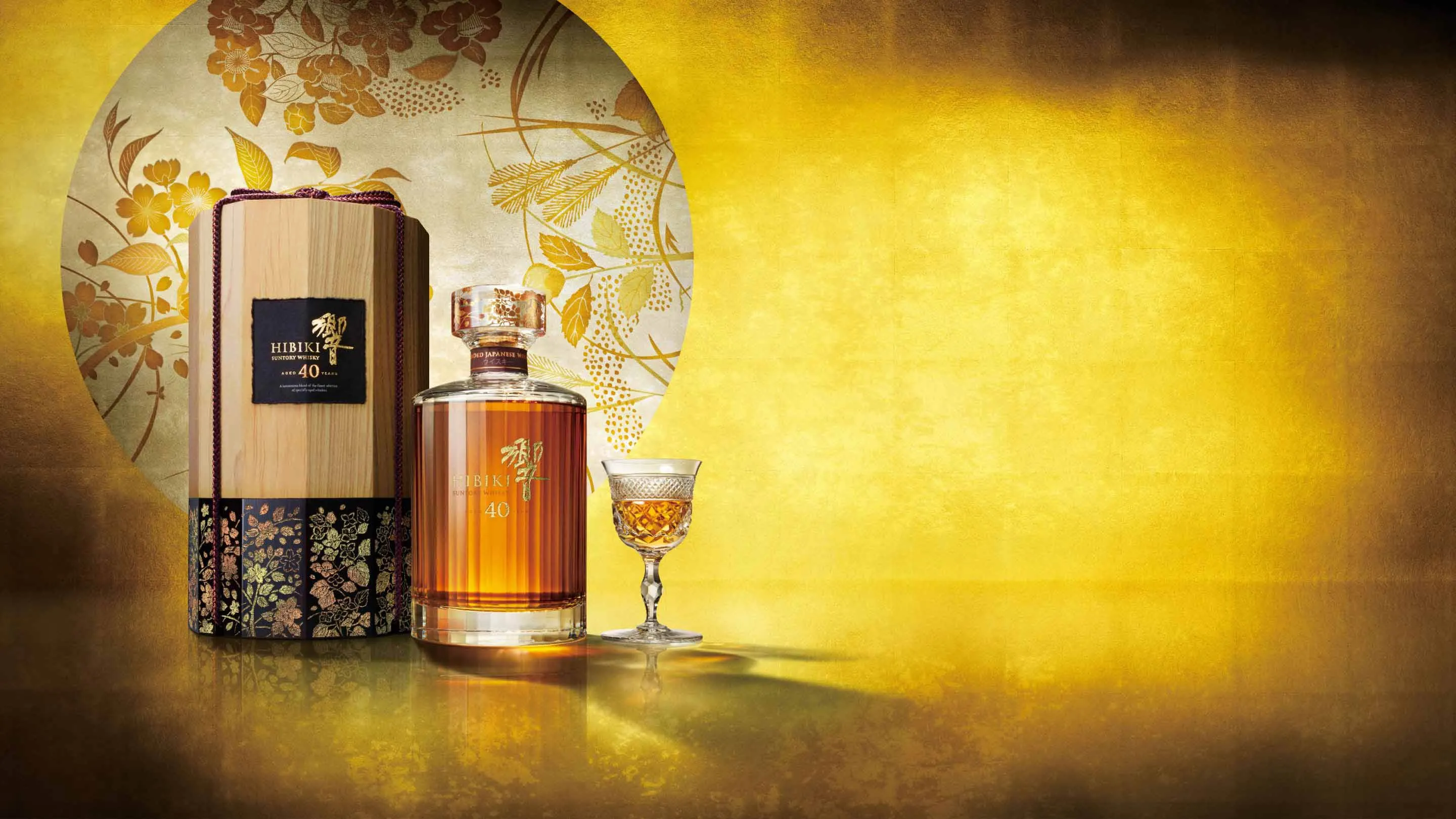
Hibiki is Suntory’s premium blended Japanese whisky line, presented as a celebration of harmony and the art of blending…
Vintage Rum
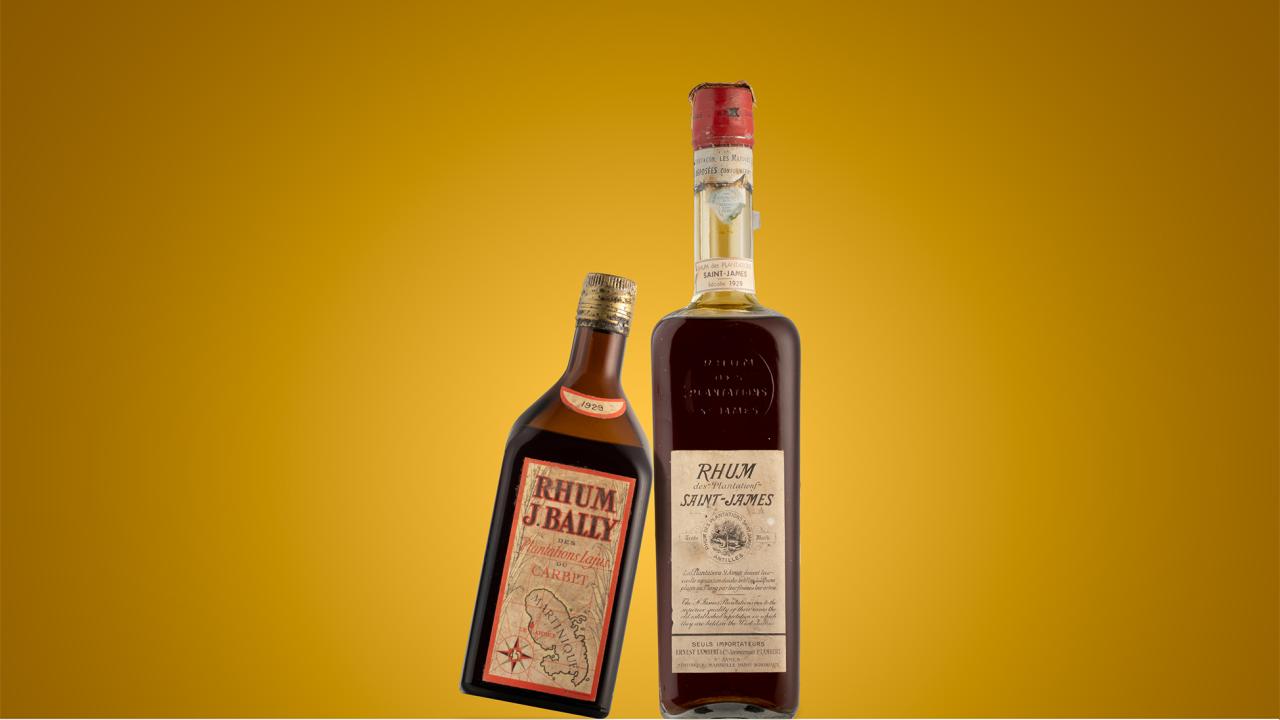
Vintage rum sits at the crossroads of spirits collecting, distillery history, and scarcity: bottles are often issued aro…

Japanese Whisky Under $200
Shopping Japanese whisky below $200 means navigating two different pleasures at once: the appeal of Japanese craftsmansh…

Suntory Torys Classic PET
This is Suntory’s Torys Classic whisky in the large PET-bottle format, a practical packaging style tied to everyday Japa…

Glassware
Glassware, as these sources frame it, spans drinkware and tableware: wine glasses, tumblers, highballs, cocktail glasses…

Luxury Bag Brands Where Craft Actually Leads
The most convincing luxury bag brands are the ones that make craftsmanship legible: Florence houses like Misuri and Dani…
Barbour Waxed Jackets
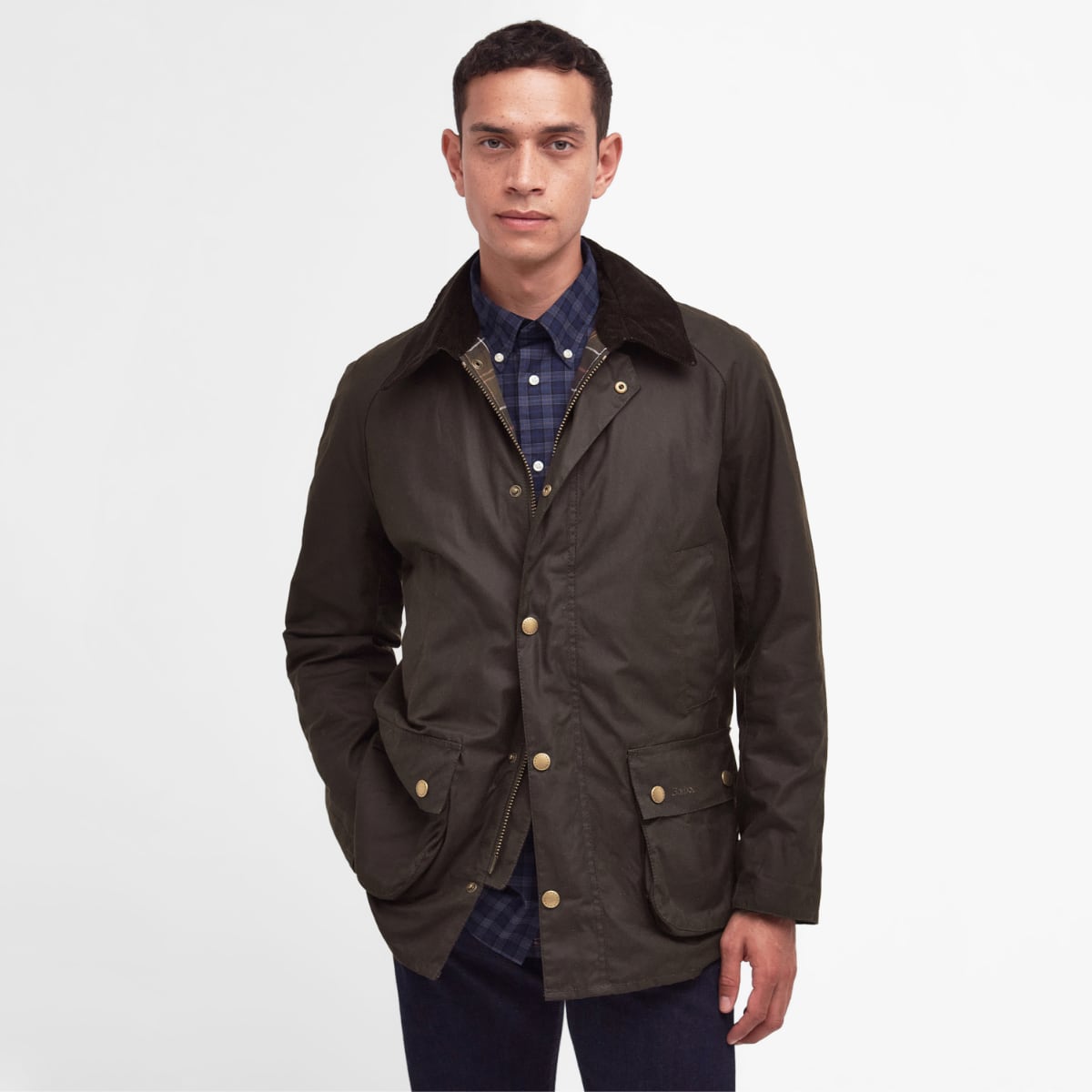
What draws people to a Barbour jacket is not just the label but the specific world of waxed cotton field coats that have…
Château Latour 1923
This query points to a very old bottle of Château Latour from the 1923 vintage: a red Pauillac classified as 1er Grand C…
More in Whisky & Wine
Stay in this world.
Vintage Rum
Château Latour 1923
Japanese Whisky Under $200
Suntory Torys Classic PET
Hibiki Whisky

Barolo Wine
Glassware
Imagery
Know someone who’d love this?
Discovered by ArcurianAuto-generated from public sources and AI synthesis — it may be incomplete or inaccurate. Treat it as a starting point for your own exploration, not professional (medical, legal, financial, or safety) advice. Verify anything you act on. Report this page.