The Red Wing Iron Ranger is a Made in USA 6-inch boot in Red Wing’s Heritage line, sold across several leather and color variants rather than as a single fixed makeup. The current range includes well-known references like the 8085 in Copper Rough & Tough, 8084 in Black Harness, 8083 in Hawthorne Muleskinner, 8111 in Amber Harness, 8086 in Charcoal Rough & Tough, 8078 in Alpine Portage, and 8087 on the Iron Ranger line page. For people who care about boots, the obsession quickly shifts from “which pair?” to the specific personality of each leather—oily Rough & Tough, roughout Muleskinner, or the cleaner Harness options—and how they age on foot. It’s a model where the reference number matters almost as much as the silhouette, which is why following patina shots, sizing debates, and resole photos is half the fun.
Learn
The Iron Ranger Line: References, Leathers, and What Actually Changes
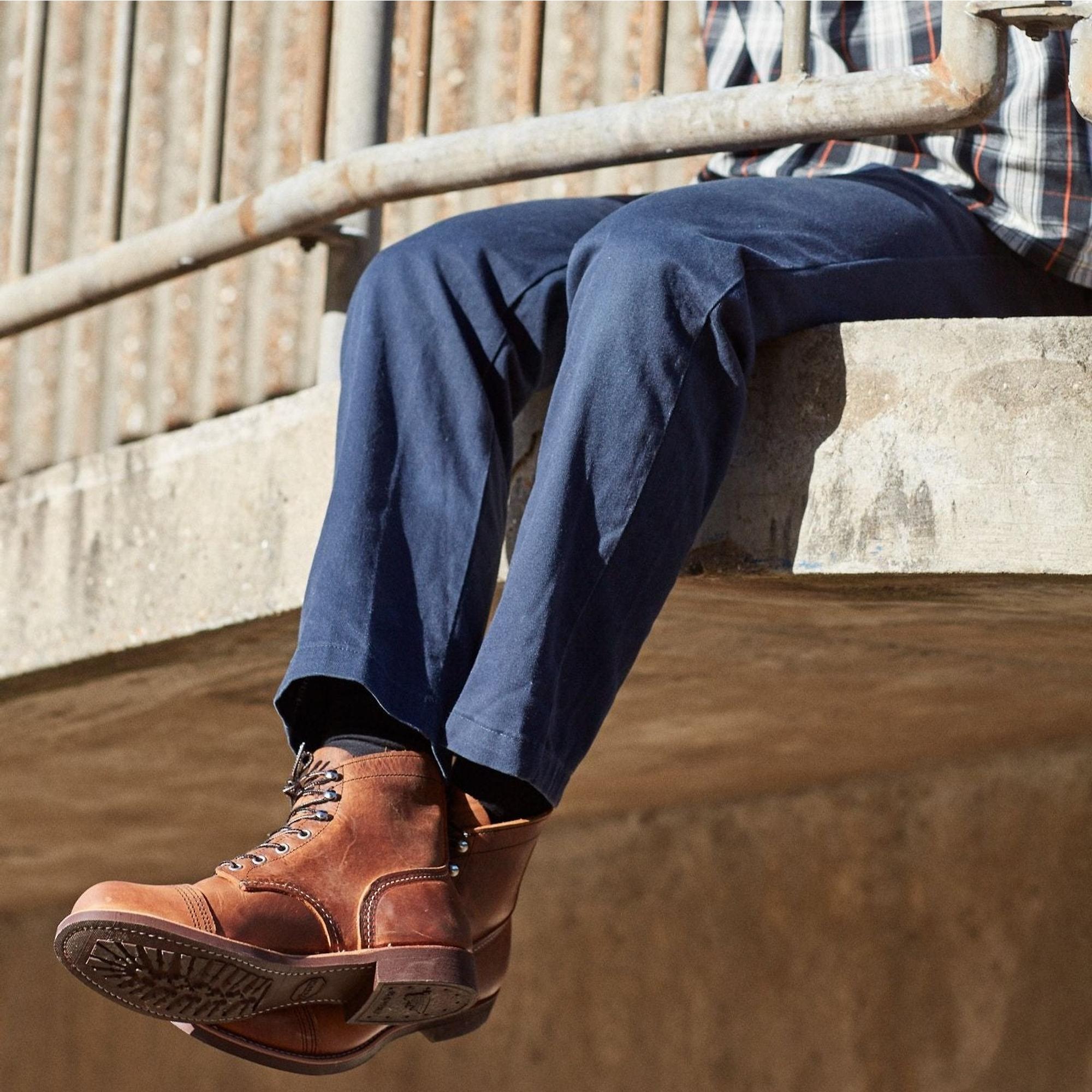
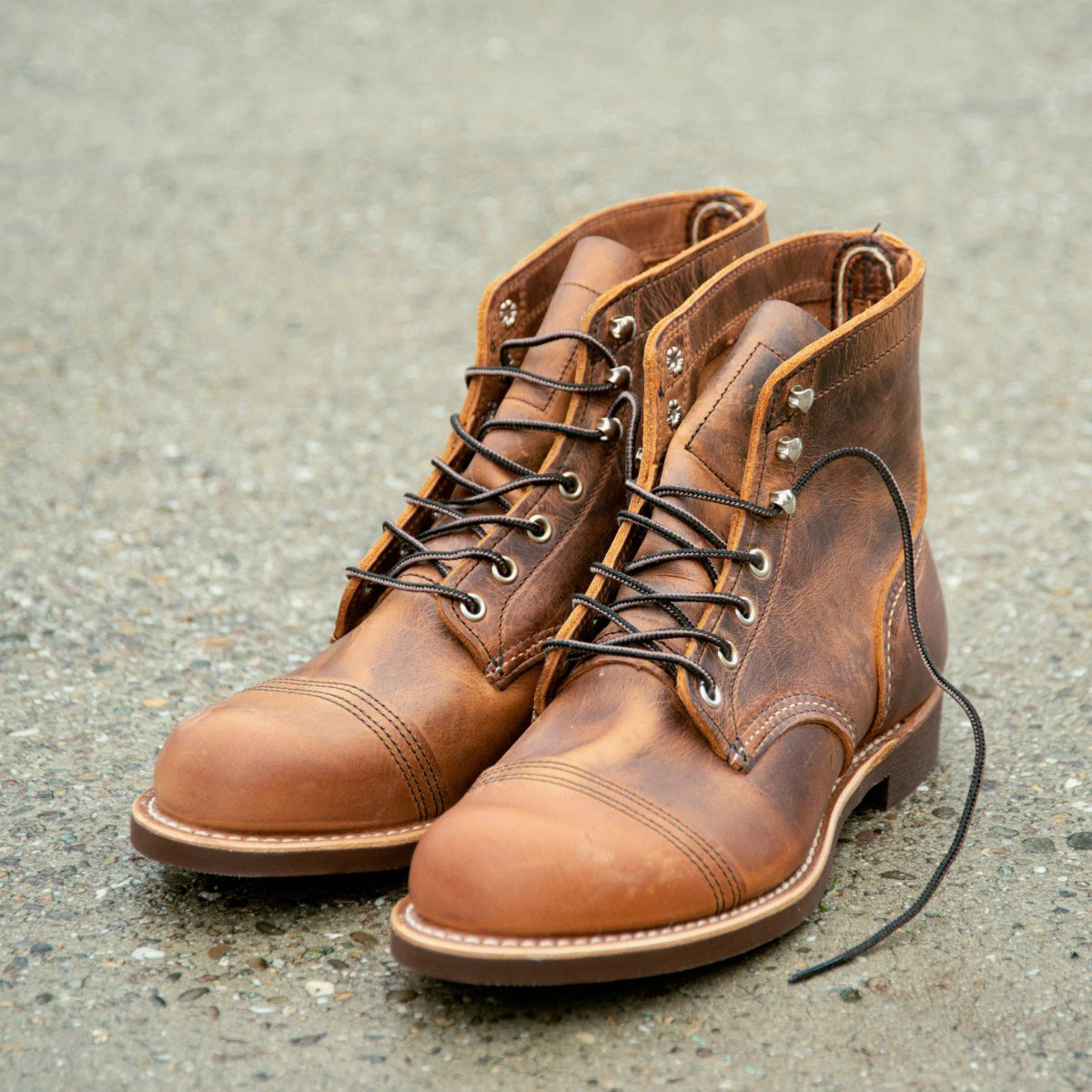
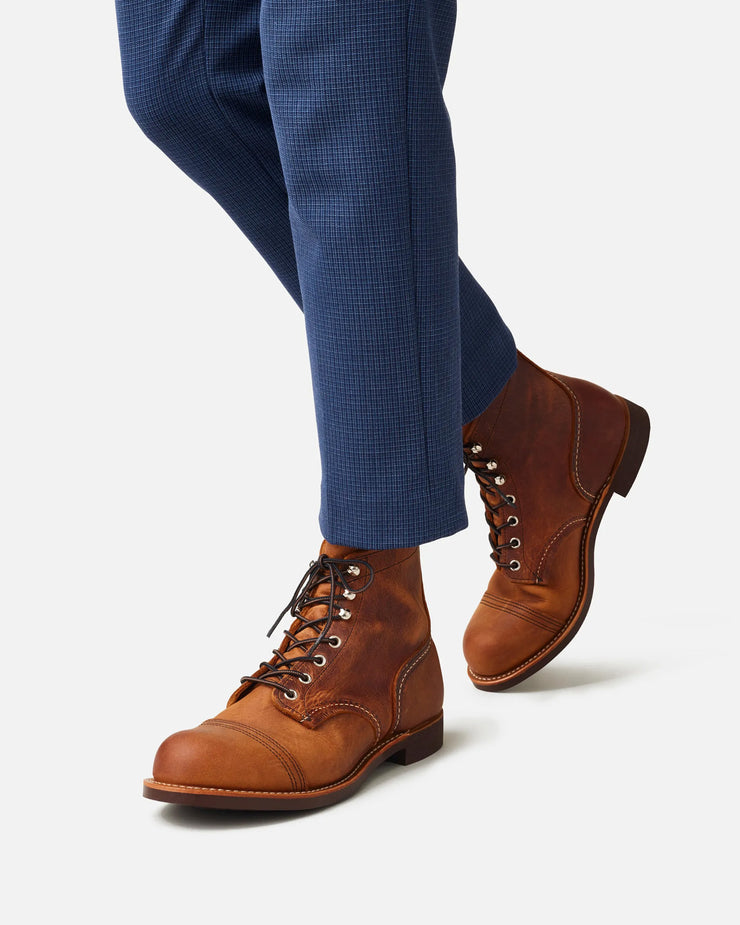
The Red Wing Iron Ranger line, originally designed for iron ore miners in Minnesota's Mesabi range during the 1930s, has maintained its core design for nearly a century, with the most significant change being the shift from nitrile cork soles to Vibram 430 mini-lug outsoles in 2018. The two dominant leather options in the line—Amber Harness (model 8111) and Copper Rough and Tough (model 8085, formerly 8115)—offer distinctly different experiences despite sharing the same No. 8 last. Amber Harness is a heavyweight, oil-tanned full-grain pull-up leather with a semi-gloss finish, no added pigments, and visible natural beauty marks like scars and grain variations, giving it a dark brown hue that develops rich patina over time. Copper Rough and Tough, by contrast, is an oil-tanned nubuck with a buffed surface, heavy oil saturation, and a pronounced pull-up effect that creates warm orange-brown tones and a vintage, mottled appearance straight out of the box. The Copper Rough and Tough leather feels softer and has more surface texture, while Amber Harness is smoother and stiffer initially, leading to different break-in experiences—the 8085 wearing in more quickly with a buttery feel, while the 8111 demands patience but rewards with a structured, classic look. Each boot requires over 230 handcrafting steps and is entirely made in Red Wing, Minnesota, using leather from the company's own S.B. Foot Tanning Company, cementing the Iron Ranger as a total package of heritage, construction, and material variation.

 styleforum.netstyleforum.net
+Field notes
- —The Iron Ranger's defining double-leather toe cap was originally a practical safety feature for iron ore miners in the 1930s, protecting feet from falling debris and sharp rocks in the Mesabi range, not a purely aesthetic add-on.
- —The only major design change in the Iron Ranger's history was swapping the original nitrile cork outsoles for Vibram 430 mini-lug soles in 2018, which improved traction while preserving the boot's classic profile.
- —Amber Harness leather (8111) is a 100% natural pull-up with no added pigments, using heavy oil and wax treatment that makes water, stain, and perspiration resistance a key feature, while its semi-gloss finish and darker brown color come from the hide’s natural grain and treatment.
- —Copper Rough and Tough is an oil-tanned nubuck with a buffed surface and specialized dyes applied during the tanning process, producing warm orange-brown tones and a distressed, mottled look that intensifies with wear, contrasting with Amber Harness's smoother, more uniform finish.
- —The break-in experience differs drastically: Copper Rough and Tough (8085) feels softer and buttery from the start due to its buffed nubuck surface, while Amber Harness (8111) is stiffer and requires more effort to break in, but both mold to the foot over time on the No. 8 last.
- —Copper Rough and Tough gains a darker, richer color with conditioning—mink oil can shift it toward purple tones—while Amber Harness's pull-up effect reveals lighter tones beneath creases and flex points, creating dynamic color shifts that emphasize the leather's organic structure.
Learn
Learn the Iron Ranger Language
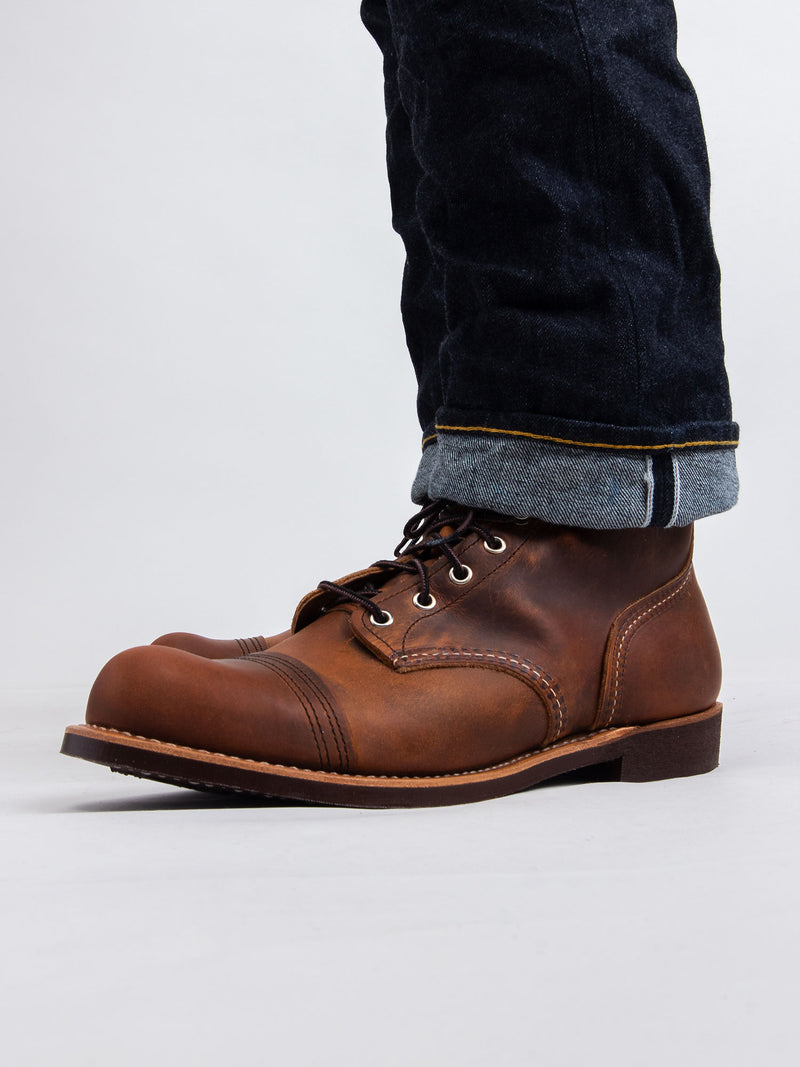
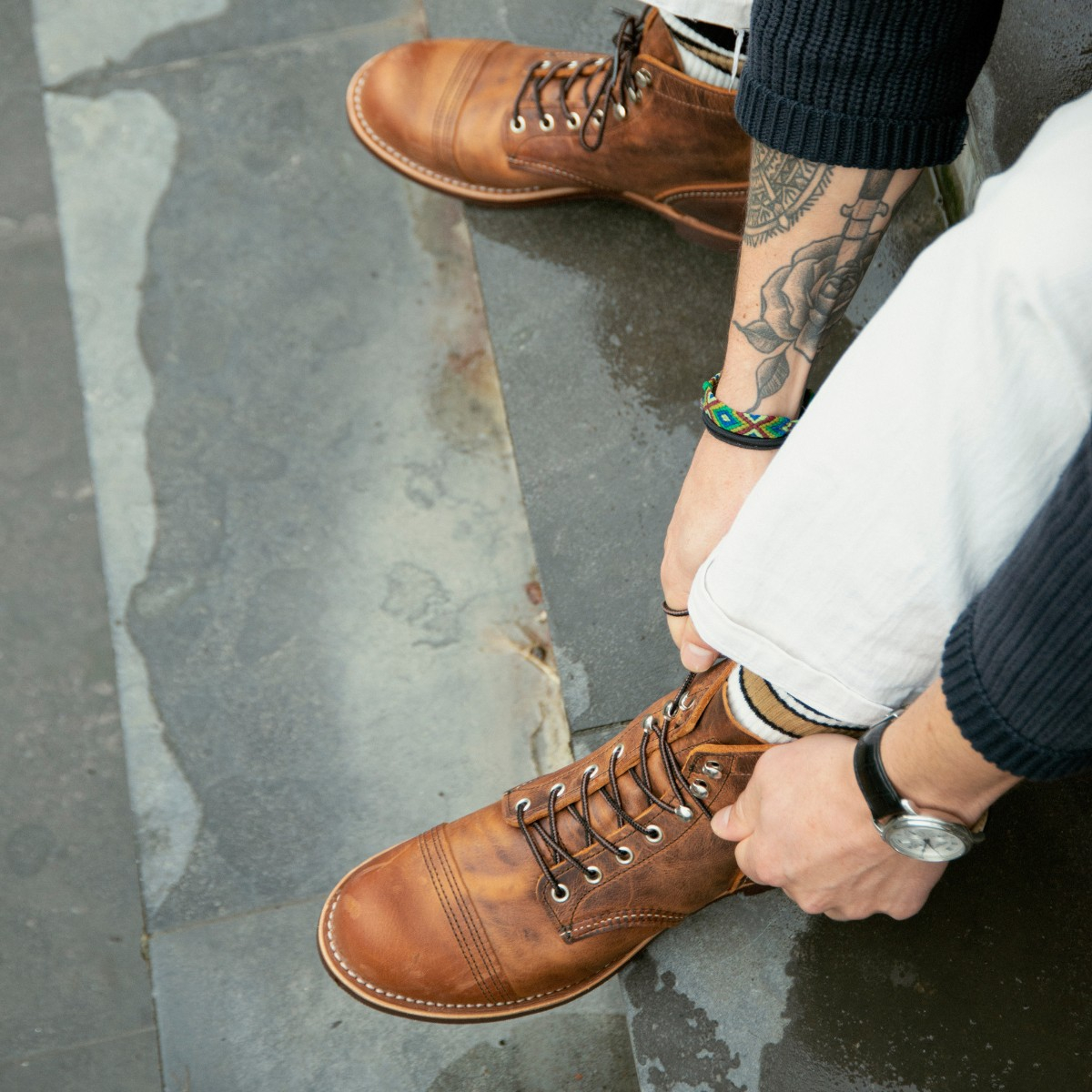
The Red Wing Iron Ranger uses a precise vocabulary to describe its materials and construction, and learning it transforms how you see the boot. The leather itself tells the story: Hawthorne Muleskinner is not suede—it's a full-grain roughout from S.B. Foot Tanning Company in Red Wing, Minnesota, flipped flesh-side out with no splitting, giving it the strength of full-grain with a burnished, textured nap that ages uniquely. Each boot is built on the No. 8 last, a bump-toe shape designed to fit a wide variety of foot shapes, and uses a Goodyear welt with Puritan triple-stitch construction, brass speed hooks, and a Vibram 430 Mini-lug outsole. The model number—8083 for Hawthorne Muleskinner—is the key to identifying the exact leather and colorway, with other numbers like 8111 (Amber Harness), 8084 (Black Harness), and 8085 (Copper Rough & Tough) each specifying a different leather and finish. Understanding this language means you can talk about the boot's heritage—originally built for iron miners in the 1930s from Minnesota's Mesabi Iron Range—and its deliberate design choices, like the double-layer reinforced cap toe and the way the cork midsole forms to your foot over time.
 redwingshoes.comredwingshoes.com

+Field notes
- —Hawthorne Muleskinner is a full-grain roughout leather, not suede; it retains the hide's full thickness by flipping the flesh side outward, making it far more durable than split suede.
- —Every Iron Ranger model number (e.g., 8083, 8111, 8084, 8085) corresponds to a specific leather and colorway—8083 is Hawthorne Muleskinner, 8111 is Amber Harness, 8084 is Black Harness, 8085 is Copper Rough & Tough.
- —The boot is built on the No. 8 last, a bump-toe shape that accommodates various foot shapes and allows toes to move naturally, and Red Wing recommends sizing down half to a full size from your Brannock measurement.
- —The Iron Ranger was originally designed for iron miners in the 1930s from Minnesota's Mesabi Iron Range, which gives the boot its name and utilitarian DNA.
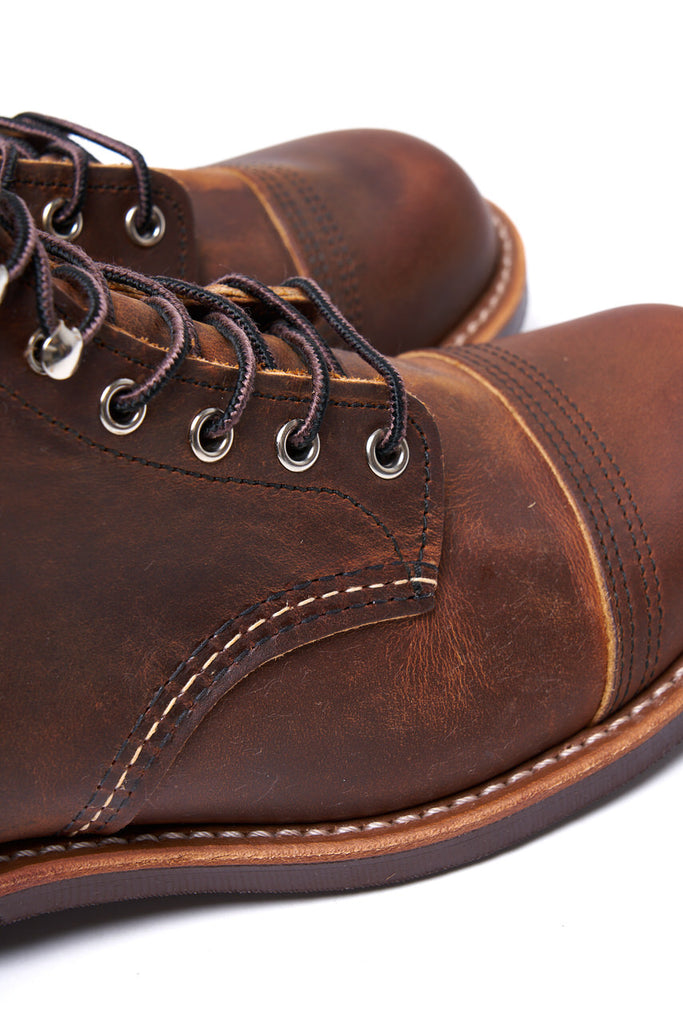
- —Key construction features include a Goodyear welt, Puritan triple-stitch construction, brass speed hooks, a double-layer reinforced cap toe, a reinforced heel counter, and a Vibram 430 Mini-lug outsole.
- —S.B. Foot Tanning Company, owned by Red Wing, sources steerhides within a 600-mile radius of Red Wing, Minnesota, and uses a reverse-suede technique with a soft retan formula and oil treatment for toughness.
Learn
Where Collectors Compare Wear, Sizing, and Resoling
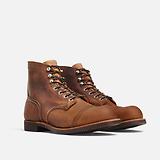
The Red Wing Iron Ranger community on Styleforum and Patina Project reveals a boot that demands patience and rewards it with deep, personal character. Sizing is the great dividing line — nearly every experienced owner goes down at least a full size from their sneaker size (often a 13 in Nikes fits as an 11 in Iron Rangers, per the No. 8 last). Yet even then, the break-in is grueling: the rigid, oil-tanned leather (especially the S.B. Foot Copper Rough and Tough or Amber Harness) can still cramp the pinky toe after six months, driving some to consider selling. The savior for many is a Red Wing retailer's stretcher left on for a full weekend. Once past that, the leather softens significantly, and the Copper Rough and Tough develops a distinctive mottled patina — not a fake "distressed" factory look, but a genuine evolution of texture and color contrast. Resoling becomes the next obsession: owners routinely plan to swap the standard Vibram 430 mini-lug for a leather midsole for more arch support, and many keep rough-out versions like the Hawthorne Muleskinner completely dry and un-conditioned to let the patina develop naturally.
 styleforum.netstyleforum.net
 styleforum.netstyleforum.net
+Field notes
- —The single best fix for a cramped toe box isn't time — it's a full weekend on a Red Wing dealer's boot stretcher, which resolved pinky toe pressure that six months of wear hadn't fixed.
- —Copper Rough and Tough (model 8115) is not a pre-distressed leather — it's an oil-tanned S.B. Foot leather that reveals contrast and texture only through actual wear, and owners strongly resist any advertising that calls it a 'distressed look.'
- —Sizing rule of thumb from owners: go down a full size from Nike sneakers and a half size from Allen Edmonds on the 5 last — one member wears 13 in Nikes and 11 in Iron Rangers on the No. 8 last, another wears 12 in Nikes and 10.5 in Red Wing (after two different salespeople independently confirmed that size).
- —Enthusiasts routinely plan their first resole to add a leather midsole, citing lack of arch support in the stock construction as the main reason to modify the boot at resoling time.
- —The Hawthorne Muleskinner (rough-out) version was worn daily for six months through a dry Denver winter without any conditioner or protector, allowing the vamp to darken naturally from jean rub-off while the quarters remained lighter — a deliberate patina strategy.
Discover
Video Reviews Worth Watching Before You Pick a Reference


Watching video reviews before buying a pair of Red Wing Iron Rangers reveals that the boot's iconic status is matched by genuine debate over its value, break-in process, and practical longevity. Stridewise's five-year review (2023) notes that after a $350 price hike, the boot's worth hinges on whether you appreciate its specific aesthetic and durability—or find the bulbous toe and stiff leather a dealbreaker. Jeff Grant's one-year wear video (2026) details his break-in journey as a 5'9" 180-pounder with a Brannock size 8.5D, emphasizing that the Amber Harness leather softens but takes months of consistent use. Rose Anvil's destructive analysis of a 1,000-mile-beaten pair (2021) confirms the boot's full leather midsole and triple stitching hold up, though they point out the cork nitrile sole wears faster than Vibram alternatives. The earlier Rose Anvil teardown (2020) of a new Copper Rough and Tough 8085 exposes the internal construction: a steel shank, leather insole, and a surprising lack of padding under the heel, which explains the famously brutal break-in. Across all reviews, a recurring takeaway is that sizing down a full size from your Brannock measurement is critical, and that the Iron Ranger is more of a lifestyle statement than a work boot—its cork sole, while comfortable on pavement, becomes treacherous on wet tile or ice.
+Field notes
- —Stridewise’s 2023 five-year review confirms the Iron Ranger’s iconic status but questions whether the post-price-hike $350 tag is justified, noting the bulbous toe cap and stiff leather can make the boot hard to dress up.
- —Jeff Grant’s one-year wear video (2026) documents his break-in as an 8.5D Brannock wearer, showing that the Amber Harness leather requires months of regular use to soften, contradicting the myth of a quick break-in.
- —Rose Anvil’s 1,000-mile teardown (2021) reveals the cork nitrile sole wears significantly faster than a Vibram minilug or Christy sole, and that the triple-stitched upper and full leather midsole remain intact even after heavy use.
- —The original Rose Anvil cut-in-half review (2020) exposes a steel shank, leather insole, and a notable lack of heel padding, which explains the notoriously stiff start and minimal arch support out of the box.
- —Nearly every reviewer—including Stridewise (2018) and Rose Anvil—stresses that you must size down at least one full size from your Brannock measurement; the boots run exceptionally long and narrow.
- —A consistent caution across all reviews: the smooth cork nitrile sole offers poor traction on wet surfaces and ice, making the Iron Ranger less practical as a daily winter boot than its rugged style suggests.
Keep exploring
More of Red Wing Iron Ranger
Branch out
Beyond Red Wing Iron Ranger
More to explore
In the same world.

Levi’s 501 Big E
Levi’s 501 Big E means the red tab with the brand name in capital letters, a detail that has become a shorthand for some…

RRL (Double RL)
RRL, or Double RL, is Ralph Lauren’s heritage-focused line built around early 20th-century workwear, military clothing,…
Ralph Lauren Double RL
Double RL is Ralph Lauren’s dedicated RRL world: a full line spanning men’s and women’s clothing, jeans, accessories, an…
RRL (Double RL)
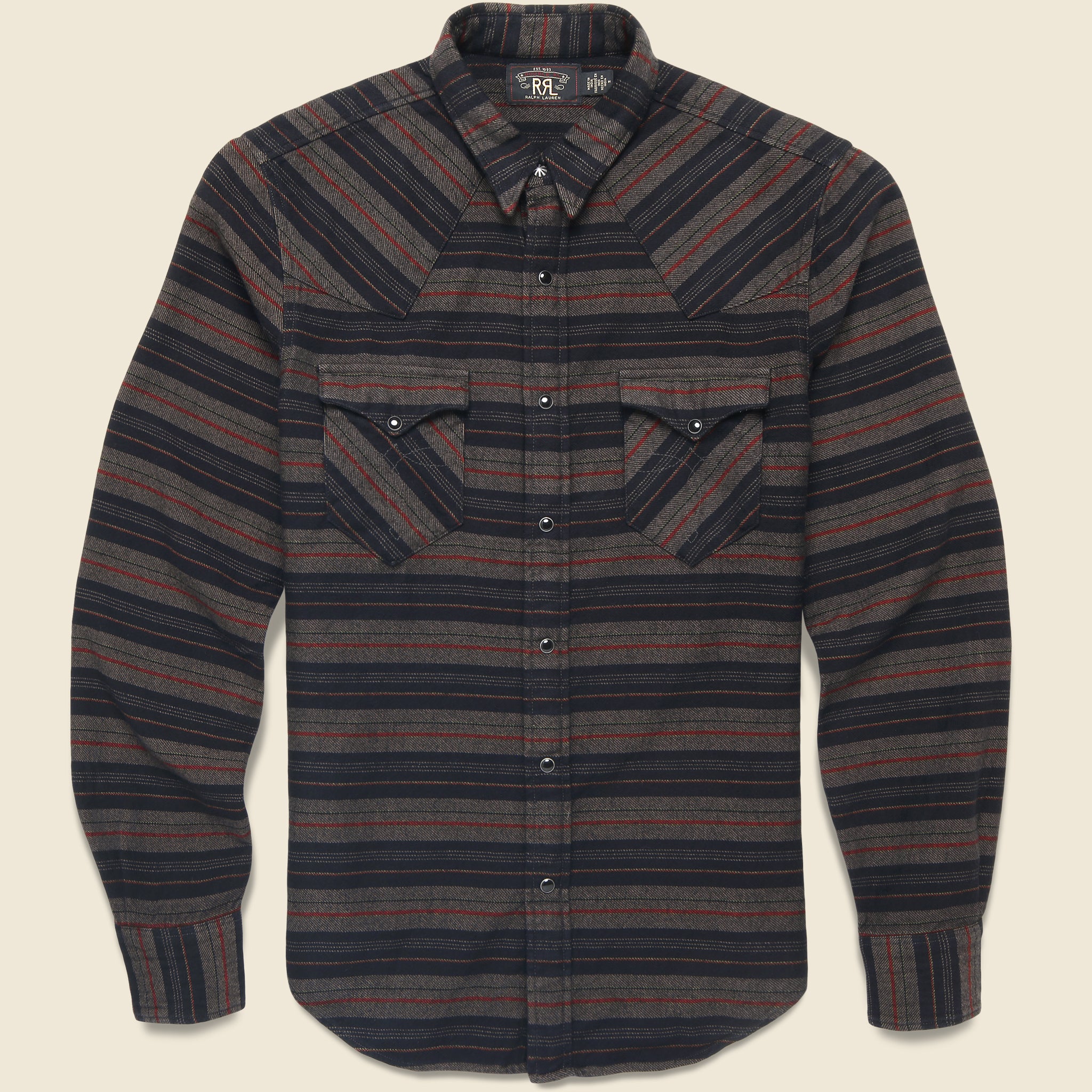
RRL, or Double RL, is Ralph Lauren’s heritage-focused line built around early 20th-century workwear, military clothing,…

Vintage Levi's Denim
Vintage Levi's denim is a collector's world built around reading the garment itself: care tags, the red tab, and details…
Barbour Waxed Jackets
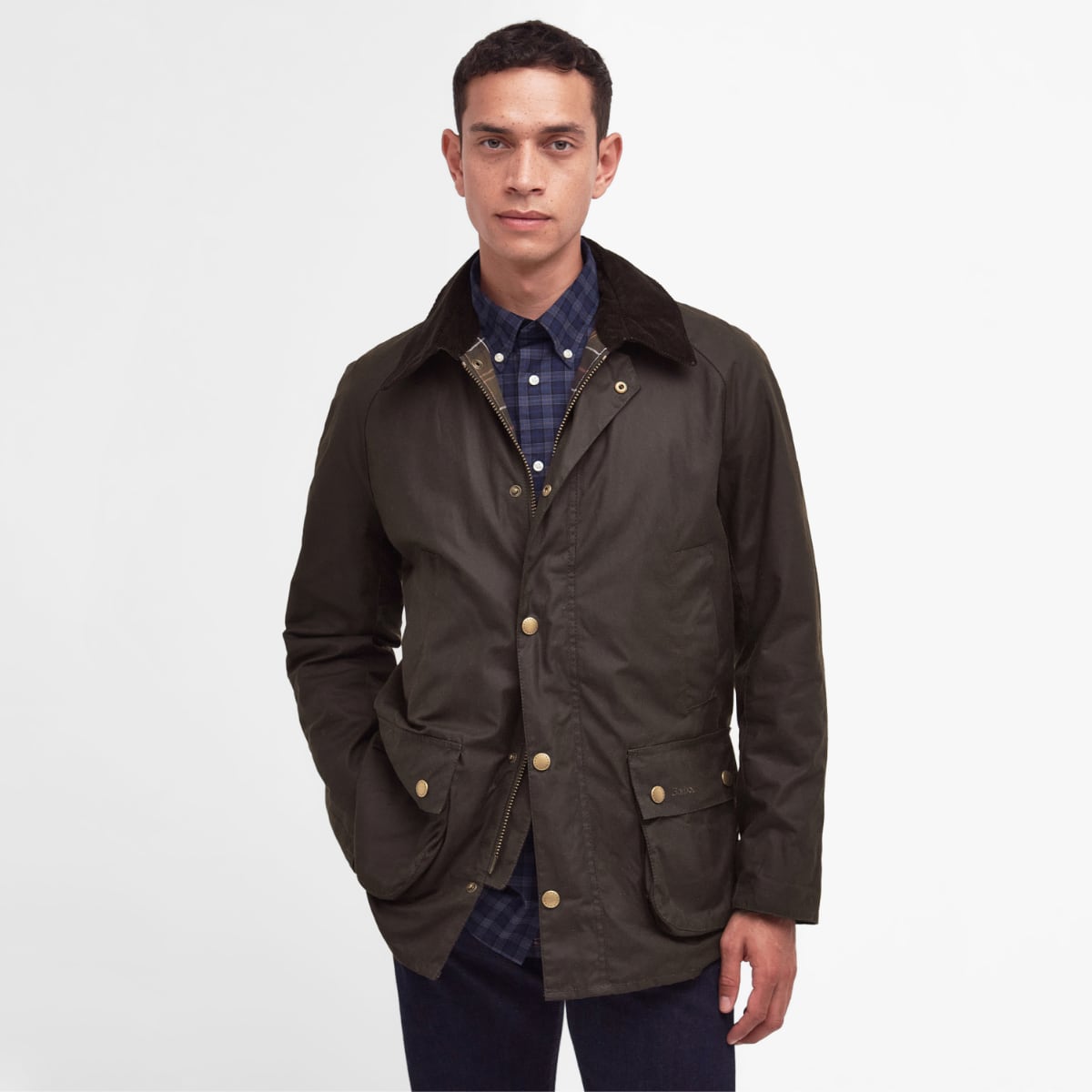
What draws people to a Barbour jacket is not just the label but the specific world of waxed cotton field coats that have…
Land Rover Defender 110
The Defender 110 is Land Rover’s longer-wheelbase Defender, positioned as the load-carrying, family-capable version with…

RRL (Double RL)
Founded in 1993 and named after Ralph and Ricky Lauren's Colorado cattle ranch, RRL is Ralph Lauren's most obsessive sub…
More in Heritage Menswear & Denim
Stay in this world.
Men’s Chain Link Styles
Italian Men’s Jewelry
Polo Country by Ralph Lauren
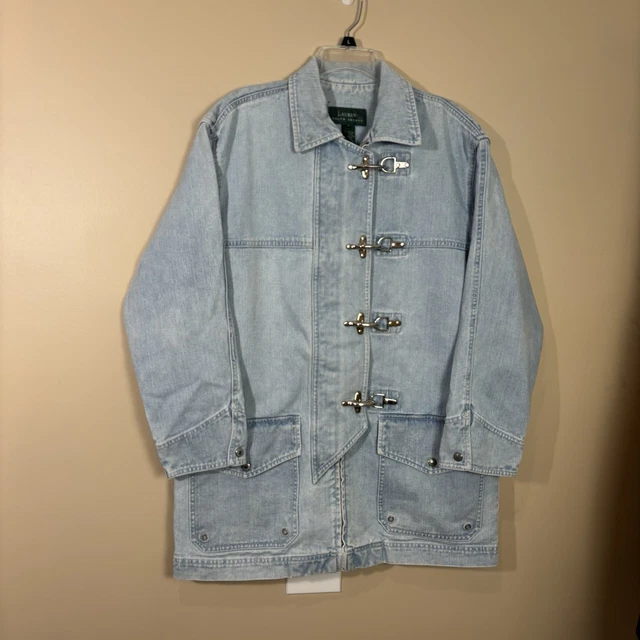
Ralph Lauren Fireman Hook Jackets
RRL (Double RL)
RRL (Double RL)
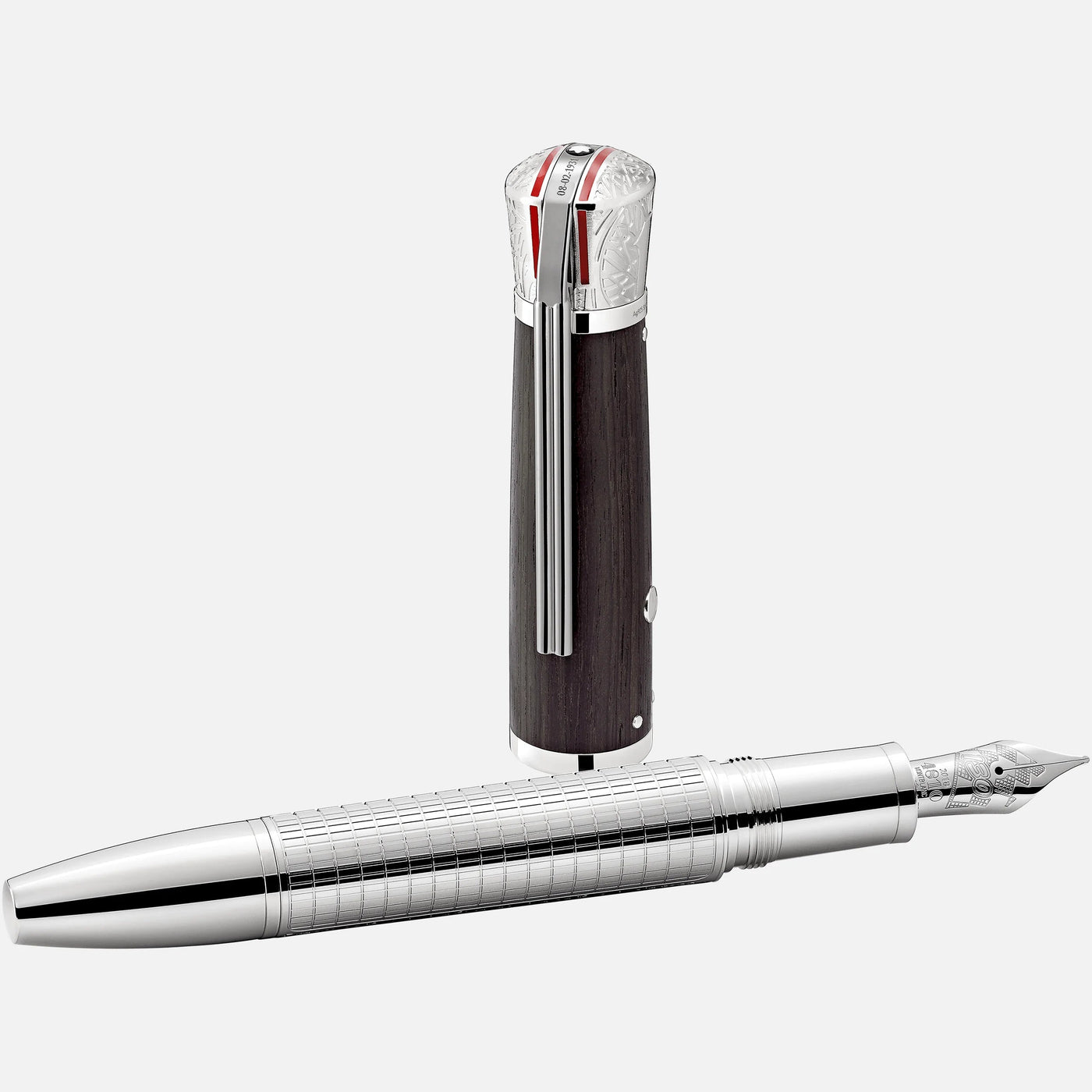
Montblanc Great Characters James Dean
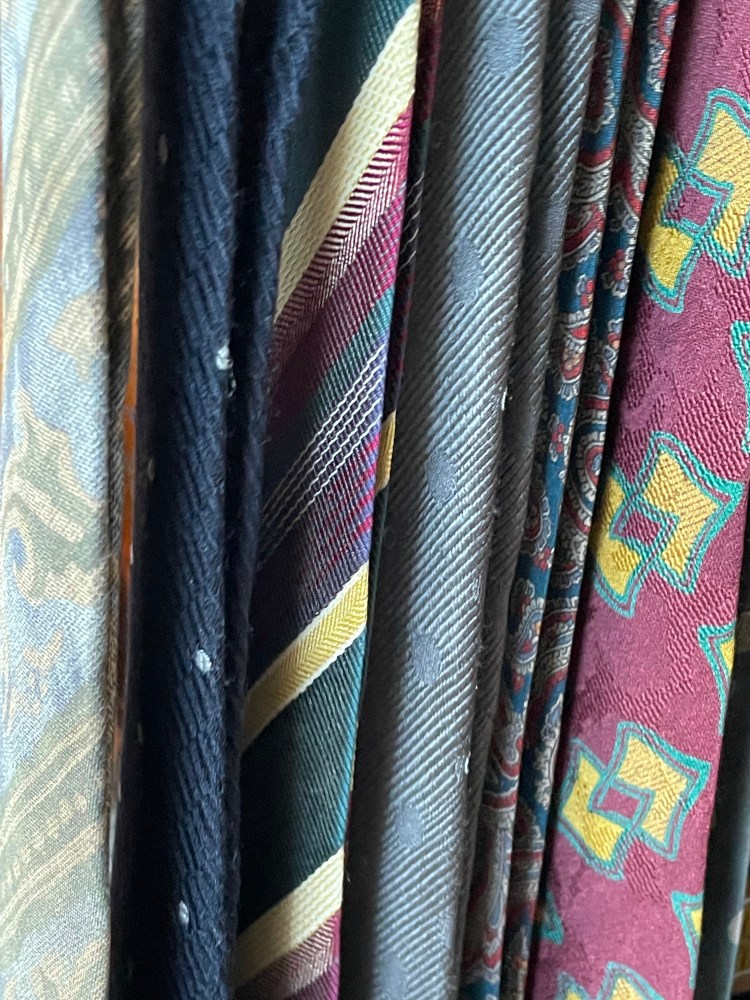
Second-Hand Men’s Ties in Paris
Imagery
Know someone who’d love this?
Discovered by ArcurianAuto-generated from public sources and AI synthesis — it may be incomplete or inaccurate. Treat it as a starting point for your own exploration, not professional (medical, legal, financial, or safety) advice. Verify anything you act on. Report this page.