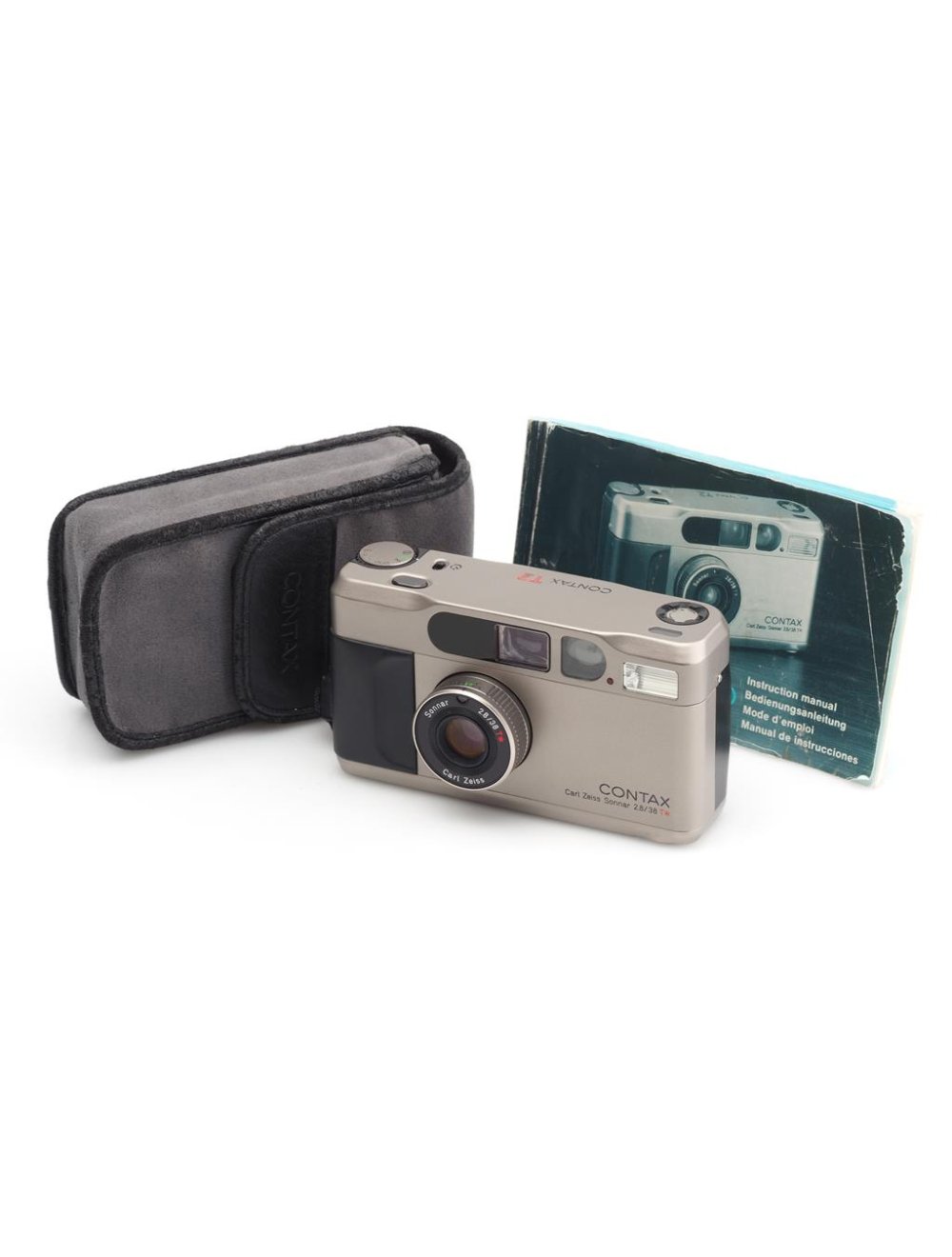
The Contax T2 is a 1991 autofocus 35mm compact built by Kyocera under the Contax name, and it matters because it turned the point-and-shoot idea into a luxury object without giving up serious photographic ambition. Its titanium body and Carl Zeiss Sonnar T* 38mm f/2.8 lens are the details people always come back to, along with the peculiar tension between elegant automation and the very real question of whether any compact camera deserves its current price. Deep in the appeal is how refined the whole experience feels: pocketable, quick, and polished in a way that made the T series stand apart from ordinary compacts. The real fascination is that the T2 is now judged as much as a cult object and market phenomenon as it is as a camera.
Learn
Why the Contax T2 Became the Luxury Compact Everyone Still Argues About
The Contax T2, launched in 1990 by Kyocera, epitomizes the luxury compact debate because its titanium body and Carl Zeiss Sonnar 38mm f/2.8 T* lens deliver genuinely exceptional image quality, yet its price has skyrocketed from around $400 in the late 2000s to over $2,000 in 2026, driven by a 2017 celebrity sighting—Kendall Jenner using one on Fallon—and a broader film revival that turned this point-and-shoot into a status symbol. Critics argue the camera is overpriced for its age, limited manual control (aperture priority only, with no manual mode), and quirky viewfinder that shows only a vague shutter speed range rather than exact numbers, while fans insist the build, lens, and cultural cachet justify the cost. The result is a camera that sparks fierce arguments: is it a genuine photographic tool or a collector's trophy propped up by hype?

 casualphotophile.comcasualphotophile.com
 shootitwithfilm.comshootitwithfilm.com
 emulsive.orgemulsive.org
+Field notes
- —The Contax T2 was released in 1990 by Kyocera, not Carl Zeiss—Zeiss only supplied the lens, a 5-element/4-group Sonnar design that's widely praised for sharpness and color rendition, not the camera body.
- —Its price surge is often traced to a single 2017 moment when Kendall Jenner used a T2 to snap photos of Jimmy Fallon on live TV, instantly making it the 'coolest' film camera for millennials.
- —The T2's viewfinder has a notorious quirk: it lights up both the 1/125 and 1/500 symbols simultaneously to indicate a shutter speed somewhere in between, rather than showing the exact value—a design choice some find infuriating.
- —Despite its reputation, the T2 offers no full manual mode—only aperture priority (with a limited range, often forcing f/2.8 in low light) and program auto, making it less flexible than far cheaper competitors.
- —Auction data shows median hammer prices around £700 across 2022–2025, but retail prices in 2026 regularly hit $2,000 for a serviced example, a 5x increase from pre-2020 values.
Learn
Place It in the T-Series Story, Not Just the Point-and-Shoot Boom
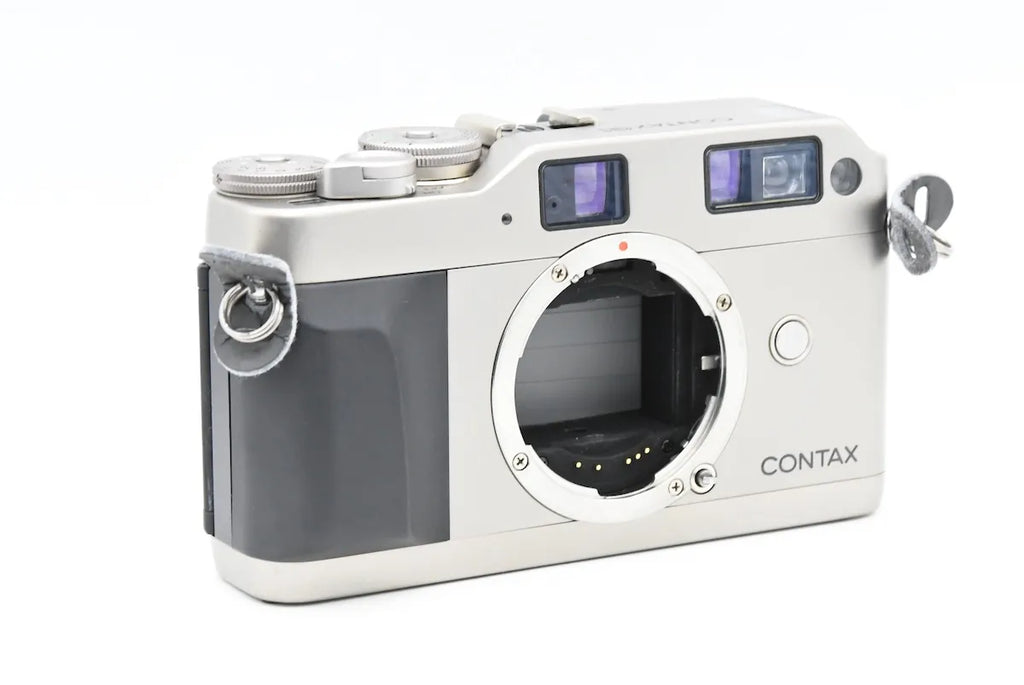
The Contax T2 didn't materialize from the 1990s point-and-shoot boom—it's the second act in a saga that began in 1984 with the original Contax T, a manual-focus rangefinger whose titanium body was designed by FA Porsche and whose shutter release was a synthetic ruby. That first T had no autofocus, no built-in flash, and a drawbridge-style lens cover; it was a pure photographer's tool. The T2 inherited the same Carl Zeiss Sonnar 38mm f/2.8 T* lens and titanium shell but added autofocus, aperture-priority automation, and an integrated flash, transforming the luxury compact for a new era. Later models—the sharper T3 with its 6-element 35mm lens and 1/1200s shutter, and the zoom-equipped TVS series—show that Kyocera was iterating on a design philosophy, not chasing trends. The T2 is best understood not as a standalone hype item but as the pivotal middle chapter in a deliberate, high-end family.


 35mmc.com35mmc.com
+Field notes
- —The T-series began with the 1984 Contax T, a manual-focus rangefinder with a Porsche Design titanium body and a synthetic ruby shutter release—no autofocus, no built-in flash, just a pure Zeiss Sonnar 38mm f/2.8 lens.
- —The T2 inherited the exact same Carl Zeiss Sonnar 38mm f/2.8 T* lens as the original T, but added active autofocus, a built-in flash, and aperture-priority exposure, making it a luxury point-and-shoot rather than a purist's tool.
- —The T3, released later, swapped to a recomputed 6-element 35mm f/2.8 lens (sharper than the T/T2's 5-element design) and boosted max shutter speed to 1/1200s, proving the series was always about optical refinement.
- —Kyocera extended the T-series DNA into the TVS line (T-VS, T-VS II, T-VS III) with Carl Zeiss T* Vario-Sonnar zoom lenses (28–56mm f/3.5–f/6.5 and later stepped focal lengths), showing the family wasn't locked to a fixed 38mm.
- —The T2's 2026 market price of around $2,000 for a serviced example reflects collector demand, but its original 1990 retail was already premium—it was never an ordinary point-and-shoot, even when new.
Learn
The Terms Collectors and Shooters Use Around the T2
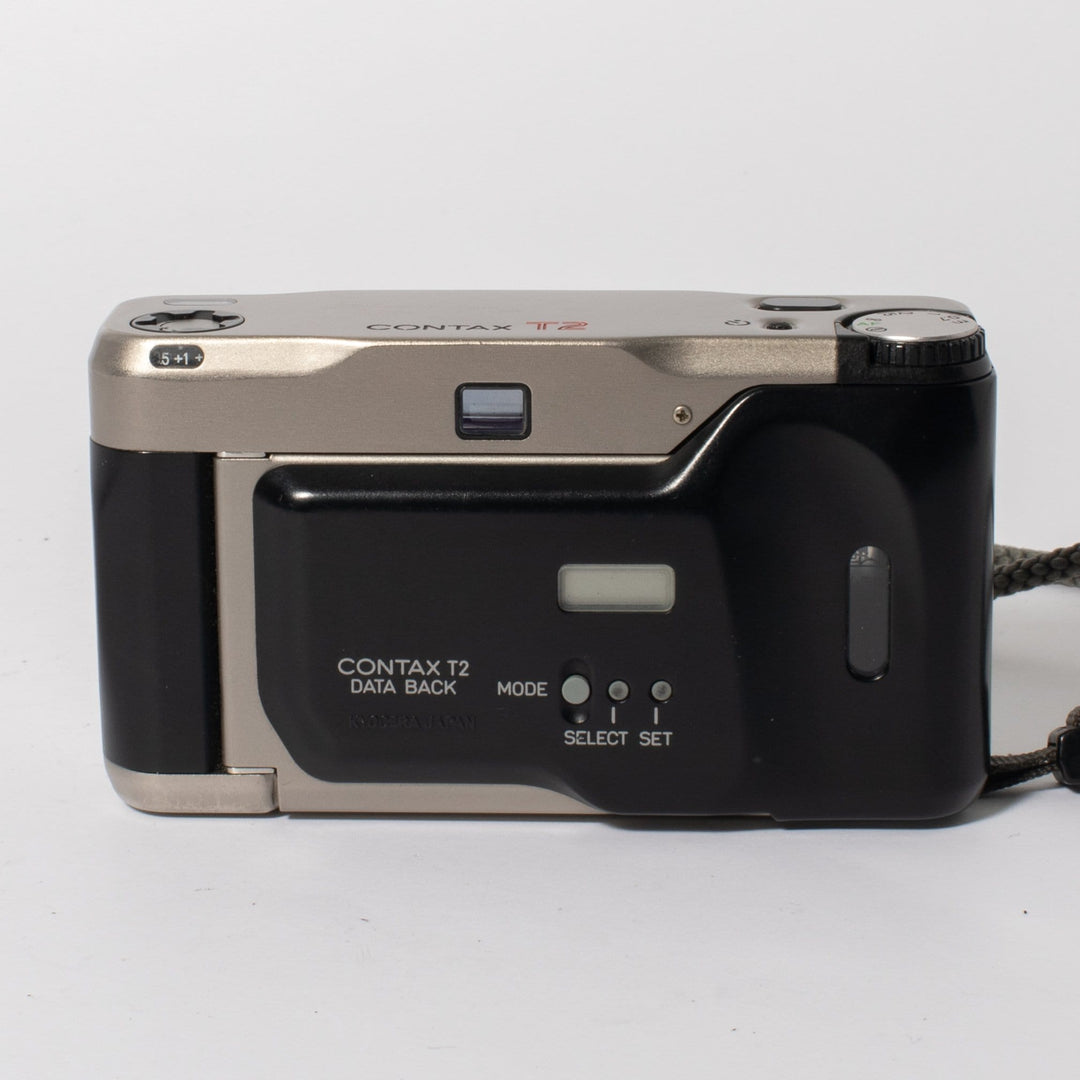
The Contax T2 lives in a peculiar spot where the language of collectors and shooters often diverges. For collectors, the T2 is a titanium-clad artifact from 1990, discussed in terms of finish variants — champagne silver, titanium black, and the rare gold special edition — and condition grades that dictate value far more than any other factor. A heavily faulty body at auction can sell for as little as £12, while a near-mint boxed example commands serious money at salerooms like Flints Auctions. For shooters, the vocabulary shifts to the real-world handling: the fixed Carl Zeiss Sonnar 38mm f/2.8 T* lens, aperture priority mode that only lets you use f/2.8 in low light, the exposure compensation dial offering +/-2 EV in half stops, and the quiet shutter that slips into a coat pocket. The data back — a separate accessory that attaches to the bottom of the camera — is a distinct item dealers call the "Contax T2 Data Back" and sell independently. The T2's manual describes the viewfinder display as an "LCD Counter" and the camera's design philosophy as a "camera to produce works of art." That kind of talk sets a certain tone between those who covet it as a collectible and those who actually load it with film.


 analogueshop.comanalogueshop.com
 manualslib.commanualslib.com
+Field notes
- —The T2's exposure compensation dial is a top-plate rotating control with a window that shows adjustment in 0.5 EV steps, ranging from -2 to +2 EV — a feature that allows real fine-tuning without entering any menu.
- —Auction data from CameraWorth shows that Contax T2 hammer prices at UK salerooms like Flints Auctions have ranged from £260 to £1,400 between, with a median around £700; a single heavily faulty example sold for just £12, confirming that condition is the overriding price driver.
- —The T2's manual focus ring offers only five discrete distance settings — 0.7m, 1m, 2m, 5m, and infinity — plus a dedicated AF mode; there is no continuous manual focus scale, which is a significant limitation for zone-focus shooters.
- —The optional Contax T2 Data Back is a separate accessory that attaches to the camera's bottom and interfaces with the film transport system; it's not built into the camera and must be sourced and priced independently from the body itself.
- —The T2's aperture ring doubles as the flash mode selector, with choices for normal flash and a pre-flash anti-red-eye mode; switches on the same ring let you set apertures from f/2.8 down to f/16.
- —In aperture priority mode, the T2 only allows you to use f/2.8 in low light conditions — a quirk that limits creative depth-of-field control and is rarely mentioned in casual reviews.
Discover
What to Watch Before You Buy or Load a Roll


Before you even load a roll into a Contax T2, you need to understand what you're actually paying for — because this camera's reputation is as much about hype and celebrity association as it is about engineering. Released in 1990 in champagne, silver, black, and gold, its defining feature is a titanium body paired with a fixed 38mm f/2.8 Carl Zeiss Sonnar lens that genuinely produces images sharp enough to rival Leica glass. But the reality check comes from real-world use: the automatic exposure system can introduce a slight greenish tint depending on the film stock, as seen on expired Agfa Vista 200, and the lens can't be swapped or even covered by a built-in lens cap (the included cap is external and easy to lose). The camera also has a known vulnerability — the film door latch or the delicate electronics inside can fail, turning a $1,000+ point-and-shoot into an expensive paperweight if you don't treat it carefully. Reviews consistently point out that while the image quality is excellent, the shooting experience is fully automatic with minimal control, making it less versatile than a manual SLM. And the price? It's been driven up dramatically by celebrity sightings (Kendall Jenner was photographed with one) and social media buzz, not necessarily by a proportional leap in performance over cheaper alternatives like the Olympus Stylus Epic or the Yashica T4. So if you're buying one, buy it for the lens and the build quality, not for the specs — and always test the shutter and focus accuracy before handing over cash.
+Field notes
- —The T2's legendary 38mm f/2.8 Carl Zeiss Sonnar lens is real — it produces images sharp enough to challenge Leica compacts, but only if your copy's autofocus hasn't drifted. Sample variation is a known issue, so test each unit before committing.
- —The camera debuted in 1990 in four colors: champagne, silver, black, and gold. The titanium body feels premium, but the finish chips easily, and the external lens cap is a separate piece — losing it means risking the lens element.
- —Shooting expired film (e.g., Agfa Vista 200 from 2005) on the T2 can introduce a greenish color cast that you can't correct in-camera because the meter and auto white balance have no manual override — use fresh stock or bracket if you're testing an old roll.
- —The T2's $1,000+ price is inflated by social media and celebrity endorsements (Kendall Jenner was famously photographed with one), not by a proportional leap in performance over cheaper alternatives like the Olympus Stylus Epic.
- —Common failure points include the film door latch and the flexible printed circuit board inside — if either goes, repairs often cost more than the camera's resale value, making it a high-risk purchase for daily carry.
- —The T2 is fully automatic: no aperture priority, no manual focus, no exposure compensation dial (just a backlight button). You're trading creative control for convenience and that Sonnar lens — so if you want to overexpose or underexpose, you'll need a different camera.
Discover
Photographers Actually Using the T2 Right Now
Photographers are still actively using the Contax T2 today, not just as a collector's item but as a daily driver. Matt Osborne, a YouTuber and blogger at MrLeica, took the T2 on a shoot in Budapest, comparing its Carl Zeiss lens directly against a Leica, and posted full-resolution samples on his blog. On TikTok, photographer Connorlmrx dubbed it 'the Tesla of 35mm film cameras,' highlighting its sleek design and cult status. Travel photographer Josep Bautista, while in Japan, found a lost T2, repaired its malfunction, and put it back into service, proving the camera remains a reliable travel companion even after decades.
+Field notes
- —Matt Osborne (MrLeica) put the Contax T2 through a real-world test in Budapest, directly comparing its Carl Zeiss lens against a Leica, and shared full-resolution sample photos on his blog at mrleica.com.
- —On TikTok, photographer Connorlmrx called the Contax T2 'the Tesla of 35mm film cameras,' reflecting its premium design and high-tech reputation among current users.
- —Travel photographer Josep Bautista found a lost Contax T2 in Japan in early 2024, fixed a minor malfunction, and returned it to regular use—showing the camera's enduring practicality for real-world travel photography.
Discover
The Best Reads on Hype, Value, and Real-World Use

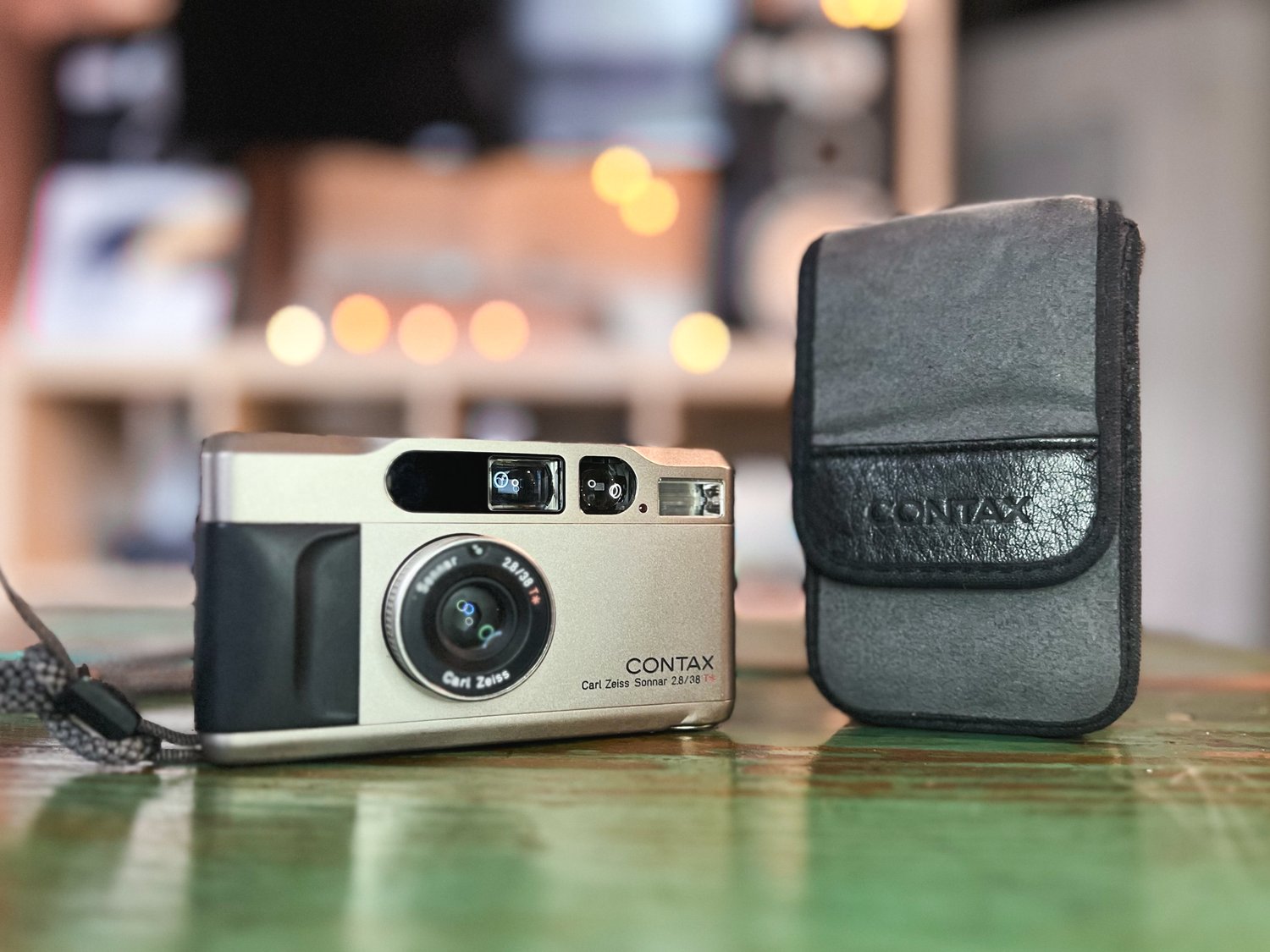
The Contax T2 is a titanium-bodied 35mm point-and-shoot from 1990, packing a Carl Zeiss Sonnar T* 38mm f/2.8 lens that delivers strikingly sharp images, but its current $2,000 price tag is driven less by optics and more by a perfect storm of scarcity, celebrity endorsements (Kendall Jenner in 2017, later Zendaya and Tom Holland), and the film revival. Real-world users consistently praise its build and lens quality while cautioning that it lacks manual control, has a finicky viewfinder that shows only vague shutter speed ranges (e.g., both 1/125 and 1/500 lit simultaneously), and cannot focus closer than 0.7 meters. Some owners report battery contact issues causing lock-ups or accidental double exposures, and the absence of a multi-exposure function frustrates creative shooters. Ultimately, for the price of a Leica Minilux or a full SLR kit, the T2 delivers luxury feel and professional-grade results—but only if you're willing to accept its quirks and inflated collector markup.
+Field notes
- —The T2's viewfinder simultaneously lights up both the 1/125 and 1/500 shutter speed symbols when shooting outdoors, offering only a vague range instead of a precise reading—a quirk that confused even experienced users.
- —It has a minimum focus distance of 0.7 meters, which is unusually long for a premium compact and limits close-up shooting, a notable annoyance given the camera's reputation for sharpness.
- —The T2 lacks a multiple-exposure function; one user circumvented it by rewinding and reshooting, but accidental double exposures can occur from battery connection glitches that cause the camera to lock up and re-fire over the same frame.
- —Celebrity sightings—particularly Kendall Jenner using one on The Tonight Show in 2017—catapulted the T2 from a $500 niche item to a $1,000+ status symbol, with prices now reaching $2,000 for serviced examples in 2026.
- —Despite its hype, the T2 offers no manual exposure control; it operates only in aperture-priority and program modes, and even aperture priority is limited—in low light, it defaults to f/2.8 regardless of setting.
- —The battery cover is a milled disc of solid metal, and the camera uses a single CR123A battery—an uncommon cell today—adding to the cost and hassle of ownership.
Explore
How Enthusiasts Shop for a T2 Without Getting Burned
Shopping for a Contax T2 without getting burned means seeking out sellers who have fully serviced the camera, ideally with a guarantee, and paying close attention to seller verification and rating systems—especially when buying from the Japanese domestic market where most T2s originate. The high price (around ¥120,000) reflects the camera’s desirability, but condition and servicing history are critical to avoid buying a unit with latent electronic issues. Specialist Etsy shops like RetroCameraFix, CoastalFilmLab, and ThisOldCamera explicitly restore and test cameras, and some offer lengthy guarantees, providing a layer of protection absent from casual listings. Meanwhile, platforms like Mercari, accessed through proxy services like Buyee, use verification badges and rating systems to help identify reliable Japanese sellers. The smart shopper prioritises a documented service history and a seller with a strong track record, not just a low price.


+Field notes
- —Several Etsy sellers (e.g., RetroCameraFix) explicitly state they restore and test each camera and offer a 100-day guarantee, indicating that enthusiasts seek sellers who have done proper maintenance—crucial for electronics-heavy cameras like the T2.
- —When buying from Japan, Mercari uses seller verification badges and high rating thresholds (e.g., 2300+ positive ratings) to flag trustworthy sellers; the T2 listing describes condition as 'no obvious damages/dirt,' a positive but limited assessment.
- —Established restoration-based sellers like CoastalFilmLab (nearly 3,000 sales, 4.8+ rating) and RetroCameraFix (929 sales, 5.0 rating) show that the smart T2 buyer prioritises documented service history and reputation over bargain hunting.
- —International proxy services like Buyee open access to the Japanese market, but the buyer pays both domestic shipping to the Buyee warehouse and international shipping; the estimated 2-3 day seller dispatch suggests relatively quick domestic delivery.
- —Sellers such as ThisOldCamera ('Restored/Repaired vintage photographic cameras') and RewindCameras ('Quality, tested, serviced vintage cameras') consistently advertise their servicing process, suggesting that a well-described T2 should come from a shop that openly discusses its restoration work.
Keep exploring
More of Contax T2 Camera

Branch out
Beyond Contax T2 Camera
More to explore
In the same world.
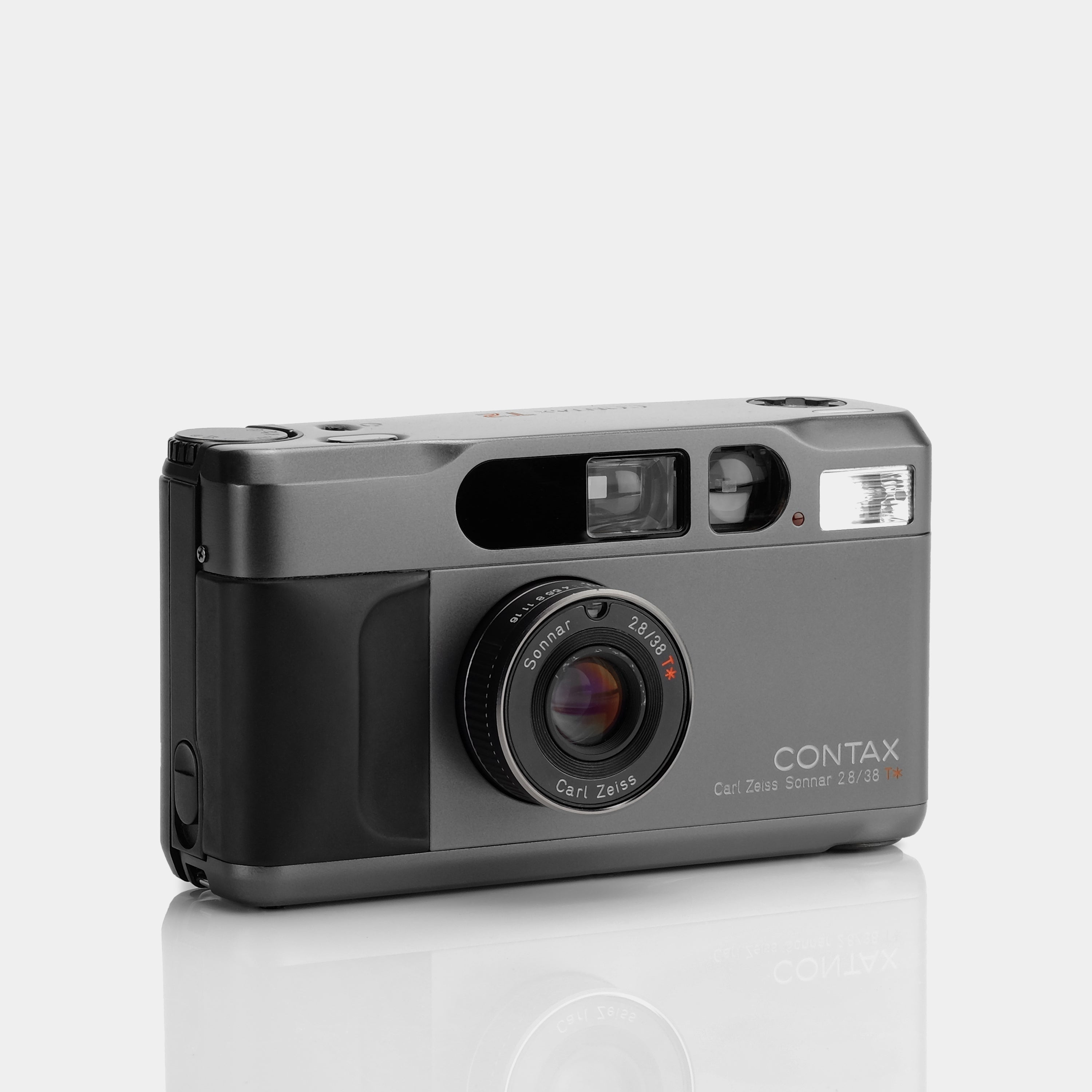
Contax T2 Point-and-Shoot Film Camera
The Contax T2 is a premium 35mm autofocus compact released in 1991 by Kyocera under the Contax name, and its appeal come…

Contax T2 Film Camera
The Contax T2 is a premium 35mm compact from 1990 that sits at the exact intersection of luxury object and serious shoot…

Contax T2
The Contax T2 is a high-end 35mm compact film camera that has become a status object as much as a shooter’s tool, prized…
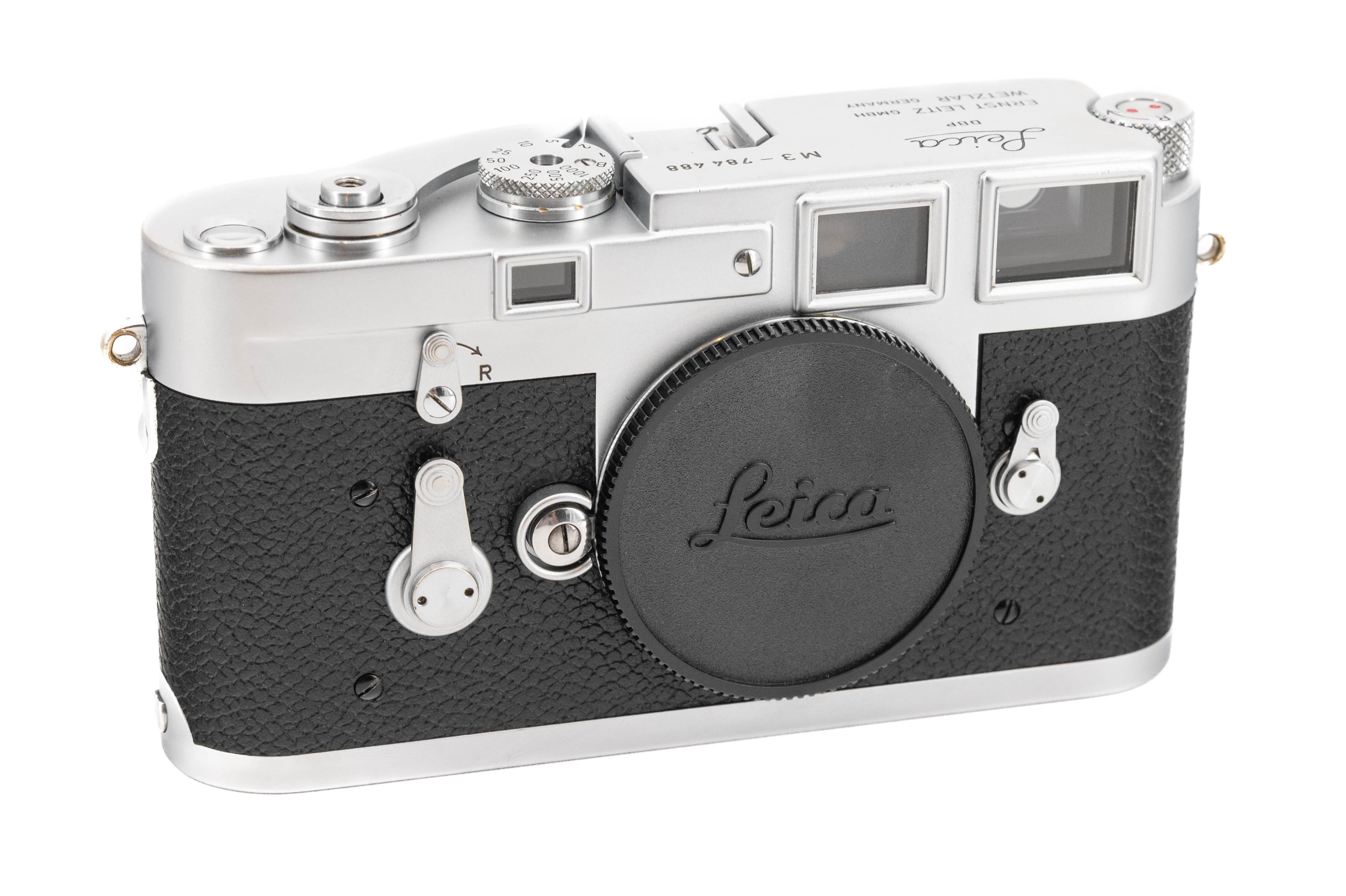
Leica M3 Camera
The Leica M3 is the 35mm rangefinder that began Leica’s M-system era in 1954, replacing the company’s earlier screw-moun…

Leica M3 Film Camera
The Leica M3 is the camera that launched the M system in 1954, and it matters because it reset what a 35mm rangefinder c…

Leica M3
Introduced in 1954 by Ernst Leitz GmbH, the Leica M3 was a radical departure from everything Leitz had built before — re…

Film Photography
Film photography is the chemical side of photography: images are recorded on gelatin film, paper, or even hard plates ra…
Best Luxury Quartz Watches
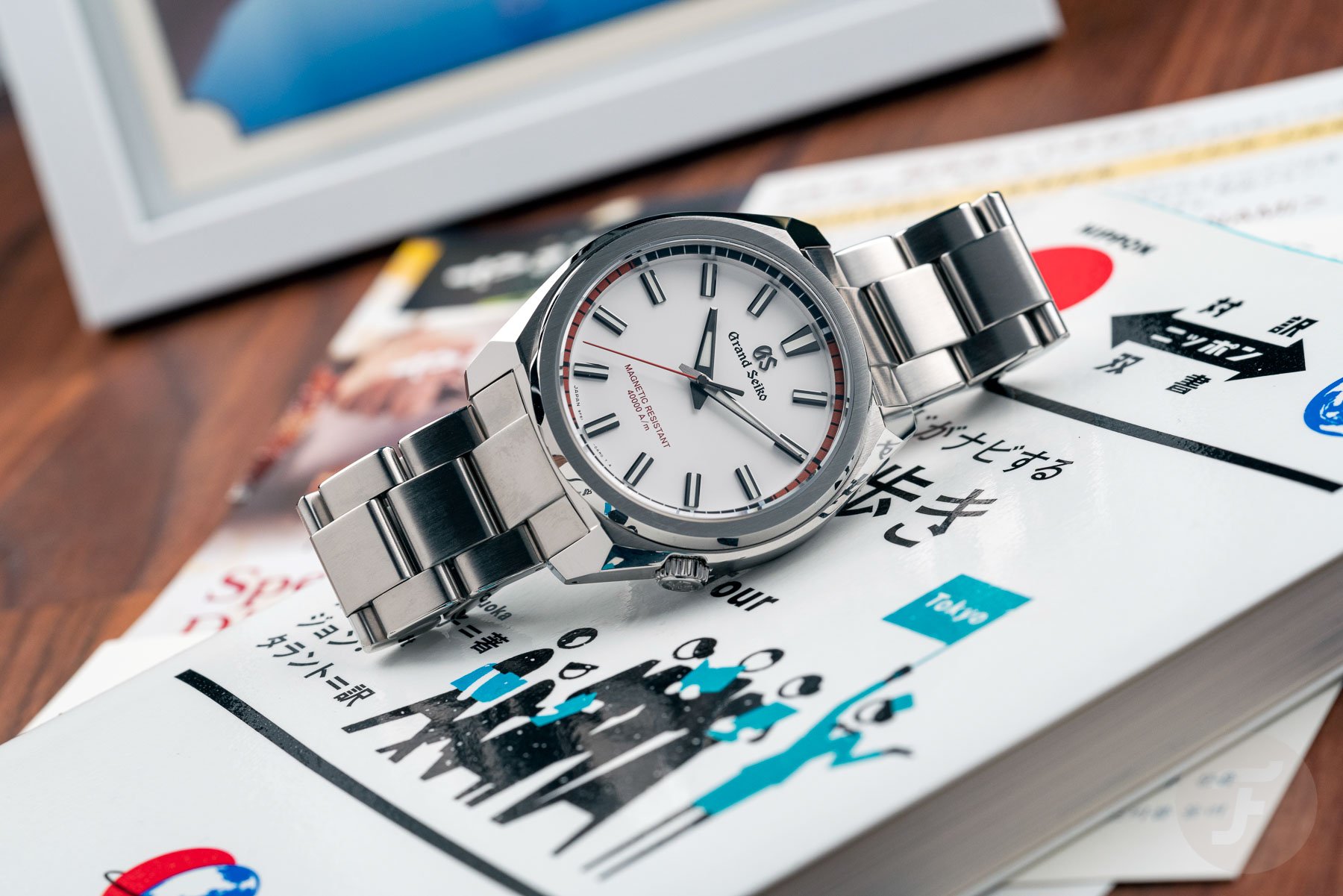
Luxury quartz watches sit in the part of watch collecting where convenience, finishing, and accuracy matter just as much…
More in Film & Analog Photography
Stay in this world.
Contax T2 Point-and-Shoot Film Camera
Leica M3 Film Camera
Contax T2 Film Camera
Contax T2
Film Photography
Leica M3
Imagery
Know someone who’d love this?
Discovered by ArcurianAuto-generated from public sources and AI synthesis — it may be incomplete or inaccurate. Treat it as a starting point for your own exploration, not professional (medical, legal, financial, or safety) advice. Verify anything you act on. Report this page.