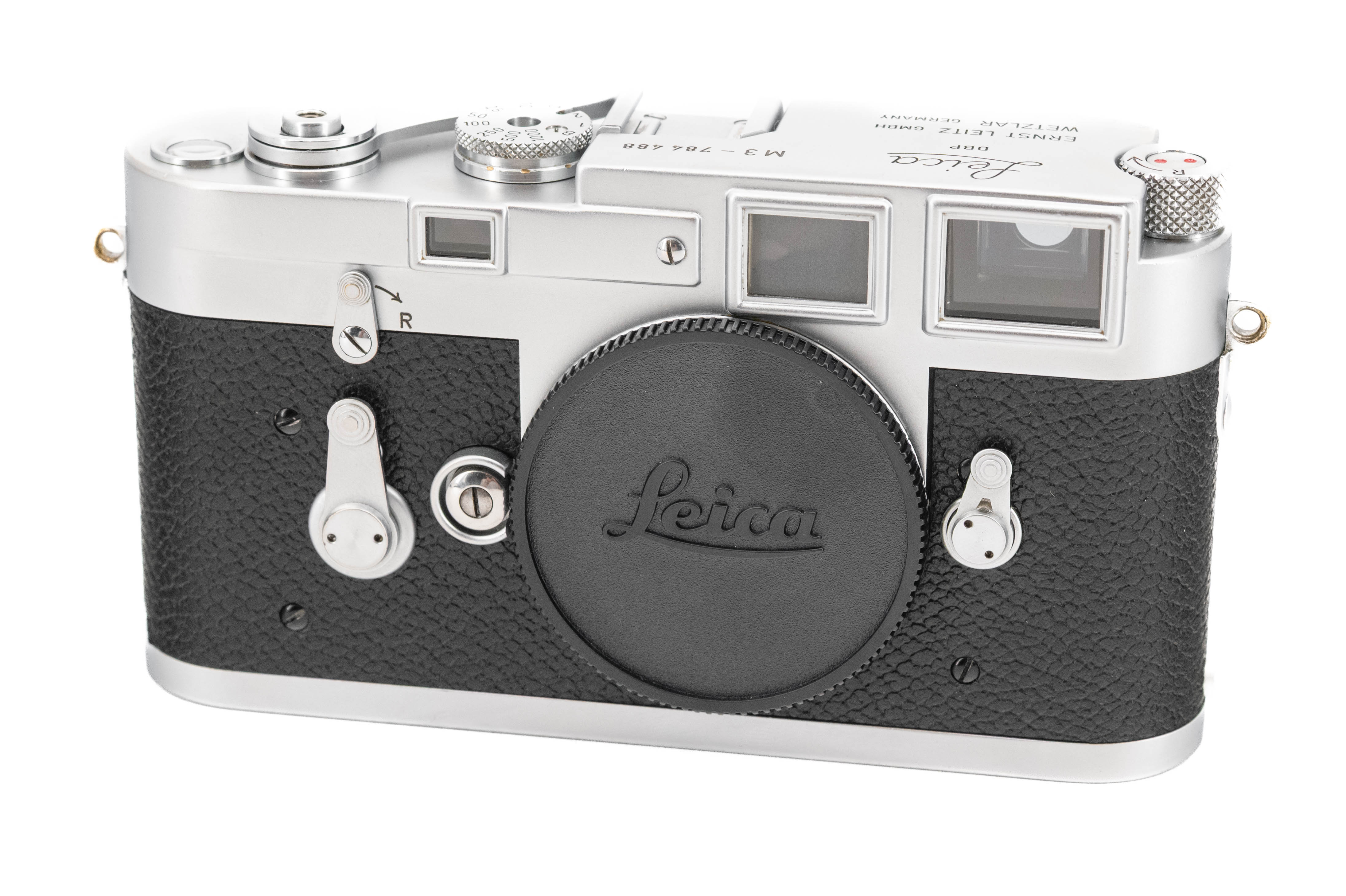
The Leica M3 is the 35mm rangefinder that began Leica’s M-system era in 1954, replacing the company’s earlier screw-mount line with a very different way of shooting. Its reputation still centers on the bright combined viewfinder-rangefinder window, the new bayonet M mount, and the rapid film advance lever that made it feel faster and more modern than the cameras before it. People who live with M3s quickly get into the fine distinctions—single-stroke versus double-stroke bodies, the unusually beloved 50mm finder experience, and the small handling details preserved in the original manuals and long-running collector guides. If you want to understand why so many later cameras feel like variations on one idea, the M3 is where that idea snaps into focus.
Learn
Why the M3 Still Defines the Leica Experience
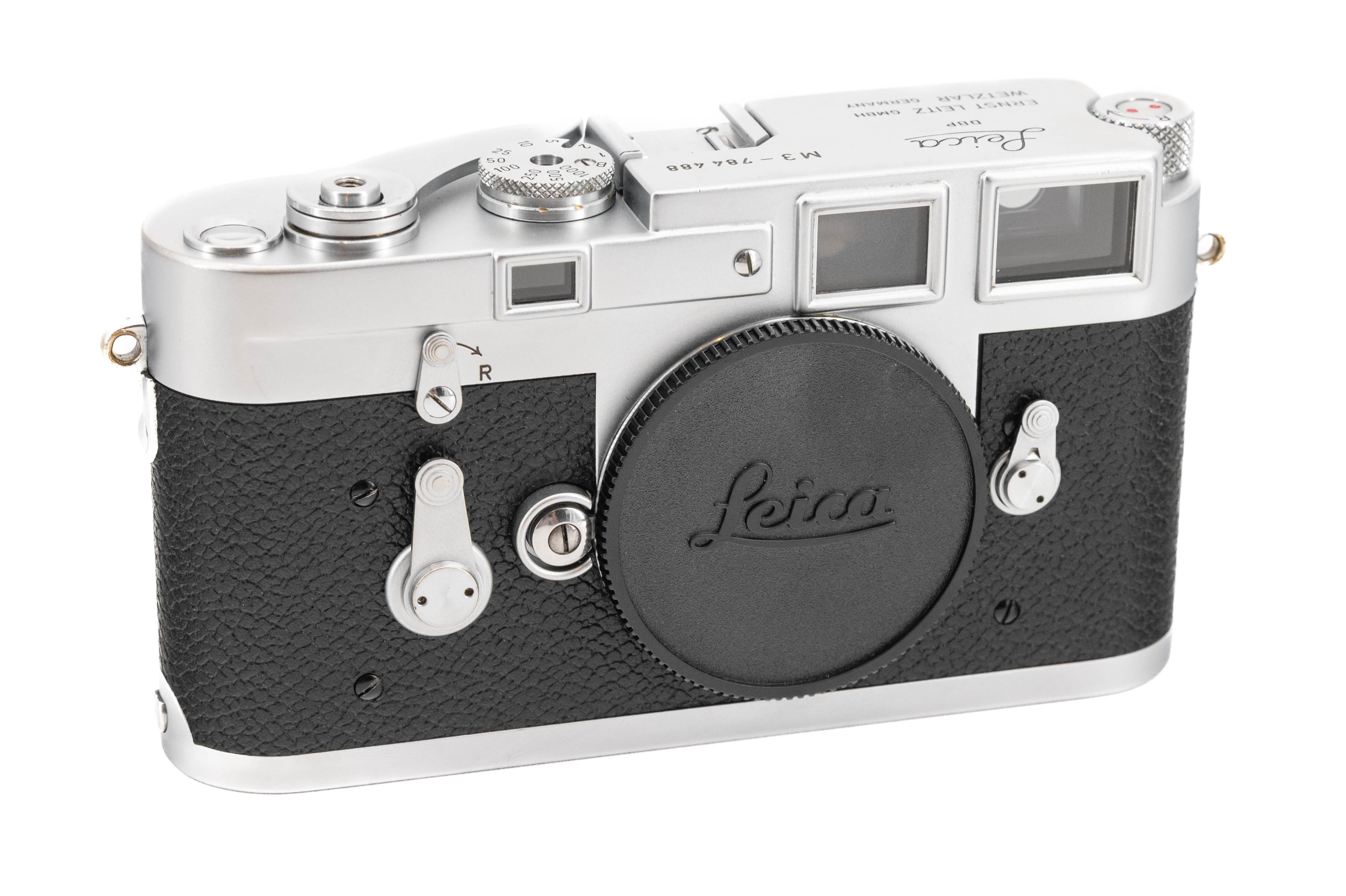
The Leica M3, launched in 1954, remains the definitive Leica experience because it established the DNA of the entire M system: the bayonet mount, the combined rangefinder/viewfinder, and a level of mechanical refinement that later digital bodies still haven't matched. Its 0.91x viewfinder is the brightest and highest-magnification of any Leica M, making it the go-to for critical focusing with fast glass like the Noctilux f/0.95. The camera's all-mechanical operation is famously silky and quiet—Ken Rockwell calls it 'smooth as silk' compared to the noisy M9—and its viewfinder never clutters the frame with overlapping framelines, a quirk of later models. While the early double-stroke advance (two strokes per frame) carries a collector premium, the M3 is still a working tool: many serious shooters in 2026 prefer it over digital M bodies for its tactile purity and total compatibility with every M lens from 1954 onward. It's a camera that embodies Leica's original vision without compromise, and that's why it's still the benchmark.


 shootitwithfilm.comshootitwithfilm.com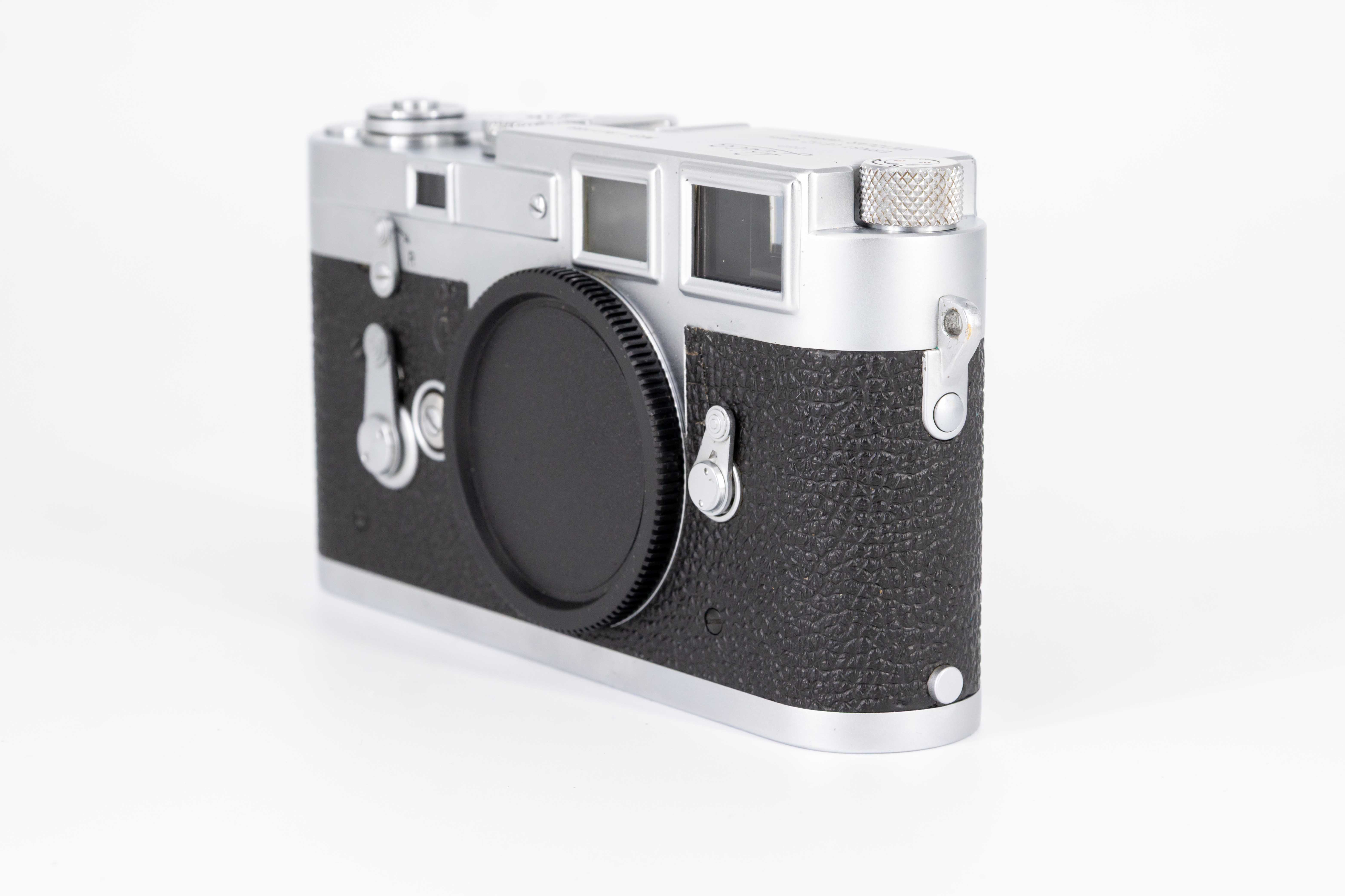
+Field notes
- —The M3's 0.91× viewfinder is the highest magnification of any Leica M, allowing critically precise focusing with lenses like the 50mm f/0.95 Noctilux—better than even the modern M9.
- —The M3's mechanics are smoother and quieter than any digital Leica; Ken Rockwell describes the sound of the second curtain as 'delicately slide home,' a tactile satisfaction absent from later bodies.
- —It introduced the Leica M bayonet mount in 1954, which remains unchanged today, ensuring full compatibility with every M lens (16mm–400mm) plus screw-mount lenses via a simple adapter.
- —Early M3s (1954–1958) use a double-stroke film advance requiring two strokes per frame; this original design commands a 15–30% collector premium over the later single-stroke models (serial #915000+).
- —Unlike later Leica M cameras, the M3's viewfinder is clean: it never shows another frameline inside the one you're using, eliminating the distraction of overlapping frames.
- —The M3 remains a working photographer's camera today—many 2026 shooters choose it over digital M bodies for its reliability and pure mechanical experience, with working double-stroke examples selling for $1,000 or more.
Learn
The Break from Screw-Mount Leica to the First M Body
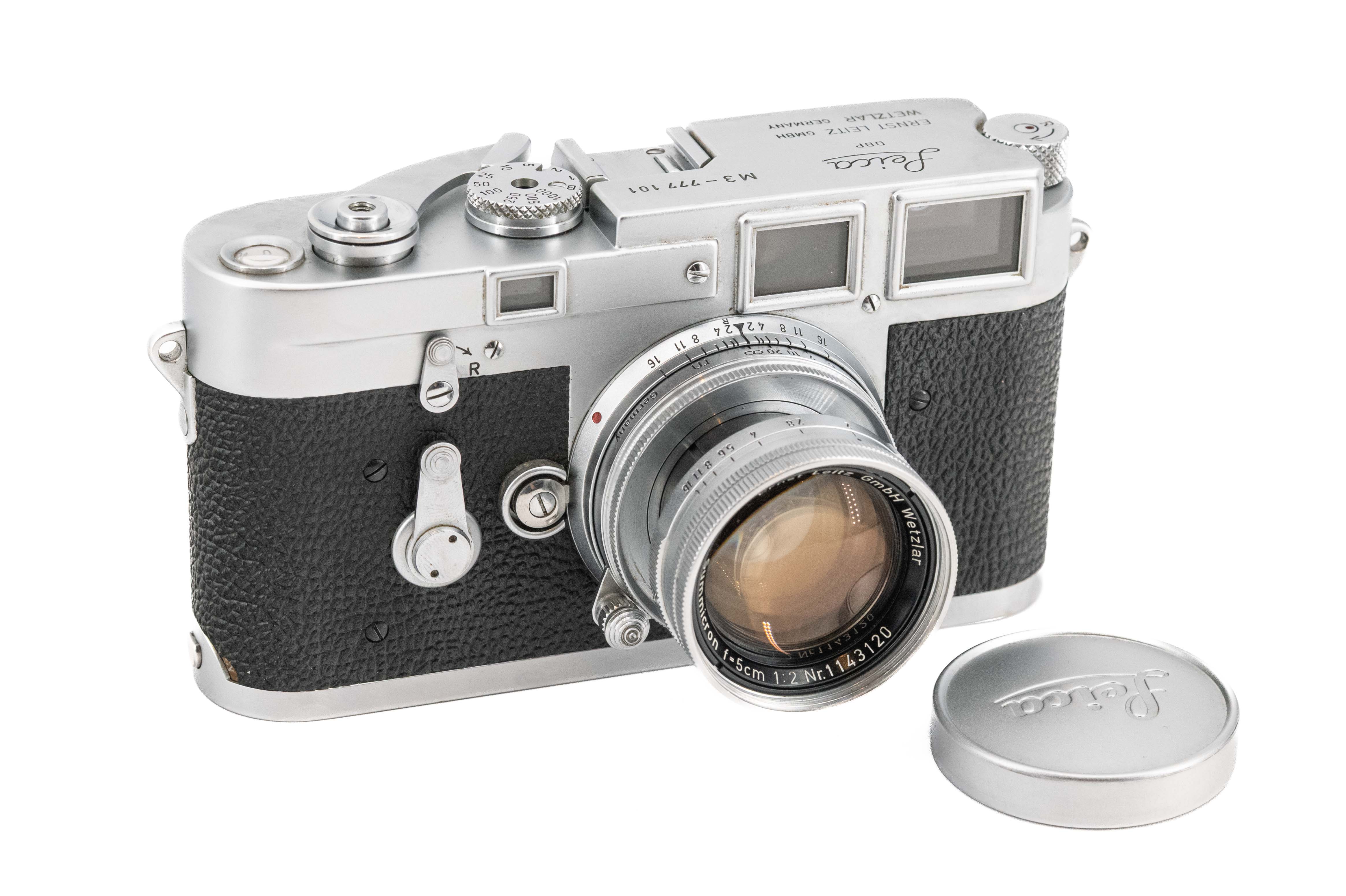
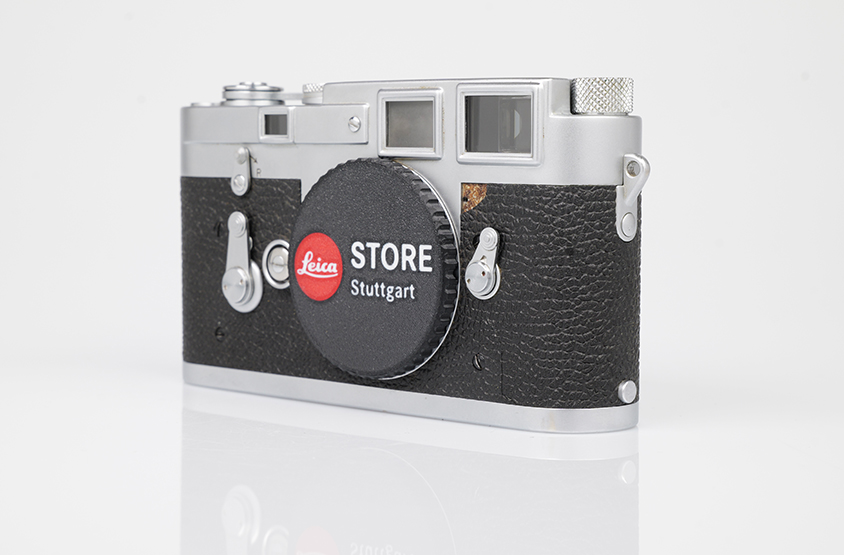
The Leica M3, unveiled at Photokina 1954, was a radical departure from the screw-mount Leicas that had defined 35mm photography for three decades. Where earlier Leicas (the 'Barnack' models) used a delicate 39mm screw thread to attach lenses and forced you to peep through separate viewfinder and rangefinder windows, the M3 fused both into a single bright eyepiece — a design trick cribbed from the Contax II of 1936. The 'M' stood for Messsucher, German for 'measuring viewfinder,' and the '3' meant three automatically selected framelines (for 50mm, 90mm, and 135mm lenses). Crucially, the new bayonet mount let you swap lenses in a second instead of laboriously screwing them on, a feature the Contax had offered since 1932. That mount has remained unchanged for 70 years, meaning a 1954 lens clicks onto a modern digital Leica M. The M3 didn't invent these ideas — rival Zeiss had the bayonet and combined rangefinder first — but Leitz's version was a masterpiece of integration, with a 0.91x viewfinder (brighter than any later M) and a build that made it the best-selling M ever, at over 220,000 units by 1967.

 leicasocietyinternational.orgleicasocietyinternational.org
 leicasocietyinternational.orgleicasocietyinternational.org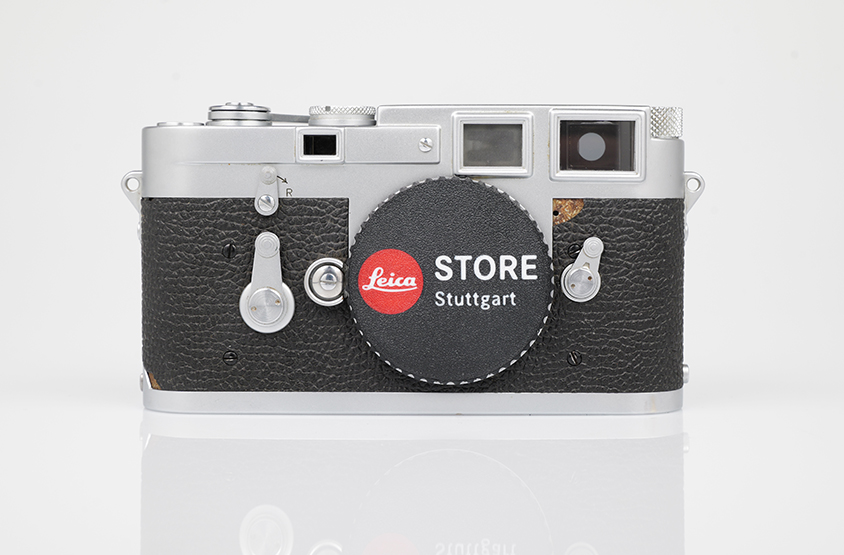
+Field notes
- —The 'M' in M3 stands for 'Messsucher' — German for 'measuring viewfinder' — a single eyepiece that combined the rangefinder patch and the framing window, replacing the separate eyepieces of all earlier screw-mount Leicas (like the IIIf).
- —Zeiss beat Leica to both key innovations: the Contax I (1932) used a bayonet lens mount, and the Contax II (1936) had a combined long-base range/viewfinder. Leitz adapted these ideas but refined them into the M3's cleaner, more reliable system.
- —The M3's Leica M bayonet mount has remained essentially unchanged since 1954, so a collapsible Summicron from the debut year can be mounted directly on a 2023 digital Leica M11 without any adapter.
- —The viewfinder magnification on the M3 is 0.91x — unusually high and exceptionally bright — making it easier to focus critically than on any subsequent Leica M (which used 0.85x, 0.72x, or 0.58x).
- —Early production M3s used a 'double-stroke' film advance — you pushed the lever twice to wind on one frame — and a German shutter-speed series (1/25, 1/50, 1/100…). From 1958 onward, Leitz switched to 'single-stroke' advance and international speeds (1/30, 1/60, 1/125…), and offered to retrofit older bodies.
- —The M3 was designed for three focal lengths (50mm, 90mm, 135mm), so to use a 35mm lens you had to attach unwieldy 'goggles' — an optical adapter that clipped onto the lens and redirected the viewfinder's 50mm framelines to match the 35mm field.
Learn
The Terms Owners Actually Use
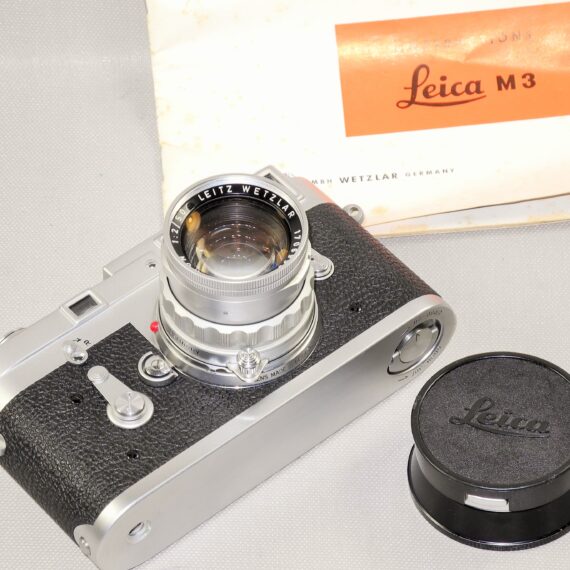
Owners of the Leica M3 speak in a precise dialect that separates the curious from the committed. The most fundamental distinction is between 'double-stroke' (DS) and 'single-stroke' (SS) bodies — the DS requires two half-movements of the advance lever, while the SS does it in one full stroke; the serial-number cutoff is 919251, with later cameras being SS. Inside the viewfinder, two tiny raised bumps — part of a 'depth-of-field preview diagram' — show focus overlap at f/16 and f/5.6 for the 50mm lens, a detail most casual users never notice. Some very early DS cameras lack a 'frameline preview lever', meaning you can’t manually check framelines without mounting a lens. The 'M' itself stands for 'Messsucher' (the German compound for measuring viewfinder/rangefinder), and the '3' refers to the three framelines it projects: 50, 90, and 135mm. For long-lens shooters, the camera’s 0.91× viewfinder magnification — the highest of any M — is a selling point, though it required awkward 'goggles' to use 35mm lenses. And connoisseurs argue that the simpler rangefinder of the DS is actually less prone to the 'flare' that afflicts later SS and M2/M4 finders, making the early model the purist’s choice.

 i35mm.comi35mm.com

+Field notes
- —Double-stroke (DS) vs. single-stroke (SS) is the owner’s primary taxonomy: DS models have serial numbers before 919251 and use two half-strokes of the advance lever; SS models after that number use one full stroke. The DS lever is also physically shorter than the later SS lever.
- —The viewfinder’s 'depth-of-field preview diagram' consists of two raised bumps above and below the central focusing spot — they indicate the depth of field at f/16 and f/5.6 respectively for the 50mm lens, allowing the photographer to see overlapping images clearly at those apertures.
- —Some of the very early double-stroke M3s lack a 'frameline preview lever' — there is no mechanical way to manually inspect the 50/90/135 framelines without actually mounting a lens, a detail that surprises many new owners.
- —The 'M' in M3 comes from 'Messsucher', German for 'measuring viewfinder/rangefinder', referencing the combined finder that replaced separate eyepieces on earlier screw-mount Leicas. The '3' denotes the three framelines (50, 90, 135mm) visible in the finder.
- —The M3’s 0.91× viewfinder magnification (often called 'life-size' by owners) is the highest of any M-series camera, making it prized for critical focusing with long lenses — but it forced users of 35mm lenses to attach awkward optical 'goggles' to widen the field of view.
- —Experienced repairers note that the double-stroke M3’s rangefinder has a simpler brightline mask without the auxiliary reflector found in later SS models, making it less prone to the 'rangefinder flare' that can wash out the focusing patch in single-stroke and M2/M4 cameras.
Explore
Where People Actually Hunt for M3 Bodies and User-Grade Examples
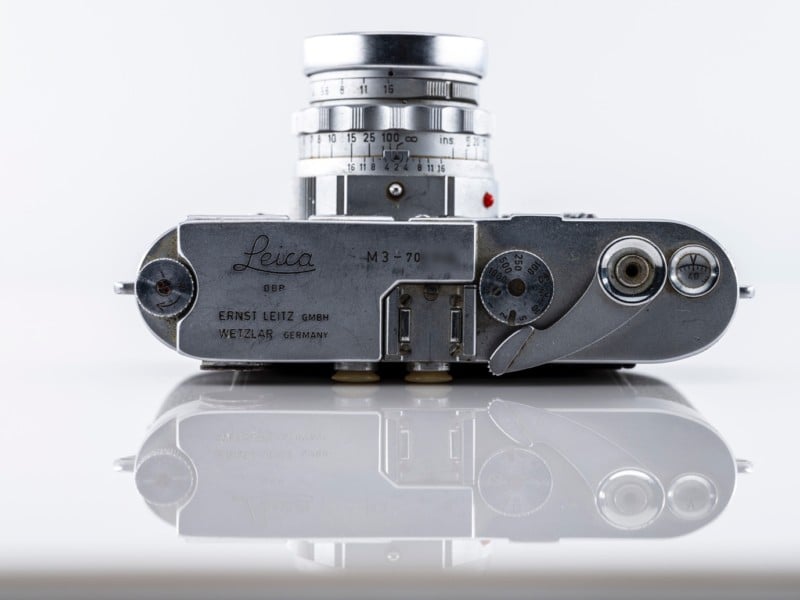
For those willing to hunt rather than pay the collector premium, the real action is on Japanese proxy auction sites like Buyee, where M3 bodies appear regularly under listings like "Leica M3 ファーストロット" (first batch) or "black painted weathered rangefinder" — often starting at 1 yen. These auctions are unfiltered and condition is candidly described (often "damaged/dirty" or "動作未確認" — operation unconfirmed). Meanwhile, Etsy shops like AmberAndCoal (New York) and VintageCameraWien offer curated, user-grade M3s from sellers with verified reputations and return policies, while Poshmark listings for reference books like the 1956 Leica Manual Data Book (13th Edition by Morgan & Lester) help buyers learn what to look for before bidding.

+Field notes
- —Japanese proxy auction services like Buyee are the primary hunting ground for user-grade M3 bodies, with listings often in Japanese and starting at 1 yen, but requiring careful reading of condition notes like "動作未確認" (operation not tested) or "現状品" (as-is).
- —Specific Japanese auction listings reveal highly sought-after variants, such as a "Leica M3 ファーストロット" (first production batch) with a matching serial number and a recent overhaul, highlighting how serious buyers chase early production runs.
- —Etsy shops like AmberAndCoal (New York) and VintageCameraWien (Vienna) offer curated, user-grade M3 bodies with return policies and seller ratings, contrasting with the as-is nature of proxy auctions.
- —The 1956 Leica Manual Data Book (13th Edition), sold on Poshmark for around $26, is a period reference that teaches buyers how to evaluate M3 features, serial numbers, and mechanical condition — invaluable for auction hunting.
- —Many Japanese listings explicitly note "black painted weathered" finishes — a variant that fetches higher prices on specialty sites but can be found undervalued in general auctions if you know the terminology.
- —Condition grading on proxy sites uses terms like "動作未確認" and "現状品" — the latter often means the camera hasn't been tested and may have hidden faults, so bidders must factor in potential repair costs.
Keep exploring
More of Leica M3 Camera

Branch out
Beyond Leica M3 Camera
More to explore
In the same world.
Leica M3 Film Camera
The Leica M3 is the camera that launched the M system in 1954, and it matters because it reset what a 35mm rangefinder c…

Leica M3
Introduced in 1954 by Ernst Leitz GmbH, the Leica M3 was a radical departure from everything Leitz had built before — re…

Contax T2 Film Camera
The Contax T2 is a premium 35mm compact from 1990 that sits at the exact intersection of luxury object and serious shoot…

Contax T2
The Contax T2 is a high-end 35mm compact film camera that has become a status object as much as a shooter’s tool, prized…
Contax T2 Point-and-Shoot Film Camera
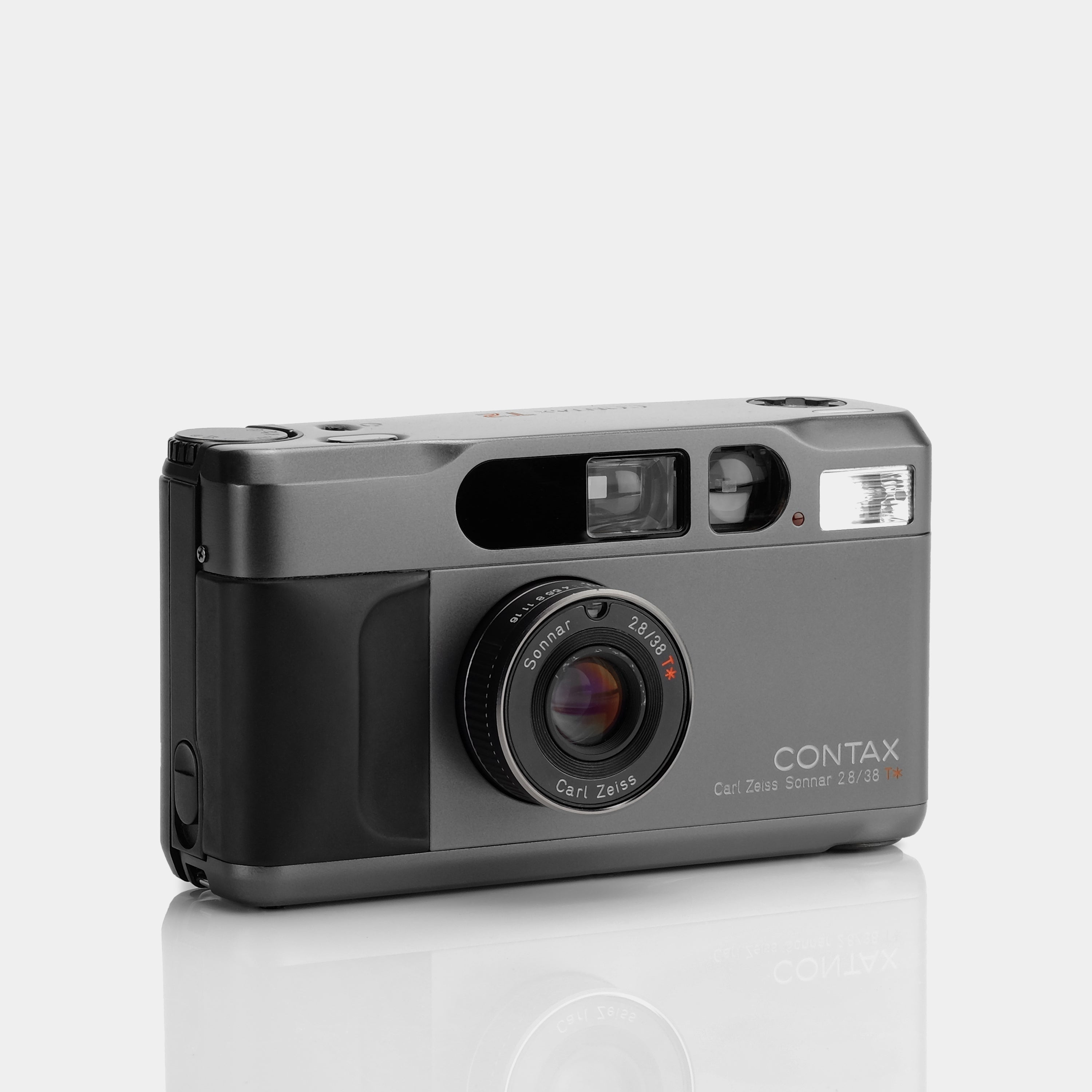
The Contax T2 is a premium 35mm autofocus compact released in 1991 by Kyocera under the Contax name, and its appeal come…
Contax T2 Camera
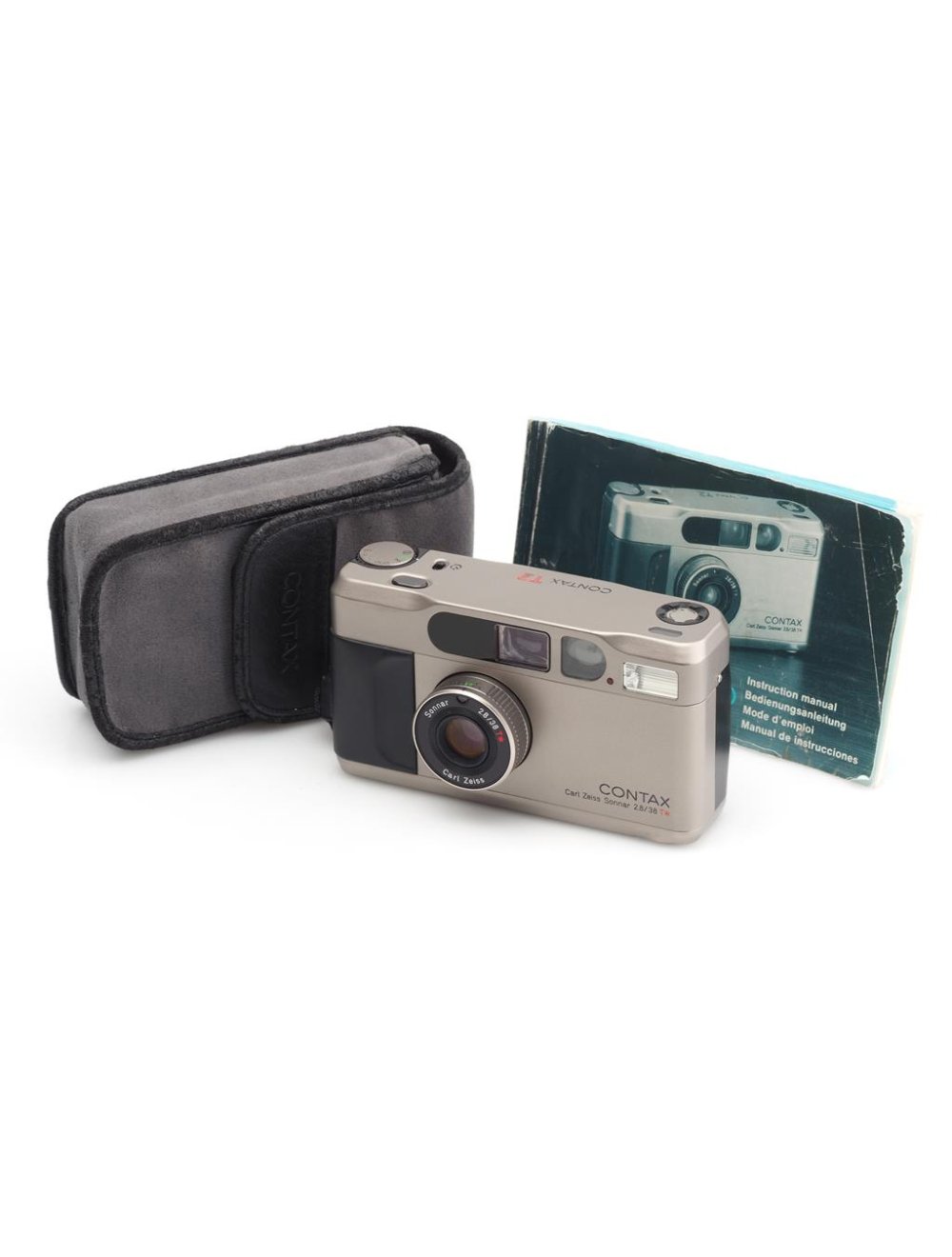
The Contax T2 is a 1991 autofocus 35mm compact built by Kyocera under the Contax name, and it matters because it turned…

Film Photography
Film photography is the chemical side of photography: images are recorded on gelatin film, paper, or even hard plates ra…

Technics SL-1200 M3D
The Technics SL-1200 M3D is a quartz direct-drive SL-1200 variant that kept the core performance of the earlier 1200 for…
Imagery
Know someone who’d love this?
Discovered by ArcurianAuto-generated from public sources and AI synthesis — it may be incomplete or inaccurate. Treat it as a starting point for your own exploration, not professional (medical, legal, financial, or safety) advice. Verify anything you act on. Report this page.