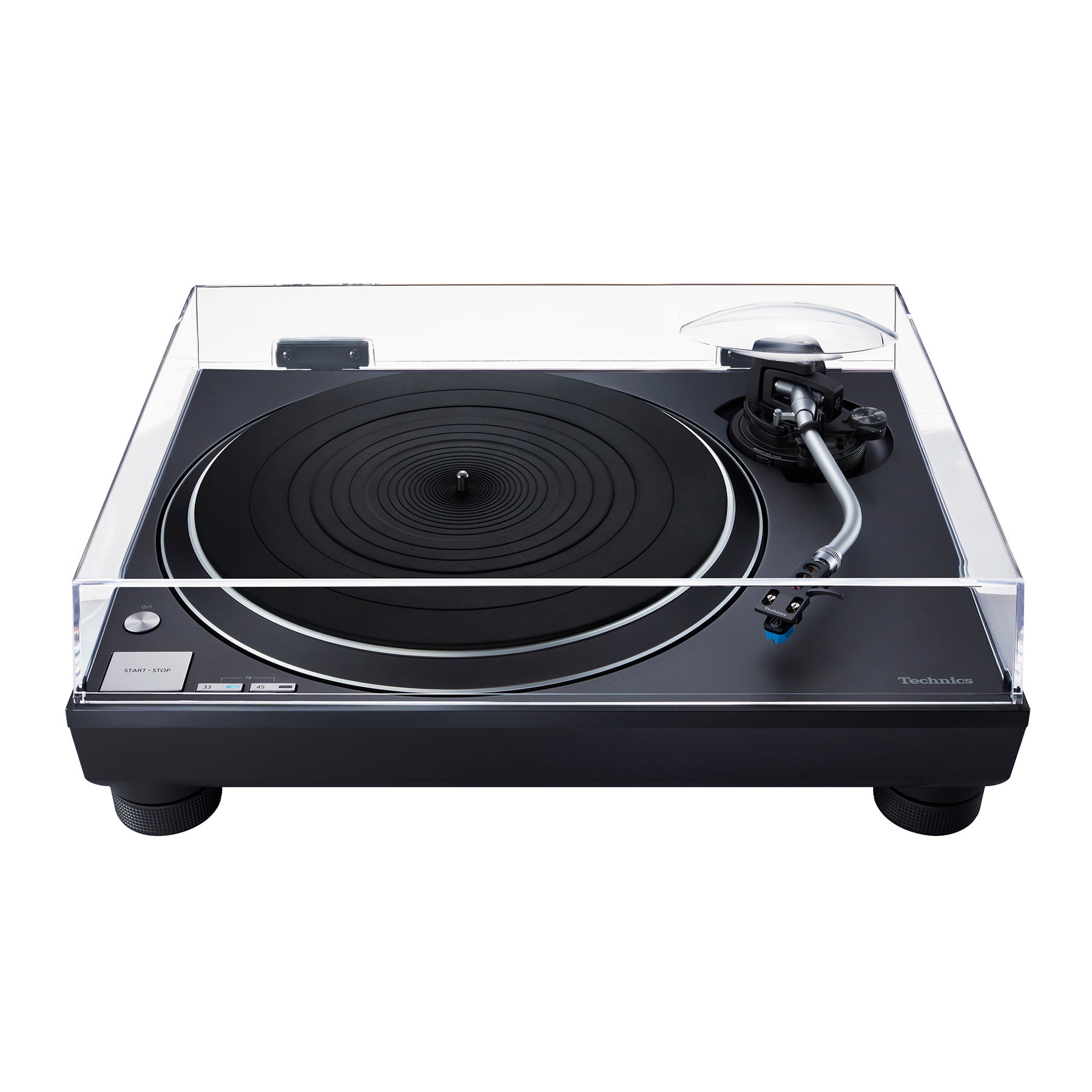
The Technics SL-1200 M3D is a quartz direct-drive SL-1200 variant that kept the core performance of the earlier 1200 formula while adding a few DJ-centric refinements that matter in actual use. It is the version people recognize for the pitch reset button and the sunken power switch, alongside the familiar universal S-shaped low-mass tonearm with gimbal suspension, helicoid height adjustment, heavy rubber base, detachable dust cover, and included slipmat. In practice, that means you get the speed stability and handling that made the SL-1200 line central to DJ culture, but in a model with small design changes that users still talk about when comparing decks. The M3D is interesting precisely because it is not a dramatic redesign—it is a close-read collector’s model where tiny functional differences become the whole story.
Learn
What Makes the M3D Distinct
The SL-1200M3D, released in 1997, is not a performance revolution over the MK2 but a series of thoughtful refinements aimed at DJs who found the MK2's quirks annoying in the heat of a mix. The most celebrated change is the clickless pitch slider, which replaces the MK2's detent at zero with a smooth, continuous fader and adds a quartz lock reset button that instantly snaps the pitch back to 0% and remembers your last setting. The recessed power switch prevents accidental shutdown during scratching, the dust cover loses its hinges for quick removal, and the stroboscope glows a distinctive orange instead of the standard red. A headshell storage slot under the counterweight and a plastic undercover for reduced drag complete the package. Under the hood, the motor and torque are identical to the MK2, so the M3D is best understood as a pro-quality DJ tool with the rough edges filed off.

 djbooth.netdjbooth.net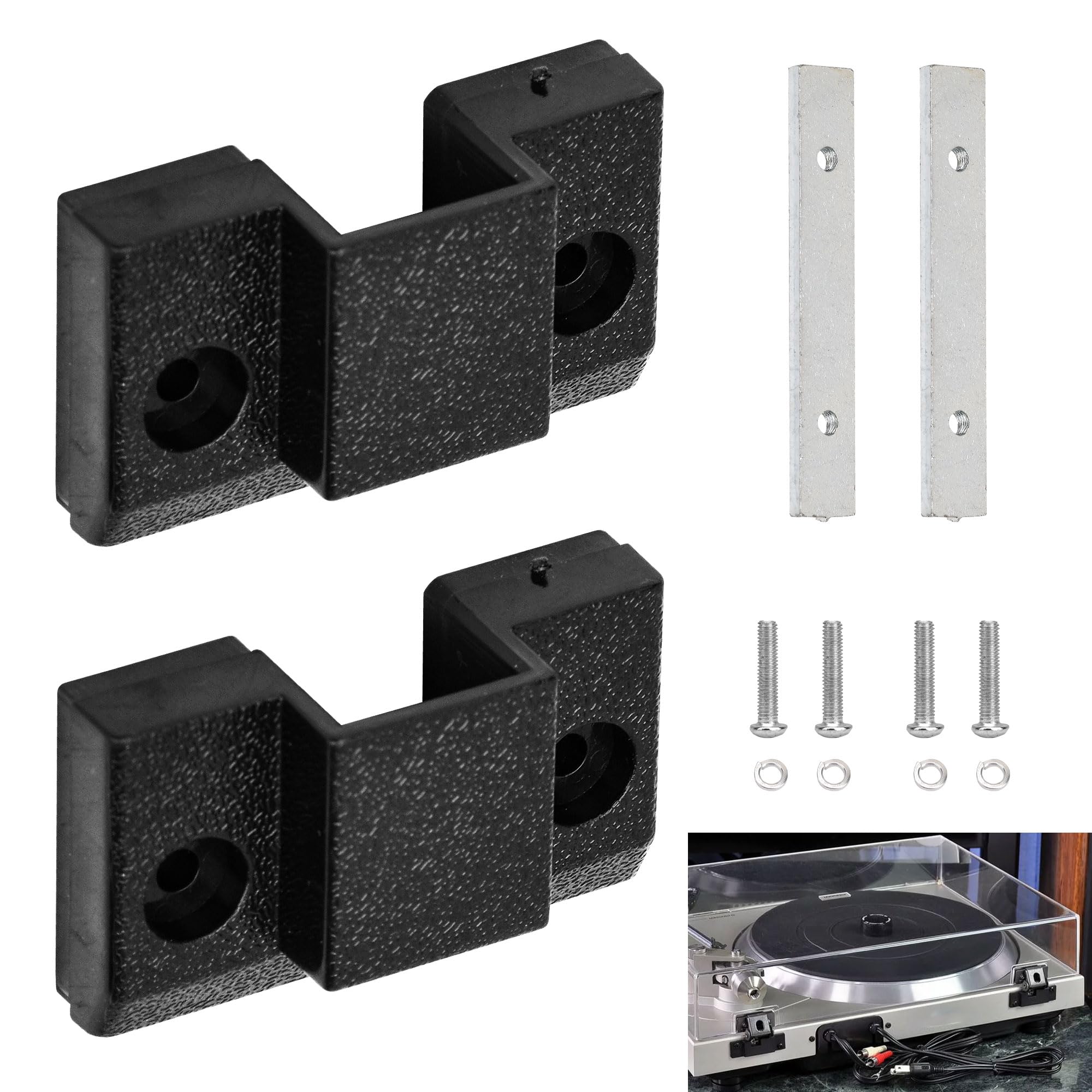
 tranceaddict.comtranceaddict.com
 audioappraisal.comaudioappraisal.com
+Field notes
- —The M3D introduces a clickless pitch slider without the MK2's mechanical detent at zero, allowing smooth, uninterrupted mixing near the center point, paired with a quartz lock reset button that returns pitch to 0% and remembers the previous setting when pressed again.
- —A recessed (sunken) power switch prevents accidental turn-off during aggressive scratching or beat juggling, a common complaint with the MK2's protruding switch.
- —The dust cover is fully removable without hinges, making it easier to lift off completely during performances, unlike the hinged cover on the MK2.
- —The stroboscopic light is tinted orange rather than the standard red, a subtle visual cue that distinguishes the M3D from earlier models.
- —A slot near the counterweight stores a second headshell, saving DJs from fumbling for spare cartridges during a set.
Learn
Where the M3D Sits in the SL-1200 Line
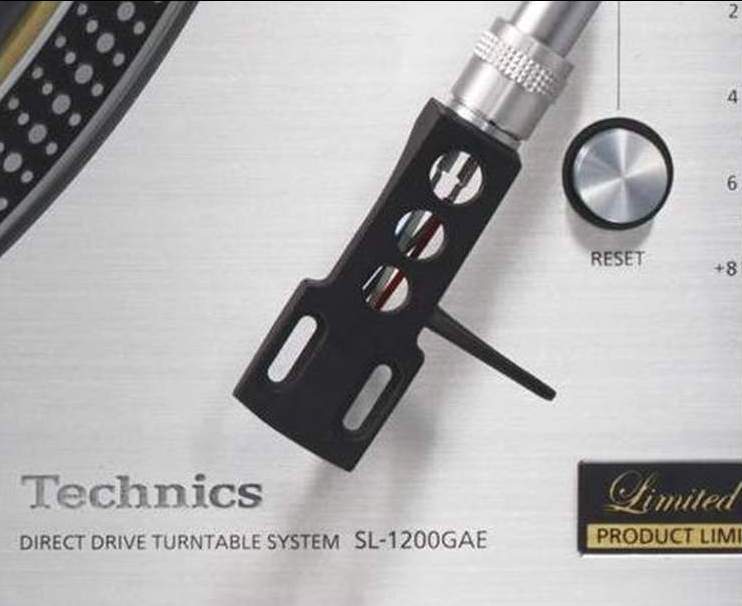
The Technics SL-1200M3D, released in 1997, occupies a subtle but important spot in the SL-1200 line: it's the model that bridges the MK3D and the MK4. Essentially a cosmetic refresh of the MK3D, it kept the same internal mechanics but introduced a more accurate pitch slider and a redesigned start/stop button. The real differentiator, though, is its improved power supply, which many enthusiasts argue gives the M3D the cleanest audio of any 1200 variant. It was produced until 2002, and while it's easy to mistake for the MK3D at a glance, the faceplate and slider tell the story. For DJs who wanted the classic 1200 feel but with tighter pitch control, the M3D became the quiet favorite.

 us.technics.comus.technics.com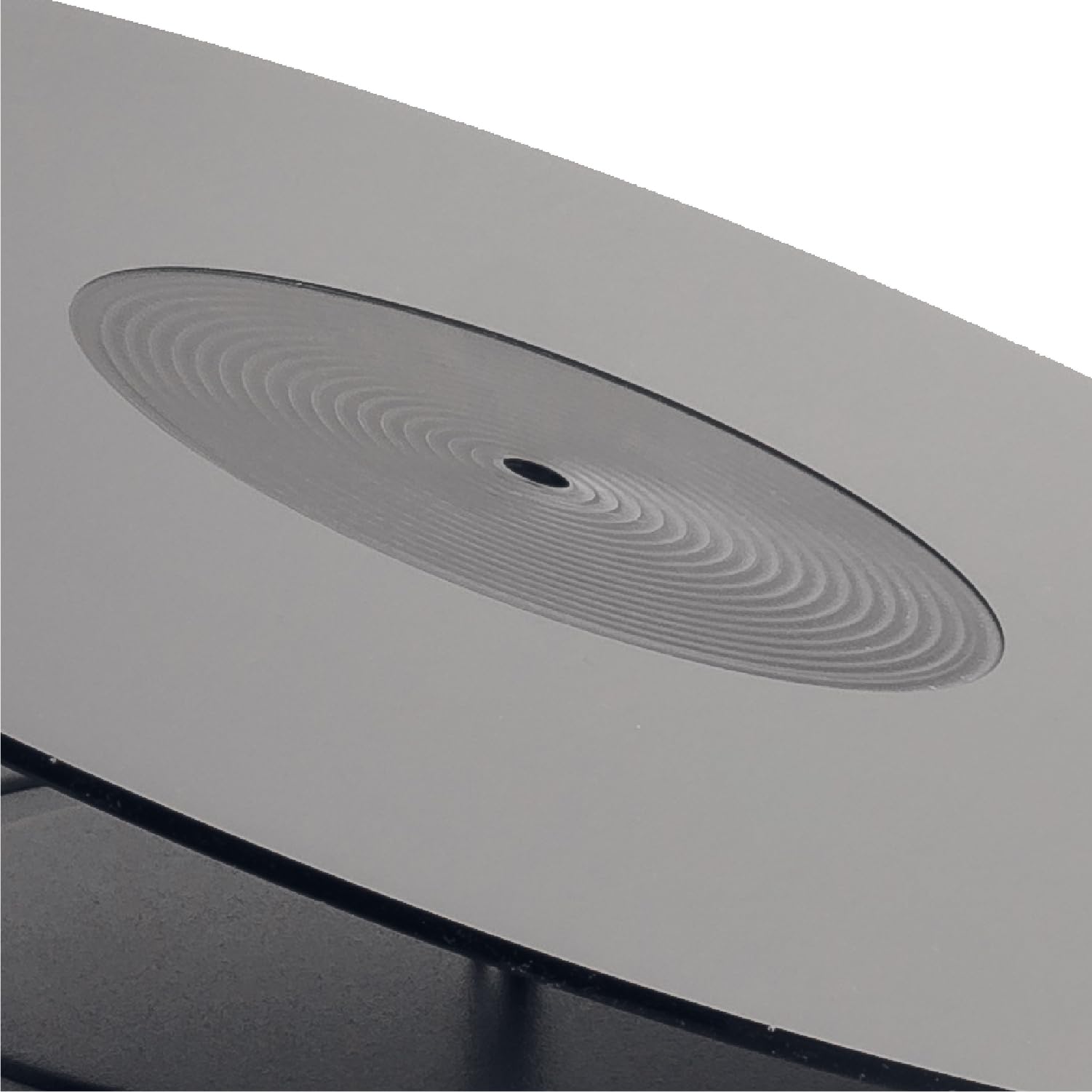
+Field notes
- —The M3D was released in 1997, sitting chronologically between the MK3D and the MK4, and is essentially a cosmetic update of the MK3D with the same internal mechanics.
- —It features a more accurate pitch slider and a different start/stop button compared to the MK3D, making it easier to fine-tune beats.
- —The M3D is often considered the best-sounding of the 1200 series by many DJs because of its improved power supply, which reduces noise in the audio path.
- —It is easily confused with the MK3D, but the M3D has a distinct faceplate and a different pitch slider, so a quick visual check sets them apart.
- —Production of the M3D ran from 1997 until 2002, making it a relatively short-lived but highly regarded model in the lineup.
Learn
Read the Deck Like an Owner
Approaching the Technics SL-1200 M3D as an owner means digging past the surface specs into the engineering decisions that define its personality. The M3D's three-phase brushless DC motor is a common point of confusion: its running torque is deliberately modest to maintain rotational smoothness, making the vaunted 1.5 kg-cm starting torque and 0.7-second spin-up a specific peak performance that contributed to the 'high torque' myth. The M3D broke from the MK2 tradition by axing the dust cover hinges for pure DJ accessibility, and its pitch slider ditched the centre detent for seamless control, with a 'Reset' button instantly recalling the quartz-locked standard speed. The chassis is a dense 12 kg composite of aluminum die-cast, proprietary TNRC damping compound, and a thick rubber base—an obsessive approach to vibration control. Its gimbal-suspended arm (12 g effective mass, 7.5 g headshell) accepts a surprisingly wide cartridge range of 11–20.5 g according to the service literature, while the all-round integration FG delivers measurable stability, as shown in tests with a Denon DL-110 on a Dr. Feickert test LP that yielded a tight ±0.02% lowpass-filtered deviation. Owners also know that the audible rumble from cogging torque is a non-issue, sitting at 26.64 Hz, safely below the 100 Hz standard rumble measurement roll-off.


 manualslib.commanualslib.com
+Field notes
- —The M3D's motor is a 3-phase variable power factor brushless DC design, where running torque was de-emphasized for smooth rotation. The fast 0.7-second spin-up from standstill to 33 1/3 rpm and the 1.5 kg-cm starting torque created its 'high torque' reputation, but the power factor at operating speed is actually very low, a deliberate sacrifice to minimize cogging.
- —Unlike its MK2 predecessor, the M3D pitch slider has no physical center detent, enabling continuous, click-free adjustment across its range. A dedicated 'Reset' switch immediately engages the quartz synthesizer lock, snapping the speed precisely to 33 1/3 or 45 rpm for instant pitch reference.
- —The cabinet construction is a three-layer damping system: a high-rigidity aluminum die-cast top plate, a core of integrally molded Technics Non-Resonance Compound (TNRC), and a base of special heavyweight rubber. This composite mass totals 12 kg and is paired with large insulators to aggressively reject external vibration from speaker sound pressure.
- —A dead giveaway for identifying an M3D on a club rig is the absence of dust cover hinges. The M3D was specifically designed for enhanced DJ operability, shipping with a completely detachable dust cover with no hinge mechanism, allowing the cover to be removed and set aside entirely during a set.
- —The service manual specifies an applicable cartridge weight range of 11 to 20.5 g (including the 7.5 g headshell), with the tonearm’s effective mass sitting at 12 g. This medium-mass arm works beautifully with a much wider range of cartridges than typically assumed, from high-compliance moving magnets to heavier moving coils, a fact hidden until you dig into the specs.
- —Real-world measurements by Archimago using a Dr. Feickert Adjust+ Test LP and an iPad PlatterSpeed app (v2.2) with a Denon DL-110 cartridge showed a lowpass-filtered speed deviation of just ±0.02% around the 3150 Hz test tone. The Quartz lock keeps the speed so tight that the graph appears nearly flat, easily competing with far more expensive belt-drive designs.
Discover
Collectors, DJs, and Restoration Feeds to Follow

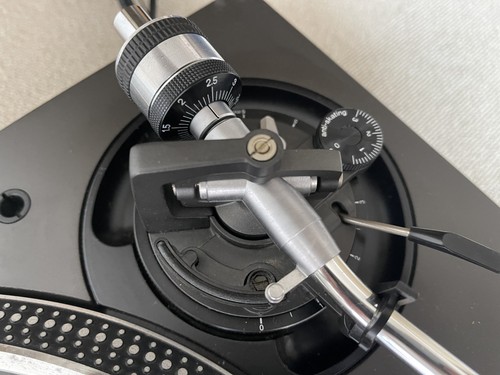
For anyone diving into the world of Technics SL-1200 M3D turntables, three YouTube channels offer sharply different but complementary angles. David Pham's 2014 overview provides a straightforward demonstration of the M3D paired with a Pioneer DJM500 mixer, useful for seeing the setup in action. The channel Repair DJ Gear delivers a meticulous, step-by-step restoration walkthrough—covering everything from replacing the pitch slide potentiometer with an SFDZ122N11-2 and upgrading audio cables to Mogami W2528 with Neutrik NYS373 RCA connectors, to reflowing main PCB solder joints and swapping out leaky capacitors and four power transistors. This is the feed to follow if you're doing your own restoration. Meanwhile, CJ's Vinyl's comparison video forcefully argues that the SL-1200 Mark 2 (1979) and its successors, including the M3D, remain the unassailable godfathers of direct-drive turntables, dismissing imitators like the Audio-Technica AT-LP120 as low-end reproductions. Together, these feeds cover the M3D's real-world use, its deep technical restoration, and its place in turntable history.
+Field notes
- —David Pham's channel features a 2014 demonstration of the Technics SL-1200 M3D paired with a Pioneer DJM500 mixer, giving a straightforward look at the combo in action.
- —Repair DJ Gear's restoration video specifies using Mogami W2528 dual unbalanced cable and Neutrik NYS373 Gold Plated Series RCA connectors for audio cable replacement, along with an SFDZ122N11-2 pitch slide potentiometer.
- —The same restoration feed emphasizes critical steps like reflowing solder joints on the main PCB to prevent known issues, replacing leaking capacitors, and checking/replacing the four power transistors on the voltage regulator.
- —CJ's Vinyl comparison video asserts that the Technics SL-1200 Mark 2 (1979) and its successors (including the M3D) are the godfathers of all direct-drive systems, while the Audio-Technica AT-LP120 is merely a low-end imitation.
Explore
Where People Actually Find M3Ds and Parts
Finding an authentic Technics SL-1200M3D in the wild means cruising the usual secondhand marketplaces—Reverb is a solid bet—but the real hunt is for the specific parts that keeps these workhorses running. The M3D occupies a sweet spot between the ubiquitous MK2 and the rarer later models, so sourcing original headshels, faceplates, or even full units often comes down to specialist sellers on platforms like Reverb who know exactly what they're dealing with. For instance, a used Technics SL-1200 MK4 silver headshell (part number SFPCC31004K) recently listed at around €132 on Reverb Bulgaria from a Japanese seller, while aftermarket stainless steel faceplates for MK2 decks have been selling for around £146 from a London-based shop called 1200plates. Independent makers also offer custom parts, like a Litz-wired headshell with an AT 3600L cartridge that fits a huge range of Technics models from the SL-1300 to the SL-QX300. The best approach is to set alerts, check listings regularly, and be ready to buy from international sellers—shipping from Japan or the UK is standard, and duties are your responsibility.

 reverb.comreverb.com
+Field notes
- —Reverb is the primary marketplace for both complete M3D units and isolated parts, with niche sellers in Japan and the UK specializing in rare headshels, faceplates, and cartridges.
- —A used Technics SL-1200 MK4 silver headshell (part SFPCC31004K) recently sold for €132.41 plus shipping on Reverb Bulgaria from a seller in Shizuoka, Japan — illustrating the global reach of parts sourcing.
- —Aftermarket stainless steel faceplates for the SL-1200/1210 MK2, made by a UK company called 1200plates, are available new for £145.99, offering a modern upgrade that slides over the existing tonearm assembly.
- —Independent makers produce compatible components like a Litz-wired headshell with an AT 3600L cartridge, which fits over 40 Technics models including the SL-1300, SL-1700, and SL-Q2 series — broadening the parts pool beyond original stock.
Keep exploring
More of Technics SL-1200 M3D


Branch out
Beyond Technics SL-1200 M3D
More to explore
In the same world.

Technics SL-1200M3D Pitch Reset Button
On the SL-1200M3D, the pitch reset button is the small change that made this version instantly recognizable to DJs: pres…
Technics SL-1200
The Technics SL-1200 is a long-running direct-drive turntable series that became the go-to deck for DJs and a defining p…

Leica M3
Introduced in 1954 by Ernst Leitz GmbH, the Leica M3 was a radical departure from everything Leitz had built before — re…

Leica M3 Film Camera
The Leica M3 is the camera that launched the M system in 1954, and it matters because it reset what a 35mm rangefinder c…
Leica M3 Camera
The Leica M3 is the 35mm rangefinder that began Leica’s M-system era in 1954, replacing the company’s earlier screw-moun…
Lelit Bianca V3 Review
The Lelit Bianca V3 is a prosumer dual-boiler espresso machine that keeps showing up in serious home-barista conversatio…

La Marzocco Linea Mini
The La Marzocco Linea Mini is a home espresso machine built as a kitchen-scaled take on the brand’s Linea Classic, with…

Happy Hacking Keyboard Professional
Happy Hacking Keyboard Professional is PFU’s compact, layout-driven keyboard line built around electrostatic capacitive…
Imagery
Know someone who’d love this?
Discovered by ArcurianAuto-generated from public sources and AI synthesis — it may be incomplete or inaccurate. Treat it as a starting point for your own exploration, not professional (medical, legal, financial, or safety) advice. Verify anything you act on. Report this page.