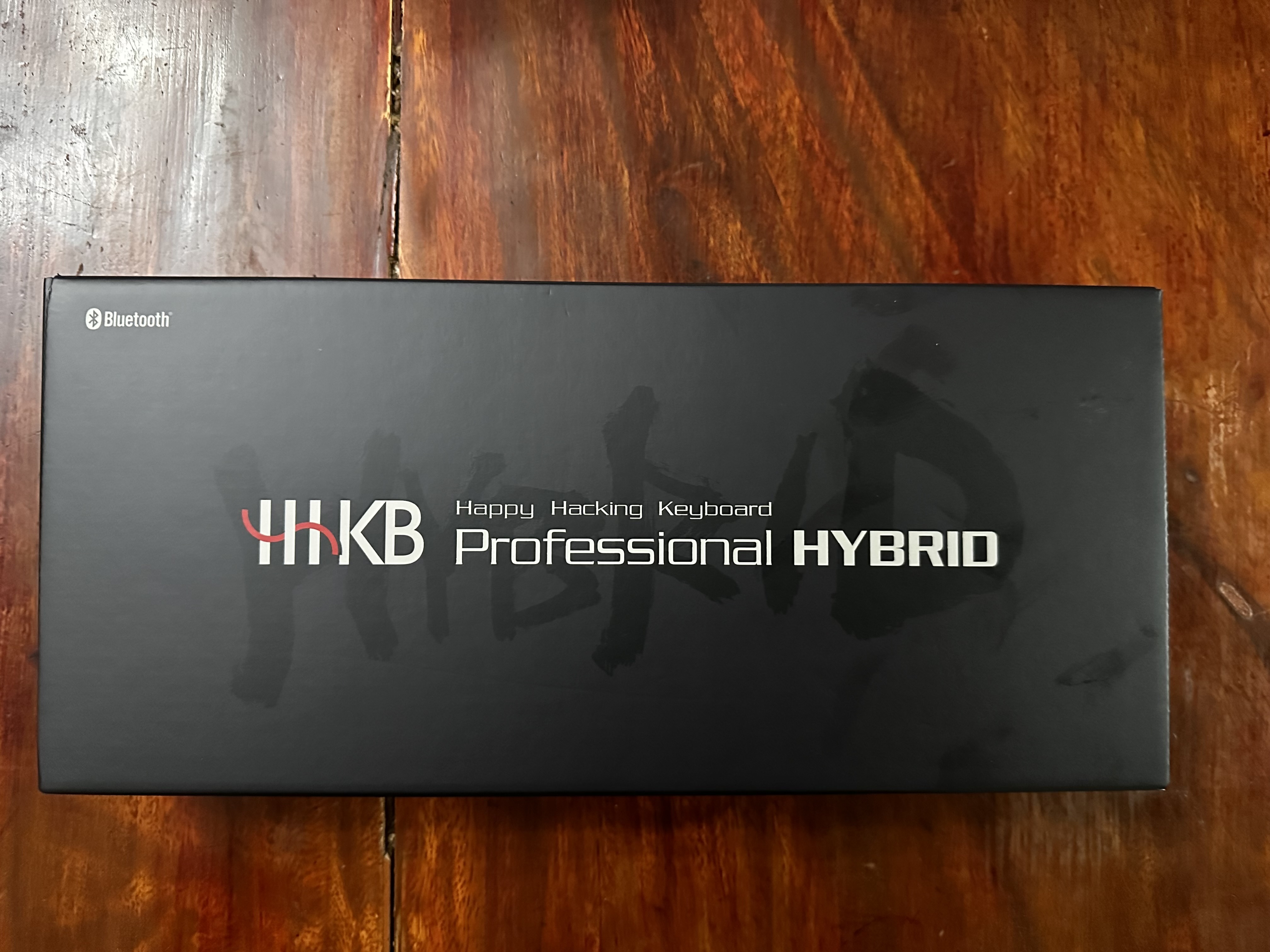
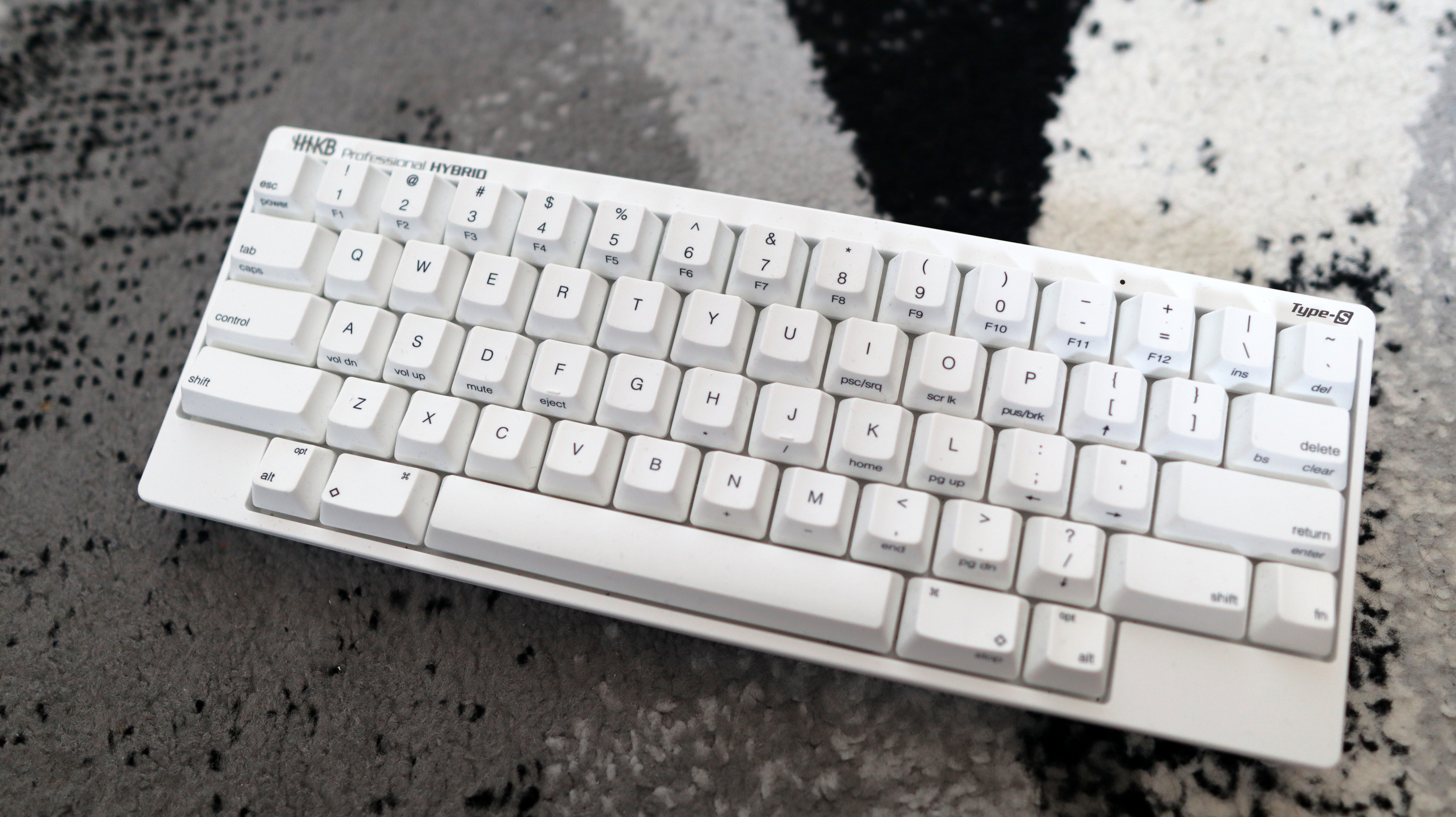
Happy Hacking Keyboard Professional is PFU’s compact, layout-driven keyboard line built around electrostatic capacitive key switches and a minimalist design philosophy aimed at serious daily typing. The defining appeal is not just the Topre-style switch feel, but the HHKB idea of keeping your hands on the home row through a rational shortcut-focused layout, with modern variants adding Bluetooth, USB-C, keymapping, and the quieter Type-S key structure. Within the line, people quickly start distinguishing between Classic, Hybrid, and Hybrid Type-S, as well as details like stamped vs. blank caps and special finishes such as Snow. HHKB is the kind of keyboard where the argument is never merely about specs—it is about whether this particular combination of feel, silence, symmetry, and discipline becomes your long-term digital companion.
Learn
What Makes an HHKB Professional an HHKB
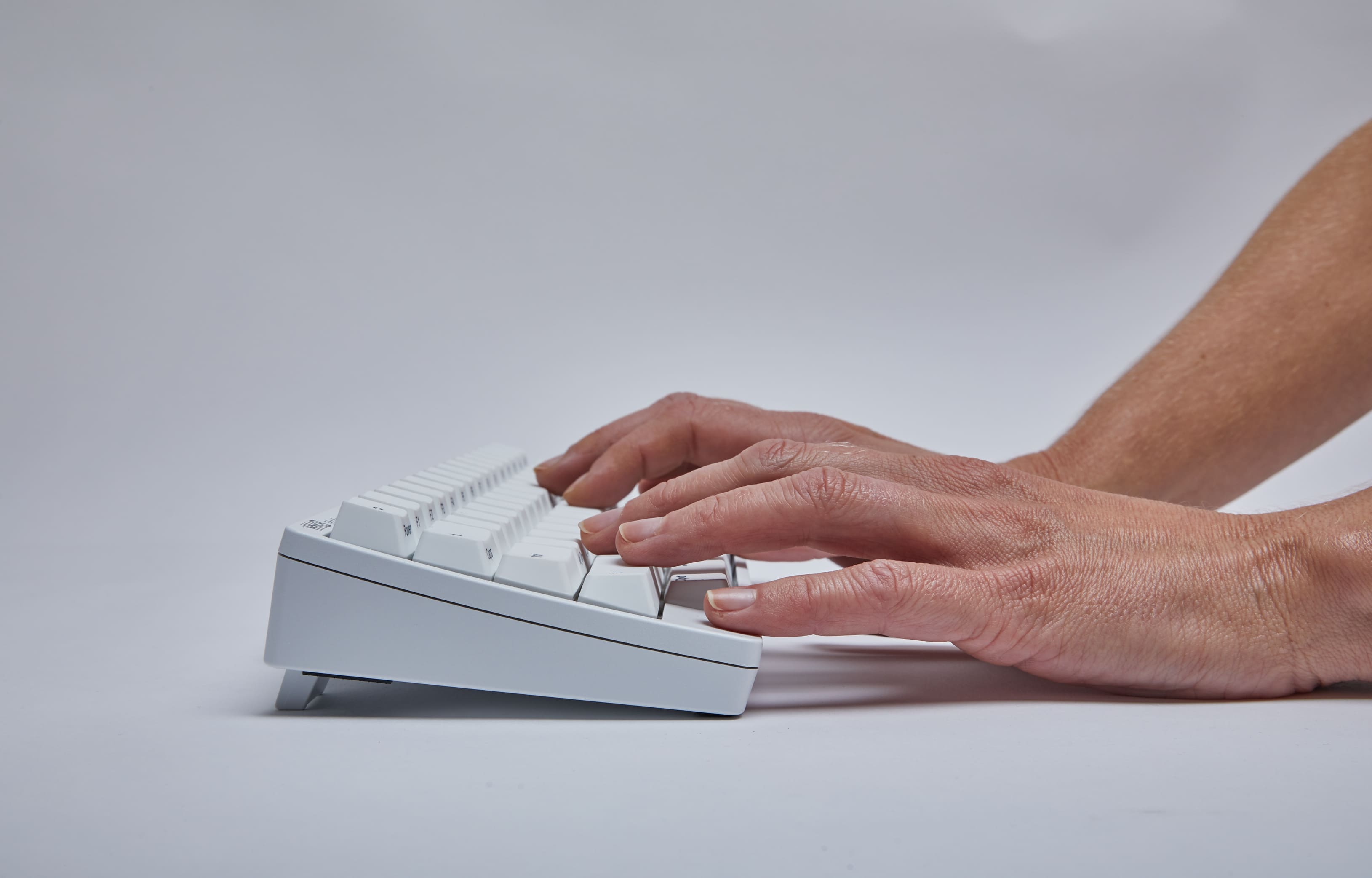
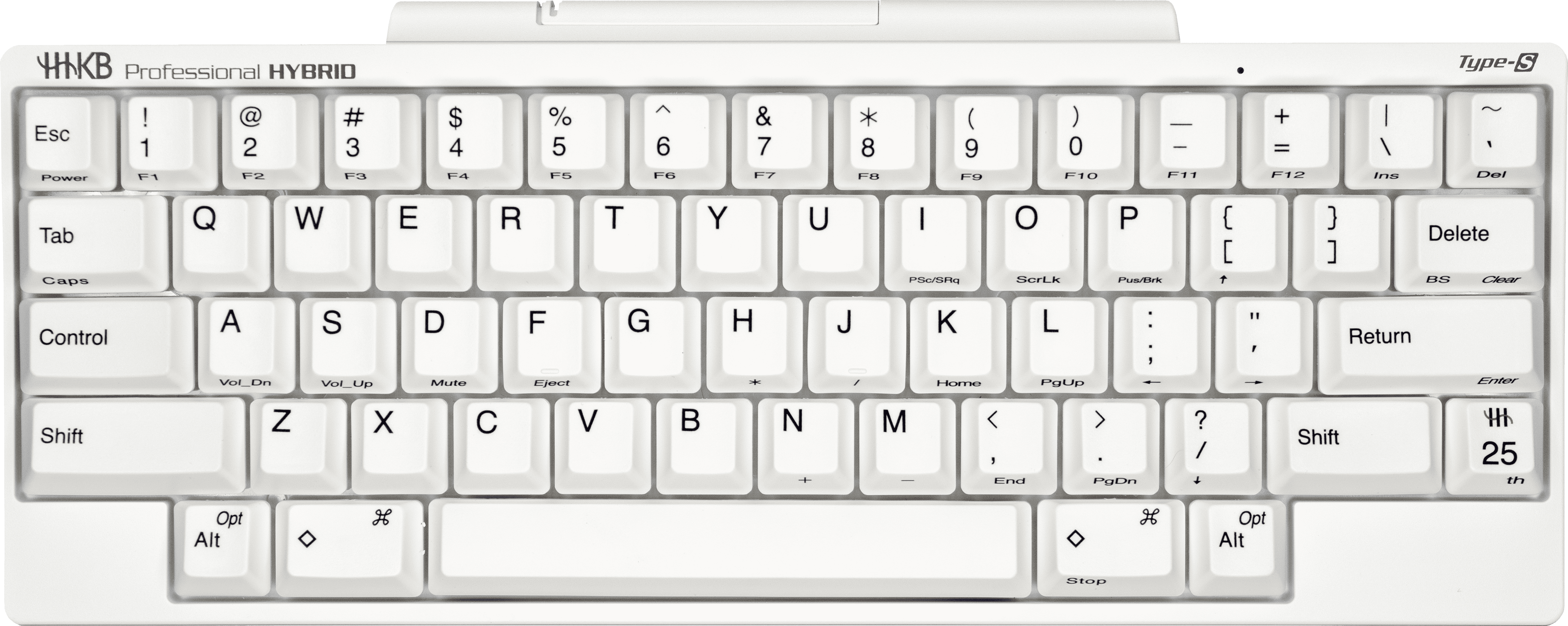
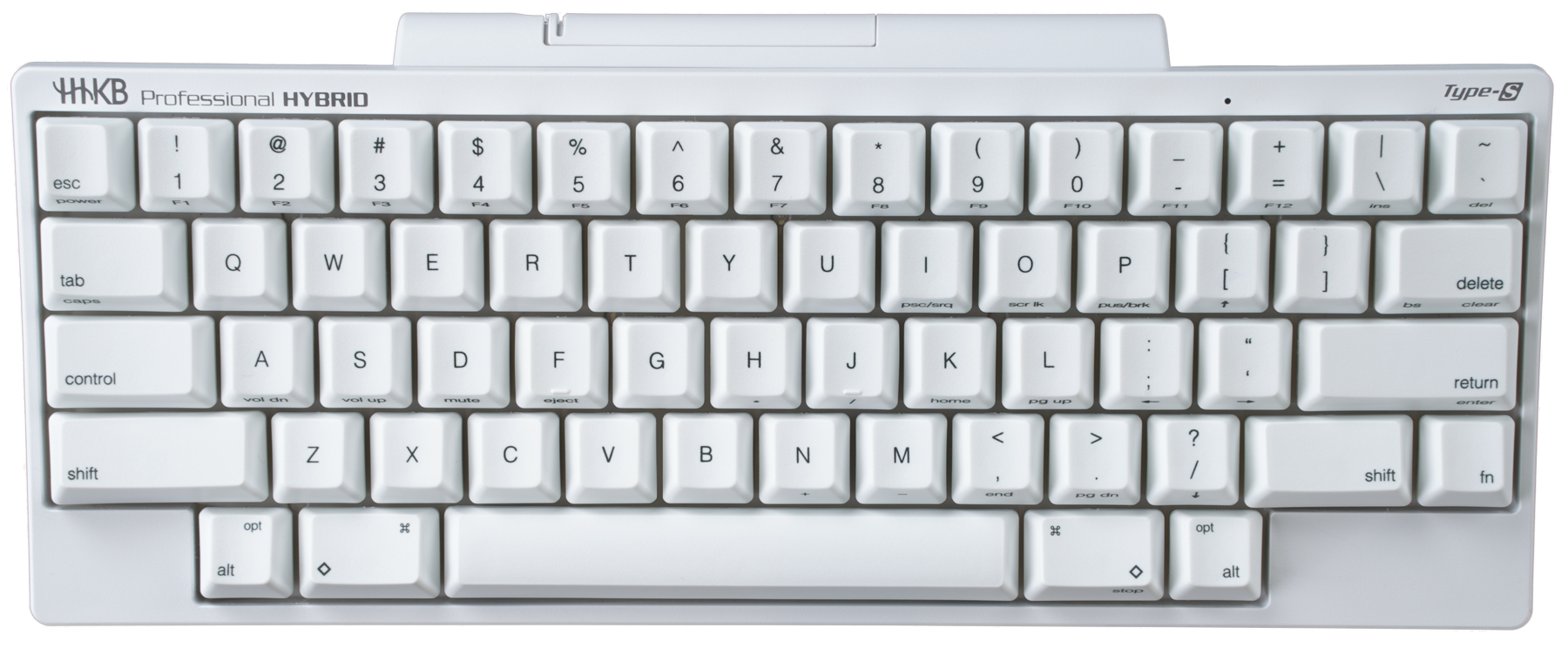
The Happy Hacking Keyboard Professional isn't just another small keyboard; it's a deliberate departure from conventional layouts, born from the frustration of Japanese computer scientist Eiiti Wada with the growing complexity of keyboard standards. The Professional's signature is its 60-key layout, which relocates the Control key to where Caps Lock normally lives, moves Escape closer to the number row, and tucks cursor navigation behind an Fn layer. This arrangement, combined with 45g Topre electrostatic-capacitive switches, creates a typing experience that Topre enthusiasts often describe as "breaking chocolate" — a snappy, rounded tactility that feels like a premium rubber-dome but with an electronic sensing mechanism rather than a mechanical click. The Type-S variant uses silenced sliders on the upstroke, making it quiet enough for an office, though some owners note it loses a bit of the snappier feel of the standard Professional, and the community is known for upgrading domes to stiffer ones for more bite. A quirk for Linux users: there's no official keymap configuration tool, so deeper remapping relies on third-party software or desktop environment hacks.

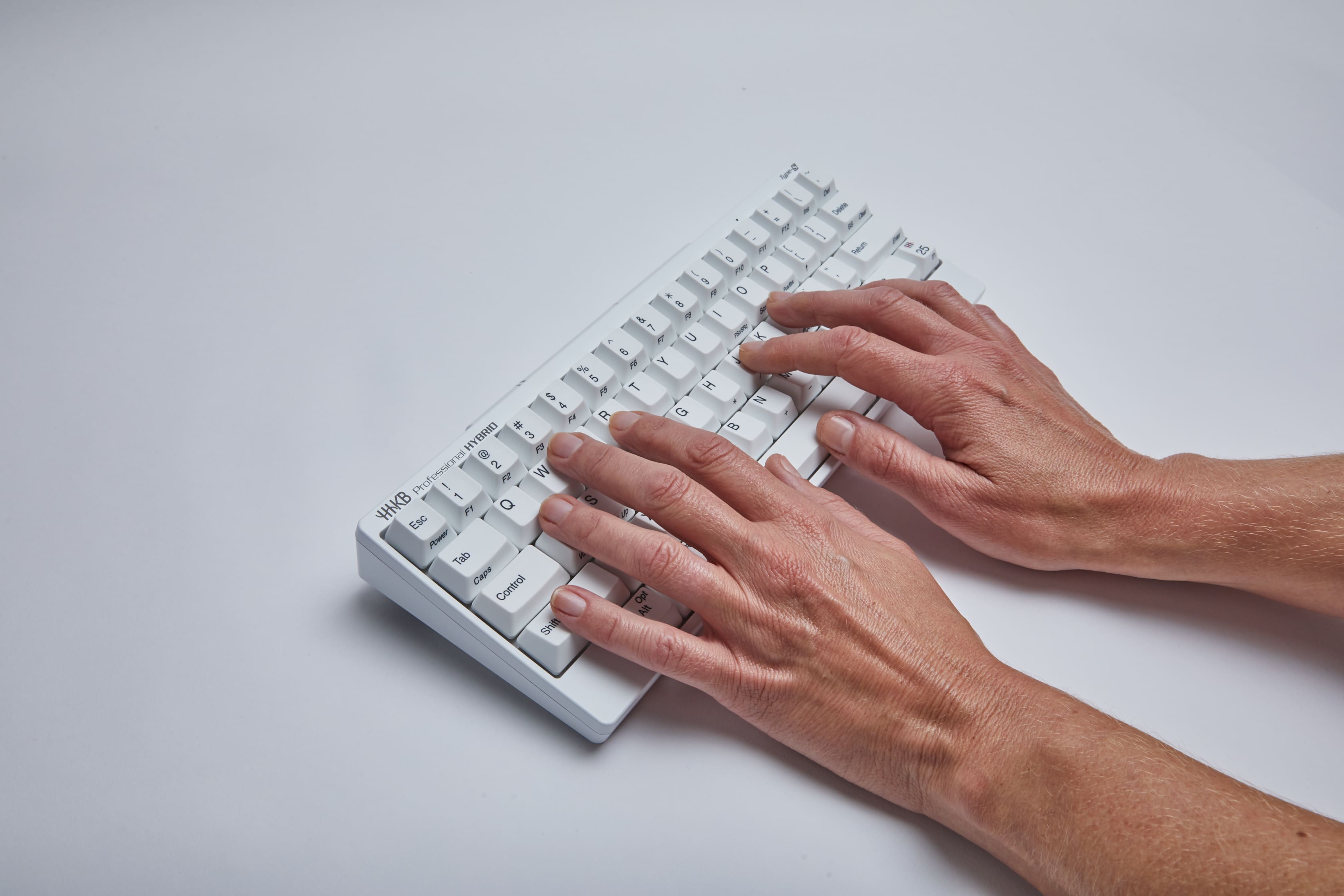
 leafandcore.comleafandcore.com
+Field notes
- —HHKB's layout was directly inspired by the original 1984 Macintosh M0110 keyboard and the IBM AT layout, not just a shrunken modern ANSI standard — a fact often lost in the 60% keyboard crowd.
- —Topre switches use a cone-shaped spring that senses capacitance by detecting changes in an electromagnetic field — the same physics behind a touchscreen — rather than relying on a physical metal contact for actuation.
- —The Type-S model is actually less tactile than the standard Professional because the silencer dampens the upstroke, making it feel slightly less snappy — a trade-off buyers should weigh if they prioritize feel over silence.
- —Korean keyboard enthusiasts describe each keystroke on an HHKB as "breaking chocolate" — a specific analogy for the firm, rounded give before the switch collapses.
- —No official Linux configuration tool exists for the HHKB's keymap or firmware settings; all deeper re-mapping must be handled through third-party software or desktop environment tweaks.
- —The HHKB Professional Hybrid Type-S is the first model to offer both Bluetooth and USB-C on the same board, but it still relies on two AA batteries for power — a deliberate design choice to avoid built-in rechargeable cells.
Learn
From the Original Wired Layout to Classic, Hybrid, and Type-S
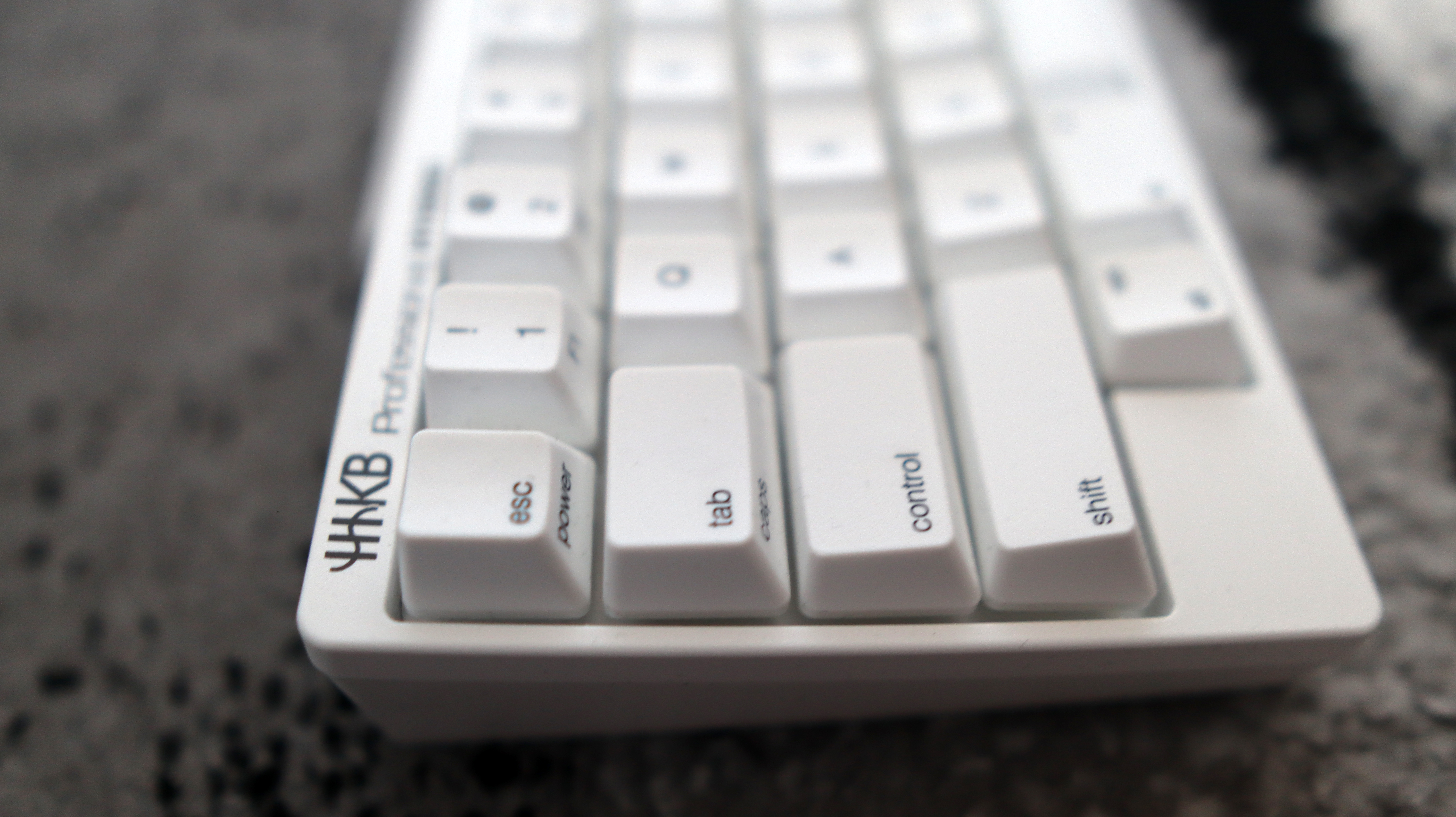
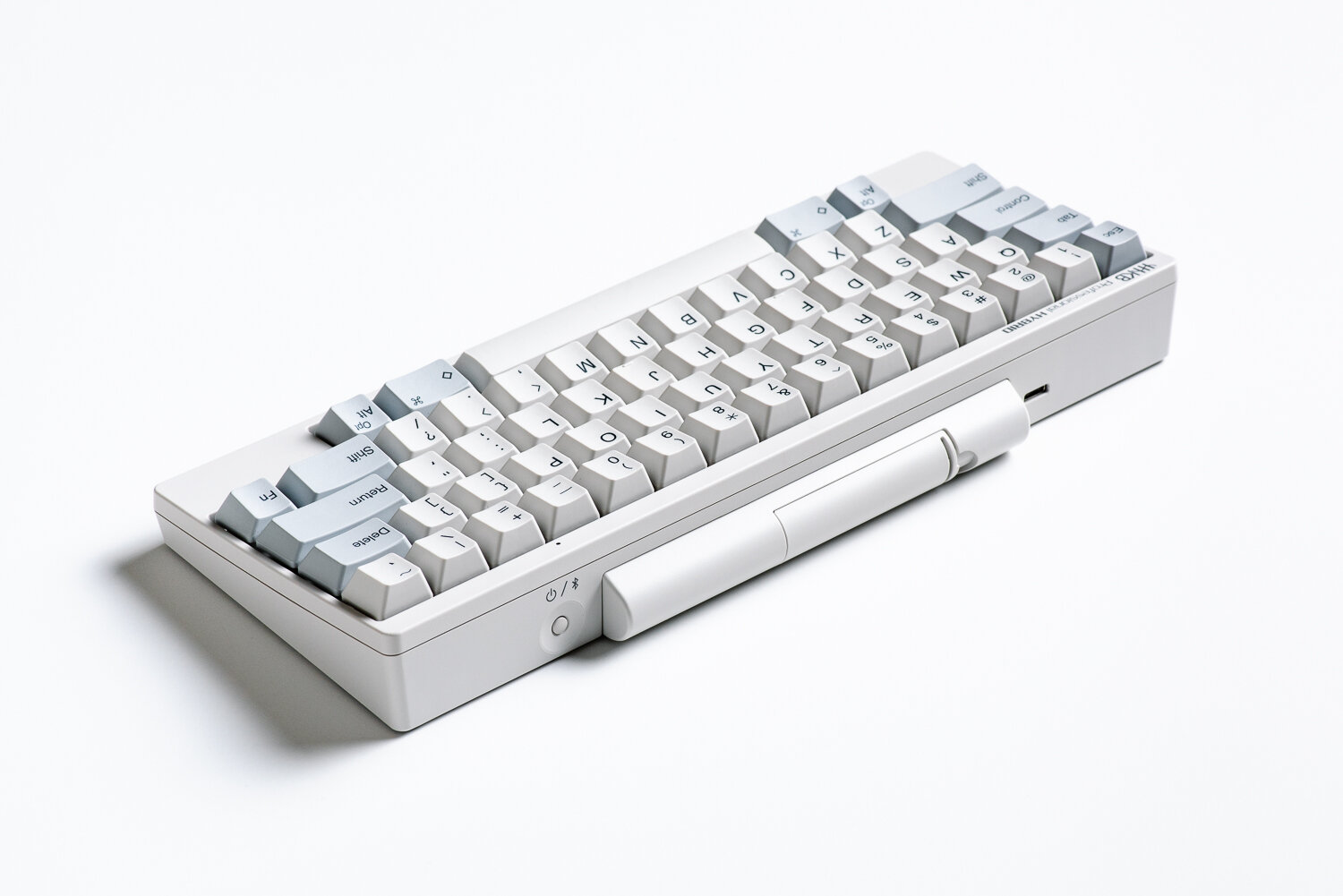
The Happy Hacking Keyboard Professional lineage began in 2003 with the PD-KB300, which swapped the original HHKB's rubber domes for Topre electrostatic capacitive switches and adopted USB, ditching the old PFU branding for the now-iconic HHKB logo. The second-generation Professional 2 (PD-KB400, 2006) added a two-port USB hub and ran for thirteen years, while the Type-S variant (2011) introduced factory-installed silencing rings on the slider, giving a softer bottom-out with slightly reduced travel. The third-generation arrived in December 2019 as two distinct lines: the Classic, a wired-only USB-C model consciously echoing the very first HHKB's minimal silhouette, and the Hybrid, which brought Bluetooth (pairing up to four devices) plus onboard keymap storage that could be configured via software. The Hybrid Type-S sits at the top of the range, combining wireless freedom with factory silencing and a robust key-remapping function that blanks especially suit. A limited 25th anniversary Hybrid Type-S in snow white was released in 2021. Throughout, the JP layout variants remain unique among Topre HHKBs for including dedicated arrow keys.

 hhkb.iohhkb.io
 hhkb.iohhkb.io
+Field notes
- —The first HHKB Professional (PD-KB300, 2003) abandoned rubber domes for Topre electrostatic capacitive switches, adopted USB, and introduced the new HHKB logo without PFU branding above the Esc and 1 keys.
- —The Professional 2 (PD-KB400, 2006) added a built-in two-port USB hub and became the longest-running model series, spanning thirteen years until 2019.
- —The Type-S silencing system debuted in June 2011 on both the Professional 2 and JP models; it uses modified sliders with silencing rings to dampen bottom-out noise, and the JP Type-S is the only Topre HHKB with dedicated arrow keys.
- —The third-generation (2019) split into the wired-only Classic — a deliberate homage to the original PD-KB01 with a USB-C connection — and the Hybrid, which adds Bluetooth for up to four paired devices plus onboard keymap storage.
- —The Hybrid Type-S is PFU's acknowledged top-tier model, combining wireless connectivity with factory silencing and a keymap customization tool that stores profiles on the keyboard itself, making it especially suited to blank keycaps.
- —A limited 25th Anniversary edition of the Hybrid Type-S (PD-KB800YS) was released in 2021 with a snow-white case and keycaps, available in both ANSI and JIS printed layouts, but no blank variant was produced.
Learn
The Terms Owners Actually Use: Topre, Type-S, 45G, No-Stamp, JIS
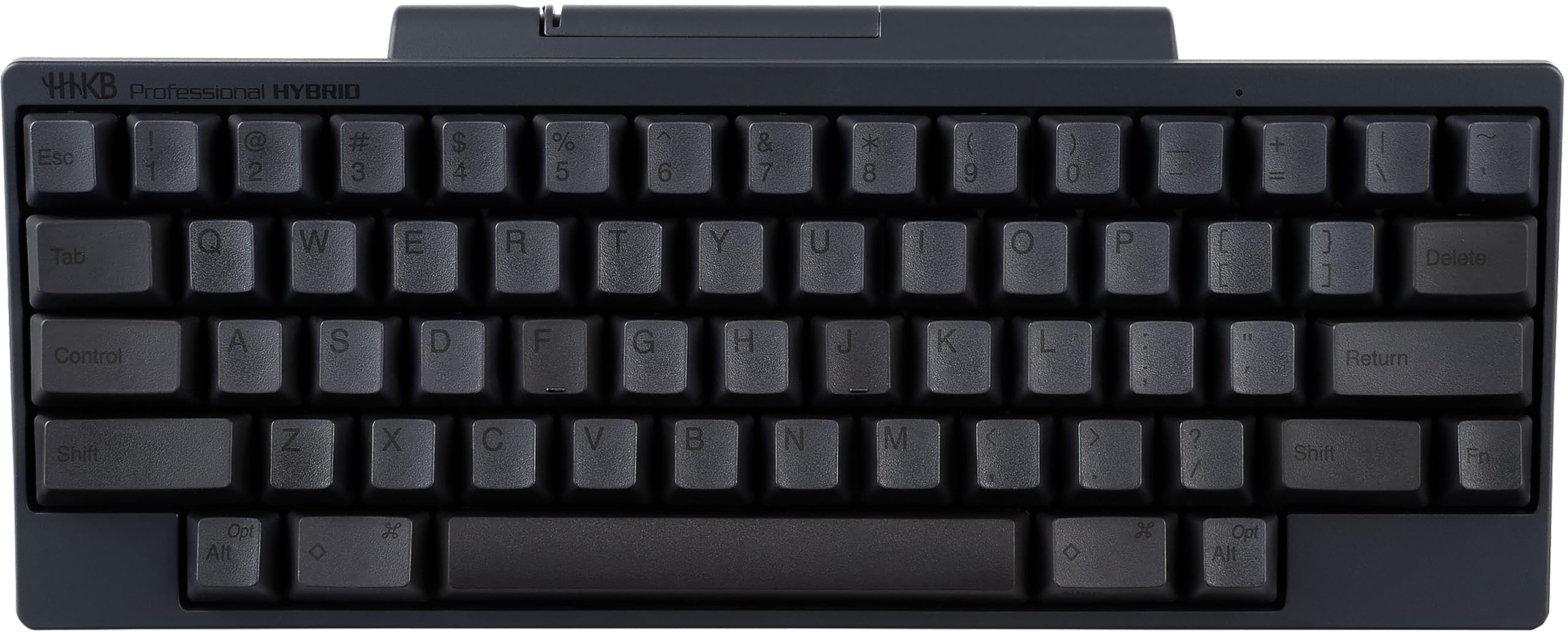
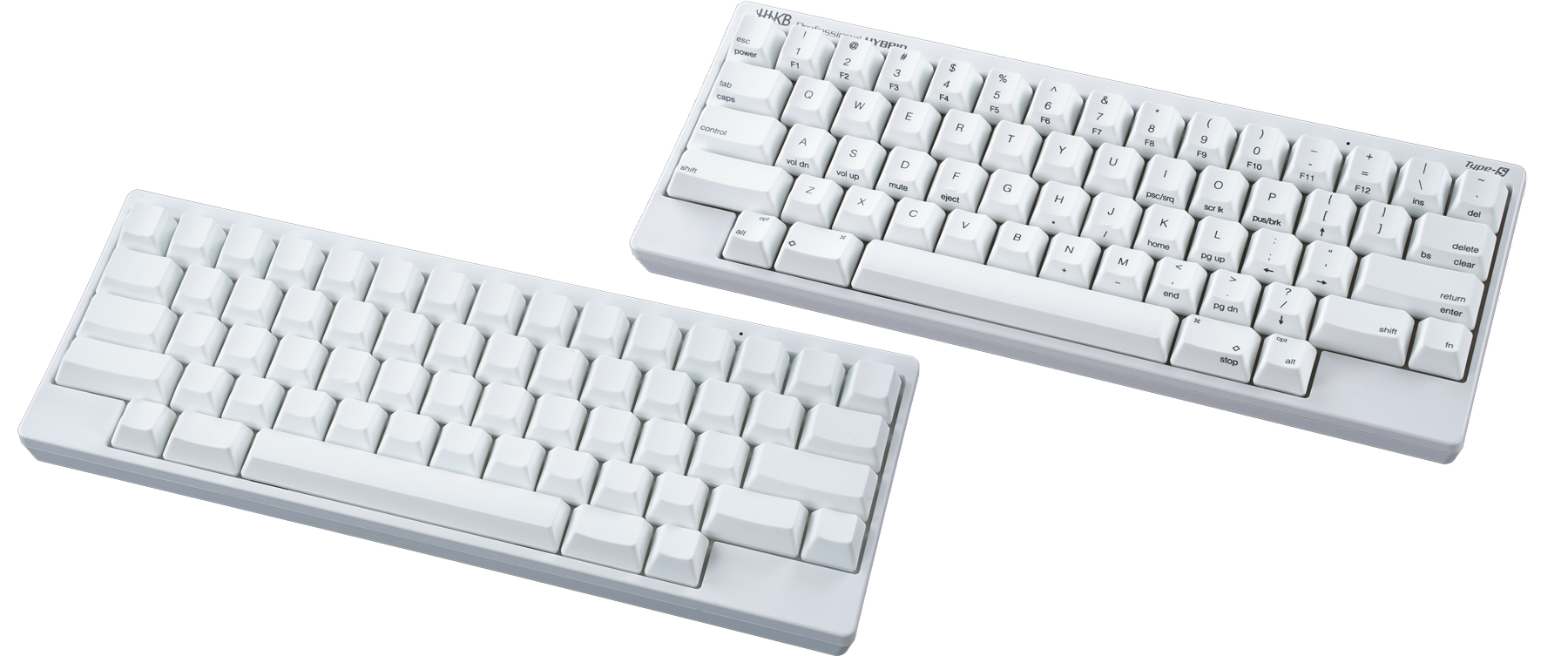
The Happy Hacking Keyboard Professional is defined by a set of specific terms that owners use to distinguish its many variants. The keyboard uses Topre electrostatic capacitive switches — not traditional mechanical switches — that combine a rubber dome, conical spring, and capacitive sensor for a uniquely smooth, tactile feel. The Type-S variant adds factory-installed silencing rings on the slider to dampen the upstroke clack, making it quieter without altering the key feel significantly. Key weight is measured in grams of actuation force; 45 g is the standard, while 55 g is common on some Realforce boards but rare on stock HHKBs. The layout comes in two flavors: ANSI (60 keys) and JIS (69 keys), the latter featuring a modified Japanese layout with a shorter spacebar and additional keys for kana input. The term "No-Stamp" (or "Blank" or "No Printed") refers to keycaps without any legends, sold as a factory option for a cleaner aesthetic. Owners also talk about the "stamped" (dye-sublimated printed) keysets, the DIP switches on the back for relocating modifier keys, and the subtle differences between models like the Hybrid (USB + Bluetooth) and Classic (wired-only). The HHKB's heritage draws directly from the Sun Type 3 layout — specifically the Ctrl key where Caps Lock normally sits — and the compact bottom row of the original Macintosh M0110.

 store.pfu-us.ricoh.comstore.pfu-us.ricoh.com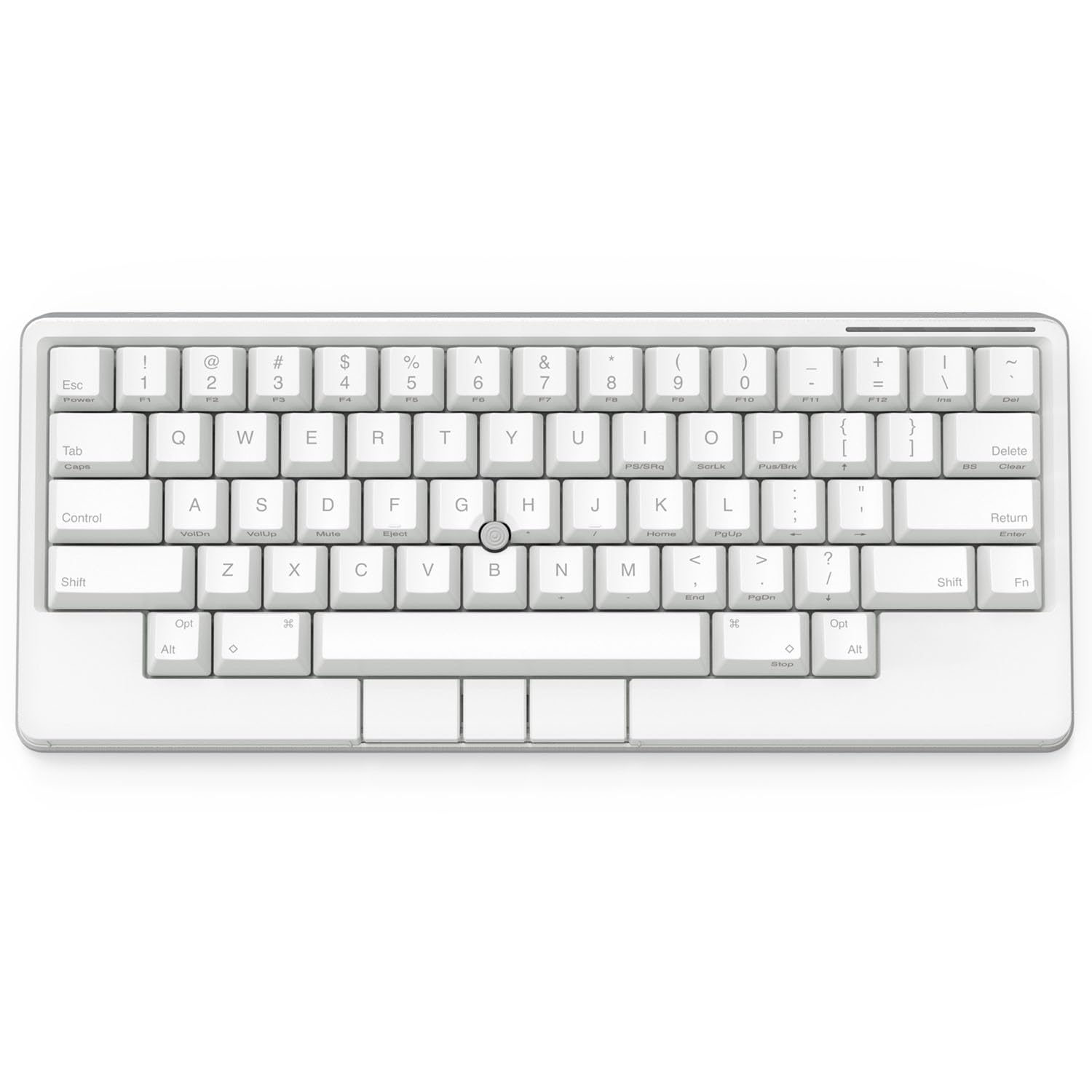
 hhkb.iohhkb.io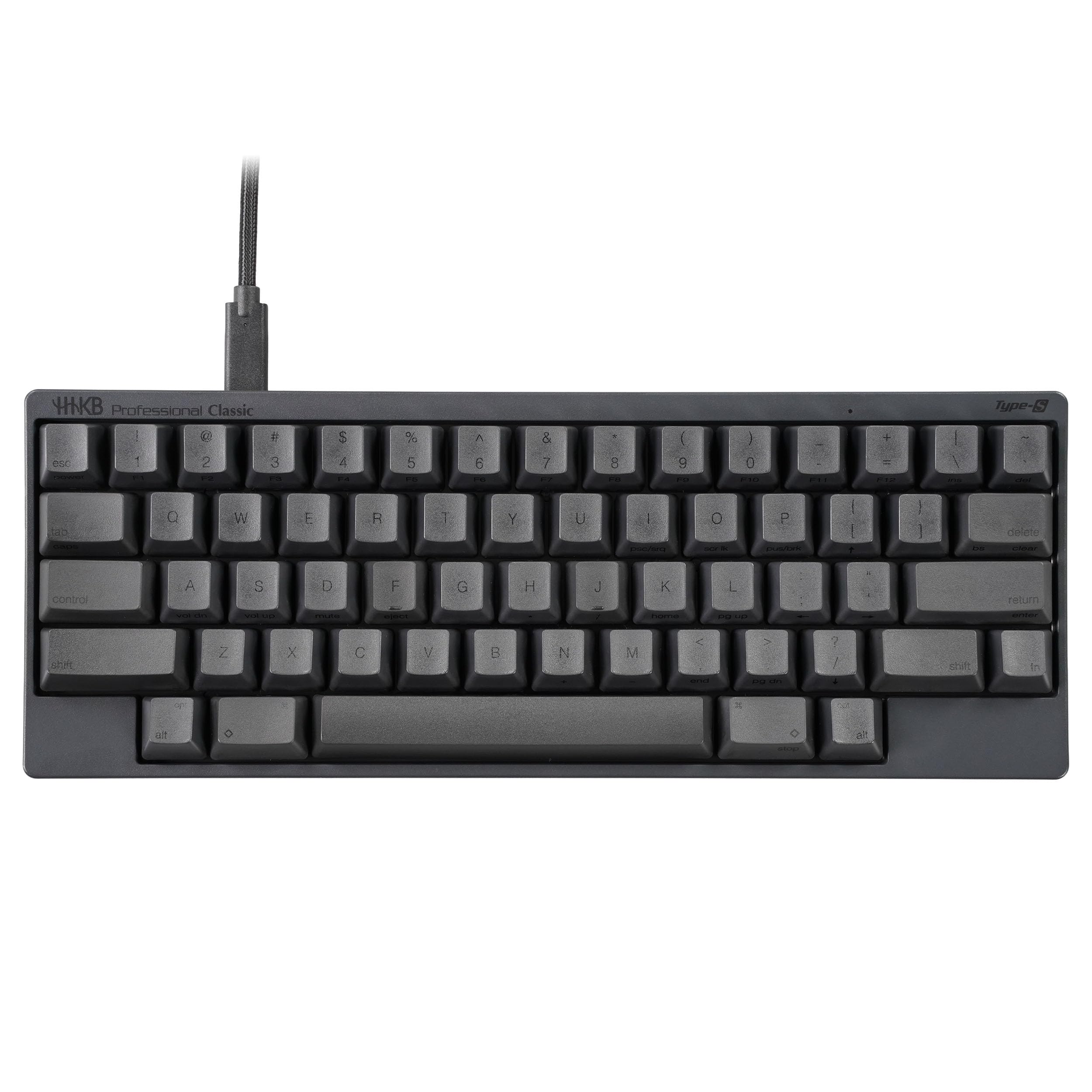
 hhkeyboard.comhhkeyboard.com
+Field notes
- —Topre switches are electrostatic capacitive, not mechanical: they use a rubber dome over a conical spring on a PCB, giving a smooth, tactile feel without metal contacts — a distinction from Cherry MX and other mechanical switches.
- —The "Type-S" designation means the keyboard has factory-installed silencing rings on the sliders, which dampen the return stroke noise; the sliders also have a slight depression to maintain the same key travel and dome contact point as standard models.
- —Standard key weight is 45 g for most HHKB Pro models; 55 g switches are found in some Realforce boards but are not a standard option on HHKBs — enthusiasts often swap in 55 g domes from other Topre keyboards.
- —"No-Stamp" (or blank) keycaps have no legends printed on them; these are a factory option (e.g., model PD-KB800WNS for Snow white blanks) and a popular choice among purists who prefer a minimalist look.
- —The HHKB layout is directly inspired by the Sun Type 3 keyboard: the Ctrl key sits where Caps Lock normally is, Esc replaces the backtick/tilde key, and Delete is where the backslash/pipe key usually lives — all to keep fingers on the home row.
- —HHKB Pro keycaps are made of PBT plastic (except the spacebar, which was ABS until the Hybrid series), making them resistant to shine and yellowing; dye-sublimation printing ensures the legends do not wear off over time.
Discover
Video Reviews That Obsess Over Feel, Sound, and Layout
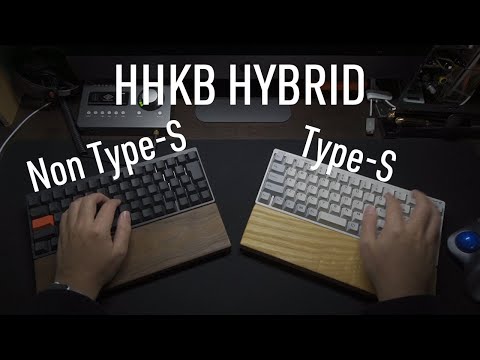

The HHKB Professional Type-S variant is the darling of video reviewers who obsess over the tactile and auditory character of Topre switches. Unlike the standard HHKB's crisp, louder bottom-out, the Type-S uses factory-installed silencing rings on each slider, which reviewers describe as turning the keypress into a softer, more muted "thock" — a term repeated across channels like BadSeed Tech and Chyrosran22, the latter demonstrating the difference with and without the silencing mat at specific timestamps. The sound comparison video by スーログ (Sūrogu) directly pits the Hybrid Type-S against the non-Type-S, revealing that while the Type-S reduces pitch and resonance, it also slightly dulls the tactile snap that Topre enthusiasts cherish. A 2023 short from CASE Shinjuku showcases the rare 30th-anniversary 30g version against the standard 45g, highlighting how weighting alters not just feel but the entire acoustic profile. These reviews treat the keyboard less as a tool and more as an instrument, with each clack and dampened thud analyzed like a note in a performance.
+Field notes
- —BadSeed Tech's 2020 review of the HHKB Professional Hybrid Type-S explicitly frames the board as a convergence of three desires: compact 60% layout, Bluetooth connectivity, and the silenced Type-S mechanism, calling it a long-awaited combination for Topre fans.
- —Chyrosran22's 2018 review of the HHKB Pro 2 Type-S includes a scientific A/B demonstration at 6:22 (without silencing mat) and 6:51 (with the mat), showing that even the factory silencing can be further dampened by an aftermarket mat, altering both sound and keyfeel.
- —The Japanese channel スーログ published a 2020 direct sound comparison between the Hybrid Type-S and non-Type-S, using identical recording conditions, and noted that the Type-S produces a lower-pitched, shorter-duration sound while the standard model has a brighter, more resonant clack.
- —CASE Shinjuku's short from 2023 compares the 30th-anniversary HHKB Professional HYBRID Type-S (30g actuation) against the regular 45g model, demonstrating that lighter weighting not only eases typing fatigue but also reduces the volume and tactile feedback of each keystroke.
- —Andi Palmer's 2020 review of the HHKB Professional 2 positions it as 'The Ultimate 60% Topre Keyboard,' emphasizing that its unique layout (with Control where Caps Lock usually sits) and Topre's capacitive rubber dome over a printed circuit board create a feel that Cherry MX users can't replicate.
Discover
Long-Form Writing on Why the Layout Converts People
Keep exploring
More of Happy Hacking Keyboard Professional

Branch out
Beyond Happy Hacking Keyboard Professional
More to explore
In the same world.
Mechanical Keyboards
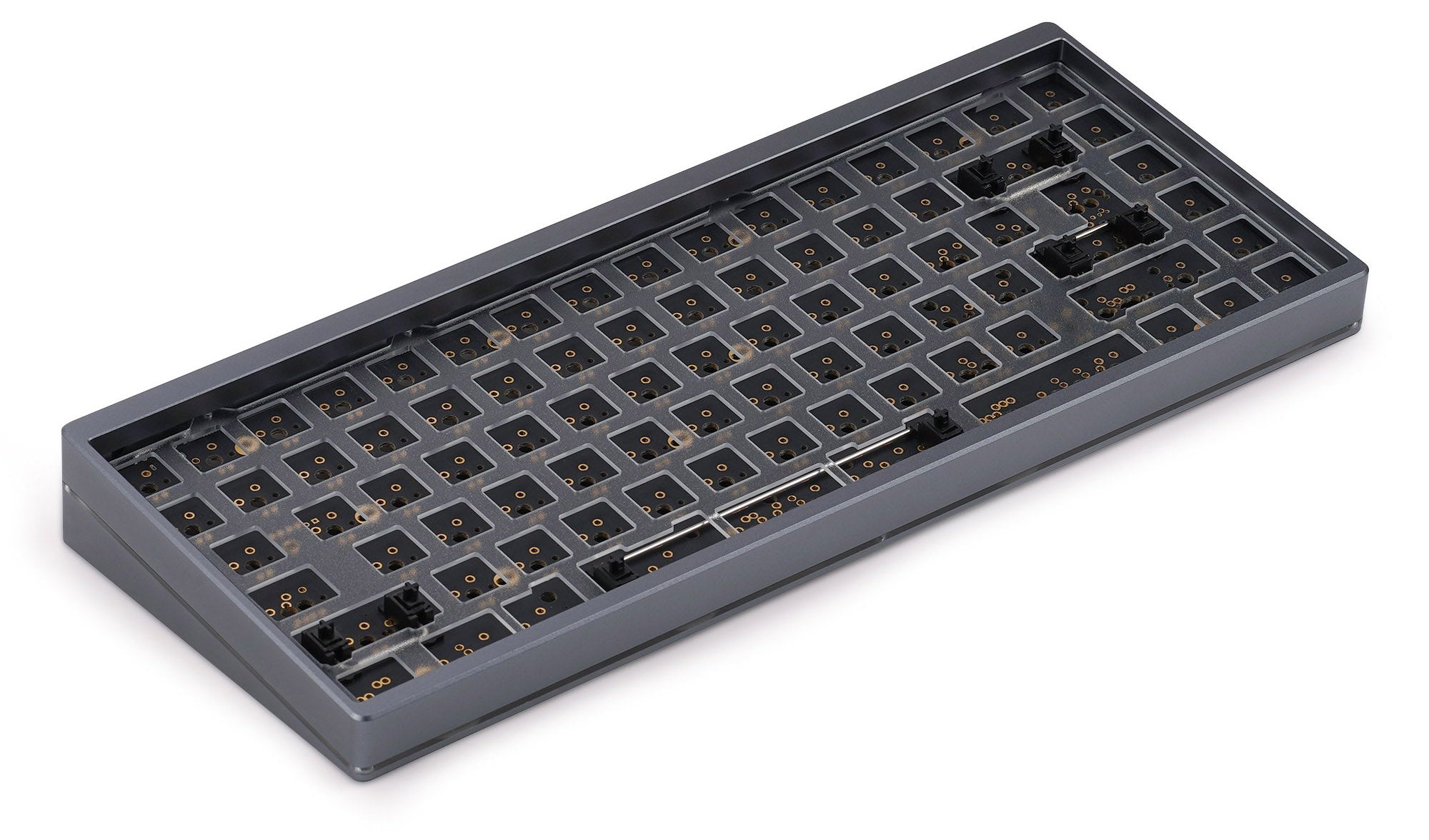
Mechanical keyboards sit at the overlap of typing tool, gaming hardware, and custom object: you can buy a polished board…
Platinum Modern Maki-e Fountain Pens
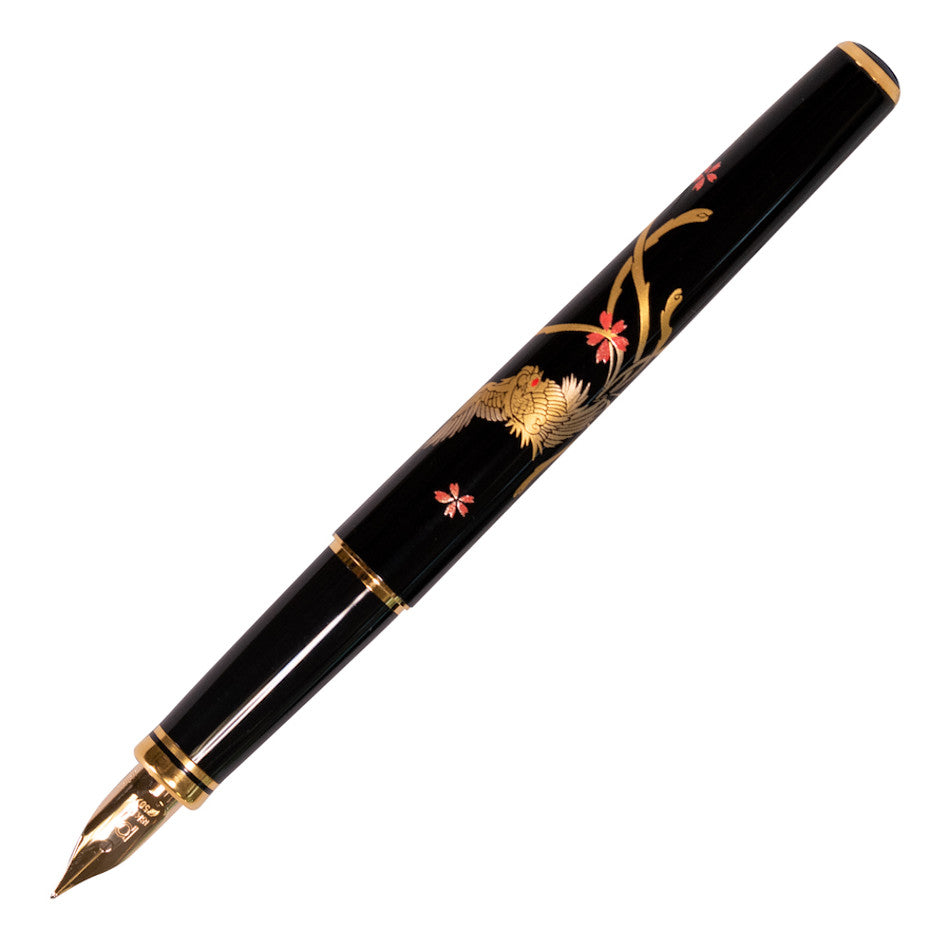
Platinum’s Modern Maki-e pens sit in a very specific corner of fountain-pen collecting: Japanese motif pens made with a…

OHTO Fountain Pens
OHTO’s fountain-pen line is a compact corner of Japanese pen culture built around metal-bodied, fine-nib everyday writer…

Technics SL-1200 M3D
The Technics SL-1200 M3D is a quartz direct-drive SL-1200 variant that kept the core performance of the earlier 1200 for…

Sailor Fountain Pens
Sailor’s fountain-pen world is built around a few core families that collectors quickly learn to recognize: the rounded…
Sailor King of Pens
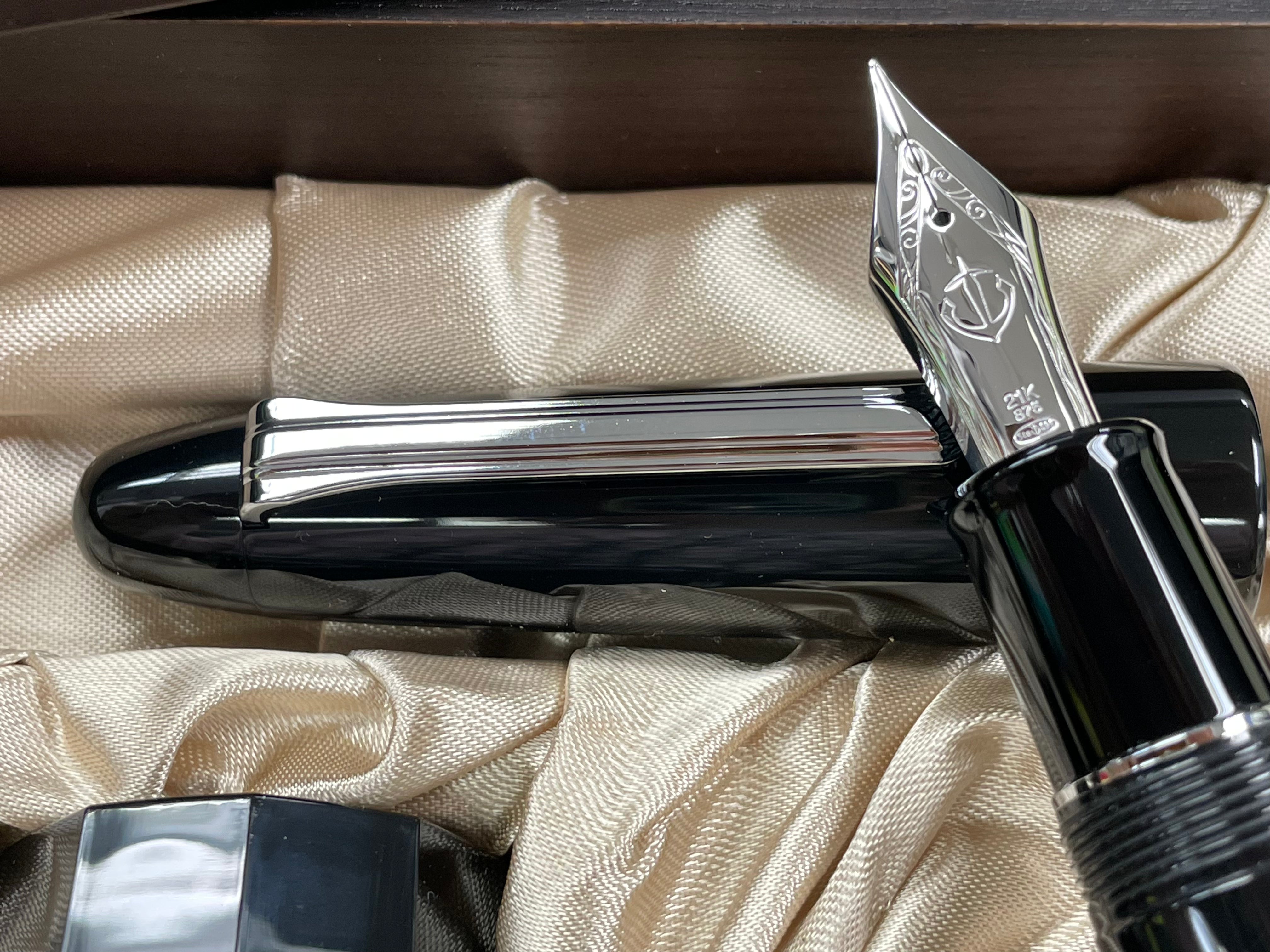
Sailor’s King of Pens is the company’s top-of-the-range fountain pen line, positioned by Sailor as a symbol of its techn…
Lelit Bianca V3 Review
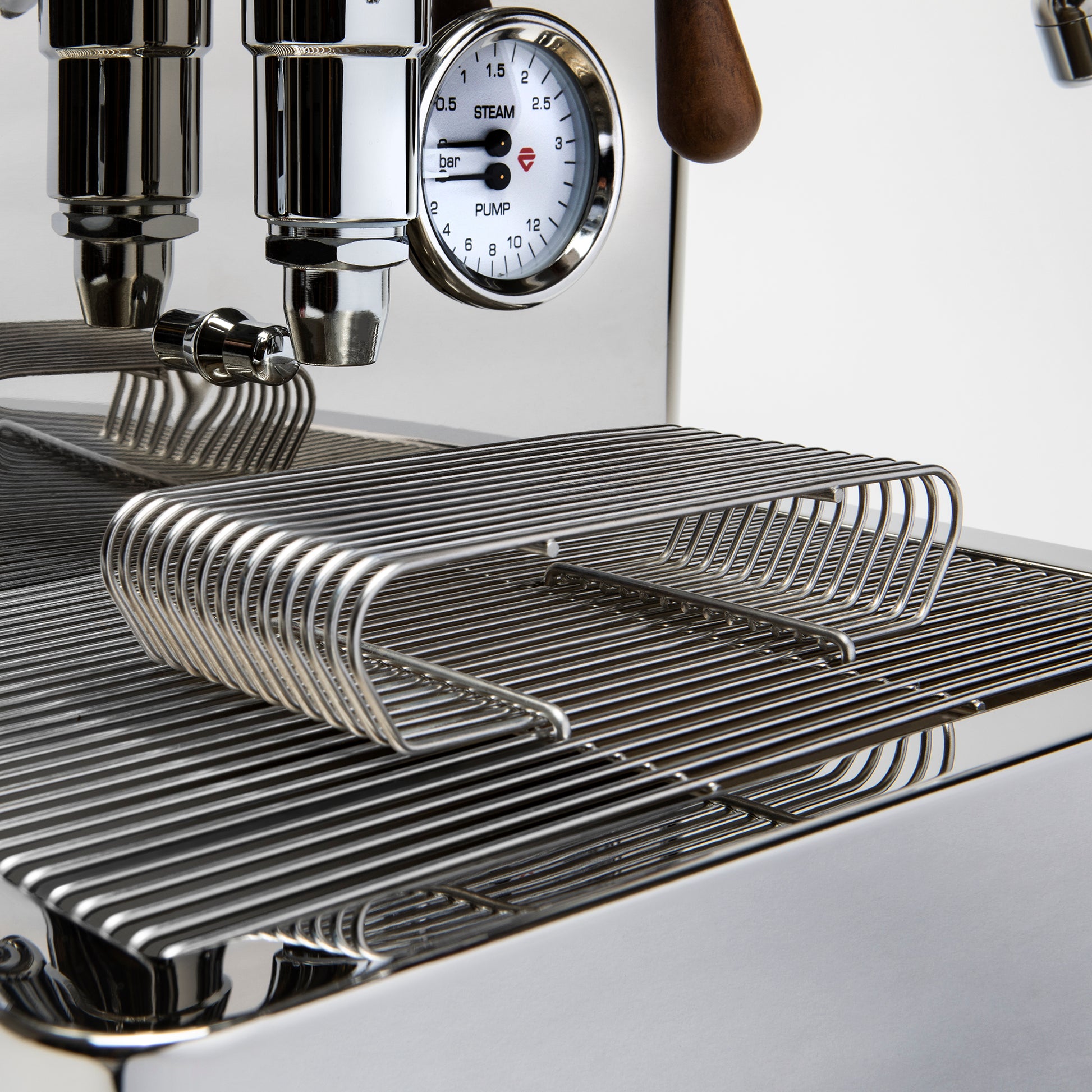
The Lelit Bianca V3 is a prosumer dual-boiler espresso machine that keeps showing up in serious home-barista conversatio…

Technics SL-1200M3D Pitch Reset Button
On the SL-1200M3D, the pitch reset button is the small change that made this version instantly recognizable to DJs: pres…
Imagery
Know someone who’d love this?
Discovered by ArcurianAuto-generated from public sources and AI synthesis — it may be incomplete or inaccurate. Treat it as a starting point for your own exploration, not professional (medical, legal, financial, or safety) advice. Verify anything you act on. Report this page.