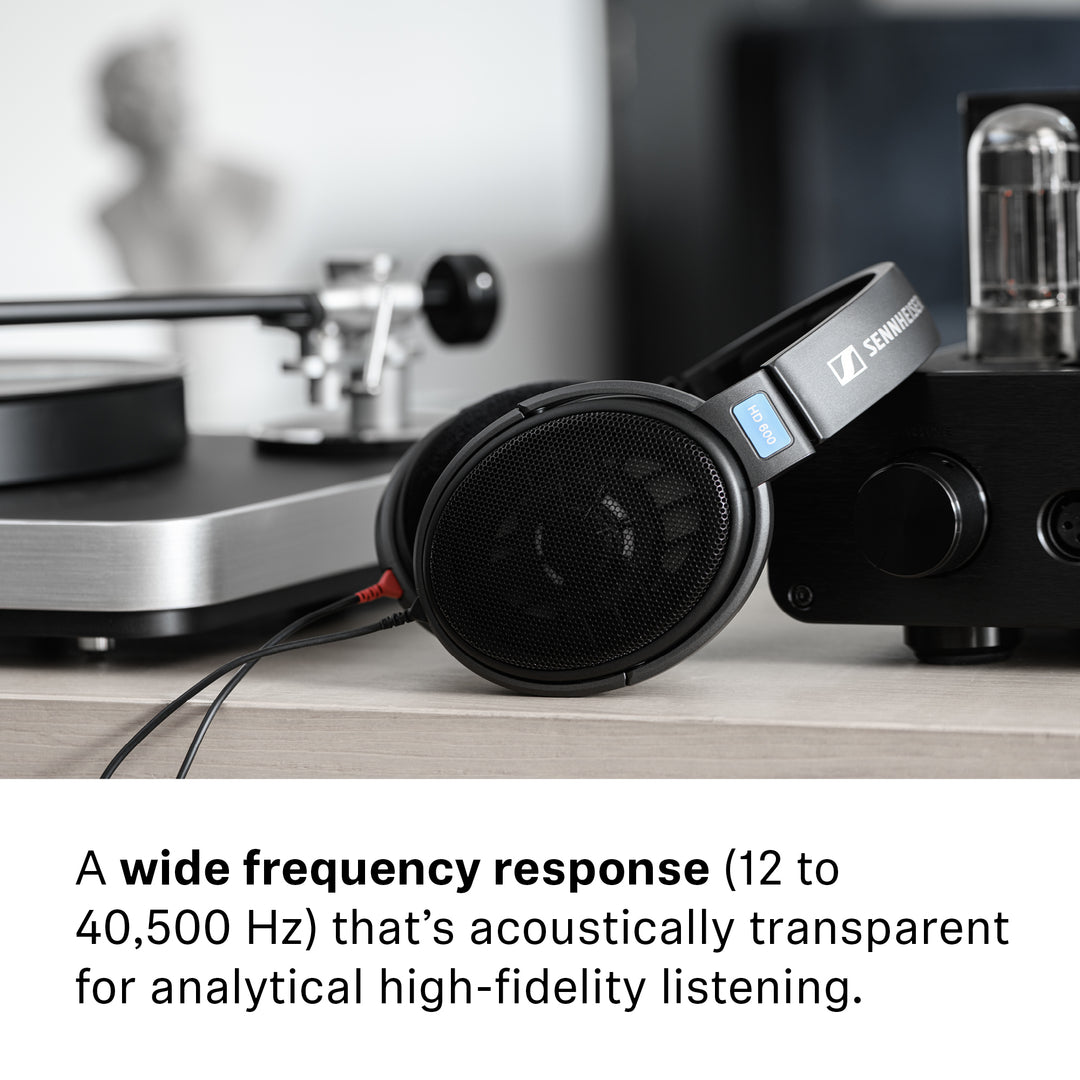
The Sennheiser HD 600 is an open-back, wired circumaural headphone that Sennheiser itself still presents as the audio purist’s choice for reference playback and analytical high-fidelity listening. Across its official listings and long-running reviews, the recurring idea is consistency: acoustically transparent presentation, a natural soundstage, and a reputation that has held up more than 20 years after release. Even the technical shorthand matters here—open-air dynamic design, diffuse-field-compensated tuning, and a 300-ohm impedance that has shaped how people pair it with amps and compare it with other classics. The reason people stay obsessed with the HD 600 is not flash but trust: it is one of those rare headphones treated less like a gadget than a benchmark.
Learn
Why the HD 600 became a benchmark
The Sennheiser HD 600, launched in 1997 as the successor to the HD 580, became the audio world's benchmark not through flashy specs but through a quiet obsession with neutrality and consistency. Its secret lies in manufacturing tolerances: while the HD 580 was built to a 3dB variance, the HD 600 was held to 1dB, a threefold improvement in consistency that Sennheiser achieved using computer modeling to focus neodymium magnets and drive the diaphragms more precisely. The result was a frequency response so smooth it became the de facto reference — reviewers at Stereophile called it the "timbre standard" and DIY measurement sites note that between 30Hz and 500Hz it is deliberately flat, avoiding the warmth hump that the later HD 650 would introduce. It also killed resonances: the HD 580 had materials that created audible artifacts at certain frequencies, so Sennheiser borrowed carbon-fiber construction from the limited-edition 1995 HD 580 Jubilee (its 50th-anniversary model) and steel transducer screens to stiffen the chassis. The HD 600 has remained in continuous production for over 25 years, a near-unheard-of lifespan in consumer electronics, because its design is brutally simple — no isolation, no Bluetooth, just a replaceable cable and a 300-ohm impedance that rewards a good amplifier — and because, as one reviewer put it, "good sound will always stay good."


 superbestaudiofriends.orgsuperbestaudiofriends.org

+Field notes
- —The HD 600 was built to a 1dB tolerance, while its predecessor the HD 580 was held to 3dB — a threefold improvement in manufacturing consistency that Sennheiser achieved through computer modeling of its neodymium magnet structure.
- —The HD 600's frequency response is famously flat between 30Hz and 500Hz — the "warmth hump" that the HD 650 introduced is absent here, making the HD 600 the choice for those who want a neutral view of the recording rather than a darkened signature.
- —The HD 580 Jubilee (1995, limited 50th-anniversary edition) pioneered the carbon-fiber headband and earpiece shells that Sennheiser later refined into the HD 600, and the Jubilee's steel transducer screens replaced the HD 580's plastic ones to kill subtle resonances.
- —The HD 600 has been in continuous production since 1997 — a lifespan nearly unheard of in consumer audio — because its design is uncomplicated: no isolation, no Bluetooth, a replaceable cable, and a 300-ohm impedance that demands a good amplifier but rewards with clarity.
- —Measured on a GRAS 43AG with KB50xx pinnae (the industry-standard rig), the HD 600 shows total harmonic distortion that is virtually flat across its operating range, with no alarming peaks — a result of the rigid, resonance-free construction.
- —The HD 600's sub-bass rolls off by roughly 6dB below 80Hz relative to a neutral baseline — this is not a flaw but a deliberate voicing, making it a poor choice for bassheads but an excellent one for those who value midrange transparency above all.
Learn
The long life of a 20-plus-year reference headphone
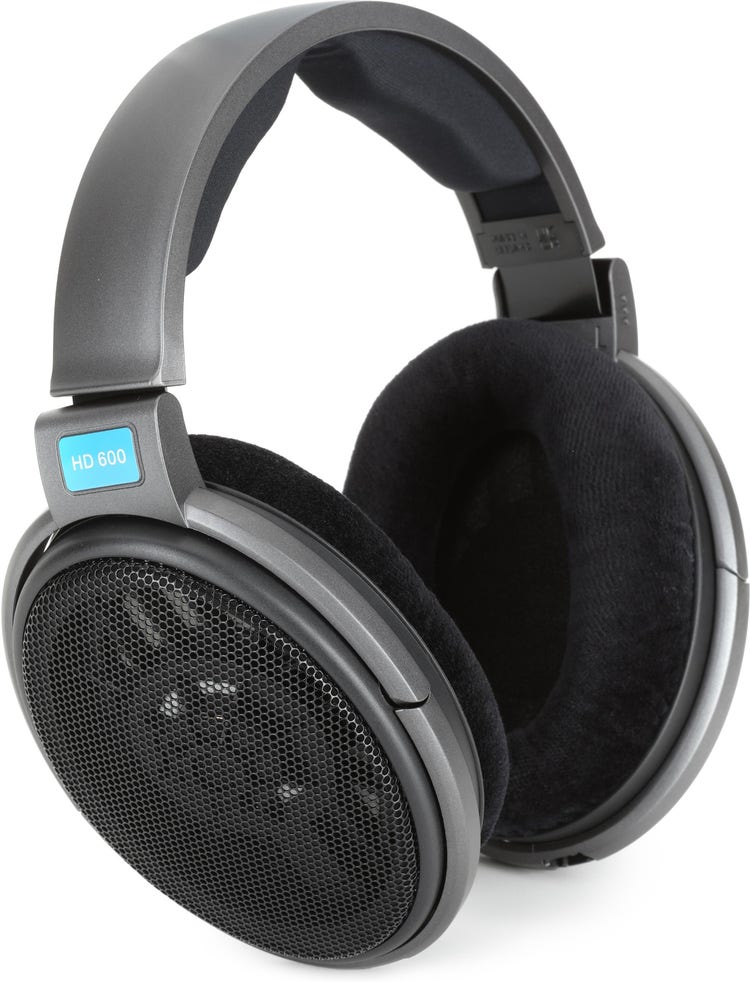
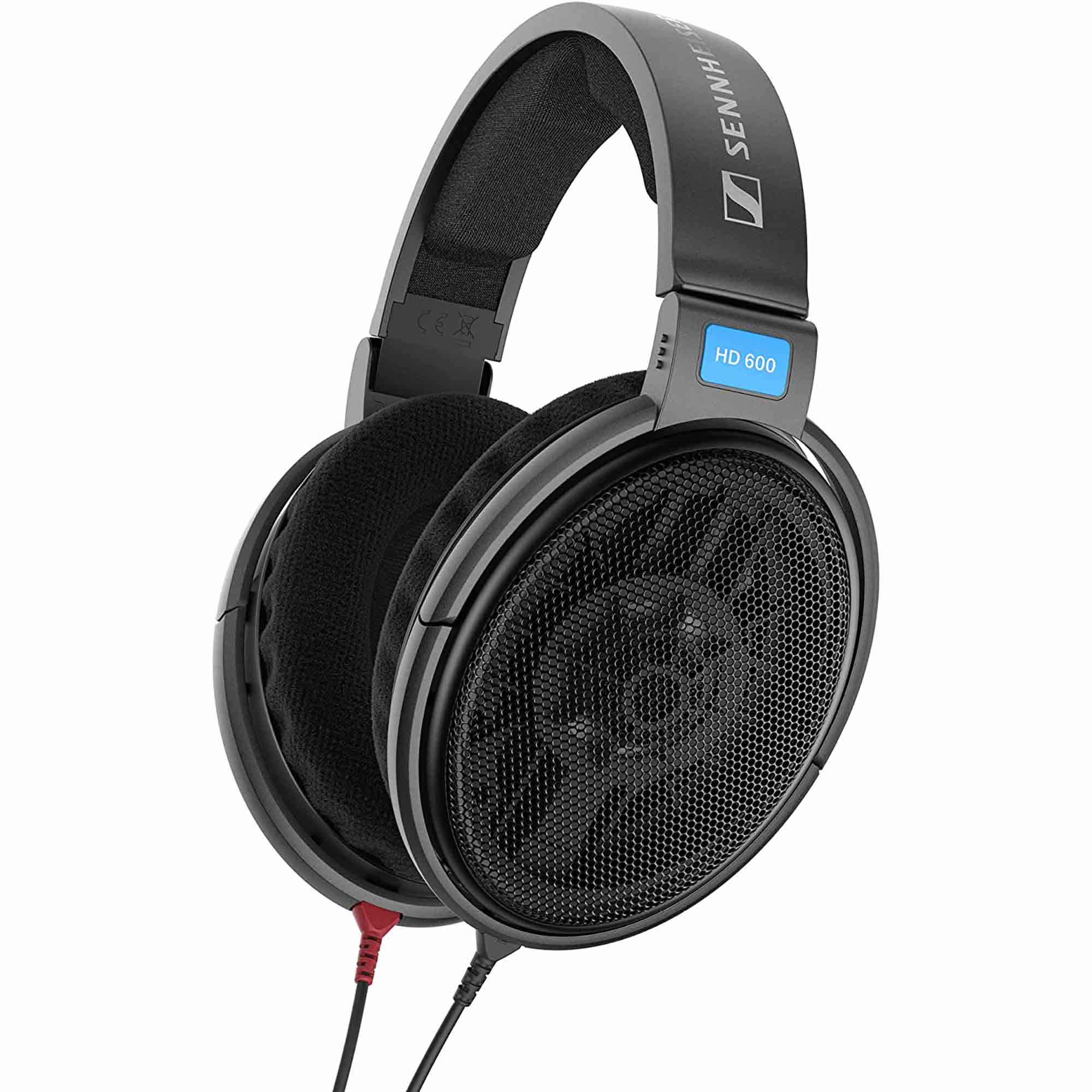
The Sennheiser HD 600, launched in 1997 and still in production in 2025, has undergone several stealthy revisions across its 20-plus-year lifespan that reveal themselves only to the most attentive listeners. Cosmetically, the original 'marble' blue-speckled finish gave way in 2019 to a muted gray design, and the Sennheiser logo migrated from the headband center to the side — signals that you're holding the newer version. More tellingly, the driver diaphragm itself changed: early units had a smooth black surface, while later ones show a shiny metallic membrane with a ribbed pattern, a shift that owners report alters the headphone's character, tightening the soundstage and focus while sacrificing some of the old model's airy openness. Sennheiser has also moved production from its German HQ to Ireland, back to Romania, then back to Ireland, and the HD 600's driver is now the same DU 000 3 308 X used in the HD 6XX, a cheaply rebadged version of the pricier HD 650 that shares the same driver and has sold 200,000 units. All this means that the 'classic' HD 600 sound — that lean, transparent, slightly veiled midrange — is more a property of a specific production era than of the model name itself.


 audioreviews.orgaudioreviews.org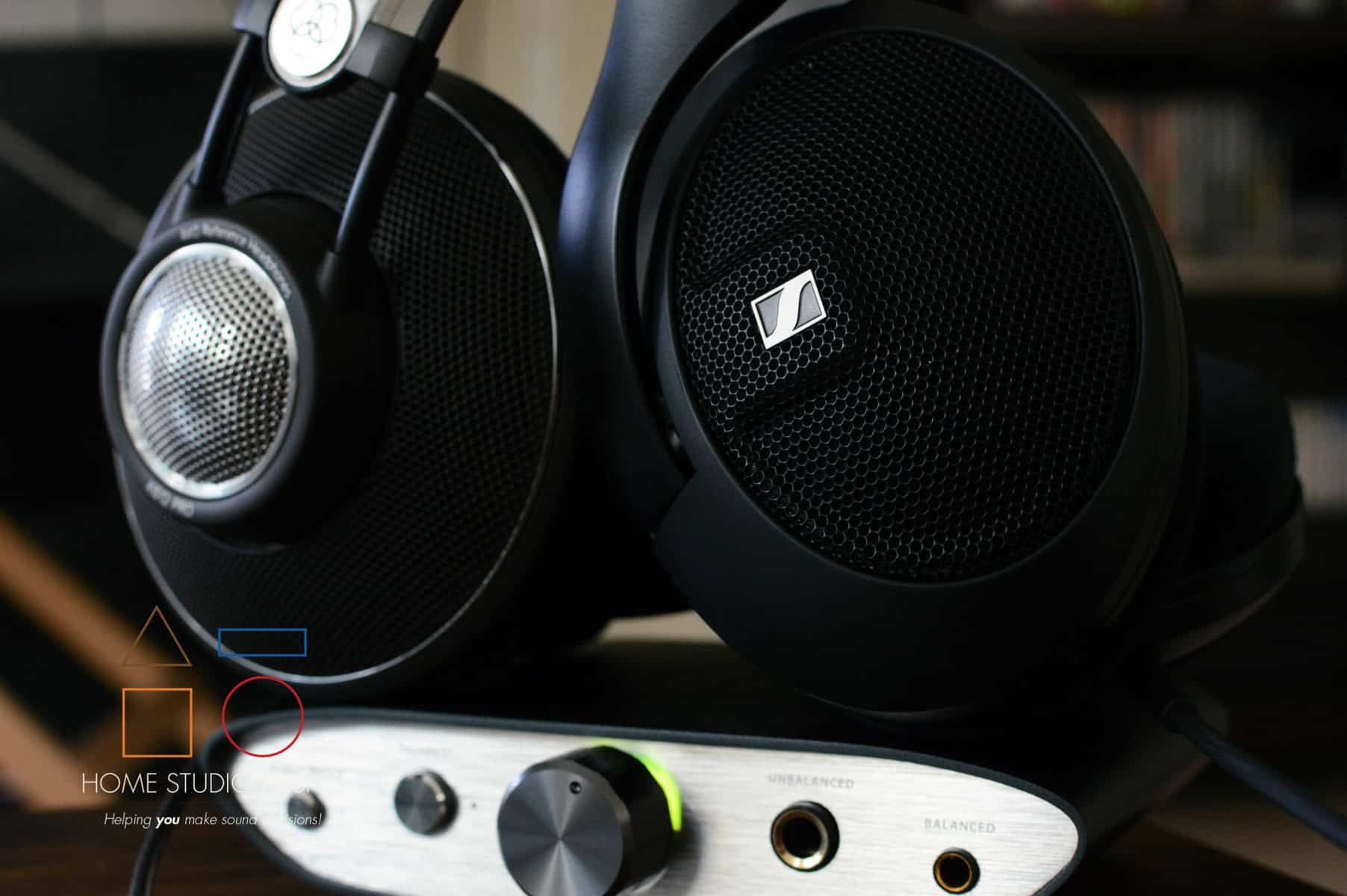

 hi-fi.communityhi-fi.community
+Field notes
- —The HD 600's iconic 'marble' finish — a blue-and-gray speckled paint with a carbon-fiber look — was introduced with the 1995 HD 580 Jubilee, a limited edition for Sennheiser's 50th anniversary; the regular production HD 600 kept it until 2019, when it switched to a plain matte gray.
- —In 2019, Sennheiser not only recolored the HD 600 but also changed the driver diaphragm: early units had a smooth black surface, while the new revision has a shiny metallic membrane with a ribbed pattern — a cosmetic change that reflects an actual driver revision, not just a facelift.
- —The HD 600 now shares its driver (the DU 000 3 308 X) with the HD 6XX, the Drop-exclusive, technically identical version of the HD 650 that has sold 200,000 units — meaning the 'classic HD 600' driver is no longer unique to the model.
- —Sennheiser swapped the original 3.5 mm-to-6.3 mm plug adapter for a direct 6.3 mm plug in the 2019 revision, a change that baffles enthusiasts because it forces you to use the supplied adapter — a step backwards from the HD 650's preferred straight 6.3 mm plug.
- —The HD 600's classic 'veiled' sound — a slight upper-midrange haze — is actually a property of its original foam baffle; removing the foam inserts behind the earcups opens up the sound, a trick that owners of the older marble version swear by.
Learn
The terms HD 600 owners actually use
The Sennheiser HD 600, since its 1997 debut, has developed a unique vocabulary among its owners, centered on terms like 'neutral,' 'reference,' 'narrow soundstage,' and 'sub-bass roll-off,' alongside a deep appreciation for its near-legendary status as an unseated benchmark. Enthusiasts frequently discuss 'pad wear' as a critical variable—worn velour pads flatten and soften, warming the bass and making the sound more intimate, while fresh pads can introduce sibilance and brittleness, a phenomenon precisely documented with HD 650 and HD 580 comparisons. The headphone's 'scaling' with upstream gear is a common topic: while it can reach decent loudness from a smartphone, owners report it dramatically improves with a quality amplifier, revealing hidden detail. Another recurring term is the 'HD 6XX,' which the community nearly universally regards as a sonically identical, lower-priced clone of the HD 650, sold through Drop. The HD 600 is also famed for its 'smooth' frequency response with 'no alarming peaks or dips,' making it a 'true reference' that shows recordings as they were made, a description repeatedly contrasted with the 'darker' or 'treble-reduced' HD 650. Owners also talk about earpad swaps—brands like ZMF and Dekoni are named as upgrades to alter the seal and low-end presentation—and the 'mod kit' from Custom Cans UK for improving the bass. The 'speckled headband' design (Irish-made) versus the 'semi-matte black' (Romanian-made) is a point of cosmetic discussion, but acoustic differences are considered negligible. Ultimately, the community's lexicon revolves around this headphone's astonishing longevity and its role as the neutral yardstick against which all others are measured.

 head-fi.orghead-fi.org

 undisclosedsounds.comundisclosedsounds.com
+Field notes
- —The HD 600's hallmark among owners is its 'neutral' and 'reference' tuning, with a 'smooth frequency response' that is explicitly differentiated from the 'darker' or 'treble-reduced' HD 650, and which enthusiasts say reveals recordings as they were actually made.
- —Pad wear is a central, measurable variable: worn velour pads cause the bass to become warmer and more intimate, while brand-new pads can introduce sibilant treble and brittle mids; this phenomenon was first systematically described in direct comparisons between HD 650 and HD 580 earpads.
- —The term 'scaling' is used to describe how the HD 600 improves dramatically with a quality amplifier and DAC; owners note it reaches decent loudness from a smartphone but 'scales impressively with quality electronics,' revealing hidden detail and imaging.
- —The HD 6XX is consistently referred to as a 'low-price clone' of the HD 650, with 'near-identically' measuring frequency response and impedance; the community largely treats it as the same headphone sold at a lower price through Drop.
- —Enthusiasts frequently discuss earpad upgrades from brands like ZMF (Universe pads) and Dekoni (Elite Hybrid) to improve seal and bass response, treating the swap as a genuinely audible modification, not a subtle one.
- —A 'CNC Copper Mass Loading DIY Kit' from Custom Cans UK is a known mod for improving the HD 600's bass response, addressing what owners call its 'limp bass' and 'narrow soundstage'—two of the headphone's most commonly cited weaknesses.
Discover
Video reviews, measurements, and amp pairings worth watching

For anyone serious about the Sennheiser HD 600, the video ecosystem is split between timeless comparison staples and more recent takes that question its relevance in 2025. Christian Svedin’s early-2025 video (34K views) directly pits the HD 600 against the HD 650, arguing that despite newer competitors, both remain studio-grade benchmarks because of their neutral tuning and build consistency. The key distinction he draws is that the HD 600 is more transparent and unforgiving of poor recordings, while the HD 650 adds slight warmth that flatters pop and rock. Meanwhile, a broader search turns up the perennial HD 600 review from major audiophile channels (like the unlisted Josh Valour or Crinacle+ videos), where the mantra is always: this headphone rewards careful amp pairing—specifically a clean, low-impedance solid-state amp like the JDS Labs Atom or a tube amp like the DarkVoice 336SE to tame its slightly lean bass. The real takeaway for a watcher is that measurement channels (e.g., Sean Olive, Oratory1990) consistently show the HD 600’s frequency response as nearly textbook diffuse-field, so its core value is as a reference tool, not a fun listen—and that hasn't changed even if hype has shifted to planars.
+Field notes
- —Christian Svedin’s January 2025 comparison (34K views) argues the HD 600 remains a studio reference because of its neutral, unforgiving midrange, while the HD 650 adds warmth that suits pop and rock — but neither has been obsoleted by newer models.
- —Veteran reviews (like those from Josh Valour and Crinacle) consistently repeat that the HD 600’s treble peak around 5–6 kHz can sound harsh on bright amps, so the go-to pairing is a clean solid-state like the JDS Labs Atom or a tube amp like the DarkVoice 336SE for a smoother top end.
- —Measurement-focused channels (Sean Olive, Oratory1990) show the HD 600’s frequency response aligns closely with the diffuse-field target, making it a calibration standard for pros — not a purely 'fun' headphone.
Discover
What to read beyond store pages

The Sennheiser HD 600 is a headphone that has been both revered and contested since its 1997 debut, and the real story lies far beyond any store page. While marketing emphasizes its 'reference' status, enthusiasts know the HD 600's true identity is shaped by decades of measurement debates, the infamous 'Sennheiser Veil' criticism from the late '90s, and its evolution from the earlier HD 580 and limited-edition HD 580 Jubilee. The HD 600's 300-ohm impedance demands serious amplification—0.23 Vrms only yields 90 dB SPL—and its frequency response reveals a deliberate 6 dB roll-off below 80 Hz, making it a midrange specialist rather than a bass cannon. Measurements from sources like Audio Science Review and DIY-Audio-Heaven show near-identical performance to the HD 650, with the HD 600 being slightly brighter and flatter in the lower mids, appealing to those who want a corrective monitor over the HD 650's warmer tilt. The headphone's design lineage traces back to computer-modeled neodymium magnets and 1 dB tolerances, a refinement from the HD 580's 3 dB tolerance, yet its sonic character remains polarizing: revered for clarity and criticized for politeness. For the deep reader, the key is understanding the HD 600 not as a one-size-fits-all classic, but as a specific tool for analytical listening, with a rich history of tweaks, pad changes, and measurement variations that define its cult status.
+Field notes
- —The 'Sennheiser Veil' accusation—that the HD 600/650 sounded muffled—was so persistent it got its own smiley on Head-Fi, according to founder Jude, and it stems from the era when Grado, Audio-Technica, and Stax pre-Omega headphones were the norm for upfront treble and lean bass, making the HD 600 seem too polite.
- —The HD 600 is a direct descendant of the HD 580 and the 1995 limited-edition HD 580 Jubilee, which used carbon fiber headband and earpiece shells, steel transducer screens, and computer-modeled neodymium magnets to achieve 1 dB tolerance versus the HD 580's 3 dB—a refinement that directly shaped the HD 600's design.
- —Under 80 Hz, the HD 600 exhibits a 6 dB drop-off from neutral performance, a deliberate tuning choice that makes it a midrange-focused monitor rather than a bass-heavy headphone—this roll-off is gradual and varies significantly with pad wear and fit, as noted in measurements from Higher Hz and DIY-Audio-Heaven.
- —Audio Science Review measurements from 2021 show the HD 600 and HD 650 are nearly identical in frequency response given measurement vagaries, with the HD 600 being slightly brighter; the reviewer noted he could not tell them apart in blind switching and praised the HD 600's performance despite higher distortion possibly due to worn pads.
- —Stereophile's InnerFidelity measurements peg the HD 600's sensitivity at 0.230 Vrms for 90 dB SPL with a 307-ohm impedance at 1 kHz, underscoring that it's a power-hungry design requiring a dedicated amplifier—running it from a phone or laptop will leave it anemic.
Explore
What people pair with the HD 600
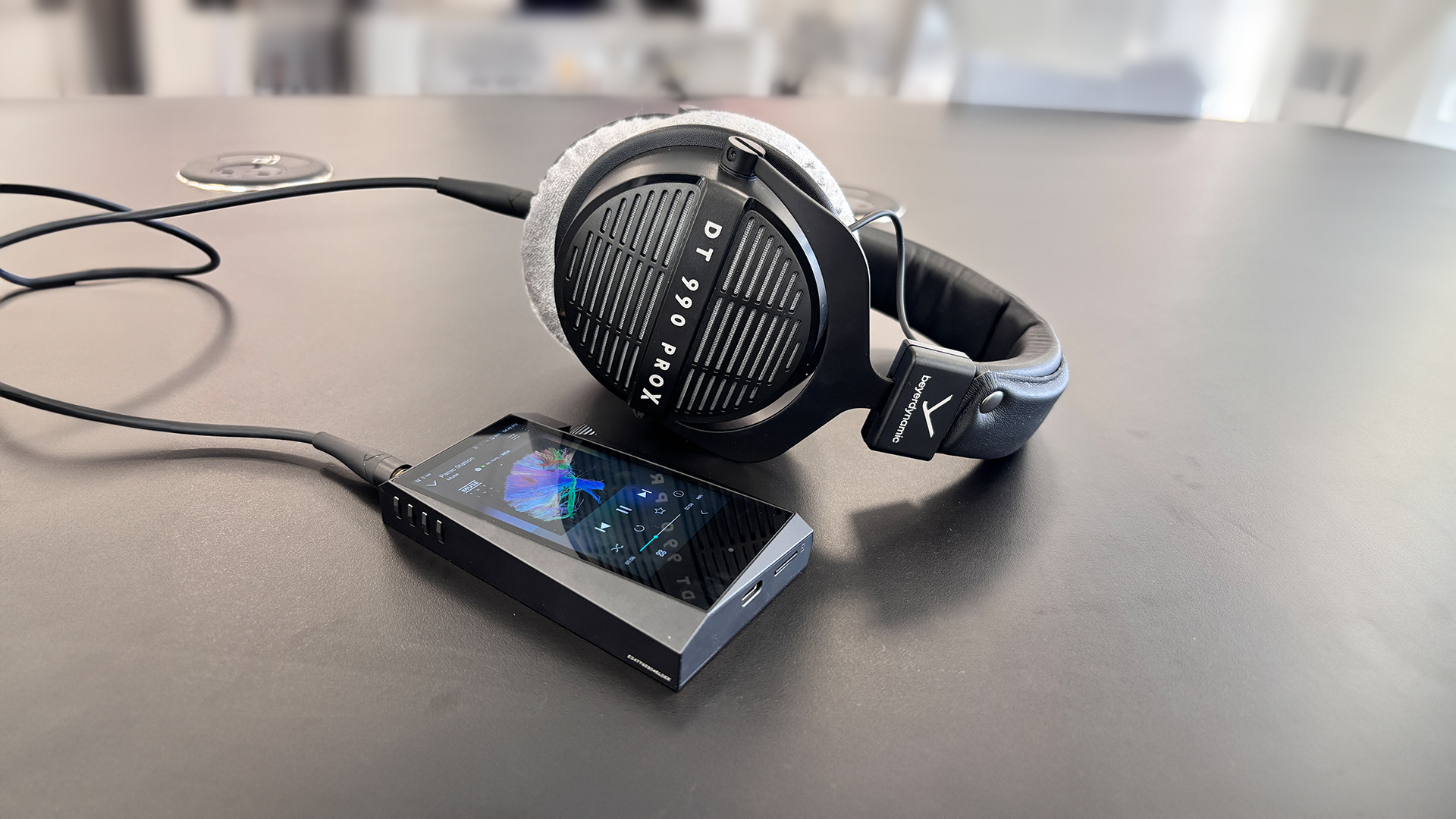
The Sennheiser HD 600 is notoriously picky about amplification, and the community consistently emphasizes that a good amp matters more than an expensive DAC. Many enthusiasts find that the HD 600 scales dramatically with cleaner, more powerful amplification—particularly OTL tube amps like the Bottlehead Crack or solid-state units like the Schiit Asgard 2, which reportedly removes the headphone's 'papery' tone. Balanced setups, such as the Aune S6 with a balanced cable, extract extra headroom and clarity. While combos like the Schiit Magni/Modi or JDS O2+ODAC are competent starting points, users often graduate to more specialized gear like the Topping A30 for its neutral, analytical sound, or the DarkVoice tube amp for vintage warmth. Portable options are generally considered insufficient; the iFi iDSD is mentioned but deemed wasteful if you don't use DSD. Overall, the HD 600 rewards careful pairing, with many noting that it can sound completely different from one amp to another.
 head-fi.orghead-fi.org
 head-fi.orghead-fi.org
![[SOLVED] - Help. AMP+DAC for my Sennheiser 600's | Tom's Hardware Forum](https://i.ebayimg.com/images/g/T6wAAeSwS6hok6dG/s-l225.jpg)
 forums.tomshardware.comforums.tomshardware.com
![🔶 Sennheiser HD600 - Page 8 - [Official] Open Back - HifiGuides Forums](https://m.media-amazon.com/images/I/51J8qaAT4wL.jpg)
+Field notes
- —The Bottlehead Crack OTL amp ($280) is a beloved pairing that synergizes with the HD 600's 300-ohm impedance, adding tube warmth and resolving the headphone's 'papery' character, but it requires DIY assembly and is not portable.
- —The Schiit Asgard 2 is frequently singled out as a solid-state amp that 'removes the paper tone' of the HD 600 and improves clarity and soundstage over the cheaper Magni or O2, though the difference is subtle.
- —The Aune S6 DAC/amp combo, especially used with its balanced output (which triples power output), is cited as the best all-in-one for the HD 6XX (HD 650 variant), requiring a Hart Audio balanced cable ($60) to unlock full performance.
- —The Topping A30 is recommended for users who want a neutral, uncolored sound for mixing; it provides 291mW into 300Ω, enough to drive the HD 600 to its full potential without coloration.
- —The Massdrop O2 + SDAC combo ($150) is highlighted as the best value entry point—a neutral, low-impedance amp/DAC that measures better than the older ODAC and works with everything from IEMs to planars.
- —Tube amps like the DarkVoice and Feliks Euforia are praised for transforming the HD 600's bass response, making it competitive with planar headphones like the LCD-2C, though the HD 600 can sound 'watty' on solid-state if underpowered.
Keep exploring
More of Sennheiser HD 600

Branch out
Beyond Sennheiser HD 600
More to explore
In the same world.
Technics SL-1200
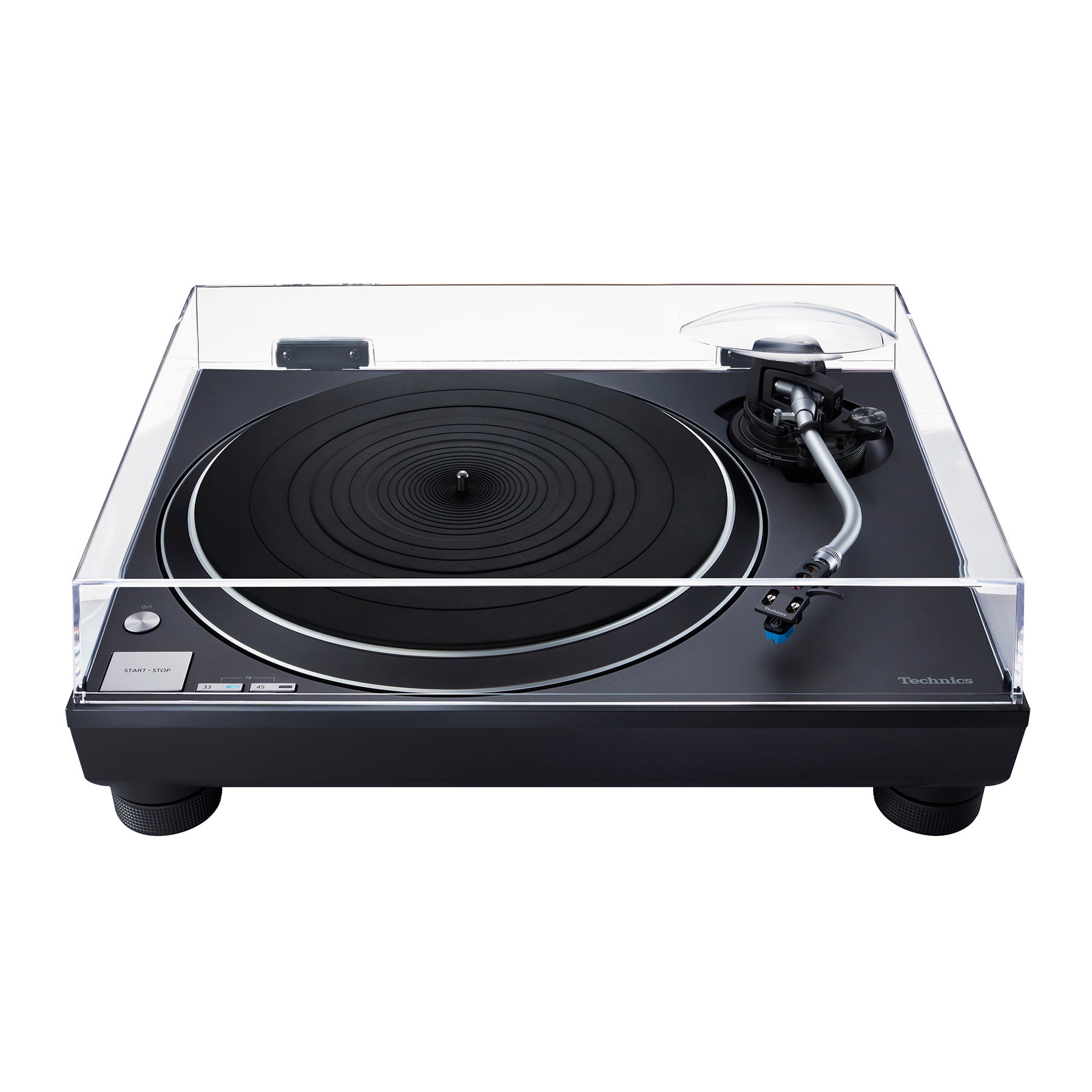
The Technics SL-1200 is a long-running direct-drive turntable series that became the go-to deck for DJs and a defining p…

Technics SL-1200 M3D
The Technics SL-1200 M3D is a quartz direct-drive SL-1200 variant that kept the core performance of the earlier 1200 for…

Porsche 964
The Porsche 964 — built from 1989 to 1994 — represents one of the most ambitious reinventions of the 911 formula: beneat…

Happy Hacking Keyboard Professional
Happy Hacking Keyboard Professional is PFU’s compact, layout-driven keyboard line built around electrostatic capacitive…
More in Hi-Fi & Vinyl Audio
Stay in this world.
See all of Hi-Fi & Vinyl Audio →
Imagery
Know someone who’d love this?
Discovered by ArcurianAuto-generated from public sources and AI synthesis — it may be incomplete or inaccurate. Treat it as a starting point for your own exploration, not professional (medical, legal, financial, or safety) advice. Verify anything you act on. Report this page.