Jungsik is the Seoul-and-New York fine-dining restaurant brand built around chef-proprietor Jung Sik Yim’s idea of “New Korean,” a contemporary approach to Korean cuisine that the New York restaurant describes as boldly flavored and whimsical. The New York location at 2 Harrison Street serves a signature tasting menu with dishes like yellowtail kimbap, mandoo, galbi, sea urchin bibimbap, and desserts such as dolhareubang, while the Seoul restaurant anchors the original identity of the brand. According to the Michelin Guide and published reporting, the New York restaurant earned three Michelin stars in 2024, and it has also been recognized on North America’s 50 Best Restaurants list. If you want to understand why Korean fine dining became a global conversation, Jungsik is one of the clearest places to start.
Learn
What Jungsik Actually Is: New Korean Fine Dining Across Seoul and New York
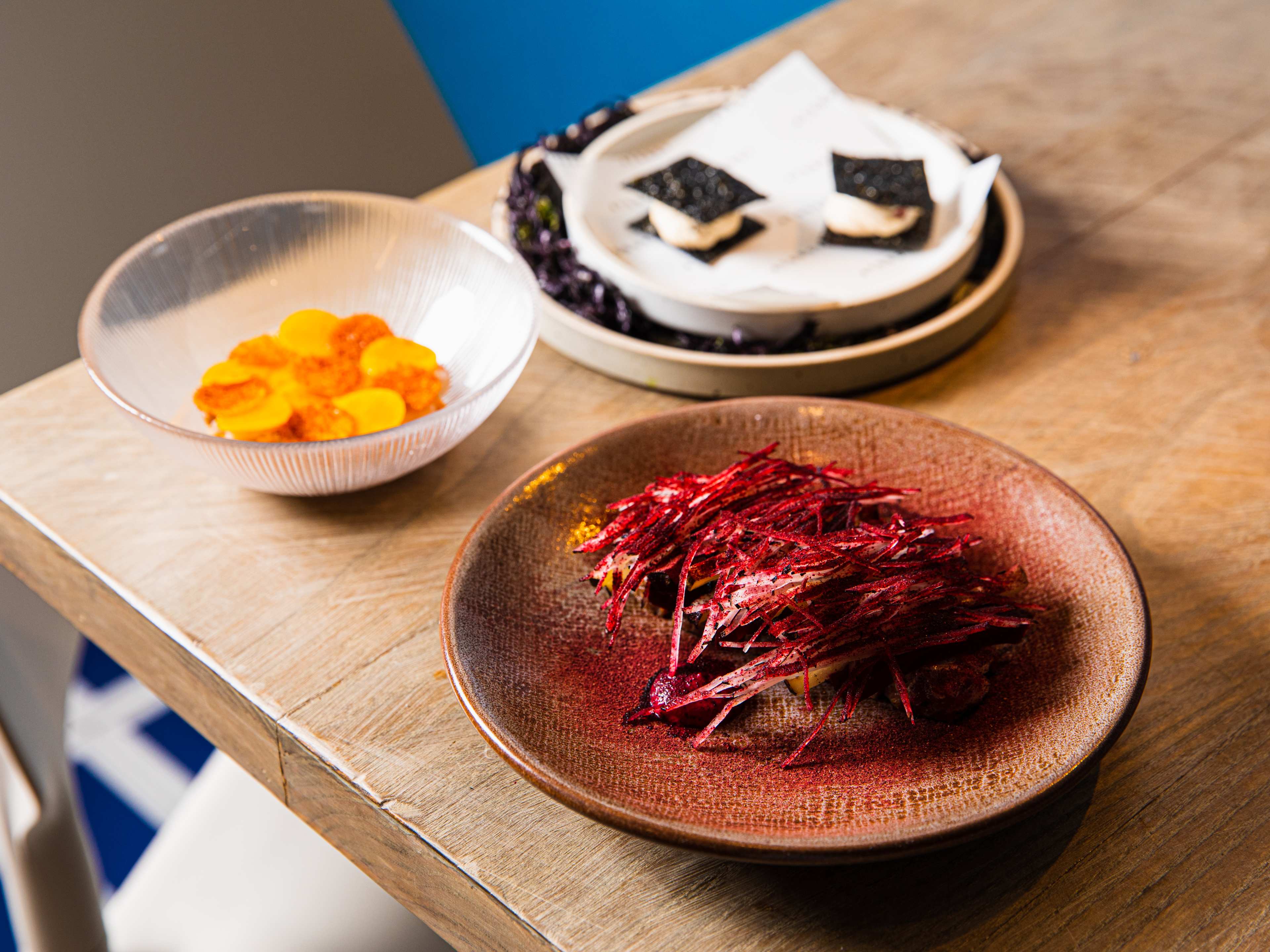
Jungsik is the restaurant that defined New Korean fine dining—first in Seoul, then in New York, where it opened in 2011 as the city's first Korean tasting-menu restaurant, long before the current wave of places like Atomix, Jua, and Meju. It earned its third Michelin star in December 2024, making it the first new 3-star restaurant in NYC since Eleven Madison Park in 2012, and the only Korean restaurant in the U.S. with that distinction. Chef-owner Yim Jung Sik—who won the James Beard Outstanding Chef award in 2025—built a style that starts with banchan but reimagines those side dishes as luxury amuse-bouches: wagyu tartare on truffle brioche, foie gras baesook with Asian pear, and a jet-black squid joomeokbap fritter. The 10-course $295 signature menu then moves through dishes like striped jack with white kimchi and chilled fish bone broth, dry-aged arctic char in a kimchi-red curry pool, and the truffle rice yellowtail kimbap that multiple critics call one of the best single bites in New York. The dining room is deliberately low-key—beige and dark, with color-coded blazers on staff—and the pacing is more "gentle sailing" than roller coaster; the menu changes rarely, which is both a strength (flawless execution) and a reason regulars hesitate to return.


 staging.theinfatuation.comstaging.theinfatuation.com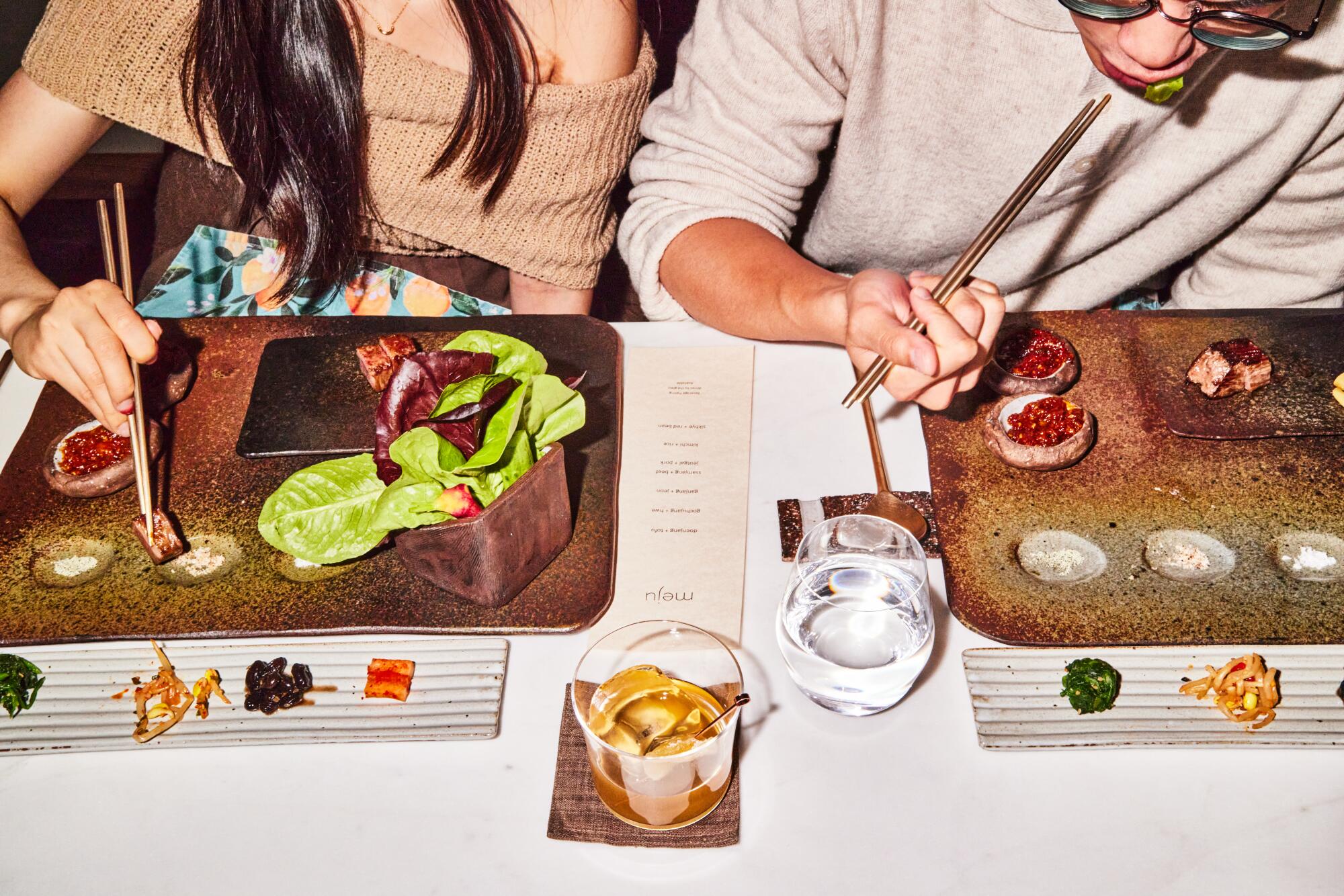
 midlionnaire.commidlionnaire.com
+Field notes
- —Jungsik opened in New York in 2011 as the city's first Korean tasting-menu restaurant, predating the current wave of Korean fine-dining places like Atomix, Jua, and Meju by several years.
- —The restaurant earned its third Michelin star in December 2024, becoming the first new 3-star restaurant in New York City since Eleven Madison Park got its third star in 2012; only four other NYC restaurants hold three stars: Per Se, Le Bernardin, Masa, and Eleven Madison Park.
- —Chef-owner Yim Jung Sik won the James Beard Award for Outstanding Chef in 2025, and many of New York's top Korean chefs, including Atomix's Junghyun Park, trained under him before opening their own restaurants.
- —The opening banchan course is not traditional side dishes but a series of luxury amuse-bouches: the lineup includes wagyu beef tartare on truffle brioche, foie gras baesook with Asian pear and pine nut, and a jet-black squid stir-fry compressed into a golf-ball-sized fritter called joomeokbap.
- —The signature yellowtail kimbap—often cited as the best single bite of the meal—uses truffle rice stuffed into a perfectly crunchy gim (seaweed) wrapper, with yellowtail and a "modeum kimbap" upgrade ($80) available; multiple critics call it one of their favorite dishes of all time.
- —The $295 signature menu rarely changes, which critics note as both a strength (flawless, predictable execution) and a weakness (the menu loses some steam after the octopus and arctic char courses, moving into "formulaic" territory compared to the chef's more casual Tribeca spot, SEA).
Learn
From Seoul to Tribeca: How Jungsik Became a Reference Point
Chef Jungsik Yim's journey from a remote South Korean island to the helm of two Michelin-starred restaurants in Seoul and New York is a story of serendipity, audacity, and precision. His first taste of cooking came during mandatory military service on Maldo, an island with no electricity and only ten residents, where the food budget was eight times the norm, giving him carte blanche to experiment with basic Korean pantry staples like soybean paste and kimchi. After training at the Culinary Institute of America and stages at New York's Aquavit and Bouley, as well as Spain's Akelarre, he returned to Seoul to open Jungsik in 2009, coining the phrase "New Korean" (New Hansik) to describe his reinterpretation of traditional dishes. Two years later, he became the first Korean-born-and-raised chef to open a fine-dining Korean restaurant in Manhattan, landing in Tribeca. The New York outpost earned its first Michelin star in 2012 and a second in 2013, while the Seoul location, initially overlooked by the guide, later received one star when Michelin arrived in Korea. Yim insists he barely adapted his menu for New York palates; the same dishes that work in Gangnam work on Harrison Street, proving his vision of Korean cuisine was globally legible from the start.
 guide.michelin.comguide.michelin.com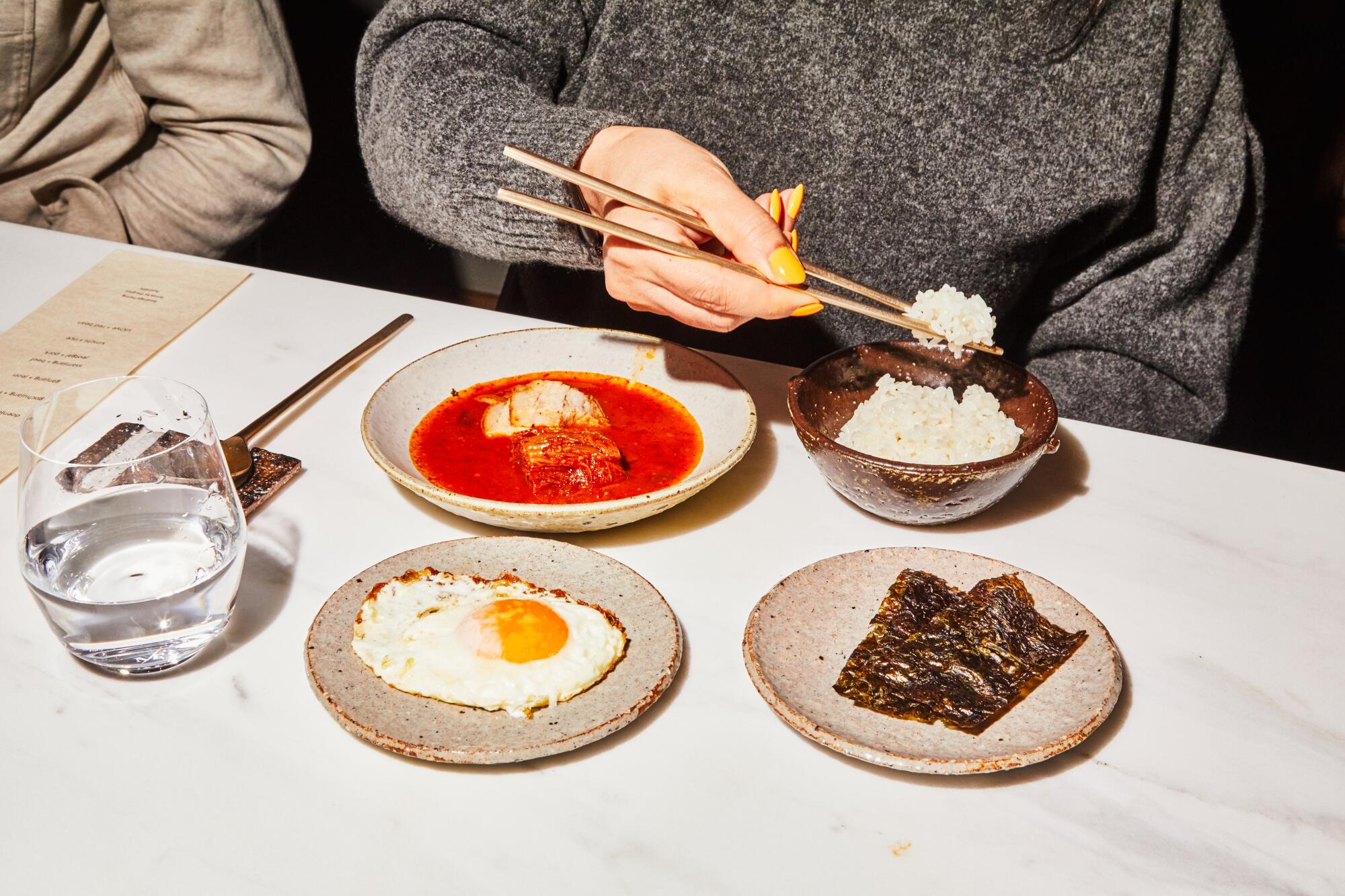

 theworlds50best.comtheworlds50best.com
+Field notes
- —Yim's culinary epiphany happened on the tiny, electricity-free island of Maldo during his marine service, where a superior's absence put him in the kitchen with eight times the normal food budget, letting him experiment freely with ingredients like gochujang and kimchi.
- —The name and concept for Jungsik — Korea's first "New Korean" fine-dining restaurant — were conceived in a ten-minute conversation over lunch, not after months of deliberation.
- —Jungsik's New York branch opened in the space formerly occupied by the legendary restaurant Chanterelle, a symbolic passing of the torch from classic French-American to avant-garde Korean fine dining in Tribeca.
- —When Yim opened in New York in 2011, the restaurant was initially quiet; it only built a steady following after earning its first Michelin star in 2012, proving that external validation can shift diner perception overnight.
- —Yim deliberately did not adapt his menu for New York audiences — his dishes are essentially the same in Gangnam and Tribeca, a rare conviction that Korean fine dining, unwatered down, could compete globally.
- —Getting the second Michelin star in New York felt more significant than the first; Yim recalls thinking, "Lots of restaurants have one star, but getting two stars felt really quite special," and he celebrated with staff in Seoul by opening bottles of good champagne.
Learn
Know the People: Jung Sik Yim, Daeik Kim, and Seula Lee
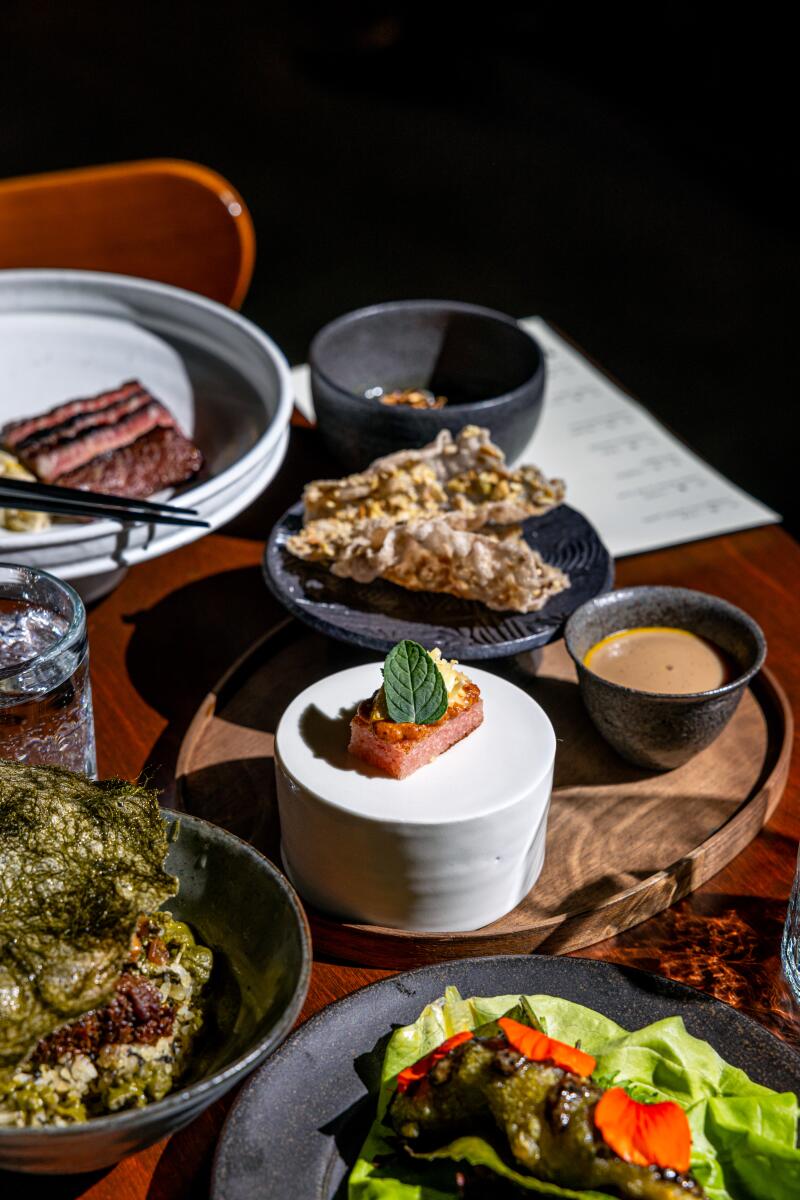
Jungsik’s rise to three Michelin stars in New York is the story of three people with distinct roles: Jungsik Yim, the visionary founder who pioneered 'New Korean' cuisine after a serendipitous start cooking on a remote island during his military service; Daeik Kim, the executive chef who came up through the ranks, blending French, Italian, Japanese, and Chinese training with Korean roots; and Seula Lee, the pastry chef who creates the restaurant’s whimsical finales, like the Dolhareubang dessert modeled after Jeju Island statues. Yim coined the term 'New Korean' over a lunch break, and his philosophy—'Make it delicious'—remains the guiding principle as the team continues to reinterpret classic flavors like gochujang and kimchi with Michelin-level precision.

 jungsik.comjungsik.com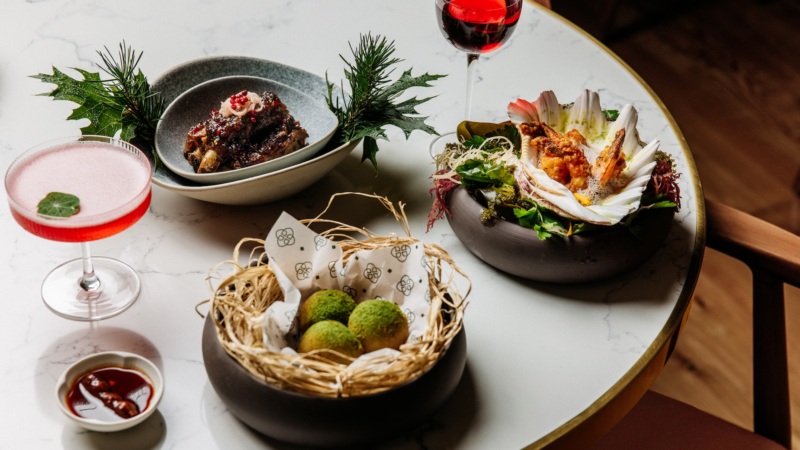
 chefspencil.comchefspencil.com
 broadwayworld.combroadwayworld.com
+Field notes
- —Jungsik Yim discovered his passion for cooking by accident during mandatory Korean military service on Maldo, a remote island with only 10 residents and no electricity, where he was given eight times the normal food budget and had to improvise with basic ingredients like rice, soybean paste, and kimchi.
- —Yim coined the term 'New Korean' over lunch in just ten minutes, drawing inspiration from the 'New Spanish' molecular gastronomy movement he encountered while training at Akelarre and Zuberoa in Spain.
- —Executive Chef Daeik Kim joined Jungsik right out of the Culinary Institute of America in 2018 and rose from sous chef to the top role; he focuses on fundamentals like knife skills and stocks rather than chasing novelty, and sees cuisine as 'a universal language that conveys emotion.'
- —Kim’s pre-Jungsik training spanned Korean, Italian, French, Japanese, and Chinese kitchens in Korea, plus a stint in Australia, giving him a multi-cuisine foundation he uses to reinterpret Korean dishes for a global audience.
- —Jungsik’s signature Dolhareubang dessert is a miniature version of the volcanic stone statues from Jeju Island, made with toasted rice ice cream, black bean mousse, and sesame, served in an edible 'traditional garden'—a touch that reflects the team’s playful yet culturally grounded approach.
- —Yim now describes his role as a 'creative director' and emphasizes that Jungsik’s three-Michelin-star success (the first new three-star restaurant in New York since Eleven Madison Park in 2012) required perfecting not just recipes but a 'management recipe'—team achievement over individual genius.
Discover
Watch the Food: Video Coverage, Tasting Menus, and Kitchen Features


Jungsik in Tribeca, led by Chef Yim Jung Sik and Daeik Kim, is the first restaurant in over a decade to earn three Michelin stars in New York, and it remains America's only 3-Michelin-starred Korean restaurant. Video coverage reveals a tasting menu that ranges from $325 to $500, with standout courses like a Sea Urchin Bibimbap and a separate $110 glass of Krug Champagne as an optional pairing. The kitchen is famously open, letting diners watch the precise, modern plating that defines the restaurant's 'New Korean' cuisine — a fusion of traditional Korean flavors with French technique and global ingredients. Service is described as both warm and theatrical, with each course arriving with a story that deepens the appreciation of the dish.
+Field notes
- —Jungsik is the first restaurant in over a decade to earn three Michelin stars in New York City, making it America's only 3-Michelin-starred Korean restaurant as of 2025–2026.
- —The tasting menu is priced at $325 for the standard option, but some diners report spending around $500 when including optional wine pairings or premium additions like a $110 glass of Krug Champagne.
- —A signature dish featured in multiple videos is the Sea Urchin Bibimbap, which reinterprets the Korean classic with uni (sea urchin) and a crispy rice base, finished tableside.
- —The kitchen is open, allowing guests to watch chefs execute precise, modern plating — a key part of the experience that underscores chef Yim's 'New Korean' philosophy blending traditional Korean techniques with French fine-dining precision.
- —Videos highlight that each course is presented with a detailed story from the service team — not just describing ingredients but explaining the cultural or culinary inspiration behind the dish, elevating the meal beyond mere tasting.
Discover
Read the Critics and Menu Breakdowns
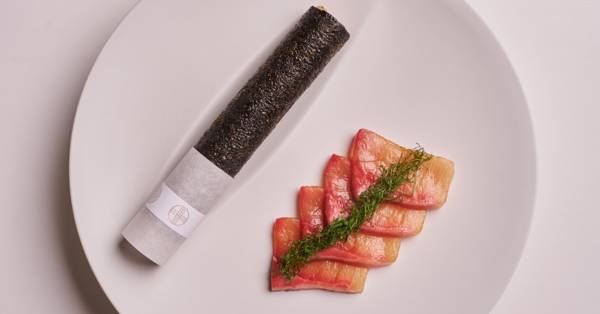


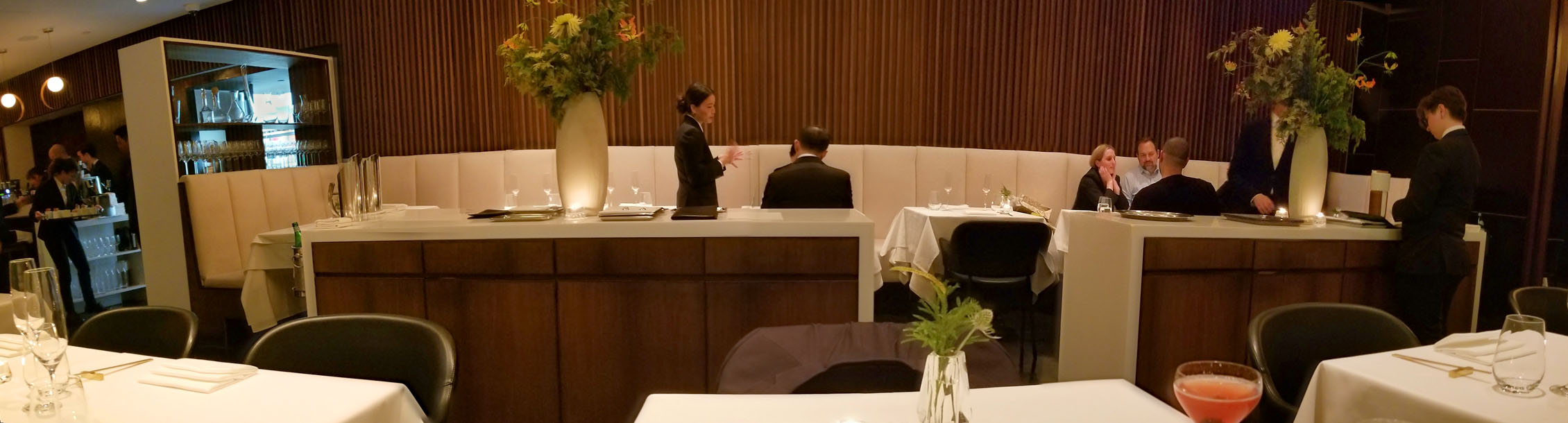
Jungsik, the Tribeca pioneer that earned America's first three Michelin stars for Korean cuisine (in 2024, after more than a decade at two stars), operates on a quiet paradox: its $335 nine-course tasting menu is a deeply traditional Korean meal, but every dish is refracted through French technique. Chef-owner Jungsik Yim, a Culinary Institute of America alum who trained at Aquavit and Bouley, opened the Seoul original in 2009 and brought this 'New Korean' style to New York in 2011, long before the current haute-Korean boom. The menu is built around seafood, seasonality, and a constellation of banchan — the small side-dish spreads — but the real signatures are dishes like the yellowtail kimbap (a handroll stuffed with truffle rice and wrapped in crispy seaweed bugak), the octopus with gochujang aioli, and the Dolhareubang, a miniature edible sculpture of Jeju Island's stone statues made from toasted-rice ice cream, black bean mousse, and sesame. The wine pairings are offered in a 'ban-ban' mixed format, blending traditional and natural-wine selections, and the dining room's dark wood and ivory banquettes keep the focus squarely on the plate. It is, as one inspector put it, a meal that makes you involuntarily nod to yourself while eating.
+Field notes
- —Jungsik is the first and only Korean restaurant in the United States to hold three Michelin stars; it earned its third in 2024, more than a decade after being awarded a second star in 2013, making it the first Korean three-star in the country.
- —The signature yellowtail kimbap is not a simple roll but a hand-size creation of truffle rice stuffed inside crispy seaweed bugak (a fried Korean seaweed sheet), with raw yellowtail — often described by reviewers as one of the most memorable bites of a multi-starred career.
- —The Dolhareubang dessert is a literal miniature of the iconic stone statues of Jeju Island: a structured plate of toasted-rice ice cream, black bean mousse, and sesame, set in a tiny 'garden' with corn, sweet potato, and pumpkin elements — a playful translation of a cultural artifact into pastry.
- —The menu offers three distinct wine-pairing tiers: a 'Jungsik Premium Wine Pairing' at $600, a 'Signature Chef's Wine Pairing' at $225, and a unique 'Ban-Ban Mixed Pairing' at $175 that splits the difference between traditional wines and non-alcoholic fermentations, teas, and juices.
- —One of the most talked-about savoury courses is the galbi — wood-fired short rib served with mustard salad and white kimchi — that closes the main menu, described by one critic as 'simultaneously rustic and transcendent,' a dish from a chef who spends years obsessing over a single cut of meat.
- —The banchan (side dishes) are a full course in themselves, served as a spread that includes wagyu tartare with truffle brioche and a foie gras-stuffed baesook (Asian pear tartlet with pine nut), a presentation that differs from traditional banchan service by being plated as individual, showpiece compositions.
Keep exploring
More of Jungsik

More in Kitchen & Home Design
Stay in this world.

Sentan SLD Nashiji Gyuto 210mm

Tappan “Tappy” Chef Figures and Chalkware Advertising
Eames Lounge Chair and Ottoman
Opinel No. 8
Mid-Century Modern Furniture

Japanese Kitchen Knives

Teishoku
Summerific® 'Perfect Storm' Rose Mallow
Imagery
Know someone who’d love this?
Discovered by ArcurianAuto-generated from public sources and AI synthesis — it may be incomplete or inaccurate. Treat it as a starting point for your own exploration, not professional (medical, legal, financial, or safety) advice. Verify anything you act on. Report this page.