This interest sits at the overlap of mid-century advertising collectibles and American chalkware: small figural pieces tied to the Tappan appliance brand and its little chef mascot, often called “Tappy.” The sources point to promotional salt-and-pepper shakers from the 1940s–50s, examples made in Japan, and even a salesman’s lamp built around the same chef character. Chalkware matters here because plaster-based figural decor and advertising giveaways were a classic inexpensive mid-century format, prized today for hand-painted wear, regional production quirks, and mascot variations like red feet versus black feet. If you follow the Tappan chef closely, you are really tracing how a stove company turned a tiny smiling cook into a whole collectible world.
Learn
What a Tappan Chef Figure Actually Is
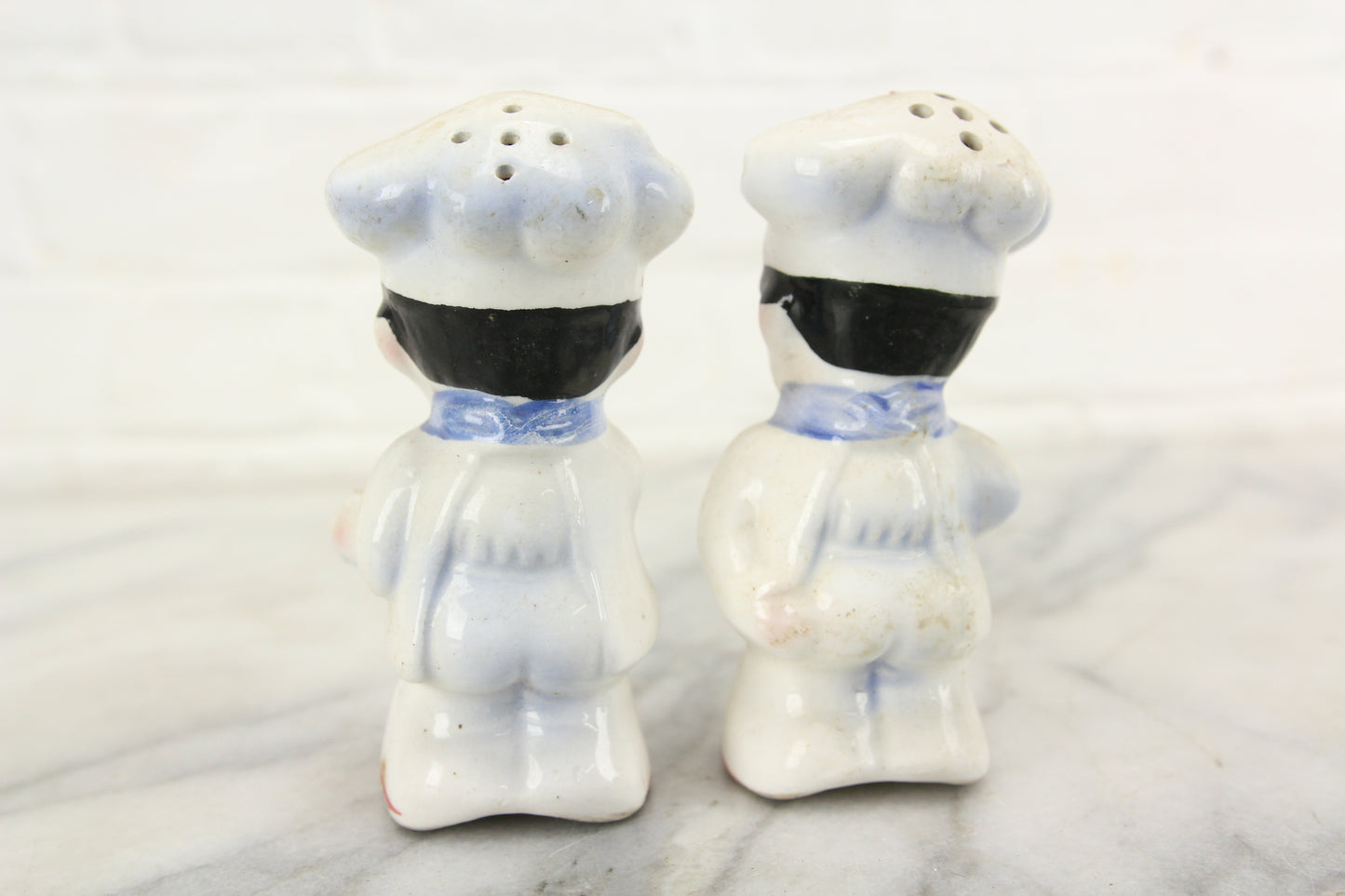
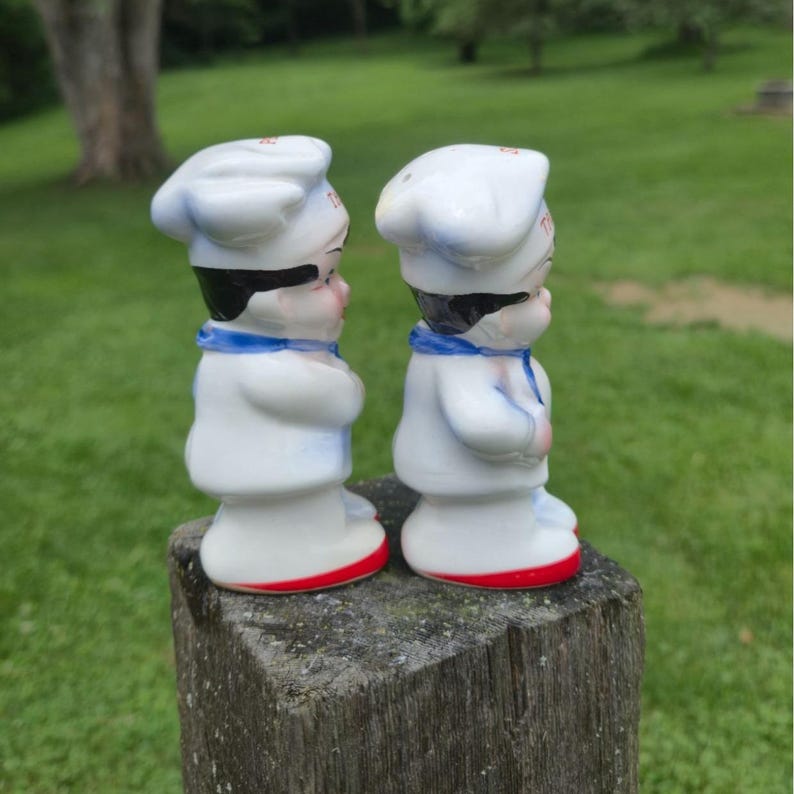
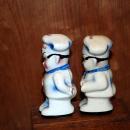
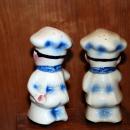
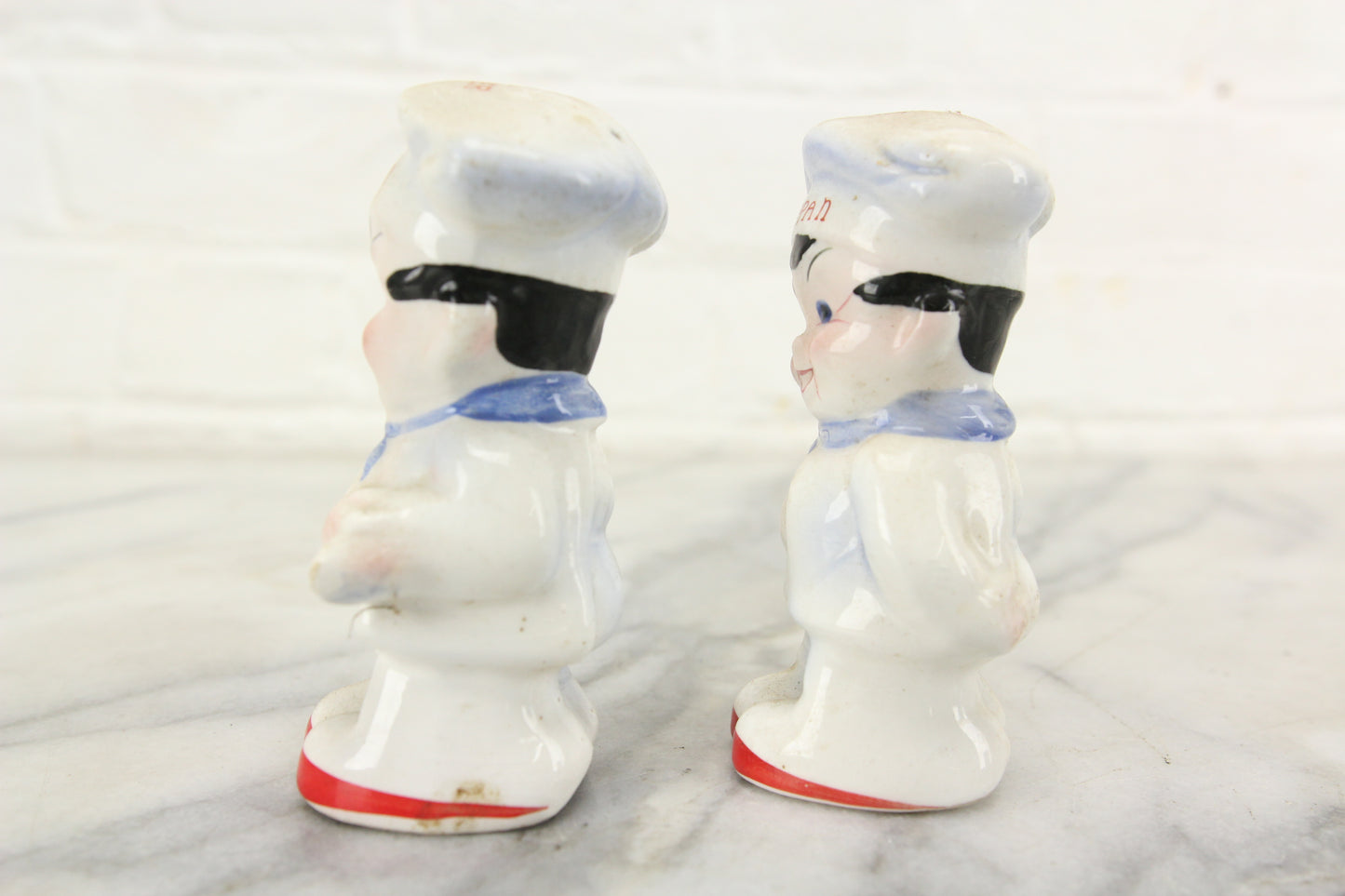
The Tappan Chef figure—often called 'Tappy' or the 'Little Chef'—isn't a standalone toy or statue but rather a piece of promotional merchandise from the Tappan Stove Company, originally conceived as a cartoon mascot in the early 1930s at the company's Wayne Street advertising department in Mansfield, Ohio. The character first appeared on 'Depression ware' glass salt-and-pepper shakers produced by McKee Glass in Jeanette, Pennsylvania, given free with every new stove purchase. The most commonly found versions today are ceramic shakers made in Japan during the 1950s, featuring two jolly chefs in white uniforms, red shoes, blue scarves, and hats marked 'SALT' or 'PEPPER' with 'TAPPAN' across the front. These Japanese-export pieces are abundant, but far rarer are the earlier milk-glass shakers with Bakelite lids or the extremely scarce Ohio-made examples with black-painted feet, which can fetch premium prices due to their scarcity and connection to the company's original domestic production.

 richlandcountyhistory.comrichlandcountyhistory.com
 richlandsource.comrichlandsource.com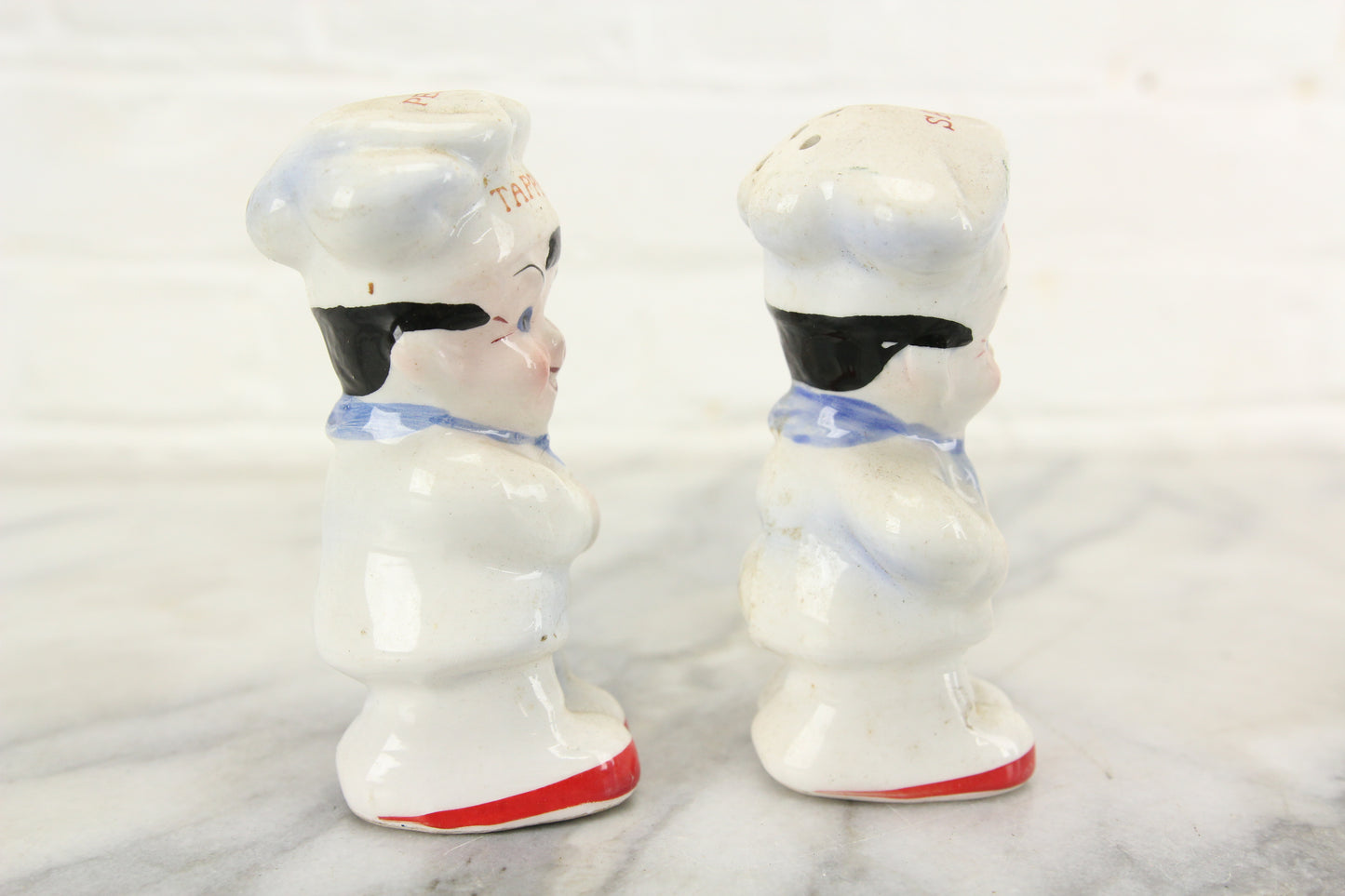
+Field notes
- —Tappy was created in the early 1930s by the Tappan advertising department on Wayne Street in Mansfield, Ohio, as a cartoon mascot inspired by the popularity of Mickey Mouse-era animated characters.
- —The first Tappy promotional item was a 'Depression ware' salt-and-pepper shaker set made of milk glass with Roman arch shapes and Bakelite lids, produced under a deal with McKee Glass of Jeanette, Pennsylvania.
- —The most commonly found Tappan Chef shakers today are ceramic figures made in Japan during the 1950s, standing about 3.75 to 5 inches tall, with a white uniform, red shoes, blue scarf, and a chef's hat labeled 'SALT' or 'PEPPER' plus 'TAPPAN'.
- —A rare variant with black-painted feet exists; some collectors believe these may have been produced in Ohio rather than Japan, making them extremely scarce compared to the common red-footed Japanese versions.
- —Beyond shakers, Tappy appeared on cookbooks, department store displays, appliance shop walls, and even as a salesman's incentive lamp—a 13.5-inch-tall working lamp featuring the chef's likeness.
- —During World War II, the Tappan Stove Company shifted production to military cook equipment and airplane parts, temporarily halting consumer promotional items like the Chef figures.
Learn
From Stove Promotion to Mid-Century Figural Keepsake
The Tappan Little Chef, affectionately called 'Tappy' by company insiders, began as a cartoon character in the early 1930s, drawn in the Tappan advertising department in Mansfield, Ohio, during the golden age of Mickey Mouse. He first appeared in company newsletters, then leapfrogged into American kitchens when Tappan partnered with McKee Glass in Jeanette, Pennsylvania, to produce custom milk-glass salt-and-pepper shakers embossed with his image—given free with every new stove. Those early Depression-era shakers, featuring Bakelite lids and Roman arch styling, are highly coveted collectibles today. By the 1940s and 1950s, production of Tappy shakers shifted largely to Japan, where they were made in ceramic with red or black feet, blue scarves, and peaked chef hats stamped 'SALT' or 'PEPPER' plus 'TAPPAN' across the front. Beyond shakers, Tappy appeared on promotional lamps (sold as salesman incentives, standing 13½ inches tall), cookbooks, and in-store displays. The chalkware versions—molded from plaster-based materials rather than fired ceramic—are especially fragile and rare, often surviving only as single figures or damaged pairs. Collectors prize the Ohio-made originals (without 'Made in Japan' marks) as the scarcest, while the Japanese export pairs remain the most accessible entry point for mid-century kitchenalia enthusiasts.


 tappantalk.blogspot.comtappantalk.blogspot.com
 worthpoint.comworthpoint.com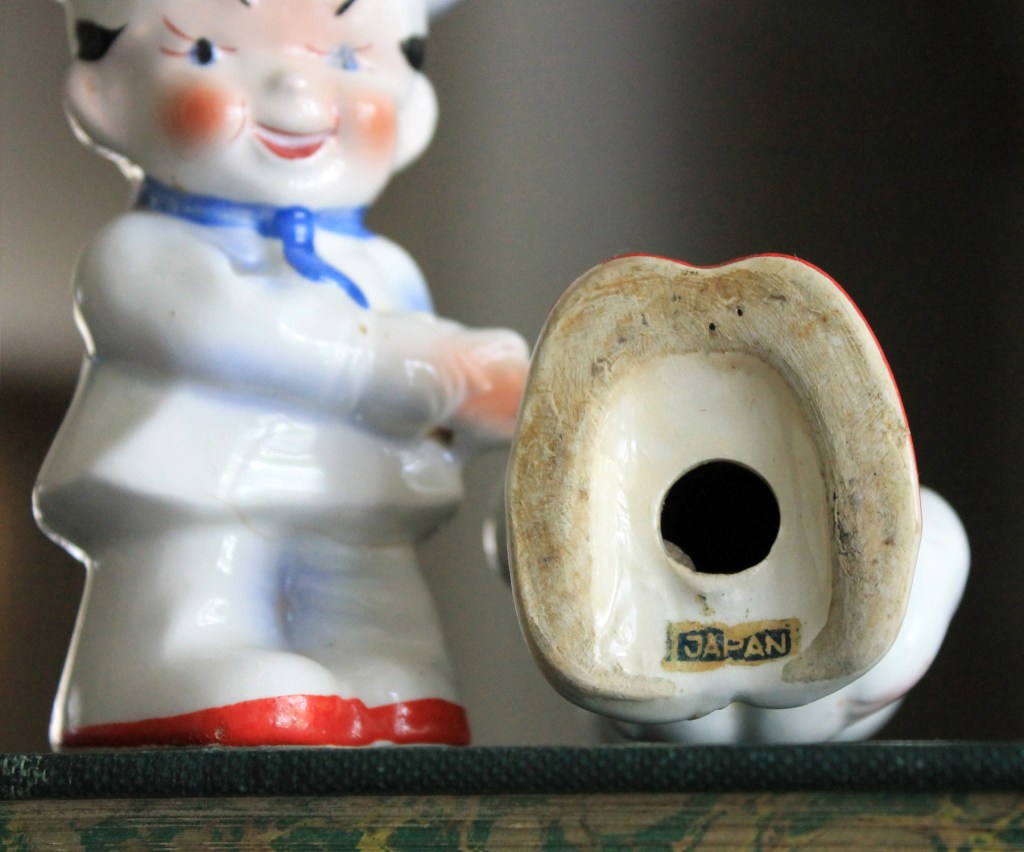
 poshmark.composhmark.com
+Field notes
- —Tappy debuted in the early 1930s as a company-newsletter cartoon during the Mickey Mouse craze, then became a real-world premium when Tappan commissioned McKee Glass in Jeannette, Pennsylvania, to produce custom milk-glass salt-and-pepper shakers with Bakelite lids—given away with every new stove purchase.
- —Early Tappy shakers were made of milk glass (opaque white glass) with a Roman arch silhouette, but by the 1940s–1950s production shifted to Japan, where the figures were slip-cast ceramic with painted details: white uniforms, red shoes, blue scarves, and a chef's hat lettered with 'SALT' or 'PEPPER' and 'TAPPAN' across the chest.
- —The most desirable sets are those made in Ohio—lacking a 'Made in Japan' stamp—and distinguished by black-painted feet rather than the common red feet found on Japanese exports; Ohio-made originals are described as 'extremely rare' by collectors.
- —Tappy was not limited to shakers: Tappan also produced a 13½-inch-tall electric lamp featuring the chef's likeness, sold as a salesman incentive, which survives today as a highly sought-after promotional collectible.
- —The Tappan Stove Company was originally founded in 1881 as the Ohio Valley Foundry Company in Bellaire, Ohio, moved to Mansfield in 1889 as the Eclipse Stove Company, and was renamed Tappan in the 1920s; it was acquired by Electrolux in 1979 after Carl Icahn's first takeover attempt.
Learn
Terms That Matter: Chalkware, Carnival Chalk, Plaster, and Promotional Porcelain
Understanding the terminology around Tappan chalkware means untangling a web of material science, manufacturing eras, and trade names. 'Chalkware' is a mostly American catch-all for objects cast from plaster of Paris (a gypsum-based powder) or sculpted gypsum, then hand-painted with watercolors, oils, or tempera—never fired, unlike ceramics. The term 'carnival chalk' specifically denotes the cheap, brightly painted figurines given as game prizes from roughly 1910 through the 1950s, a practice that peaked during the Depression and WWII before stuffed animals took over. Many mid-century chalkware lamps and wall pieces from the 1940s–60s are also grouped under the umbrella, though they lack the midway provenance. 'Plaster' is the literal material; 'promotional porcelain' is a modern misnomer—true chalkware objects were never kiln-fired and remain matte, heavy, and fragile. The field's real distinction lies in recognizing the three distinct production waves: early 19th-century Staffordshire imitations, Depression-era carnival giveaways, and mid-century modern decorative home goods, each with different construction cues (hollow vs. weighted bases, hand-painted vs. stenciled details).

 collectorsjournal.comcollectorsjournal.com
+Field notes
- —Chalkware is never fired in a kiln—unlike porcelain or pottery, it's cast from gypsum plaster (plaster of Paris) and hand-painted with watercolors, oils, or tempera, giving it a distinctive matte, unglazed finish.
- —The term 'carnival chalk' emerged because from about 1910 to the 1950s, these plaster figurines were the standard prizes at carnival games, sold wholesale by novelty suppliers like Gellman Bros. of Minneapolis for as little as 13 cents each (around a dollar a dozen).
- —Early 19th-century chalkware was often hollow and made in two-piece molds, with the halves cemented together; later Depression-era and mid-century pieces were weighted with a heavy plaster base to prevent tipping, making reproductions heavier than originals.
- —Mid-century modern chalkware (1945–1965) expanded beyond figurines into table lamps, wall decor, and tourist memorabilia, often featuring romantic or exotic motifs like dancers, idealized faces, and abstract designs—distinct from the cartoonish carnival prizes.
- —Chalkware string holders—faces with pursed lips where string emerged like spaghetti—are among the most sought-after kitchen collectibles, while nodding-head figures are the rarest (though European reproductions exist).
- —The term 'promotional porcelain' is a collector's misnomer for chalkware: true chalkware was never ceramic and was not fired. It was an inexpensive, disposable medium, which is why surviving pieces—especially carnival prizes—are often chipped, darkened with age, or repainted, severely affecting value.
Discover
Price Trails, Auction Listings, and Identification Clues
Tappan's 'Little Chef' or 'Tappy' chalkware figures, born from a 1930s advertising cartoon at the company's Wayne Street department in Mansfield, Ohio, are among the most misidentified pieces in vintage advertising collectibles. Early collectors prize the original Depression-era 'milk glass, roman arch shakers with Bakelite lids' made by McKee Glass in Jeanette, PA — far more than the common later ceramic figures. The biggest trap for new hunters: assuming black feet on the porcelain chef shakers (2.25" x 1.75" x 4") means Ohio-made rarity; most were actually produced in Japan with red feet, and the black-footed ones are a mystery rather than a guaranteed score. Beyond shakers, Tappy appeared on salesman incentive lamps standing 13.5" tall and on cookbooks, department store displays, and WWII-era advertising. Understanding the McKee glass connection and the Japan vs. Ohio production split is the difference between paying impulse prices and knowing exactly what you're holding.
+Field notes
- —The earliest and most collectible Tappy salt & pepper shakers were made by McKee Glass in Jeanette, PA, as 'Depression ware' — milk glass with a roman arch shape and Bakelite lids — given free with every new Tappan stove purchase in the 1930s.
- —Most later Tappy shakers were produced in Japan and have red feet; the few with black feet are of uncertain origin — possibly Ohio-made, but no definitive source confirms that rarity, making them a speculative find rather than a proven valuable variant.
- —A scarce Tappan salesman lamp exists — a factory-made 13.5" tall chalkware figure of Tappy, tested and working, listed by a dealer for $245, suggesting that non-shaker Tappy advertising pieces carry serious value when they surface.
- —Tappy's design originated in the early 1930s at Tappan's in-house advertising department on Wayne Street in Mansfield, Ohio, first appearing in company newsletters before becoming the brand's printed mascot on cookbooks and in appliance shops.
- —During WWII Tappan stopped making stove giveaways and shifted to military production, meaning that any Tappy promotional item from 1941–1945 is extremely rare and likely predates the later Japanese-made figures.
- —The standard Japanese-made Tappy shakers are 2.25" long x 1.75" wide x 4" tall, often found missing corks or with stuck Bakelite lids — condition and original closures significantly impact their value on the secondary market.
Explore
Where to Hunt for Tappy Pieces and Related Chalkware
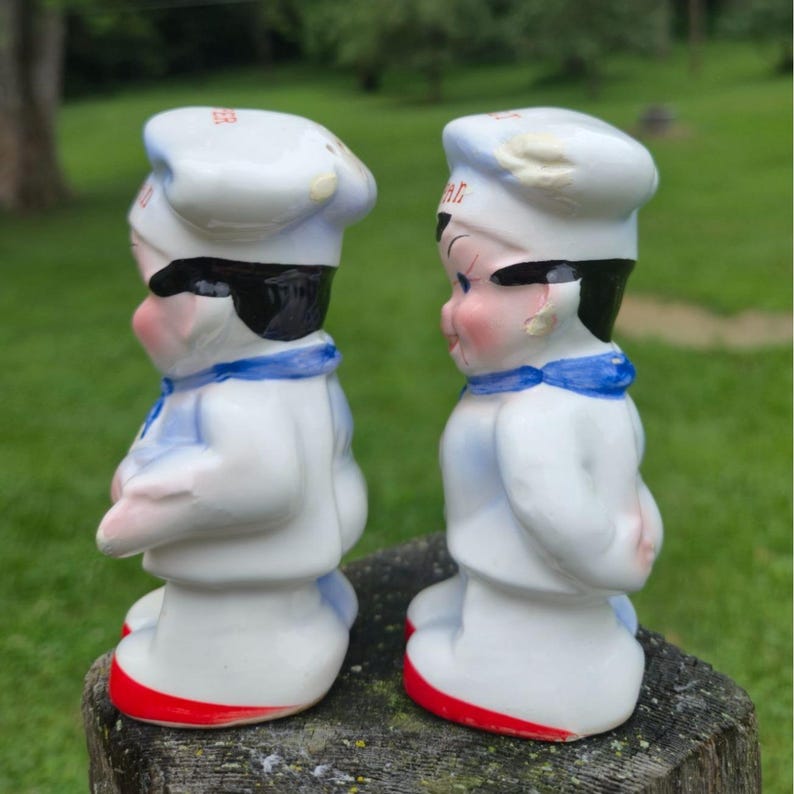
Hunting for Tappan chalkware figures—those iconic chef salt and pepper shakers from the 1950s—means scouring peer-to-peer resale platforms like Poshmark, where listings for the 'Vintage 1950s TAPPAN Advertising CHEFS Salt & Pepper S&P Shaker Set MCM JAPAN' frequently appear, often priced around $43 for a set in great condition. Sellers like @pookiecloset898 in Norwalk, CA, and @niko_78 in Rochester, MN, regularly offer these sets, sometimes with minor chips or crazing (like on the hats of a ceramic baker set listed for $20-$27), while a set of 'Tappan Chef Boys Twins Baker Salt and Pepper Shakers Japan' might show wear like a chip at the foot and cost $35. To spot genuine Tappy pieces, look for the distinctive white ceramic with red accents, the 'Japan' marking common to 1950s imports, and the chef's toque shape; sellers often bundle them with other vintage kitchenware, and the 'chip at foot' and 'cork inside shaker' noted in one listing are typical signs of age. For broader chalkware hunting, keep an eye on related advertising figures—like a 1985 Campbell's Soup Kids ceramic bisque 'Little Chef' figurine for $15, or a vintage 'Blue Boy' chalkware table lamp inspired by Gainsborough for $80—which share the same hand-painted, mid-century aesthetic and often surface in similar estate-sale resale channels.
 poshmark.composhmark.com
 poshmark.composhmark.com
+Field notes
- —Poshmark is a prime hunting ground for Tappan chalkware shakers, with listings like a 'Vintage 1950s TAPPAN Advertising CHEFS Salt & Pepper S&P Shaker Set MCM JAPAN' from seller @pookiecloset898 in Norwalk, CA, priced at $43.
- —Condition varies widely: a 'VINTAGE ceramic Tappan chef baker salt and pepper shakers' set from seller @niko_78 in Rochester, MN, shows 'a couple chips and some crazing on the top of the hats' and is priced at $20-$27, while a 'Vintage Tappan Chef Boys Twins Baker Salt and Pepper Shakers Japan' set has a 'chip at foot' and cork inside, listed at $35.
- —Genuine Tappan chalkware often features white ceramic with red accents, a 1950s 'Japan' marking, and chef's toque shapes; a 'White Ceramic Chef Salt and Pepper Shakers - Set of 2' listed for $20-$45 highlights bright white finish with red accents for display or use.
- —Related chalkware to watch for includes a 1985 Campbell's Soup Kids 'Little Chef' ceramic bisque figurine for $15, and a vintage 'Blue Boy' chalkware table lamp inspired by Gainsborough, 17 inches tall with a pull-chain socket, listed at $80—both share hand-painted, mid-century aesthetics.
- —Sellers often bundle Tappan sets with other vintage kitchenware for discounts, like a '15% off 3+ Bundle' offer from @pookiecloset898, making it strategic to combine searches for 'vintage salt and pepper shakers' or 'advertising chef figurines' on platforms like Poshmark.
Keep exploring
More of Tappan “Tappy” Chef Figures and Chalkware Advertising

Branch out
Beyond Tappan “Tappy” Chef Figures and Chalkware Advertising
More to explore
In the same world.

Le Creuset
Founded in 1925 in Fresnoy-le-Grand, France, Le Creuset — literally 'the crucible' — is the French-Belgian maker whose e…

Copper Cookware
Copper cookware sits at the high-performance end of the kitchen: brands consistently frame it around speed, responsivene…
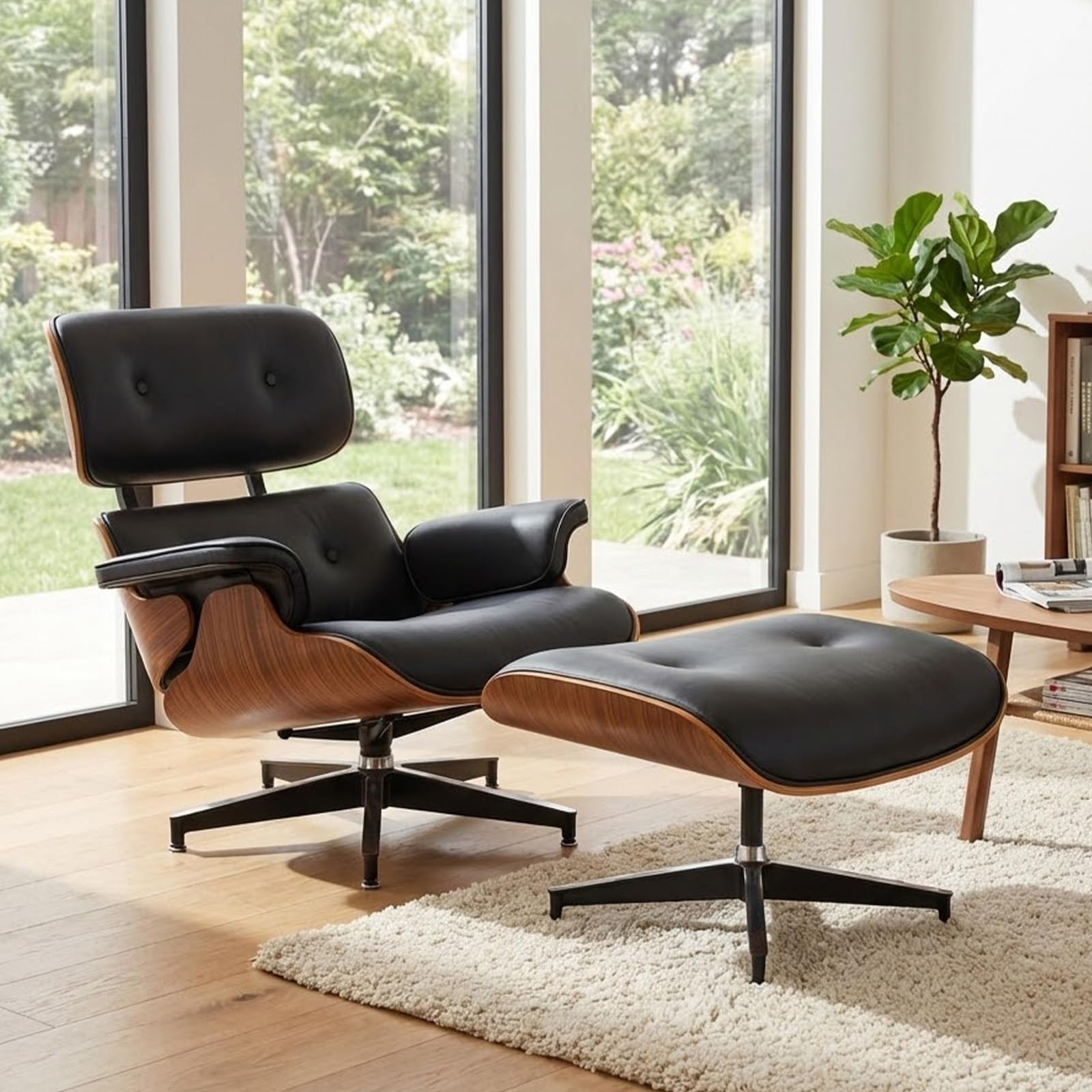
Mid-Century Modern Furniture
Mid-century modern furniture lives in two worlds at once: it is a living retail style category and a serious vintage col…

Cutlery Brands
"Cutlery brands" spans both tableware and kitchen knives, and the sources here point to a field where heritage, material…

Glassware
Glassware, as these sources frame it, spans drinkware and tableware: wine glasses, tumblers, highballs, cocktail glasses…
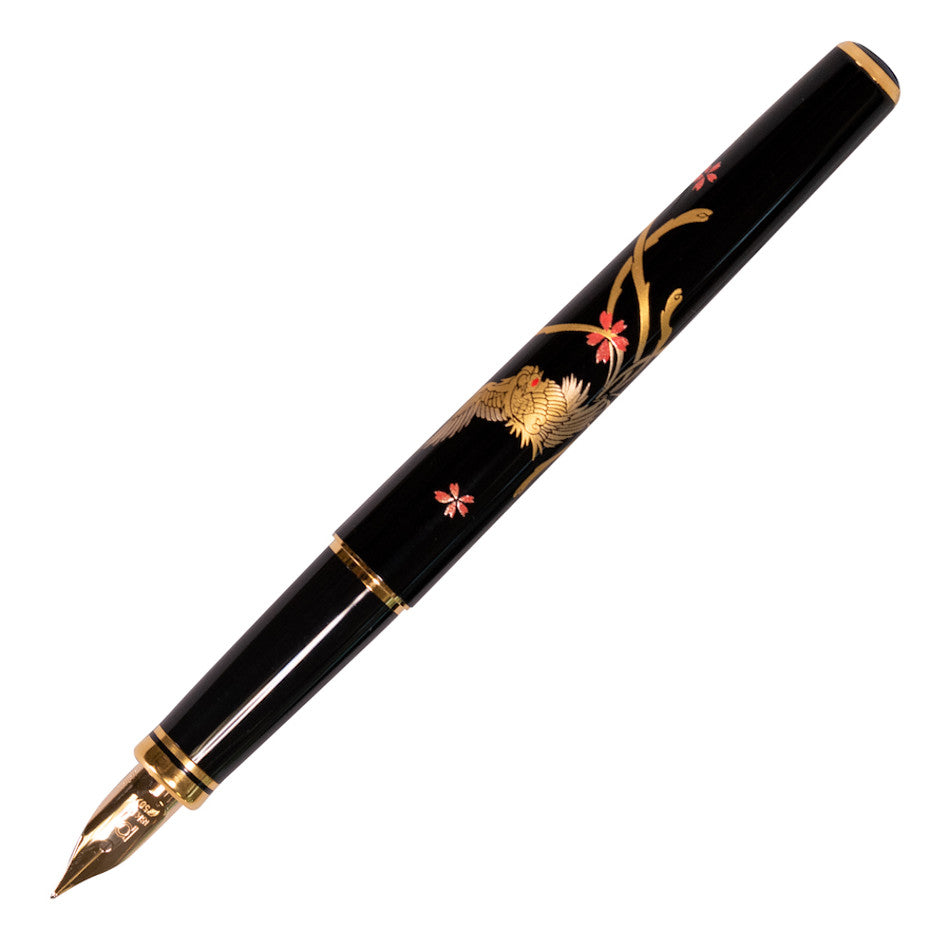
Platinum Modern Maki-e Fountain Pens
Platinum’s Modern Maki-e pens sit in a very specific corner of fountain-pen collecting: Japanese motif pens made with a…
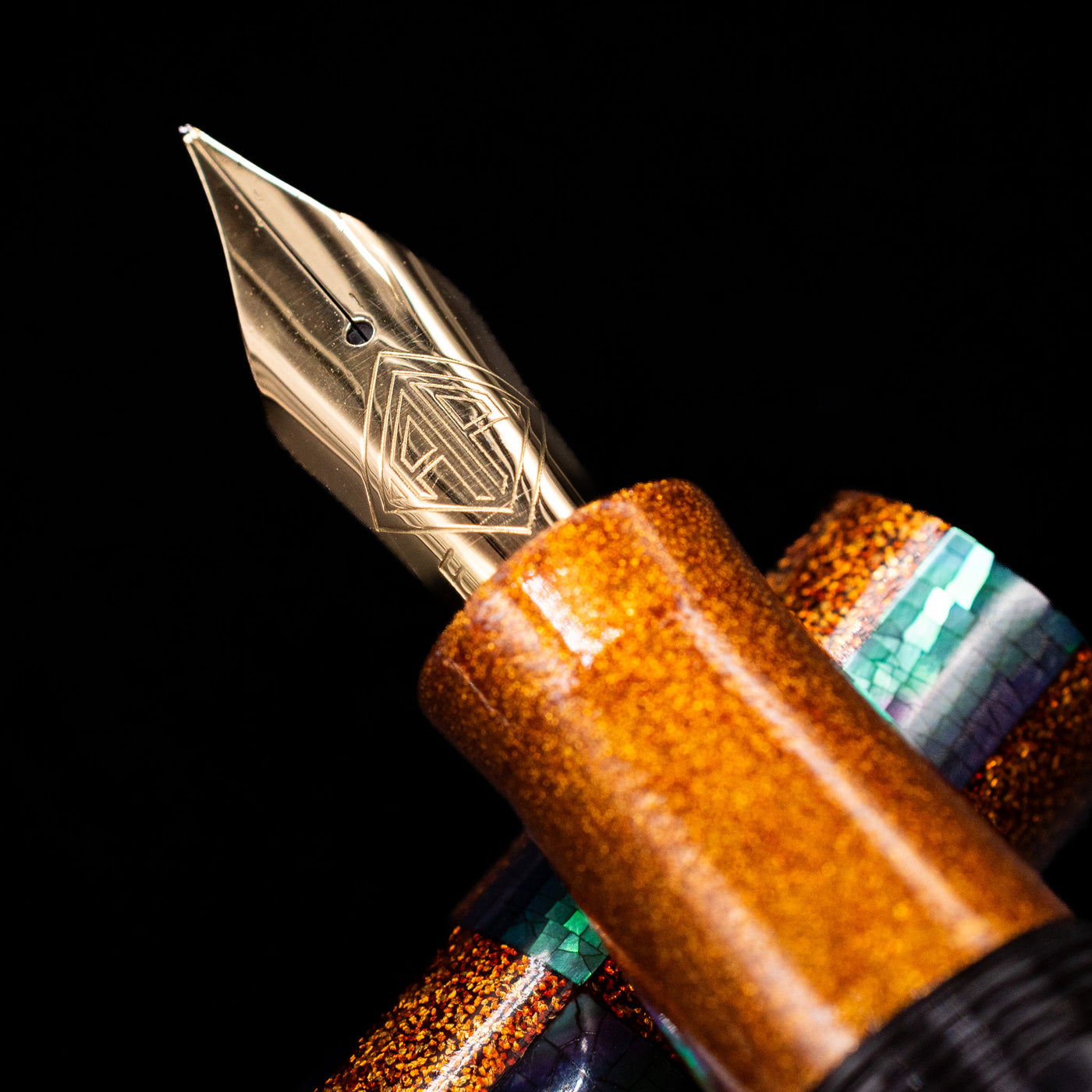
Sailor Maki-e Fountain Pens
Sailor’s Maki-e fountain pens sit at the meeting point of writing instrument collecting and a Japanese decorative art wi…

Japanese Kitchen Knives
Japanese kitchen knives are a broad world of made-in-Japan chef’s knives that ranges from workhorse gyutos and santokus…
More in Kitchen & Home Design
Stay in this world.

Sentan SLD Nashiji Gyuto 210mm
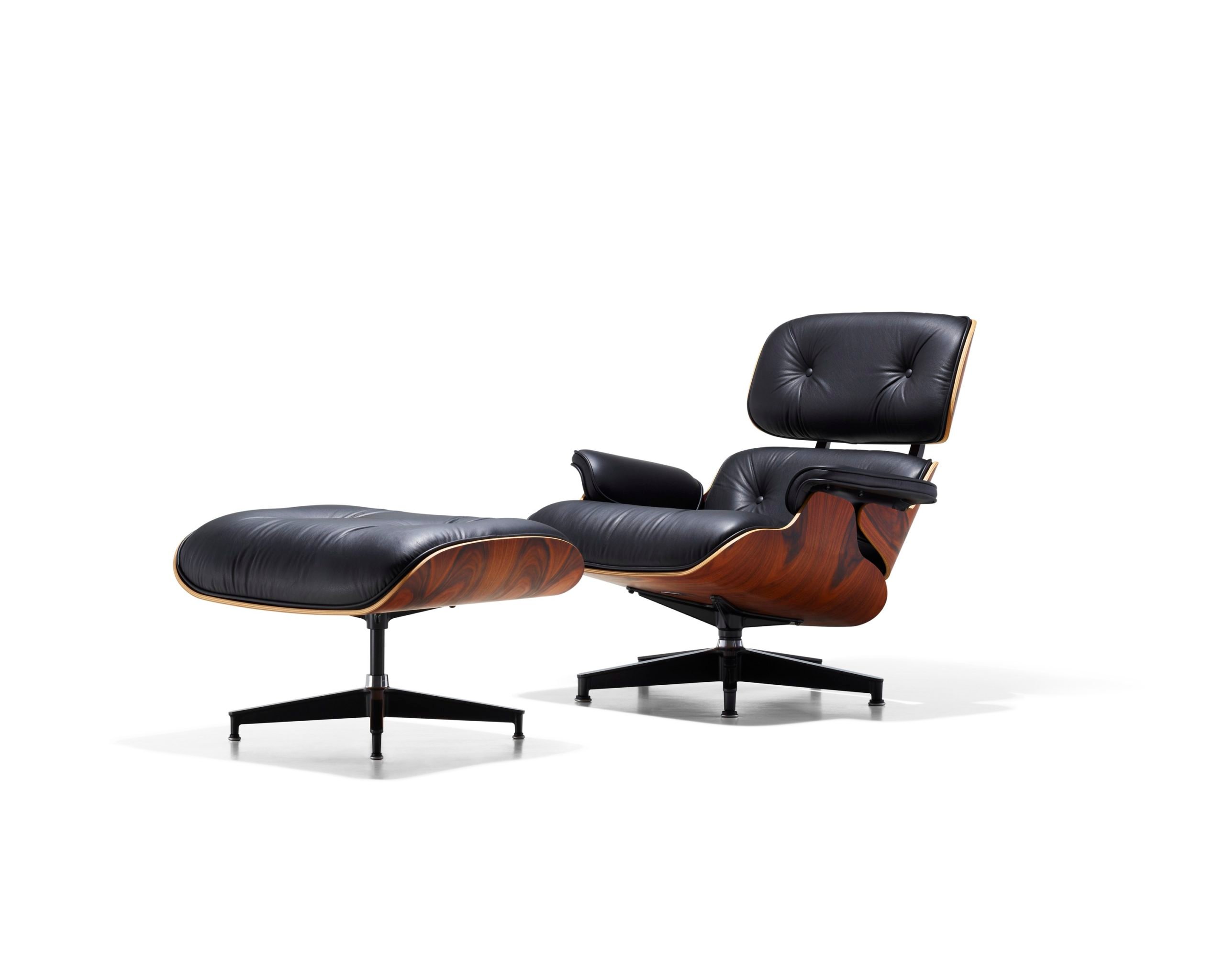
Eames Lounge Chair and Ottoman
Opinel No. 8
Mid-Century Modern Furniture
Japanese Kitchen Knives

Jungsik

Teishoku
Summerific® 'Perfect Storm' Rose Mallow
Imagery
Know someone who’d love this?
Discovered by ArcurianAuto-generated from public sources and AI synthesis — it may be incomplete or inaccurate. Treat it as a starting point for your own exploration, not professional (medical, legal, financial, or safety) advice. Verify anything you act on. Report this page.