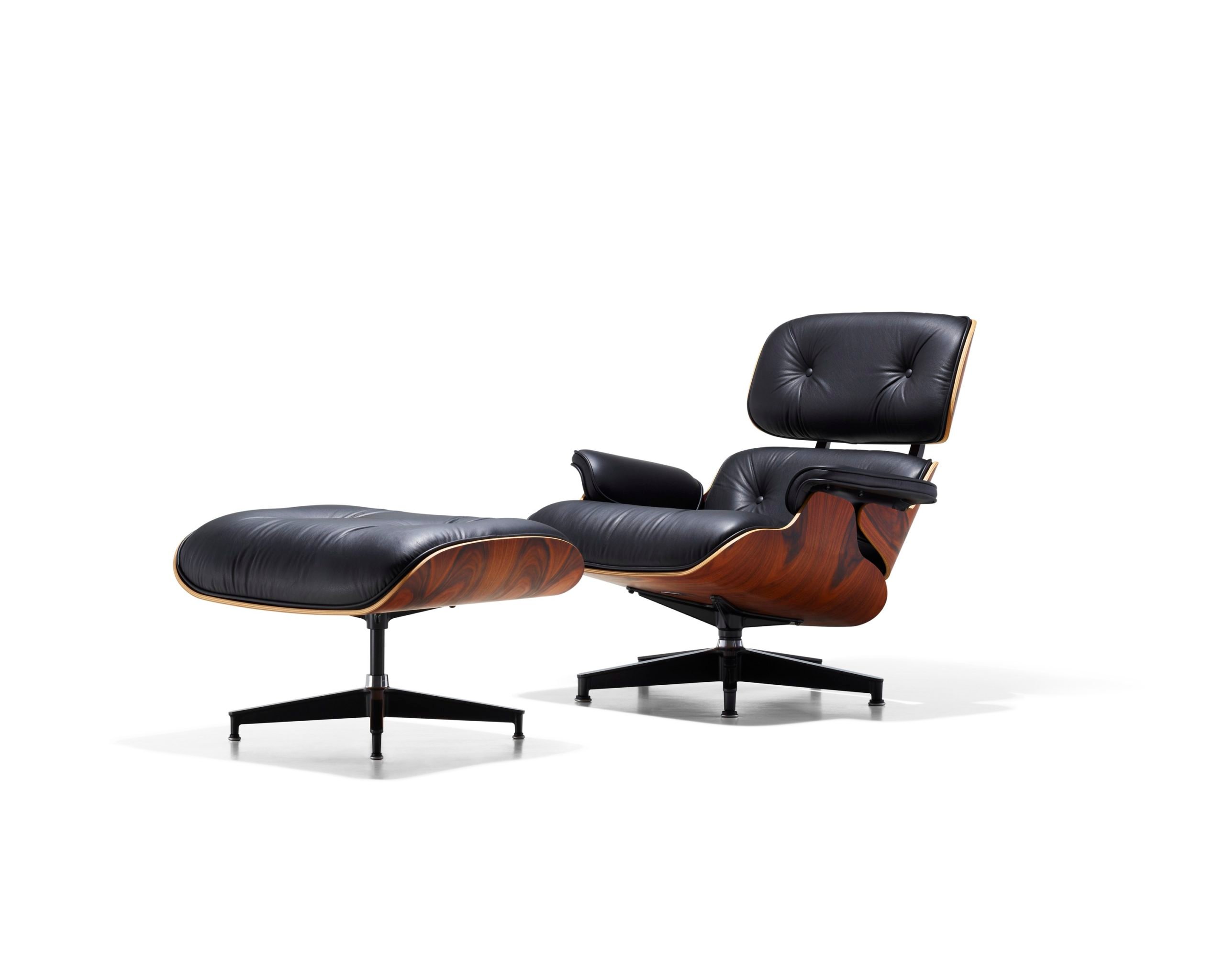
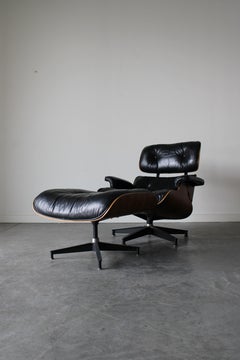
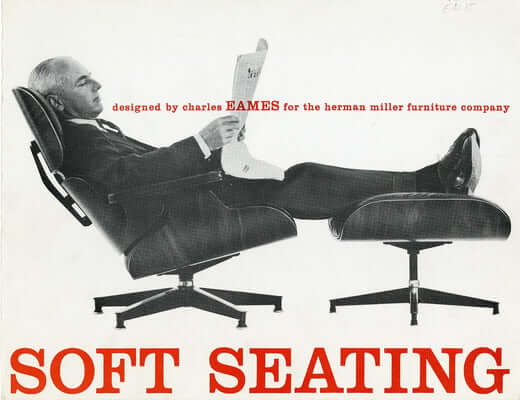
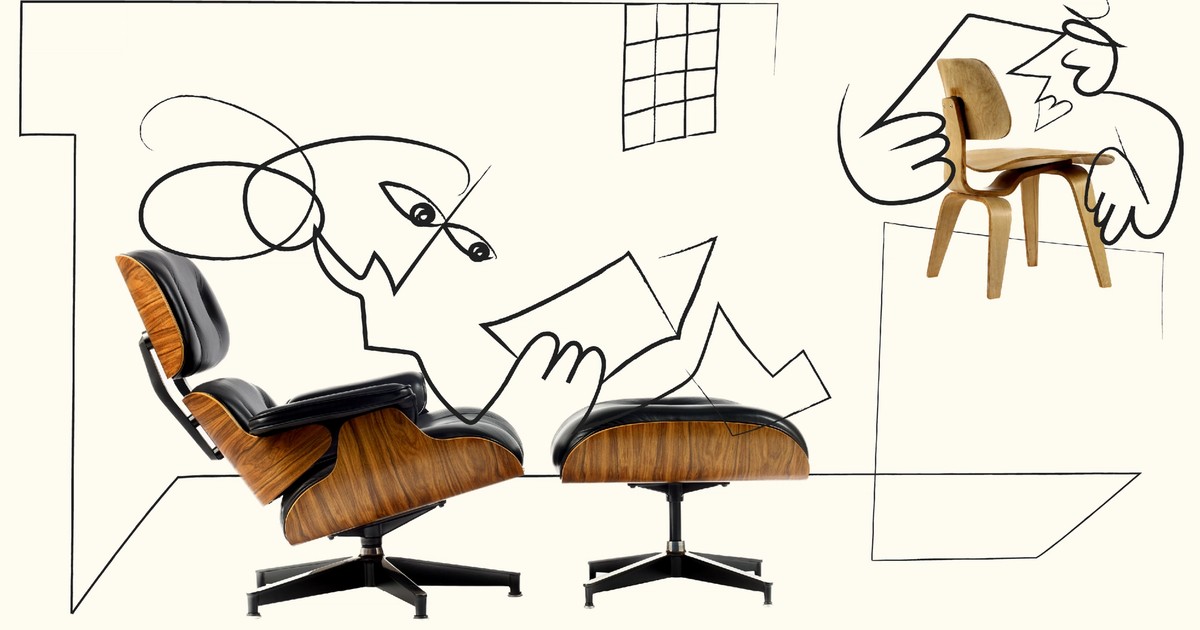
The Eames Lounge Chair and Ottoman is one of the signature objects of mid-century modern design: a 1956 Charles and Ray Eames design produced by Herman Miller and Vitra, and a piece that sits as comfortably in homes as it does in museums. What gives it its lasting pull is the combination of luxury and industrial thinking — molded plywood shells, tailored leather cushions, and an "updated version of the old English club chair" translated into a cleaner modern form. The Eames Foundation notes the tension at the heart of it: an unmistakably luxury item built with classic Eames ideas like standardized parts and the humble logic of plywood, finished with premium veneer. If you want to understand why one chair became a lifelong object for collectors, this is where design history, materials, and status all meet.
Learn
What Makes the Eames Lounge Chair a Design Obsession
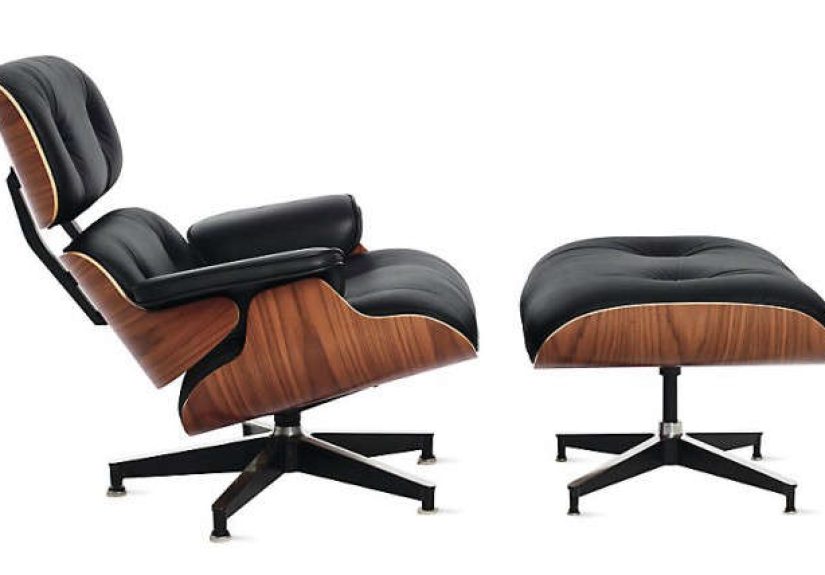
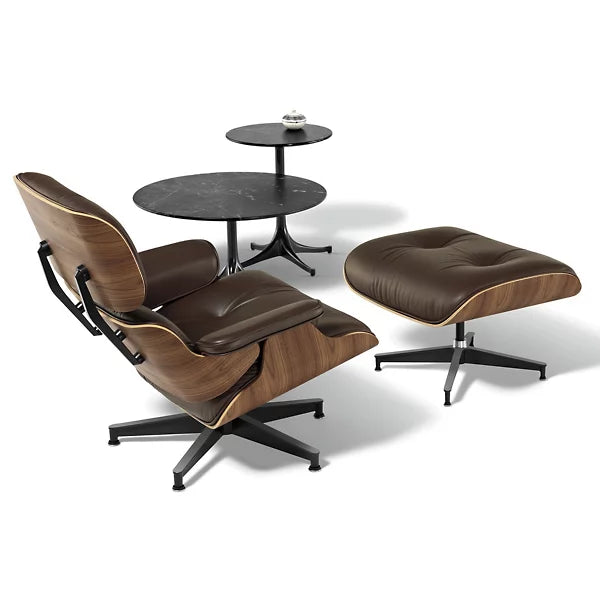
The Eames Lounge Chair and Ottoman (670/671) occupies a singular position in design history — not just as a comfortable place to sit, but as a masterclass in industrial logic disguised as luxury. Charles and Ray Eames deliberately broke with their own mass-production philosophy to create this piece, their first high-end market chair, and yet it still embodies their core principles: standardized parts, humble plywood construction, and meticulous engineering. The chair is built from only two standard molded plywood shapes — the two back panels are identical, and the chair seat and ottoman seat are identical — which means production efficiency directly enables the use of premium face veneers like Santos Palisander or walnut. The cushions are equally clever: both back cushions can be reversed top-to-bottom, and the seat and ottoman cushions can be swapped entirely. Charles famously said he wanted it to have "the warm, receptive look of a well-used first baseman's mitt," and Ray herself called it "comfortable and un-designy" in a letter to Charles. Despite being relentlessly copied (by Plycraft and countless others), the real thing has held its value so well that in adjusted dollars it sells for about the same as it did in 1956 — making it one of the few furniture purchases that doesn't depreciate and is routinely handed down as a family heirloom.
 eamesfoundation.orgeamesfoundation.org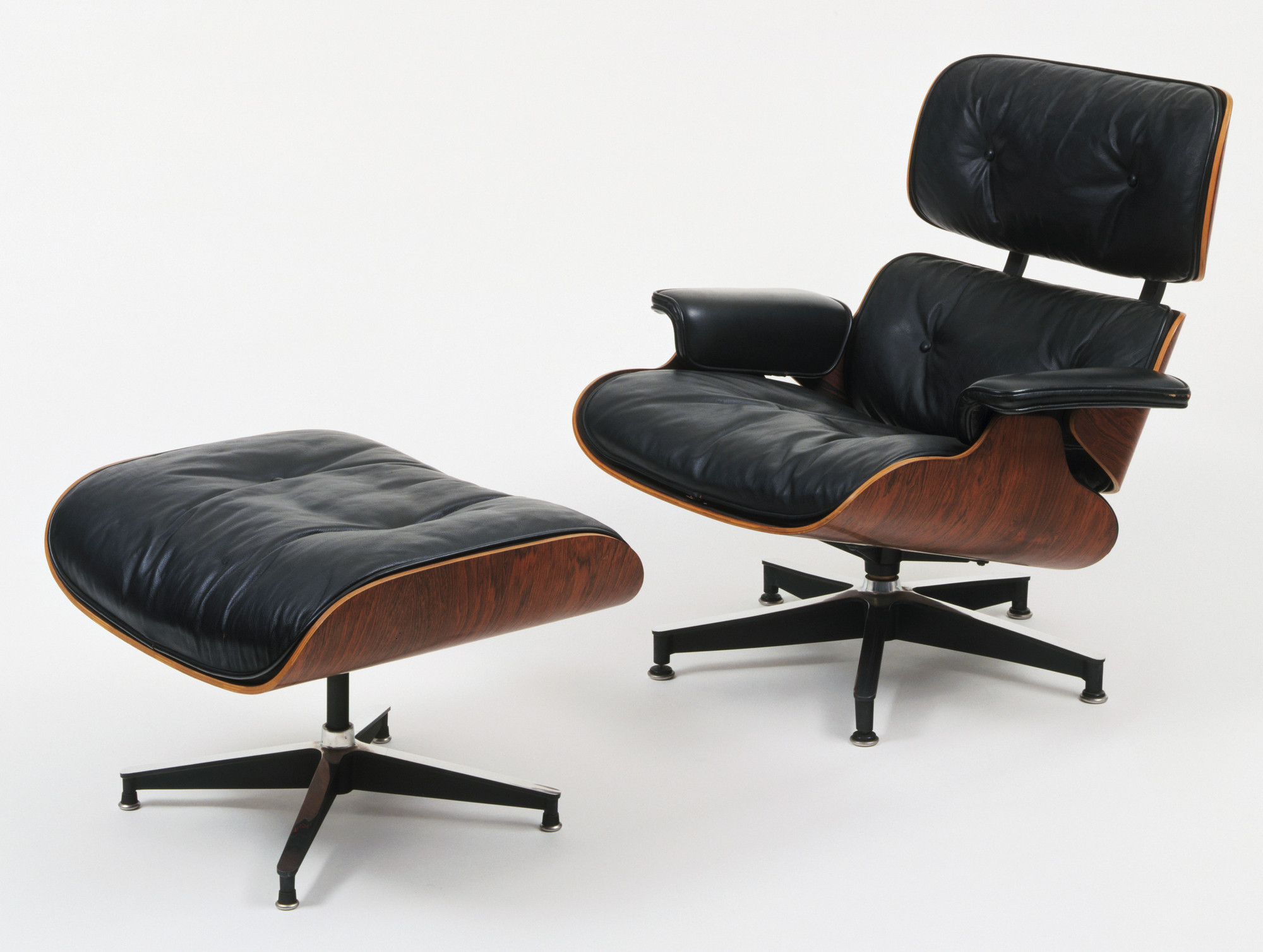
 rarify.corarify.co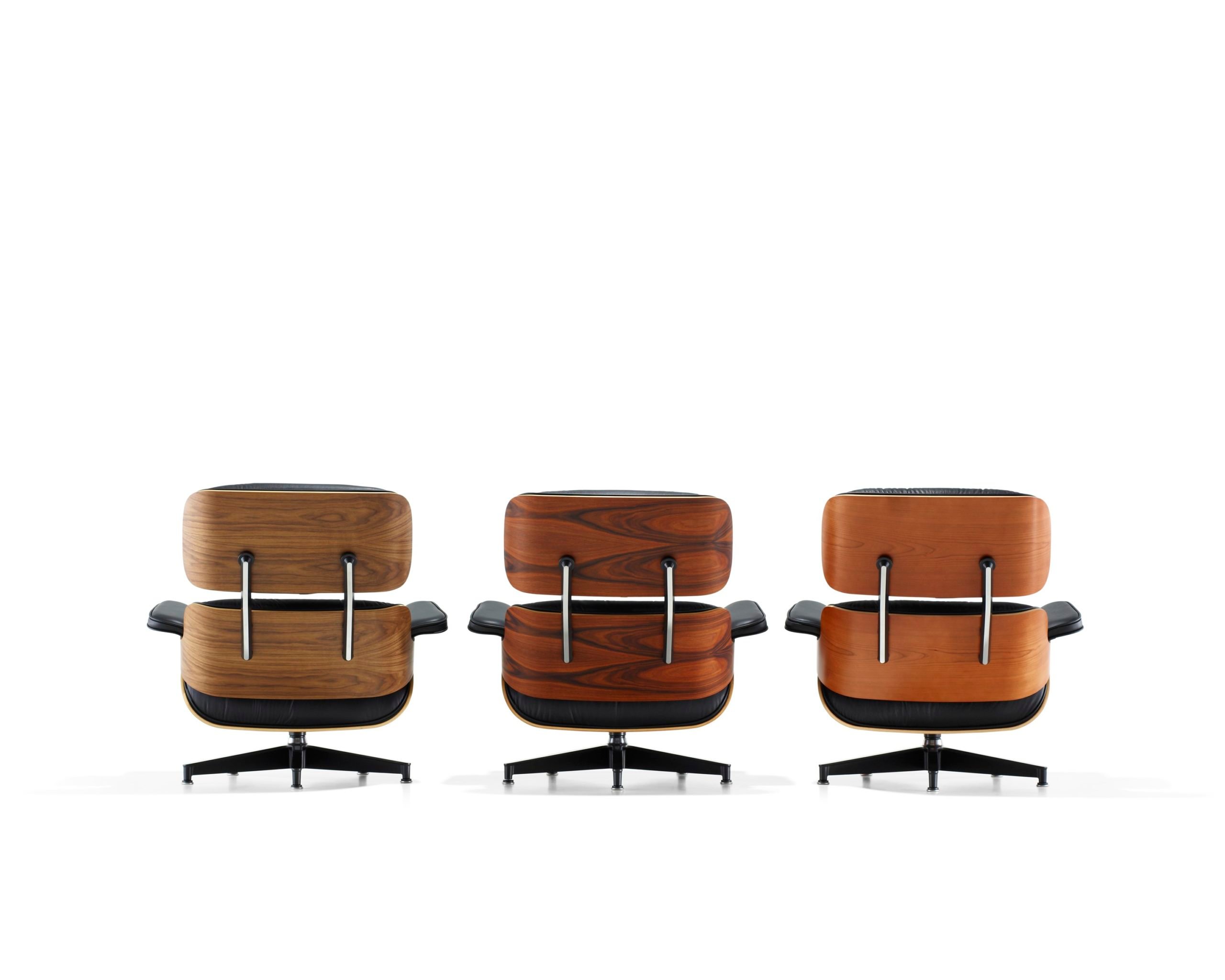
 eamesoffice.comeamesoffice.com
 store.hermanmiller.comstore.hermanmiller.com
+Field notes
- —The entire chair and ottoman rely on only two distinct plywood molds: the two back panels are identical, and the chair seat and ottoman seat share the same shape — a standardization that keeps production efficient enough to justify premium materials like Santos Palisander veneer without making the price astronomical.
- —Charles Eames described his goal as giving the chair "the warm, receptive look of a well-used first baseman's mitt," and Ray Eames wrote to him that the finished prototype looked "comfortable and un-designy" — a telling contrast between the designer's intent and public perception at launch.
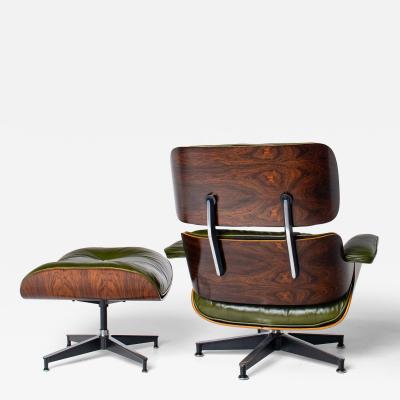
- —Production changes over the decades are a forensic rabbit hole: before the early 1990s, the shells used five thin layers of plywood with Brazilian rosewood veneer, but after that switched to seven layers paired with sustainably sourced Palisander rosewood or other woods — a structural difference that matters for restoration.
- —The cushion system is designed for rotational life extension: the two back cushions can be swapped top-to-bottom, and the seat and ottoman cushions are interchangeable with each other — a practical trick that doubles the usable life of the upholstery.
- —Early versions (1956–1960) used down feather filling for the cushions; from 1960 onward, a foam core was added, and modern cushions use a combination of foam and Dacron — a timeline that helps authenticate vintage chairs and explains differences in how they sit today.
- —The chair is one of the most counterfeited designs in furniture history, with direct copies from Plycraft in the 1950s and countless Chinese and European knockoffs since — but only Herman Miller (US) and Vitra (Europe) produce licensed originals named Eames, making authentication a critical skill for buyers.
Learn
From 1956 Onward: The Club Chair Reimagined
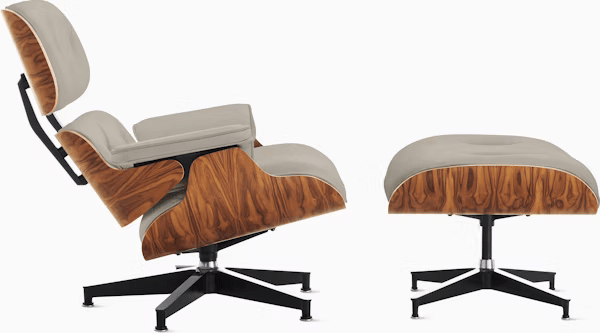
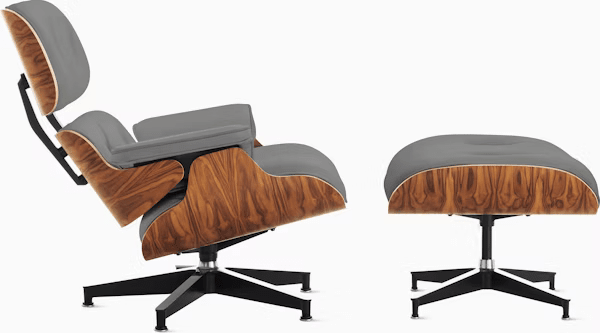
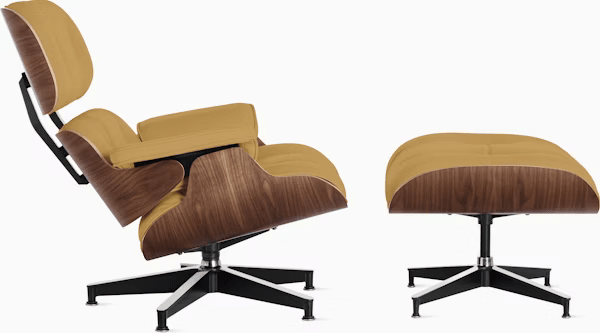
The Eames Lounge Chair and Ottoman (model numbers 670 and 671) debuted in 1956 as a radical reinterpretation of the heavy, tufted English club chair of the 19th century. Charles Eames famously wanted it to have "the warm, receptive look of a well-used first baseman's mitt." The genius of the design lies in its ruthless standardization: there are only two unique molded plywood shells in the whole set—the two back panels are identical, and the chair seat and the ottoman are the same piece. This meant the chair could offer luxury (premium veneers, removable leather cushions) at a price that, in adjusted dollars, hasn't changed much since 1956. It was the first chair the Eameses aimed at the luxury market, yet it still used their signature plywood-molding technology, with the shells bonded to rubber shock mounts for a subtle flex. The chair is so structurally efficient that even the seat and ottoman cushions can be swapped with each other. Today, Vitra (Europe/Middle East) and Herman Miller (rest of world) both produce it, with Vitra having introduced a Tall version to accommodate the 10 cm increase in average human height since the 1950s. Despite rosewood being Charles and Ray's favorite wood, original Brazilian rosewood was phased out in the early 1990s due to sustainability concerns, replaced by sustainably farmed Santos palisander and other veneers.
 vitra.comvitra.com
 vitra.comvitra.com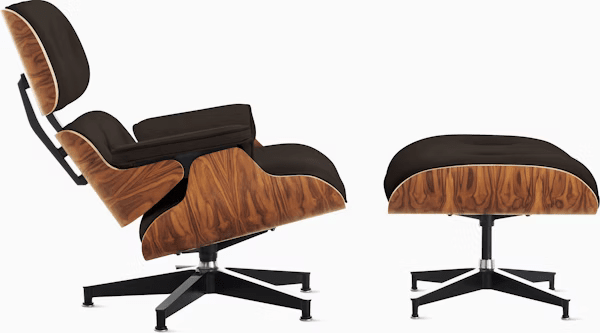
+Field notes
- —The chair uses only two unique molded-plywood parts: the two back panels are identical to each other, and the seat shell is the same mold as the ottoman shell (only the upholstery orientation differs). This part commonization kept costs under control.
- —Charles Eames described the intended look as "the warm, receptive look of a well-used first baseman's mitt," and that phrase appears consistently in the Eames Office's own materials and in Herman Miller's history page.
- —The Eames Lounge Chair was the first chair Charles and Ray designed for the high-end market; before it, their molded-plywood work (like the LCW and the Eames Elephant) was aimed at affordable, mass-produced furniture.
- —Original production (1956–early 1990s) used five-ply Brazilian rosewood; current production uses seven-ply construction with veneers of cherry, walnut, Santos palisander (a sustainably grown substitute), white ash, or lacquered chestnut.
- —Vitra has introduced a Tall version of the chair because average human height has increased roughly 10 cm since 1956; the classic size continues to be sold alongside it.
- —The cushions are reversible: the two back cushions can be swapped top-to-bottom, and the chair seat and ottoman cushions can be swapped with each other, extending the life of the upholstery.
Learn
Know the Terms: 670, 671, Shells, Veneers, and Upholstery
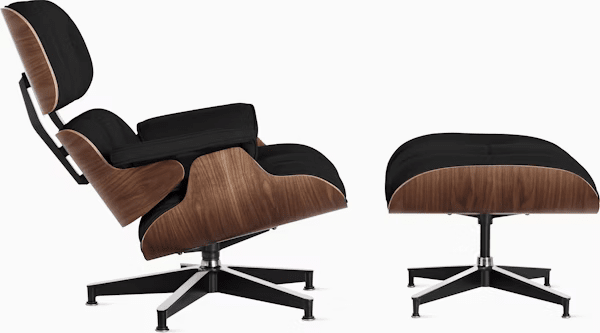
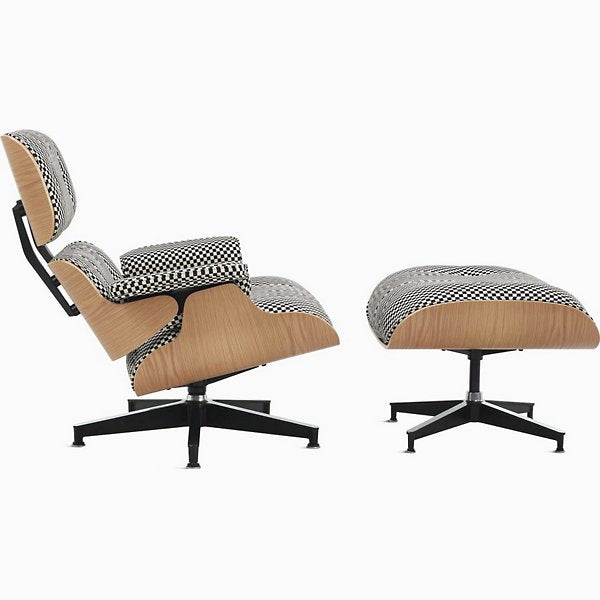
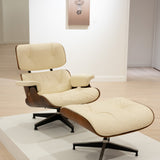
The Eames Lounge Chair and Ottoman, officially designated as the 670 (chair) and 671 (ottoman), is a study in standardized luxury: its three molded plywood shells—headrest, backrest, and seat—are made from identical parts across the chair and ottoman, with the two back panels being interchangeable and the chair seat sharing its mold with the ottoman. This clever engineering, born from Charles and Ray Eames's obsession with mass-production techniques, allows a premium piece to offer surprising repairability—cushions are fully removable and reversible, and the seat and ottoman cushions can even be swapped. The shells themselves have evolved: early models (1956 through the early 1990s) used a five-ply construction with Brazilian rosewood veneer, while modern production switches to seven plies and sustainably sourced options like cherry, walnut, and Santos palisander, finished with water-based varnish rather than the original polyurethane. The aluminum base, adapted from the Eames Molded Plastic Chair, features rubber shock mounts that flex with the sitter, a detail that enthusiasts point to as key to the chair's legendary comfort. Authentication revolves around these material details—the presence of Brazilian rosewood, the type of spacers on the spine (rubber versus plastic), and the number of screws—all of which shift with production eras, making the 670/671 a time capsule of mid-century industrial artistry.
+Field notes
- —The 670 (chair) and 671 (ottoman) share interchangeable parts: the two back panels are identical, and the chair seat and ottoman shell use the same mold, reducing waste and enabling cushion reversibility and swapping between the two pieces.
- —Early production (1956–early 1990s) used five-ply plywood with Brazilian rosewood veneer; after the 1990s, production shifted to seven plies with sustainably sourced veneers like cherry, walnut, and Santos palisander, finished with water-based varnish instead of polyurethane.
- —The rubber shock mounts connecting the aluminum spine to the wood shells—a feature adapted from earlier Eames molded plywood chairs—were later replaced by hard plastic washers; the presence of rubber or plastic is a key authentication marker for vintage examples.
- —All chairs share a five-pointed die-cast aluminum base with a built-in swivel, a first for an armchair in 1956, but the ottoman base is identical in shape yet fixed (non-swiveling), except for rare swivel-ottoman variants that collectors prize.
- —Modern customization allows for six veneer options and over 2,600 possible configurations, but when ordered as a set, the grain on the chair and ottoman shells is matched during production—a luxury detail lost if purchased separately.
Discover
Watch Restorations, Authenticity Breakdowns, and Collector Walkthroughs


Restoring an Eames Lounge Chair—whether a genuine Herman Miller piece or a vintage Plycraft knockoff—demands a specific, hands-on understanding of materials and construction that varies dramatically by era and maker. A 1972 Charlton-style chair restoration by KevinCrafted took five months of patient work, including metal refinishing, wood veneer repairs, and first-time upholstery, while Dan the Furniture Repair Man and his son Arthur have rebuilt countless Eames and Plycraft chairs, each revealing the owner's personality through custom finishes. The most common failure point is the leather around the button holes, which tears over time, causing the button to sink into the cushion—a repair that requires cutting the button away and stitching the hole closed, as shown by leatherhelpguy's real-time tutorial. Authentic production methods at Herman Miller (documented by BrandmadeTV) involve precision-crafted molded plywood shells and top-grain leather, while the replica market, as Yadea furniture Jerry points out, varies wildly: cheap copies use PU or low-grade split leather, premium replicas use full-grain aniline leather, and originals use the best materials. Thefurnituredr's 95-minute deep dive on a Plycraft restoration covers everything from staple removal to making custom leather buttons and piping, proving that mastering these chairs is a craft of small details—like tracing old upholstery patterns and patching veneer—that separate a hack job from a true revival.
+Field notes
- —The most common and frustrating issue with an Eames lounge chair is the leather tearing around the button hole; over time the button sinks into the cushion, and fixing it requires cutting the button away and repairing the hole by hand.
- —A full restoration of a 1972 Charlton Eames-style chair (often confused with Herman Miller originals) can take five months, covering metal work, wood refinishing, and upholstery—even for a first-time upholsterer like KevinCrafted.
- —Dan the Furniture Repair Man and his son Arthur have become experts in both Eames and Plycraft lounge chairs, treating each restoration as a chance to express the owner's personality through custom finishes, from standard refurbishing to bold reinterpretations.
- —Authentic Eames Lounge (670) and Ottoman (671), released in 1956, are made from molded plywood and leather, with a heritage tracing back to the Eames' 1940s plywood chair innovations; Charles Eames intended the chair to be 'a special refuge from the st' (stress of modern life).
- —Restoring a Plycraft Eames-style chair involves dozens of discrete steps: removing staples, sanding, sealing wood shells, tracing old upholstery, patching veneer, making leather buttons and piping, and installing everything correctly—a process documented in 95 minutes by thefurnituredr.
- —The replica market for Eames lounge chairs splits sharply: cheap copies use PU or low-grade split leather that feels plastic and cracks, while premium replicas like Yadea's use 100% full-grain aniline leather that ages beautifully, similar to the original Herman Miller's top-grain material.
Discover
Read the Specialist Guides on Versions, Materials, and What to Look For


Keep exploring
More of Eames Lounge Chair and Ottoman
Branch out
Beyond Eames Lounge Chair and Ottoman
More to explore
In the same world.
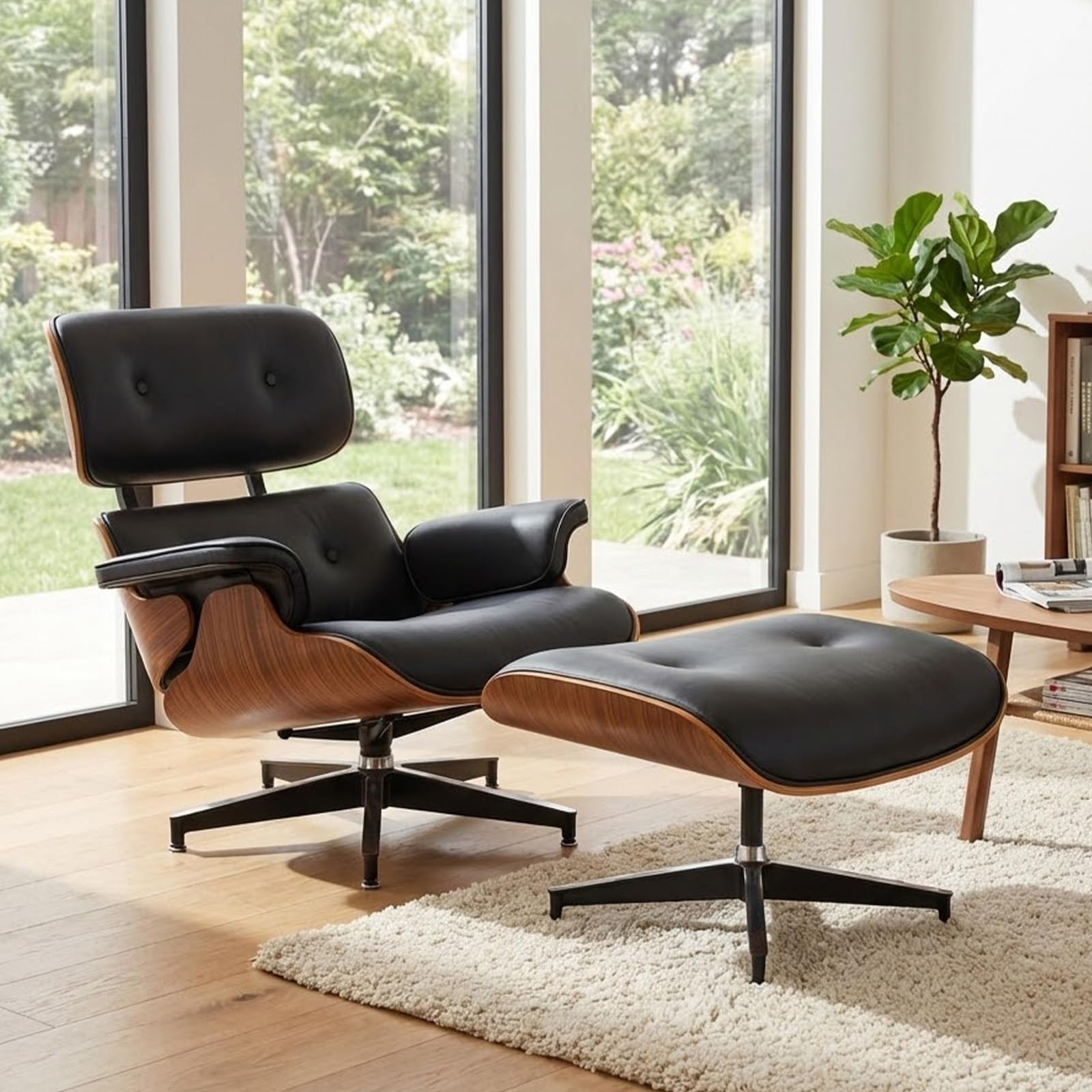
Mid-Century Modern Furniture
Mid-century modern furniture lives in two worlds at once: it is a living retail style category and a serious vintage col…
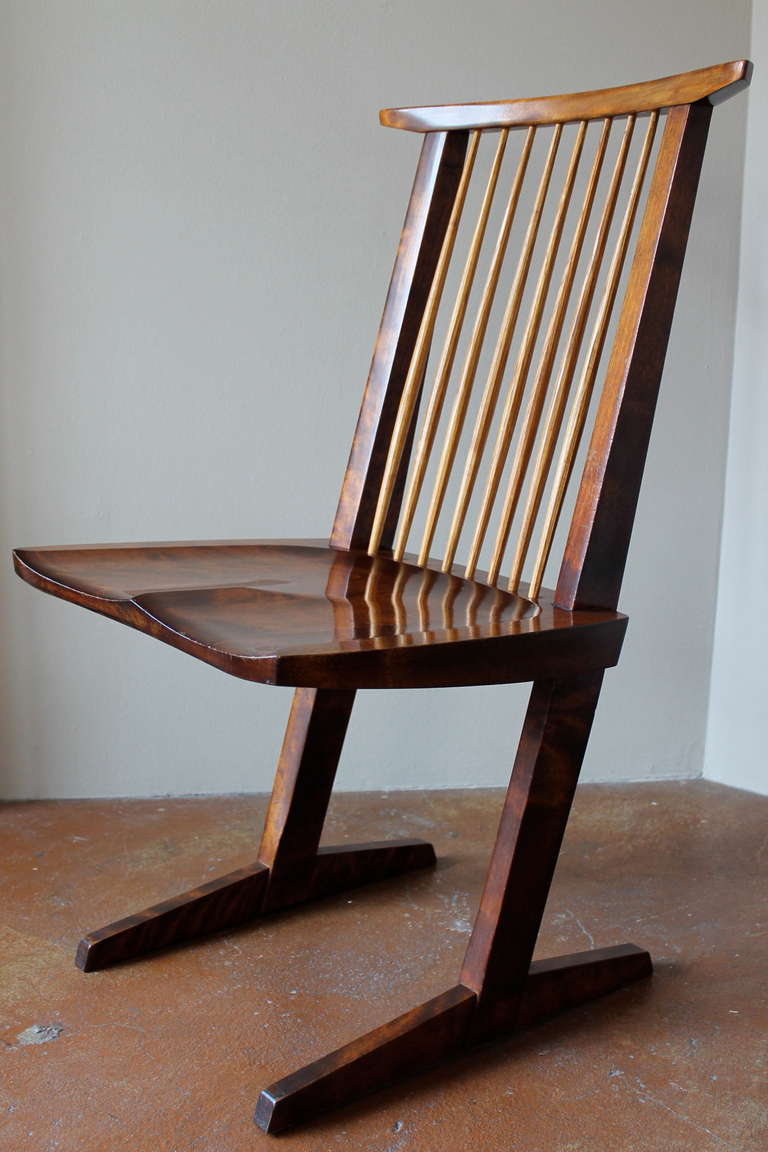
George Nakashima’s Conoid Chair
The Conoid Chair is one of George Nakashima’s signature seating designs, made in New Hope, Pennsylvania and held today b…
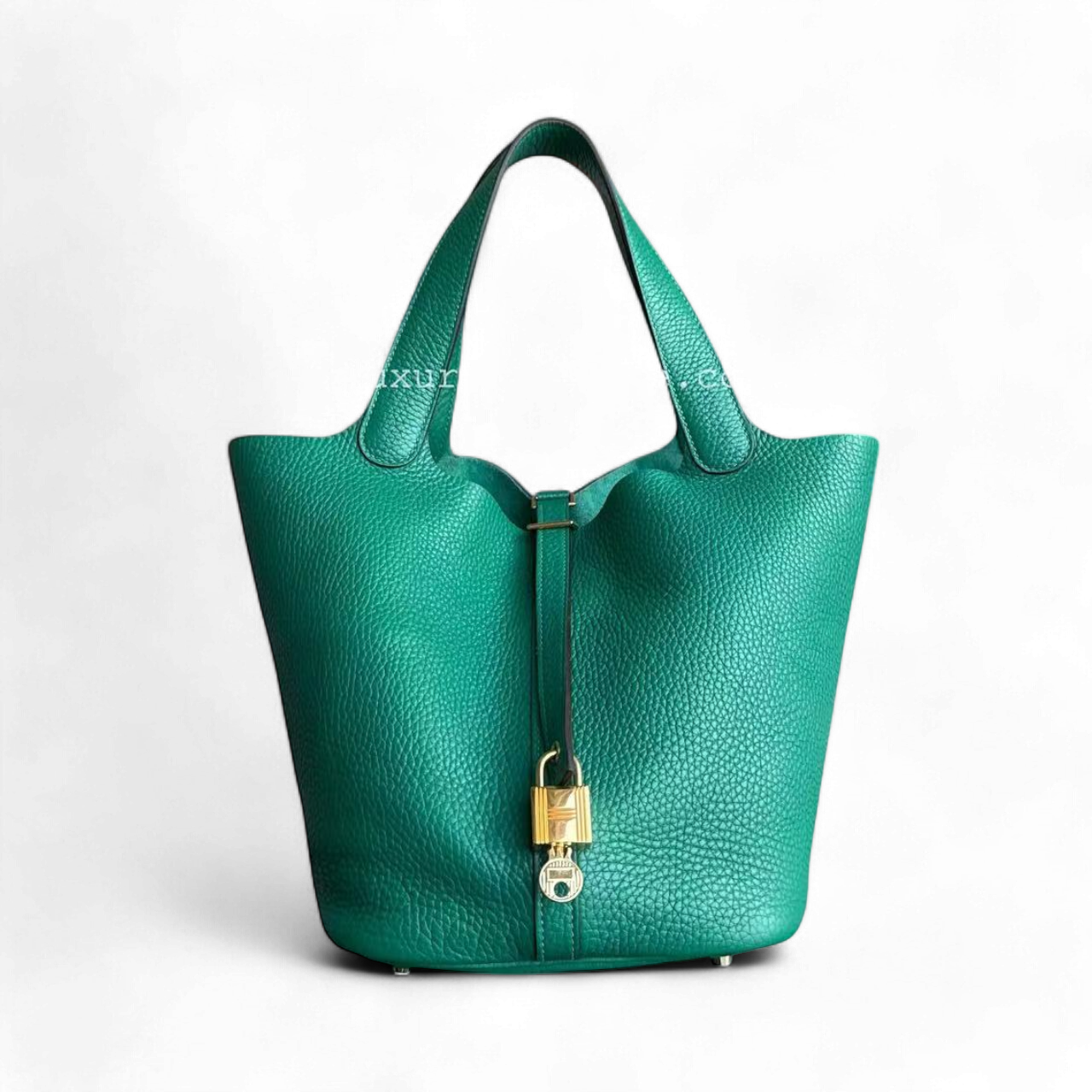
Hermès Birkin
The Birkin is Hermès’s storied top-handle bag, traced by the house to a 1984 Paris-to-London flight where Jane Birkin de…

Luxury Bag Brands Where Craft Actually Leads
The most convincing luxury bag brands are the ones that make craftsmanship legible: Florence houses like Misuri and Dani…

Vintage Pelikan Fountain Pens
Vintage Pelikan collecting really starts with the Model 100, the company’s first fountain pen, made from 1929 to 1944 an…

Vintage Levi's Denim
Vintage Levi's denim is a collector's world built around reading the garment itself: care tags, the red tab, and details…

Levi’s 501 Big E
Levi’s 501 Big E means the red tab with the brand name in capital letters, a detail that has become a shorthand for some…

Porsche 964
The Porsche 964 — built from 1989 to 1994 — represents one of the most ambitious reinventions of the 911 formula: beneat…
More in Kitchen & Home Design
Stay in this world.

Sentan SLD Nashiji Gyuto 210mm

Tappan “Tappy” Chef Figures and Chalkware Advertising
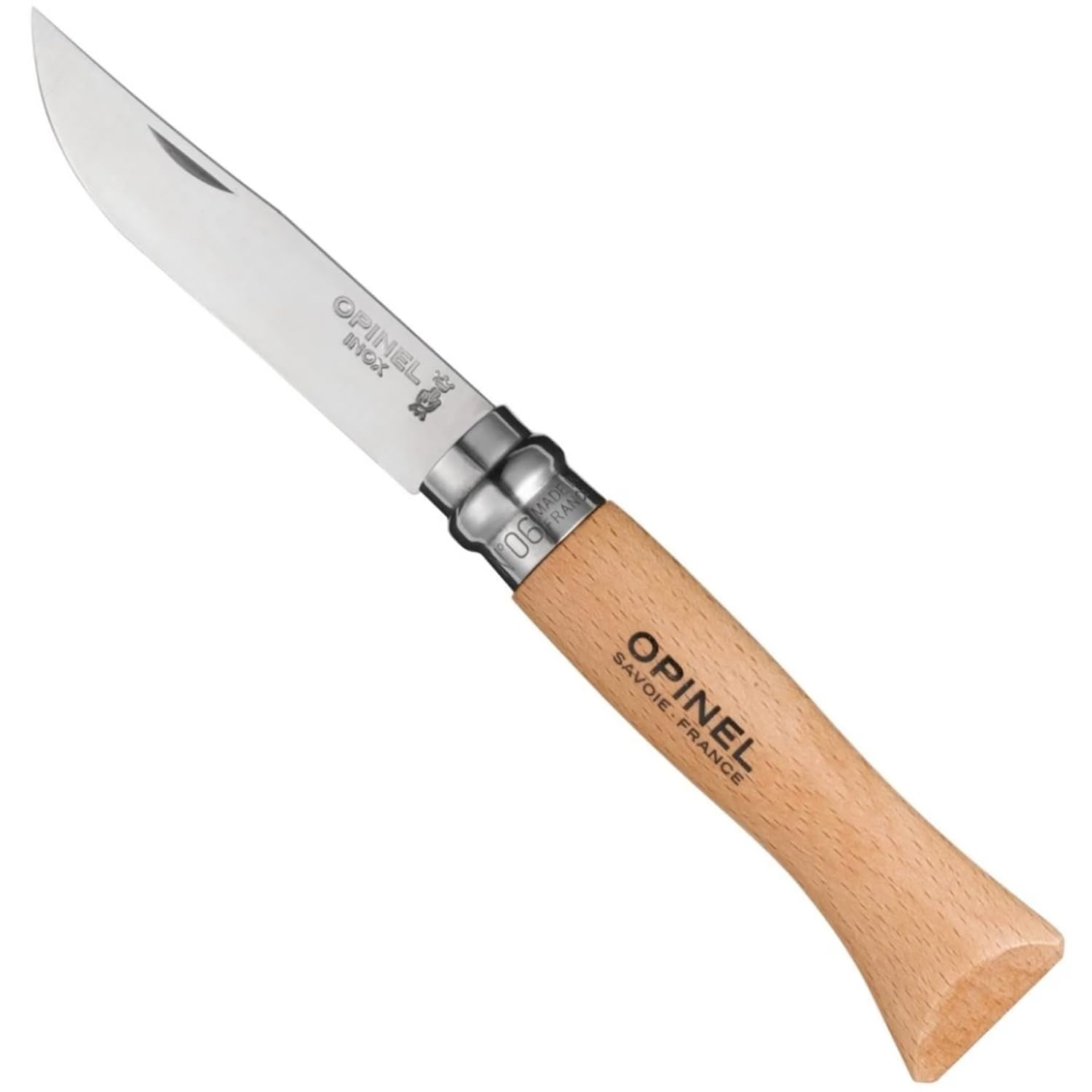
Opinel No. 8
Mid-Century Modern Furniture

Japanese Kitchen Knives

Jungsik

Teishoku

Summerific® 'Perfect Storm' Rose Mallow
Imagery
Know someone who’d love this?
Discovered by ArcurianAuto-generated from public sources and AI synthesis — it may be incomplete or inaccurate. Treat it as a starting point for your own exploration, not professional (medical, legal, financial, or safety) advice. Verify anything you act on. Report this page.