Teishoku is the Japanese set meal: a fixed-price meal served as a complete tray, typically built around a main dish with rice, miso soup, pickles, and small sides. Several sources describe it as a balanced, everyday style of eating rather than a single recipe, with roots linked to the ichiju-issai pattern of traditional meals and Zen temple dining. What makes teishoku interesting is the structure—fried fish, karaage, tonkatsu, or ginger pork can all become teishoku once they enter that rice-soup-pickles rhythm, and regional details can shift too, such as Kansai substitutions for pickles. It is one of the clearest ways to understand how Japanese food organizes comfort, efficiency, and balance on one tray.
Learn
How a Teishoku Meal Is Built
Teishoku is a Japanese set meal built on an ancient architectural principle called ichijū-sansai (one soup, three dishes), originating from Muromachi-period Zen temple cuisine. The meal is served all at once on a single tray, with rice as the gravitational center and everything else arranged around it in a precise, rule-bound layout. Front left is always the rice bowl, front right the miso soup, with the main protein dish placed rear right and smaller vegetable side dishes at the rear left or center. This isn't just tradition—it's ergonomics: the soup goes on the right because it's lifted to the mouth, and placing the liquid nearest the dominant hand minimizes spill risk. The main dish sits at the rear right for easy access with chopsticks during a meal that alternates bites of rice, soup, protein, and pickles. Even regional variations exist: people in Niigata stick to the standard arrangement, while those in the Kansai region (around Osaka) push their soup to the far upper left corner, as far from the body as possible, to avoid scalding. The result is a meal designed for balance, efficiency, and the quiet pleasure of composing each bite yourself.


 foodtourtokyo.comfoodtourtokyo.com
 nippon.comnippon.com
+Field notes
- —The foundational template is ichijū-sansai (一汁三菜, 'one soup, three dishes'), a formula from the Muromachi period (14th–16th century) that dictates the entire structure of a teishoku: rice, one bowl of miso soup, a main protein dish (shusai), a vegetable side (fukusai), and a small garnish or pickle (fukufukusai).
- —Placement is strictly codified: rice goes front left, miso soup front right, the main dish rear right, and side dishes rear left or center. The logic is practical—soup is placed on the right because it's lifted to the mouth, and liquid on the dominant side minimizes spill accidents.
- —Regional tradition overrides the standard layout: in Niigata Prefecture, rice and soup sit closest to the diner, while in the Kansai region (Osaka area), the soup bowl is deliberately placed in the upper left corner, as far from the body as possible, to avoid contact with its piping-hot contents.
- —Rice is the true centerpiece—called shushoku (主食, 'main food')—while all other dishes are considered fukushoku (副食, 'subsidiary foods'). In Kyoto, side dishes are referred to as omawari (お回り, 'that which goes around'), underscoring that everything else orbits the rice.
- —The rule that soup and rice occupy the front positions dates back to the Heian period (794–1185), and the arrangement is designed for a right-handed diner: the main dish sits rear right because it takes multiple bites to eat and is conveniently reached across the tray.
Learn
From Ichiju-Issai to Everyday Dining
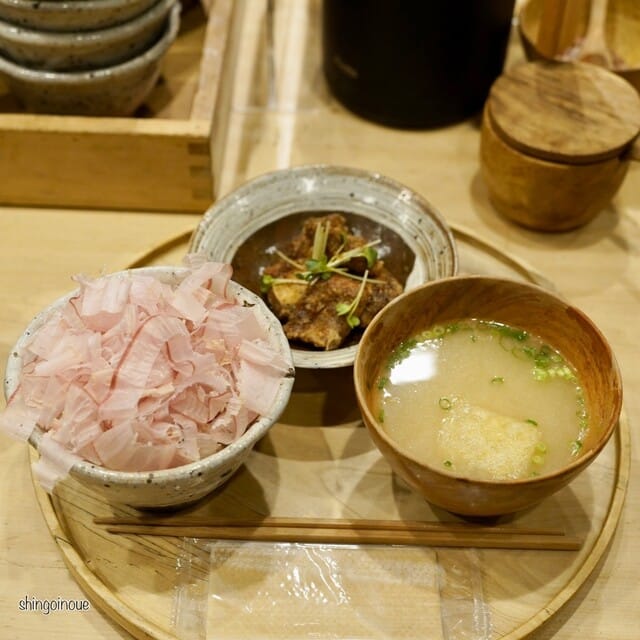
Teishoku, the Japanese set meal, is the everyday descendant of a Zen monastic tradition called ichiju-issai (“one soup, one side”) that emerged in the Kamakura period as a deliberately frugal, minimalist way of eating. The core template—steamed rice, miso soup, pickled vegetables, and a single main dish—was codified not for luxury but for temperance: feudal lords like Uesugi Yozan and Ikeda Mitsumasa actively mandated ichiju-issai meals during the Edo period as a public thrift measure. Over centuries, that spare Zen format expanded into the more generous ichiju-sansai (“one soup, three dishes”) structure, which the Japanese Ministry of Health, Labour and Welfare now explicitly recommends as a healthy eating pattern for its built-in micronutrient variety. Today's teishoku sets, often named after their protein (tonkatsu teishoku, yakizakana teishoku, sashimi teishoku), are the go-to lunch for budget-conscious students and office workers across Japan, typically priced under ¥1,000—a direct line from monastic austerity to workplace canteen.

 sabukaru.onlinesabukaru.online

+Field notes
- —Teishoku's deepest root is the Zen monastic ichiju-issai (一汁一菜): one bowl of soup, one side dish, plus rice and pickles. This format was deliberately simple and vegetarian, in keeping with Zen doctrine that forbade animal products—a rule that held until the Meiji period lifted the meat ban under Western influence.
- —By the Edo period, powerful daimyō—most notably Uesugi Yozan and Ikeda Mitsumasa—ordered their subjects to adopt ichiju-issai meals as a matter of public frugality. This wasn't culinary advice; it was an explicit cost-cutting directive that pushed the monastic template into everyday secular life.
- —The modern ichiju-sansai (one soup, three dishes) format—rice, soup, a main dish, and two sides—was the structure cited in UNESCO's 2013 registration of washoku as an Intangible Cultural Heritage. Japan's Ministry of Health, Labour and Welfare explicitly recommends this pattern as a health measure because the multiple small dishes encourage natural micronutrient diversity.
- —In Kyoto, side dishes are still called omawari (お回り)—literally "that which goes around"—because rice is the shushoku, the true main course, and everything else is positioned around it. This spatial logic is mirrored in the traditional placement: rice on the left, soup on the right, and the main dish at the back.
- —Teishoku pricing has historically stayed below ¥1,000 per set, making it the default lunch for students and salarymen alike. Independent restaurants near universities and dense office districts specialize in teishoku because the fixed format lets them keep menus streamlined and prices low.
- —Although the original ichiju-issai was meatless, the most common teishoku mains today are tonkatsu (deep-fried pork cutlet), yakizakana (grilled fish), and tempura—a clear break from the Zen vegetarian lineage, driven by the Meiji-era normalization of meat eating.
Learn
The Menu Words That Matter
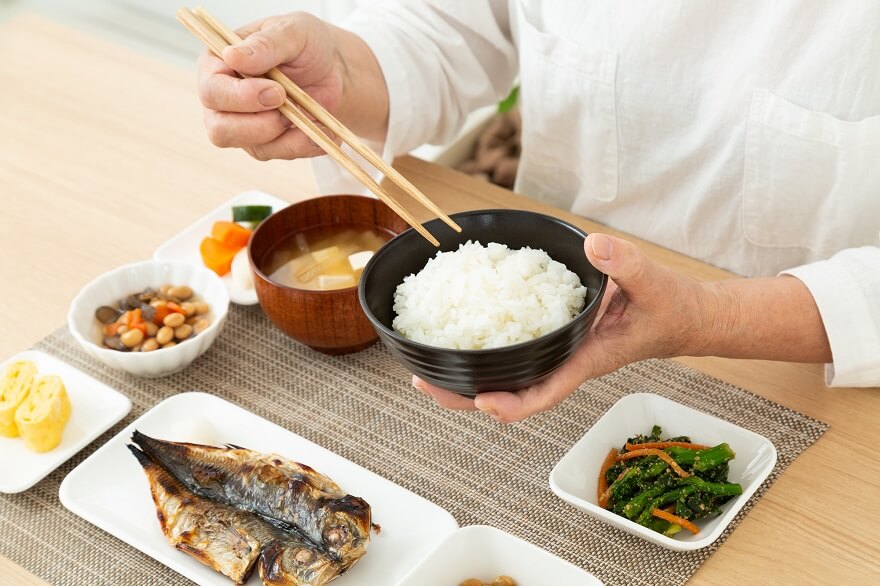
Teishoku, Japan's set meal, is far more than a convenient lunch option — it's a direct expression of the centuries-old ichiju-sansai (one soup, three dishes) philosophy from the Muromachi period, where rice is the absolute center and every component is deliberately balanced in flavor, texture, and temperature. When you see 定食 on a menu, you're getting a tray that always includes rice (usually refillable), miso soup, a main protein (grilled fish, tonkatsu, karaage, or ginger pork), a vegetable side, and pickles — all served at once, not in courses. The word itself combines 定 (fixed) and 食 (meal), and the specific type is almost always named after the main dish (e.g., 鯖の塩焼き定食 for salt-grilled mackerel). Understanding this structure unlocks the most reliable, affordable, and nutritionally complete meal in Japanese everyday dining, and knowing a few key terms like 日替わり (daily special) and 単品 (à la carte) lets you navigate any shokudō with ease.

 senseijapanese.comsenseijapanese.com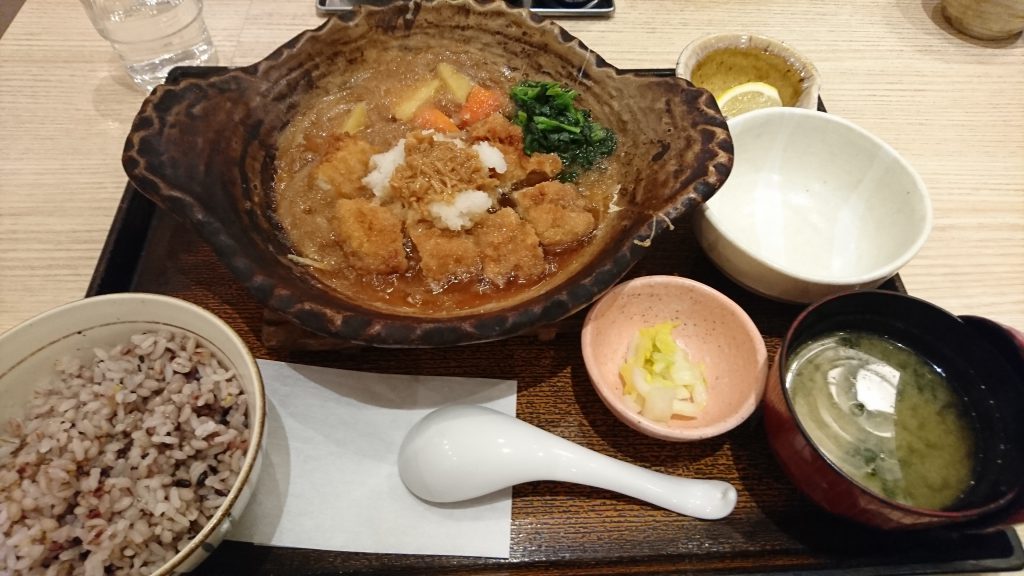

+Field notes
- —Teishoku literally means 'fixed meal' (定 + 食) and follows the ichiju-sansai principle — one soup, three dishes — a format that originated in Zen temple cuisine and became standardized during the Muromachi period (14th–16th century).
- —The standard teishoku tray always has five components: rice (ご飯), miso soup (味噌汁), a main dish (主菜), a vegetable side (副菜), and pickles (漬物). In Japanese culinary logic, rice is the main dish (主食), not a side — everything else is meant to complement it.
- —The most common teishoku types are named after their main protein: 焼き魚定食 (grilled fish), 唐揚げ定食 (fried chicken), とんかつ定食 (pork cutlet), 生姜焼き定食 (ginger pork), and the ever-present 日替わり定食 (daily special, often written on a blackboard).
- —A key menu phrase to know: 本日の定食は売り切れです (honjitsu no teishoku wa urikire desu) means 'today's set meal is sold out' — useful because many shops only have a limited number of the daily special.
- —The tray placement has traditional etiquette: rice on the left, soup on the right, main dish at the back — a layout rooted in the belief that the most important item (rice) sits on the left, though modern diners often ignore this.
Discover
Watch Teishoku Kitchens and Home-Style Plate Assembly


The teishoku format is less a set of recipes and more a disciplined yet flexible assembly system rooted in the traditional washoku principle of *ichiju sansai* (one soup, three dishes), a dietary culture recognized by UNESCO in 2013. Home cooks build each meal around a bowl of steamed short-grain rice (shushoku), a miso soup (shirumono), one main dish (shusai) — often grilled salmon or a fried cutlet like tonkatsu — and one or two vegetable side dishes (fukusai), plus pickles. The real trick is preparation: components like *nikujaga* (meat and potato stew), *ingenno gomaae* (green beans with sesame), and *nukazuke* (fermented rice-bran pickles) can be made in advance and stored, so busy cooks simply pull them out, reheat the rice, and plate everything together in minutes. The result is a balanced, visually tidy meal that requires no last-minute chaos — just a little foresight and the right small bowls.
+Field notes
- —The *ichiju sansai* template — one soup, three dishes — is the structural core of washoku, which was inscribed as a UNESCO Intangible Cultural Heritage in December 2013, and that same template is what makes teishoku so easy to replicate at home.
- —A standard teishoku breakfast breaks down into five specific components: white rice (shushoku), miso soup (shirumono), one grilled fish main (shusai), one or two vegetable sides (fukusai), and a small portion of pickled vegetables — all arranged in separate small dishes on one tray.
- —Dinner teishoku often features hearty fried or pan-cooked mains such as tonkatsu (pork cutlet), ebi furai (fried shrimp), hamburger steak, or ginger pork, all of which can be batch-cooked and used for multiple set meals throughout the week.
- —The side dish *nukazuke* — vegetables fermented in a rice bran bed — is a make-ahead staple that can live on the counter and be sampled daily, adding a distinct tangy crunch to any teishoku plate without extra cooking.
- —Teishoku assembly is intentionally modular: by preparing a few versatile components like grilled salmon (shiozake), simmered nikujaga, and a simple sesame-dressed green bean salad, you can mix and match to create a balanced meal in under ten minutes.
Discover
Read Deeper into Everyday Set-Meal Culture

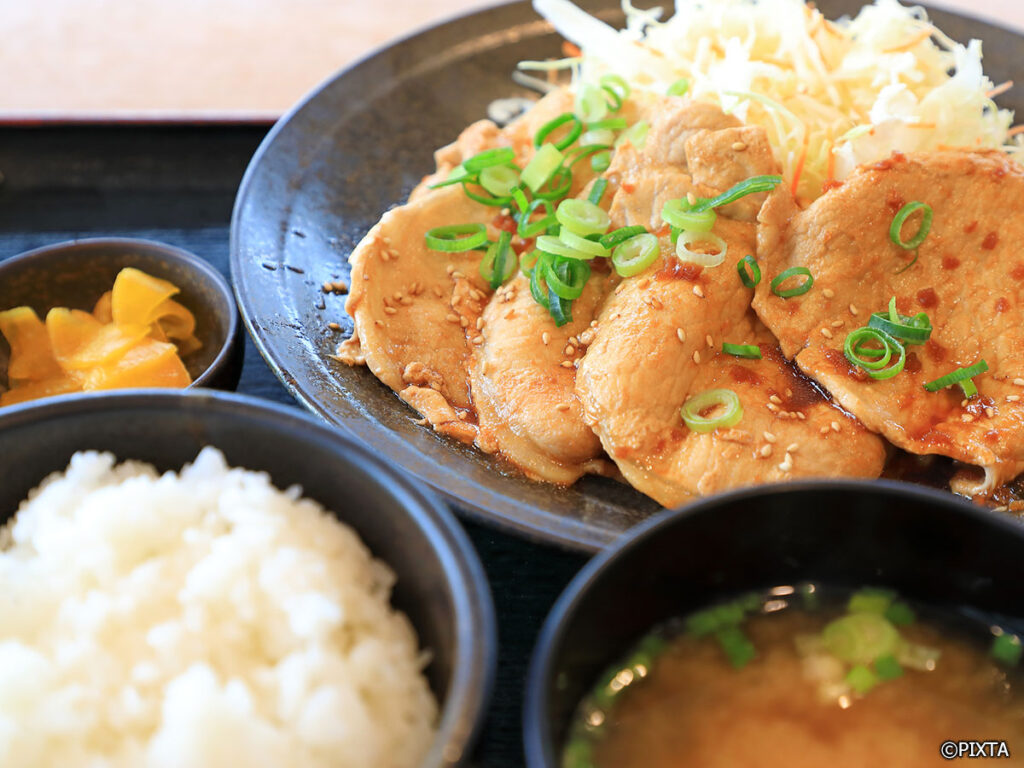

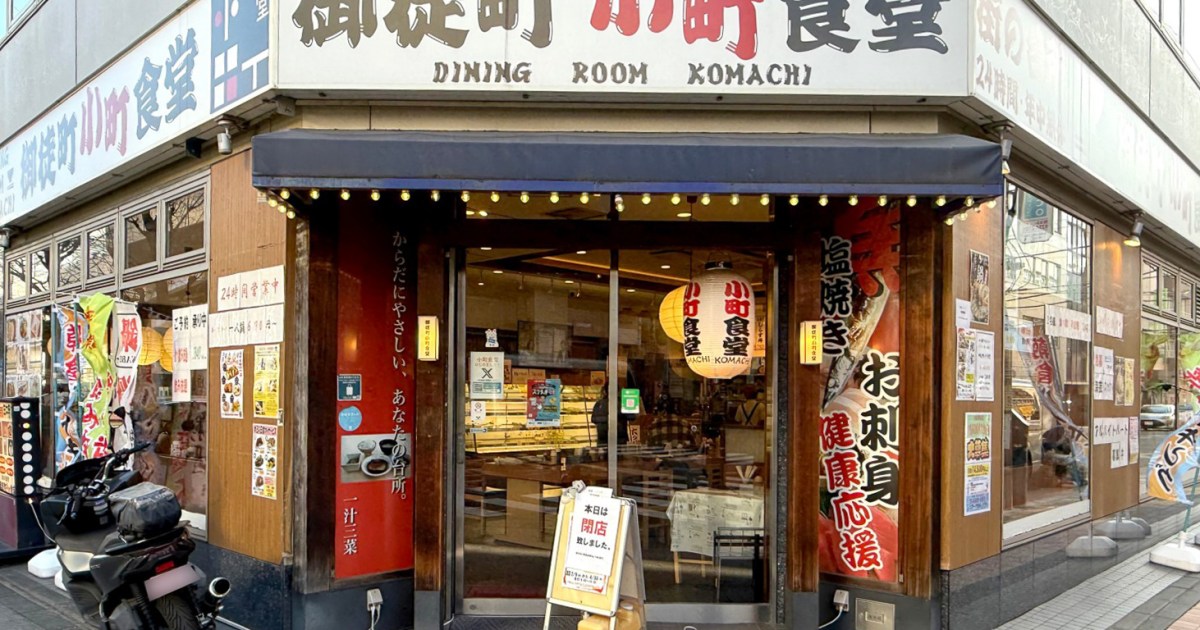
Teishoku, the Japanese set meal, is the everyday workhorse of Japanese dining — a tray bearing rice, miso soup, pickles (tsukemono), a main dish (shusai), and a side (fukusai). Far from being just a quick lunch, its roots go back to the ichiju-issai (one soup, one side) of Zen temple cuisine in the Heian period (794–1185). The true star of the tray is rice, considered the shushoku (main staple), around which everything else — called omawari, "that which goes around" in Kyoto — is arranged. This structure turns every meal into a deliberate, balanced composition. Teishoku is served everywhere from backstreet mom-and-pop shokudo (written with the characters for "food" and "hall") to chains like Yayoiken, and even in 24-hour spots like Komachi Shokudo, which offers over 60 chilled side dishes that you grab like from a fridge and heat yourself. The teishokuya (定食屋) diner is a cultural institution where lunch is devoured in under 11 minutes, the barley tea comes from huge plastic pitchers, and the aesthetic is proudly greasy and unrenovated. Ordering is often via ticket vending machines or from handwritten wall menus with no photos. What makes teishoku genuinely surprising is that the namesake dish — say, tonkatsu teishoku — is named after the main, but the real point is the architecture of the whole tray: a complete, nutritionally balanced meal that has fed Japan for centuries without ever needing to be fancy.
+Field notes
- —Teishoku traces back to the Heian period (794–1185), where the basic structure of ichiju-issai (one soup, one side) originated in Zen temple cuisine; the term teishoku itself combines "fixed" (定) and "meal menu" (食事献立).
- —In the traditional teishoku arrangement, rice (gohan) is the shushoku (main staple), not the side dish; in Kyoto, side dishes are called omawari — "that which goes around" — because they are arranged around the central bowl of rice.
- —At a classic teishokuya diner, meals are served in under three minutes, and a regular customer might polish off katsudon with one hand while holding a bowl of ramen with the other, finishing in under 11 minutes.
- —Komachi Shokudo, a 24-hour shokudo chain, uses a self-service system where you grab a tray and pick from over 60 refrigerated side dishes — heating them yourself in the microwave — while staff serve hot rice and miso soup at the register, creating millions of possible combinations.
- —Many shokudo operate on a pay-first system with ticket vending machines (usually cash only), and their menus are often handwritten in Japanese on wall papers with no pictures — though some have food samples near the entrance for ordering.
- —The main dish defines the teishoku name (e.g., saba no shioyaki teishoku for salt-grilled mackerel), but the tray also always includes miso soup, tsukemono pickles, and at least one fukusai side dish — the goal being nutritional balance and a variety of flavors and textures in one sitting.
Explore
Serve It Properly at Home
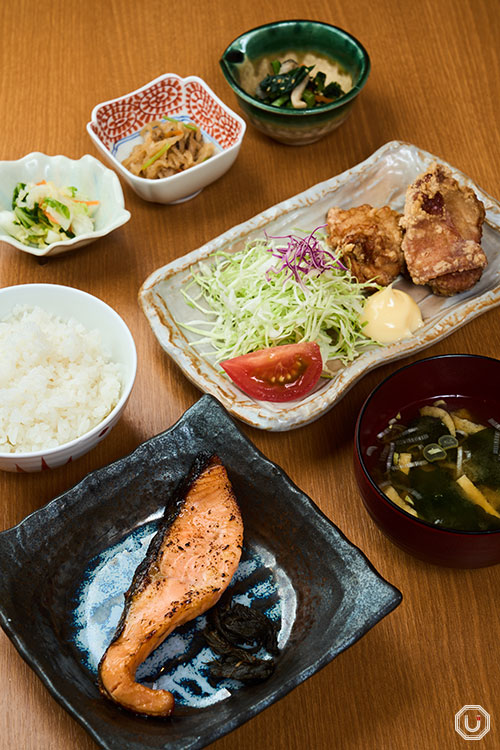
To serve teishoku properly at home, you don’t need a full set of matching tableware — in fact, the Japanese aesthetic actively avoids it. The foundation is the *ichiju-sansai* (一汁三菜) format: one soup, one main dish, and two side dishes, plus rice and pickles. Each component gets its own vessel: a personal rice bowl (*ochawan*, often chosen individually per family member), a lacquered soup bowl (*shiruwan* or *owan*) with a lid, a medium plate for the main dish, small plates for sides, and tiny *mame-zara* for condiments or pickles. The classic layout places the rice bowl at front left and the soup bowl at front right (for practical right-hand use), with the main dish at rear right and sides rear left or center. Chopsticks rest horizontally in front on a *hashioki*, pointing left. There’s no need to own expensive, matching sets: natural textures like ceramic, wood, and bamboo are ideal, and mixing shapes and colors is encouraged — the goal is balance and seasonal harmony, not uniformity. You can even substitute Western dishes if you choose complementary sizes and keep the arrangement intentional.
 justonecookbook.comjustonecookbook.com
 yamatodining.comyamatodining.com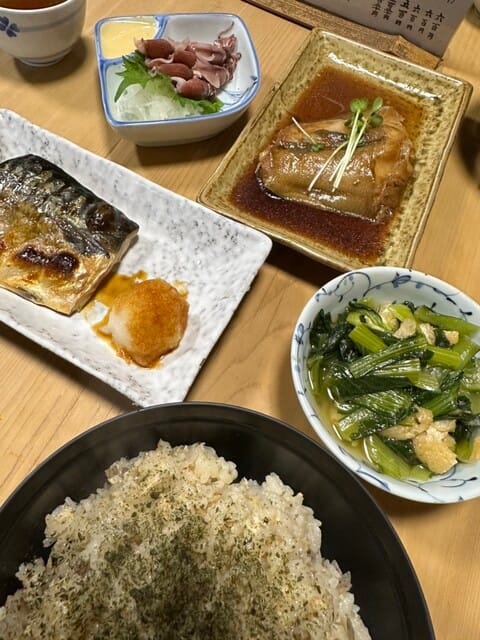
 okonomikitchen.comokonomikitchen.com
+Field notes
- —Every family member may have their own personal rice bowl (*ochawan*), chosen by size and feel — larger for the husband, smaller for the wife in *meoto chawan* sets, and even different character prints for children, reflecting individual taste and seasonality.
- —The soup bowl (*shiruwan* or *owan*) is typically made of lacquered wood for insulation and has a lid, and unlike rice bowls it is usually uniform across the household; its placement on the right is intentional for right-handers to minimize spill risk when lifting it to the mouth.
- —The classic *ichiju-sansai* layout places the rice bowl at front left, soup at front right, main dish (like fish or meat) at rear right, side dishes at rear left or center, and pickles near the rice — all within easy reach without crossing chopsticks over other dishes.
- —Chopsticks are laid horizontally in front of the diner with the tips pointing left, resting on a *hashioki* (chopstick rest); the back of the chopsticks faces the dominant hand — right for most people — making pickup natural without twisting.
- —You don’t need to buy traditional Japanese tableware at all — Western plates and bowls can work if you mix shapes and sizes, use natural textures like ceramic or wood, and follow the color balance of red, yellow, green, white, and black (3 of 5) for visual harmony.
Keep exploring
More of Teishoku

More to explore
In the same world.
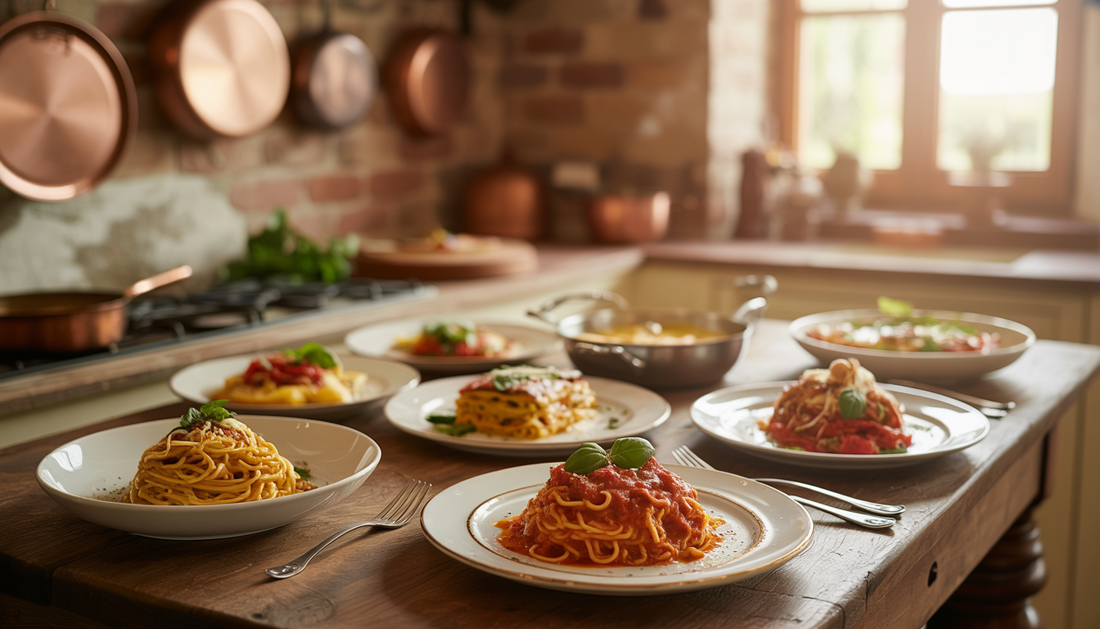
The Typical Italian Diet
A typical Italian diet is less about a single menu than a pattern built around fresh, seasonal ingredients, regular meal…

Japanese Kitchen Knives
Japanese kitchen knives are a broad world of made-in-Japan chef’s knives that ranges from workhorse gyutos and santokus…

Shohin Bonsai
Shohin bonsai are miniature trees defined less by a rigid species list than by scale and presentation: many sources plac…

Tenkara Fly Fishing
Tenkara is a traditional Japanese style of fly fishing built around radical restraint: a long rod, a fixed line, and a f…

Suntory Torys Classic PET
This is Suntory’s Torys Classic whisky in the large PET-bottle format, a practical packaging style tied to everyday Japa…

Japanese Whisky Under $200
Shopping Japanese whisky below $200 means navigating two different pleasures at once: the appeal of Japanese craftsmansh…

Sentan SLD Nashiji Gyuto 210mm
The Sentan SLD Nashiji Gyuto 210mm is a Japanese-style all-purpose chef’s knife sold in several ferrule colorways, inclu…

Cutlery Brands
"Cutlery brands" spans both tableware and kitchen knives, and the sources here point to a field where heritage, material…
More in Kitchen & Home Design
Stay in this world.
Sentan SLD Nashiji Gyuto 210mm

Tappan “Tappy” Chef Figures and Chalkware Advertising
Eames Lounge Chair and Ottoman
Opinel No. 8

Mid-Century Modern Furniture
Japanese Kitchen Knives

Jungsik
Summerific® 'Perfect Storm' Rose Mallow
Know someone who’d love this?
Discovered by ArcurianAuto-generated from public sources and AI synthesis — it may be incomplete or inaccurate. Treat it as a starting point for your own exploration, not professional (medical, legal, financial, or safety) advice. Verify anything you act on. Report this page.