Shohin bonsai are miniature trees defined less by a rigid species list than by scale and presentation: many sources place them under about 20–25 cm, often small enough to hold in one hand. What separates shohin from simply “small bonsai” is the display culture around them, with multi-tree arrangements, special tables, and a visual language that rewards proportion, branching, and pot choice at very small scale. The size bands around mame and shohin matter to enthusiasts, and so do teachers and exhibitors such as Evan Marsh, noted by the Bonsai Society of Australia for prize-winning shohin and study with Koji Hiramatsu of the All-Japan Shohin Bonsai Association. If standard bonsai asks you to admire a tree, shohin asks you to notice how an entire miniature display world is built.
Learn
What Makes Shohin Its Own World
Shohin bonsai is not just a smaller tree; it's an entirely different discipline of composition. By convention, a Shohin tree is under 20cm from the rim of the pot (a guideline from the All Japan Shohin Bonsai Association, flexible enough that a 21-23cm tree can win at major exhibitions), but the real distinction is that Shohin are never shown alone. They are always arranged as a multi-element display—typically three to nine pieces including the trees, accent plants, and sometimes scrolls or suiseki—and every element must provide contrast: different species, styles, pot shapes and colours, and individual stands, all varied. The arrangement itself follows intricate rules of spatial tension: trees on the same shelf must be at different heights (achieved by varying their individual display stands), each pair should point toward one another, and the gaps above the trees within the box stand must also be deliberately varied. The tradition holds that the primary tree is a strong, masculine specimen (often a conifer), while the secondary tree signals the season with flowers or fruit. This pursuit of maximum contrast within a tiny stage makes Shohin fundamentally more complex and rule-bound than displaying a single large bonsai.

 shohin-europe.comshohin-europe.com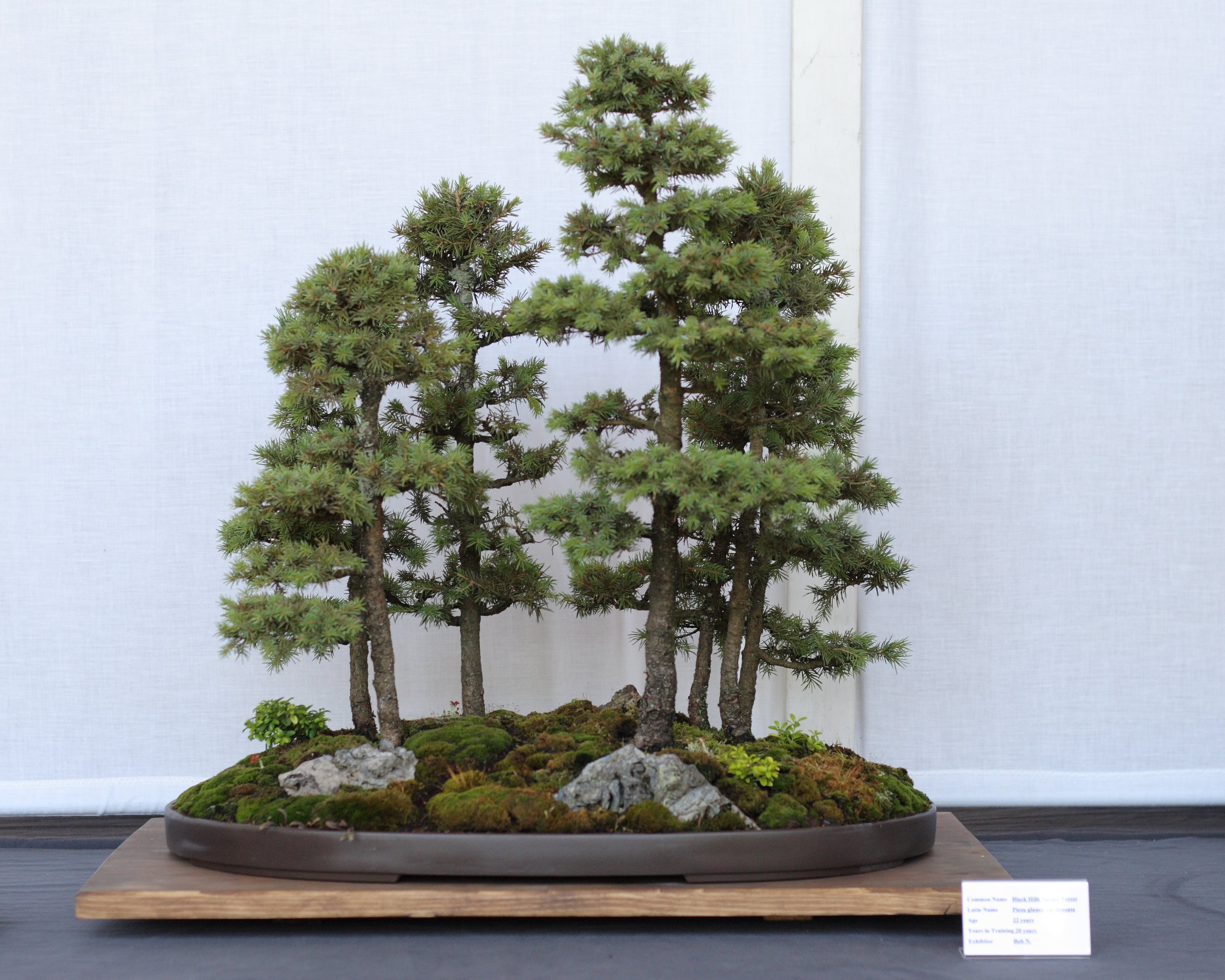
 bonsaitoday.combonsaitoday.com
 bonsai.asn.aubonsai.asn.au
 bonsainz.combonsainz.com
+Field notes
- —The size limit for Shohin is 20cm from the rim of the pot (set by the All Japan Shohin Bonsai Association), but this is flexible—small jin or flowers can break it, and trees up to 21-23cm have won prizes at major Japanese exhibitions; the final decision rests with the judges based on whether the tree 'has the feeling of a Shohin.'
- —A Shohin display never shows a single tree; the standard display calls for five to seven trees arranged on a rack, always varying species, pot forms, colours, and the individual stands under each tree—repeating any element is forbidden at elite shows like Kokufu.
- —Each tree in a Shohin display sits on its own small display table (stand), and these stands are deliberately chosen to raise each tree to a different height—even if a tree is naturally taller than its neighbour, it sits on a taller stand to exaggerate the height difference and vary the gaps above the trees within the box stand.
- —The primary tree in a display is traditionally a strong, masculine conifer (often a pine), while the secondary tree carries a clear seasonal signal—berries, flowers, or winter silhouette—so the layout itself expresses the changing season.
- —Shohin typically use a 1:4 trunk-to-height scale (trunk thickness is 1/4 of tree height), a dumpier proportion than the usual 1:6 scale for larger bonsai, though literati and 'sumo' Shohin break even that—sumo Shohin can have a 1:2 ratio.
- —When building a Shohin tree from scratch, modern practice rejects the 'left, right, back' thinking used for larger bonsai; instead, the goal is to fill all available space because empty space makes a small tree look immature, and a rounded canopy is key to making a tiny tree appear old.
Learn
From Size Category to Display Tradition
Shohin bonsai, defined by the All Japan Shohin Bonsai Association as trees up to 20 cm tall from pot rim to apex, is never shown as a single tree. Instead, it demands a curated ensemble of five to seven trees on a single rack, each of a different species, pot shape, and color, with a strong masculine main tree (often coniferous) and a secondary tree expressing the current season via flowers, berries, or bare branches. The Gafu-ten, held every January at Kyoto's Miyako Messe, is the world's largest and most prestigious shohin exhibition, with about 120 display seats and roughly 600 trees, plus a separate area for ceramic artists. Displays are judged as complete compositions, not individual trees, and a key variation is the three-point display using two trees, an accent planting, and a hanging scroll—though scrolls are rare in standard racks to preserve negative space. The exhibition avoids the terms "Mame" and "Shito," preferring "Mini Bonsai," and charges a ¥40,000 display fee per composition.


 shohin-bonsai.or.jpshohin-bonsai.or.jp
 shohin-bonsai.or.jpshohin-bonsai.or.jp
+Field notes
- —Shohin bonsai is always exhibited in groups of five to seven trees on a single rack; a lone tree is never shown because the seasonal interplay between multiple specimens is essential to the art form.
- —Standard display areas measure 90 x 180 cm, with a shorter 120 cm length used for mame-sized trees (under 10 cm), and no two pots, stands, or species may be repeated in a single composition.
- —The Gafu-ten in Kyoto, now in its 51st edition, is the world's largest shohin exhibition, with about 200 trees displayed across 118 exhibit areas in 2020, and charges a ¥40,000 registration fee per composition.
- —A tradition forbids using the terms "Mame" and "Shito" at Gafu-ten; instead, the exhibition categorizes small sizes as "Mini Bonsai" in two classes: below 10 cm and below 7 cm.
- —In a three-point display, two trees—one possibly exceeding standard shohin size—are arranged with an accent planting and a hanging scroll, a rare format because scrolls can crowd the required negative space in standard racks.
- —The main tree in any shohin display is traditionally a strong masculine specimen (often coniferous, like Shimpaku Juniper), while the secondary tree must clearly signal the season—berries or flowers for autumn, leafless branches for winter.
Learn
Learn the Size Language: Mame, Shohin, and Beyond
The world of shohin and its smaller siblings isn't just a matter of inches—it's a classical Japanese classification system rooted in practicality, originally based on how many hands it took to carry the tree. From the fingertip-sized Keshitsubo (under 3 inches, sometimes called 'poppy-seed' bonsai) to the palm-filling Mame (2–6 inches) and the one-handed Shohin proper (up to 8 inches), the smaller you go, the more abstract the depiction of nature becomes. The 'hand' method—Shohin (one hand), Chiu (two hands), Dai (four hands), all the way up to eight-hand Imperial trees over 60 inches—remains the most visceral way to grasp size, even if modern shows have stretched the numbers. And here's the kicker: these micro-trees are brutally hard to maintain, not easier. Master John Naka famously said the secret to good bonsai is 'acquire good material,' not obsess over a size bracket—but once you start working with Shohin, you'll quickly understand why its devotees are a loyal, slightly fanatical bunch.

 growingbonsai.netgrowingbonsai.net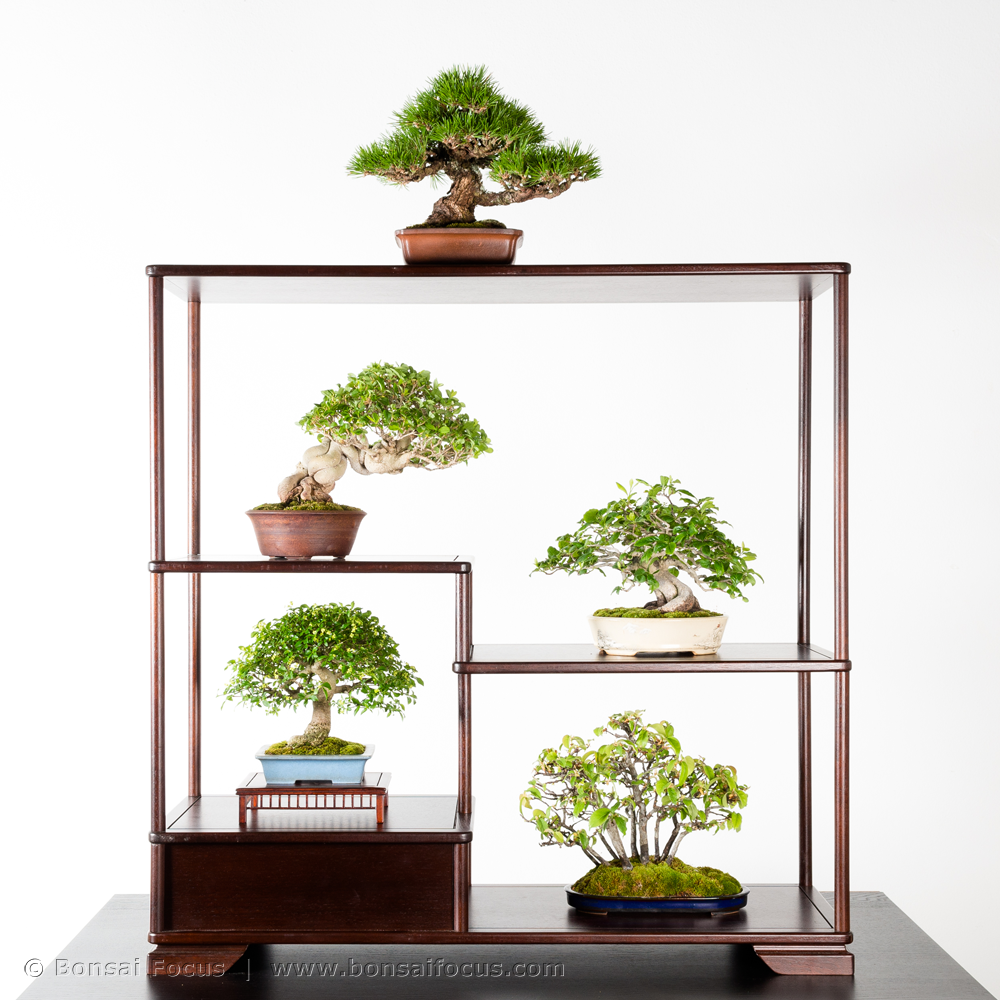

 bebonsai.bebebonsai.be
+Field notes
- —The traditional size system came from moving trees in tatami rooms: one hand (Shohin) meant you could carry it alone, two hands (Chiu) needed a pair, and four hands (Dai) demanded two people—no tape measure required.
- —Keshitsubo (1–3 inches) is the smallest recognized class, sometimes called 'poppy-seed' bonsai, so tiny that they often won't have visible ramification and are treated more as botanical curiosities than fully formed trees.
- —Mame (2–6 inches) and Shohin (5–8 inches) are both one-handed categories, but the Mame starts to show better branch development while Shohin trees are often detailed enough to be photographed and mistaken for full-size bonsai—if you don't see the ruler in the frame.
- —Don't imagine small bonsai are easier—actually the opposite is true. In dry climates like Albuquerque's high desert, keeping a Shohin adequately watered in spring and summer can be an overwhelming challenge, and winter care is equally tough.
- —The 'hand' system also mapped to display rules: a tiny tatami room demanded smaller trees, and a Dai tree (30–48 inches) needed a much larger alcove. Modern exhibitions have largely ignored these constraints, but the sizing language stuck.
- —Master John Naka, when repeatedly asked how to make good bonsai, answered: 'Acquire good material.' He argued that size is secondary to finding a tree with potential—though Shohin purists might still want to throw a punch over that idea.
Discover
Read Deeply on Proportion, Pots, and Survival at Small Scale


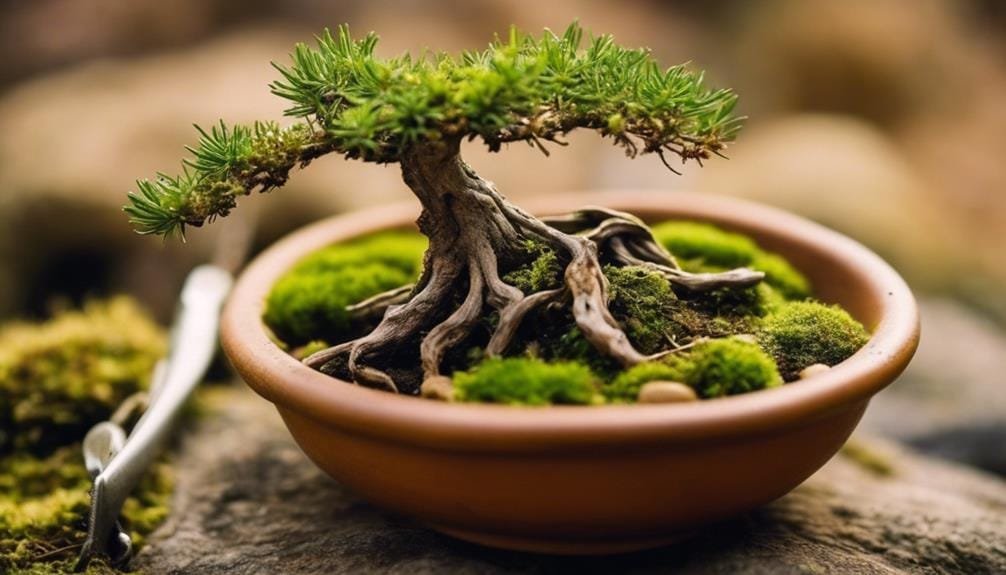



Shohin bonsai—trees under 20 cm, small enough to hold in one hand—demand a radical rethinking of proportion, pot selection, and survival. Unlike larger bonsai, space is the enemy: a rounded canopy makes a tiny tree look mature, while gaps reveal immaturity. Pots must harmonize in size, shape, color, and texture with the tree, but quality matters enormously—a $200 Japanese container from Tokoname or a unique Western-made piece by potters like John Pitt can elevate a tree for exhibition, whereas an inexpensive pot might pass unnoticed by most hobbyists. Watering is acutely perilous due to shallow soil and fast evaporation; the finger test and close observation beat any fixed schedule. Species selection favors small leaves and slow growth—juniper, Chinese elm, maple—and modern practitioners now grow Shohin from the start rather than reducing larger trees, abandoning conventional 'left, right, back' thinking in favor of filling every available space.
+Field notes
- —Shohin are defined as under 20 cm tall (or palm-sized), and a rounded canopy is key to making the tree look old and mature; empty space is the 'enemy' because it makes a Shohin appear immature.
- —Modern Shohin practice starts with a small tree in mind from day one, discarding the old 'left, right, back' branch thinking in favor of asking 'Where is there space? How can it be filled?'
- —Container selection must consider size, shape, color, texture, horticultural needs, purpose, and season—a deciduous tree in winter leaf-bare might look fine in a shallow pot, but the same pot may look sparse when the tree is in full summer foliage.
- —Pot quality varies hugely: a $20 container versus a $200 Japanese or Western pot—like those from Derbyshire potter John Pitt, who uses unique oxide finishes and multiple firings—can utterly change a Shohin's exhibition presence, though 80% of hobbyists may not see the difference.
- —Shohin pots typically range from under 2 inches (5 cm) to about 10 inches (25 cm), with major Japanese production centers including Tokoname, Yokkaichi, Seto, and Shigaraki, dating to the early Showa period (c. 1920–1935).
- —Due to shallow pots and fast-draining soil, Shohin are highly susceptible to rapid moisture fluctuations—the finger test (inserting a finger an inch into the soil) is the most reliable method, not a fixed watering schedule.
Keep exploring
More of Shohin Bonsai


Branch out
Beyond Shohin Bonsai
More to explore
In the same world.
Bonsai
Bonsai is the Japanese art of growing and shaping miniature trees in containers, a practice with a long documented histo…
Sailor Maki-e Fountain Pens
Sailor’s Maki-e fountain pens sit at the meeting point of writing instrument collecting and a Japanese decorative art wi…

Sentan SLD Nashiji Gyuto 210mm
The Sentan SLD Nashiji Gyuto 210mm is a Japanese-style all-purpose chef’s knife sold in several ferrule colorways, inclu…
Namiki by Pilot
Namiki is Pilot’s Japanese brand for high-end fountain pens, especially models finished in maki-e and urushi lacquer. Th…
Platinum Modern Maki-e Fountain Pens
Platinum’s Modern Maki-e pens sit in a very specific corner of fountain-pen collecting: Japanese motif pens made with a…

Japanese Kitchen Knives
Japanese kitchen knives are a broad world of made-in-Japan chef’s knives that ranges from workhorse gyutos and santokus…
Hibiki Whisky
Hibiki is Suntory’s premium blended Japanese whisky line, presented as a celebration of harmony and the art of blending…

OHTO Fountain Pens
OHTO’s fountain-pen line is a compact corner of Japanese pen culture built around metal-bodied, fine-nib everyday writer…
Imagery
Know someone who’d love this?
Discovered by ArcurianAuto-generated from public sources and AI synthesis — it may be incomplete or inaccurate. Treat it as a starting point for your own exploration, not professional (medical, legal, financial, or safety) advice. Verify anything you act on. Report this page.