Bonsai is the Japanese art of growing and shaping miniature trees in containers, a practice with a long documented history and roots connected to the earlier Chinese tradition of penjing. What makes it compelling is that the tree is real and alive: scale is created through pruning, wiring, repotting, and the restrictions of tray cultivation rather than through dwarf species alone. The field ranges from ancient specimens such as the yew known as “Kenshin Tōge,” said to be about 800 years old, to beginner-friendly work on maples, junipers, and rooted cuttings. If you stay with bonsai long enough, it stops looking like decoration and starts reading like a slow collaboration between horticulture, design, and time.
Learn
What Bonsai Actually Is: Tree, Container, Illusion
Bonsai is not a genetically dwarfed plant, as many assume, but a normal tree or shrub forced to remain miniature through precise root and canopy restriction in a shallow tray (the name 'bonsai' literally means 'tray cultivation'). The entire enterprise is an illusion of age and scale: a fifty-year-old juniper may stand only twelve inches tall because its roots have been repeatedly pruned and its branches wired into position, while its leaves are deliberately reduced in size by techniques like defoliation. The container is not just a pot but a frame that must harmonize with the tree, neither too large nor too distracting, and the root flare (nebari) that spreads across the soil surface is as critical to the visual story as the trunk and branches. Every cut in bonsai is a tiny structural improvement that, accumulated over years, builds the tree's character — and the most common beginner mistake, overwatering, kills more bonsai than any other single error.

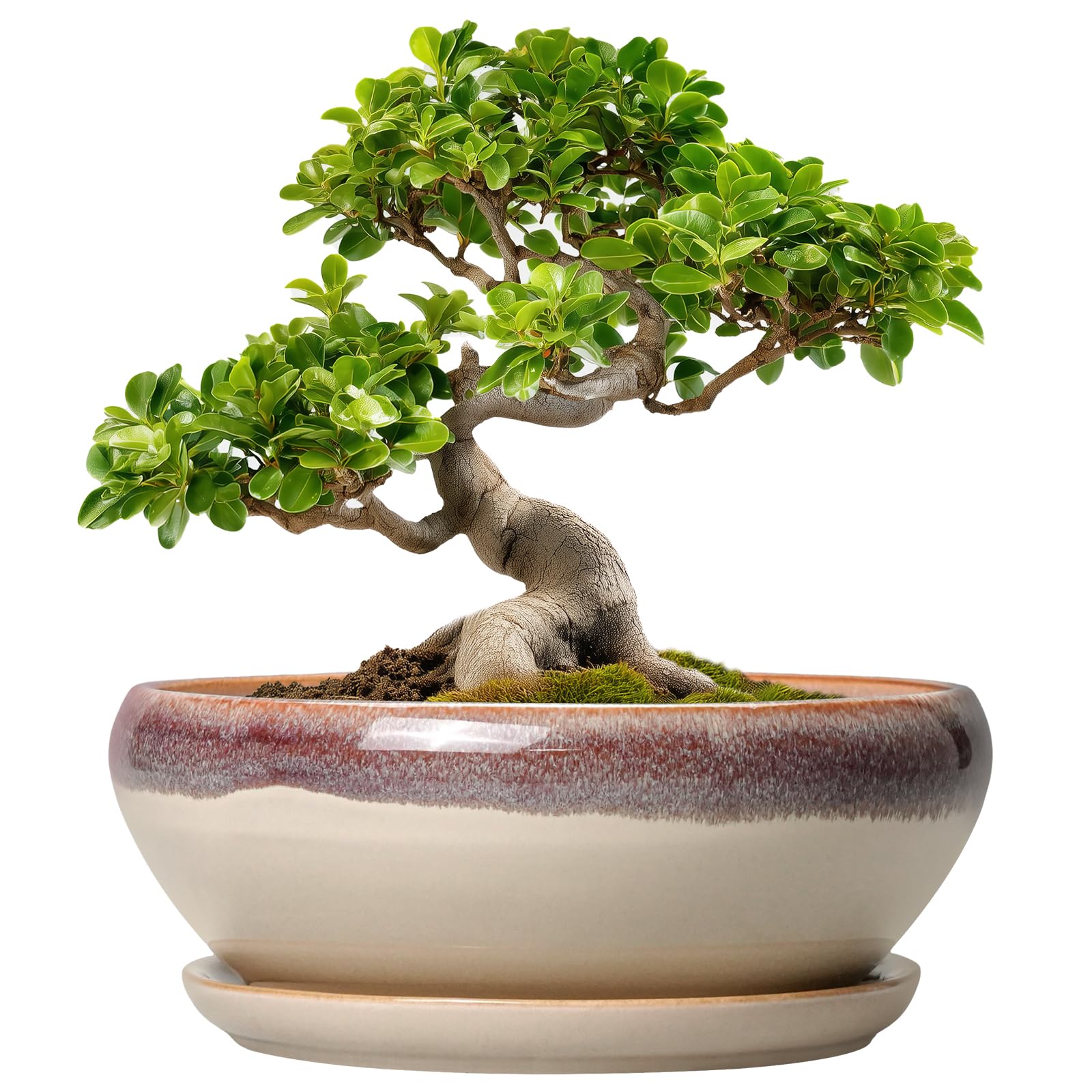


 miyagibonsai.co.ukmiyagibonsai.co.uk
+Field notes
- —Bonsai trees are not genetically dwarfed; they are ordinary plants that are kept small through container restriction, root pruning, and top pruning — a fact that surprises most newcomers.
- —The word 'bonsai' translates to 'tray cultivation' (from the Japanese), referring to the shallow pot that limits root spread and forces the tree to stay small.
- —Leaf size reduction is a natural consequence of container restriction; naturally small-leaved species like azaleas and Japanese maples are favoured because they already fit the visual scale, and their leaves shrink further under bonsai treatment.
- —Defoliation — cutting off all leaves in summer — forces a second flush of smaller leaves and denser branching (ramification), a technique that enhances the miniature illusion.
- —The root flare (nebari) that spreads visibly at the base of the trunk is a deliberate aesthetic goal, created by techniques like root spreading and surface-root training, and is considered as important as the canopy in a mature bonsai.
- —More bonsai die from incorrect watering than any other cause: the rule is to check soil moisture daily and water only when the surface begins to feel slightly dry, never on a fixed schedule.
Learn
From Penjing to Japanese Bonsai
Japanese bonsai did not spring from nothing—it is a deliberate, centuries-long adaptation of Chinese penjing, a practice that first appears in a Tang-dynasty tomb mural from 706 CE at the Qianling Mausoleum. By the Kamakura period, Japanese scrolls like the 1195 *Saigyo Monogatari Emaki* show dwarfed potted trees, but these were likely prized exotics imported from China, not yet a native art. The very word 'bonsai' is the Japanese reading of the Chinese *penzai* (tray planting), and for most of its history in Japan the term simply meant 'potted plant' in a broad sense. It was only around 1890, driven by the Chinese-inspired fashion for sencha tea ceremony accessories, that connoisseurs and dealers narrowed the definition to the miniaturized, artistically trained trees we recognize today. That shift was so recent that Japanese dictionaries did not drop the broad 'potted plant' meaning until the 1960s–70s. The Omiya Bonsai Art Museum, which opened in 2010 in Saitama's century-old Bonsai Village, now holds 125 bonsai pieces and 342 pots, and in 2019 it formed a sister-museum partnership with Washington D.C.'s National Bonsai & Penjing Museum—itself founded in 1976 after Japan gifted 53 masterwork bonsai for the U.S. Bicentennial.


 bonsai-nbf.orgbonsai-nbf.org
+Field notes
- —The earliest known depiction of a miniature landscape in a container is a Tang-dynasty mural (706 CE) in the tomb of Crown Prince Zhanghuai at the Qianling Mausoleum, showing a servant carrying a shallow pot with rocks and cascading plants.
- —Japan's oldest surviving image of a dwarfed potted tree appears in the 1195 *Saigyo Monogatari Emaki* scroll, but these were likely high-status imports from China, not locally cultivated.
- —The term 'bonsai' was used broadly for any potted plant throughout the medieval and Edo periods; only around 1890 did it narrow to trained miniature trees, a change driven by Chinese-style sencha tea ceremony accessories.
- —Japanese dictionaries kept the broad definition of 'bonsai' as 'potted plant' until the 1960s–70s, when they finally restricted it to the artistic miniature-tree sense.
- —The Omiya Bonsai Art Museum, opened in 2010 in Saitama's Bonsai Village, holds 125 bonsai pieces and 342 bonsai pots, and in 2019 it formed a sister-museum partnership with the National Bonsai & Penjing Museum in Washington, D.C.
- —The National Bonsai & Penjing Museum at the U.S. National Arboretum was established in 1976 after Japan's Bicentennial gift of 53 masterwork bonsai and 6 suiseki from the Nippon Bonsai Association.
Learn
The Core Techniques and Terms to Recognize
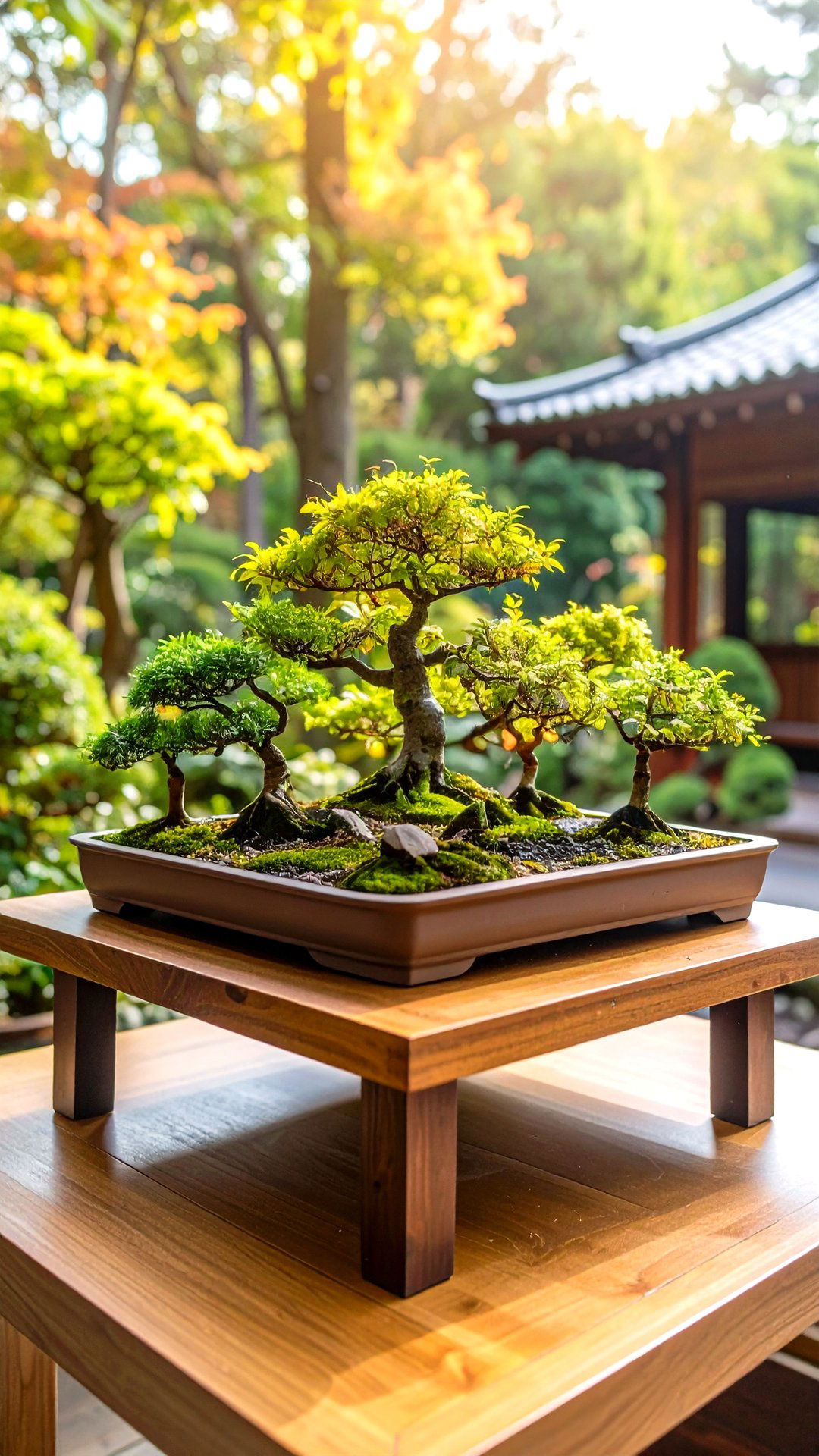
Bonsai is an art of controlled illusion, and its jargon is the key to seeing the craft beneath the tree. Beyond basic pruning and wiring, the real mastery lies in techniques like air layering—where you trick a branch into growing its own roots while still on the parent tree—and in understanding that a tree's 'nebari' (the flared root base) is as important as its foliage for conveying age. The size classifications—from 'mame' (under 6 inches) up to 'imperial' (up to 80 inches)—aren't just measurements; they dictate the entire design approach. And the old saying that it takes three years to master watering isn't hyperbole: adjusting hydration to species, season, and soil dryness is the most fundamental skill in bonsai care. Terms like 'jin' (deadwood branches) and 'shari' (deadwood on the trunk) show how decay is deliberately crafted to tell a story of survival. Recognizing these core concepts transforms a casual observer into someone who can appreciate the decades of decisions packed into a single pot.
 natesnursery.comnatesnursery.com


 forum.bonsaimirai.comforum.bonsaimirai.com
+Field notes
- —The proverb 'three years to master watering' reflects that adjusting water to species, season, and soil dryness is considered the most fundamental and difficult skill in bonsai care.
- —'Yamadori' refers to trees collected from the wild, which are prized for their natural trunk movement and aged bark—material that can't be replicated in a nursery.
- —'Nebari' is the flared root base at the trunk's bottom; a well-developed nebari creates the illusion of a ancient, stable tree anchored in its pot.
- —Size classifications like 'mame' (under 6 inches) and 'shohin' (under 18 inches) are not just labels—they define the entire scaling of branches, leaves, and pot proportion.
- —Air layering is a propagation technique that forces roots to form on a branch while still attached to the parent tree, allowing you to create a new bonsai with a thick trunk from a single branch.
- —The distinction between 'pinching' (removing growing tips with fingers) and 'pruning' (using scissors) affects how energy is distributed and how fine ramification develops.
Discover
Watch Trees Being Styled, Pruned, and Repotted
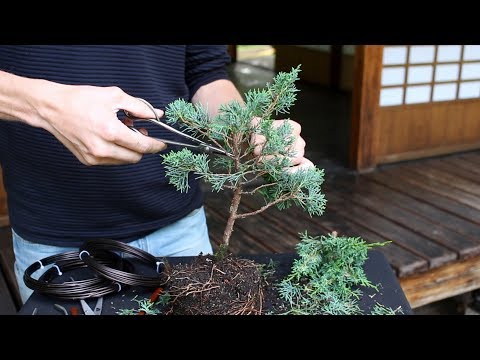

Watching bonsai styling, pruning, and repotting reveals a meticulous craft where every snip and wire bend is a deliberate act of shaping living material. The process is less about horticulture and more about visual storytelling: you're coaxing a nursery plant—like a four-year-old juniper—into a miniature that whispers of ancient winds. Pruning splits into two philosophies: gentle maintenance-pruning to refine a tree's silhouette, and brutal structural-pruning to lay down its skeleton. Wiring, a choreography of copper or aluminum, coerces branches into horizontal or downward poses that fake the weight of decades. Repotting is a root ballet, using chopsticks to tease away soil and reveal the nebari (surface roots) that anchor the illusion. The real secret, though, is deception: making a young hawthorn look gnarled and weathered by cutting shoots back hard and sealing wounds with cut paste, as Jason Hanrahan demonstrates, or crafting juniper deadwood (jin and shari) to simulate lightning strikes and age. Each tool—knob cutters, concave cutters, wire pliers—has a specific scar it leaves, and the best practitioners, like Ryan Neil of Bonsai Mirai, treat the tree as raw material for a three-dimensional painting that evolves over decades, not hours.
+Field notes
- —Pruning is split into two modes: structural-pruning (done once to establish the tree’s basic shape) and maintenance-pruning (done regularly to refine that shape), and confusing the two is a common rookie mistake that can ruin a tree’s design.
- —When repotting a nursery juniper, Bonsai Empire uses chopsticks—not just any tools—to gently remove old soil without damaging the fine roots, revealing the root crown and nebari that are critical for a natural-looking base.
- —Ryan Neil, in a 1.5-hour stream from Bonsai Mirai, transforms a noble fir (a Christmas tree staple) into bonsai material, emphasizing that the first styling is about hammering down foundations—selecting the front, removing crossing branches, and wiring for movement.
- —Jason Hanrahan’s secret to making young hawthorn look old is strategic branch placement: he prunes immature upright shoots to force horizontal and downward growth, simulating the weight and sag of ancient branches, then seals cuts with wound paste to mimic bark healing.
- —A common error for beginners is incorrect watering technique—watering little and often rather than deeply saturating the substrate—which leads to weak roots and poor tree health; Bonsai Empire lists this as Mistake 2 in their 7-rookie-mistakes video.
Discover
Read Care Guides by Species and Season

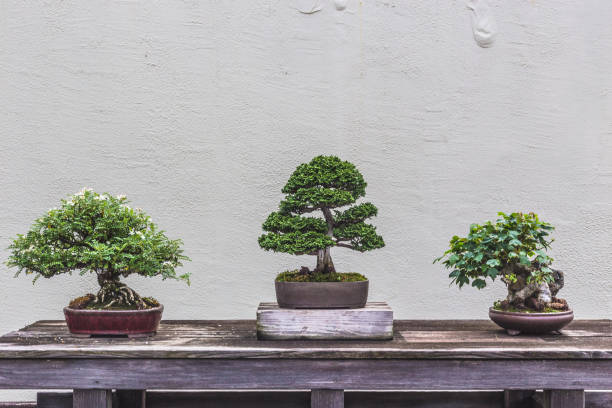
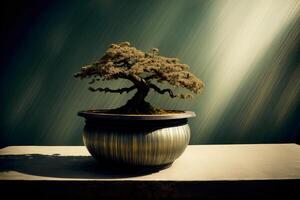

Caring for a bonsai by species and season means respecting its biological clock — a Japanese Maple (Acer palmatum) needs daily watering in summer and afternoon shade above 85°F, but it also demands a cold winter dormancy with protection below 15°F, and it should never be hard-pruned in spring because cuts will bleed sap. A Juniper (Juniperus) must live outdoors year-round; bring it inside and it will die, but winter frost can turn its foliage purplish-brown as a natural defense. Ficus (Retusa or Ginseng) is the forgiving indoor tropical, tolerating low humidity and even occasional overwatering, but it needs high humidity to develop those iconic aerial roots. The real secret is observation over schedule — stick your finger in the soil or use a chopstick, don't trust a calendar. Feed strategically: high nitrogen in spring for growth, potassium-rich in autumn for root strength, and nothing during winter rest. Structural pruning on deciduous trees happens in autumn or late winter, while conifers get major work in autumn or winter. Every species has its own rhythm, and the best caretakers learn to read the tree, not the manual.
+Field notes
- —Japanese Maple (Acer palmatum) must be watered daily during the growing season and sometimes multiple times on hot days if the soil is well-drained — but never use calcareous water, and protect the tree from sun above 85°F to prevent leaf scorch.
- —Juniper Bonsai (Juniperus) cannot survive indoors; place it outside year-round in full sun, and during frosty periods its foliage may turn purplish-brown as an internal frost-protection mechanism — don't panic, it will green up in spring.
- —Ficus (Retusa and Ginseng) prefers consistent warmth and high humidity to develop aerial roots, but its thick waxy leaves let it tolerate low humidity; ignore labels that say water daily — water only when the soil gets slightly dry, using room-temperature soft water.
- —Japanese Maples should be hard-pruned in autumn or early winter, not spring, because cuts made in spring bleed sap profusely — this is a critical species-specific rule that beginners often get wrong.
- —Temperate trees like Japanese Maple and Juniper must experience a cold winter dormancy with chill hours to survive; keeping them indoors in winter is a fatal mistake — protect from temperatures below 15°F by placing in a coldframe, not by bringing them inside.
- —Instead of a fixed watering schedule, check soil moisture by sticking a finger or chopstick into the soil; watering frequency varies by season — daily in summer, every other day or even every five days in winter, always based on observation.
Explore
Tools, Soil, and Pots That Matter First
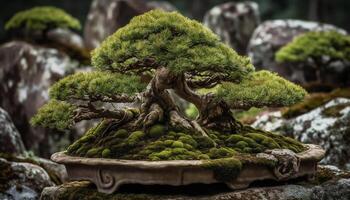
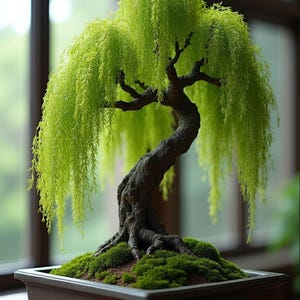
Starting bonsai the right way means spending your first $80–$120 on a real tree, quality soil, and just a few tools — not a glossy starter kit. Most bonsai deaths come from soil physics, not skill: standard potting mix in a shallow container can drop air-filled porosity below 15%, forcing roots into anaerobic fermentation that produces toxic ethanol. The fix is a substrate built from three inorganic particles — akadama, pumice, and lava rock — each with a distinct job. A 1:1:1 ratio is a safe starting point, but you'll tweak it by 10% for your climate and species. For US growers, soft akadama grades can break down in three humid seasons, so check the hardness before you buy. Tools are the other trap: you only need four things in year one — a concave cutter for branch removal, bonsai scissors for fine trimming, a root hook for repotting, and wire cutters for shaping. Resist the 20-piece kits; they bundle gear you won't touch and often include cheap anvil pruners that crush stems. A repotting mat, a fine-rose watering can, and a scoop or two keep the work tidy. Write the soil recipe and the repotting date on a card — that simple habit ties the tree to its care history long after the bench is cleaned.


+Field notes
- —Standard potting mix in a bonsai pot achieves only about 13% air-filled porosity, below the 15–20% range roots need; below 15%, roots switch to fermentation and produce ethanol, which is toxic to root cells — so most beginner tree deaths are caused by soil physics, not watering mistakes.
- —The three core inorganic substrates — akadama, pumice, and lava rock — each play a distinct role: akadama's internal pores hold moisture and fertilizer ions, pumice is the lightweight champion of aeration, and lava rock adds structure and weight; a 1:1:1 ratio is a neutral baseline, but you should shift each component by up to 10% depending on your climate, species vigor, and watering habits.
- —For US growers, soft akadama grades break down in as little as three humid seasons, collapsing pore space and forcing an early repot; the NOHOBE 2.5lb Hard Akadama specifies a 1/8 to 1/4 inch grain range and darkens when wet — a reliable signal that the clay is actually absorbing moisture.
- —Beginners need exactly four tools for the first year: a concave cutter (leaves a hollow that heals flush, unlike regular pruners that leave a permanent stub), bonsai scissors for reaching into dense foliage, a root hook for repotting, and wire cutters for shaping; a full 20-piece kit is a waste — you'll use the same handful of tools for months.
- —A high-quality pair of scissor-action pruning shears (not anvil-style, which crush stems) will last 5+ years and cost $20–$35; pair them with a watering can that has a fine-rose spray head so you mist the soil evenly instead of flooding it — one-liter capacity is enough for a small collection.
Keep exploring
More of Bonsai


More to explore
In the same world.
Shohin Bonsai
Shohin bonsai are miniature trees defined less by a rigid species list than by scale and presentation: many sources plac…
Sailor Maki-e Fountain Pens
Sailor’s Maki-e fountain pens sit at the meeting point of writing instrument collecting and a Japanese decorative art wi…
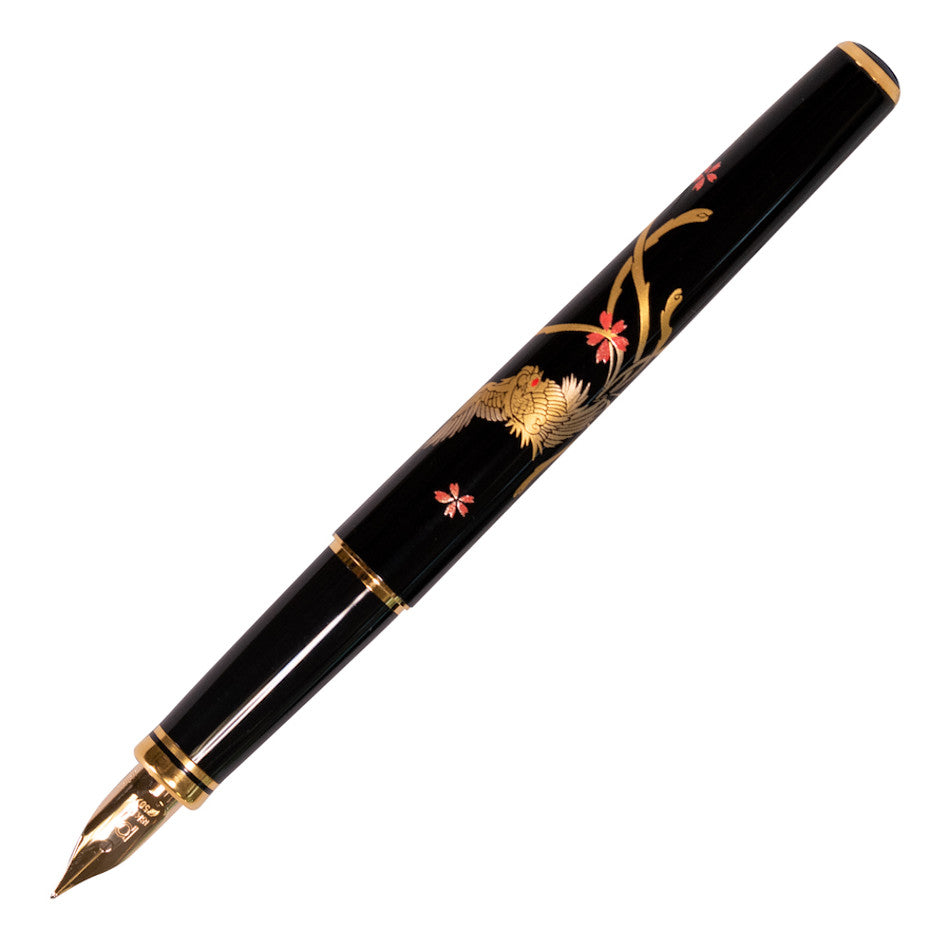
Platinum Modern Maki-e Fountain Pens
Platinum’s Modern Maki-e pens sit in a very specific corner of fountain-pen collecting: Japanese motif pens made with a…

Tenkara Fly Fishing
Tenkara is a traditional Japanese style of fly fishing built around radical restraint: a long rod, a fixed line, and a f…
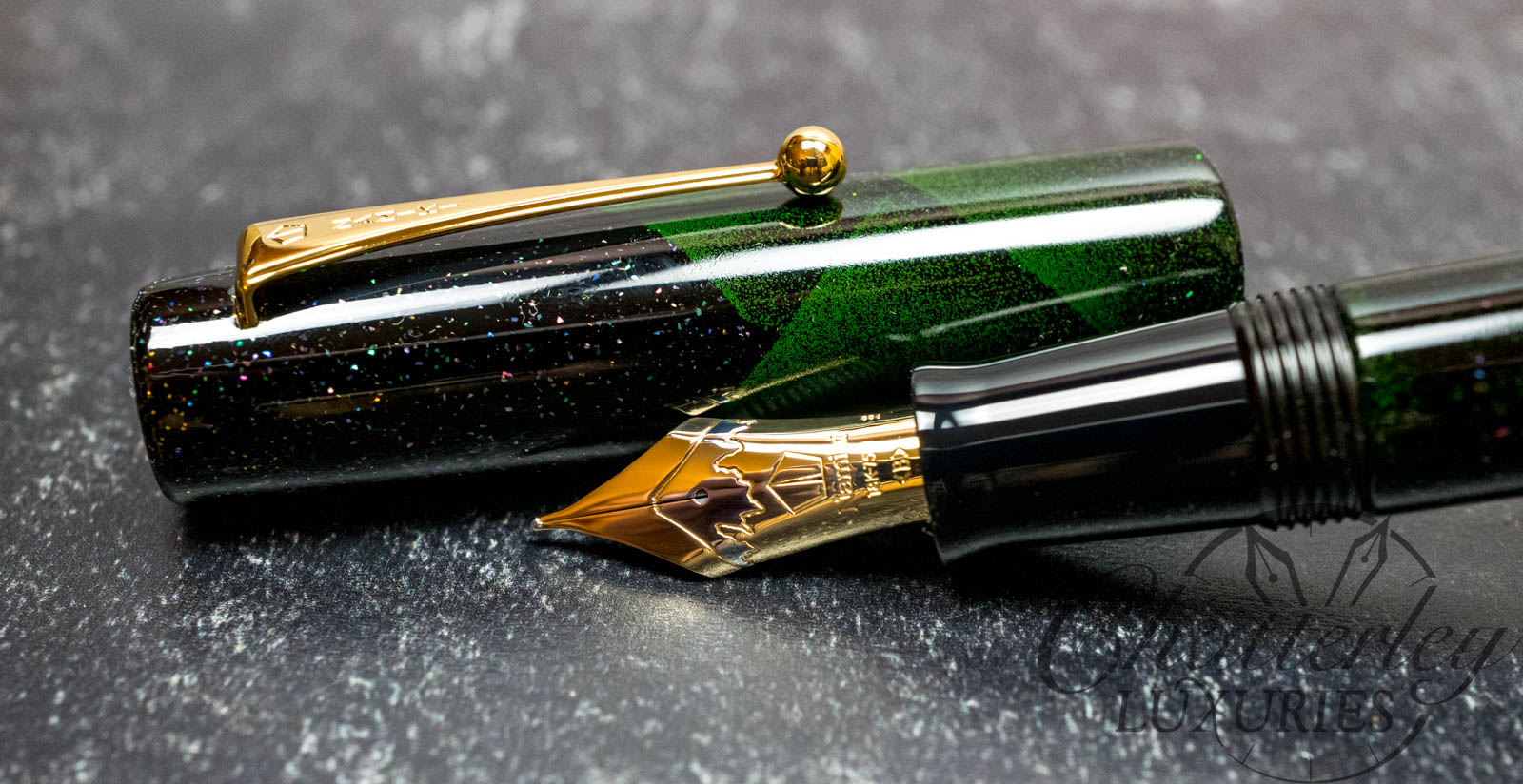
Namiki by Pilot
Namiki is Pilot’s Japanese brand for high-end fountain pens, especially models finished in maki-e and urushi lacquer. Th…

Sailor Fountain Pens
Sailor’s fountain-pen world is built around a few core families that collectors quickly learn to recognize: the rounded…

Japanese Kitchen Knives
Japanese kitchen knives are a broad world of made-in-Japan chef’s knives that ranges from workhorse gyutos and santokus…
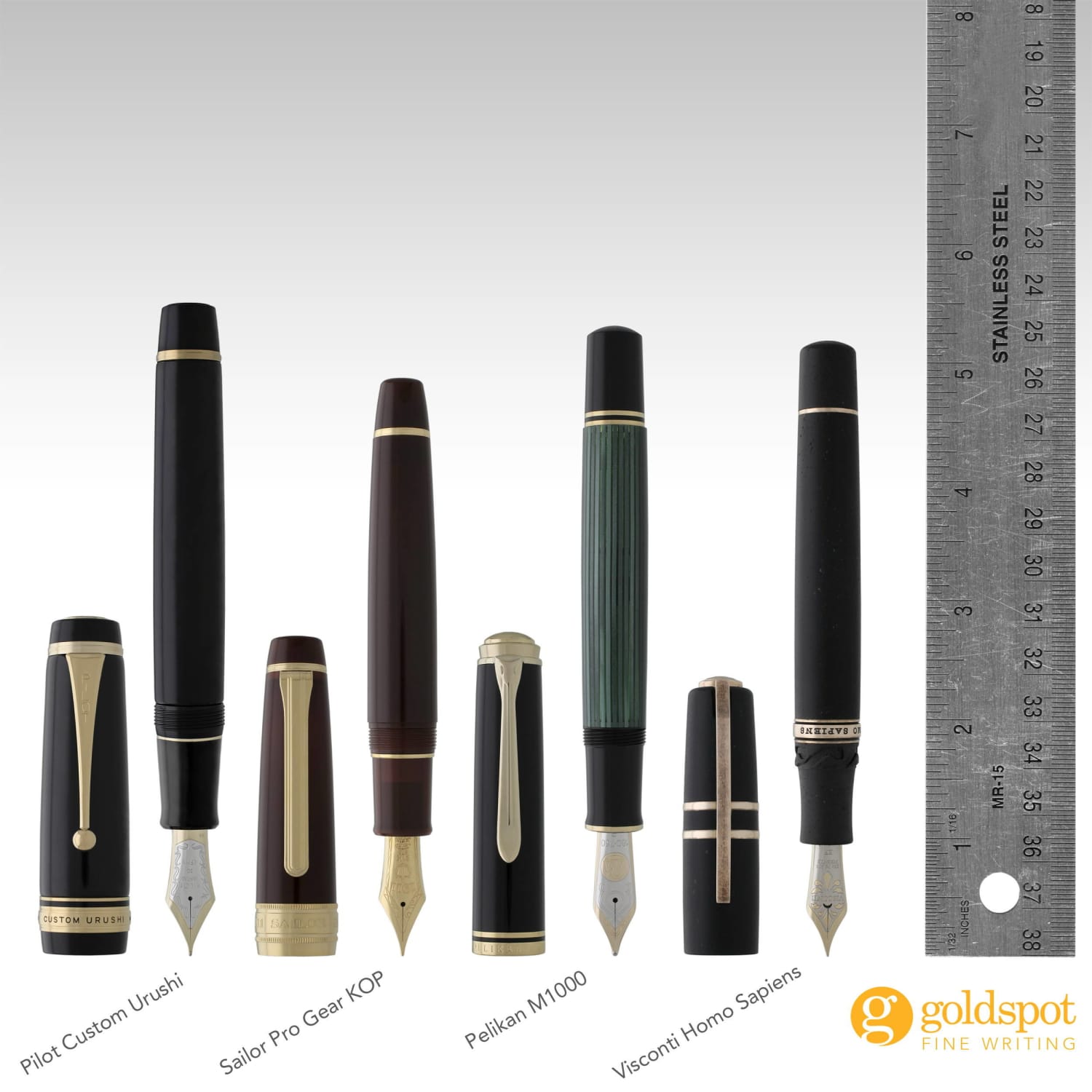
Fountain Pens
Fountain pens are refillable writing instruments that feed liquid ink to a metal nib, and for many people the appeal is…
Imagery
Know someone who’d love this?
Discovered by ArcurianAuto-generated from public sources and AI synthesis — it may be incomplete or inaccurate. Treat it as a starting point for your own exploration, not professional (medical, legal, financial, or safety) advice. Verify anything you act on. Report this page.