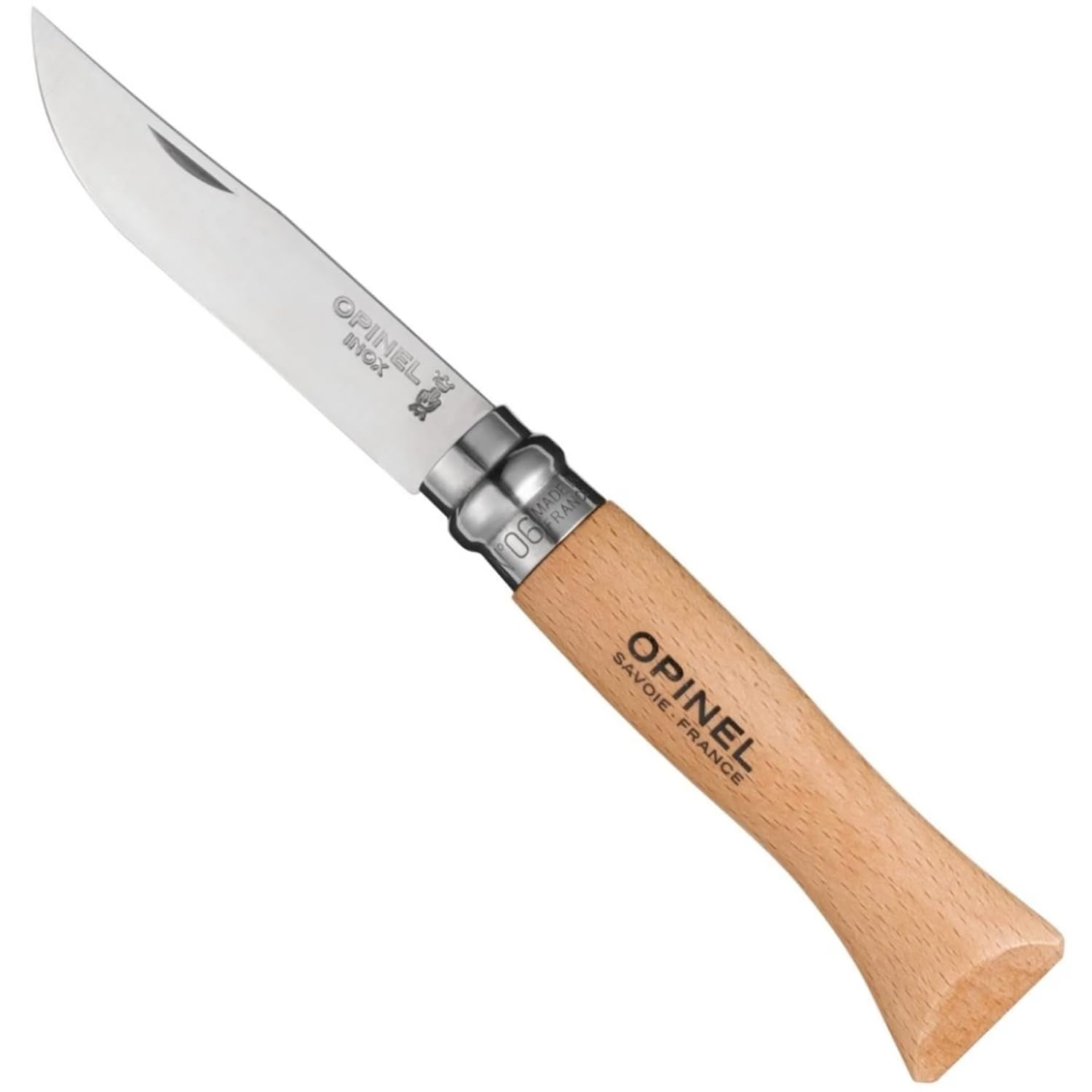
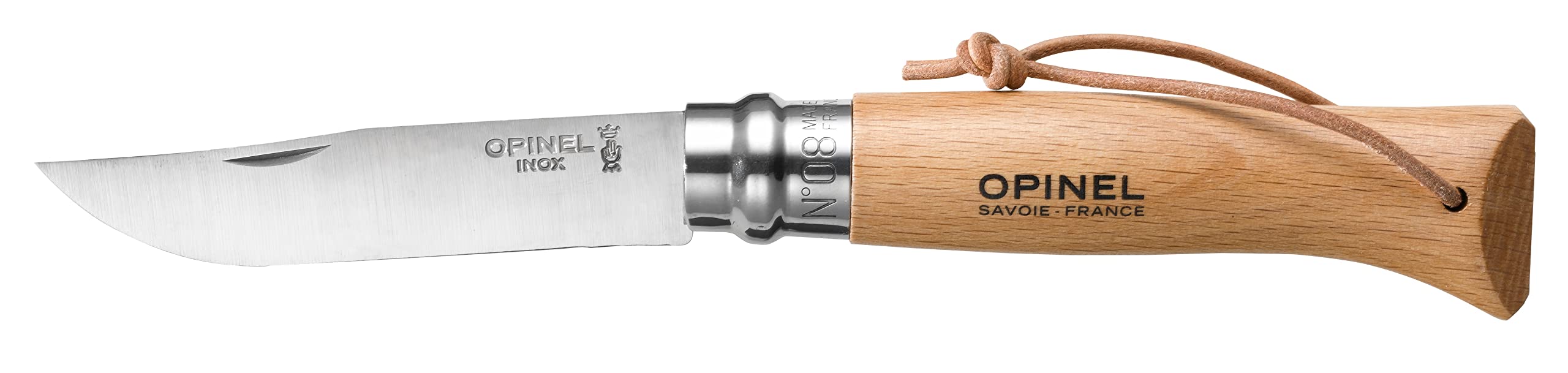
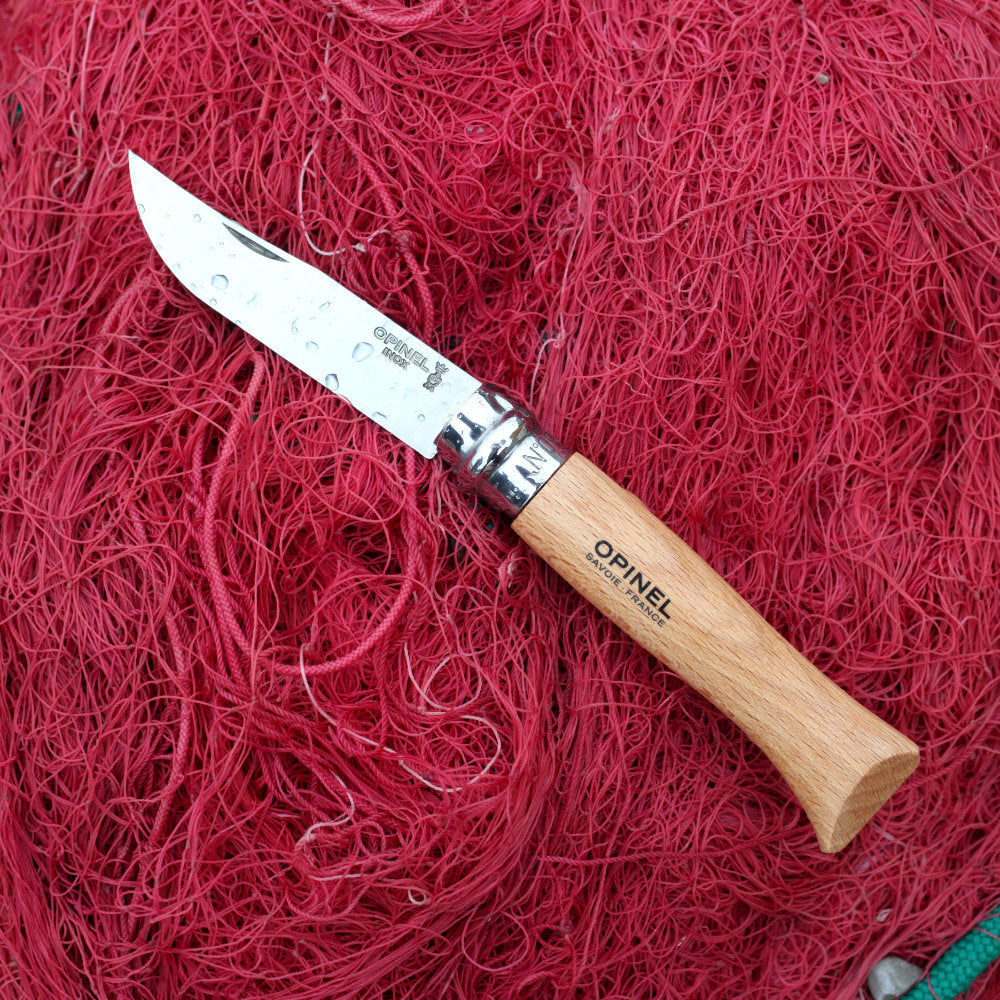
The Opinel No. 8 is the brand’s must-have, most iconic folding pocket knife size, offered in both stainless steel and carbon steel versions and still made in France. Across Opinel’s own listings, the No. 8 stands out for its simple beech wood handle, 3.28-inch blade, light 1.6 oz weight, and the fact that the carbon version needs to be dried and greased regularly because it is highly susceptible to corrosion. The stainless model is presented as a patented product with a lifetime warranty, while the wider No. 8 family now includes variants with lanyards, gift sheaths, and different handle woods. What makes it interesting is how much culture and preference can grow around such a stripped-down tool: steel choice, patina, carry setup, and which No. 8 feels like the real original.
Learn
Why the No. 8 Is the Defining Opinel
The Opinel No. 8 is the defining size of the legendary French folding knife because it hits a near-perfect balance of blade length, weight, and usability that no other model achieves. At 3.28 inches of blade and just 1.6 ounces, it's small enough to disappear in a pocket yet capable enough for serious camp cooking, wood carving, or cutting cord on a climb. Its thin, convex-ground Yatagan blade geometry makes it one of the most efficient slicers at any price — it literally passes through soft material like food with almost no resistance. The No. 8 is the size that made Opinel a MoMA permanent collection piece and the one that outdoor enthusiasts, from hikers to mountaineers, have carried for generations. The knife's genius lies in its simplicity: a beechwood handle, a Sandvik 12C27 stainless or XC90 carbon steel blade, and the Virobloc locking ring added in 1955. But that simplicity has a catch — the untreated wood handle swells in moisture, which can make the blade stick closed exactly when you need it most. This tension between elegant design and real-world durability is what makes the No. 8 such a fascinating, and sometimes frustrating, icon.

 gearjunkie.comgearjunkie.com
 gearpatrol.comgearpatrol.com
+Field notes
- —The No. 8's blade is exactly 8.5 cm (3.35 in) long, making it the most versatile size in the range — not too small for heavy food prep, not too big for pocket carry. It's the best-selling model for good reason.
- —The thin, convex-ground blade geometry is the secret to its performance: it cuts with almost no friction through food and soft materials, but that thinness also makes it feel flexy and under-gunned for tough jobs like cutting dense rope or webbing.
- —The Virobloc locking ring, introduced in 1955 and updated in 2000 to also lock the blade closed, is a simple and clever safety mechanism. But grit, sand, and dirt can jam it, making the knife hard to operate when you need it most.
- —The beechwood handle is famously comfortable for long carving sessions, but it's the knife's weakest point in wet conditions: untreated wood absorbs moisture and swells, causing the blade to stick and the handle to become difficult to open or close.
- —The No. 8 is available in both carbon steel (XC90, easier to sharpen but rust-prone) and stainless steel (Sandvik 12C27, more corrosion-resistant but harder to sharpen). Hikers and chefs tend to prefer carbon for its aggressive edge; the Outdoor version swaps wood for a polymer handle and adds serrations for rope cutting.
- —At around $19 and weighing just 45 g (1.6 oz), the No. 8 delivers an out-of-the-box sharpness that punches far above its price point — repeatedly described as the best value folding knife in the budget category.
Learn
From Joseph Opinel's 1890 Design to the Modern No. 8
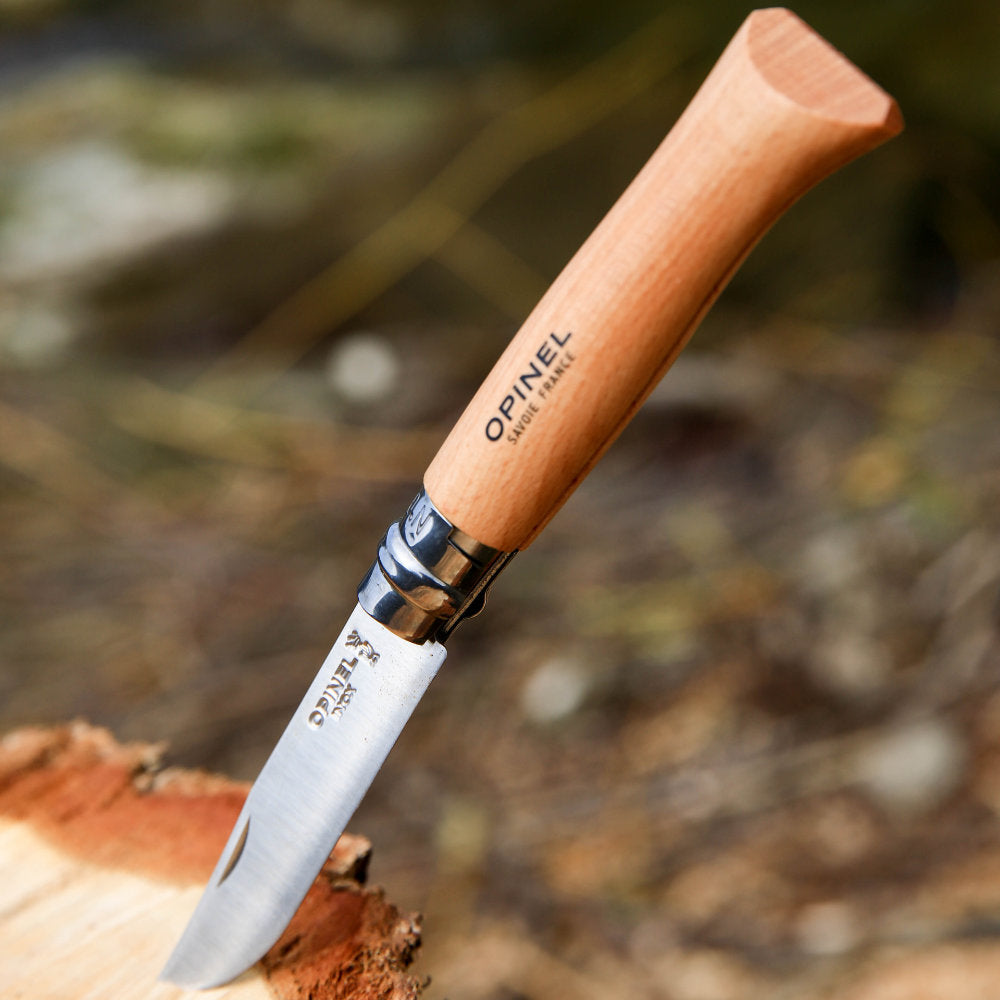
The Opinel No. 8 is the direct descendant of Joseph Opinel's very first knife, drawn in 1890 when he was just 18 years old, working against his father's wishes in the family forge in the hamlet of Gevoudaz, Savoie. By 1897, Joseph had formalized a range of twelve numbered sizes from No. 01 to No. 12, but the No. 8—with its 8.5 cm Yatagan-profile blade, 9 cm varnished beechwood haft, and 45-gram heft—quickly became the most popular because it fit the hand perfectly and was equally at home at the dinner table, in the field, or at a workbench. It remains a five-part object: blade, haft, fixed ferrule, rivet, and the rotating Virobloc safety ring added by Marcel Opinel in 1955 (and upgraded in the early 2000s to also lock closed). Despite being a simple working man's tool, the No. 8 was selected by London's Victoria & Albert Museum in 1985 as one of the 100 most beautiful objects in the world, joining company like the Porsche 911 and the Rolex, and it entered New York's MoMA collection and the Larousse dictionary in 1989.
 opinel.comopinel.com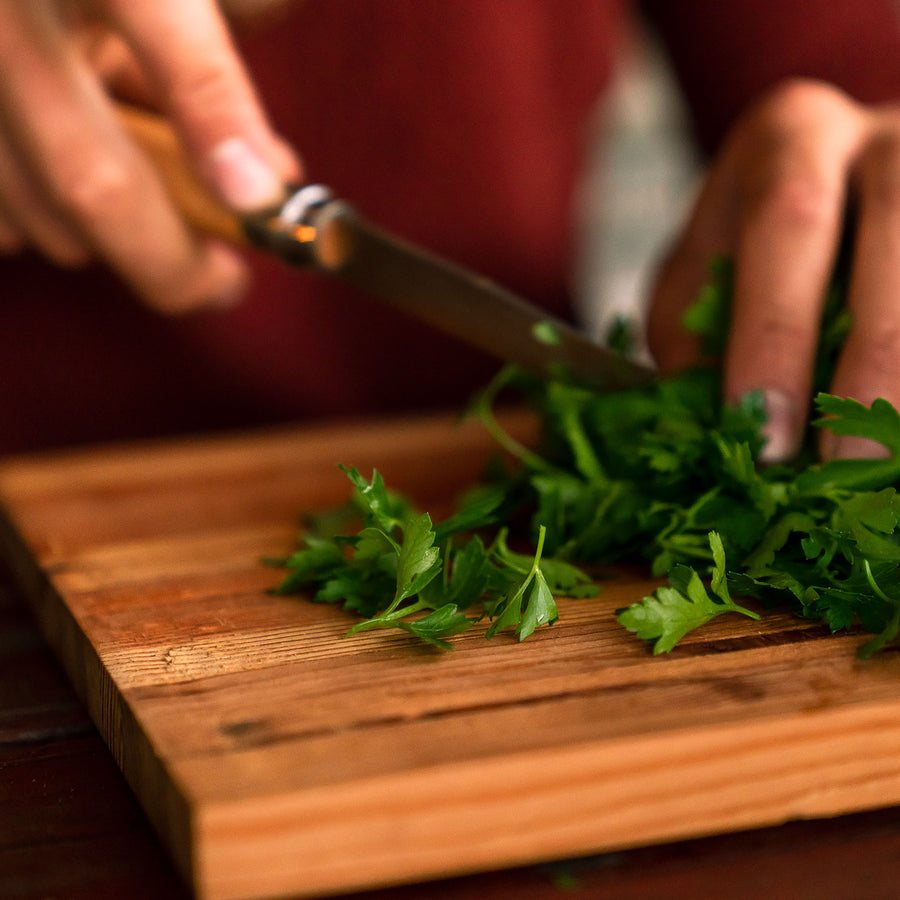
 opinel-usa.comopinel-usa.com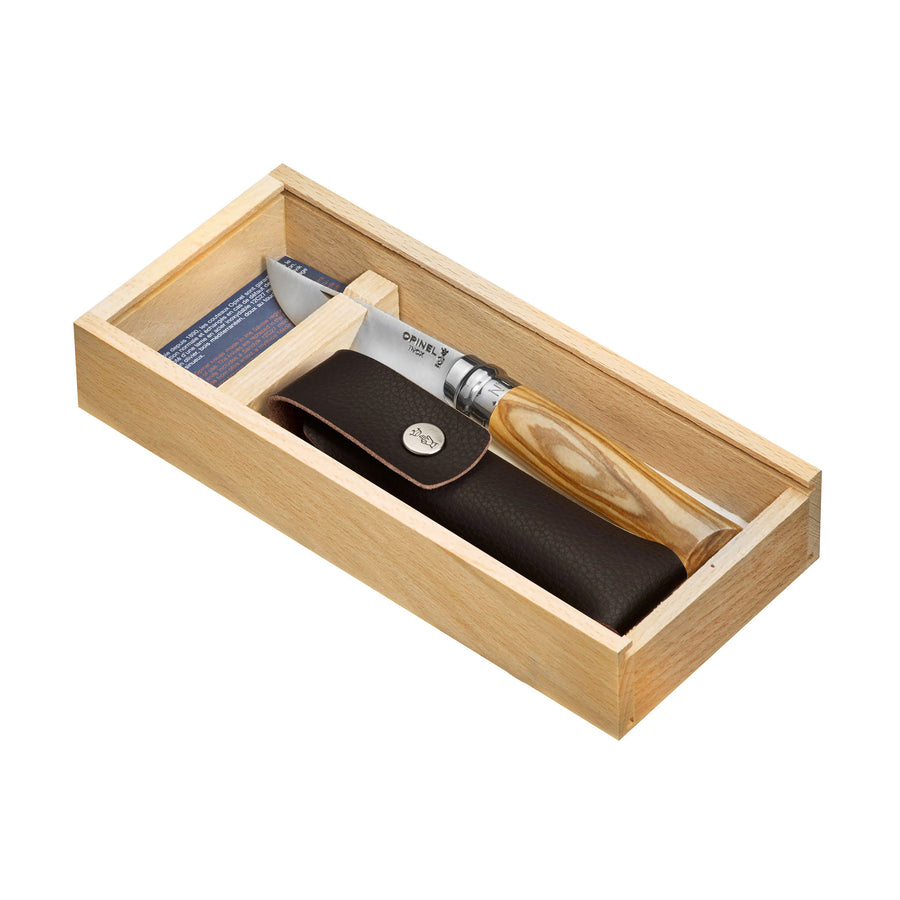
 francetoday.comfrancetoday.com
+Field notes
- —Joseph Opinel conceived the original No. 8 against his father's express wishes, spending his free time perfecting a small pocket knife using modern machinery while also building his own camera and working as a wedding photographer.
- —The 1897 numbering system went from No. 01 (smallest) to No. 12 (largest); the No. 8's 8.5 cm blade and 9 cm handle made it the universal favorite among farmers, railroad workers, and later sculptors like Picasso.
- —The iconic Crowned Hand stamp, added in 1909, derives from the blessing hand of Saint John the Baptist on the coat of arms of Saint-Jean-de-Maurienne, with a crown added to remind users that Savoy was a duchy.
- —In 1955, Marcel Opinel invented the Virobloc safety ring—a rotating ferrule that slides over the fixed ferrule to lock the blade open—a deceptively simple mechanism that took years to perfect and was later updated in the 1990s/early 2000s to also lock the blade closed.
- —The No. 8 was selected by the Victoria and Albert Museum in 1985 as one of the 100 best-designed objects in the world, alongside the Porsche 911 and Rolex, and entered the MoMA collection and the Larousse dictionary in 1989.
Learn
Speak Opinel: No. 8 Terms That Actually Matter
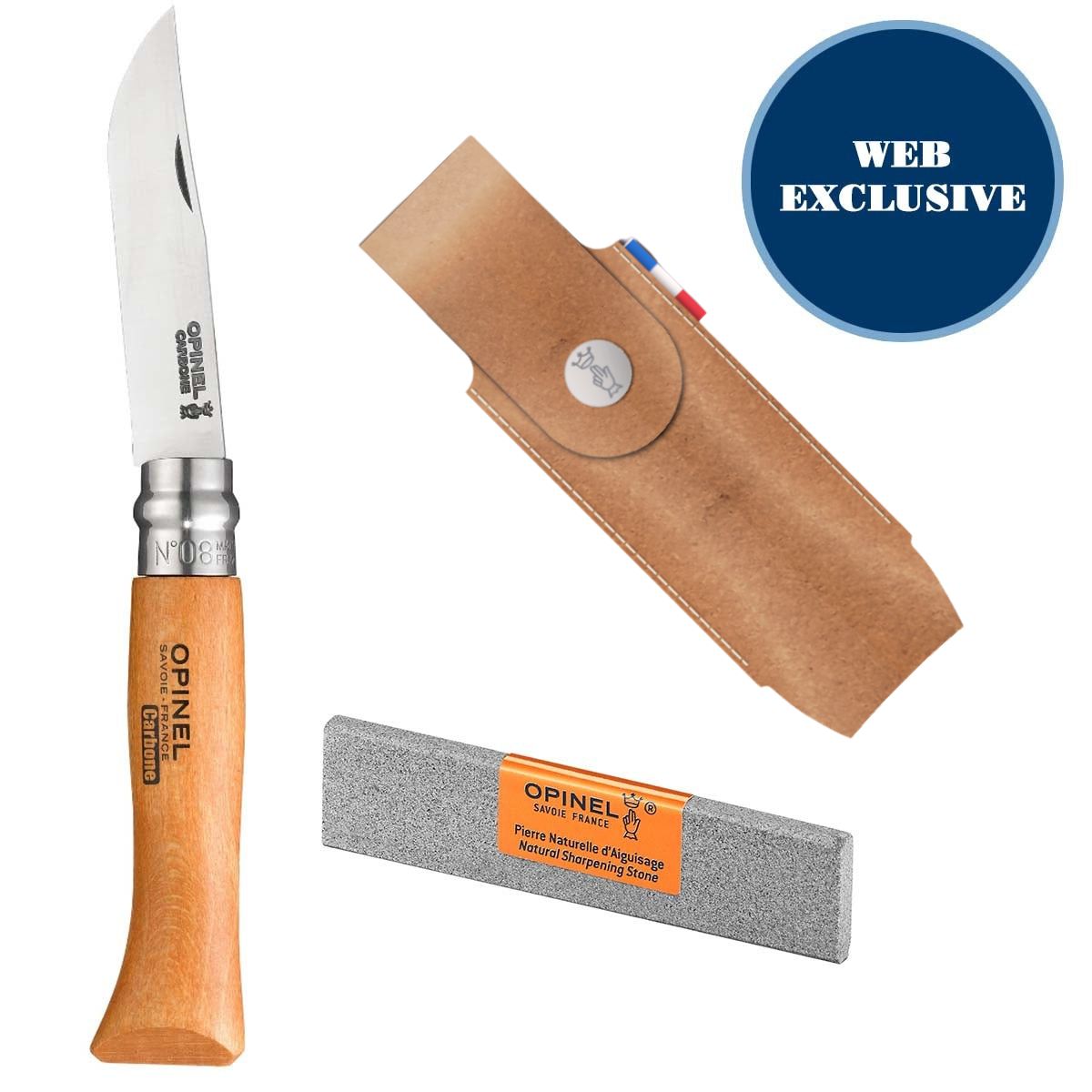
Speaking Opinel means knowing what's stamped on the blade. The most critical distinction is between "Carbone" (XC90 high-carbon steel) and "INOX" (Sandvik 12C27 stainless) — each dictates how you treat the knife. INOX, short for the French "inoxydable," signals a blade with 14.5% chromium that resists rust with minimal fuss, while Carbone develops a protective patina from use but will rust if neglected, requiring light food-safe oils like mineral or olive oil. The Virobloc locking ring, patented in 1955 by Marcel Opinel, is the iconic twist-lock that secures the blade open or closed; its name breaks down into "virole" (ferrule) and "bloc" (lock). For the No. 8 specifically—a 3.28-inch blade, 1.6 ounces, beechwood handle—most come with a Virobloc, and the blade thickness differs: 1.4mm for carbon vs. 2.2mm for stainless, a detail the official specs confirm. These terms aren't just markings—they define the entire ownership experience.
 opinel-usa.comopinel-usa.com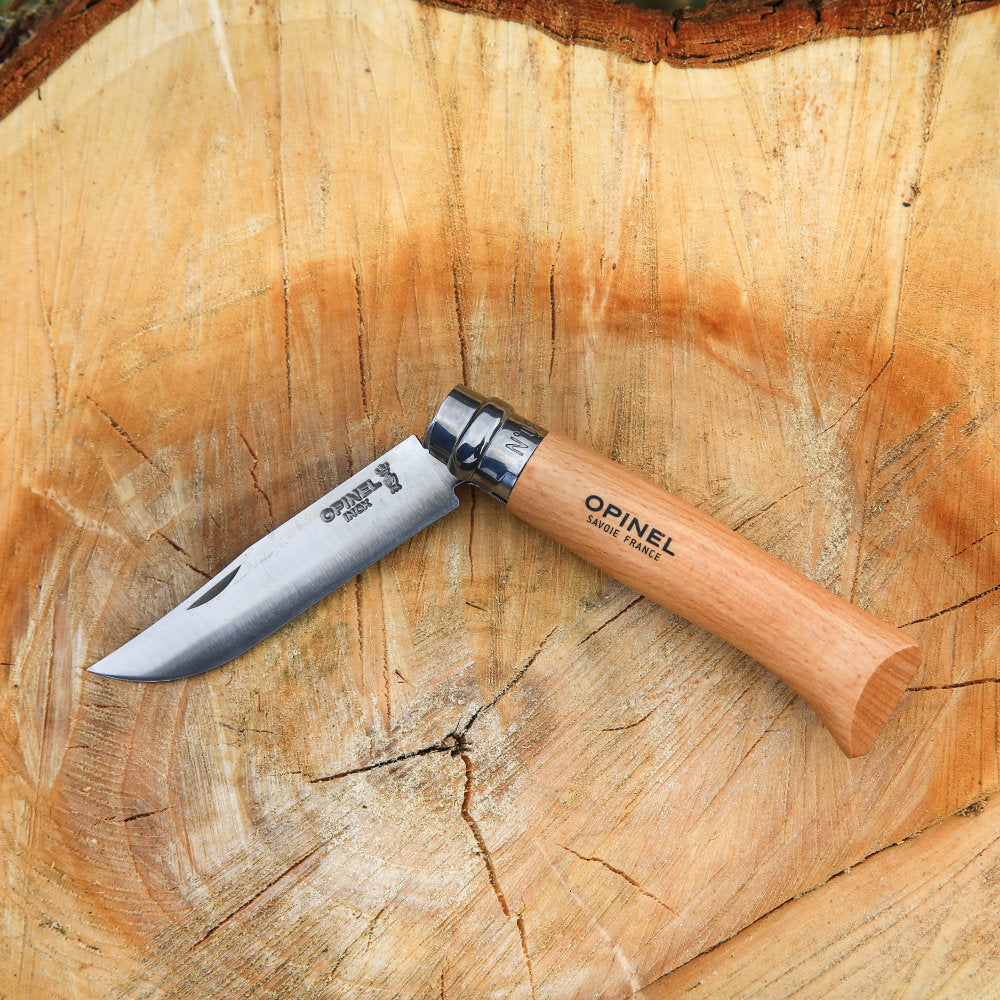
 meesterslijpers.nlmeesterslijpers.nl
 opinel-usa.comopinel-usa.com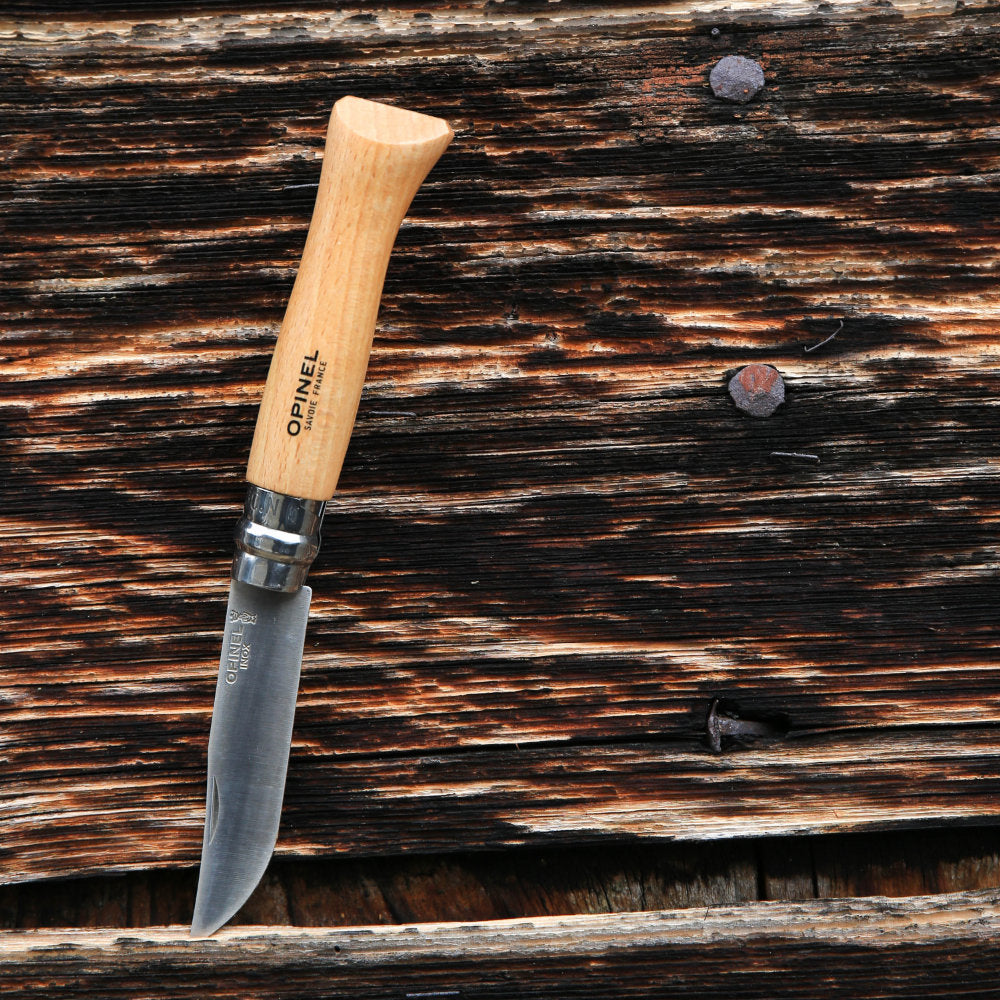
 bladeforums.combladeforums.com
+Field notes
- —INOX is not a model name—it's short for "inoxydable," the French word for stainless steel, marking blades made from Swedish Sandvik 12C27 steel with 14.5% chromium for corrosion resistance.
- —Carbone blades use XC90 high-carbon steel, which develops a dark patina from oils and acids over time; this patina is not dirt but a protective layer that actually improves rust resistance.
- —The Virobloc locking ring—invented in 1955 by Marcel Opinel and improved in 2000 to lock both open and closed—is a rotating ferrule that slides over the blade slot, combining "virole" (ferrule) and "bloc" (lock).
- —On a No. 8, the blade thickness differs by steel type: 1.4mm for carbon steel versus 2.2mm for stainless, affecting slice geometry and weight—2 oz total for the No. 8 stainless.
- —The Opinel blade hardness target is 57–59 HRc, a balance between edge retention and toughness; going harder risks brittleness, which is why Opinel avoids extremes.
Keep exploring
More of Opinel No. 8
Branch out
Beyond Opinel No. 8
More to explore
In the same world.

Cutlery Brands
"Cutlery brands" spans both tableware and kitchen knives, and the sources here point to a field where heritage, material…

Japanese Kitchen Knives
Japanese kitchen knives are a broad world of made-in-Japan chef’s knives that ranges from workhorse gyutos and santokus…

Sentan SLD Nashiji Gyuto 210mm
The Sentan SLD Nashiji Gyuto 210mm is a Japanese-style all-purpose chef’s knife sold in several ferrule colorways, inclu…

Vintage Pelikan Fountain Pens
Vintage Pelikan collecting really starts with the Model 100, the company’s first fountain pen, made from 1929 to 1944 an…

OHTO Fountain Pens
OHTO’s fountain-pen line is a compact corner of Japanese pen culture built around metal-bodied, fine-nib everyday writer…

Audemars Piguet
Audemars Piguet is a Swiss luxury watchmaker rooted in Le Brassus in the Vallée de Joux, where the brand says its craft…

Audemars Piguet Code 11.59
Code 11.59 is Audemars Piguet’s contemporary round-cased collection, revealed in 2019 as a platform for both new design…
Montblanc Meisterstück 149
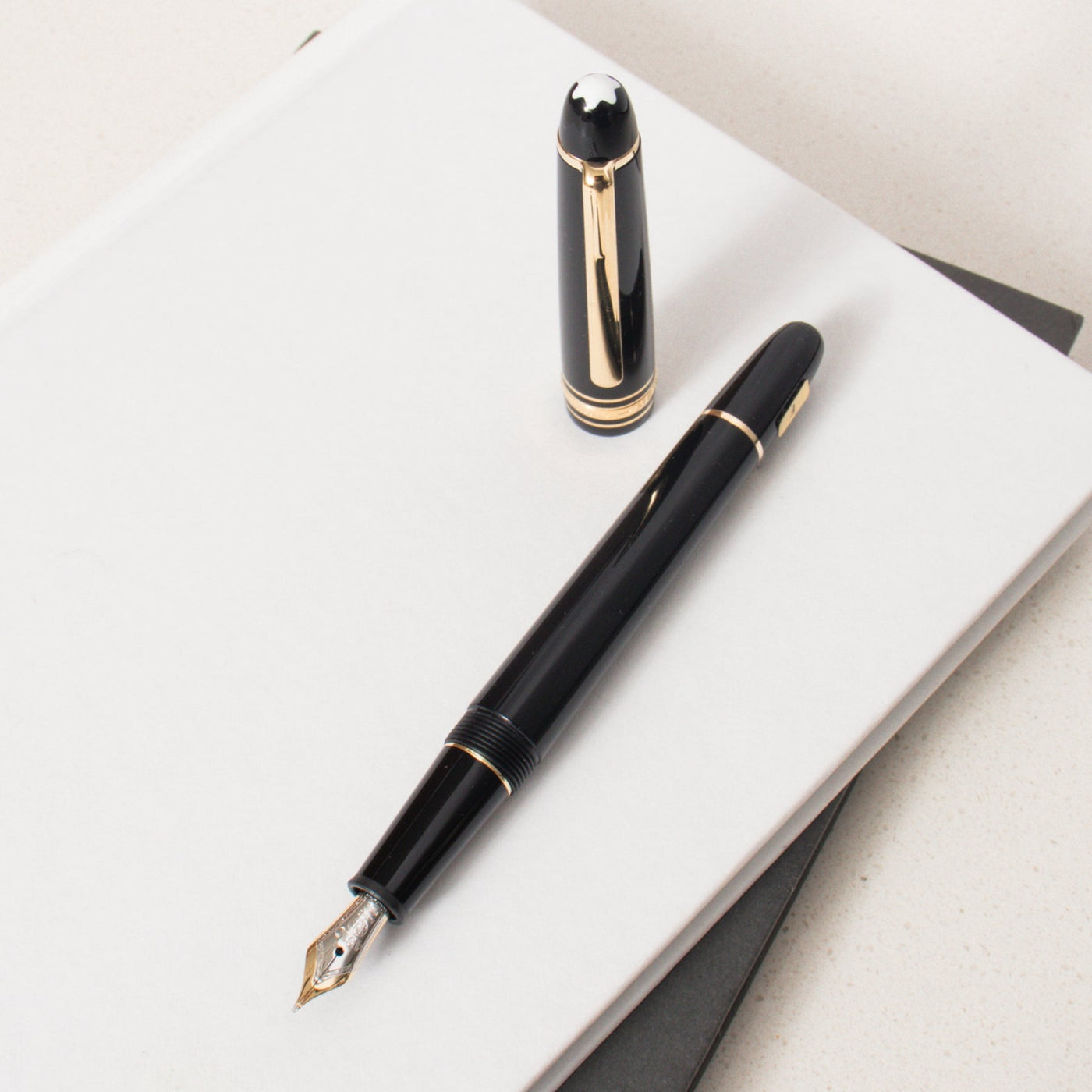
The Montblanc Meisterstück 149 is the flagship oversize fountain pen in the brand’s Meisterstück line, sold today in bla…
More in Kitchen & Home Design
Stay in this world.
Sentan SLD Nashiji Gyuto 210mm

Tappan “Tappy” Chef Figures and Chalkware Advertising
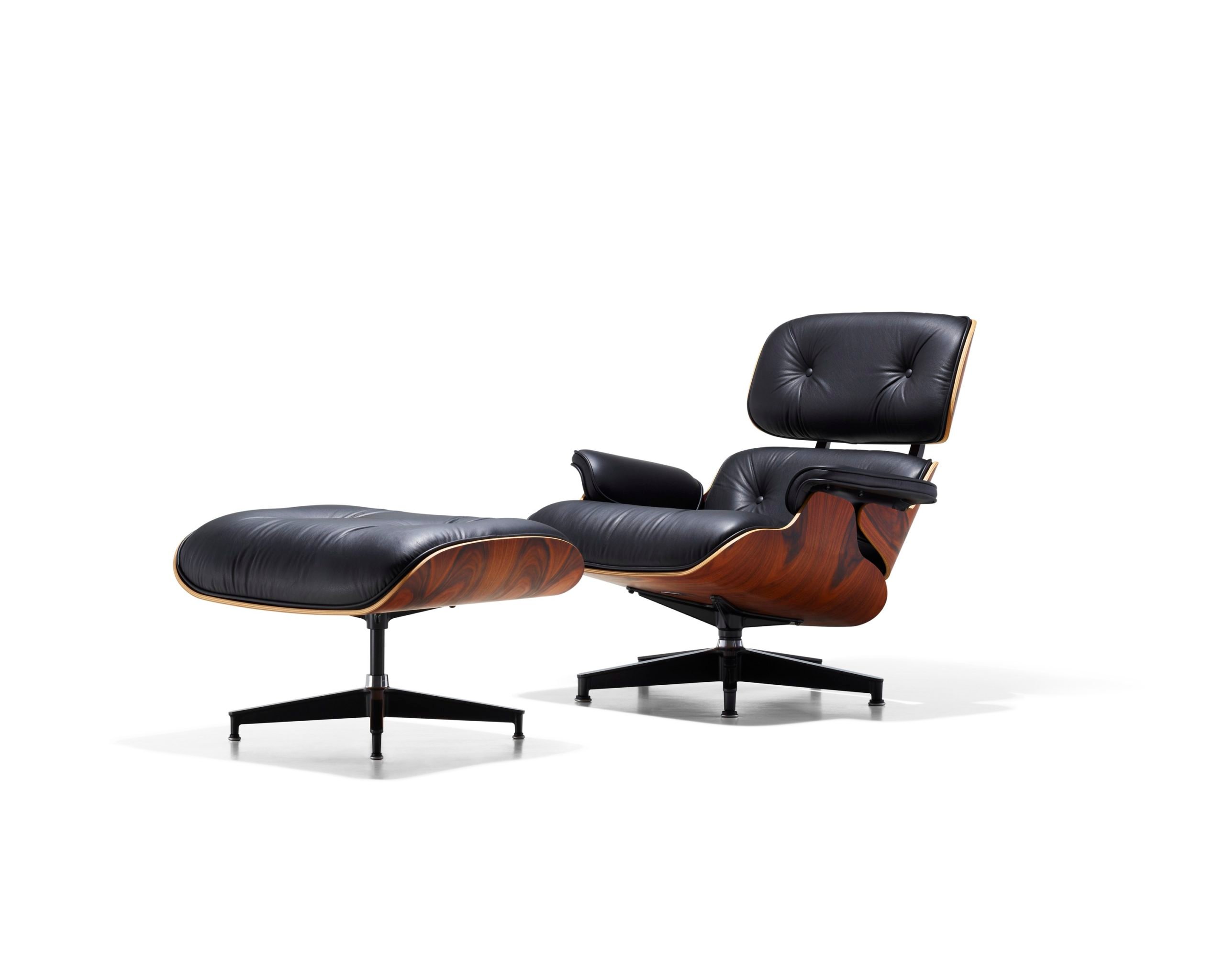
Eames Lounge Chair and Ottoman
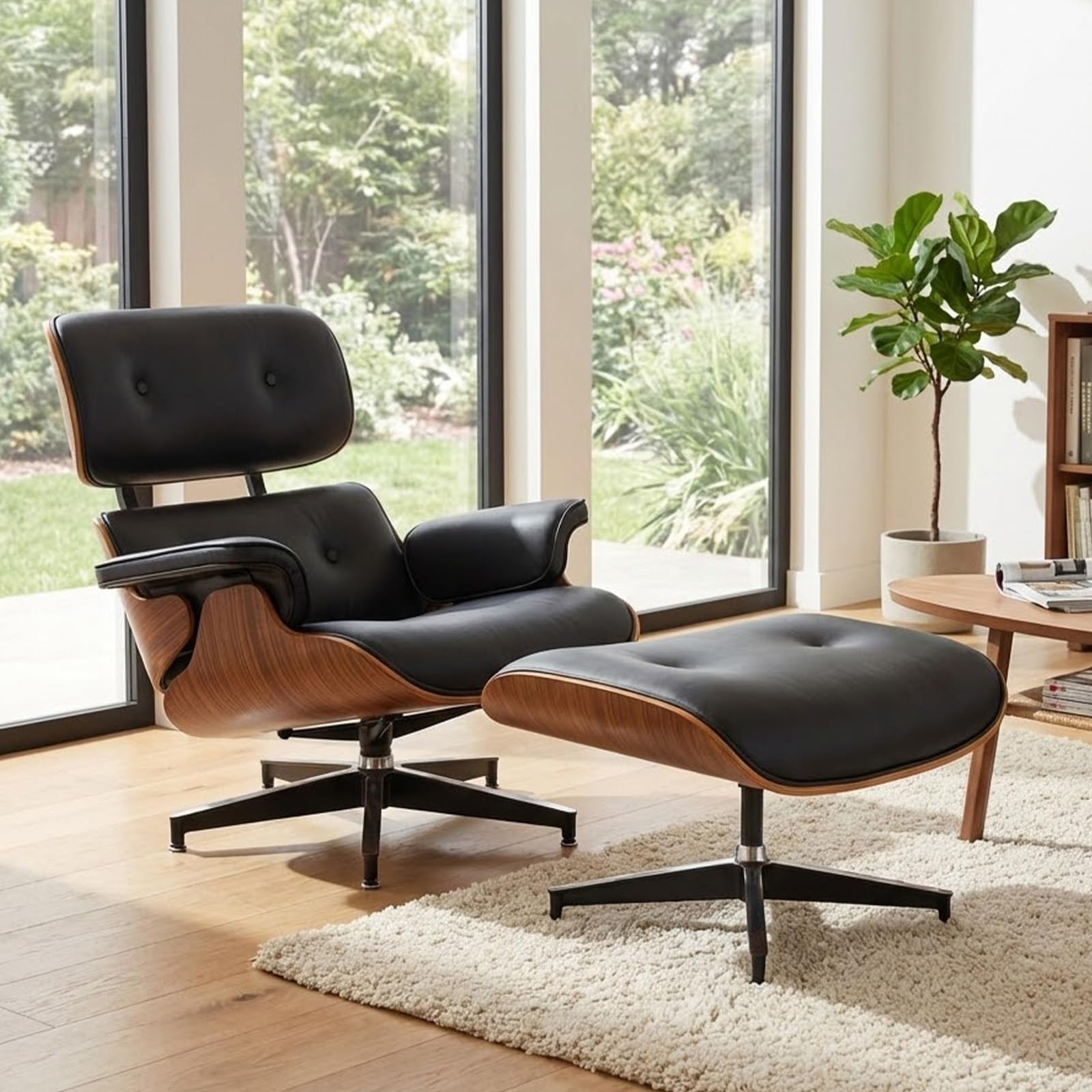
Mid-Century Modern Furniture
Japanese Kitchen Knives

Jungsik

Teishoku
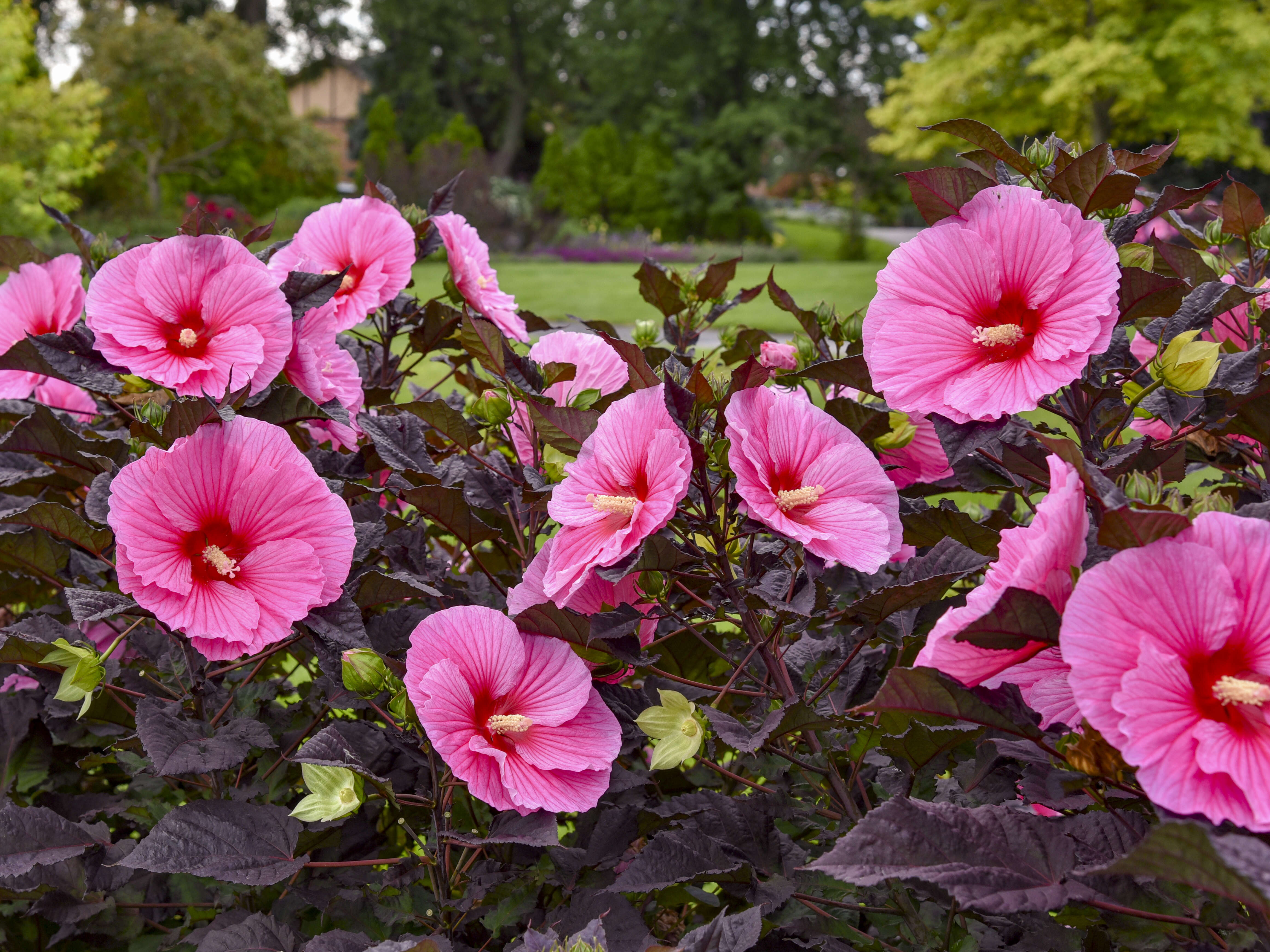
Summerific® 'Perfect Storm' Rose Mallow
Imagery
Know someone who’d love this?
Discovered by ArcurianAuto-generated from public sources and AI synthesis — it may be incomplete or inaccurate. Treat it as a starting point for your own exploration, not professional (medical, legal, financial, or safety) advice. Verify anything you act on. Report this page.