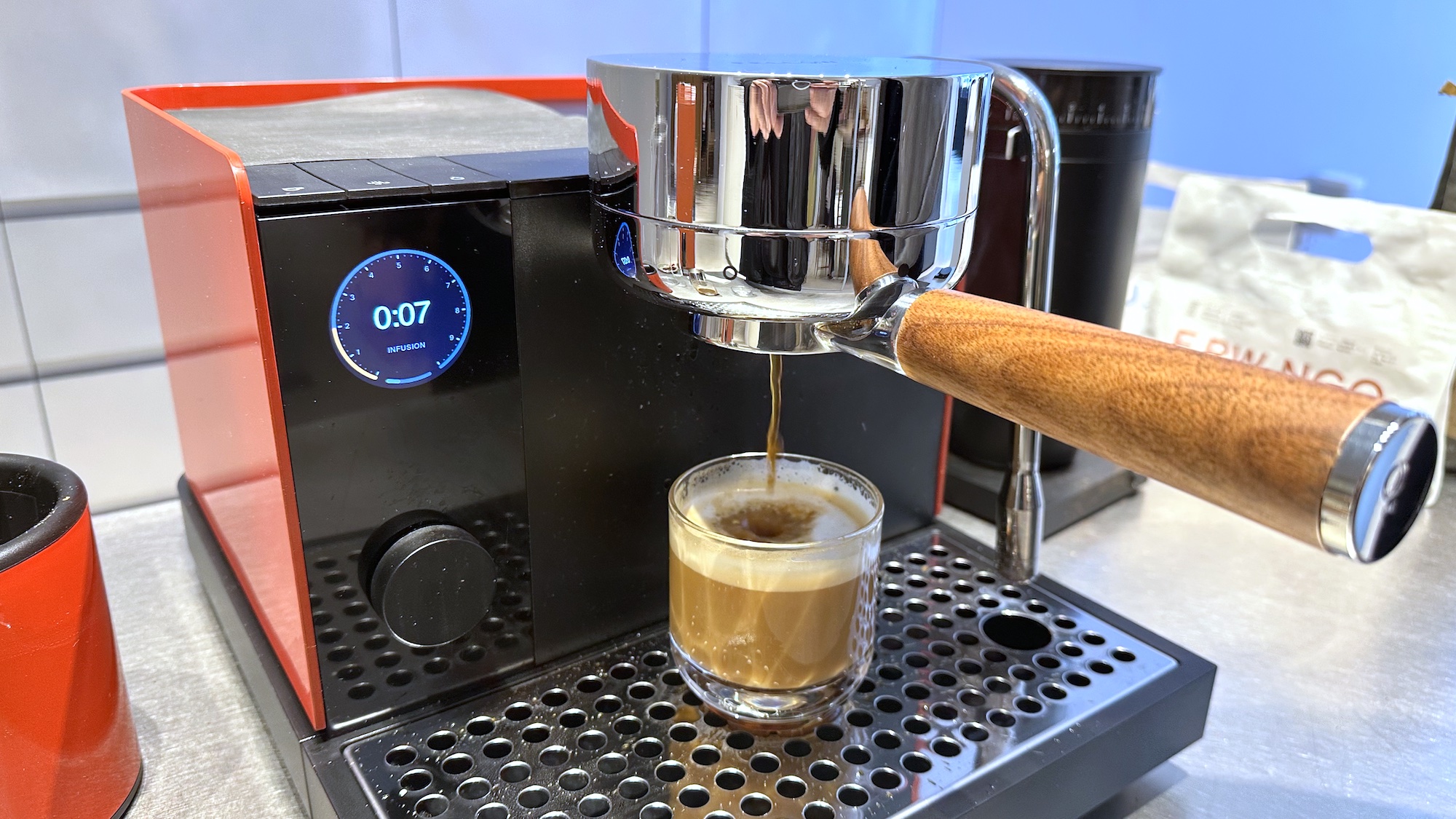
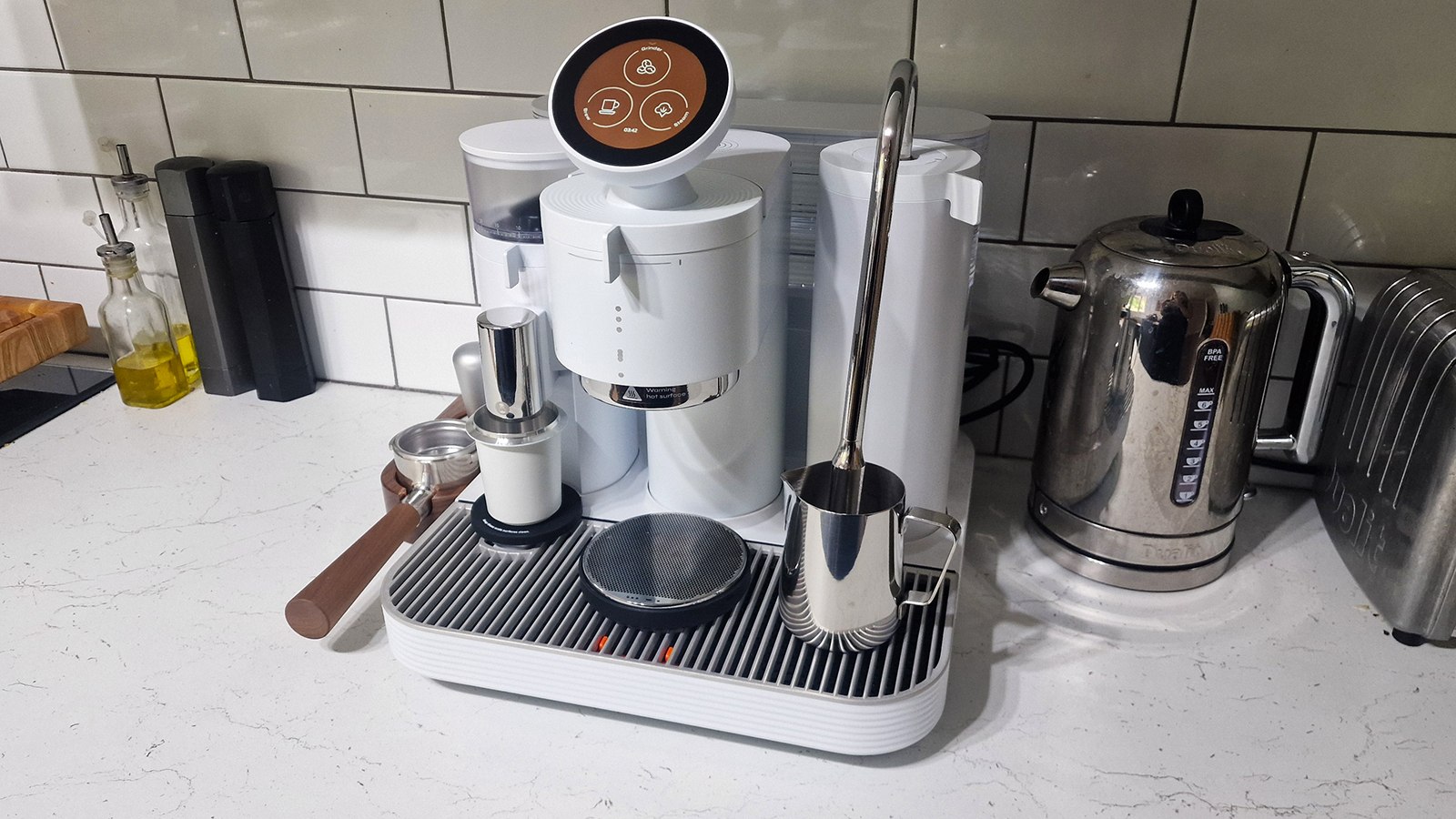
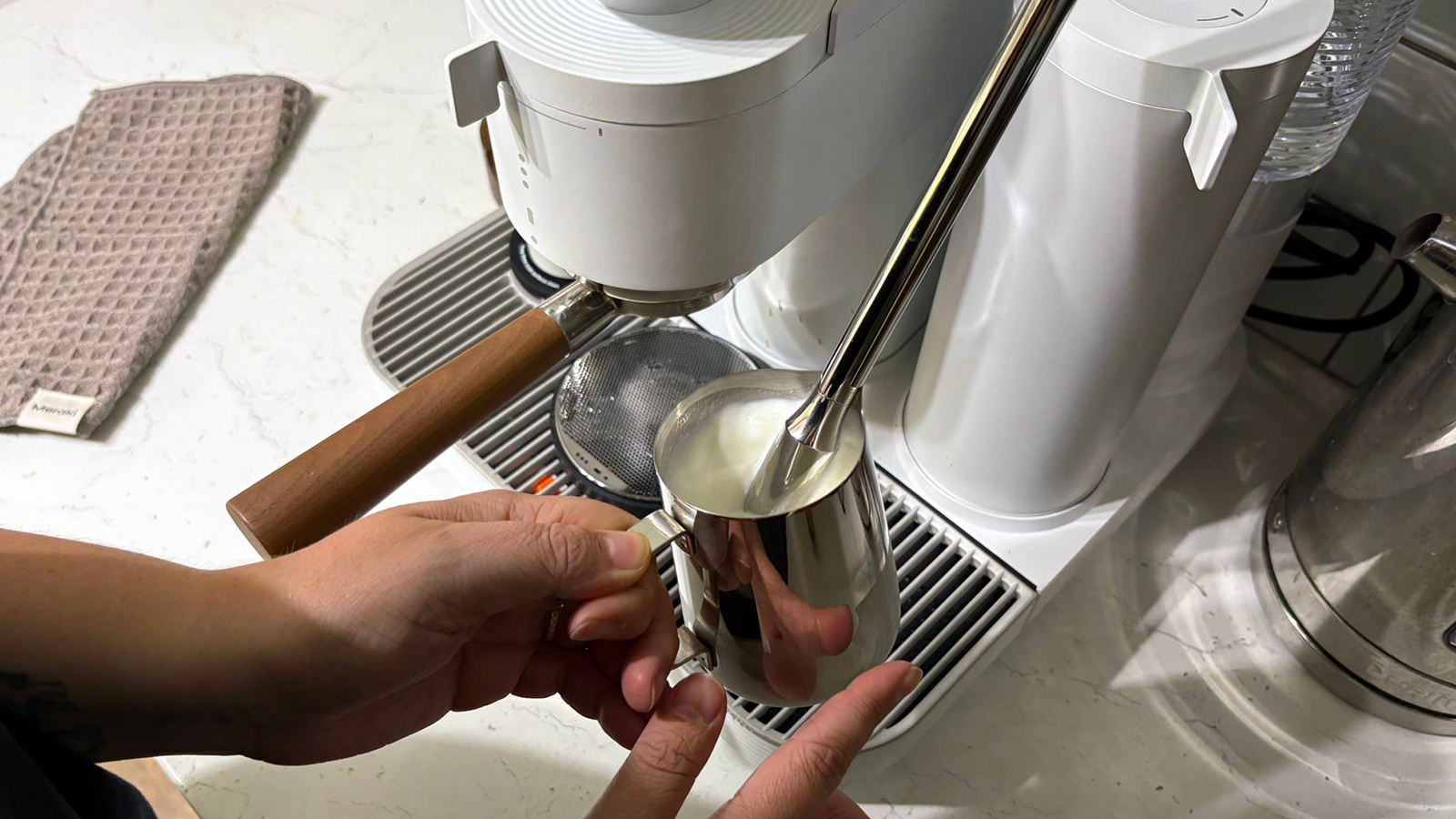
Home espresso machines sit at the intersection of coffee craft, kitchen design, and equipment obsession: they promise café-style espresso and milk drinks, but the experience changes dramatically depending on whether you choose a simple beginner machine, an all-in-one grinder setup, or a dual-boiler platform. Even in a basic roundup, the spread is huge—from the budget DeLonghi Stilosa to Breville’s Barista Express, Barista Touch, and Oracle Dual Boiler, plus newer entrants like Fellow’s Series 1 and Meraki’s rotary-pump dual boiler machine. Features that keep showing up in current machines—built-in grinders, automatic frothing, touchscreen workflows, cold brew modes, and dual-boiler architecture—signal the real divide in the hobby: convenience versus control. Once you notice how much machine design shapes the ritual, espresso stops being just a drink and starts looking like an entire ecosystem of workflows, upgrades, and strong opinions.
Learn
What Actually Separates One Home Espresso Machine from Another
The single biggest factor separating a mediocre home espresso machine from a truly great one isn't brand, price, or even pump pressure — it's the thermal architecture that controls water temperature during extraction. Most casual buyers focus on looks or steam wand placement, but the real divide comes down to whether a machine uses a single boiler, a heat exchanger, or a dual boiler, and whether it has a PID controller for fine-tuned temperature stability. Even a 2°C swing can turn a perfectly balanced shot sour or bitter. A dual boiler with PID, like the Breville Dual Boiler (BDB) at around $1,300–1,450, lets you brew and steam simultaneously with ±1°C accuracy — performance that was exclusive to $3,000+ machines just five years ago. Meanwhile, entry-level single boilers require manual "temperature surfing" and long waits between functions, and heat exchanger machines demand a cooling flush before every shot to avoid scorching the coffee. The PID is the single most impactful upgrade you can add to an entry-level semi-auto; it transforms an unstable brewer into a precision instrument. The machine is only the environment — the grind, water quality, and dose still decide the final cup, but the boiler system dictates whether you ever get a fair chance at consistency.
 clivecoffee.comclivecoffee.com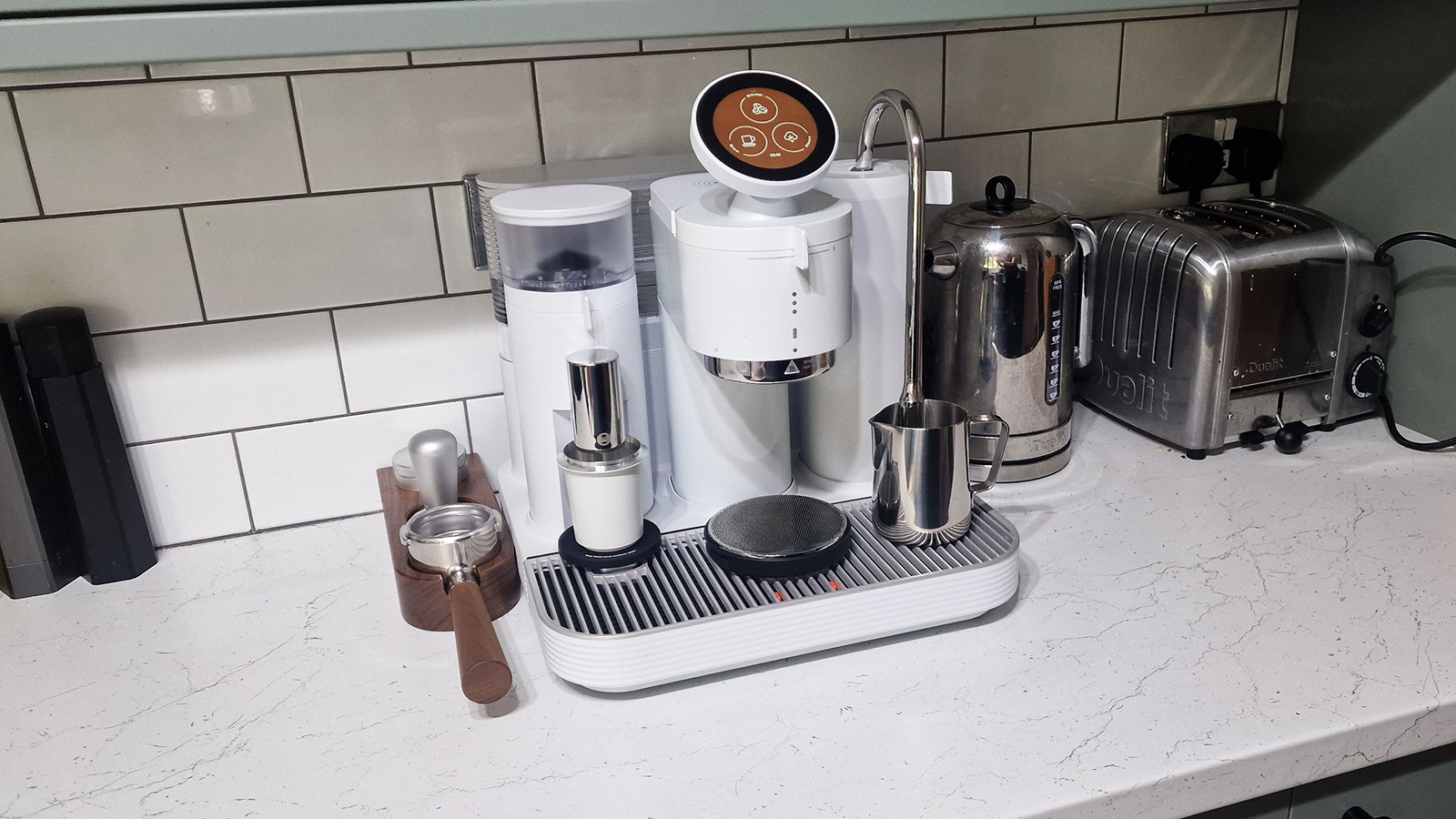
 simonandbearns.coffeesimonandbearns.coffee
+Field notes
- —Temperature stability is the hidden dictator of espresso quality: even a 2°C temperature swing can shift a shot from perfectly balanced to sour (under-extracted) or bitter (over-extracted), because different flavor compounds extract at different rates.
- —Heat exchanger machines, often marketed as offering dual-boiler convenience at a lower price, actually require a mandatory cooling flush before every shot to avoid brewing with overheated water — a step that adds complexity and waste.
- —The Breville Dual Boiler (BDB) at $1,300–1,450 delivers features — independent brew and steam boilers, PID control with 1°C precision, and pre-infusion at 3–4 bar — that were exclusive to $3,000+ machines five years ago, making it the benchmark under $1,500 since 2023.
- —The PID (Proportional-Integral-Derivative) controller is the single most impactful upgrade on an entry-level semi-automatic machine: it converts an unstable brewer into a precision tool by regulating boiler temperature in 1°C increments, with light roasts requiring 94–96°C to enhance sweetness and clarity.
- —Single-boiler machines force a sequential workflow — you must brew all shots before switching to steam, or wait for the boiler to cool down after steaming — which makes back-to-back milk drinks tedious and requires weeks of practice to master temperature surfing.
- —The Dynamic Duo (BEP920) from Breville, sold as Sage in the EU/UK, features post-2022 compression fittings that fixed a prior o-ring weak point, a 58 mm commercial portafilter, and adjustable pre-infusion from 60% to 90% of full pump pressure for repeatable extractions.
Learn
The Terms That Matter Before You Buy Anything
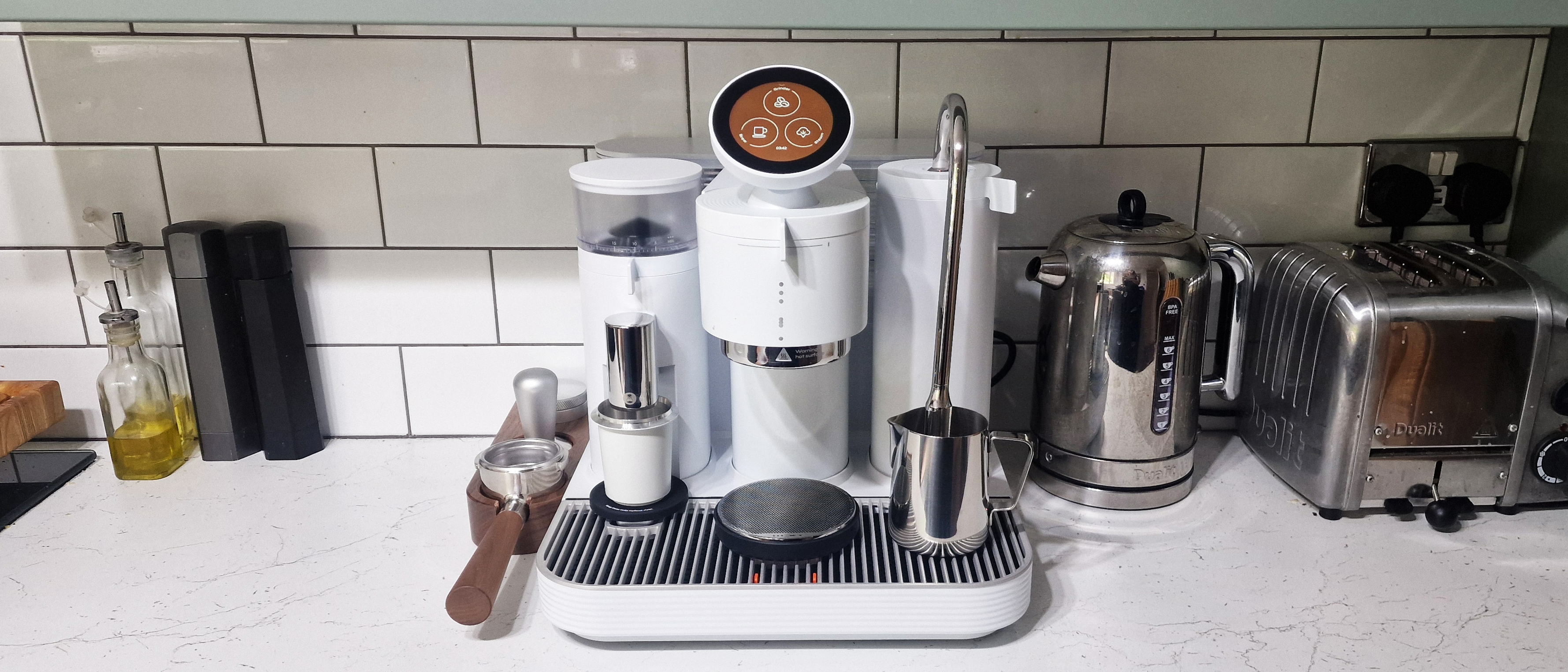
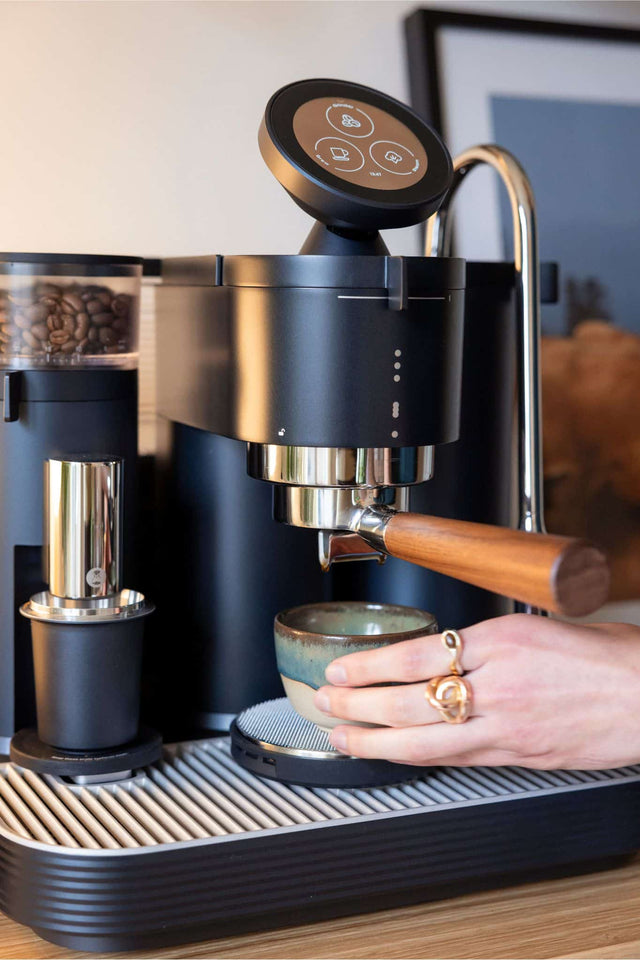
Before you spend a cent on an espresso machine, you need to understand the boiler architecture — it dictates your workflow, temperature control, and whether you can brew and steam simultaneously. The four main types are single boiler (cheapest, but you must wait between brewing and steaming), heat exchanger (one boiler with a coiled tube that lets you steam and pull shots at the same time, though brew water temperature varies and requires "temperature surfing"), dual boiler (two independent tanks for brew and steam, offering simultaneous operation and precise, independent temperature control via PID), and thermoblock (a metal block with embedded heating elements that heats water on demand, fast to warm up but often less stable than a dedicated boiler). The iconic E61 group head, an open commercial standard from 1961, provides natural mechanical pre-infusion and extreme thermal stability once it reaches temperature — but its large chrome thermosyphon assembly takes 20–40 minutes to stabilize. A PID controller (Proportional-Integral-Derivative) digitally regulates boiler temperature to within ±1°C, far outperforming old mechanical pressurestats, letting you dial in light roasts at 94–96°C for sweetness or avoid bitterness and acidity. The pump, too, matters: vibratory pumps are compact and cost-effective but last 5–7 years, while rotary pumps run quieter and endure 15+ years. Understanding these core components — boiler type, group head design, PID versus pressurestat, pump style — separates a purchase you'll love from one you'll want to replace in six months.

 voltagerestaurantsupply.comvoltagerestaurantsupply.com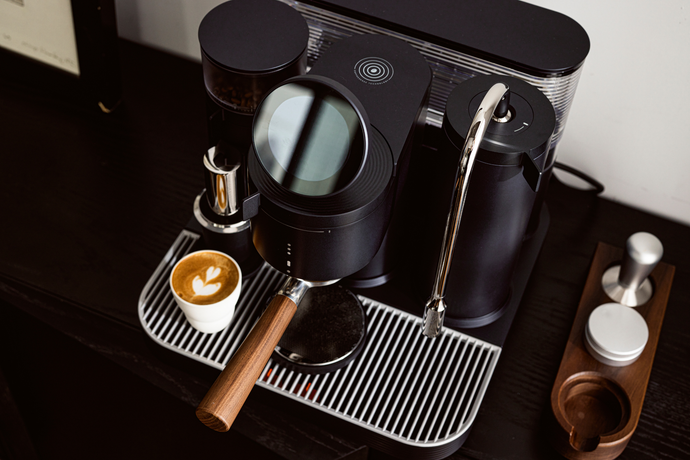
 hibrew.comhibrew.com
+Field notes
- —Single-boiler machines are affordable and simple, but you cannot brew espresso and steam milk simultaneously — you must wait for the boiler to switch between brew temperature (~195–205°F) and steam temperature (212°F+). They suit single-cup households that rarely make milk drinks.
- —Heat exchanger (HX) machines use one boiler for steam while a copper coil inside it heats fresh water for brewing, enabling simultaneous brewing and steaming — but brew temperature varies with the boiler's steam cycle, requiring the barista to learn "temperature surfing" (flushing water until the group head stabilizes).
- —Dual boiler machines have independent boilers for brew and steam, offering precise, independent temperature control (often with a PID on each) and true simultaneous operation — ideal for households that make multiple milk drinks in a row, though they typically cost $600–1,500 more than a comparable single-boiler with PID.
- —The E61 group head, designed by Faema in 1961, is a passively-heated 58mm standard on most prosumer HX and dual-boiler machines; it provides natural mechanical pre-infusion and exceptional thermal stability once fully heated (20–40 minutes warm-up), recognizable by its chrome dome and three-position lever.
- —A PID (Proportional-Integral-Derivative) controller digitally regulates boiler temperature in 1°C increments, replacing old mechanical pressurestats and drastically reducing temperature fluctuations — essential for dialing in light roasts (best at 94–96°C) and achieving shot-to-shot consistency.
- —Pump type matters for longevity: vibratory pumps are compact and affordable but typically last 5–7 years, while rotary pumps are quieter, more durable (15+ years), and allow plumbed water connections — a key consideration for heavy home use or future upgrades.
Learn
From Starter Machines to Feature-Heavy Countertop Systems
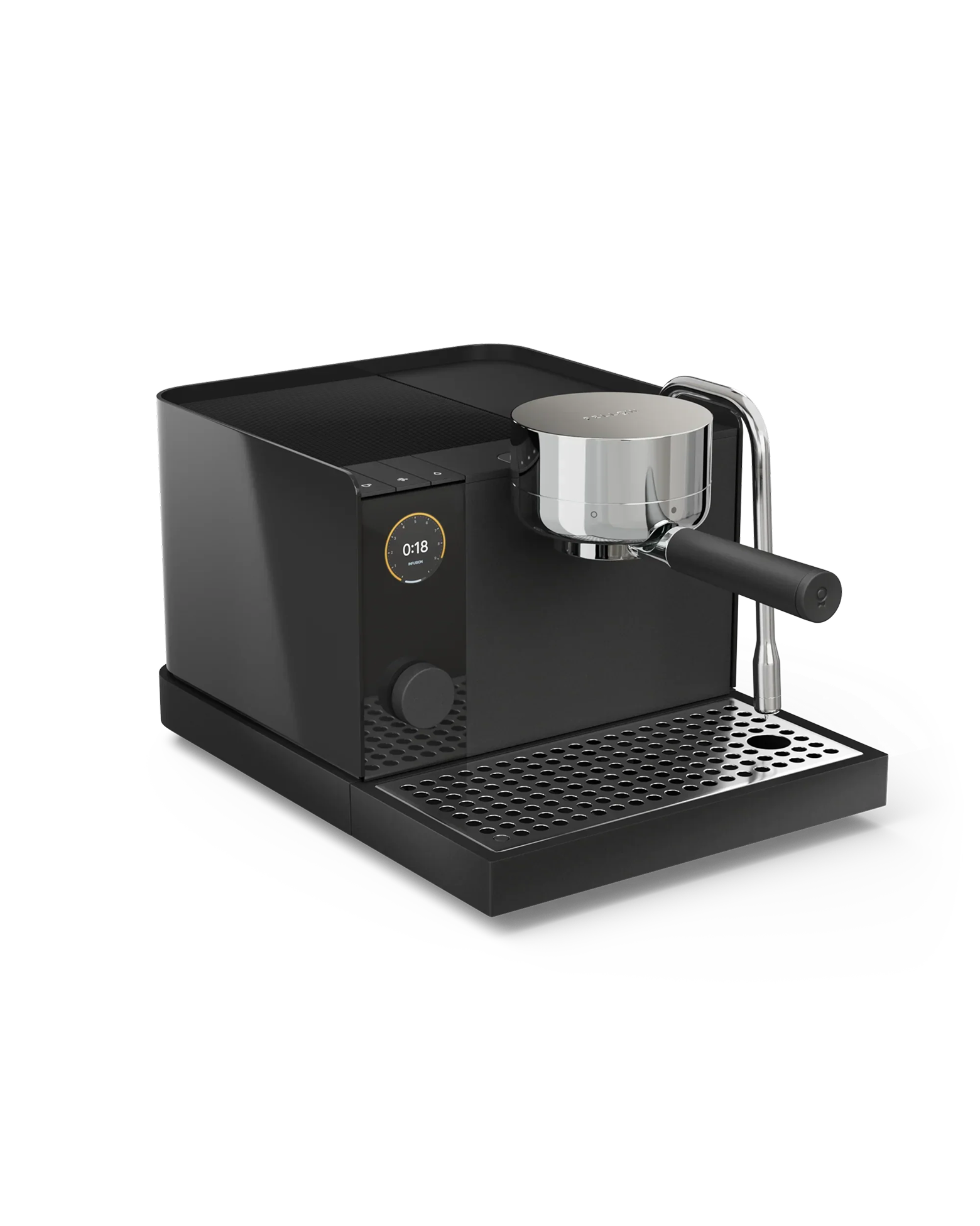
The countertop espresso machine market has evolved into a tiered ecosystem where each model targets a specific skill level and budget, with Breville offering perhaps the most coherent upgrade path—from the $500 Bambino Plus to the $2,400 Oracle Dual Boiler. The real surprise is that Breville's ThermoJet system heats up in just three seconds, making the Barista Touch (now $749.95) faster than many commercial machines. Meanwhile, Fellow's Series 1 ($1,499.95) attempted to enter this space with its Boosted Boiler architecture and two-minute warm-up, but Serious Eats found it fell short in testing. De'Longhi's La Specialista Touch, a 2025 Red Dot and iF Design Award winner, introduces Bean Adapt Technology that interactively guides you through dialing in grind, dose, pre-infusion, and temperature—a feature that makes the $1,000-ish machine feel like having a barista coach on your counter. The real enthusiast's choice remains the Breville Dual Boiler at $1,600, which allows manual pre-infusion and brew temperature adjustments in 1°F increments, rivaling machines costing three times as much. For those who want automation without surrendering control, the new Oracle Dual Boiler debuts a Quad-Core CPU with Auto Dial-In that analyzes each shot and automatically adjusts grind size using Baratza European Precision Burrs with 45 settings—a closed-loop feedback system previously seen only in commercial roasteries.

 delonghi.comdelonghi.com
+Field notes
- —Breville's ThermoJet heating system achieves optimum extraction temperature in 3 seconds and uses up to 32% less energy annually compared to a traditional Thermoblock system.
- —The Fellow Espresso Series 1 features a Boosted Boiler architecture with three independent heating elements for sub-two-minute warm-up, but Serious Eats concluded it 'did not meet our standards after multiple rounds of testing.'
- —De'Longhi's La Specialista Touch uses Bean Adapt Technology, an interactive guided system that helps you set grind size, dose, pre-infusion, and brewing temperature, and it won both the 2025 Red Dot and iF Design Awards.
- —The Breville Dual Boiler, at $1,600, allows manual control over pre-infusion and brew temperature in 1°F increments, delivering professional-grade precision that serious enthusiasts say rivals machines costing three times as much.
- —The new Oracle Dual Boiler (not the discontinued Oracle Touch) is powered by a Quad-Core CPU with an Auto Dial-In system that analyzes each shot and intelligently adjusts grind size using 45-setting Baratza European Precision Burrs, creating a closed-loop feedback mechanism for extraction consistency.
- —Breville's upgrade path is designed so skills transfer between machines: the Bambino Plus ($500) teaches temperature surfing basics, the Barista Express ($499.95) adds an integrated grinder with 16 settings, and the Oracle series automates grind, dose, and tamp with a 58mm portafilter holding a 22g dose.
Discover
Watch Real Workflow Reviews, Not Marketing Demos

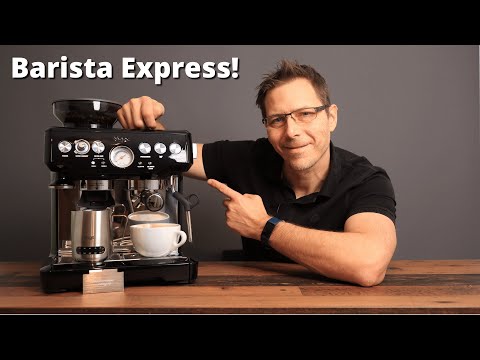
If you want to understand how an espresso machine actually performs day-to-day, ignore polished launch videos and seek out real-world workflow reviews from knowledgeable users. The Breville Dual Boiler (BDB), for example, is often dismissed as a kitchen appliance, but experts like Lance Hedrick reveal it has hidden capabilities—like a built-in pre-infusion system that can be manually controlled via the OPV, and a modding community that swaps out the steam wand tip or even installs a "slayer mod" for flow profiling—that rival machines costing several times more. In contrast, the Barista Express, while Amazon's best-seller, frustrates users with its built-in grinder that often needs burr adjustment to even reach proper espresso pressure, and its thermoblock steam system that pales beside a true dual boiler. James Hoffmann's shootout of machines under £1,500 further underscores that the BDB's feature set (independent boilers, programmable pre-infusion, PID control) makes it a standout, while Seattle Coffee Gear's comparison of the Barista Touch vs Oracle Touch highlights that the Oracle's built-in grinding and tamping doesn't replace skill—it just automates mediocrity. The lesson: always watch at-home workflow demos from owners, not marketing demos, to see a machine's real quirks, mod potential, and temperature stability over multiple shots.
+Field notes
- —Lance Hedrick's deep-dive on the Breville Dual Boiler reveals it has a manual OPV (over-pressure valve) adjustment and supports a "slayer mod" for flow profiling, letting users mimic expensive profiling machines like the Slayer—a capability barely hinted at in Breville's own marketing.
- —The Barista Express's integrated grinder often needs its upper burr adjusted to grind fine enough to generate proper espresso pressure; Tom's Coffee Corner demonstrates this in his unboxing, a step completely absent from Breville's official setup instructions.
- —James Hoffmann's group test under £1,500 found that the Breville (Sage) Dual Boiler competes directly with the Rancilio Silvia Pro and Lelit MaraX on temperature stability and pre-infusion, but costs significantly less and has a larger modding community—details no Breville ad will mention.
- —Seattle Coffee Gear's comparison of the Barista Touch vs Oracle Touch shows that the Oracle's automatic tamping and grinding often produce inconsistent results because the machine can't adapt to different bean density and age—a limitation you'd never see in Breville's polished demo videos.
- —Real Chris Baca's honest Oracle Touch review, after months of daily use, points out that the machine's slow steam boiler recovery rate noticeably hinders back-to-back milk drinks, a flaw rarely discussed in quick unboxing or sponsored content.
Discover
Read Buyer-Focused Testing and Long-Term Owner Impressions


![Breville Oracle Touch Review [After Several Weeks]](https://coffeedrinker.net/wp-content/uploads/Breville-Oracle-Touch.webp)
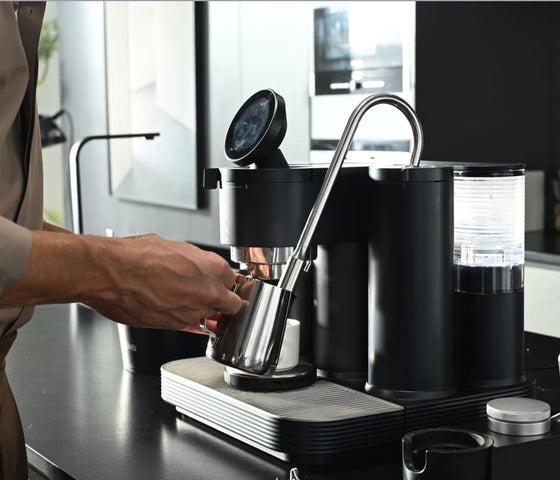
After months of daily use, owners consistently praise the Breville Barista Touch for its ThermoJet system that heats up in a claimed 3 seconds and its automatic milk frothing that handles oat milk without issue—a notable feat since alt-milks often cause problems. The integrated conical burr grinder with dose control is a time-saver, but the 54mm portafilter is a common annoyance because it limits third-party accessory compatibility and feels less substantial than standard 58mm setups. Long-term users note that the touchscreen menu, while intuitive, can become sluggish over time and that the machine's reliance on proprietary parts makes DIY repairs difficult. The Oracle Dual Boiler, meanwhile, adds dual user modes and an auto dial-in feature that many experienced home baristas find game-changing for consistency, though its price tag and large footprint give serious pause.
+Field notes
- —The ThermoJet heating system on the Barista Touch genuinely reaches brew temperature in about 3 seconds, eliminating the traditional warm-up wait; this is a key differentiator from heat-exchanger or dual-boiler machines that need 10–20 minutes to stabilize.
- —Automatic milk texturing on the Barista Touch produces consistent microfoam even with oat milk—a notorious challenge—without requiring any manual steaming technique.
- —The 54mm portafilter (as opposed to the industry-standard 58mm) limits aftermarket baskets and accessories, a frustration for those wanting to upgrade or fine-tune their workflow.
- —Long-term owners report that the touchscreen interface can become less responsive after a year or so, though a factory reset sometimes resolves the lag.
- —The Oracle Dual Boiler introduces dual user modes and an auto dial-in feature using a built-in scale that adjusts grind and dose automatically, reducing guesswork for daily consistency—but it demands significant counter space and a higher budget.
- —Most source authors stress that after 6–12 months, the integrated grinder's burrs need replacement to maintain grind quality, a non-obvious ongoing cost that many new owners overlook.
Keep exploring
More of Home Espresso Machines
More to explore
In the same world.
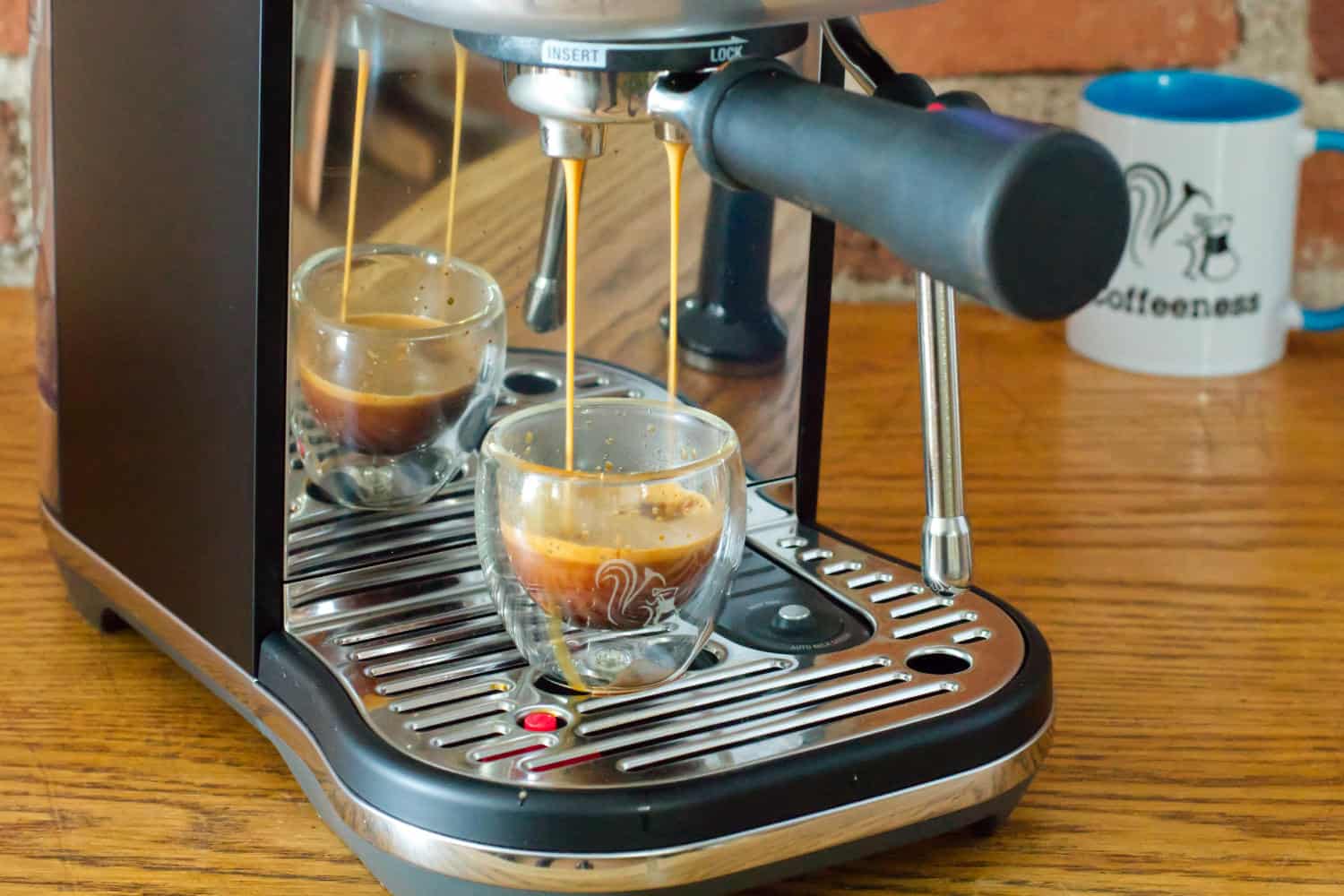
Espresso Machines Under $500
The under-$500 espresso category is where home espresso gets interesting: multiple guides now argue you can get a real p…

La Marzocco Linea Mini
The La Marzocco Linea Mini is a home espresso machine built as a kitchen-scaled take on the brand’s Linea Classic, with…
Espresso
Espresso is a concentrated coffee drink made by forcing hot water under high pressure through finely ground coffee, a me…
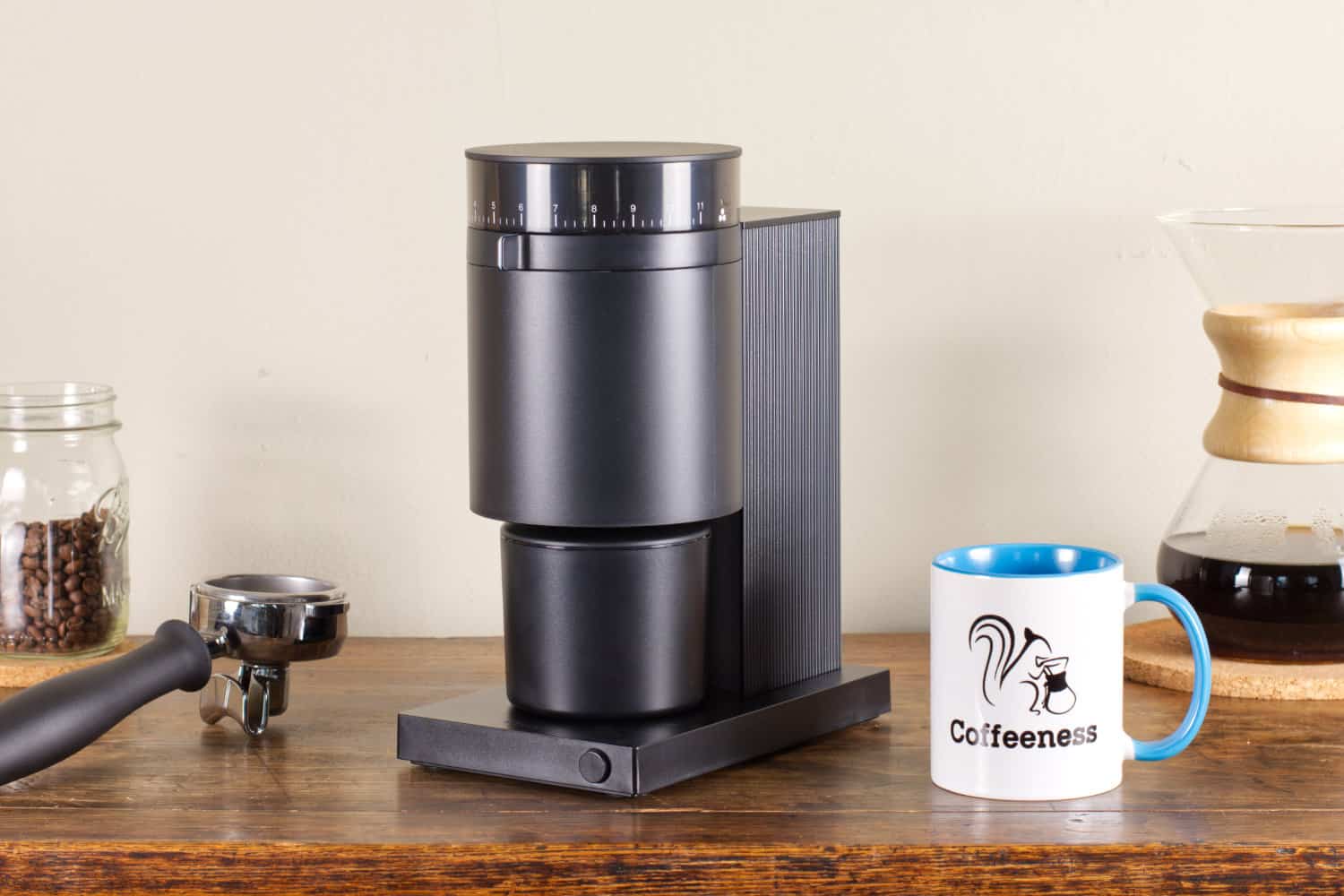
Gaggia Classic Pro + Baratza Encore ESP Setup
This setup pairs the Gaggia Classic Pro, a manual home espresso machine, with the Baratza Encore ESP, a grinder position…
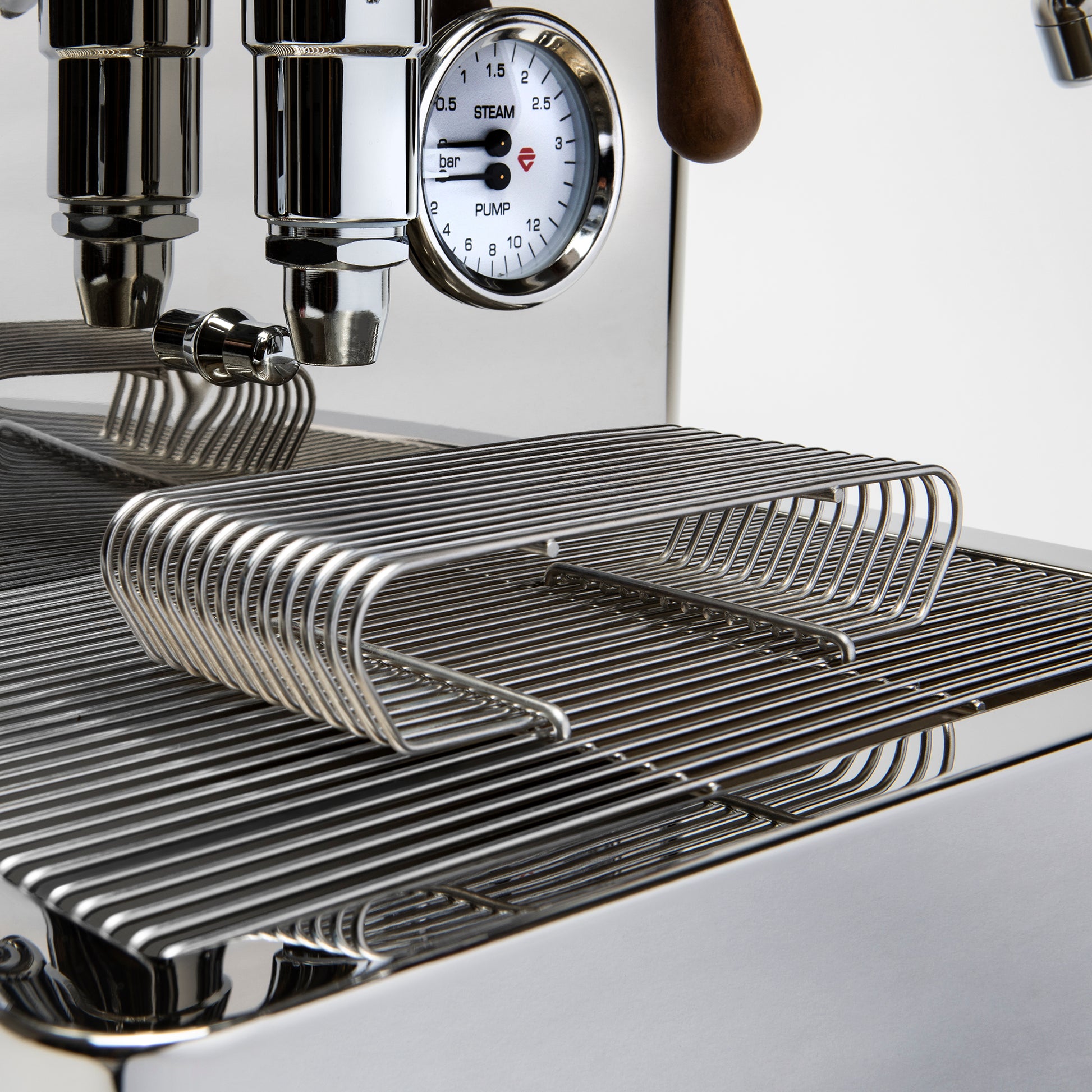
Lelit Bianca V3 Review
The Lelit Bianca V3 is a prosumer dual-boiler espresso machine that keeps showing up in serious home-barista conversatio…

Coffee in Oʻahu, Hawaiʻi
Oʻahu’s coffee scene is less about a single plantation identity and more about the island’s mix of neighborhood cafés, n…
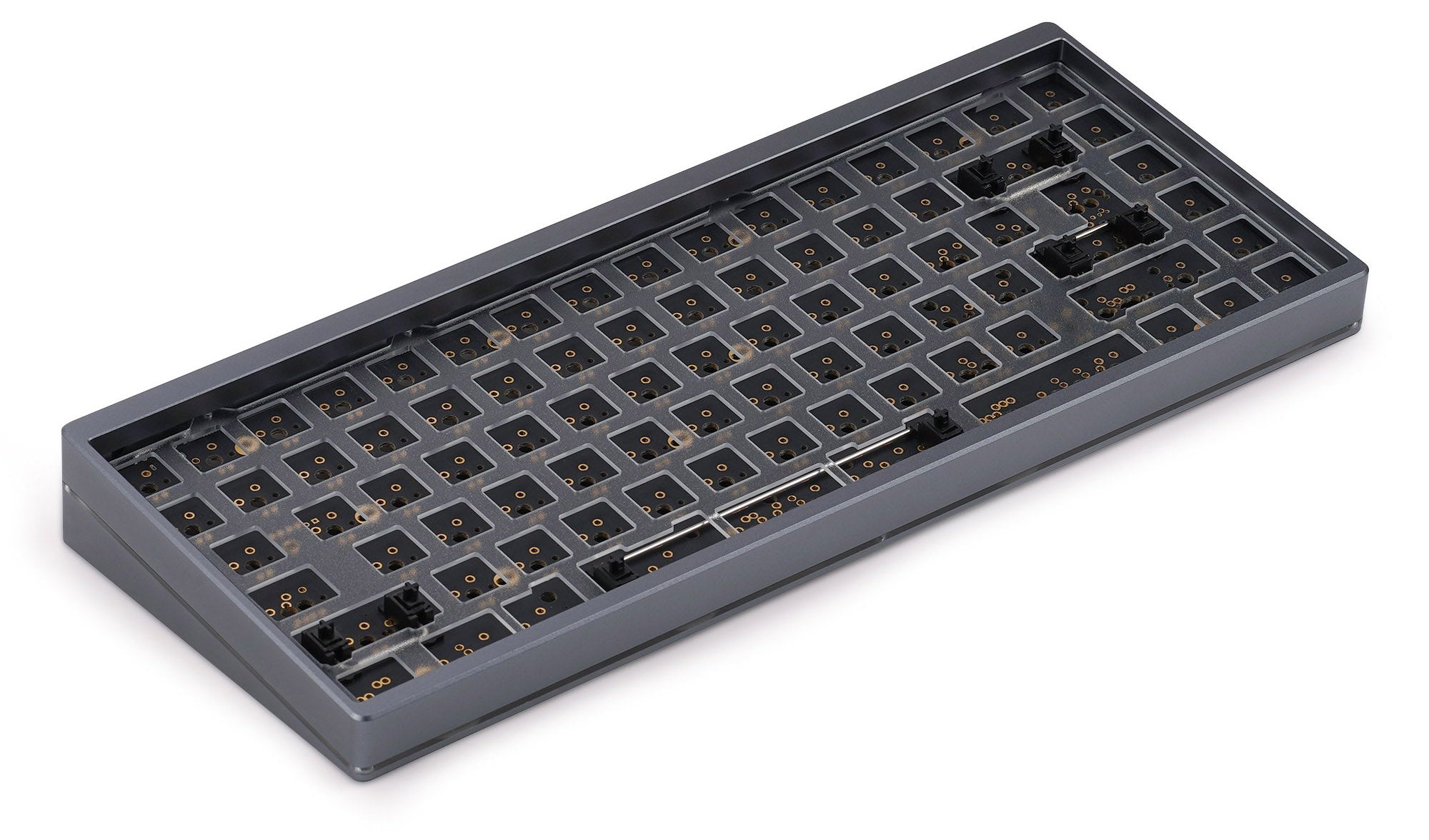
Mechanical Keyboards
Mechanical keyboards sit at the overlap of typing tool, gaming hardware, and custom object: you can buy a polished board…
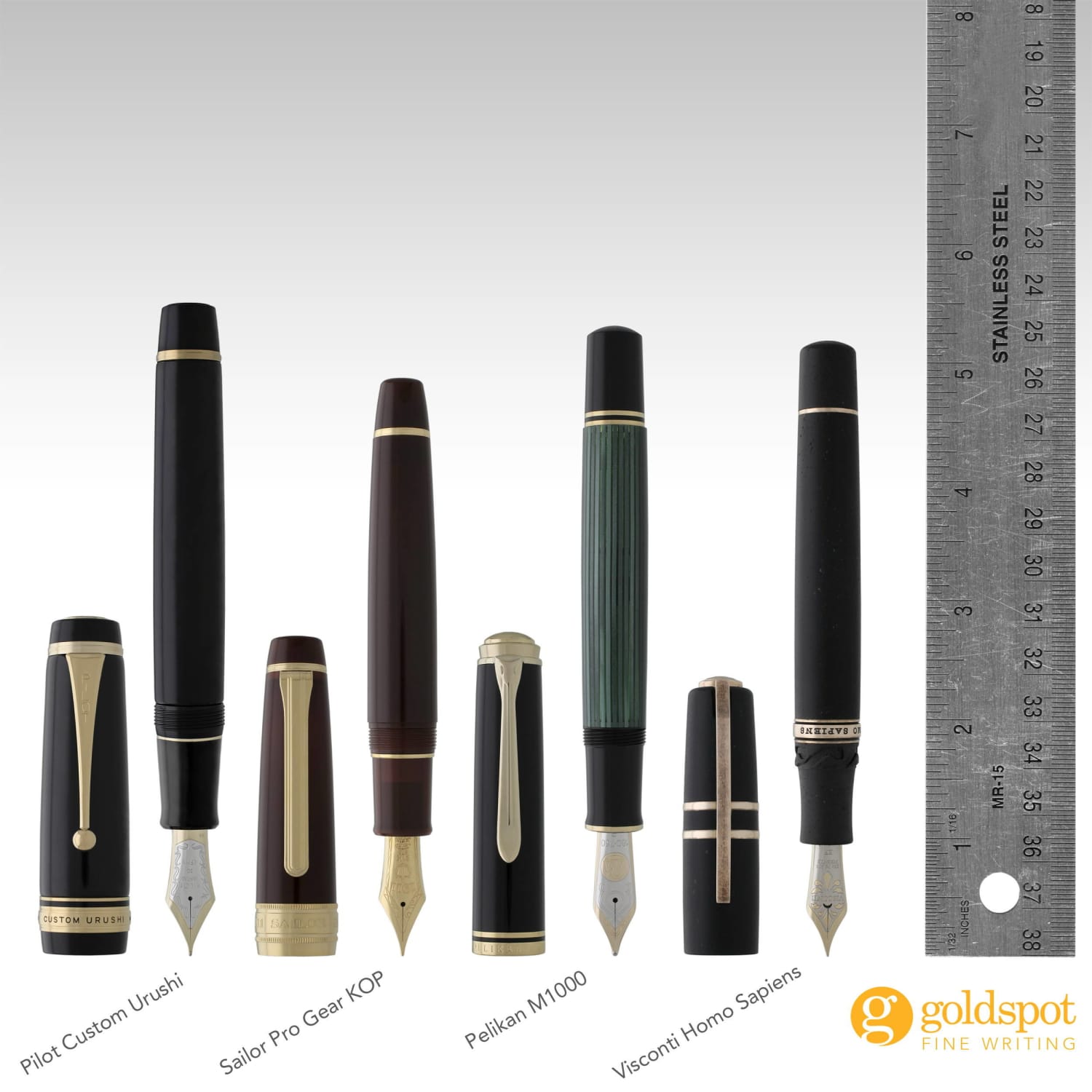
Fountain Pens
Fountain pens are refillable writing instruments that feed liquid ink to a metal nib, and for many people the appeal is…
More in Coffee & Espresso
Stay in this world.

Hilo vs. Kona on Hawaiʻi Island
Coffee in Oʻahu, Hawaiʻi
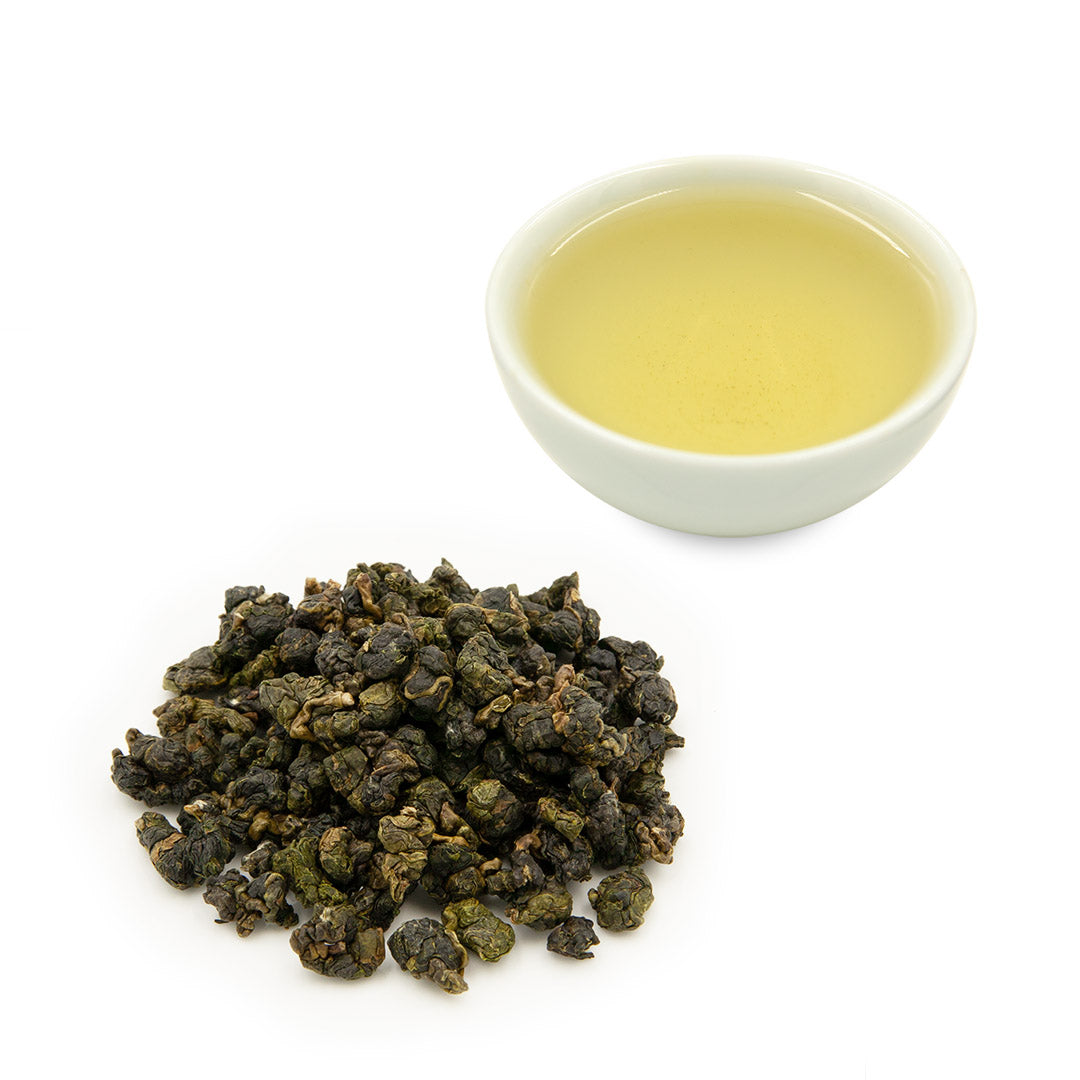
Taiwanese Jin Xuan Tea
Gaggia Classic Pro + Baratza Encore ESP Setup
Espresso Machines Under $500
Lelit Bianca V3 Review
La Marzocco Linea Mini
Espresso
Imagery
Know someone who’d love this?
Discovered by ArcurianAuto-generated from public sources and AI synthesis — it may be incomplete or inaccurate. Treat it as a starting point for your own exploration, not professional (medical, legal, financial, or safety) advice. Verify anything you act on. Report this page.